
Esoteric K-05XD Review
Just how many SACD players does Esoteric currently offer? There are currently six models in total. This lineup includes the flagship Grandioso P1X/D1X SACD transport and DAC combination, plus the Grandioso K1X, K-01XD, K-03XD, K-05XD, and the P-05X pure transport. Among these, the K-01XD, K-03XD, and K-05XD have all evolved into the XD generation, signifying the full integration of flagship-derived technologies: the Master Sound Discrete DAC and the Atlas VRDS transport mechanism.
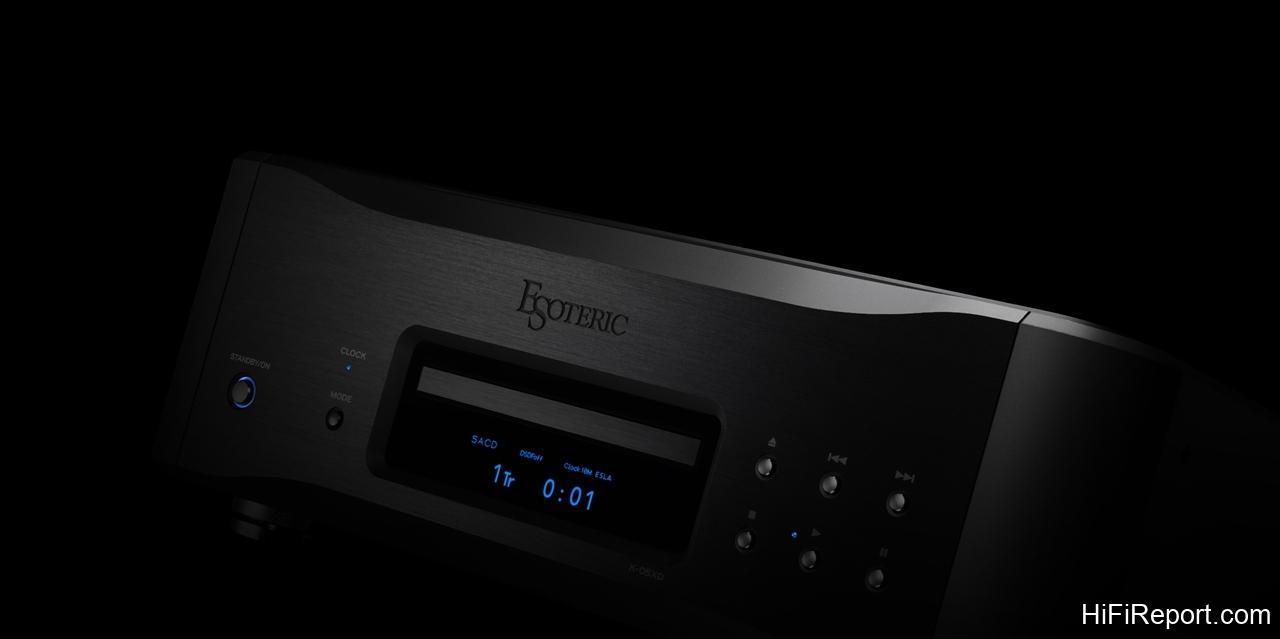
This review focuses on the K-05XD, the newly evolved entry-level model.
What are the differences between these models? Previously, Esoteric’s product segmentation was quite clear. Higher-tiered models featured heavier, more robust VRDS structures, used more DAC chips, and boasted larger power supply arrays. The chassis dimensions of the K-03 and above were also distinctly different from the K-05; the higher models had taller chassis, while the K-05 had a slimmer profile, indicating a more simplified internal circuit structure.
Despite being the lowest tier in this lineup, the K-05 has consistently been the best-selling model. The reason is simple: the K-05 offered the most accessible price point for owning the VRDS transport mechanism, making it the most value-packed option. It’s no wonder it became Esoteric’s most competitive and popular seller.
The first generation K-05 was released in 2011, followed by the K-05X in 2015, and the K-05Xs in 2018. The upgrade path had always maintained a consistent approach. However, with the launch of the latest K-05XD this year, something surprising happened. Upon seeing the new K-05XD, I was momentarily confused. Was this really the K-05XD? Why did the chassis look identical to the K-03XD, and even the K-01XD?
Unexpectedly, Esoteric has broken its own product segmentation rules this time, making the K-05XD’s chassis as tall as its elder siblings, the K-01XD and K-03XD!

Clearly, the K-05XD’s upgrade this time around is far from trivial. Esoteric wouldn’t just enlarge the chassis; the internal circuitry must have been simultaneously upgraded, aiming to further enhance the competitiveness of this flagship sales model. Just how significant is the upgrade? Let’s delve deeper.
Internal Architecture
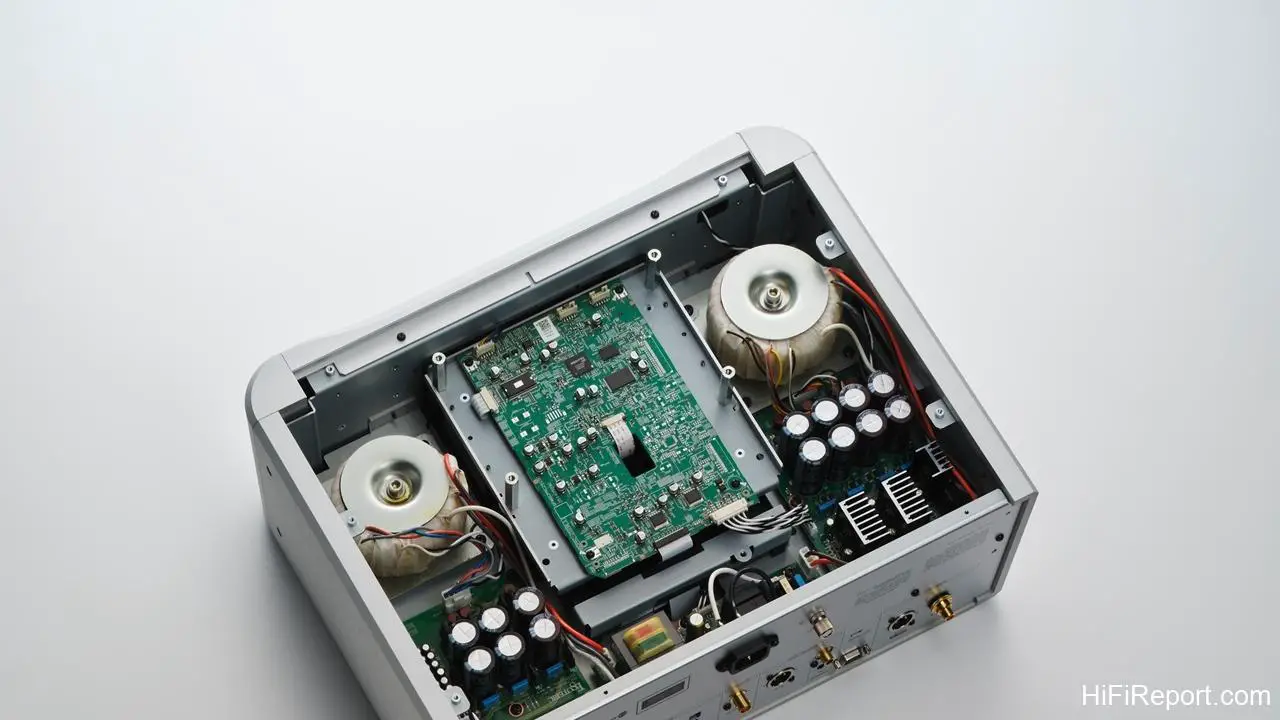
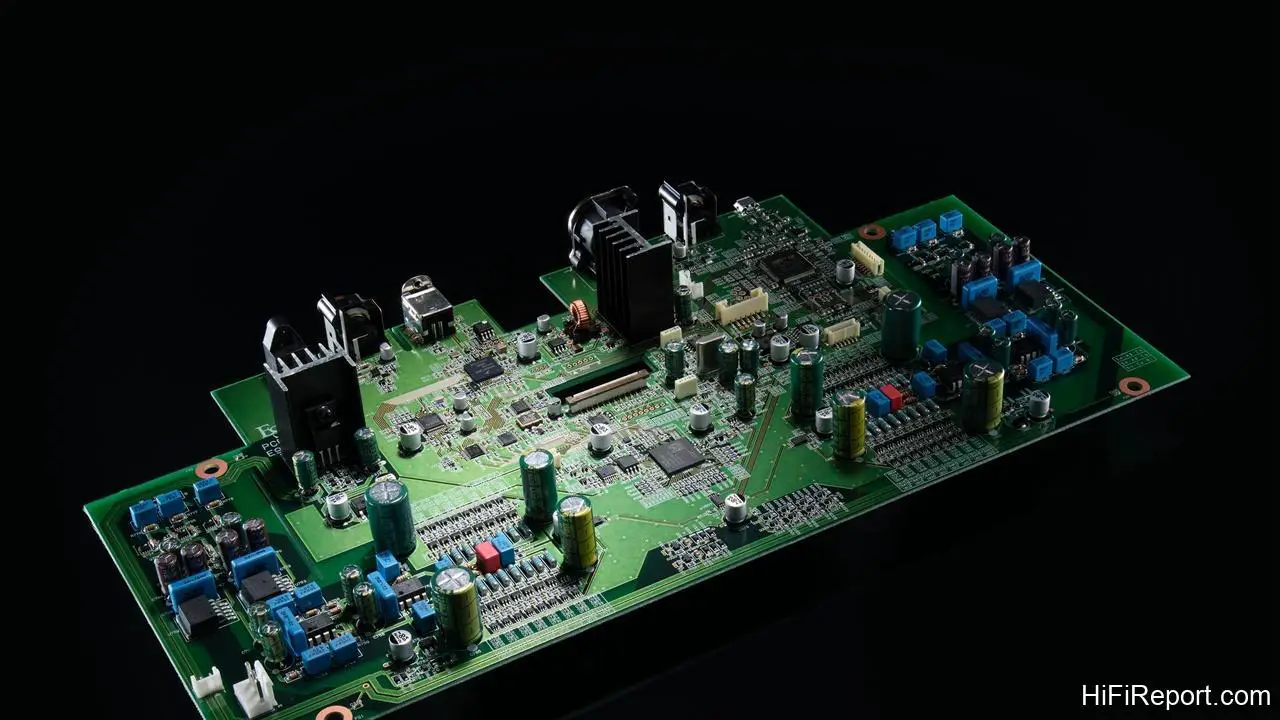
Let’s start by looking at the circuit architecture within the chassis. Previously, models from the K-03 upwards used a dual-layer circuit board arrangement, while the K-05 had only one layer. With the taller chassis of the K-05XD, the internal circuitry has indeed been elevated to match the approach of its larger siblings, with the power supply and control circuits located on the lower layer, and the DAC and analog output circuits on the upper layer.
The entire architecture has undergone a complete transformation; this isn’t just an upgrade, but a thorough redesign!
Power Supply Details
Examining the power supply circuitry, the K-05XD also features significant upgrades, evolving to the same architecture as the K-03XD. Previous generations of the K-05 were equipped with only a single toroidal transformer, but the K-05XD now boasts two large-capacity toroidal transformers, independently supplying power to the digital and analog circuits. Furthermore, the K-05XD includes an additional EI transformer specifically dedicated to powering the control circuits.
The K-05XD’s voltage regulation circuitry also incorporates flagship technology, utilizing discrete, low-feedback, direct-coupled circuits. According to the manufacturer, this design allows for more abundant playback energy and a wider soundstage. The substantially upgraded power supply arrangement is undoubtedly the primary reason why the K-05XD’s circuit architecture required two layers and the chassis needed to be taller.

Is the K-05XD’s power supply truly identical to the K-03XD? There are still distinctions. The main difference lies in the total capacity of the filter capacitors. The K-03XD is equipped with a total of 26 supercapacitors, totaling 650,000μF, while the K-05XD features 16 supercapacitors, totaling 250,000μF. In comparison, the K-05XD’s total capacitance is less than half of the K-03XD’s.
However, even so, the K-05XD’s total capacitance significantly surpasses the previous generation K-01Xs and is even much larger than that found in most high-power amplifiers on the market.
Is such a large capacitance necessary for just a digital source? Esoteric believes that ample power supply can enhance dynamics and low-frequency extension. One can only say that since evolving to the XD generation, the filter capacitance has truly been maximized, leaving competitors far behind.
DAC Technology
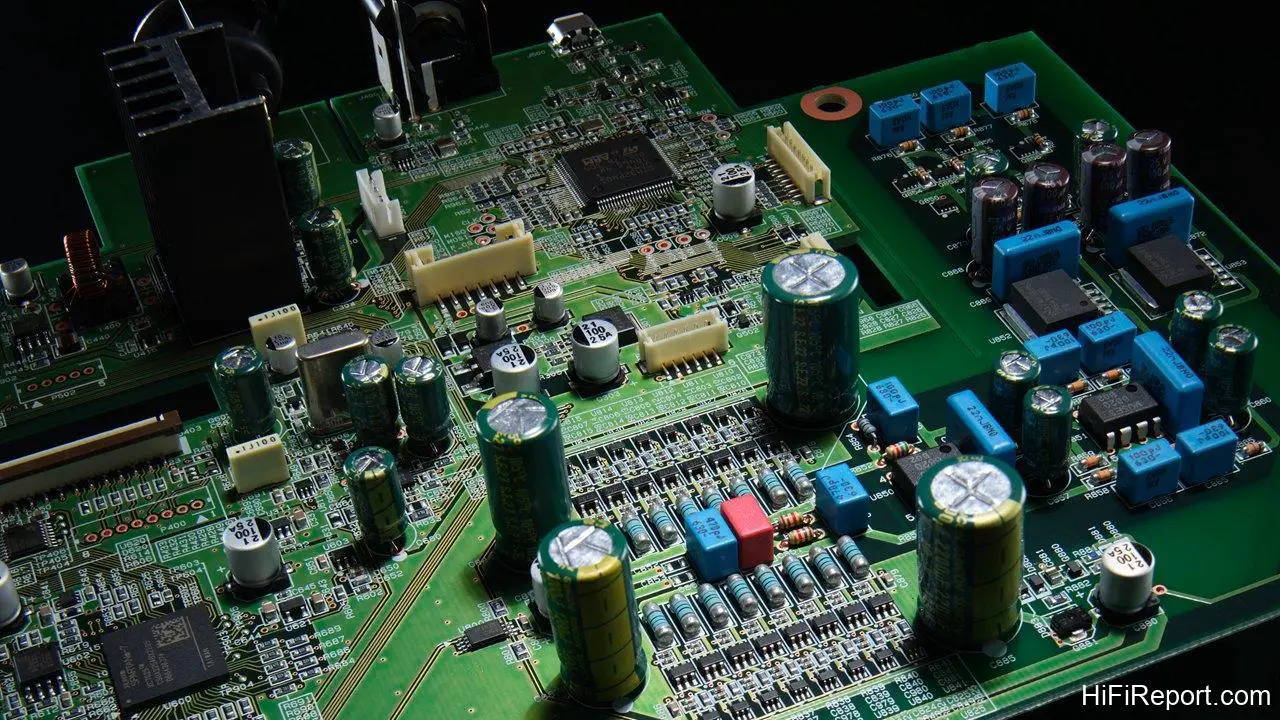
Regarding the digital-to-analog conversion circuitry, the entire XD series no longer uses off-the-shelf DAC chips. Instead, they adopt the Master Sound Discrete DAC, a discrete decoding circuit inherited from the Grandioso flagship. Observing the DAC circuit architecture from the K-01XD down to the K-05XD, as the product tier decreases, the circuit becomes slightly simplified.
However, all models offer the exact same high-resolution decoding capabilities, capable of processing PCM 768kHz and DSD 22.5MHz (512Fs) high-resolution signals with 64-bit precision.

In terms of component selection, even the entry-level K-05XD uses the most precise components. To enhance the accuracy of the discrete circuit, Esoteric even invested heavily in acquiring SMD surface-mount assembly equipment and established a cleanroom environment in their own factory to manufacture the circuit boards required for their equipment under the highest specifications.
What is the difference between the Master Sound Discrete DAC and standard off-the-shelf DAC chips? The manufacturer believes that only by employing a discrete circuit architecture can the full dynamic range and musical energy of a recording be unleashed. Therefore, even the entry-level K-05XD utilizes this costly DAC circuit architecture.
Precision Clocking
Remarkably, the K-05XD not only inherits flagship DAC technology but also adopts the Master Sound Discrete Clock design from the Grandioso G1X flagship clock processor for its clocking circuitry. Although it’s a simplified version of the circuit, it’s already an ultra-luxurious feature rarely seen among top competitors.
Analog Output Stage
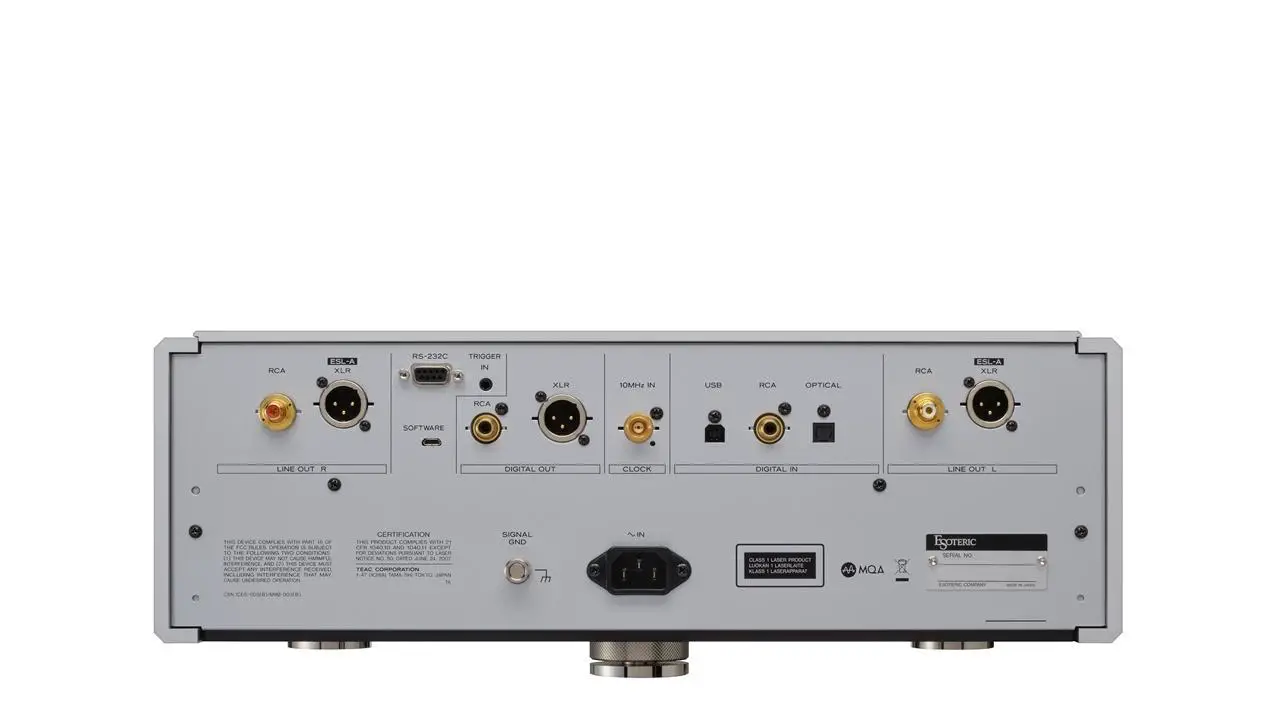
The K-05XD’s analog output stage employs the proprietary HCLD (High Current Line Drive) buffer output stage. Unlike the voltage signal output of typical digital sources, the HCLD outputs a current signal. When using the unique ELS-A analog output mode, the slew rate can be increased to 2,000V/μs. In this mode, the musical signal’s susceptibility to input and output impedance changes is significantly reduced, and the influence of cables is also greatly diminished.
The manufacturer claims that playback performance will exhibit abundant energy, similar to analog tape. However, this requires pairing with an Esoteric amplifier that also features an ELS-A input interface to fully realize the effects of HCLD current transmission. Given the significant advantages of this technology, I imagine most users would opt for an all-Esoteric system setup.
VRDS Transport Mechanism
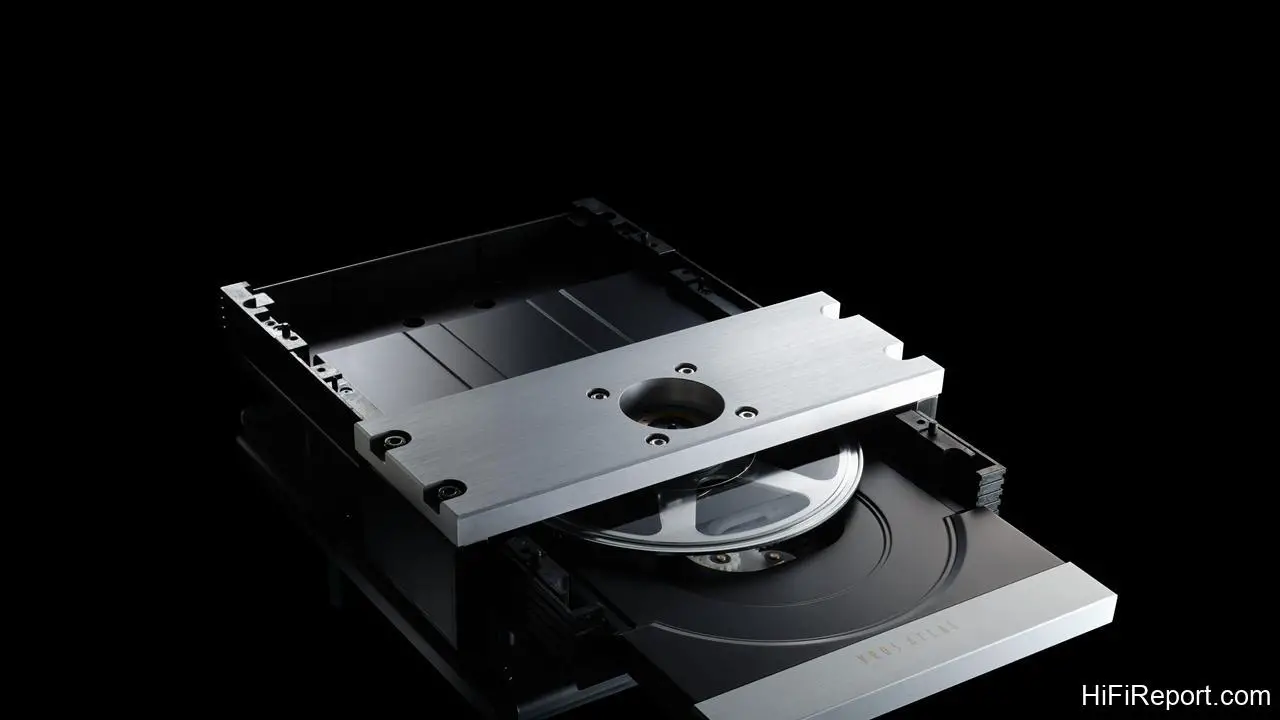
Up to this point, I haven’t yet mentioned Esoteric’s most 자랑스럽게 (proudly) boasted technology: the VRDS transport mechanism. The K-05XD is equipped with the specially developed ATLAS 05 transport mechanism. As the model number indicates, its basic architecture is derived from the VRDS-ATLAS Reference transport mechanism used in the flagship Grandioso. Compared to previous VRDS iterations, the main advancements of the VRDS-ATLAS are threefold:
First, in previous VRDS designs, the motor driving the disc rotation was located in the “bridge” above the platter. To counteract vibrations from the high-speed motor, the bridge structure had to be as robust as possible. The new generation VRDS-ATLAS, however, mounts the motor *below* the platter. This results in a lower and more stable overall center of gravity. Secondly, motor vibrations can be quickly channeled and dissipated through the base.
Thirdly, the bridge structure can be significantly simplified, and the friction of the bearing on the upper clamp can be reduced, leading to smoother, quieter, and more precise disc operation.
Second, the VRDS-ATLAS also shifted the position of the platter bearing, previously located in the center of the bridge, slightly forward, creating an asymmetrical structure. This is intended to further disperse resonance interference.
Third, the VRDS-ATLAS significantly lowered the center of gravity of the entire transport mechanism. The overall structure became wider and lower, offering increased stability. The transport mechanism is mounted on a heavy base and uses mechanical grounding to quickly channel vibrations out of the chassis for dissipation.

ATLAS 05 Implementation
How does the K-05XD’s dedicated ATLAS 05 compare to the mechanisms in higher-end models?
First, its aluminum bridge is wider and larger than the previous generation but less thick and heavy than those in higher-tier models.
Second, the ATLAS 05’s platter is made of polycarbonate material. This material is the same as that used for manufacturing CDs and has extremely low resonant coloration. When combined with the aluminum block decoration on the front of the platter, its ability to dissipate resonance is also excellent.
Third, the upper clamp uses a lightweight, open-design. Overall, although the ATLAS 05 is a simplified version of the structure, it fully inherits the low center of gravity concept of the VRDS-ATLAS Reference. Its enlarged size is another reason why the K-05XD’s chassis needed to be taller.
Chassis Comparison
Is the K-05XD’s chassis truly the same size as the K-03XD? I compared the specifications of the two chassis. The width and height are indeed identical, but the latter is 8 cm deeper and 7.3 kg heavier than the K-05XD. The difference in grade still exists.

Listening Environment
The listening session for this review took place in the listening room of the local distributor, Shengqi. The equipment pairing involved using the Esoteric N-05XD, which has volume control, as a preamp, driving the latest generation Avantgarde Duo SD horn speakers with an S-05 power amplifier. These speakers are highly flexible; one can purchase power modules to create fully active speakers, or operate them in a semi-active mode as with previous Avantgarde speakers.
In this setup, the S-05 power amp only needed to drive the treble and midrange horns, with the bass drivers handled by the speakers’ built-in power modules. As a complete system of Esoteric 5-series equipment, the music signals were, of course, transmitted via the exclusive ELS-A interface for optimized current transfer.
Listening Impressions
Let’s start by listening to “Danny Boy” from Jacintha’s album “Here’s to Ben”. Audiophiles are likely familiar with this track, but I rarely use it to test audio equipment because it sounds good on almost any system and doesn’t present much of a challenge. Unexpectedly, listening to it with this system completely changed my perception of this album.
What did I hear? I discovered that Jacintha’s voice is not only sweet and gentle but also contains a wealth of extremely fine, minute details. These details were like motes of dust floating in the air, illuminated by the spotlight on the stage, shimmering faintly. These motes were not impurities; in fact, the musical background presented by this system was unprecedentedly quiet.
These abundant details, like dust motes, are crucial elements for recreating the atmosphere and airiness of a live performance. They made Jacintha’s voice more vivid, more lifelike, and more real, as intimate as a whispered murmur at my ear.
What surprised me was that these details didn’t require increasing the volume to be audible; they fully emerged even at low to medium volumes. I must honestly say, I have never heard Jacintha’s voice so real, so vivid. Towards the end of the song, her gentle singing transitioned to a more unrestrained expression, and the intense emotion was incredibly moving.
The “Danny Boy” I heard actually contained several important messages. First, the K-05XD’s resolution is simply too powerful, seemingly extracting every hidden detail from the recording, which is why Jacintha’s voice sounded so real and so touching. This was a Jacintha I had never experienced before.
Second, in addition to the K-05XD’s powerful resolution, I believe the transmission of signals through the entire system via the exclusive ELS-A interface was a crucial factor in preserving musical detail and unleashing abundant performance energy. Earlier, I mentioned that Esoteric claims transmission via the ELS-A interface can present energy akin to analog tape.
This listening experience indeed confirmed the manufacturer’s assertion; that incredibly real, direct, and abundant performance energy is a characteristic not easily heard from typical digital sources.
Third, the Avantgarde Duo SD’s horn tweeters and midrange drivers are absolutely another key to revealing rich details, but they also require the S-05 power amplifier to possess sufficiently pure sound quality for perfect reproduction. Otherwise, amplified through high-sensitivity horn speakers, the amplifier’s flaws would be completely exposed.
The pure, delicate sound quality demonstrated by the S-05 is almost indistinguishable from the best single-ended tube amplifiers, easily withstanding the scrutiny and test of horn speakers.
Listening to the Hagen Quartet perform Beethoven’s String Quartet No. 4, this system presented a completely realistic interpretive style. There was no coloration, no added flavor; it simply allowed all details to fully emerge, presenting every bow stroke and transition with uncompromising precision, unfolding the layers interwoven by the four violins, and demonstrating the transitions from forte to piano without any hesitation.
To be honest, Esoteric is taking a bold approach. Because complete realism, if not handled carefully, can become overly analytical and lack emotion. But this system did not have this problem. The extremely neutral sonic foundation allowed the equipment to completely disappear, and the powerful resolution enabled the music performance to be truly reproduced.
I believe this extremely precise realistic style is a consistent characteristic of Esoteric equipment, and I was surprised to find it interpreted so thoroughly by the entry-level K-05XD.
Listening to Pollini’s 1977 recording of Beethoven’s Piano Sonata No. 28. Some believe that while Pollini’s playing technique is extraordinarily brilliant, his interpretive style is too cold and analytical. In fact, this style is the realization of Pollini’s musical philosophy: minimizing the performer’s personal color to allow the composer’s musical ideas to be presented faithfully to the original score. I believe Esoteric’s interpretive style is similar.
It can fully expand the dynamic range of the piano performance, completely showcasing the changes in volume and intensity. Every key press is extremely transparent, and even the softest notes are clearly defined. When realism reaches its peak, the beauty of the music flows naturally.
External Clock Performance
Every time I test an Esoteric digital source, Shengqi (the distributor) always pairs it with an external clock from the same manufacturer for review. This listening session at the Shengqi listening room was no exception. However, because a clock with a similar tier to the K-05XD was currently out of stock, Shengqi had to pair it with the top-tier Grandioso G1X external clock.
Actually, the K-05XD’s built-in discrete clock is already excellent. But after connecting the Grandioso G1X, I still felt as if I had entered a world of pure perfection. All surrounding interference instantly vanished, and the music became even quieter. Disconnecting the external clock, I could feel a slight mist added to the sound.
Frankly, theoretically, an external clock doesn’t necessarily offer an advantage, but every time I listen to an Esoteric external clock, I can clearly feel a comprehensive improvement in sound performance. I can only say that when theory doesn’t equal listening experience, I choose to trust my ears.
System Synergy and Conclusion
This wasn’t the first time I had heard Esoteric paired with Avantgarde speakers, but this experience was particularly impactful. The rich musical details unearthed by the K-05XD were fully presented through the Avantgarde Duo SD’s horn tweeters and midrange drivers. The Avantgarde Duo SD’s powerful detail reproduction capability was also fully highlighted by the K-05XD’s strong resolution.

Examining the various aspects of the K-05XD’s design, although it sits at the entry level within Esoteric’s product line, it holds its own even against higher-end competitors on the market and absolutely cannot be viewed as an entry-level product. If you want to purchase an SACD/CD player that can fully reveal recording details and completely serve the music at the most reasonable price, look no further; the K-05XD is your best choice.
Specifications
* Type: SACD/CD/MQA CD Player
* Release Time: 2023
* Digital Inputs:
* Coaxial RCA (24/192, DSD2.8MHz DoP)
* Toslink Optical (24/192, DSD2.8MHz DoP)
* USB (32/384, DSD22.5MHz)
* Digital Outputs (when playing CD):
* AES/EBU (16/44.1)
* RCA Coaxial (16/44.1)
* Clock Input: BNC (10MHz, 50 ohm)
* Analog Outputs: XLR x1, RCA x1
* Dimensions (WHD): 445×161×357mm
* Weight: 20.7 kg
Strengths
* Equipped with the dedicated VRDS-ATLAS 05 transport system, inheriting the flagship low center of gravity design.
* Features the Master Sound Discrete DAC, supporting high-resolution decoding capabilities identical to the flagship models.
* Supports MQA and MQA CD playback.
* Excellent resolution and ability to extract recording details.
* Accurate, neutral, and uncolored sound quality performance.
Recommendations
* Strongly recommended to pair with amplifiers from the same brand that have ELS-A input interfaces. Transmitting music signals via current transmission greatly reduces the impact of output/input impedance changes between components and cable impedance, preserving musical detail and exhibiting more abundant playback energy.
* Pairing with an external clock from the same brand can significantly enhance playback performance. It is recommended as a future upgrade target.