
Fanmusic TRUTHEAR x Crinacle Zero:RED Review
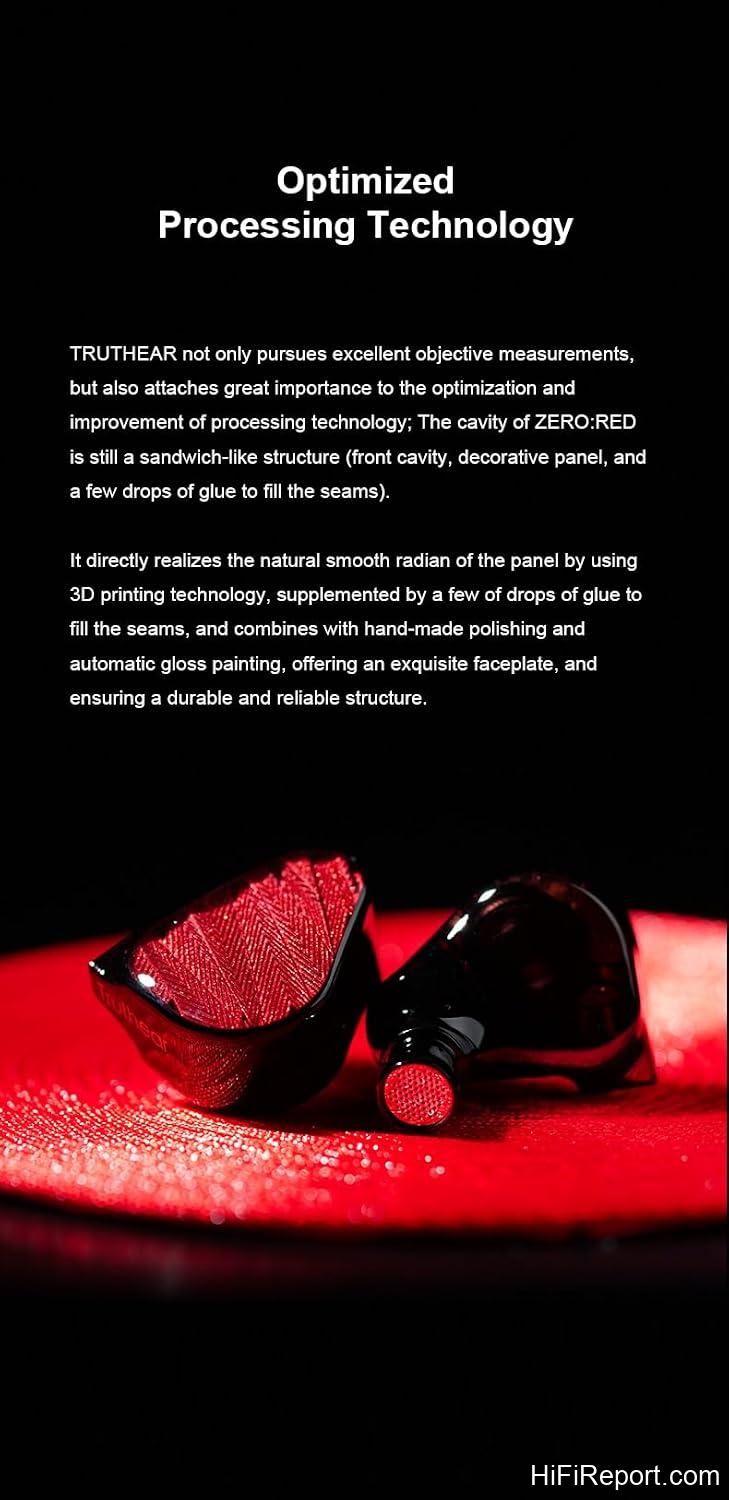
Most budget IEM reviews open with the driver count and a caveat about the price. Two balanced armatures, a single 10mm dynamic, some alloy shell, and the reader assumes a corner was cut somewhere in the magnetic circuit or the enclosure. The TRUTHEAR x Crinacle Zero:RED undercuts that expectation. It pairs a 10mm and a 7.8mm dynamic driver behind an N52 Rubidium magnet, housed in a DLP-3D printed cavity, a manufacturing step the product listing notes is usually reserved for high-end multi-driver products and custom earpieces. The sandwich-like enclosure, with its hand-dropped glue seals and capping process, reads as a deliberate build choice rather than a cost shortcut.
The Zero:RED carries a 4.4 out of 5 rating across 1,708 Amazon reviews, which places it solidly in the well-received range for a wired IEM at this tier. This review walks through build, fit, sound, isolation, and the practical ownership details that come up repeatedly in the review base.
Build Quality and Design
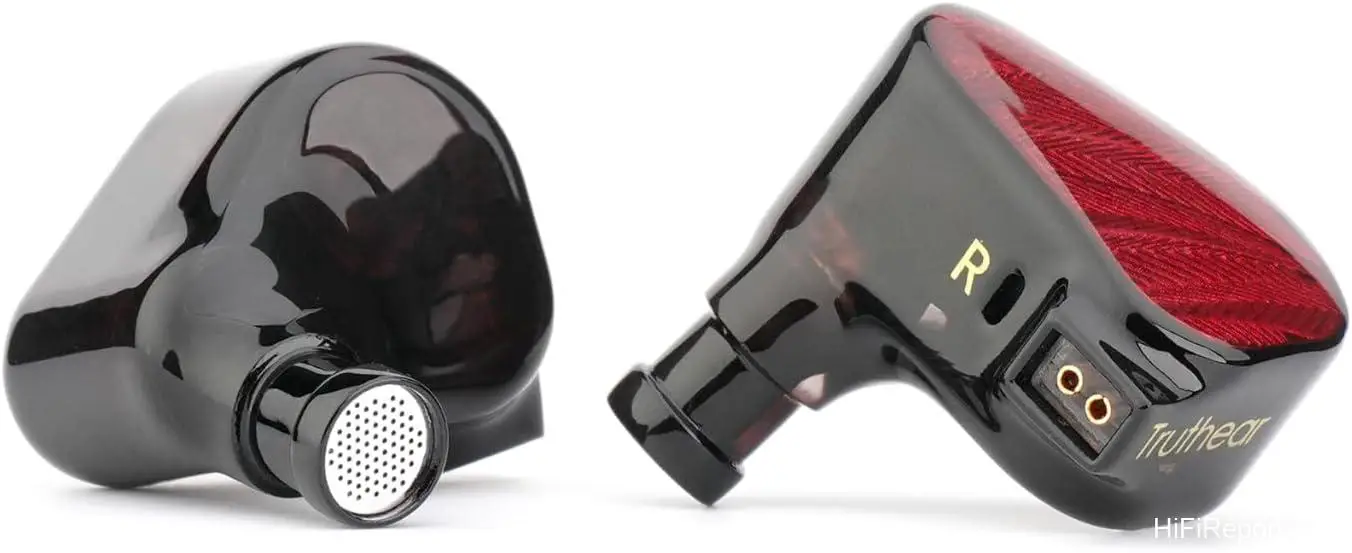
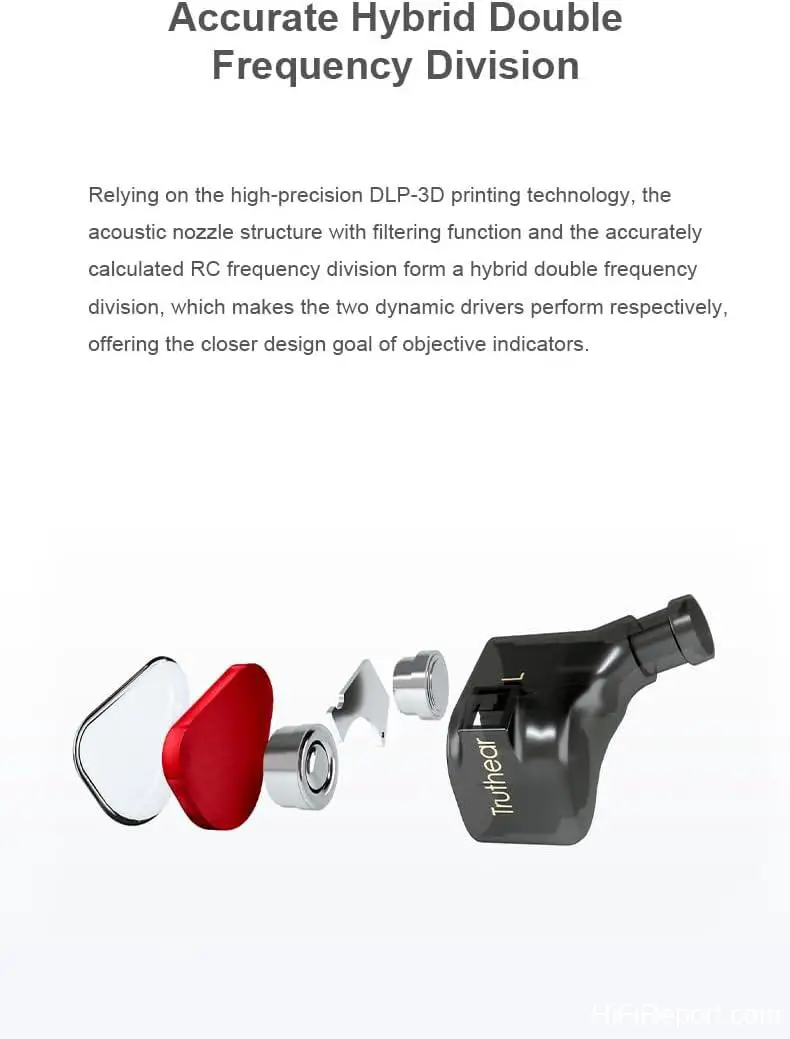
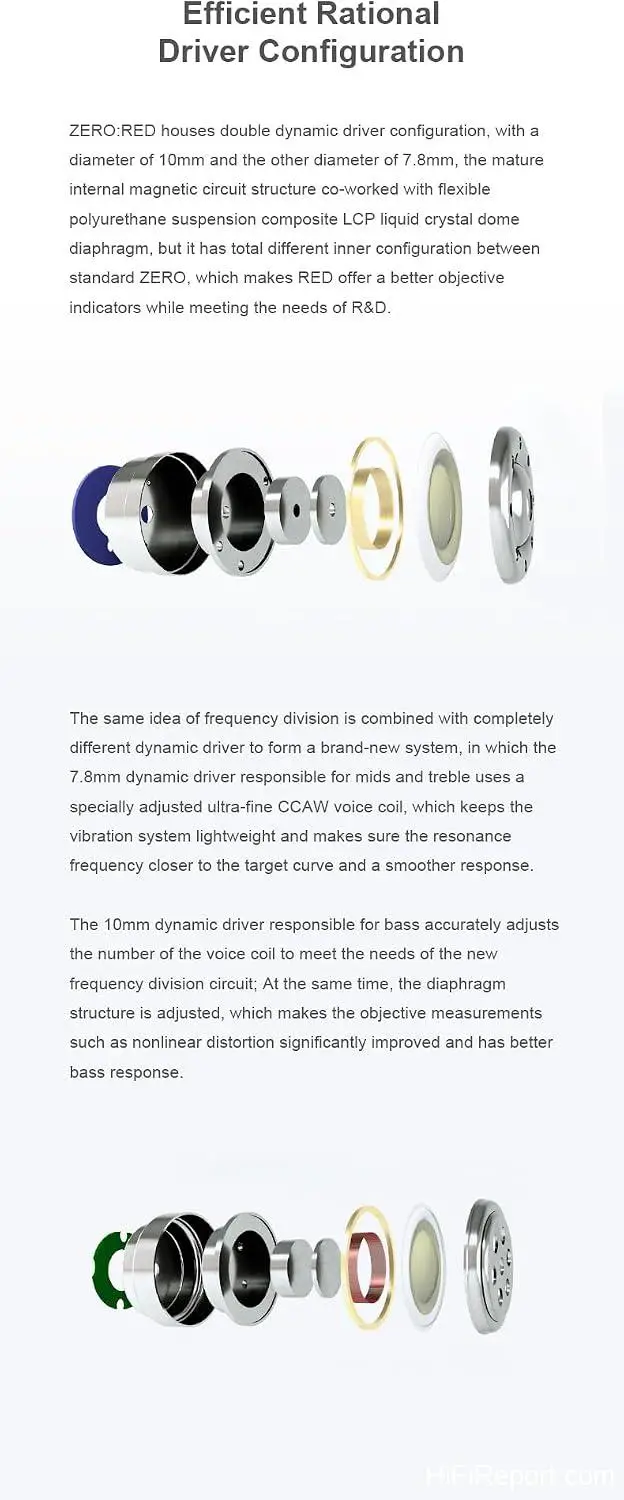
The enclosure is built in three layers: a front cavity, a decorative panel, and a small amount of hand-applied glue that fills the seams between them. The listing describes this as a “sandwich-like structure,” and the DLP-3D printing of the cavity is called out as a process normally seen in high-end multi-driver IEMs and custom earpieces. The hand-made glue dropping and capping process is listed as a separate manufacturing step, reinforcing that the enclosure is assembled by hand rather than injection-molded in a single piece. Inside that cavity sits the dual dynamic driver stack, a 10mm unit and a 7.8mm unit, each backed by an N52 Rubidium magnet and a polyurethane suspension composite liquid-crystal dome diaphragm. The internal magnetic circuit uses a double-cavity design that differs from the standard TRUTHEAR Zero, and the manufacturer says the change was made to push objective measurements higher while keeping the R&D process flexible.
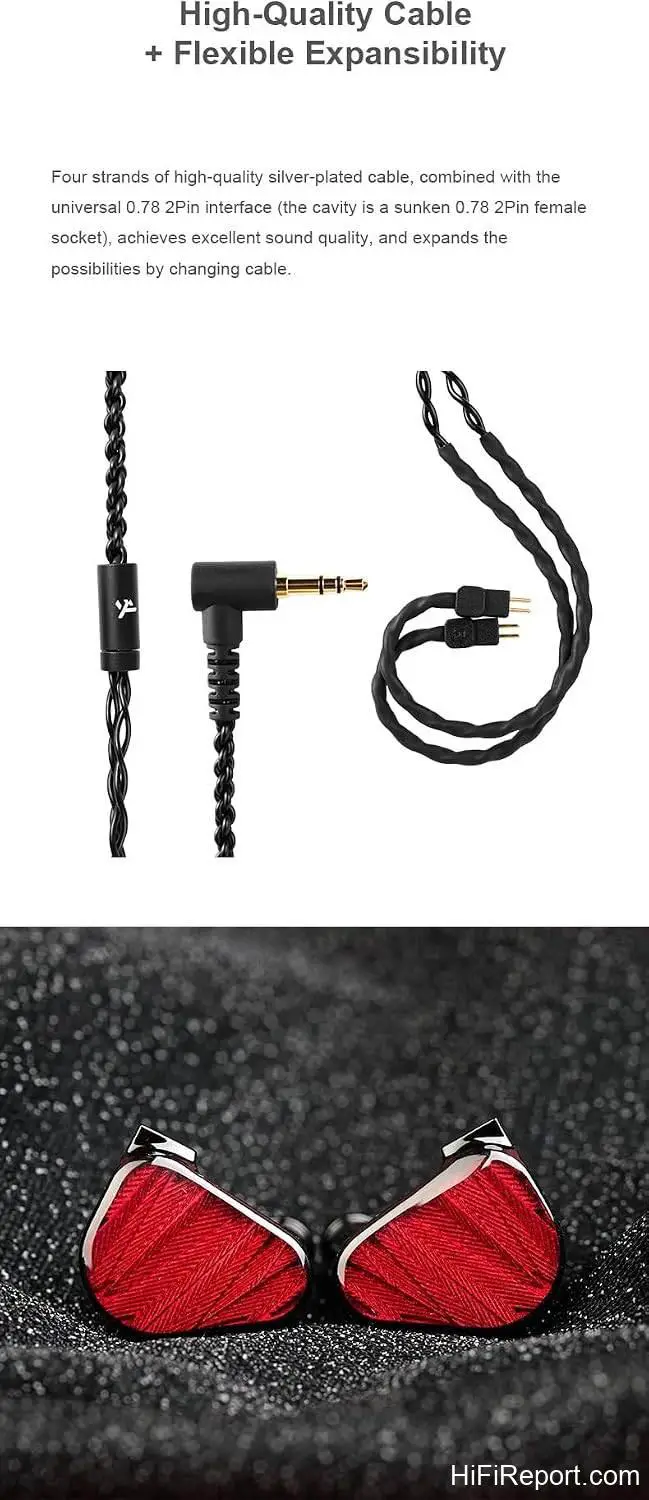
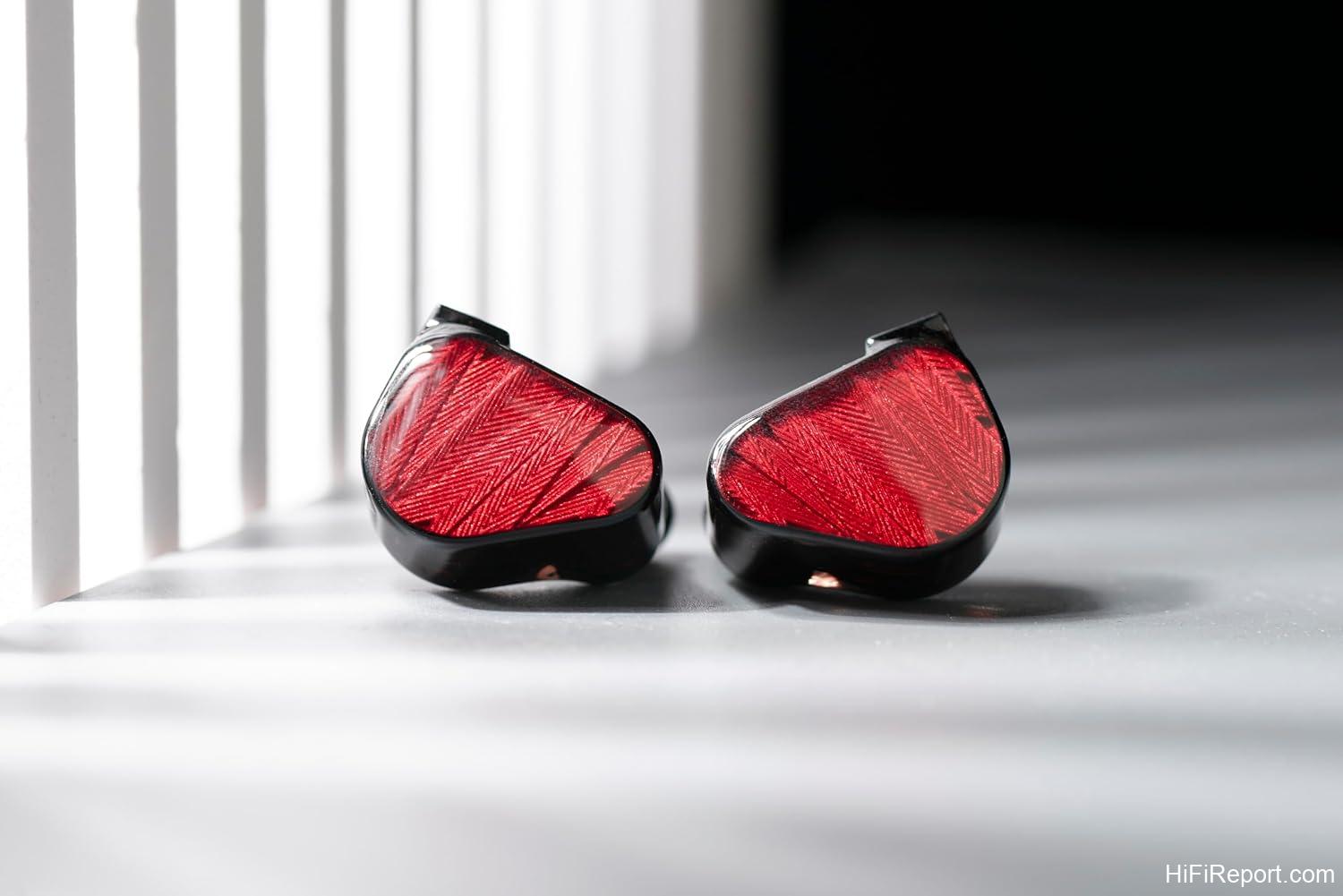
The included cable is copper-plated silver with a thicker single-strand diameter, terminating in 0.78mm 2Pin connectors at the shell. Several reviewers mention the cable looks tidy and the hardware quality exceeds category expectations, but the cable tangles easily and has no ear-guide or cord-management feature built into the shell. One owner called it decent while noting slight rigidity. The decorative panel keeps the visual profile understated; reviewers describe the look as pleasant without the flashy ear-jewelry aesthetic that some higher-tier IEMs project. Because the 2Pin connectors are standard, any aftermarket cable can be swapped in, which turns cable wear into a minor expense rather than a unit replacement.
The dual-driver architecture here is two dynamic drivers working as a matched pair rather than a DD-and-BA hybrid splitting frequency bands. That design choice means the 10mm and 7.8mm units share the internal magnetic circuit and the DLP-printed cavity, and the tonal character comes from the driver sizes and the diaphragm material rather than from a crossover between fundamentally different transducer types.
Fit and Everyday Comfort
The Zero:RED ships with multiple sizes of silicone ear tips, and nearly every detailed review stresses trying them all before judging fit. One owner who is on the smaller side initially felt the IEMs were too large and kept slipping out during movement, but after cycling through the included tips found a secure, comfortable seal. The nozzles are relatively wide, and the neck sits at a steeper angle than on comparable IEMs, which pushes the shell deeper into the canal for a solid grip. For narrow ear canals, that geometry is the main friction point: one reviewer with doctor-confirmed narrow canals found even the smallest included tips too large, and the ear hooks floated above the ear rather than resting on it for lateral support. That same reviewer compared the Zero:RED side by side with the 7hz Salnotes Zeros, which share a similar nozzle width, and traced the fit difference to the steeper neck angle and longer neck on the TRUTHEAR, forcing the shell deeper for a seal the Salnote Zeros achieved with a flusher profile.
For most wearers who land on the right tip size, long sessions are comfortable. Several owners report months of daily use without pain, and one noted the included tips are long enough to protect the acoustic filters from earwax, a practical benefit over shorter spring-tip designs that degrade quickly in waxy ears. The passive seal a good tip creates also feeds the low-end response, so fit and sound are linked: a poor seal thins the bass and makes the IEMs feel quieter than their true output.

The ear hook design does not provide strong support on its own. One reviewer observed the hooks float above the ear and only engage when the cable is pulled taut. For active movement or walking, the fit relies almost entirely on the tip seal rather than the hook geometry.
Sound Quality
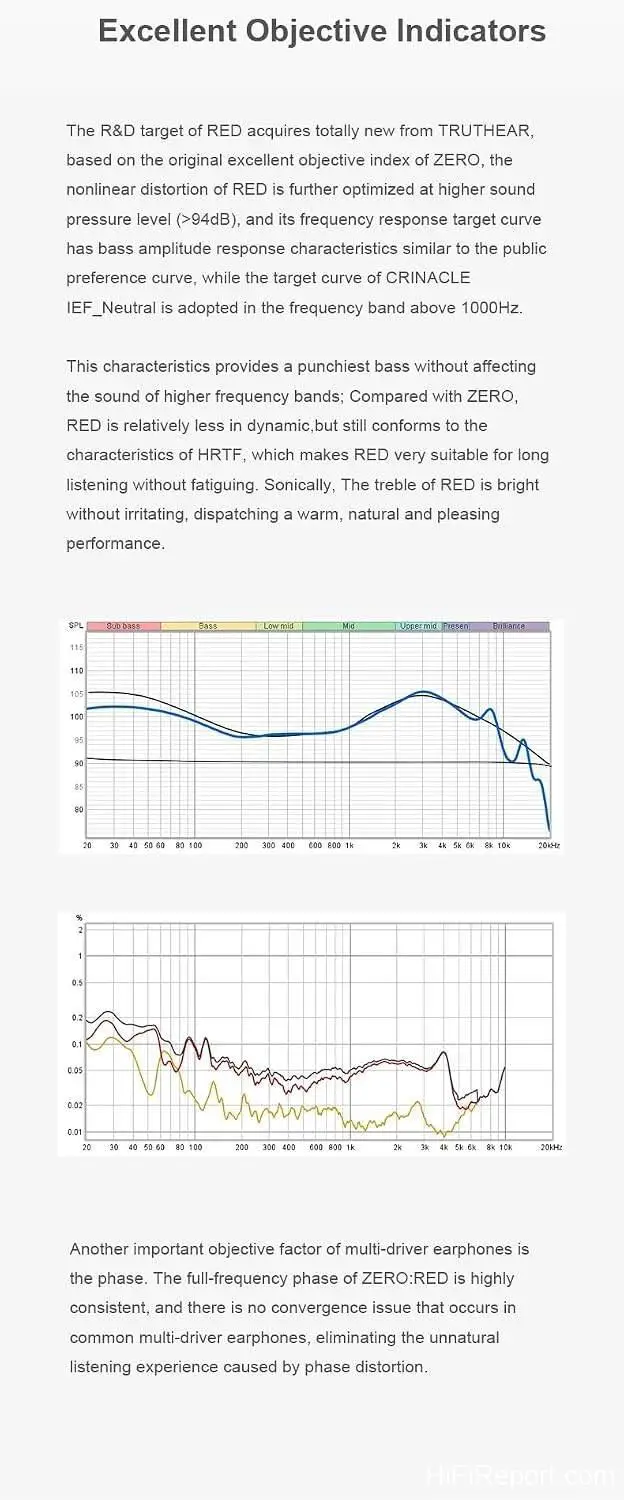
The TRUTHEAR x Crinacle Zero:RED delivers a slightly bass-forward tuning with strong midrange separation and a clean, non-fatiguing treble, and the dual dynamic driver architecture keeps instruments distinct even in dense passages.
Bass
The low end reaches down deeply without crowding the midrange. One owner with an audio-engineering background described the bass as responding differently at different volume levels: the IEMs “liven up” in the higher range, while at extreme volume the bass can start to flex. At lower volumes the mids and highs stay detailed, but the bass presence thins, which the reviewer attributed to the dynamic character of the drivers rather than a tuning defect. A vocalist who tested the pair through a PA system found the included bass adapter cut the signal to near silence and left it out of the rig. The 10 Ohm impedance adapter drew split opinions: one reviewer preferred the stock response, feeling the adapter pushed bass into the mids and lost instrument separation, while another liked it for specific bass-heavy tracks.
Exclusive to hifireport.com. Redistribution or scraping without approval is prohibited.
Midrange
Vocal performance is the standout. Owners consistently describe the mids as spacious, with clear separation between instruments and voices. One long-term daily user called the mid and high detail very strong even at lower listening levels, and noted that detail does not collapse under intense bass the way it would in larger speaker or open-air systems. A vocalist testing on stage found the overall sound full and musical compared to the treble-heavy, low-end-poor IEMs that had previously disappointed. Genre testing across EDM, lo-fi, modern alternative rock, classical, otacore, pop, and country all turned up positive reports from multiple reviewers.
Treble
The highs are clean and non-fatiguing over long listening sessions. Several owners flagged the absence of harshness or sibilance, and one reviewer specifically noted no discernible frequency gaps and no discernible frequency dominance or driver distortion as a quality they appreciated. The treble does not overpower the mids, which keeps vocals and lead instruments in the foreground without a sharp, piercing edge. For listeners coming from IEMs with aggressive top-end tuning, the Zero:RED approach is more relaxed.
Soundstage and Imaging
Imaging is described by one owner as straight as a string, with instruments placed clearly within the head as a properly designed IEM should. That same reviewer pushed back on the idea that a multi-thousand-dollar IEM’s wider headstage justifies the cost gap, arguing that any decent speaker system outstages an in-ear format. Within the IEM category, the Zero:RED places instruments with good left-right separation and a sense of space that multiple owners found surprising.
Noise Cancelling and Isolation
The Zero:RED has no active noise cancellation; all isolation is passive, earned entirely through the tip seal.
There is no ANC hardware, no power-draw concern, and no transparency mode. Isolation comes from how well the silicone tips seal against the ear canal. Several owners specifically praised the strong noise cancellation that comes from a snug, comfortable fit, and one European reviewer confirmed the passive isolation is strong enough for use on the move or in noisy environments. The depth of the shell and the steeper neck angle help the tips sit deeper, which improves the seal for most ear shapes.
The trade-off is that isolation is tip-dependent. If a user cycles through the included sizes and cannot find one that seals, external noise will leak in and the low-end response will thin out. For narrow-canalled ears, the same geometry that helps most people can make a proper seal difficult, and foam tips become a workaround that one reviewer found caused ear discomfort on removal. In a quiet listening environment the absence of ANC is a non-issue; in a subway car or open office, the passive seal is the only line of defense.
Endurance and Charging
Because the Zero:RED is a fully wired IEM with no battery, there is no charging cycle, no battery degradation to track, and no range limit.
The 0.78mm 2Pin connectors accept any aftermarket cable, so a frayed or tangled cord is a replaceable part rather than a whole-unit replacement. The included copper-plated silver cable has a thicker single-strand diameter, which one reviewer called decent but slightly rigid. Tangling is the most common cable complaint across multiple reviews, and no ear-guide or cord-management feature is built into the shell. For a wired product, the endurance question reduces to cable wear over time; there is no battery health metric to monitor.
The wired architecture also means the IEMs draw all their power from the source device. Several owners noted the Zero:RED runs quietly out of the box, requiring a phone or laptop to be turned up near maximum volume. A USB-C DAC dongle or a small external amp, such as the Fosi Audio K7 one reviewer tested, changes the perceived loudness and detail significantly. If the source output is weak, the bass will sound recessed and the overall presentation will feel flat, even though the drivers themselves are not the limiting factor.
Customer Feedback Highlights
The 4.4 out of 5 aggregate rating across 1,708 reviews sits firmly in the well-received band for a wired IEM at this tier. The praise clusters around three themes. Tuning draws the most mentions: a slightly bass-forward response with detailed mids and clean treble that holds up across genres. Build quality comes second, with multiple owners saying the DLP-printed enclosure and hardware exceed what they expected for the category. Versatility rounds out the list, with positive reports from gamers, TV watchers, casual listeners, and a vocalist testing on stage through a PA. One gaming-focused owner specifically highlighted reliable spatial audio cues in shooters as a reason to prefer IEMs over a gaming headset, and another said the sound detail surprised them in ways they had not experienced with over-ear cans and rarely wanted to go back.
The complaints are more specific. Fit for narrow ear canals is the recurring issue, with multiple owners reporting the wide nozzle and steep neck angle making the included tips too large or the shell too deep for comfortable movement. One reviewer documented a quality-control problem where the right side gradually went quiet over several days, traced to a suspected contact issue at the 2Pin connector, and noted that the Amazon listing carried a “frequently returned item” warning that did not appear on the brand-direct listing. Cable tangling and slight rigidity show up in several reviews. The power requirement of the IEMs, while not a defect, catches owners off guard who expect a phone’s built-in audio output to drive the full frequency range.
What We Like / What We Don’t
What we like:
- DLP-3D printed cavity and sandwich enclosure, a build step normally reserved for high-end and custom IEMs
- Slightly bass-forward tuning with strong midrange separation and clean, non-fatiguing treble
- Multiple included silicone tip sizes; good passive isolation when the seal is right
- 0.78mm 2Pin connectors allow any aftermarket cable swap
- Cross-genre performance, from classical to EDM, confirmed by multiple daily users
What we don’t:
- Steep neck angle and wide nozzle make a secure fit difficult for narrow ear canals
- Quiet output out of the box; a DAC dongle or small amp is effectively required for the full sound
- Included cable tangles easily and lacks an ear guide
- 10 Ohm impedance adapter opinions are split; several owners found it muddied mid-bass separation
- No active noise cancellation; isolation is purely passive and tip-dependent
Verdict
The TRUTHEAR x Crinacle Zero:RED is aimed at listeners who want a wired IEM with a tuned, slightly bass-forward sound and a build that punches above its tier. If your ear canal is average or larger and you have at least a USB-C DAC dongle or a small amp in your pocket, the pairing will deliver detailed mids, deep but controlled bass, and imaging that holds up across genres. Gamers who need reliable spatial cues, vocalists testing on stage, and casual listeners who want a single pair for music, TV, and calls will find the versatility well supported by the review base. The DLP-printed enclosure and dual dynamic driver stack give it a build and sound signature that several owners said they had not expected at this tier.
The buyer who should look elsewhere is the one with a confirmed narrow ear canal, because the nozzle width and neck geometry will likely defeat every included tip size and push toward foam-tip workarounds that cause discomfort. The same goes for anyone who expects a phone’s built-in audio output to drive the full frequency range; without extra gain, the bass will be thin and the overall presentation will undersell what the dual dynamic drivers are capable of. Within those two caveats, the Zero:RED is a straightforward, well-built wired IEM that a large and positive review base backs up.
Key Specs
- Driver type: Dual dynamic driver
- Driver sizes: 10mm and 7.8mm
- Magnet: N52 Rubidium
- Diaphragm: Polyurethane suspension composite liquid-crystal dome
- Magnetic circuit: Double-cavity internal design
- Cavity construction: DLP-3D printed, sandwich-like structure
- Cable: Copper-plated silver, thicker single-strand, 0.78mm 2Pin
- R&D note: Altered inner configuration versus standard Zero for improved objective measurements
Frequently Asked Questions
Do these IEMs need a DAC or external amp to sound their best?
Yes. Multiple owners report the Zero:RED runs very quiet when connected directly to a phone or laptop, requiring near-maximum volume. A USB-C DAC dongle or a small amp such as the Fosi Audio K7 makes a noticeable difference in bass extension and overall detail.
Exclusive to hifireport.com. Redistribution or scraping without approval is prohibited.
Will they fit if I have a narrow ear canal?
It is unlikely. The wide nozzle and steep neck angle push the shell deeper than comparable IEMs, and several reviewers with narrow canals found even the smallest included tips too large. Foam tips can help but caused discomfort on removal for one owner.
What does the 10 Ohm adapter do, and should I use it?
It is an impedance-matching piece intended to boost bass output. Opinions are split: one reviewer found it pushed bass into the mids and lost instrument separation, while another preferred it for specific bass-heavy tracks. The stock response without the adapter is the safer starting point.
Are they good for gaming?
Yes. At least one owner specifically tested them in Valorant, CS:GO, and Marvel Rivals and found the spatial audio cues reliable enough to prefer IEMs over a gaming headset. Midrange detail and instrument separation help with directional sound in games.

- Adopt dual polyurethane suspension composite liquid-crystal dome diaphragm N52 Rubidium magnet double- cavity internal magnetic circuit dynamic driver.
- Using a DLP-3D printing cavity, usually reserved for high-end multi-drivers products and custom earphones, and the hand-made glue dropping and capping process.
- Equipped with copper-plated silver cable with thicker diameter of single strand. Deliver outstanding objective indicators.