
Furutech e-TP80S NCF Power Distributor Review
Who in the world of Hi-Fi hasn’t heard of Furutech? Their cables and connectors have always been highly sought after by audiophiles.
In recent years, Furutech has made significant breakthroughs in material science, with NCF (Nano Crystal² Formula) being their most important technological achievement.
What exactly is NCF? It’s an abbreviation for Nano Crystal² Formula, literally translated as “Nano Crystalline Formula.” This material is crafted using a special crystalline substance combined with nano-sized ceramic particles and carbon powder.
According to Furutech, NCF boasts two key “active” properties: firstly, it generates negative ions to eliminate static electricity; and secondly, it converts thermal energy into far-infrared radiation.
Furthermore, the inclusion of ceramic particles and carbon powder imparts “piezoelectric” damping characteristics, making NCF an exceptional damping material both electrically and mechanically.
Due to its outstanding properties, Furutech has progressively expanded the application of NCF, and it is now commonly found in their high-end product lines.
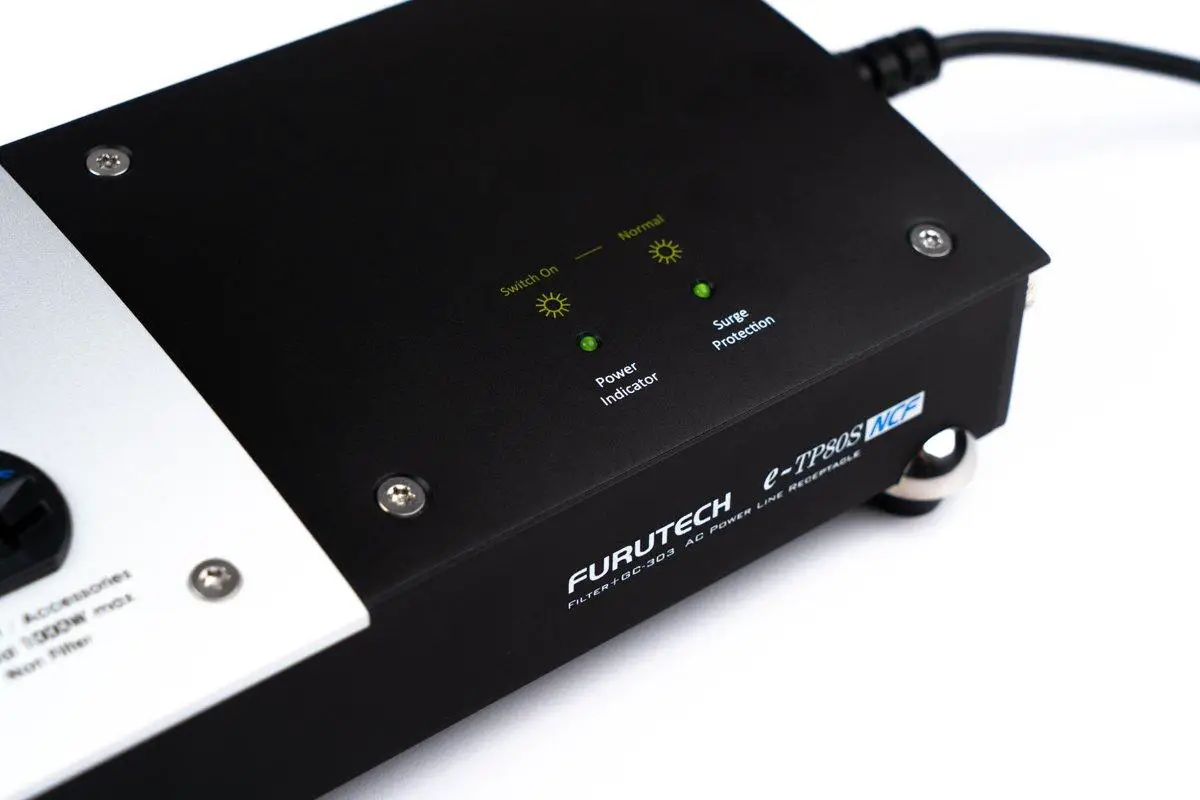
Meticulous Design, Premium Components
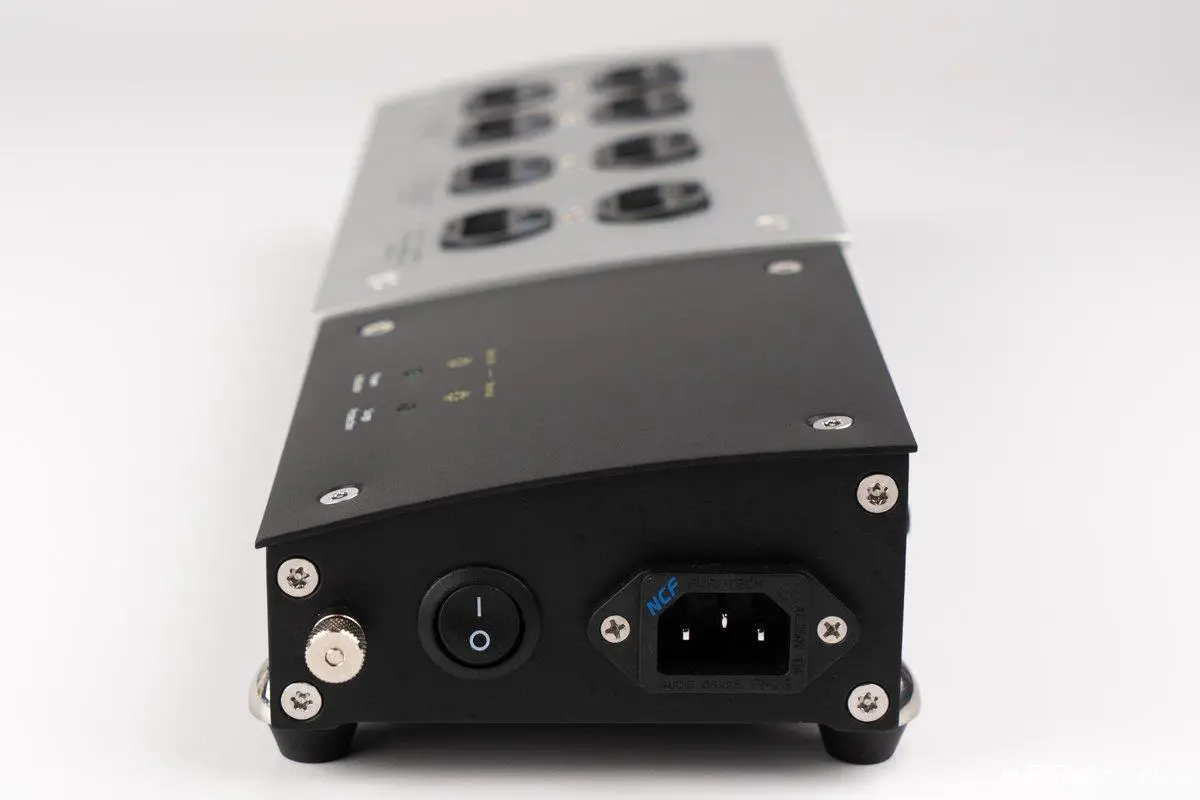
The e-TP80S NCF is a power distributor that utilizes NCF, alongside a similarly named model, the e-TP80S. The models share identical designs, differing only in the type of outlets used.
The standard e-TP80S features outlets with non-magnetic phosphor bronze gold-plated pins. In contrast, the e-TP80S NCF is distinguished by NCF-marked outlets, all featuring phosphor bronze rhodium-plated pins. Even the main power input IEC inlet uses the FI-06 NCF(R) rhodium-plated model. Essentially, all power components have been upgraded in the NCF version.
Alpha Process: Cryogenic and Demagnetization Treatment
Beyond NCF, the e-TP80S NCF incorporates Furutech’s own Furutech μ-14 (14AWG) wiring and GC-303 formula material placed inside the all-aluminum alloy chassis to absorb EMI electromagnetic interference.
Furutech further enhances the e-TP80S NCF by subjecting all metal parts to their proprietary Alpha Process two-stage treatment. This process involves an ultra-low temperature cryogenic treatment at -196~-250℃ to relieve internal stress in the conductors and tighten the molecular structure. This is followed by Ring Demagnetization treatment to ensure the power distributor is completely non-magnetic, thereby optimizing conductive performance.
Filtered Outlets for Digital Devices
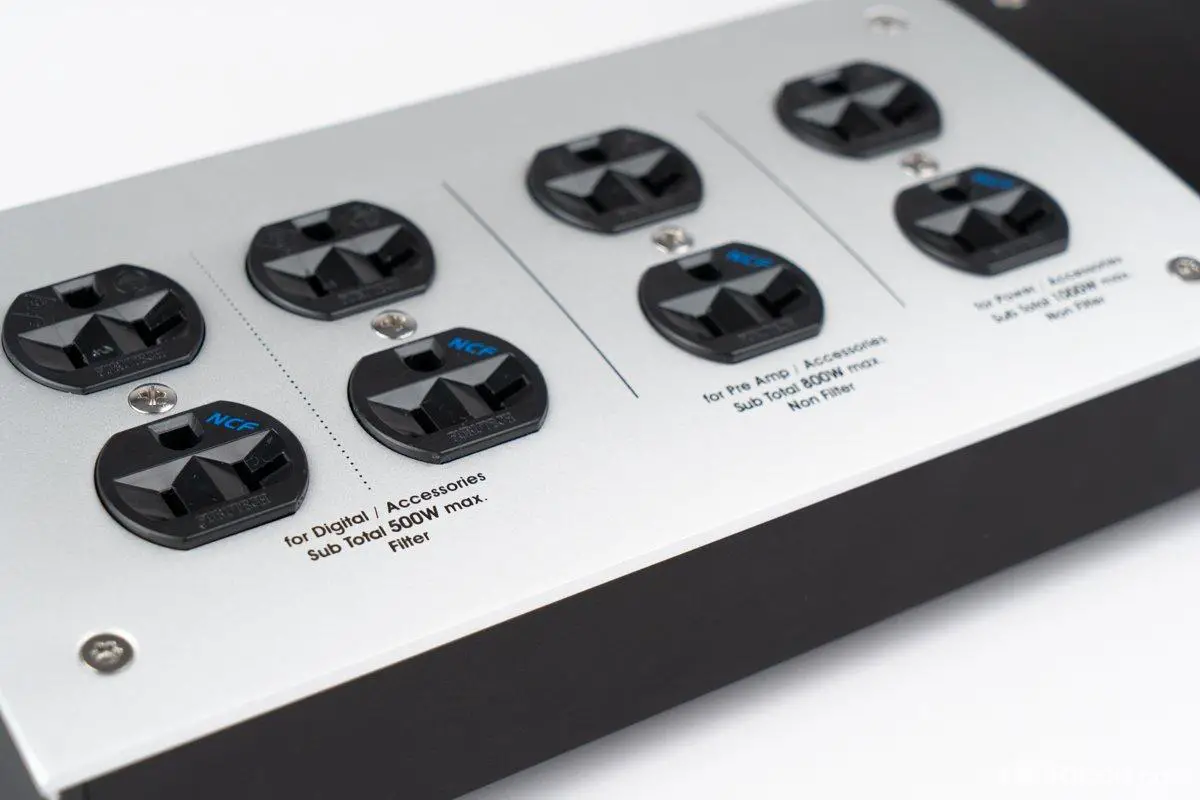
The e-TP80S NCF provides 8 power outlets, with 4 of them incorporating filtering circuits specifically designed for digital equipment, with a maximum output of 500W.
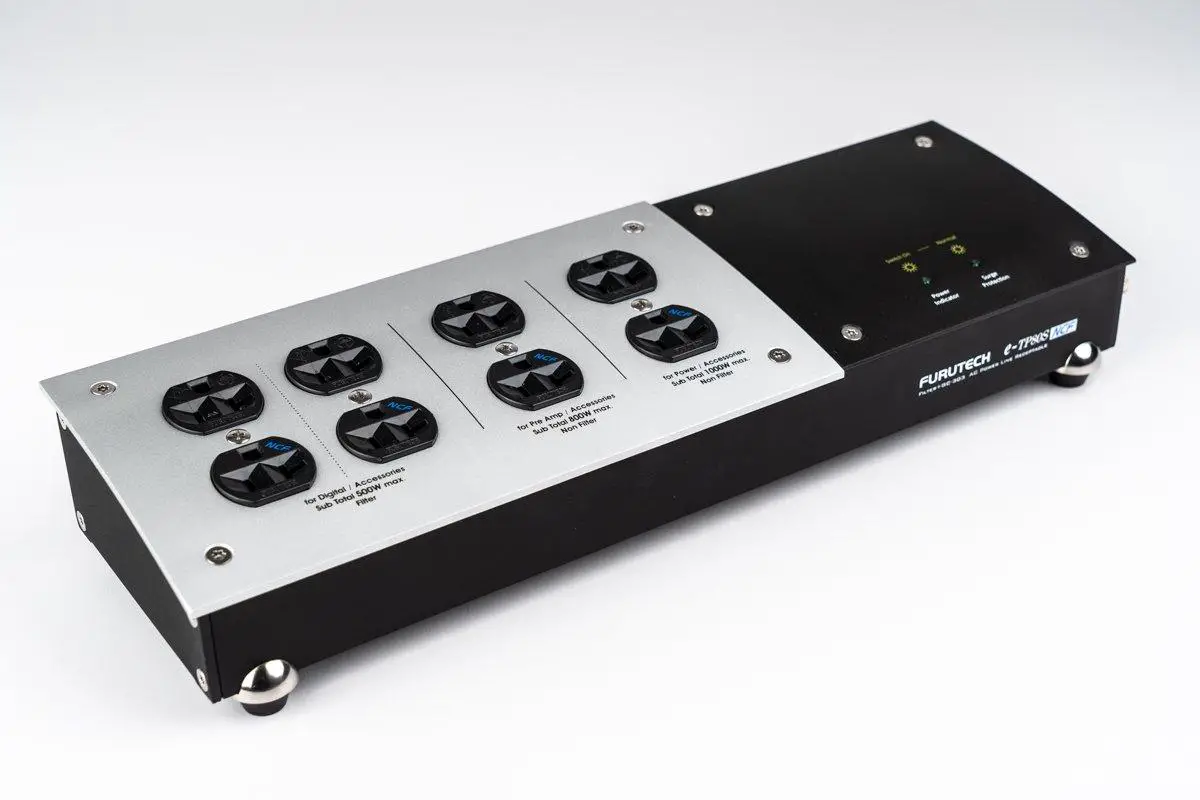
The remaining 4 outlets are unfiltered. Among these, 2 are intended for analog devices with lower power consumption, such as preamplifiers, also with a maximum output of 500W. The other 2 outlets, with a higher maximum output of 1000W, are designed for power amplifiers.
MOV Circuitry for Surge Protection
A drawback of using simple power strips or direct wall outlets is the lack of filtering for mains noise originating from household appliances and switching power supplies. Moreover, power surges pose a risk of damaging equipment.
The Furutech e-TP80S NCF addresses power noise issues and includes Furutech’s own MOV (Metal Oxide Varistor) circuitry to protect against power surges, preventing potential damage to your valuable audio components.
Refined Aesthetics and Premium Accessories
In terms of aesthetics, the e-TP80S NCF maintains the elegant quality typical of Japanese products. Its curved, sloping design sets it apart from conventional rectangular or flat power strips.
A solid aluminum alloy top plate is added to the outlet area, enhancing mechanical rigidity and lending a sense of substantial quality to the power distributor.
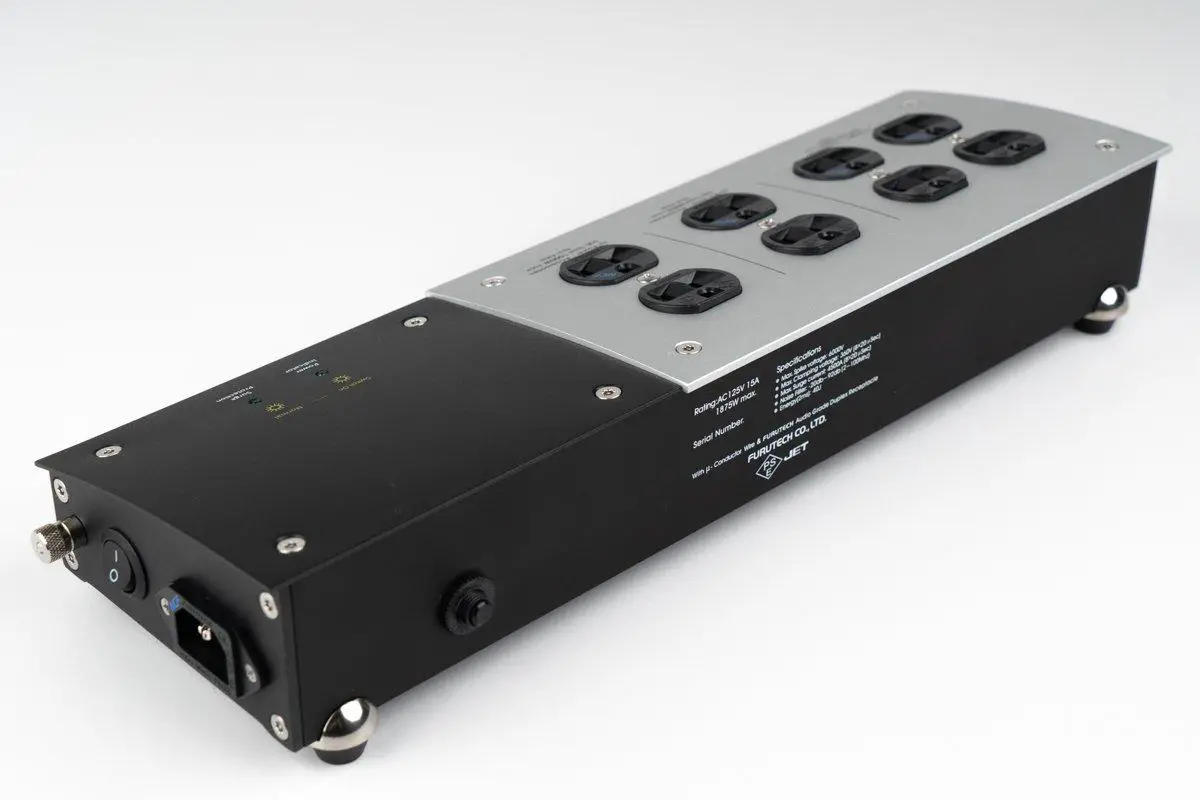
Rubber feet are provided at the base to isolate vibrations.
Next to the main power inlet, besides the power switch, there is a grounding terminal. The manufacturer thoughtfully includes a grounding cable for users who wish to utilize grounding.
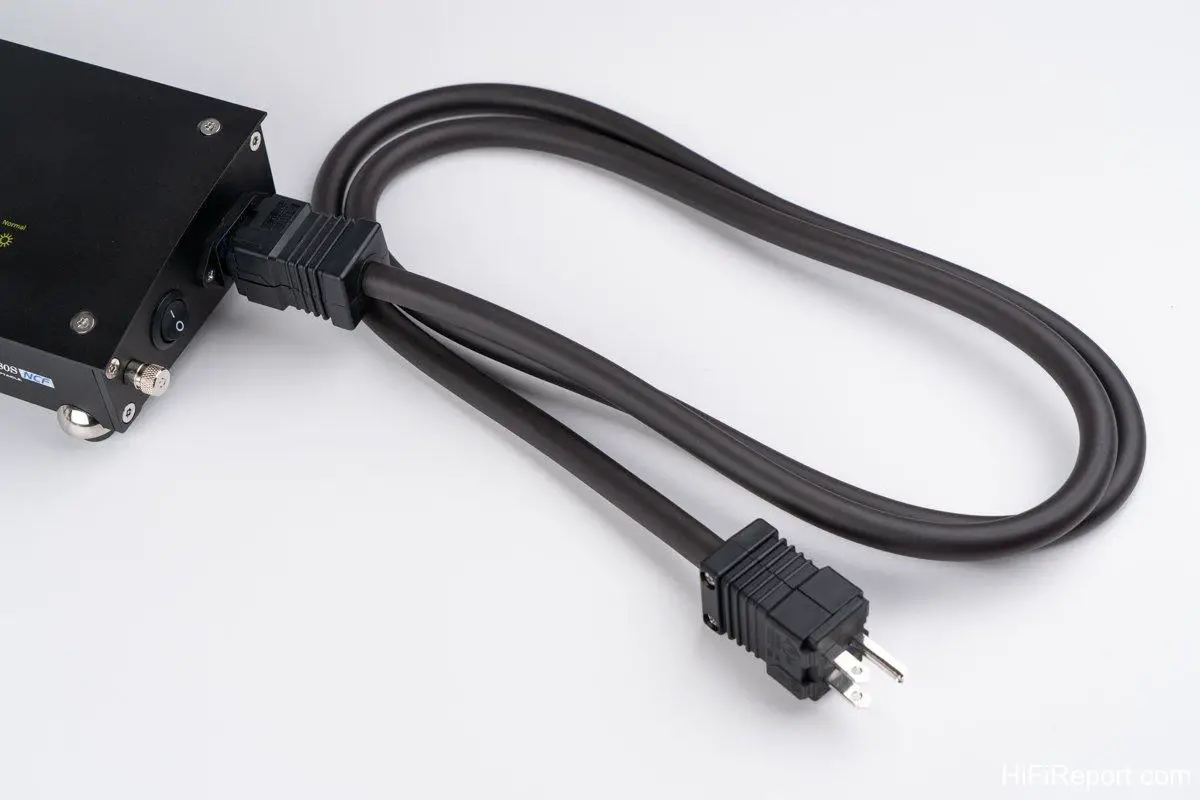
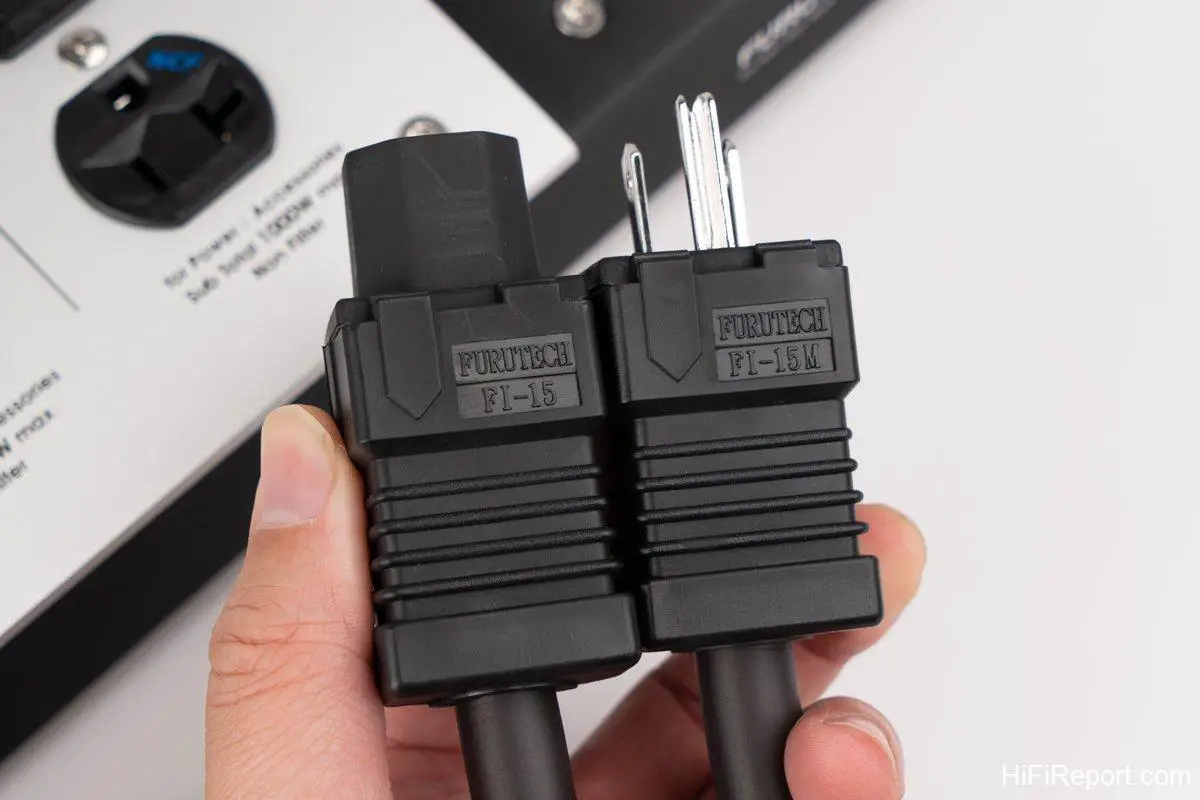
Furutech also generously includes a high-quality power cable. The cable itself is their own FP-314Ag power cable, featuring 15~14 AWG (1.82 sq. mm) silver-plated oxygen-free copper conductors, which have also undergone the Alpha Process treatment.
The power plug is the FI-15M (R) rhodium-plated plug, and the IEC connector is also the FI-15 (R) rhodium-plated model, both exuding a premium feel.
Enhanced Clarity, Soundstage, and Focus
How much sonic improvement can a power distributor actually deliver? The answer is, definitively, yes, it can. If upgrading power cords makes a difference, then upgrading your power distributor will certainly also be effective.
During the e-TP80S NCF’s stay at the editorial office, it coincided with a network cable feature. The standard setup in the listening room involved an MSB Discrete DAC and an Ansuz D.TC Supreme PowerSwitch network switch connected to the e-TP80S NCF.
It made the sound cleaner and more transparent, with more focused and three-dimensional imaging. It was as if the background had become blacker, pushing the sound images forward.
For example, in Lou Reed’s “Walk on the Wild Side,” the opening features a steady rhythm from guitar and double bass. Compared to the domestically produced non-filtered power strip typically used in the listening room, the e-TP80S NCF demonstrably offered higher sonic density, clearer outlines, and better three-dimensionality. The entire sound image became tighter and more solid, adding about 10% to the weight of the sound.
The bass plucking alone was fuller, and the string vibrations were more distinct, creating a more vivid sonic picture.
In terms of vocals, Lou Reed’s singing had greater presence and more detailed articulation. Listening to his somewhat nonchalant vocals was truly enjoyable.
The e-TP80S NCF brought these performances to life, but its vitality didn’t make the sound float or become unstable. Instead, it lent greater stability to the sound, a more grounded soundstage, and a more substantial and rounded, easy-to-listen-to quality.
More Powerful, Fuller, and Solid Sound
With Adèle Charvet’s album “Long Time Ago,” the simple instrumentation makes any changes in system quality readily apparent.
To my surprise, the e-TP80S NCF actually made the sound more powerful, fuller, and more solid.
The mezzo-soprano’s vocal image became clearer, more focused, and rounded. In comparison, when connected to a regular power strip, the sound image became somewhat diffused, cloudier, muddier, looser, and softer.
The piano was also noticeably improved. Not only were the notes more distinct and connected, each note remarkably clear. When the reverberation trailed off, you could perceive it more concretely. In contrast, these reverberations were more dispersed and directionless on a standard power strip.
In the eighth track, the inclusion of handclaps and footsteps revealed even more impact through the e-TP80S NCF. These percussive sounds were rendered with greater force.
Effortless Layering, Vivid Musicality
If it’s effective with digital sources, it’s equally effective with amplifiers.
I connected an integrated amplifier to the unfiltered outlets.
The robust, full, powerful, and rich texture immediately transformed the musical presentation.
In comparison, while also unfiltered, the sound was simply not as good as when connected to the e-TP80S NCF.
Take Kanamb Noel’s Christmas music album, for example. In the track “C’etait a l’heure de minuit,” the opening drum sounds build from soft to loud, creating an illusion of distance shifting. These drum sounds became more solid and crisp, and the drumbeats became more defined.
The plucked sounds, reminiscent of church bells, sounded particularly vivid and alive.
When the vocals entered, first children’s voices, then female voices, layered on top of each other, the e-TP80S NCF made the musical picture clearer and more transparent, like brightening your vision after cleaning your glasses.
Removing Sonic Impurities
Many people might think that adding a power distributor adds connection points and losses, making the power less direct.
However, this is similar to the principle of power cables. Directly connecting equipment to a dedicated line from the electrical panel doesn’t necessarily guarantee better sound.
A power distributor is not just a “splitter” for connecting multiple devices. The design within a power distributor eliminates many interferences from the mains, such as noise and electromagnetic waves. The design features of the e-TP80S NCF mentioned earlier are all aimed at addressing these issues.
Just as you let clams spit out sand before cooking, and wash vegetables and remove roots before stir-frying, and blanch meat before cooking to remove impurities, we have many procedures in cooking to remove unwanted flavors. The same applies to audio.
A power distributor is designed to remove sonic impurities, allowing the true flavor of your system to shine through.
Have you tasted the true potential of your system? The Furutech e-TP80S NCF can help you achieve that.
Specifications
* Type: Power Filtering Distributor
* Outlets: US Standard (or European Standard e-TP80ES NCF) 8 Outlets
* Maximum Power Capacity: 1875W
* Fuse Amperage: 15A
* Filtering: -20dB~92dB (2-100MHz)
* Dimensions: 400 x 130 x 60 mm
* Weight: 1.8 kg