
Furutech NCF Clear Line USB/LAN Review
Among the many fascinating audio accessories I’ve encountered, Furutech’s NCF Clear Line series of signal optimizers has consistently left a deep impression. They are celebrated for their “plug-and-play” convenience, promising immediate sonic improvements without altering your existing system configuration.
Following the success of earlier versions designed for power outlets, RCA, and XLR connectors, Furutech has now introduced two new models tailored specifically for the digital audio enthusiast: the NCF Clear Line-LAN and NCF Clear Line-USB.
These new devices feature RJ45 and USB-A plugs, respectively, and house Furutech’s proprietary internal structure and materials. Simply plug them into any unoccupied terminal on your digital equipment, and they work to absorb digital noise, effectively increasing the signal-to-noise ratio and allowing for a painless upgrade to your digital audio quality.
Understanding Furutech’s NCF Technology
The Furutech NCF Clear Line range encompasses various forms – power, RCA, and XLR – but their core effectiveness stems from the manufacturer’s vaunted NCF “Nano Crystal² Formula” black technology. This material combines nano-sized ceramic particles with carbon powder, blended into a special resin to create a plastic composite with exceptional electrical properties.
Beyond generating negative ions to eliminate static electricity, NCF also converts mechanical vibrations produced by electrical current into thermal energy, which is then released as infrared radiation from the surface. This dual action effectively tackles the stubborn issues of vibration and static interference that can plague signal transmission.
Design and Construction Details
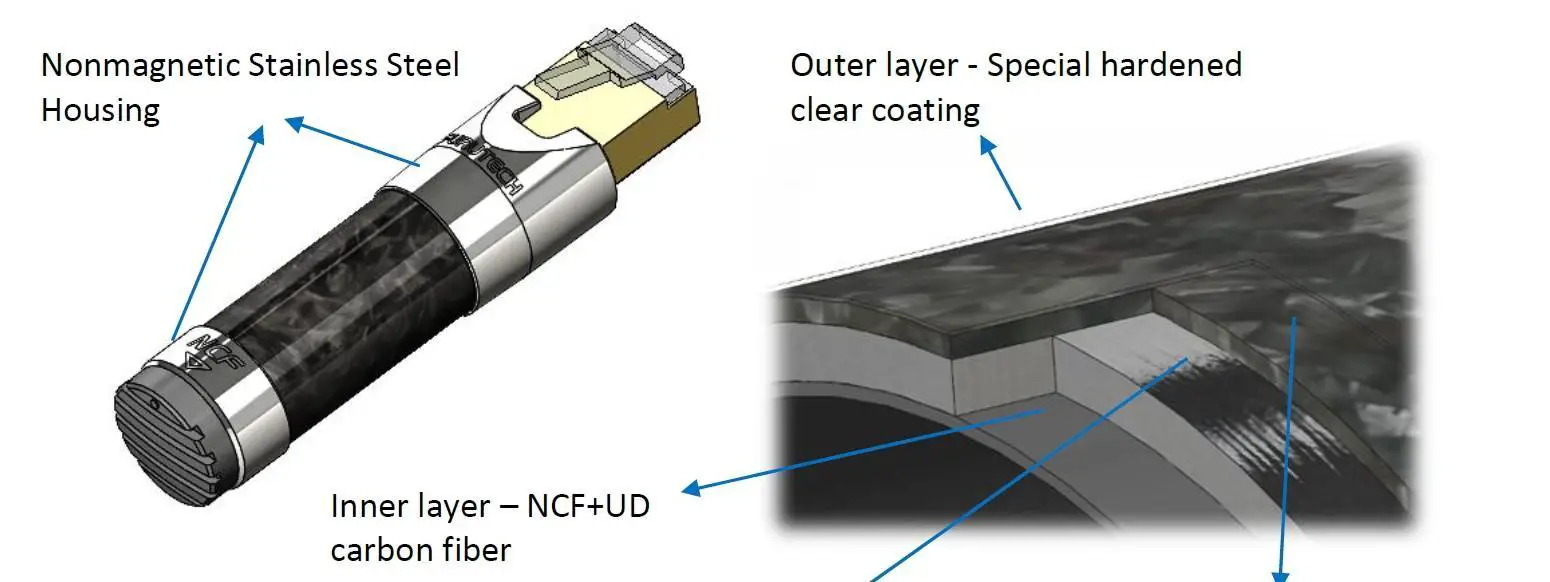
While all NCF Clear Line products share a similar sonic effect, Furutech has specifically fine-tuned the structure of these new models to combat the noise inherent in “digital” components. Both the new NCF Clear Line-LAN and NCF Clear Line-USB feature top caps made from NCF resin. The distinctive carbon fiber ring around the body is not just cosmetic; it’s a four-layered structure.
The innermost layer comprises NCF resin and carbon fiber composite. The second layer is an NCF carbon fiber weave. The third layer uses specially forged texture carbon fiber, all wrapped finally in a hard, clear coating – the finish you see externally.
This complex structure is paired with Alpha-treated non-magnetic stainless steel housing. The Alpha process is another Furutech hallmark, involving deep cryogenic treatment (cooling metal parts to -196°C to -250°C using liquid nitrogen or helium) followed by a slow return to room temperature. This process relieves internal stress in the metal, resulting in a tighter structure.
The second step involves demagnetization using large machinery to enhance the conductivity of all materials, making electromagnetic noise absorption more efficient.
Beyond NCF: Additional Technologies and Application
Certainly, many audio accessories on the market aim for similar results by using capacitors in the circuit to absorb ultra-high frequency electromagnetic waves, thereby purifying the signal. However, Furutech’s approach is notably more meticulous. The RJ45 and USB plugs used in the NCF Clear Line-LAN and NCF Clear Line-USB are crafted from 24K gold-plated non-magnetic copper alloy, ensuring excellent conductivity. Behind the terminals, specially selected electrolytic capacitors are connected.
Furutech has even applied a unique silver damping coating to the capacitor surfaces to minimize resonance effects.
In practice, you can plug these devices into any unused USB port on your audio equipment, or into vacant sockets on your router, network switch, wall plate, or modem within your system. Without altering the inherent sonic character of your setup, they work to reduce the detrimental impact of noise on the sound.
According to Furutech, using the NCF Clear Line-LAN and NCF Clear Line-USB will immediately lead to a significant improvement in soundstage depth and focus, alongside an elevated signal-to-noise ratio. This reduction in distortion yields increased transparency and, consequently, enhanced musical dynamic contrast.
Listening Test: NCF Clear Line-USB
But does the NCF Clear Line-USB truly live up to Furutech’s claims? Of course, the proof is in the listening. I began by plugging the NCF Clear Line-USB into my I-O Data Soundgenic music server and compared the before-and-after using my headphone system. Playing “What Is And What Should Never Be,” the second track from Led Zeppelin’s second album, the reduction in background noise was immediately apparent.
Vocals and instruments emerged as if a fine veil had been lifted, becoming significantly more transparent.
The headphone’s sense of space expanded noticeably, and the instrumental arrangement felt less flat. Not only did the lateral soundstage widen, but the depth, often harder for headphones to portray convincingly, also became more prominent, giving instruments a more (three-dimensional) and layered sense of positioning.
The vocals within the track were highlighted and separated from the band. The rough edges I had previously noted disappeared, revealing a clear, three-dimensional distinction between the lead elements and the accompaniment. Robert Plant’s powerful vocals took center stage with newfound clarity. The electric guitar’s raw distortion now sounded less cluttered; its strumming dynamics were sharper.
The rhythm section, driven by the electric bass and jazz drums, felt more impactful and rhythmically precise! Compared to similar products, the NCF Clear Line-USB’s major advantage lies in its ability to enhance musical separation and reduce noise without sacrificing body or making the sound thin and tight. Instead, the sound became more relaxed and naturally liquid.
Listening Test: NCF Clear Line-LAN
Next, I connected the NCF Clear Line-LAN to my network switch and tested it with my two-channel speaker system. It similarly created a spacious and dimensional soundstage. For instance, listening to Barenboim leading Mozart’s Piano Trio No. 1, the NCF Clear Line-LAN instantly delivered a vivid sense of positional accuracy. I could clearly discern the cello on the right, the violin on the left, and the piano slightly behind – a distinct triangular arrangement.
The instruments also seemed further apart, and during passages where all three played together, there was no longer any sense of congestion; I could easily follow the intricate details of the performance. The violin exhibited a tighter, more refined line quality. The piano’s keystroke dynamics were significantly enhanced, with the energy release during forte passages becoming sharper and more immediate.
The cello initially sounded slightly less lush, but this was simply the removal of bloatedness and expansion, resulting in a tighter, more solid form. Crucially, I could hear richer details of the cello’s body resonance, bringing the instrument’s timbre closer to reality.
Comparative Performance and Conclusion
I have previously reviewed the entire range of NCF Clear Line signal optimizers, including the power, RCA, and XLR versions. While they all provide audio purification, their impact was not as pronounced as with these new NCF Clear Line-LAN/USB models. This demonstrates that digital streaming systems are far more susceptible to electromagnetic interference than analog amplifiers or power lines, making noise the biggest adversary to digital audio quality.
The NCF Clear Line-LAN/USB optimizer is truly a tuning sacred tool for digital audio enthusiasts. By simply plugging them into unused terminals, they provide a targeted solution from within, achieving painless audio purification.
Specifications
* **Product Type:** USB/LAN Signal Optimizer
* **Materials:** Non-magnetic Stainless Steel, NCF (Nano Crystal² Formula), Carbon Fiber Particles, Nylon, and other composite materials
* **Connectors:** 24k gold-plated non-magnetic USB, LAN plugs