
Furutech NCF RCA/XLR Review
When it comes to effective audio tweaks, the Furutech NCF Clear Line is arguably one of the most convincing. Its initial incarnation resembled a power plug, designed to eliminate electrical noise simply by plugging it into any vacant wall outlet within your system’s power loop.
As a Furutech product, the NCF Clear Line was not only technically transparent but also delivered undeniably significant improvements in sound quality – arguably making it one of the most cost-effective power conditioning solutions available.
However, Furutech was clearly unwilling to limit the NCF Clear Line technology solely to the power domain. This year, they have ported the same concept to RCA and XLR connectors, focusing instead on directly suppressing noise within audio signals. The new NCF Clear Line RCA/XLR versions are far from mere repackaging; their structure has been significantly re-engineered to meet the specific demands of audio signal terminals, incorporating numerous new technologies.
Anticipation for their performance is understandably high!
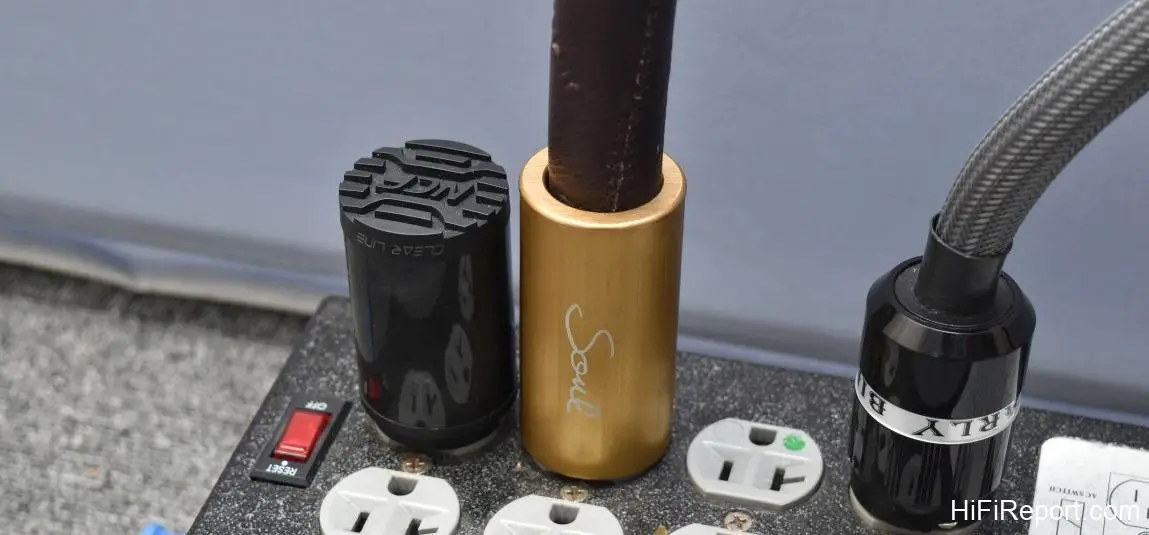
Design and Functionality
Furutech refers to the NCF Clear Line RCA/XLR products as “Line Optimizers.” This release introduces three distinct versions: a single-ended RCA female type, and two versions for XLR (male and female). Their usage is delightfully straightforward. Much like standard RCA and XLR plugs, you simply insert them into any unused connector on the rear panel of your audio equipment. This simple action initiates their intended effect: suppressing static electricity and vibration.
The manufacturer claims that using the NCF Clear Line series products will result in a higher signal-to-noise ratio, enhanced musical detail, increased micro-dynamics in volume variations, and an overall upgrade in sound quality.
Upon first encountering the new RCA/XLR versions, I was immediately struck by their aesthetics and build quality, which are noticeably more refined than the previous power-oriented versions. The casing is crafted from non-magnetic stainless steel, replacing the earlier plastic material. Holding them provides a reassuring heft, and the gleaming surface instills a sense of care, making you want to avoid leaving fingerprints.
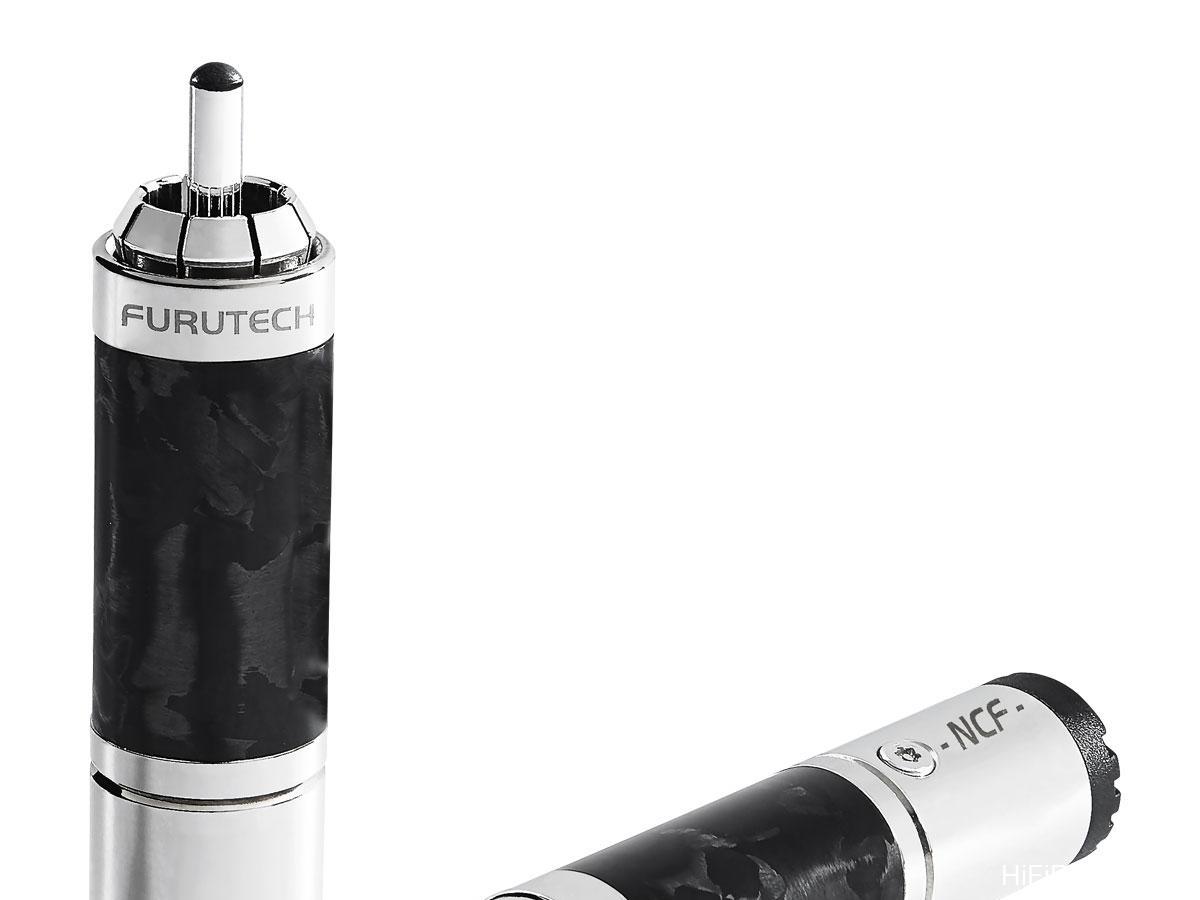
The carbon fiber sleeve around the waist features a unique non-woven texture, mirroring the styling of the power connectors on Furutech’s flagship Project V1 power cord. This detail further accentuates its exquisite texture. It’s truly impressive how Furutech treats even a small tuning accessory with the meticulous standards of a high-end product.
The Science Behind the Sound: NCF Technology and Construction
Delving deeper, I discovered that the NCF Clear Line RCA/XLR’s beauty is more than skin deep; its internal structure is far more complex than it appears. The markings printed on the casing and top cap hint at Furutech leveraging their proprietary NCF “black technology” to its fullest. NCF, or Nano Crystal² Formula, is a proprietary material combining nano-sized ceramic particles and carbon powder.
This unique composite boasts exceptional electrical properties. It not only generates negative ions to eliminate static electricity but also converts vibrations generated by current flow into thermal energy, which is then dissipated as infrared radiation from the surface. This sophisticated process effectively addresses both vibration and static electricity issues that can occur during signal transmission.
The carbon fiber ring encircling the waist of the NCF Clear Line RCA/XLR is actually composed of a four-layer structure. The innermost layer is an NCF resin and carbon fiber composite. The second layer is an NCF carbon fiber weave. The third layer is a special forged texture carbon fiber layer, which forms the visible outer surface. Finally, a hard, transparent coating encapsulates the assembly.
This complex carbon fiber structure, combined with the anti-vibration stainless steel casing, provides optimal damping characteristics.
Furthermore, the NCF Clear Line RCA includes a semi-sealed air chamber internally. By sealing the air pressure, this chamber contributes additional damping effects. The top cap, made from special heat-resistant nylon and NCF material, provides the final stage of vibration suppression, aiming to achieve a balanced sonic signature.
Internal Engineering and Connection
As experts in connectors, Furutech naturally gave meticulous attention to the conductors used in the NCF Clear Line RCA. The RCA central pin, like those in their flagship connectors, features a tubular α-OCC (Alpha Process Oxygen-free Copper) conductor plated with rhodium. Furutech’s high-temperature NCF liquid polymer resin is injected into the core and extends into the internal casing of the connector.
Simultaneously, a copper damping ring is employed on the NCF internal casing. This design effectively suppresses conductor vibrations and static electricity generation. Where a standard connector would typically connect to the cable conductor at this point, the NCF Clear Line RCA connects to a passive ceramic capacitor. This capacitor forms an electrical loop with the audio equipment, absorbing noise generated by the connector itself.
The capacitor’s surface is coated with a high-performance silver anti-vibration paint, which further suppresses vibration and enhances sound clarity.
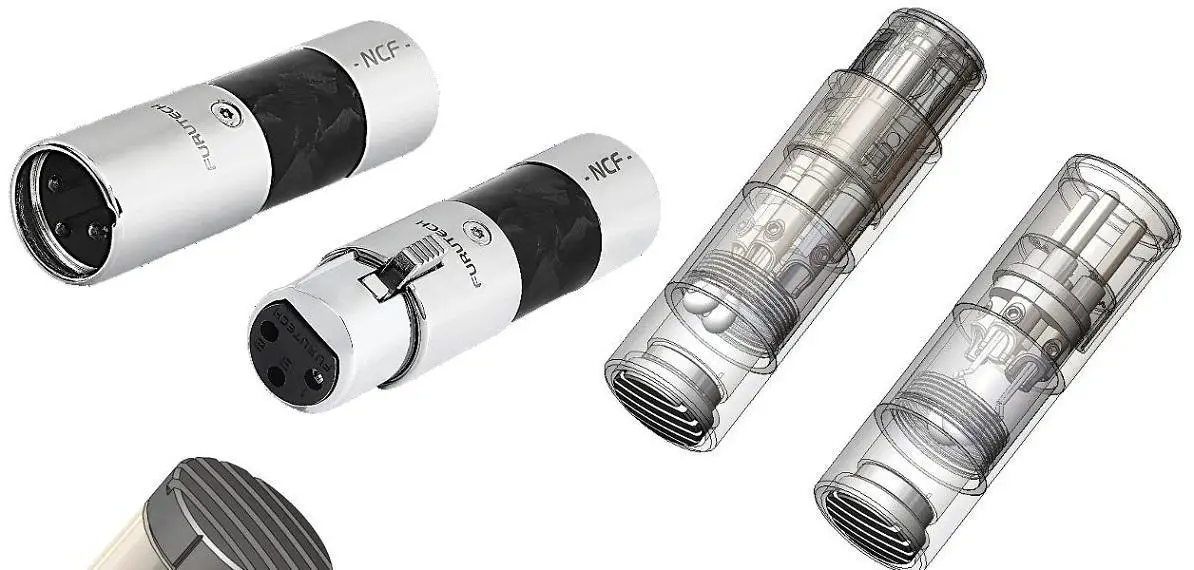
To ensure the NCF Clear Line RCA makes a secure connection with the equipment’s terminal, it features the common locking mechanism found on RCA connectors. You simply plug it into your audio equipment and then tighten the casing. The metal leaves of the negative terminal contract inwards, locking the connector in place and increasing the contact surface area, allowing the NCF Clear Line RCA to perform at its best.
Listening Impressions
For this test, I chose my personal headphone system as the subject: a COS H1 headphone amplifier paired with an Aurender N150 streaming transport and Focal Stellia headphones. I first inserted the NCF Clear Line RCA and XLR into the unused coaxial terminals on the COS H1. The moment the music started, I experienced an immediate and highly noticeable improvement in sound quality!
In the past, when reviewing similar audio tweaks aimed at tuning, I would often sense a reduction in noise, but this could sometimes lead to the sound becoming stiff or skeletal. The NCF Clear Line was different. After plugging them in, not only did I perceive a significant increase in the music’s signal-to-noise ratio, but vocals and instruments gained more body and presence. They sounded richer, more ‘hydrated’, enhancing the system’s overall musicality.
For instance, listening to the Trio Wanderer’s performance of Haydn’s Piano Trios, I felt the soundstage within the headphones become much more three-dimensional, with a stronger sense of depth. Crucially, it pushed the perceived depth significantly further back, dramatically reducing the “in-head” effect. The localization of instruments became clearer, their focus incredibly precise, banishing any flat or sterile feeling.
Simultaneously, the contours of the string instruments became more defined. The subtle graininess I had become accustomed to vanished, replaced by a smoother, more fluid presentation. The violin’s form felt more cohesive and full-bodied. Enchantingly, musical phrases were now graced with delicate, lingering decay, lending the violin’s timbre a touch of noble elegance. The piano’s notes sounded rounder, and the micro-dynamics of key presses were significantly richer.
The cello’s bowing texture was full-bodied, revealing more details of the wood’s resonance beyond its warm nasal tone, indicating improved resolution in the mid-low frequencies and a more solid sense of instrumental body.
Next, I played “Decalcomanie” from the Korean girl group Mamamoo’s album “Memory.” After connecting the NCF Clear Line, the opening kick drum impact immediately grabbed my attention! The exhilarating electronic bass line in the track became clearer, with vastly improved dynamics. The bass notes were fast and precise. It was then I realized how much rich detail this track’s bass had when its energy wasn’t overly diffuse. I could hear better elasticity and a deeper, more controlled extension.
Regarding the vocals, my initial impression was that their form had slightly shrunk. However, I soon realized this was because the music’s noise floor had lowered, removing any sense of vocal bloat. Their contours became sharper, and the sound density felt absolutely peak.
Listening to the alternating vocals throughout the track, I could sense the spatial separation between the four singers increasing, enriching the layering of the harmonies and allowing for effortless appreciation of Mamamoo’s impressive vocal techniques.
Conclusion
Effectively tackling noise interference in an audio system is no easy feat, especially when dealing with inherent “bugs” within the equipment’s circuitry, which can feel impossible to address. The NCF Clear Line RCA and XLR not only provide immediate tuning benefits but are also among the few accessories of their type that I feel offer unequivocally positive changes to sound quality.
If your system is already well-balanced and you’re contemplating further upgrade possibilities, these small Furutech tuning accessories are guaranteed to deliver a noticeable and instant improvement.
Specifications
* Product Type: RCA, XLR Line Optimizer
* Materials: Non-magnetic stainless steel, NCF (Nano Crystal² Formula) “Nano Crystalline Formula”, carbon fiber particles, nylon, and other composite materials
* Connectors: α (Alpha) Process OCC Rhodium-plated RCA, XLR Male/Female Connectors