
Hypsos DC Power Supply Review
With streaming becoming increasingly important for audiophiles, the associated equipment and devices are also on the rise. Network devices, storage solutions, music servers, streaming players, DACs… you likely have at least one or several of these in your home. They share a common trait: their power supplies are mostly standard, off-the-shelf DC units.
This is both a drawback and an advantage.
The drawback is that these power supplies are typically generic switching power supplies, and their quality might be questionable. The advantage is the freedom to upgrade the power supply, immediately enhancing the audio quality.
However, a problem arises: these devices require different voltages, some 12V, some 5V, some 9V, and even 19V. You often have to compromise and choose a power supply based on voltage compatibility.
But now, this hassle is eliminated. Ferrum Audio’s newly launched Hypsos DC power supply offers a voltage range from 5V all the way to 30V, with a maximum current capacity of 6A. It’s practically guaranteed to work with your gear!
Company Background
Ferrum Audio hails from Poland and is a newly established brand. Currently, Hypsos is their sole product. However, Ferrum Audio’s parent company, HEM, is far from new. They are seasoned veterans in the audio industry, boasting over two decades of experience in audio product design and manufacturing.
HEM was founded by Marcin Hamerla. Before establishing HEM, he worked for the Polish government in design roles across medical and military sectors. His encounter with Micha? Jurewicz, the founder of Mytek Digital, sparked his interest in digital audio. He shifted his focus to digital audio conversion and subsequently founded HEM. Initially, HEM designed products for Mytek Digital, with Mytek’s ADCs and DACs being creations of HEM.
Furthermore, HEM possesses a comprehensive in-house engineering and software design team, enabling them to offer OEM and ODM services for digital audio and electronics-related equipment.
In essence, HEM, the force behind Ferrum Audio, is an electronics engineering company with its own R&D capabilities and manufacturing prowess. While Ferrum Audio is a young brand, it is backed by substantial expertise! This robust technical foundation has given rise to the exceptional Hypsos DC power supply.
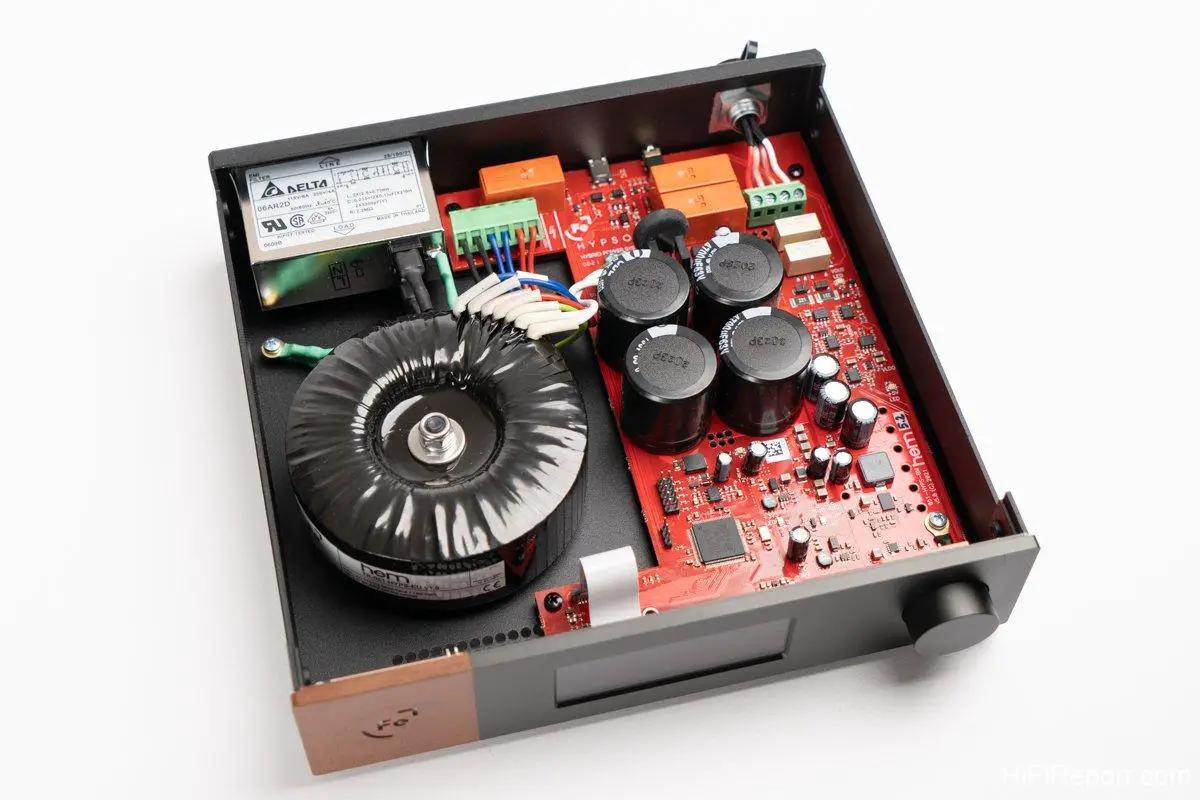
Its most distinctive feature is the hybrid design, blending linear and switching power supply technologies. The company calls it the “Hybrid Power System.” Internally, it houses a substantial toroidal transformer and four filtering capacitors, ensuring a low-ripple, low-noise power supply. The switching power supply aspect grants Hypsos rapid response and high efficiency, capable of delivering up to 6A of current, with instantaneous peaks reaching 9A, and a maximum continuous output power of 80 watts.
Moreover, Hypsos has a previously mentioned “special ability”: its output voltage is continuously adjustable from 5V to 30V in 0.1V increments. This makes it compatible with virtually all audio equipment on the market.
Hypsos’s control and adjustments are managed by an ARM central processing unit, enabling precise current output and continuous monitoring for optimal adjustments. Therefore, it’s essentially a sophisticated electronic device, far beyond a typical traditional power supply.
User-Friendly Features
All adjustments for Hypsos are made via a single knob on the front panel, complemented by a detailed display screen for operation and control.
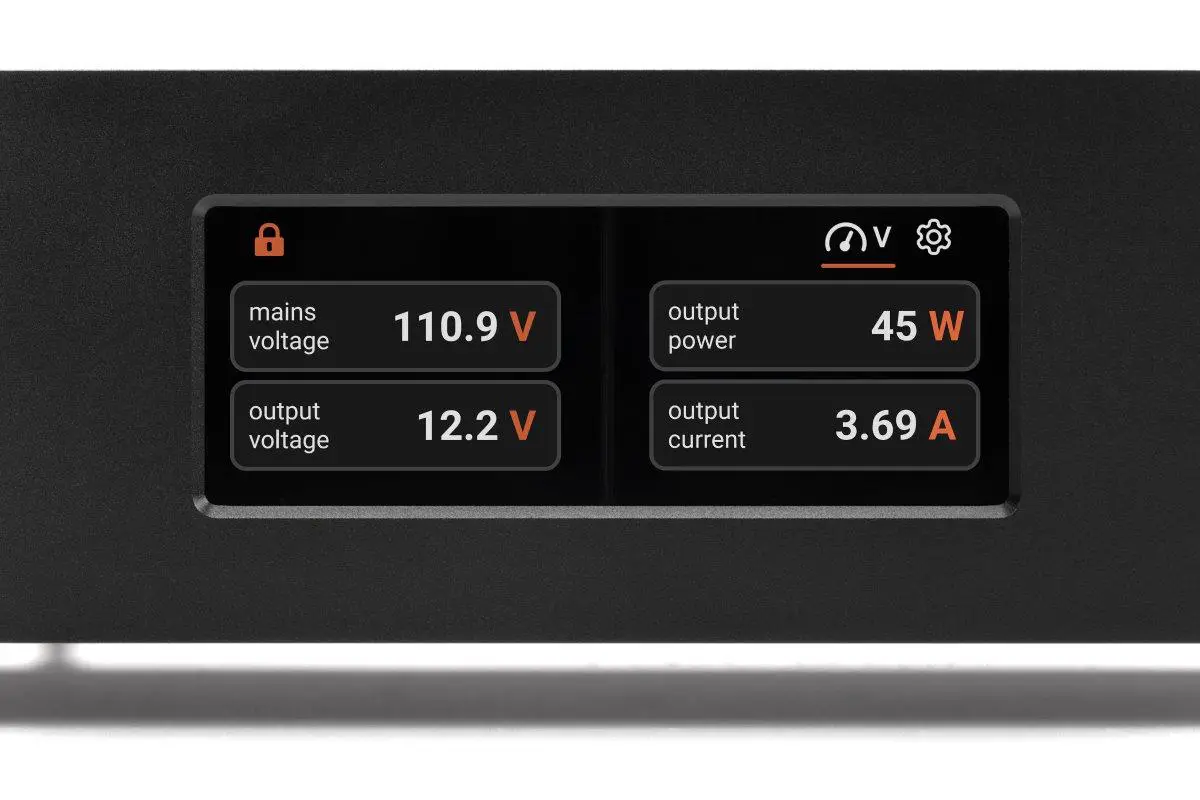
This screen typically shows four pieces of information: the set output voltage, the measured actual output voltage, the current power consumption, and the measured output current.
These details provide a clear understanding of Hypsos’s operational status.
Upon initial use, setting the output voltage is crucial to prevent damage from mismatches with your equipment.
Voltage setting can be done in two ways: selecting from Hypsos’s built-in device list or manual adjustment.
Hypsos comes pre-loaded with a list of devices that Ferrum Audio has confirmed to be compatible. If your device is on the list, selecting it will automatically set Hypsos to the correct voltage. If your device isn’t listed, you can manually set the voltage. However, you must first know the correct voltage to avoid incorrect settings.
Amazingly, Hypsos also allows setting the polarity of the output plug – whether the positive is on the inner or outer ring. While it’s uncommon for DC input jacks to have a positive polarity that isn’t center pin, Hypsos’s inclusion of this feature suggests there might be devices that are exceptions.
In any case, the compatibility device list in Hypsos is truly thoughtful, saving users a lot of effort in setup.
Hypsos further offers a fine-tuning voltage function called SST (Sweet Spot Tuning). What’s its purpose? As mentioned, Hypsos’s voltage adjustment is in 0.1V increments, allowing you to fine-tune the output voltage while listening to find your preferred sonic “sweet spot.”
When using the voltage fine-tuning, Hypsos permits an adjustment range of ± 5% of the set voltage value, ensuring no damage to your equipment within this range.
Build and Design
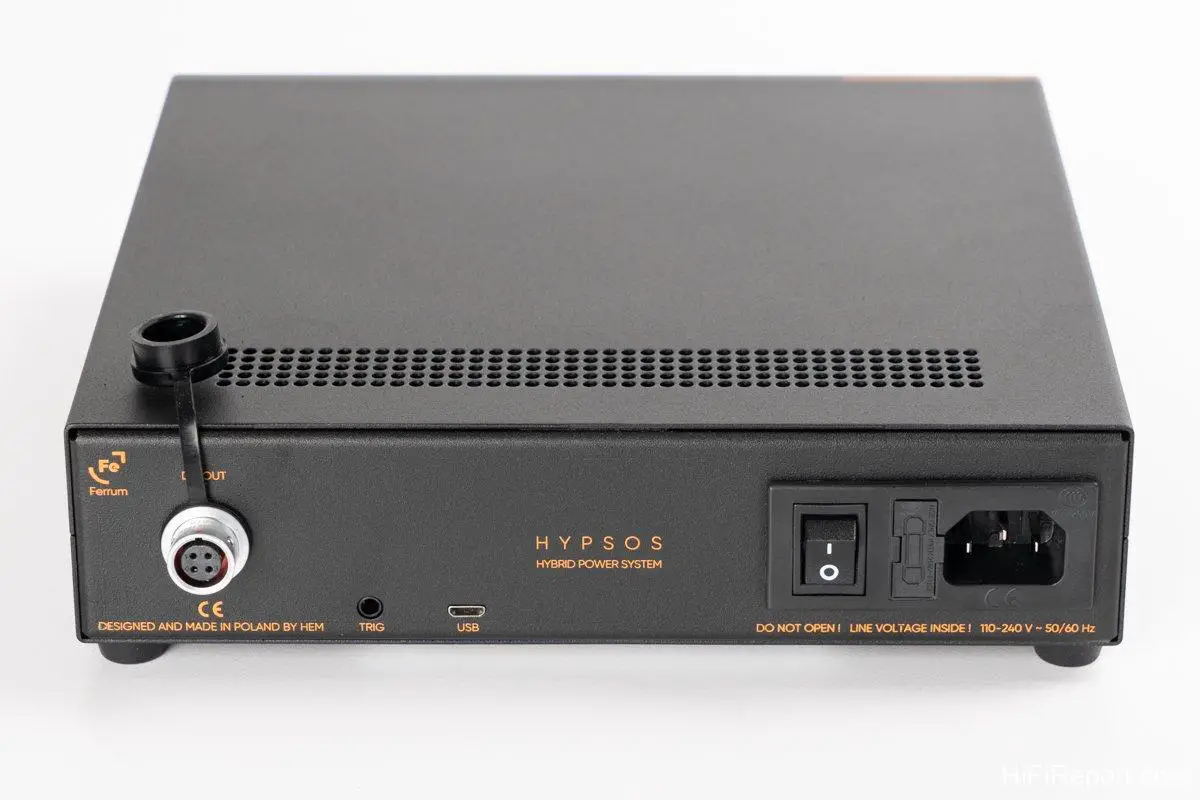
Hypsos boasts another unique feature: 4TSD (4 Terminal Sensing Design).
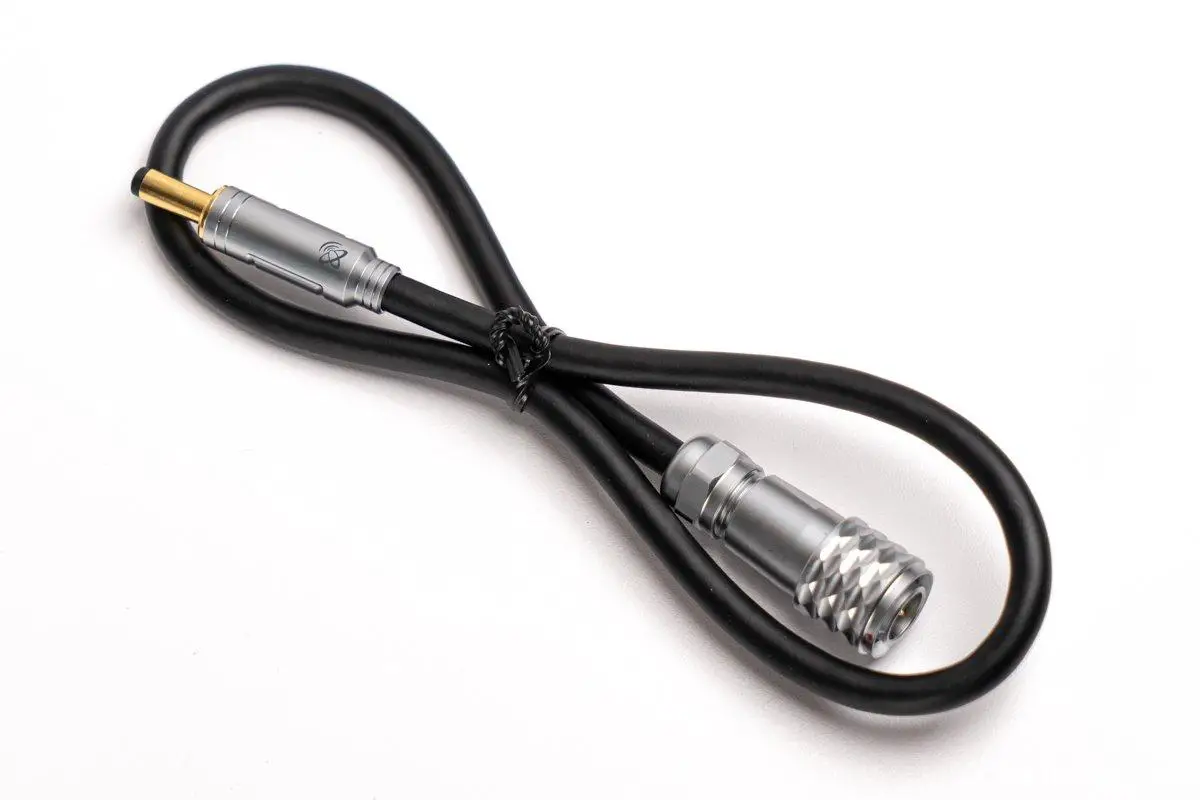
“4 Terminal” refers to the four pins on its power output connector. Two pins are for delivering DC power, while the other two form a feedback circuit. This ensures that regardless of the power consumption of the connected device, Hypsos can constantly adjust voltage to maintain stability, thereby providing better transient response performance.
Additionally, Hypsos incorporates SSM (Spread Spectrum Mode). What is this? In typical switching power supplies, the converter operates at a fixed frequency. SSM, however, makes the converter operate at a variable frequency. This reduces distortion generated at the operating frequency and its multiples. However, SSM function might affect the high-frequency performance of some devices and may not always be beneficial.
Both 4TSD and SSM features are user-selectable, adding to the device’s versatility.
Hypsos not only surpasses all similar DC power supplies on the market in “soft power” and features but also exhibits commendable high-quality hardware and craftsmanship.
The display screen is undeniably exquisite, with delicate fonts, excellent color saturation and brightness, and a superior UI design that is visually pleasing.
The chassis is constructed from thick steel, with high precision in the sheet metal work. The seams are tightly fitted, demonstrating a level of metal processing that exceeds its price range.
The chassis surface is sandblasted, giving it a rugged texture and a solid feel.
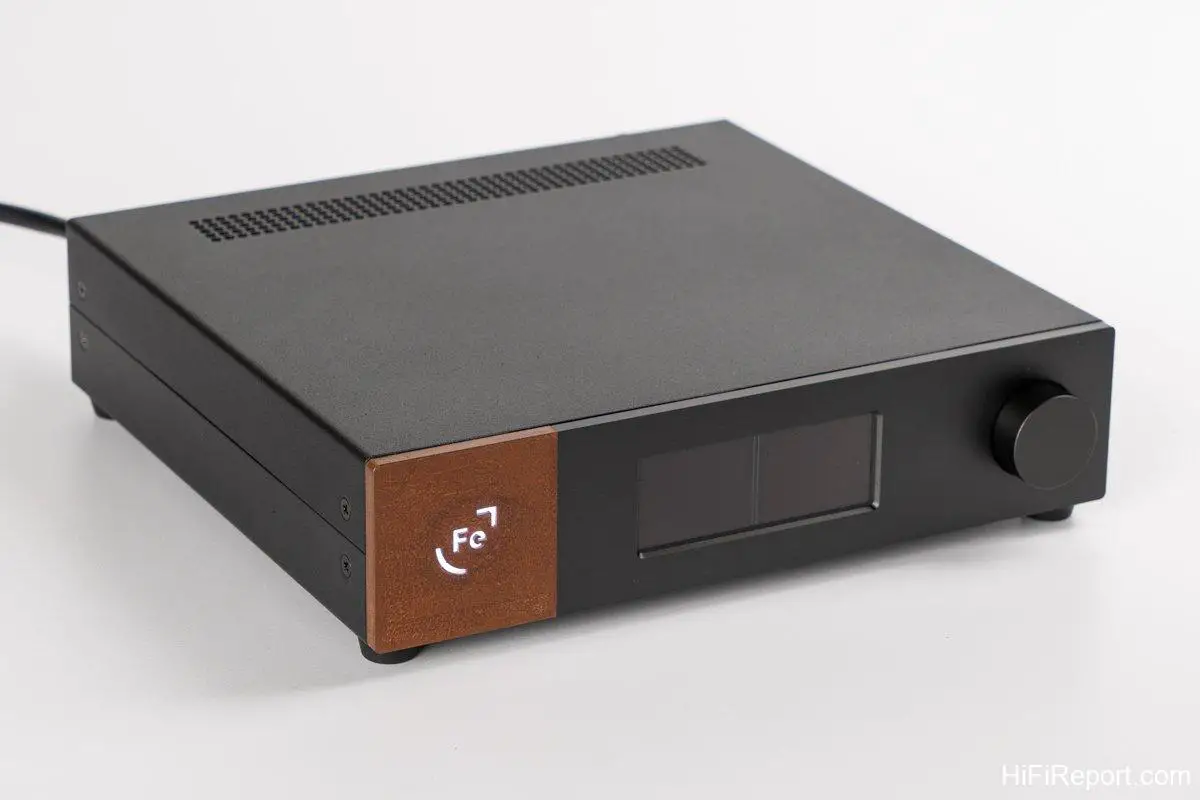
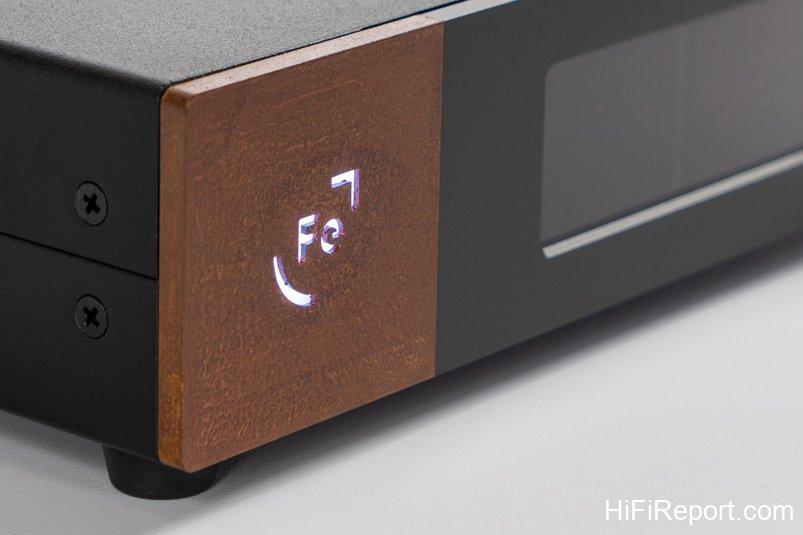
Notably, the brown square decorative element on the left side of the front panel has a textured surface that appears to be wood. However, it’s metal to the touch. Is the color painted on? No, it’s the natural color of Corten steel.
Corten steel is an alloy steel that, when exposed outdoors for years, naturally oxidizes on the surface to form a rust layer. This rust layer remains on the surface and doesn’t penetrate the steel, providing a rust-resistant function.
Hypsos uses this Corten steel piece, laser-cut with the “Fe” logo, illuminated from behind with white light, creating a simple, heavy, and aesthetically pleasing look.
Ferrum Audio founder Marcin Hamerla’s father was a blacksmith. Iron ore is one of Poland’s primary mineral resources. With a thriving metallurgy industry, many traditional crafts in Warsaw, Poland’s capital, are related to iron. It’s natural that Marcin Hamer chose “ferrum,” Latin for iron, as his brand name.
Sound Quality Improvement
Next is the listening test.
Hypsos can power virtually any DC-powered audio equipment, especially playback devices like streaming players, music servers, and DACs. The impact of Hypsos should be most direct and noticeable on these. However, I didn’t have such devices readily available. As a fallback, I decided to use Hypsos with two other types of equipment: my NAS acting as a music server and a network switch essential for streaming, to see what effect Hypsos could have on them.
Starting with the NAS.
I use a QNAP TS-453Be, which requires 12V and comes with a 90W standard power supply.
Hypsos can continuously output up to 80W at voltages above 13.3V (Hypsos’s output power increases with voltage). While slightly less than the standard 90W, my NAS only has two HDDs installed and is solely used as a music server, so Hypsos should be more than sufficient.
The playback system used for listening tests included the Audionet DNP streaming preamp, which streams music files from the TS-453Be over the network. The power amplifier was a NuPrime EVO One, and the speakers were Aurum Cantus Grand Harmony.
Playing DECCA’s “Lover’s Adagios” compilation, I selected the Prelude to Act 1 from Wagner’s opera “Tristan and Isolde.” The piece is filled with long, sustained string melodies, starting from pianissimo, gradually building with crescendos, and slow musical development leading to a climactic high point with wind instruments in the latter part.
Such music demands a light and agile sonic foundation and a rich, clear sense of layering. Otherwise, the lengthy opening soft passages can sound dull and tedious due to a lack of micro-dynamic nuances, becoming somewhat uninteresting. This is precisely the case with the standard power supply.
After switching to Hypsos, improvements were evident in sonic transparency, soundstage depth, ambience, musical flow, and layering. Subtle dynamics became more vivid, making the music, though slow and gentle, not feel heavy or sluggish.
In comparison, the standard power supply sounded thicker and less defined, appearing somewhat clumsy and less agile. Moreover, the layers of instruments seemed compressed together, less separated, naturally lacking vibrancy.
NAS boot-up takes about ten minutes, meaning each A/B comparison required a ten-minute wait. Despite the long interval, the difference between Hypsos and the standard power supply was clear. The improvement was distinct and readily apparent.
More Vivid and Luminous
Next, I tested Hypsos’s effect on a network switch. Here, I used a consumer-grade QNAP QSW-308S switch, comparing it against the QSW-308S’s standard power supply. The rest of the system remained the same, including the TS-453Be and DNP.
First, I played track 7, “Immediately Blessed,” from the “Blue Coast Collection – The E.S.E Sessions” compilation, featuring two guitars accompanying a male vocalist.
A/B comparison revealed that even on a switch, Hypsos brought noticeable positive improvements to the sound. The direction of improvement was similar to the NAS test: better transparency, a lighter and more ethereal texture, enhanced channel separation, richer dynamic layering with better linear progression. Since this track features vocals, it was even more noticeable that Hypsos improved imaging, making the sonic images more three-dimensional.
The music became lighter, resulting in a faster, more lively, and vibrant feel. Guitar plucks had better impact and crispness, and the dynamic range of the vocals expanded, making the sound more fluid and natural.
As for the standard power supply, while it might initially sound warmer and rounder, it was actually more static and heavy. The two guitars sounded clustered in the center, with poorer separation. Hypsos spread them wider, creating a more open soundstage.
Replaying the “Tristan and Isolde” Prelude, the standard power supply immediately made the sound duller. String luster was diminished, and the flow and smoothness were less impressive, with a slightly stuttering sensation. In the climax, the dynamic progression was also more sluggish, and the layering of instruments was less distinct.
Switching back to Hypsos, the scale of the symphony orchestra immediately expanded. The music became more open and relaxed, with effortless dynamics and a vivid, colorful presentation.
The difference was significant, making me reluctant to revert to the standard power supply.
Advanced Features in Action
Remember Hypsos’s two special features, 4TSD (4 Terminal Sensing Design) and SSM (Spread Spectrum Mode)? In the previous tests, I had kept both features off. Now, I turned them both on and listened to the “Tristan and Isolde” Prelude again. The result? The sound improved further! Dynamics, contrast, separation, layering… all were enhanced. The frequency bandwidth seemed to expand, creating a sense of openness. This made the quieter passages clearer, micro-dynamics more pronounced, the soundstage deeper and more three-dimensional. The bow-string friction of the strings became finer, and the timbre more vibrant. Subtly, the system’s overall caliber was elevated.
Power is indeed crucial. Upgrading power at key points often yields such significant effects.
Hypsos’s advantage lies in its adjustable output voltage, allowing you to experiment with different devices to find the most impactful application.
If budget allows, consider purchasing multiple units for a system-wide upgrade.
Furthermore, you can fine-tune the output voltage to find the “sweet spot” and unlock your equipment’s full potential.
Hypsos is an “atypical” DC power supply, waiting for you to explore its capabilities.
Specifications
* **Type:** DC Power Supply
* **Input Voltage:** 100 – 240V / 50 – 60Hz
* **Output Voltage:** 5 – 30V DC
* **Output Plug:** 5 × 2.5 mm / 5 × 2.1 mm (selectable)
* **Maximum Continuous Output Current:** 6 A (voltage above 13.3 V)
* **Maximum Instantaneous Output Current:** 9 A
* **Maximum Continuous Output Power:** 80 W (voltage above 13.3 V)
* **Dimensions:** 217.5 × 50 × 206.5 mm (W×H×D)
* **Weight:** 2.89 kg