
iFi Audio Zen Signature Set Review
I am beginning to understand the feeling of being “poisoned,” as described by HiFiReport editor, Tsai Cheng-Rong. His culprit was the iFi Audio Zen DAC, while mine is the iFi Audio Zen Signature Set.
And I dare say, I’m poisoned even more deeply.
Digital and Analog Separation
Why am I so sure my “poisoning” is more severe? Because this time, the Zen series I received isn’t just the top-tier Signature version, but a two-unit set. It includes the Zen DAC Signature and Zen Can Signature 6XX, meaning the source and headphone amplifier are separate. Furthermore, the included power supply is upgraded to iFi’s top-of-the-line iPower X. It’s essentially a triple jump in quality, so how could I not be more profoundly “poisoned”?
Currently, iFi Audio’s Zen series comprises four products: Zen DAC, Zen Can headphone amplifier, Zen Blue Bluetooth DAC, and Zen Phono phono stage. The Zen DAC and Zen Blue have already evolved to their V2 generations, and both the Zen DAC and Zen Can have introduced Signature versions. iFi Audio has packaged these two Signature versions into a set, conveniently including a perfectly sized 4.4mm Pentaconn signal cable. This allows for the shortest possible connection between the two units. By separating digital conversion and headphone amplification, eliminating mutual interference, it provides a complete, convenient, and uncompromising desktop listening solution.
Zen DAC Signature
Let’s start by examining the Zen DAC Signature.

A significant difference between the Zen DAC Signature and the standard Zen DAC V2 is that the Signature version completely removes the headphone amplification function, making it a pure DAC.
Focusing on a single task certainly allows for better execution.
However, for convenience, it still retains both fixed and variable volume output modes, making it easy to connect to power amplifiers or active speakers.
By eliminating the headphone amplifier circuit, the Zen DAC Signature has more room to enhance its already excellent analog circuitry. For example, the original balanced circuit is further strengthened into a true-differential balanced circuit, continuously pushing down the signal-to-noise ratio and improving dynamic performance.
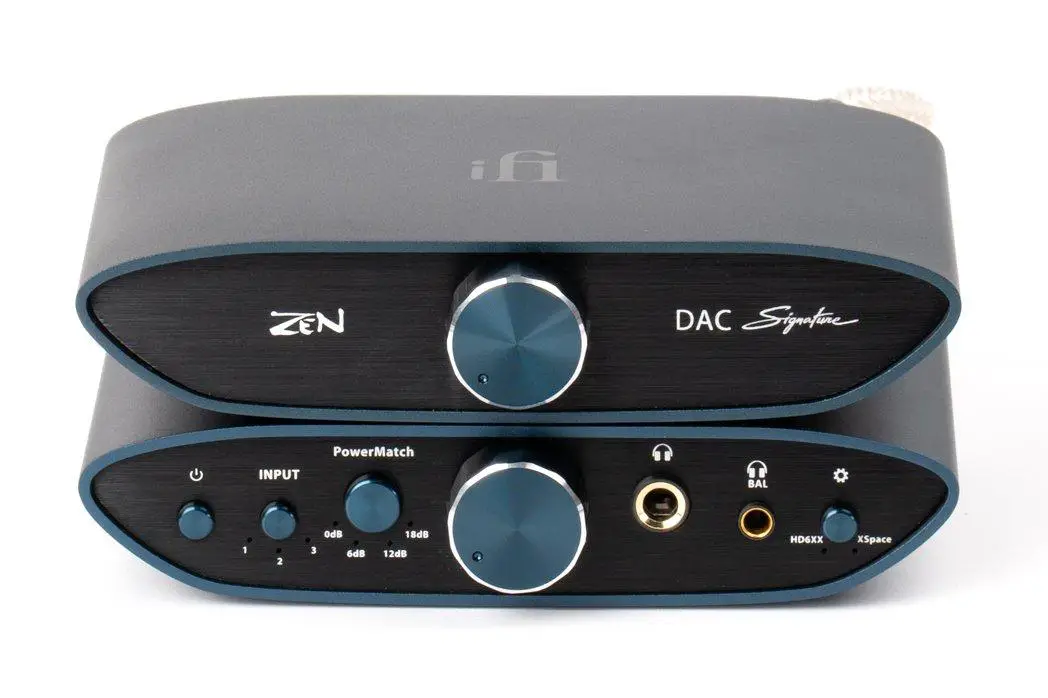
Furthermore, critical capacitors have been upgraded from surface-mount capacitors to through-hole components, including Panasonic OS-CON capacitors and Elna Silmic II capacitors, employing more audiophile-grade parts.
The Zen DAC Signature offers both single-ended and balanced outputs. The single-ended output is RCA stereo, while the balanced output is 4.4mm Pentaconn. If you need to connect to an amplifier or active speakers with XLR balanced inputs, you can do so via a Pentaconn-to-XLR cable, still enjoying the benefits of balanced amplification.
For inputs, the Zen DAC Signature has only one USB 3.0 port, compatible with computers, mobile phones, or digital audio players. Internally, it features an XMOS USB receiver chip, supporting asynchronous reception up to PCM 384kHz, DSD256, and DXD formats, and it can hardware decode MQA.
When playing files of different formats or sampling rates, the LED light behind the central knob changes color for clear identification.

The power supply of the Zen DAC Signature also sees a major upgrade, directly equipped with iFi’s top-tier iPower X power supply. This results in lower noise, stronger output, and further enhanced dynamic performance.
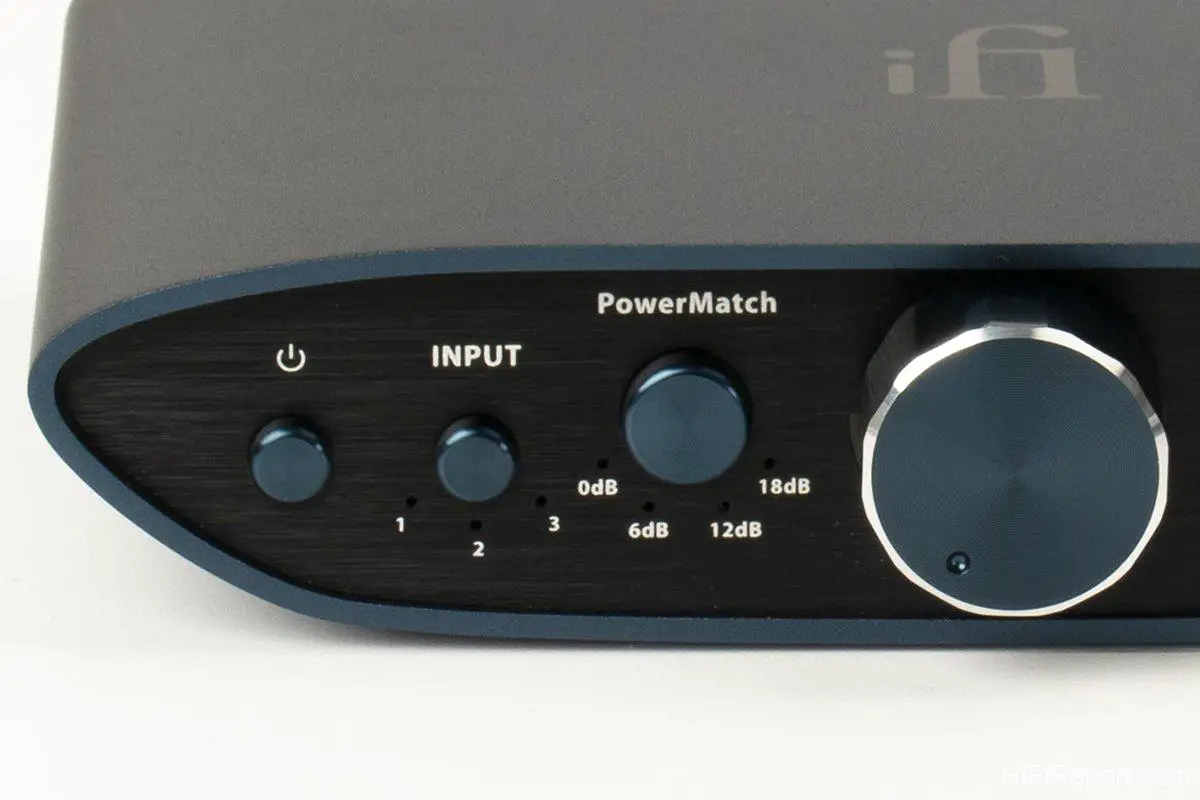
In terms of appearance, the Zen DAC Signature is similar in shape and size to the Zen DAC V2, but with different colors. The Zen DAC Signature has a black front panel and a deep blue-grey chassis, while the Zen DAC V2 has a silver-grey front panel and an iron-grey chassis.
Zen Can Signature 6XX
Next, let’s look at the Zen Can Signature 6XX.
The most peculiar aspect of its model name is the “6XX” suffix. What does it mean? It turns out that this is iFi Audio’s specially designed ActiveEQ function for Sennheiser HD 6XX headphones. Simply press the button on the far right of the front panel to activate it.

The HD 6XX is a headphone custom-made by Sennheiser for the American group-buying website Drop.com, based on the HD 650. As of mid-June this year, it has sold over 130,000 units and continues to grow.
According to iFi Audio, the HD 6XX is renowned for its excellent midrange performance, but with some quirks in the high and low frequency ranges. It appears the ActiveEQ function is designed to adjust the high and low frequencies to make the HD 6XX sound more balanced. This function is also applicable to the HD 650, which shares similar characteristics.
In addition to ActiveEQ, the Zen Can Signature 6XX also offers a function called XSpace. By pressing the rightmost button on the front panel again, you can switch the ActiveEQ function to the XSpace function (another press activates both, and another press turns them both off). XSpace also operates in the analog domain, expanding the soundstage width and depth, creating a more speaker-like sound field experience with headphones.
Besides maintaining a dual-mono balanced architecture, the Zen Can Signature 6XX, like its DAC counterpart, also utilizes more audiophile-grade components in critical areas, such as Panasonic OS-CON capacitors and Elna Silmic II capacitors.
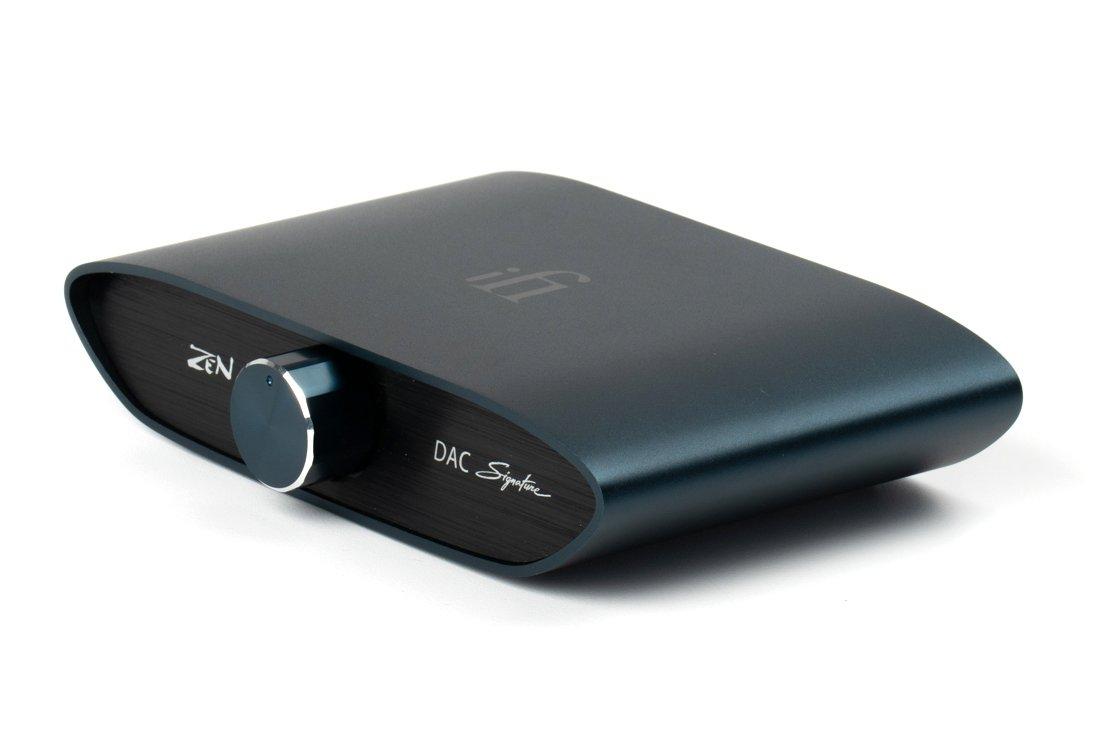
Furthermore, paired with the top-tier iPower X power supply, the Zen Can Signature 6XX boasts even more impressive driving power. It also features PowerMatch, offering four gain levels: 0dB, 6dB, 12dB, and 18dB. Users can freely switch between these settings according to headphone characteristics, ensuring broad compatibility, effortlessly handling everything from sensitive in-ear monitors to high-impedance over-ear headphones.
In terms of input and output interfaces, as the Zen Can Signature 6XX is a pure analog headphone amplifier without digital inputs, it only has analog inputs, totaling three: a 4.4mm Pentaconn balanced input, a 3.5mm single-ended input, and a set of RCA stereo inputs. The front panel features one 6.3mm single-ended output and one 4.4mm Pentaconn balanced output.
Thickness and Etherealness
During the listening test, my usual desktop PC was used as the source, requiring the installation of a USB driver to recognize the Zen DAC Signature.
I first listened with Philips Fidelio X1 headphones. These headphones aren’t particularly difficult to drive, but getting the low frequencies to sound good isn’t always easy.

Setting the Zen Can Signature 6XX’s PowerMatch function to 0dB provided ample volume. Turning it up further could easily drive the Fidelio X1 to its limits without distortion, no additional gain needed.
I experimented with switching PowerMatch to 6dB. The volume increased slightly, but the volume knob still had plenty of fine-tuning range. However, the sonic presentation changed significantly. The contrast between loud and soft passages became more distinct, the dynamics more rhythmic and lively, imbued with a vibrant energy. In other words, PowerMatch not only serves to match different impedance or sensitivity headphones but also offers different sonic flavors.
For the Fidelio X1, I found the 6dB gain setting more dynamic, so I kept PowerMatch at 6dB for the rest of the listening session.
Consistent with my past experiences with iFi Audio equipment, the Zen Signature Set delivers a comfortable, relaxed sound, combining clarity and brightness with a touch of pleasing warmth. Its tonality is neutral and natural, without any pronounced coloration or bias, allowing listeners to easily discern the characteristics of the headphones themselves. For example, I noticed a significant difference between the Fidelio X1 and HD 650. The Fidelio X1 sounded open, spacious, and smooth, with a wide and flat frequency response and a slightly emphasized mid-bass and bass. The HD 650 focused more on the midrange, with clearer imaging, better density, and a richer timbre. Even with the ActiveEQ function tailored for the HD 6XX enabled, this sonic tendency remained evident.

Basically, I found both headphones paired with the Zen Signature Set to sound excellent. The clean sound with a suitable sense of thickness and etherealness perfectly suited my taste.
Refinement and Grandeur
Taking piano music as an example, I chose Brendel’s performance of Schubert’s Piano Sonata in B-flat Major D.960. I could feel that the Zen Signature Set didn’t emphasize the grain and impact of piano keystrokes as much, but the sense of flow was excellent. The sound was very smooth, making the piano more lyrical.
This is not to say that the Zen Signature Set’s dynamic performance is lacking. In fact, its dynamic range is very linear, with rich gradations between loud and soft, exhibiting both refinement and grandeur, contributing to its smooth and flowing sound.
Also noteworthy is the timbre. It’s not just clean; you can also hear the light, airy high frequencies, with lingering decays and reverberations. It possesses both transparency and a suitable level of moisture and warmth, accurately conveying the richness of piano tones.

Another advantage of the Zen Signature Set is its ability to effortlessly reveal abundant detail, evenly across the entire frequency range. This consistent excellence in detail retrieval across the spectrum is the main reason why it sounds so relaxed and smooth.
It’s important to emphasize that “rich detail” doesn’t mean certain sounds become more prominent or the contrast between loud and soft becomes more pronounced. Instead, the overall sound becomes denser, fuller, and more balanced. Playing any music at any volume, you’ll find that no frequency band masks another. This is precisely the quality of the Zen Signature Set.
Symphony Ready
iFi Audio’s official website claims the Zen Signature Set has excellent driving power, and this is no exaggeration. This is verifiable with orchestral music. Listening to symphonies at high volumes with the Zen Signature Set, the sonic impact, authority, and scale felt far beyond what you would expect from such small devices, delivering sheer listening pleasure.
The Zen Signature Set has excellent low-frequency control, with both upper and lower extensions being well-handled, making symphonies sound more expansive. Listening to Karajan conducting the Berlin Philharmonic in Richard Strauss’s “Also Sprach Zarathustra,” the sustained low frequencies at the beginning of the piece were both deep and stable, with clear contours. The brass instruments were penetrating, bright, and radiant.
Subsequently, as the entire orchestra joined in, the soundstage immediately expanded, seemingly exploding in my mind. The key point was the effortless sound. Even at very high volumes, there was no sense of compression or strain, only a feeling of brilliance.
This piece is a true test of contrast and dynamics. The quiet passages require clean and clear low frequencies, with stability and solidity. The loud passages need not only authority and rich, full bass but also clear layers, and the brilliance of the high frequencies must not be obscured. The Zen Signature Set effortlessly achieves all of these aspects.
If you enjoy symphonic music and are on a budget, the Zen Signature Set is worth considering.
My experience testing the Zen Signature Set was fantastic.
From a price perspective, the Zen DAC Signature and Zen CAN Signature 6XX are significantly more expensive than the standard Zen DAC V2 and Zen Can. However, the standard versions were already excellent value. Even though the Signature versions’ prices are proportionally higher, they are still not overly expensive. Moreover, both units in the Zen Signature Set are equipped with the top-of-the-line iPower X power supply and come with a 4.4mm Pentaconn signal cable. Two iPower X power supplies alone cost around 6000 NTD (approximately 185 USD). Considering the overall package, it’s actually not expensive at all and offers great value!
Specifications
**iFi Audio Zen DAC Signature**
* Type: Digital-to-Analog Converter
* Input: USB 3.0
* Supported Formats: PCM 384kHz, DSD256, DXD, MQA
* Analog Output: RCA (max 3.3V), 4.4mm Pentaconn balanced (max 6.2V)
* Signal-to-Noise Ratio: < -117dB (A)
* Total Harmonic Distortion: < 0.0011%
* Dimensions: 160 × 117 × 35 mm (W×D×H)
* Weight: 750 g
**iFi Audio Zen CAN Signature 6XX**
* Type: Headphone Amplifier
* Input: RCA, 3.5mm single-ended, 4.4mm balanced
* Headphone Output: 6.3mm single-ended, 4.4mm balanced
* Analog Output: 4.4mm balanced
* Signal-to-Noise Ratio: 122dB
* Frequency Response: 10Hz – 200kHz / -3dB
* Dimensions: 160 × 117 × 35 mm (W×D×H)
* Weight: 550 g