
Innuos PhoenixNET Network Switch Review
Innuos has undeniably been one of the most dynamic digital audio brands in the market recently. Their presence at audio shows worldwide is remarkable; Innuos products are frequently featured not only in their own exhibition rooms but also in those of other exhibitors. Their quality and sound performance have earned widespread acclaim.
While some might perceive Innuos as a relatively new brand, it was actually established in the UK back in 2009. However, their dedication to research and development meant it took seven years before they officially entered the market in 2016. This timeline clearly demonstrates Innuos’ commitment to achieving nothing less than the best. Today, they boast a global network of nearly 50 distributors and over 300 dealers.
Innuos’ New Headquarters and Factory in 2023
To accommodate their expanding production scale, Innuos made the strategic decision to establish their headquarters and production base in Faro, southern Portugal. The state-of-the-art facility was completed in March of last year, and I had the privilege of visiting in November. I was thoroughly impressed by Innuos’ incredibly modern production equipment and processes, coupled with their exceptionally well-organized management structure.
This level of sophistication is truly rare within the audio industry. The product under review is the PhoenixNET audiophile-grade network switch. Since it was recognized that network switches significantly impact sound performance, various manufacturers have been introducing high-end models focused solely on enhancing audio quality. Innuos, with its robust in-house development and production capabilities, embarked on creating the PhoenixNET from the ground up, rather than modifying existing consumer-grade switches like some other brands. They meticulously considered every detail that could potentially influence the sound, ensuring the most faithful and pure signal transmission.

The unique front panel design adds complexity to CNC machining, increasing production costs.

PhoenixNET features one input and three outputs.

The three substantial feet at the base are particularly noteworthy. During my visit to the factory, founder and CTO Nuno Vitorino explained that Innuos’ high-end product footers are custom-designed based on resonance frequency measurements conducted in a German laboratory. Therefore, the stock footers are already optimized, and aftermarket replacements may not necessarily yield sonic improvements.

Innuos’ Four Core Design Principles for PhoenixNET:
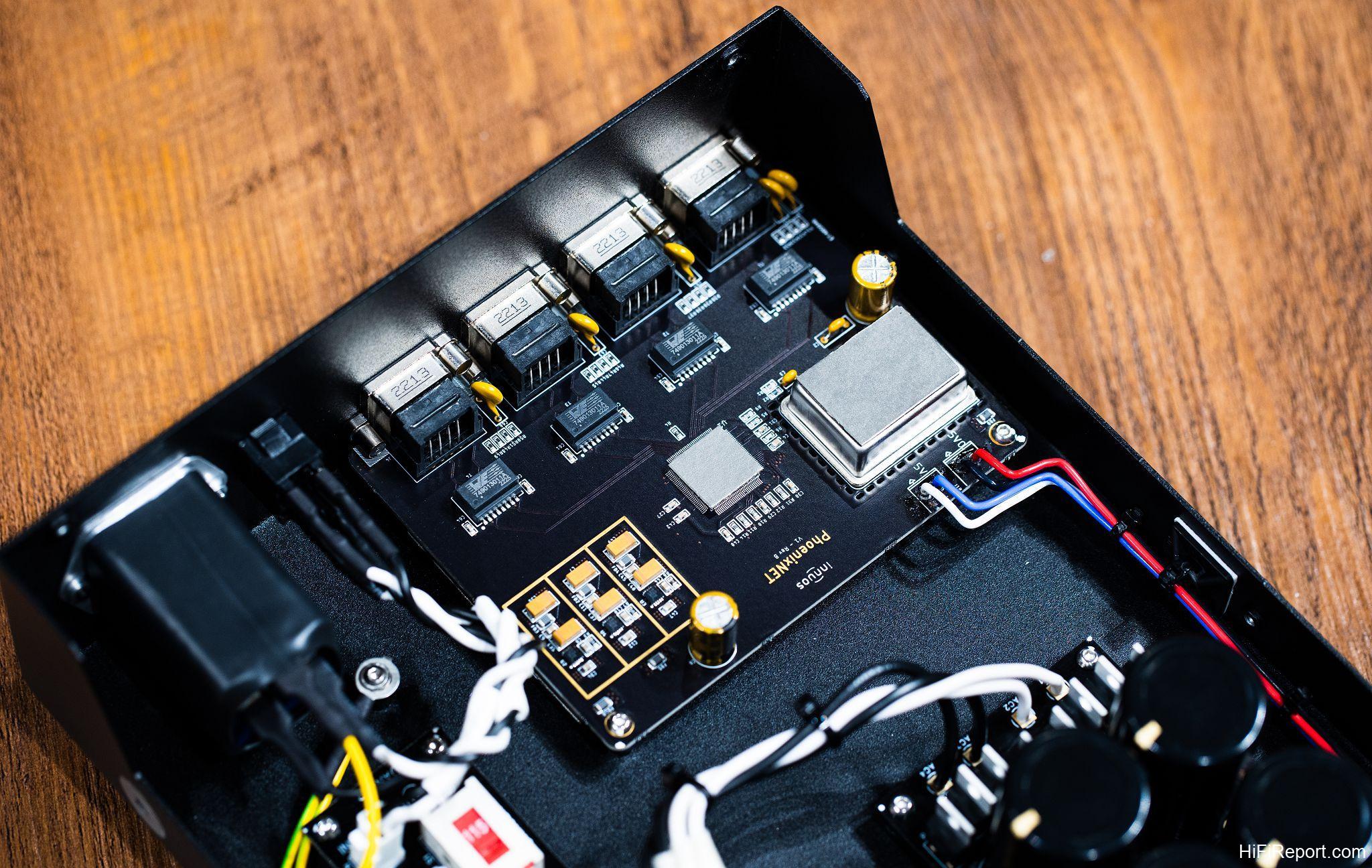
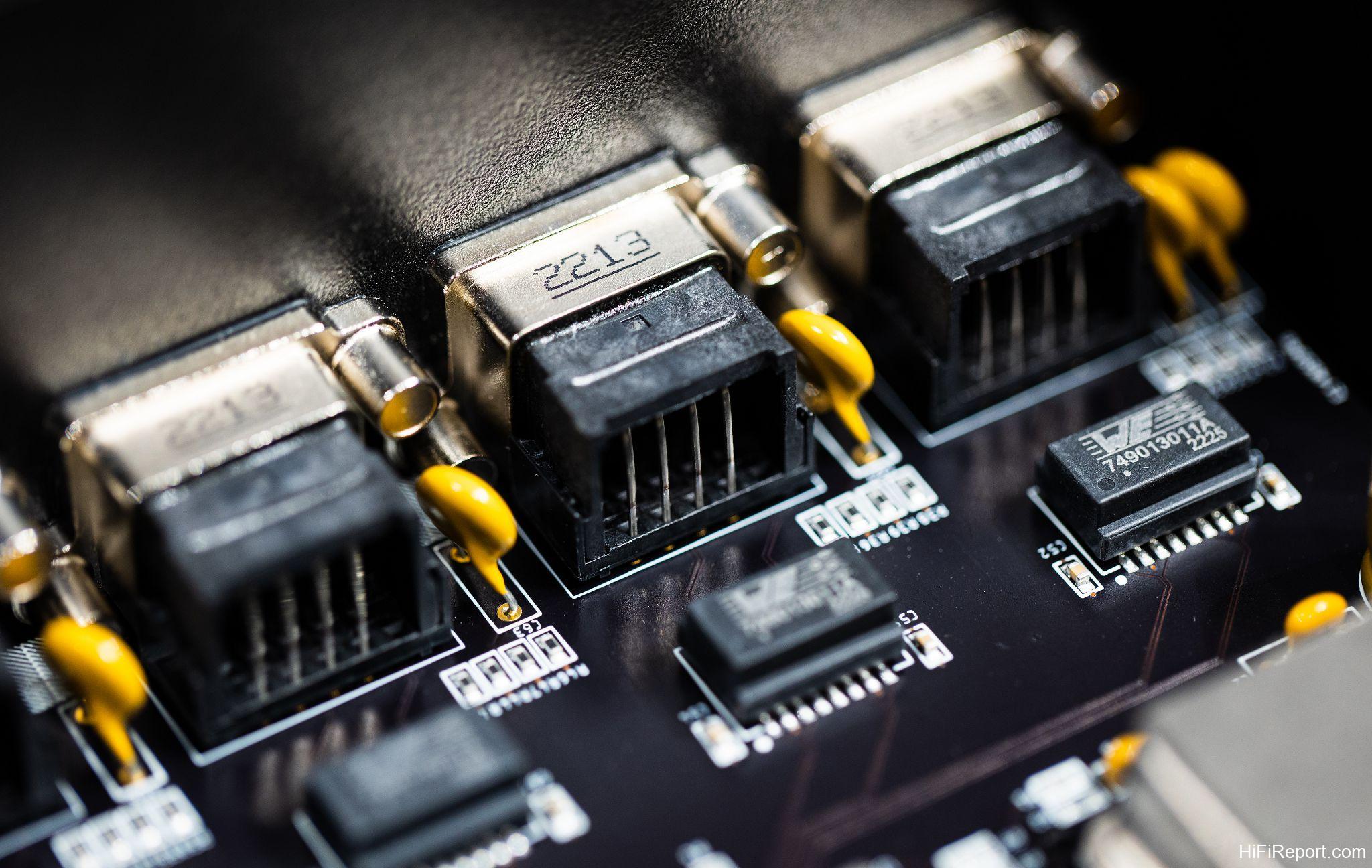
1. **Minimize Switch Noise:** Employing a 100Mbps network switch chip known for its superior sonic characteristics, the design eliminates switching power rectification to eradicate high-frequency noise. Audiophile-grade Amphenol RJ45 connectors, individually isolated and shielded, are utilized, devoid of LED indicators to prevent interference, and are further treated with EMI isolation.
2. **High-Precision and Stable Clock:** An exceptionally precise 3ppb 25MHz Oven-Controlled Crystal Oscillator (OCXO) is integrated, matching the specifications of their flagship STATEMENT server. This OCXO is powered by an independent linear power supply and directly connected to the network switch chip.

3. **Purest Power Supply:** The PhoenixNET incorporates two linear power supply modules (CX Modules), identical to those in the flagship STATEMENT. Designed by the renowned Sean Jacobs, these modules utilize audiophile-grade Mundorf capacitors and provide separate, independent power to the clock and main circuitry, with the shortest possible signal paths to minimize EMI interference.

4. **Vibration Reduction:** Custom-designed CNC-machined aluminum feet, internally damped with a specifically formulated material, effectively eliminate resonance. The inner side of the top cover also features a specialized damping material that converts vibrations into thermal energy. Even the RJ45 connectors are fitted with silicone rings for further vibration isolation.

Scientific Design and Modern Production
Innuos has emerged as a rapidly successful brand in the realm of audiophile-grade network streaming products, and network switches naturally became a key focus in their product lineup. The name PhoenixNET, while its significance might differ in Western cultures, carries connotations of nobility and prestige in the East. Innuos’ approach to switch design is deeply scientific, focusing on noise isolation, precise clocking, superior power delivery, and vibration control.
They strive to eliminate interferences like EMI and physical vibrations, ensuring the optimal signal transmission path for audio. While the number of brands producing audiophile-grade switches is increasing, and the design goals are generally similar, the ultimate execution, much like cooking, varies significantly from one designer to another. Having visited Innuos’ Portuguese headquarters and factory, we were greatly impressed by their modern production management system, a level of rigor rarely seen in the audio industry.
This undoubtedly boosts consumer confidence in Innuos products. We have personally tested numerous audiophile-grade switches, and each one, from our initial tests to the latest models, has presented distinct sonic characteristics. The fact that switches alter the final sound of a system is undeniable through direct experience, and with any alteration, there are naturally distinctions between better and worse.
Enhanced Cohesion, Clarity, and Musicality
For listening tests, Eva Cassidy’s acclaimed “Live At Blues Alley” album served as a reference. This recording perfectly captures Eva’s vibrant stage presence and effortless vocal style, ranging from joyful to deeply emotional, showcasing her captivating musicality and vocal prowess. Her interpretations of diverse songs are timeless classics. We evaluated the PhoenixNET switch by streaming online tracks from Tidal and Qobuz via Roon, with the Roon Server installed on a NAS.
The PhoenixNET switch was connected to the external network, the NAS, and the streaming player. It demonstrably impacted the final musical performance of our audio system. For instance, the sonic cohesion and musical clarity were noticeably improved. The sound became more relaxed, agile, and subtly powerful. The sonic background was cleaner and more transparent, with increased density. Across a wide range of music, the presentation felt particularly natural and fluid, and even at higher volumes, it remained composed without becoming harsh.
With Eva’s album, the playback approached perfection. I also explored modern pop tracks by artists like Eminem, Rihanna, Linkin Park, and Sam Smith. While some might consider their music arrangements overly complex or rhythmically aggressive, these vocalists possess exceptional talent and pitch accuracy. Well-chosen tracks from these artists are excellent for testing audio equipment, especially since we are often more familiar and fond of these songs. The PhoenixNET switch’s ability to deliver sonic purity, natural extension, and a clean background made these tracks sound even more engaging and musically compelling.
Powerful Rhythm and Unrestrained Sound
The evaluation commenced with Hanne Boel’s “Blowin’ In the Wind.” The sound produced by the Innuos PhoenixNET exhibited remarkable dynamism. The pulsating drumbeats were delivered with ample airiness, well-judged weight, and excellent separation.
While the drums weren’t particularly heavy, each beat was solid and impactful, resulting in a full-bodied sound even without overwhelming force. The comfortable and engaging rhythm permeated the entire track, remaining enjoyable and never becoming monotonous, even after extended listening. The rhythmic drive was palpable, yet simultaneously imbued with a noticeable and energetic bounce.
Vocals were rendered with impressive three-dimensionality and focus. The sensation of the voice gliding past the ears was captivating. The track presented a remarkably spacious soundstage, and in conjunction with the male vocals and drums, the sound extended exceptionally well in all directions. The overall sonic picture felt virtually boundless. There was no sense of limitations in the frontal image; instead, the music unfolded a vibrant and expansive canvas, allowing the sound to roam freely, propelled by the drums and vocals.

Abundant Detail and Intricate Sonic Textures
Moving on to Chantal Chamberland’s “Besame Mucho,” the initial impression was of exceptionally clean and clear instrumentation. The opening guitar notes were strikingly beautiful, possessing an undeniably refined high-frequency character. The tone was crystalline, full-bodied, and richly nuanced, instantly conveying a sense of sonic brilliance illuminating the space.
The level of detail was readily apparent, highlighting the nuanced nature of the sound. For instance, the subtle breathiness in the vocals contributed to a distinct three-dimensional presentation. Similarly, the soft, rustling percussion in the background, despite its delicate nature, was never overshadowed by the more prominent instruments or vocals. The shifts in the background accompaniment and its sonic characteristics were easily discernible.

The vocal performance was characterized by a captivatingly graceful quality. One could perceive the gentle fragility of the breathy vocal passages and the intricate beauty of the full-bodied vocal delivery, showcasing the multifaceted richness of the song with clarity and depth. The abundance of detail also ensured that the airiness within the breathy vocals was rendered with exquisite subtlety, adding a layer of tenderness and intimacy to the song, effortlessly creating a romantic ambiance in the listening space.
Precise Dynamics and Immersive Soundstage
Finally, Joy Williams’ “Before I Sleep” served as the concluding reference track. After evaluating several female vocal tracks, it became evident that the Innuos PhoenixNET consistently delivered clear and sonically pleasing audio. The sound was undeniably refined, leaving little room for criticism. Even the instrumental sections were remarkably stable, and the sonic presentation felt unrestrained and natural. This particular track highlighted the clean and precise dynamic shifts. The music could transition from surging intensity to absolute silence in an instant, demonstrating the sound’s ability to start and stop with remarkable speed, instantly revealing the transparency of the background.
The stringed instrument sounds exhibited a subtle airiness, conveying a sense of vibrant resonance. The sound was perceived as robust and powerful, and this intensity persisted throughout the track. Even during fast-paced and energetic passages, the musical energy was palpable, and the interplay between instruments and vocals was equally compelling. However, they didn’t compete for attention; instead, they intertwined seamlessly, creating a cohesive and immersive soundscape. The synergy between them was beautifully integrated, resulting in a panoramic sonic vista that presented the song’s essence with clarity, depth, and completeness.
Innuos PhoenixNET Network Switch Specifications
* **Input:** RJ45 x1
* **Output:** RJ45 x3
* **Speed:** 100Mbps
* **Dimensions:** 215 x 87 x 342 mm
* **Weight:** 5kgs