
Lindemann Musicbook Combo Review
In the realm of music, we often speak of two distinct domains: online and offline. Online music is synonymous with digital streaming, drawing from the boundless resources of the internet. Offline music, on the other hand, evokes physical media like CDs and vinyl, alongside digital files stored on computer hard drives or NAS devices. The Lindemann Musicbook Combo from Germany elegantly bridges these two worlds. This single unit is designed to comprehensively handle both online and offline music sources, offering a streamlined path to pure musical enjoyment.
Simple Setup, Superior Sound
If you are an uncompromising audiophile, committed to the complexities of separate component systems—preamps and power amps, dedicated CD transports and DACs, high-end standalone streamers paired with massive, SSD-based audio NAS drives—then the Musicbook Combo might not be for you. Conversely, if the idea of individually sourcing and meticulously matching each component feels daunting, then the Musicbook Combo is precisely what you need. It’s engineered to simplify your audio life, delivering a complete musical solution with just the addition of loudspeakers.
Just how feature-rich is the Musicbook Combo? Deconstructing its capabilities reveals a digital upsampler, DAC, network streamer, preamplifier, power amplifier, and even an MM phono stage—essentially six discrete components consolidated into one chassis. While a comprehensive integrated amplifier in this price range might not be considered ‘budget-friendly,’ when you consider that the Musicbook Combo effectively replaces six separate devices, it undeniably presents exceptional value.
Fraction of the Cost of Separates
Currently, the Lindemann Musicbook series comprises three models: the Combo, Source II, and Power II. The Combo essentially merges the Source II and Power II into a single unit. It forgoes the slot-loading CD mechanism and reduces the power output from 500 watts to 130 watts into 4 ohms. However, the price of the standalone Combo is less than half the combined cost of the Source II and Power II, while offering virtually identical functionality. This naturally leads to the question posed to Mr. Luo, the owner of HiFiReport: “Won’t the Combo cannibalize sales of the Source II and Power II? It seems like the Combo offers significantly better value.”
Mr. Luo chuckled and explained that the target audiences differ, minimizing any potential impact. He reasoned that enthusiasts seeking separate pre-power combinations are typically looking for a more involved, hands-on audiophile experience, which a single box solution might not fully satisfy. Conversely, consumers drawn to the Combo are likely prioritizing system simplification.
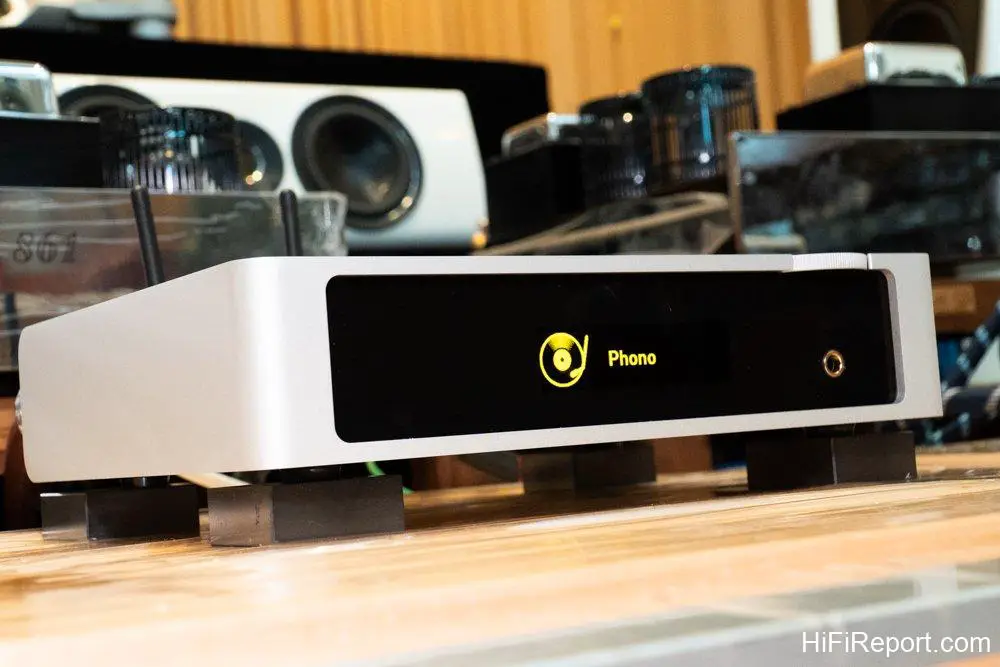
This is akin to electric guitar amplification. Those who prefer amp heads and cabinets are less inclined towards combo amps. Professional guitarists often prefer bringing their own amp heads to ensure their signature tone is consistent, irrespective of the venue’s PA system.
Six Components in One
The Musicbook Combo is truly impressive. Within the same chassis footprint as other Musicbook components, it incorporates almost all the functionality of the Source II. In terms of digital streaming, it supports a wide array of services including Tidal, Qobuz, Deezer, HighRes Audio, Spotify, internet radio, and Podcasts, and is also Roon Ready. Furthermore, it provides two sets of analog inputs, an MM phono stage, and a headphone amplifier. Whether your source is digital or analog, the Musicbook Combo offers comprehensive connectivity. At its digital heart is an ARM single-chip processor, ensuring future compatibility with emerging streaming services through firmware updates.
However, it’s worth noting that Japanese brands offer similarly featured devices at more competitive prices. Why then, opt for the Lindemann at a higher cost? Even with its dual AKM AK4493 DAC chips in a dual-differential mono configuration, coupled with AK4137 upsampling, the Musicbook Combo remains pricier than many Japanese counterparts. And it’s not as if Japanese chips are necessarily inferior. So, where does the added value of the Musicbook Combo lie? (Image courtesy of Lindemann) The answer is that component specifications alone are not the sole determinant of audio quality. AKM DAC chips are readily available for purchase. The true challenge lies in engineering exceptional sound. This is analogous to a Michelin-starred restaurant. While the ingredients might be similar to those used in everyday eateries, the price difference is substantial. Dining at a Michelin-starred restaurant is not just about the ingredients; it’s about experiencing culinary artistry. In the context of audio, this artistry translates to the manufacturer’s expertise and engineering prowess.
DSD Upsampling: A Signature Feature
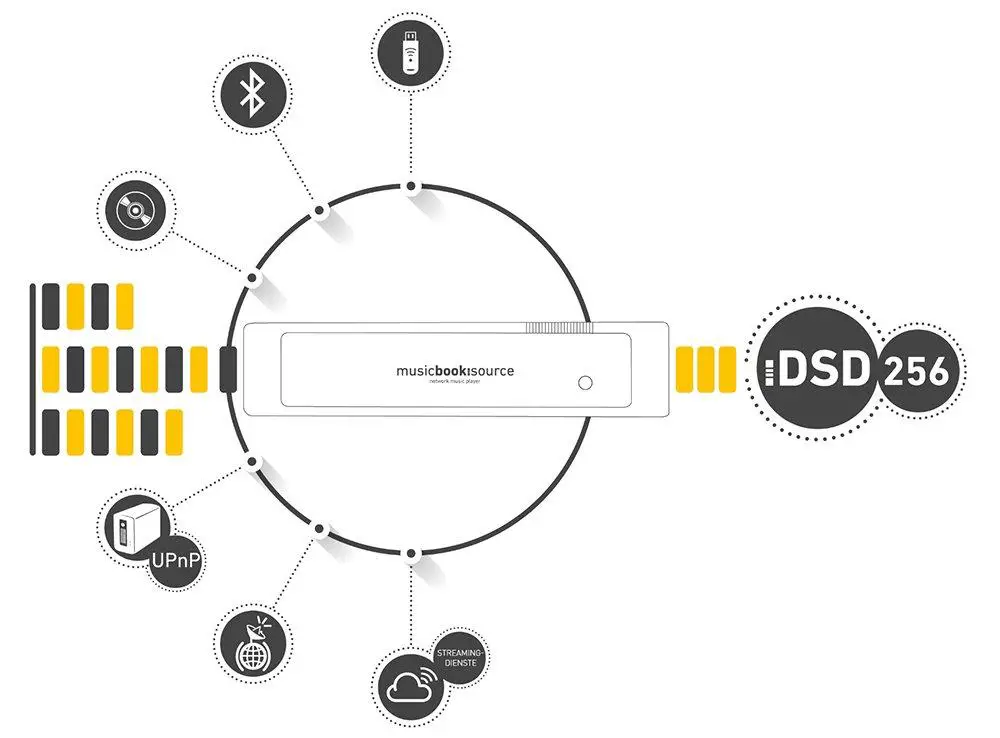
Where does Lindemann excel? In my opinion, it’s their DSD upsampling. This is a proprietary algorithm developed in-house that converts PCM signals to DSD 256, with a demonstrably significant impact on the sound. I previously experienced this with the Limetree Network and was equally impressed with the Musicbook Combo.
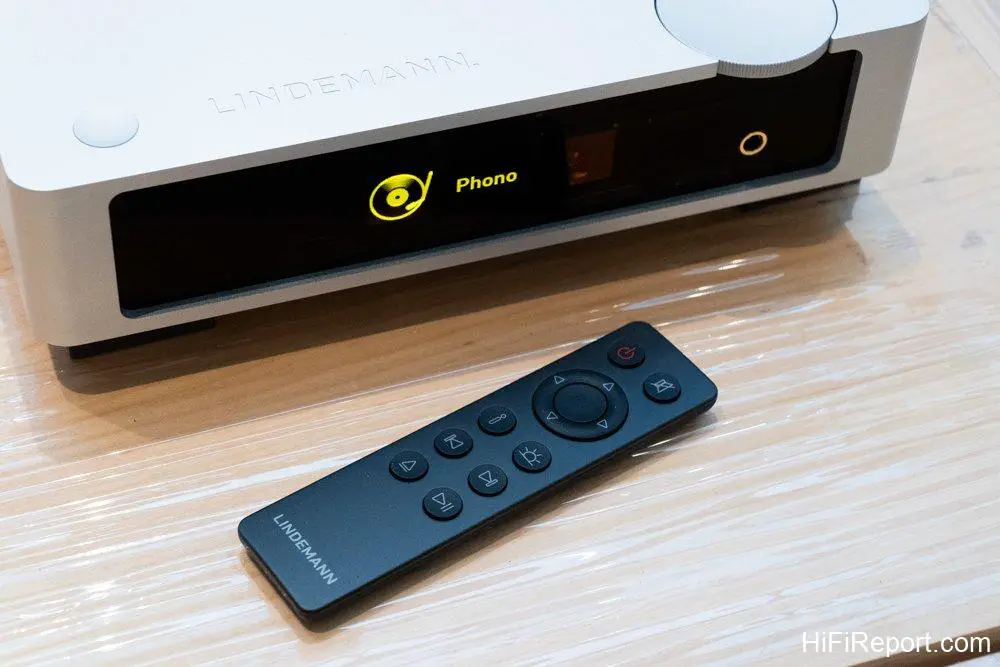
The debate about whether PCM or DSD is inherently superior remains unresolved. However, the enduring presence and dedicated followings of both formats suggest inherent strengths in each. Yet, the same music can sound subtly different in PCM and DSD. Wouldn’t it be ideal to have both? With the Musicbook Combo, you can.
(Image courtesy of Lindemann)
Femto Clock: Precision Timing from High-End Components
Capable of handling PCM up to 32 bit/384 kHz and DSD 512, the Musicbook Combo’s format compatibility is on par with DACs in a similar price range. However, its unique selling point is the Re-sampling algorithm that converts PCM to DSD at 32-bit resolution with an ultra-high dynamic range of 180 dB. This sets the Musicbook Combo apart.
Are there other manufacturers offering similar conversion features? Yes, brands like Emm Labs and dCS also incorporate PCM-to-DSD conversion, but each employs a different algorithm, resulting in distinct sonic characteristics.
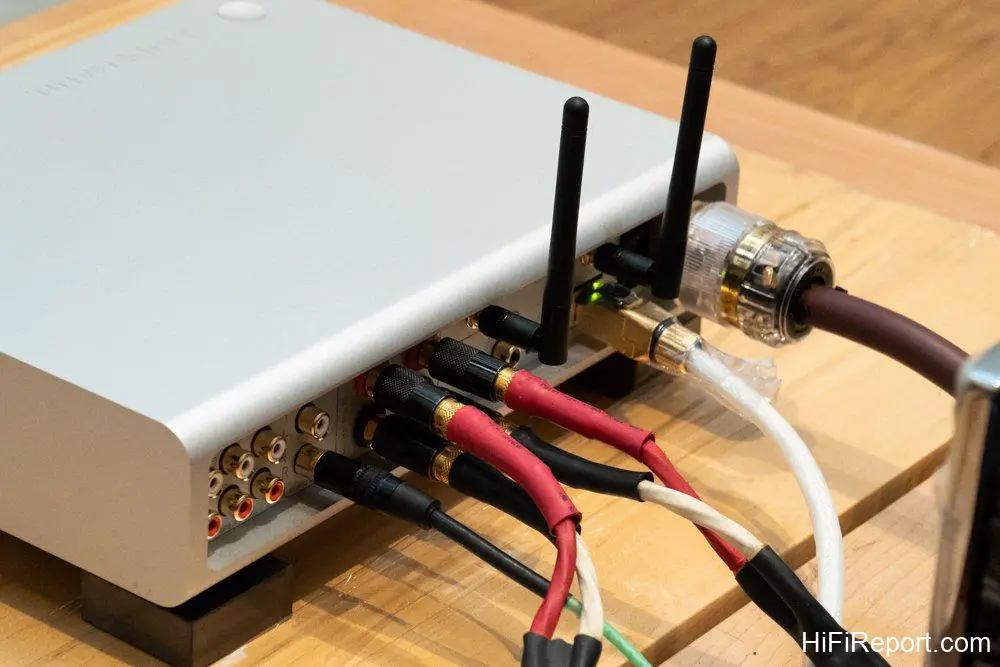
The Musicbook Combo employs dual AK4493 DAC chips in a dual-differential mono configuration to maximize channel separation. Higher channel separation contributes to more precise soundstage imaging. The AK4137 handles the re-sampling, while clock precision is meticulously managed by a MEMS Femto Clock—often referred to as a “femtosecond clock.” A femtosecond is 10 to the power of -15 seconds. Utilizing such minute timing increments minimizes digital jitter.
Discovering that the Musicbook Combo incorporates a femto clock was a pleasant surprise. In a component priced above $5,000 USD, a femto clock would be expected. However, for an integrated amplifier in the Musicbook Combo’s price bracket, Lindemann’s inclusion of such a high-precision clock is another testament to its exceptional value.
Damping Factor Over 500: Enhanced Bass Control
Compared to the separates in the Musicbook series, the Musicbook Combo has a significantly lower power rating. The Musicbook Power II delivers up to 500 watts, while the Combo is rated at 130 watts. Despite this seemingly large difference, Lindemann has prioritized two key aspects in the Musicbook Combo’s Class D amplification that are arguably more crucial than sheer power output.
What are these two factors? Firstly, the Musicbook Combo boasts a damping factor exceeding 500. Secondly, it utilizes an ultra-low noise power supply, achieving a total harmonic distortion plus noise figure of less than 0.03%.

This signifies that the Musicbook Combo is an exceptionally quiet amplifier with an extremely low noise floor. The high damping factor ensures excellent low-frequency control. Both of these attributes are paramount to sound quality. While the lower power output compared to the Power II is a factor, it primarily depends on your listening space and volume preferences. For very large rooms or those who demand extremely high SPLs, the Power II might be necessary. However, for typical home listening environments, 130 watts is more than sufficient.
The Musicbook Combo also includes a headphone amplifier circuit, saving the need for a separate component. This headphone stage is no afterthought; it can drive headphones with impedances ranging from 16 to 200 ohms, has a damping factor exceeding 100, and offers selectable gain settings of 0 dB and 12 dB. Although not specifically tested during this HiFiReport session, based on these specifications alone, it likely outperforms many standalone headphone amplifiers.
Vela FS 407 Sounded Like Larger Speakers
HiFiReport paired the Musicbook Combo with Elac Vela FS 407 floorstanding speakers, positioned in front of the larger Elac Concentro speakers. The Vela FS 407 appear relatively compact, but driven by the Musicbook Combo, one might visually mistake them for the Concentro in terms of sound output. This highlights the impressive power of this simple two-component system.
Of course, HiFiReport’s listening room isn’t overly large, which allows the 130-watt Musicbook Combo to drive the Vela FS 407 with authority. In a space three times larger, limitations might become apparent. However, in the HiFiReport listening environment, the Musicbook Combo and Vela FS 407 pairing performed effortlessly and with ample headroom.
While listening to the Musicbook Combo, I observed the HiFiReport room and asked Mr. Luo if any recent acoustic adjustments had been made, as the room seemed quieter than I remembered. Mr. Luo mentioned ongoing fine-tuning, making subtle adjustments to enhance sound diffusion and minimize standing waves and noise in the corners. This reflects a professional approach to room acoustics: prioritizing diffusion over absorption, which is likely a key factor in HiFiReport’s success. Understanding how to optimize sound is crucial for any audio business.
Solid Bass Foundation
Returning to the Musicbook Combo, how can a 130-watt integrated amplifier make the Vela FS 407 sound so powerful? Listening to Mari Boine’s electronic track “Vuoi Vuoi Mu,” a genre not typically in my regular rotation, the track’s surging bass and diverse sonic textures demand an amplifier with robust speaker control to maintain composure at higher volumes without becoming harsh or distorted. Distortion and harshness often stem from amplifier limitations or an inability to properly control the speaker drivers. Demanding electronic music can quickly become a chaotic mess under such circumstances.
However, the Musicbook Combo exhibited remarkable stability and control. The bass was solid and well-defined, with rounded, full-bodied notes. The stereo panning effects in the electronic music bounced across the soundstage like ping-pong balls. Vocals were firmly anchored in the center, while the bass frequencies incorporated out-of-phase signals, widening the soundstage. The central electronic drums punched with full, rounded impact. At higher volumes, the performance genuinely evoked the impression of listening to the much larger Concentro speakers.
This capable 130 watts represents just the baseline performance of the Musicbook Combo. I often tell friends that unless you need to listen at unreasonably loud volumes, 100 watts is generally ample for home use. By this metric, the Musicbook Combo exceeds expectations. While Lindemann products are pricier than similarly featured Japanese counterparts, the premium is justified by their superior sound quality. The natural musicality, combined with a transparent and accurate soundstage, are the core values that make the Musicbook Combo a compelling choice.
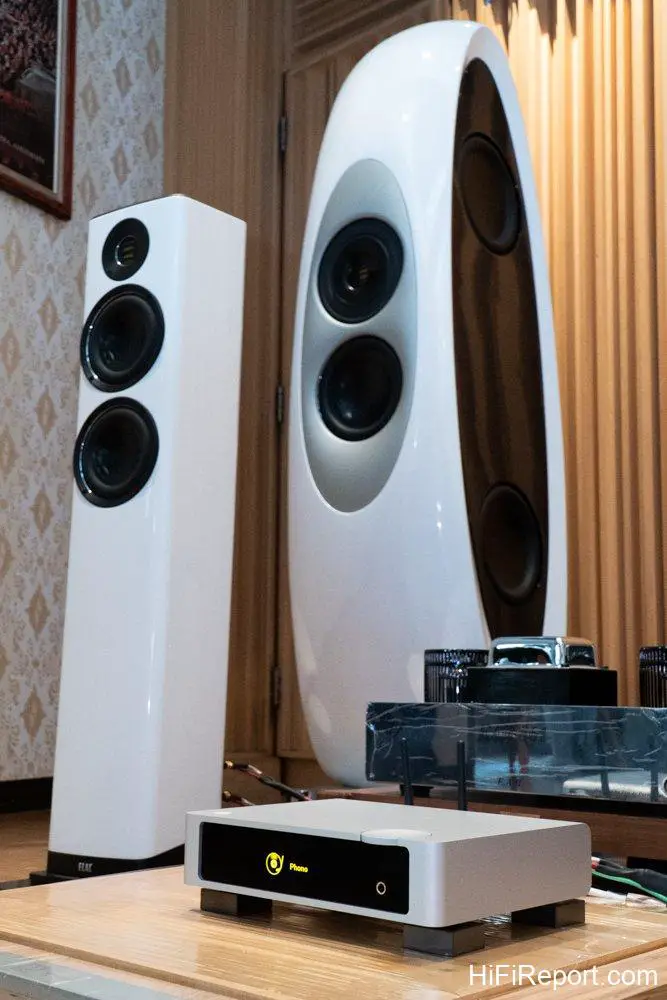
Excellent Dynamics and Layering with Violin Concerto
Listening to Anne-Sophie Mutter’s early recording of Vivaldi’s “The Four Seasons,” specifically the second movement of “Summer,” the delicate, thread-like violin passages are contrasted with the sudden, powerful bursts of the string orchestra. According to Vivaldi’s accompanying sonnet, the second movement of “Summer” depicts the fatigue and unease of people amidst buzzing insects, flashes of lightning, and angry barking dogs. The quiet, wavering violin likely represents the insects, the recurring three-note motif beneath the violin suggests incessant barking, and the thunder and lightning are vividly portrayed by the orchestra’s explosive responses.
The Musicbook Combo masterfully conveyed these dynamic contrasts, beautifully rendering the interplay between the solo violin and the orchestral layers.
Moving into the third movement of “Summer,” the tense strings depict panicked crowds, with thunder, lightning, and hail blocking their path home. The Musicbook Combo presented a wide, expansive string section, conveying the tension of the music. Within the rapid melodic passages, there were rushing sonic textures, depicting the stormy weather. The solo violin played with frantic urgency, answered by the orchestra’s increasingly urgent responses. Amidst these rapid notes, the Musicbook Combo maintained a solid low-frequency foundation. Even within the frantic passages, a steadfast bass line anchored the music, propelling it towards the movement’s conclusion.
DSD Upsampling is Fun and Engaging
Paired with the Vela FS 407, the Musicbook Combo seemed to make the speakers sound larger, delivering impressive mid-bass energy and a balanced frequency response. However, this still doesn’t fully showcase the Musicbook Combo’s unique “special power”—PCM-to-DSD upsampling. Lindemann’s proprietary algorithm allows you to enjoy both PCM and DSD formats and switch between them at will. Crucially, this technology significantly enhances even Bluetooth streaming.
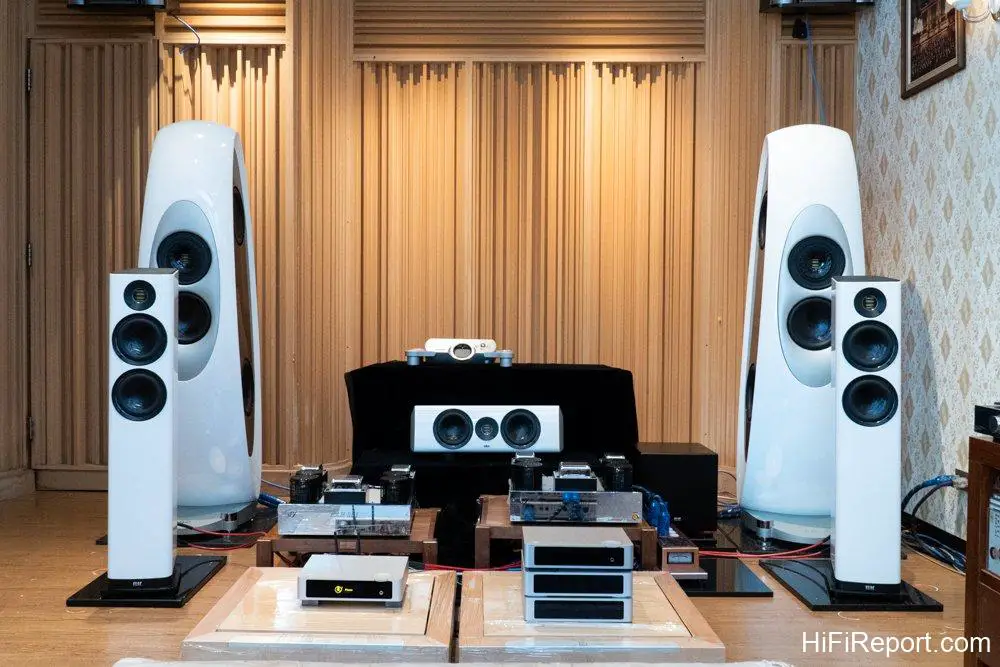
Switching to Airplay and connecting my iPhone via Bluetooth, I was struck by how the Musicbook Combo elevated Bluetooth audio to near-file quality, approaching 44.1 kHz CD standards. While still not quite matching Hi-Res masters, achieving near-CD quality with the convenience of Bluetooth made the Musicbook Combo even more appealing.
Even Airplay and Bluetooth Sound Great
To further explore this, I chose Pink Floyd’s classic “Dark Side of the Moon,” focusing on the effects-laden track “Money.” The iconic opening cash register sounds rhythmically transform into percussion. The song’s unusual 7/4 time signature gives it a unique rhythmic feel. The vintage analog recording’s warmth was clearly evident through the Musicbook Combo. The electric guitar’s vibrato effect had a distinct 70s vibe. The stereo mixing is exaggerated, with diverse sounds panning dramatically between channels. Listening via Airplay was surprisingly enjoyable. Switching to DSD mode, the midrange became warmer and more analog-like. For those who prefer a smoother texture, DSD is preferable. However, for those who favor the raw, gritty character of classic rock, PCM might be more satisfying.
Wait, does this mean DSD upsampling isn’t always superior to PCM? Precisely. The ability to switch between PCM and DSD doesn’t imply that DSD upsampling is universally better. It’s a matter of taste and sonic nuance, varying with different musical genres. Generally, DSD upsampling tends to sound smoother and more fluid, while PCM mode offers sharper, clearer lines and a more direct sonic presentation.
PCM or DSD: Choose Your Flavor
Based on my listening session at HiFiReport, DSD upsampling is generally a safe bet for classical music. Listening to Zimerman, Bernstein, and the Vienna Philharmonic’s rendition of Brahms’ Piano Concerto No. 2, the cello solo in the slow movement was breathtaking. In PCM mode, the cello already sounded beautiful. However, with DSD upsampling, the background seemed quieter, enhancing the cello’s romantic and lyrical quality. The light, sustained strings in the background provided a delicate foundation, leading into the piano’s entrance. DSD upsampling amplified the music’s inherent romanticism.
However, for rock music, PCM and DSD each have their merits. Listening to EggPlantEgg’s “Love You More Than I Thought I Could,” the driving kick drum had more impact in PCM mode. DSD upsampling softened the attack slightly, making the kick drum less forceful and the overall energy a bit less intense.
Conversely, listening to John Mayer’s “Live in LA: Where the Light Is,” and his cover of Tom Petty’s “Free Fallin’,” the acoustic guitar and vocals in DSD upsampling mode sounded richer and warmer, adding depth and emotion to the performance.
These are, of course, subjective impressions. Ultimately, the Musicbook Combo’s PCM and DSD modes offer two distinct sonic flavors, giving you the freedom to choose according to your preferences and musical tastes.
Highly Recommended: Versatile and Superb Sound
In terms of value, the Musicbook Combo undoubtedly surpasses the Source II and Power II separates. It’s a single-box solution, sacrificing only the CD transport and some power output. However, the Musicbook Combo’s primary appeal isn’t just its comprehensive digital and analog functionality. While other integrated amplifiers may offer similar features at lower prices, Lindemann’s strength lies in its exceptional digital and analog processing technologies. These technologies impart an almost analog-like warmth to the sound and allow you to explore the nuances of both PCM and DSD, tailoring the sound to your preferences. In short, if you seek both versatility and exceptional sound quality, the Musicbook Combo delivers outstanding sonic performance and is highly recommended.
Specifications
* Type: Streaming DAC Integrated Amplifier
* Digital Inputs: USB-B × 1, Toslink × 1, Coax × 1, WLAN, Bluetooth 4.2 A2DP, USB (CD-ROM)
* D/A Conversion: Up to 32 bit/ 768 kHz, DSD 512
* Analog Inputs: RCA × 2, MM Phono Stage
* Analog Outputs: XLR × 1, RCA × 1
* Network Inputs: Ethernet, Wi-Fi
* Frequency Response: 0 Hz – 200 kHz
* Output Power: 130 W x 2 (4 ohms), 70 W x 2 (8 ohms)
* Damping Factor: Greater than 500
* Total Harmonic Distortion: Less than 0.03%
* Headphone Output Gain: 0 dB / 12 dB Switchable
* Headphone Impedance: 16-200 ohms Recommended
* Dimensions: 280 x 63 x 220 mm (Width x Height x Depth)
* Weight: 3 kg