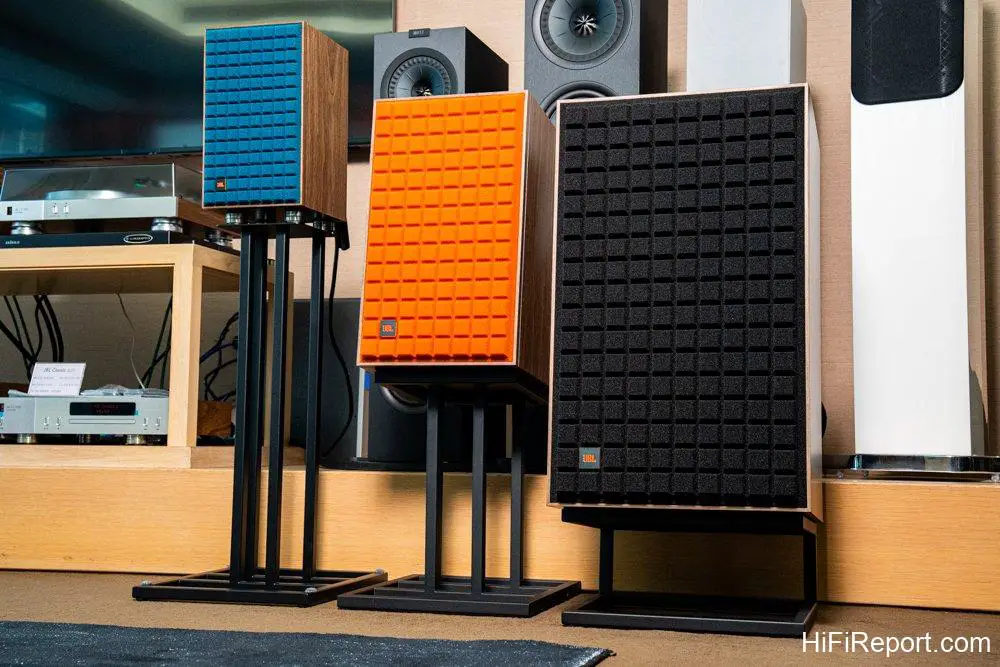
JBL L100 Classic MK II Review
Do you love jazz? Then the new JBL L100 Classic MK II is a classic evolution well worth a dedicated audition at your local audio dealer. During this visit to Hi-Fi Report Audio, the chief editor paired the L100 Classic MK II with JBL’s own SA750 digital streaming amplifier, streaming music files via Roon. The jazz club atmosphere emanating from the L100 Classic MK II was simply spot-on.
Classic Reimagined
Back in 2018, JBL launched the L100 Classic, a faithful recreation of the 1970 L100 in terms of external dimensions, but featuring entirely new drivers and crossover networks. In 2021, the L100 Classic 75 followed, released as a limited edition to celebrate JBL’s 75th anniversary. Now, in 2024, we see the introduction of the L100 Classic MK II. One can surmise that this speaker, with its “modern vintage” appeal, has been a market hit in recent years, otherwise, JBL wouldn’t keep playing the same card.
Just how powerful is the allure of “old school”? Richard E. Ocejo wrote a bestseller titled “Masters of Craft: Old Jobs in the New Urban Economy,” which explores how young, creative souls embrace traditional craftsmanship, from bartending and brewing to butchery and barbering. The appeal of old-school as new-cool is undeniable. It’s clear that the L100 Classic MK II’s “old-meets-new” approach isn’t just aimed at Baby Boomers and Gen X consumers, but also seeks to captivate Gen Y and Gen Z with its blend of vintage charm and modern performance.
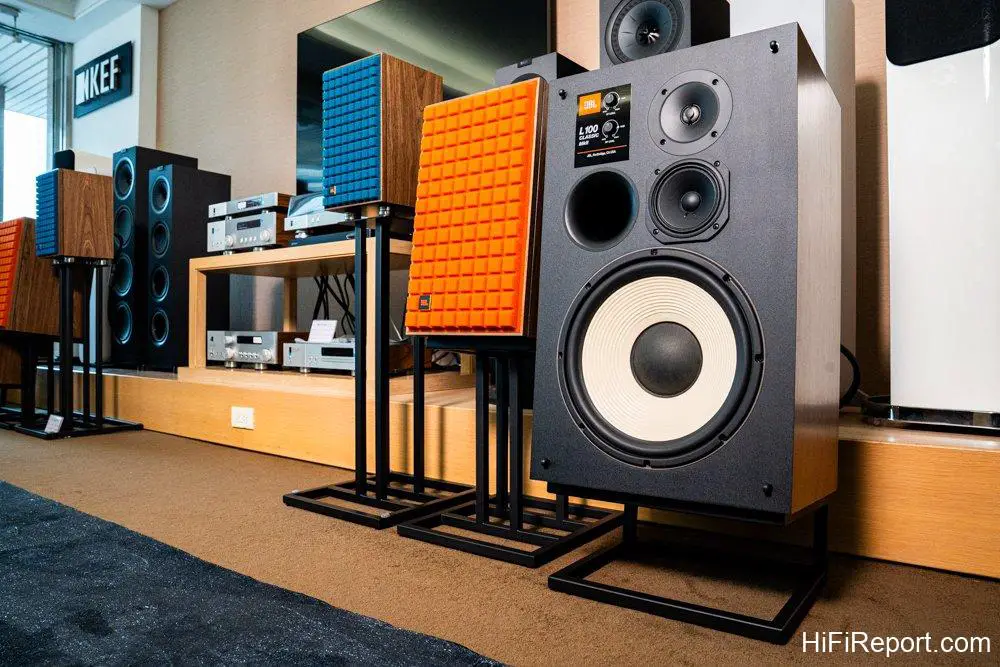
Apparent Sameness
Before heading to Hi-Fi Report Audio to audition the L100 Classic MK II, I did my homework and noticed something peculiar: the L100 Classic MK II’s appearance seemed almost identical to the first-generation L100 Classic from 2018. Even the driver count, sizes, frequency response, efficiency, and crossover points appeared to be exactly the same. Only two differences stood out: first, the speaker terminals. The L100 Classic featured single-wire terminals, while the new L100 Classic MK II boasts bi-wire capability. The other difference was weight, with the L100 Classic MK II being 1.9 kg heavier.
Oh, I missed a third difference: the price. The L100 Classic MK II is a bit more expensive. However, the first-generation L100 Classic has not been discontinued. So, if you feel that the new L100 Classic MK II seems like a mere cosmetic refresh, you still have the option of the slightly more affordable L100 Classic.

All-New Drivers
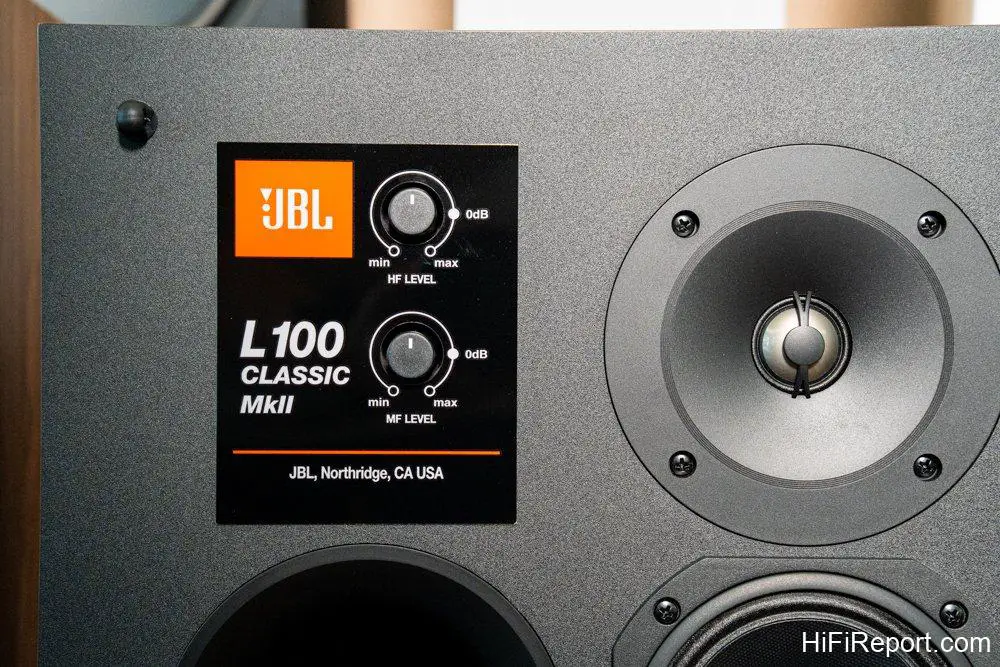
Would JBL, a venerable brand, truly just swap out speaker terminals and then release the L100 Classic MK II with a price hike? Unlikely. A closer look at the specifications reveals that all three drivers used in the L100 Classic MK II have different part numbers. For instance, the 1-inch titanium dome tweeter has evolved to its second generation, and both the 5.25-inch midrange and 12-inch woofer bear distinct part numbers. This signifies that all three drivers have been updated, necessitating a corresponding revision to the crossover network.
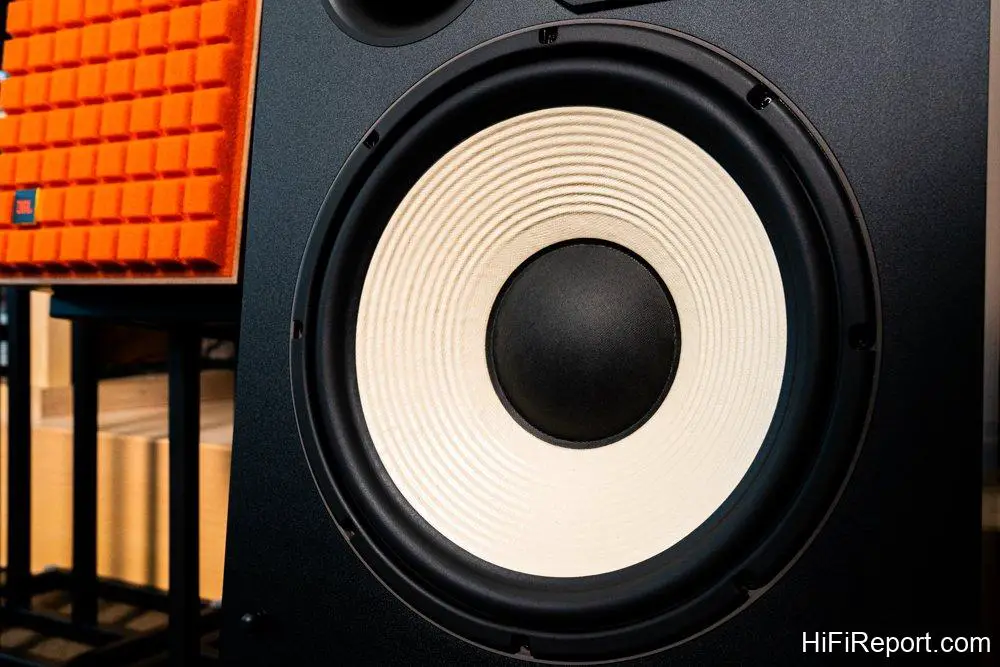
In front of the L100 Classic MK II’s titanium tweeter, there’s a plastic piece combined with a shallow horn, forming an Acoustic Lens. This enhances the high-frequency wave dispersion. The 5.25-inch paper cone midrange features a polymer coating on its surface to improve diaphragm rigidity. The 12-inch woofer also retains the classic white paper cone, adding to the L100 Classic MK II’s quintessential vintage JBL aesthetic.
Dual Spider Woofer
The 12-inch white paper cone woofer is likely the primary reason for the L100 Classic MK II’s increased weight, as this generation utilizes a “dual spider” design. This, coupled with the already hefty cast-frame driver, probably accounts for the majority of the MK II’s added mass.
The function of the spider (or “” as described) is to keep the driver centered in its stationary state. When the amplifier drives the speaker, causing the driver to move back and forth in a piston-like motion, the spider helps the diaphragm quickly return to its original mechanical position. In other words, the spider acts like a brake: when sound is produced, the diaphragm moves back and forth, but once the sound stops, the spider quickly brings the diaphragm back to its stationary, centered position. The faster the spider acts, the better the low-frequency transient response will be.

The 12-inch white paper cone woofer used in the L100 Classic MK II employs a dual spider design. Traditionally, as a woofer diaphragm gets larger, the spider also needs to be larger, but its braking effect isn’t necessarily better. So, JBL designed a dual spider system, allowing for smaller individual spiders while achieving a stronger and quicker return force. This is somewhat analogous to the concept of dual-caliper brakes.
Iconic Grille & Tone Controls
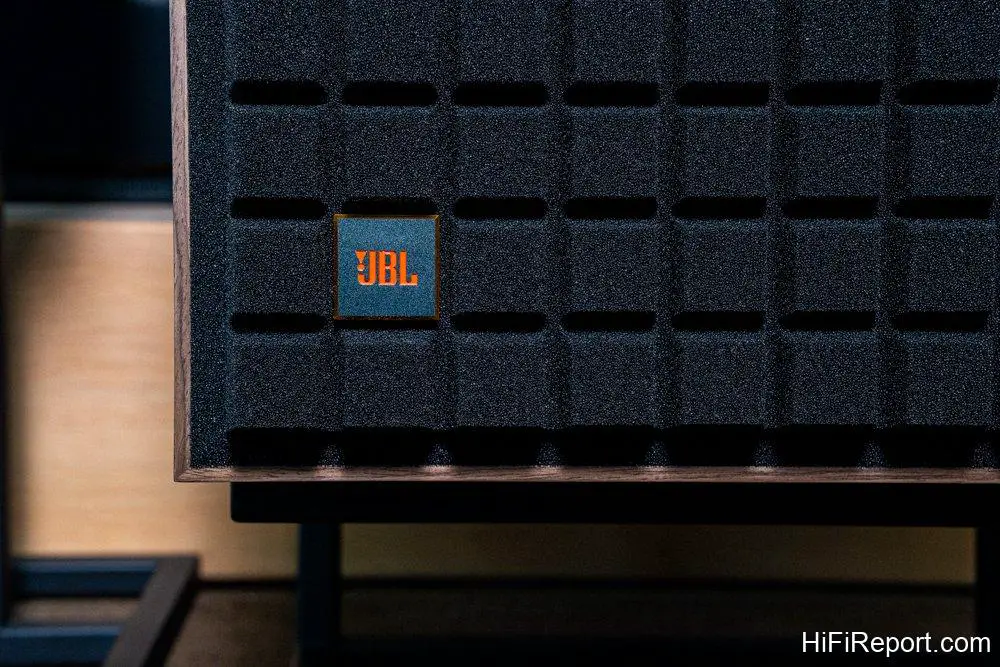
The L100 Classic MK II’s grille remains the classic Quadrex foam grille, a homage to its heritage. When I reviewed the first-generation L100 Classic, I pondered the durability of the foam grille, fearing material embrittlement and cleaning difficulties over time. However, seven years have passed since the first generation’s release, and there haven’t been reports of issues, so JBL’s continued use suggests there’s no need to worry about foam deterioration.
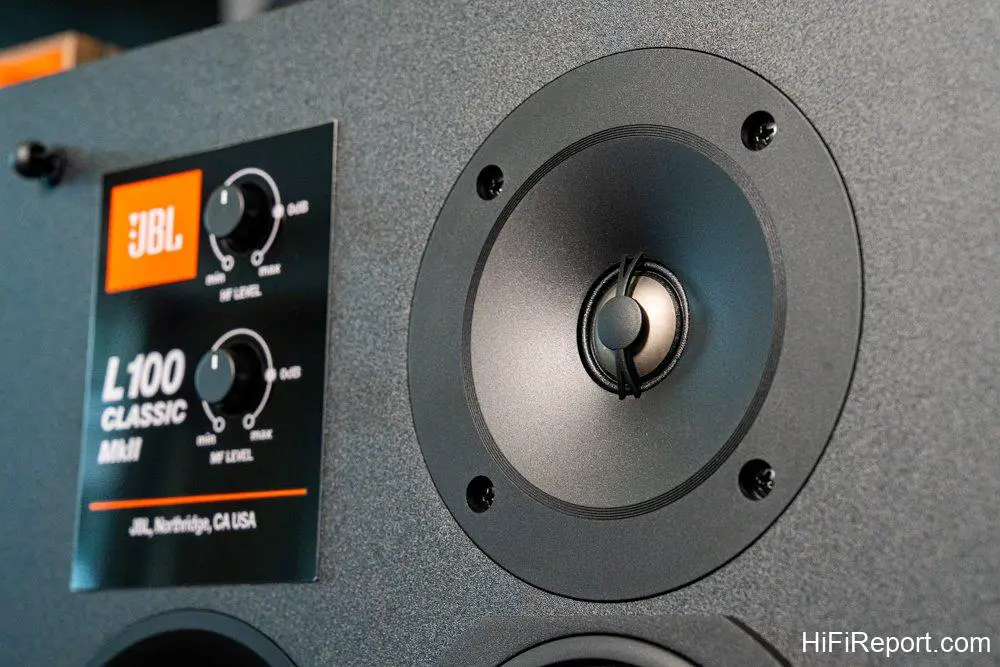
On the front panel of the L100 Classic MK II, there are still two adjustable attenuators for the high-frequency and midrange drivers. These allow you to fine-tune the output levels of the tweeter and midrange according to your listening room’s acoustics and your personal tonal preferences. This not only enhances the L100 Classic MK II’s adaptability to different spaces but also caters to individual sonic tastes.
Seamless SA750 Synergy
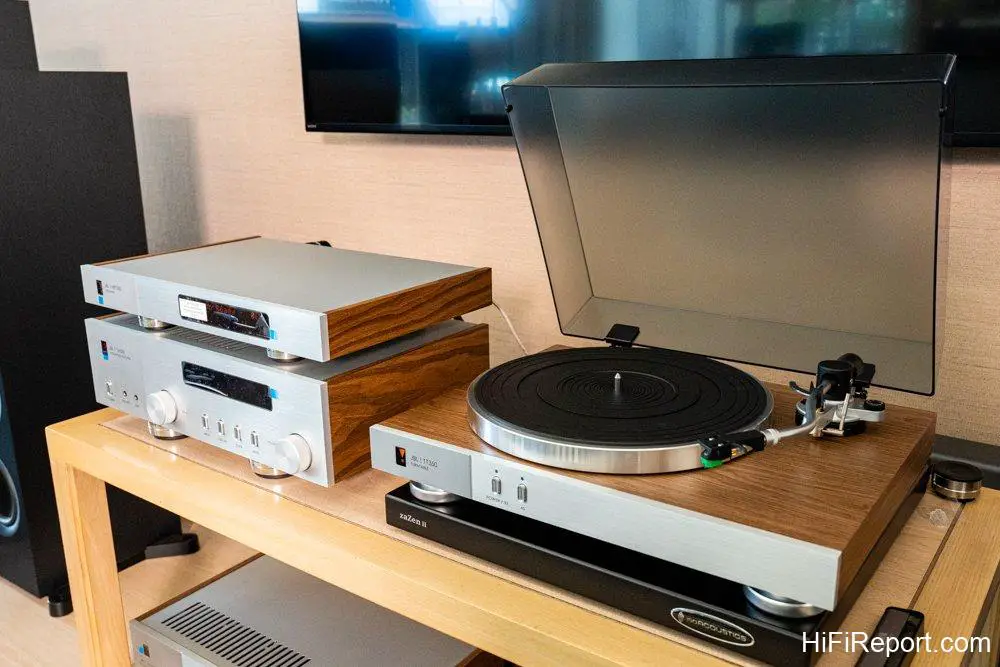
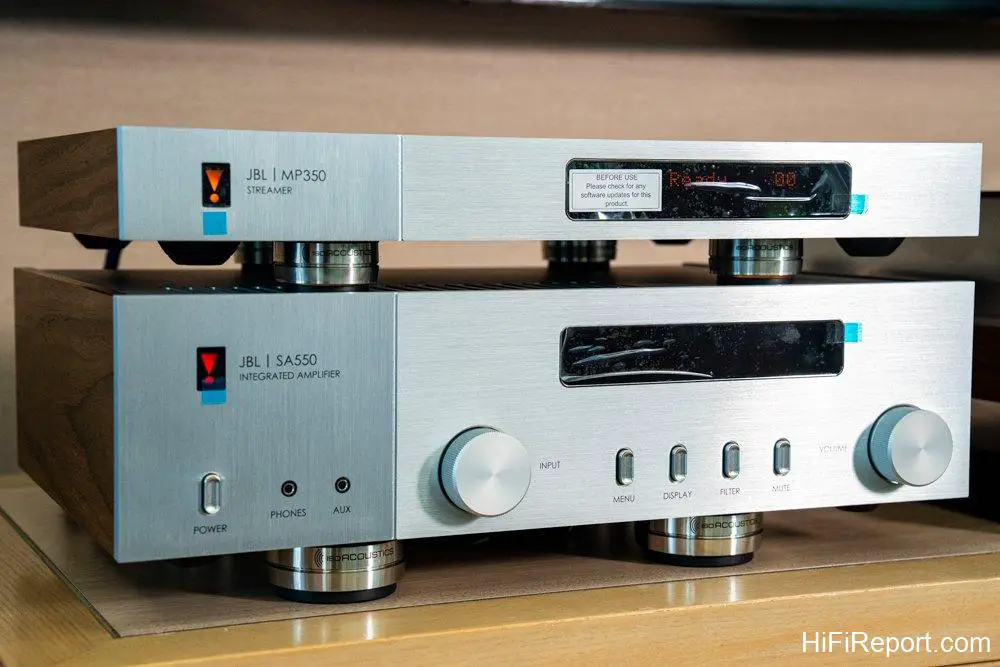
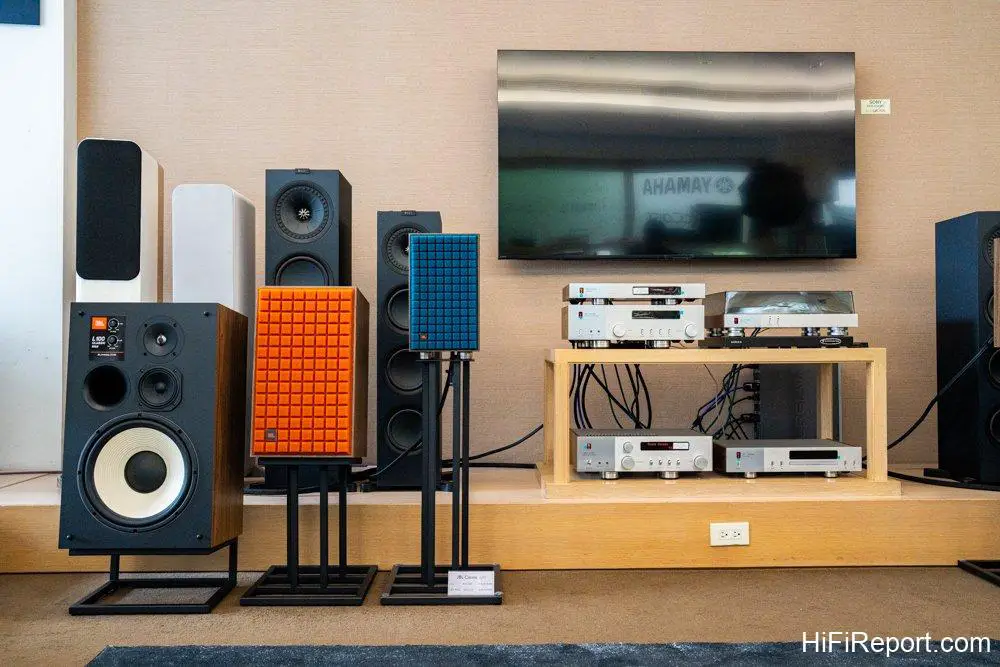
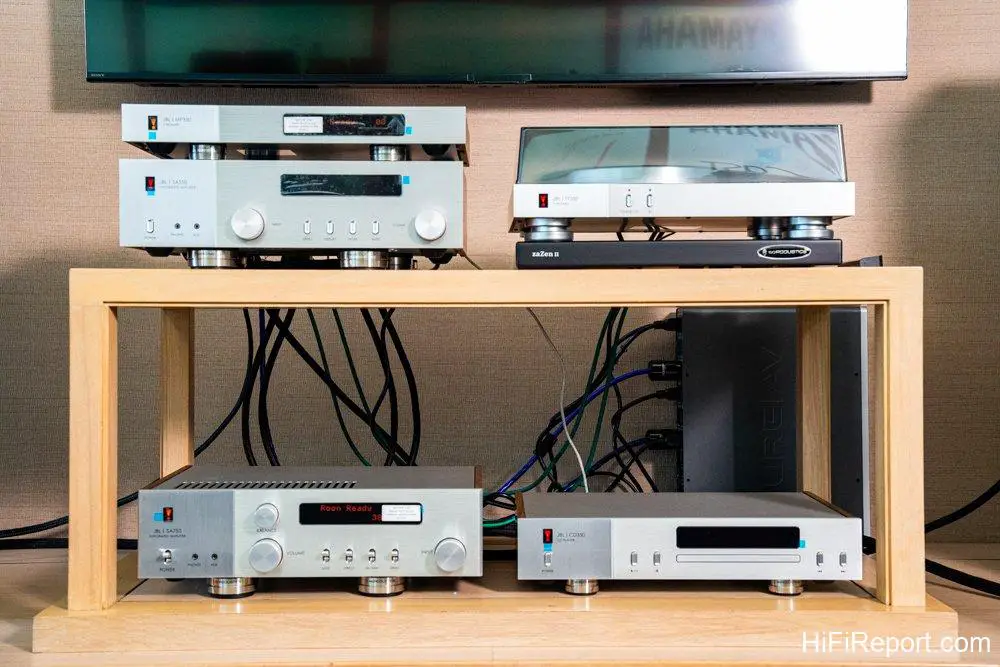
At Hi-Fi Report Audio, a full array of JBL equipment was on display, including the TT350 direct-drive turntable, CD 350 CD player, MP350 digital streaming player, SA550 integrated amplifier, and SA750 integrated amplifier. This means a complete JBL “suit” setup with the L100 Classic MK II is certainly an option. However, I suspect many would opt for a “smart pairing,” using just the SA750 digital streaming integrated amplifier to integrate both online and offline music libraries for the simplest two-component setup.
When I auditioned the first-generation L100 Classic in the Hi-Fi Report editorial office, I used this very same pairing for its convenience, simplicity, and budget-friendliness. So, upon arriving at Hi-Fi Report Audio, I naturally replicated this setup.
Integrated Dirac Live
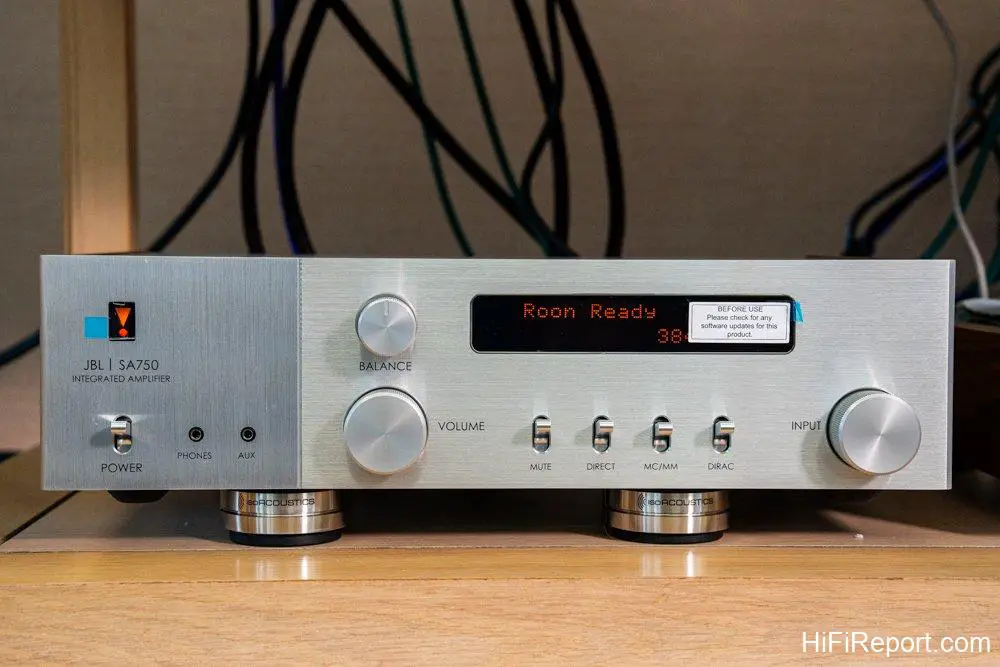
Furthermore, pairing with the SA750 offers another advantage: its built-in Dirac Live room correction software. By using the included microphone for acoustic measurements, it optimizes the room’s sound. The Dirac Live included in the SA750 is the standard version, optimized for low-to-mid frequencies, which is usually sufficient. If full-range Dirac Live room correction is desired, an upgraded version can be purchased online.
Despite being a digital streaming integrated amplifier, the SA750 is incredibly feature-rich. Basic functionalities like Wi-Fi, Google Chromecast, AirPlay 2, and UPnP are all present, along with Roon Endpoint support, allowing Roon to integrate your online and offline music databases. It even includes an HDMI input, convenient for connecting to a flat-screen TV to enhance the audio experience while streaming.
Jazz: A JBL Hallmark
Having discussed the L100 Classic MK II and its SA750 pairing, it’s time to talk about the sound.
Before starting the audition, I exchanged pleasantries with Mr. Lin, the owner of Hi-Fi Report Audio. He was playing some soft jazz and remarked that jazz sounds best on JBLs. I nodded in agreement. For many years, JBL has been an essential classic for jazz lovers. In Japanese jazz kissa (listening bars), vintage JBL horn speakers are practically standard equipment. If you’re lucky enough to encounter an antique Paragon, you’re not just listening to sound quality; you’re experiencing pure sentiment.
From the iPad, I selected Roon and searched my music library for familiar tracks to audition the L100 Classic MK II. Naturally, I started with jazz, pulling up Oscar Peterson Trio’s classic album “We Get Requests” and choosing “Quiet Nights of Quiet Stars.” The opening plucking sound is Oscar Peterson running his fingers across the grand piano strings, creating a unique texture. Then, the jazz drums and double bass establish a swinging rhythm, with the piano gently weaving the melody above.
The L100 Classic MK II did not disappoint. The low frequencies blossomed with the relaxed, “beefy” plucking of the bass, creating a wonderfully comfortable and easy-going swing. Listening to the Oscar Peterson Trio in the open listening space of Hi-Fi Report Audio, it felt as if time had shifted, and the audio store had transformed into a jazz club. JBL’s ability to create that jazz atmosphere is truly superb.
The West Coast Sound
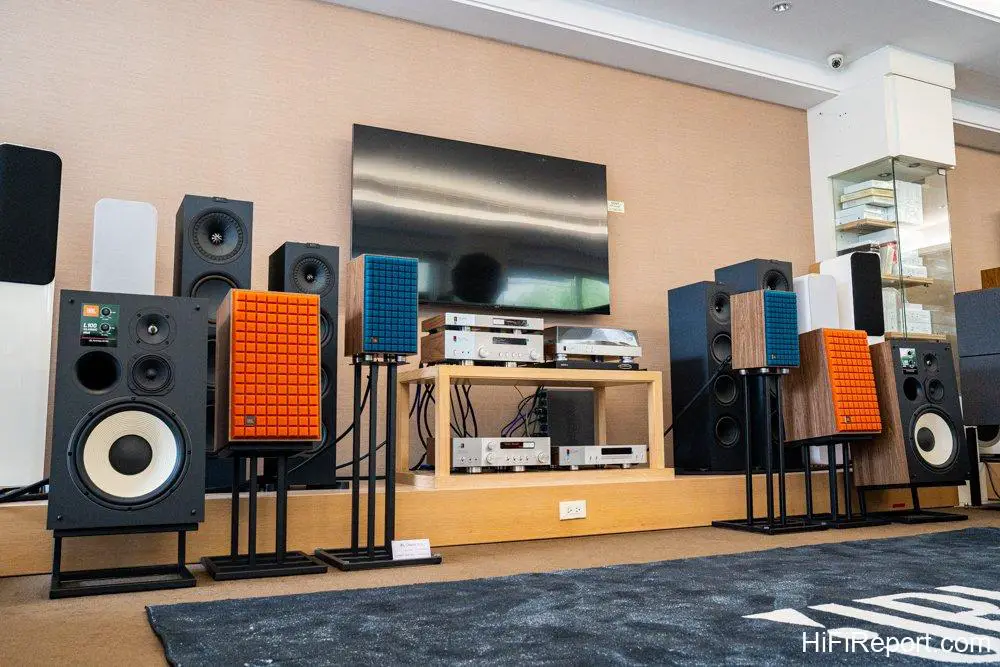
In the Hi-Fi Report Audio space, the L100 Classic MK II and its siblings were arranged in a row for aesthetic display, showcasing the L82 Classic MK II and L52 alongside it. Consequently, the largest L100 Classic MK II was positioned a bit wide. Perhaps if the speakers were placed a little closer together, the imaging might be more precisely focused. However, listening to jazz this way, with a relaxed and comfortable musical presentation, felt even more natural, so I didn’t dwell on additional placement details.
In the early days, American audio had two distinct schools: East Coast and West Coast. The East Coast school placed more emphasis on soundstage imaging, often influenced by European ideas, while the West Coast school prioritized tonal character and dynamics. JBL can be considered one of the quintessential representatives of the West Coast sound. Therefore, when listening to the L100 Classic MK II, the emphasis is more on the musical atmosphere. While it’s certainly possible to use placement to create a specific soundstage, perhaps the more crucial aspect of choosing the L100 Classic MK II is its ability to convey the emotional ambiance of the music.
Effortless Jazz Club Ambiance
Choosing another jazz classic, I listened to “Jazz At The Pawnshop,” starting with “Lime House Blues.” This is a jazz standard, recorded in a live jazz club setting. The L100 Classic MK II effortlessly created the casual and beautiful atmosphere of a jazz bar, reproducing the subtle background noises of the venue—the clinking of glasses, the faint coughs from the audience, the ding-dong of the cash register opening and closing—all mingling with the musicians’ leisurely sound checks. The drums’ flashy off-beat fills lead into the various instruments of the band, especially the vibraphone’s tinkling sounds set against the saxophone.
Despite using a titanium dome tweeter, the L100 Classic MK II’s high frequencies were surprisingly smooth and gentle. Overall, the midrange exhibited a rich, concentrated warmth. This made the “Pawnshop Jazz” jazz club atmosphere feel even more enveloping. The SA750 drove the 90 dB efficient L100 Classic MK II with effortless ease; there was no sense of strain whatsoever. In terms of price, it felt like a perfectly matched pairing.
Ella & Louis: Rich & Sweet
Selecting another jazz gem, I queued up “Ella & Louis.” In the Hi-Fi Report Audio library, the version that popped up was a 24/96 FLAC. I listened to “Can’t We Be Friends.” The piano sounded bright and crisp, while the double bass laid down a steady, thick foundation. Ella Fitzgerald’s voice was effortlessly sweet and relaxed. Louis Armstrong then joined in, his gravelly, rough-hewn low voice providing a striking contrast to Ella’s, making their male-female jazz duet an enduring classic.
The L100 Classic MK II’s sufficiently thick midrange ensured that even Louis Armstrong’s trumpet solo didn’t sound harsh or aggressive. Instead, the midrange body and the relaxed, comfortable low frequencies created a wonderfully swinging, easygoing atmosphere.
Spring Sonata: A Comparative Listen
Time for some classical music. I chose the first movement of Beethoven’s Violin Sonata No. 5, “Spring.” The familiar violin melody, underscored by the piano’s arpeggiated chords. The L100 Classic MK II’s warm midrange created a comfortable atmosphere for the sonata. The two instruments had appropriate spatial presence, and their outlines weren’t exceptionally sharp or clinical but rather conveyed a smooth, pleasant softness.
I was listening to the Decca recording by Perlman and Ashkenazy. Both were quite young when they recorded this “Spring” Sonata. Perlman’s violin already possessed a smooth, refined quality then, and the early recordings emphasized balance. Of course, without comparison, it’s hard to truly grasp the differences. I then selected Mutter and Orkis’s second collaboration on the “Beethoven Violin Sonatas.” On the L100 Classic MK II, the difference in recording eras was immediately apparent.
When Mutter and Orkis recorded the “Beethoven Violin Sonatas” for the second time in 1998, Mutter was no longer the young talent nurtured by Karajan but an internationally renowned violin virtuoso. Their second complete recording of Beethoven’s violin sonatas with Orkis revealed much more of her personal interpretation, for example, a much slower tempo variation compared to their first recording. In terms of recorded spatiality, there was also increased depth and height. Compared to the older Decca recording, the newer version emphasized the recording space and the contrast of instrumental forms more prominently.
Micro-Dynamics Revealed
Next, I played a version I’ve recently come to appreciate: the collaboration between Maria João Pires and Augustin Dumay. In this recording, the opening “breathing sound” of the violin is even more pronounced. The initial breath at the start of the music is the violin’s signal to the piano to begin, and the urgency or relaxation of that breath also hints at the upcoming tempo. Adding this subtle detail brings one closer to the live recording. On the L100 Classic MK II, the breathing sounds and instrumental tones were naturally presented, painting the recording’s atmosphere.
Dumay’s violin performance carries a hint of assertiveness, yet Pires’s piano, with its smooth, arpeggiated chords, softens the violin’s intensity. When the violin takes over the arpeggios, the piano’s clear, crystalline melodic sounds create a harmonious balance. As the music accelerates, the violin strives for prominence, while the piano responds with a gentle expression. This “Spring,” with its strong violin contrasting with the tender piano, boasts a rich musical expression. On the L100 Classic MK II, the contrast between strong and weak passages effectively conveyed the emotional differences between the piano and violin, making for a highly engaging listen.
Orchestral Scale
Scaling up the soundstage, I listened to Hilary Hahn’s violin solo in Brahms’ Violin Concerto, conducted by Sir Neville Marriner with the Academy of St. Martin in the Fields, choosing the brisk third movement. The violin’s spirited main theme, met by the echoing unison of the woodwind section. In those days, Hilary Hahn was full of youthful vigor, and against the seasoned Sir Neville Marriner, her violin emphatically picked up the pace, making the already challenging Brahms even more so. Yet, Hilary Hahn’s “light boat has passed over ten thousand mountains” fluidity and smoothness proclaimed to music lovers worldwide: “See, my speed is just this fast, this piece is not difficult at all!”
Listening on the L100 Classic MK II, the violin solo’s soaring momentum was palpable, while the orchestra’s breadth seemed to embrace the violin. Especially when the brass section swelled, the expansive soundstage contrasted beautifully with the violin’s solo responses. The L100 Classic MK II displayed a wide, grand presence. I’d say that the L100 Classic MK II’s rendition of concertos wasn’t about pinpoint, sharp detail, but rather about conveying the majestic sweep of the orchestral performance. The sense of scale was excellent.
Jazz: The Ultimate Match
If I had to compare its performance with classical versus jazz, I still prefer listening to jazz on the L100 Classic MK II. Finally, I put on “Pick Yourself Up and Start All Over Again” from the “Chesky 20th Anniversary Collection,” featuring father-and-son guitarists Bucky Pizzarelli and John Pizzarelli, accompanied by violinist Johnny Frigo.
Switching to the audiophile recording from Chesky, the L100 Classic MK II’s liveliness immediately intensified. The violin’s sound was beautifully focused, with the guitars providing accompaniment. The two guitars were distinctly positioned on either side, with the violin in the center. If the older jazz recordings were about atmosphere, then the Chesky audiophile recording brought out the L100 Classic MK II’s stronger sonic capabilities. The high-midrange delineation and focus were improved, the walking bass had a solid foundation, complemented by the occasionally clear, articulated kick drum beats, while the two guitars traded solos left and right. I imagine Bucky Pizzarelli, while recording, might have thought, “My son John is truly remarkable; he might even surpass his old man in a few years.”
Vintage Soul, Modern Craft
In recent years, when writing reviews, I rarely specify which type of music a particular speaker is best suited for. However, I must say that listening to jazz on the L100 Classic MK II just feels right. After all these years, JBL’s preserved jazz essence is simply so natural and leisurely, creating such an effortlessly relaxed atmosphere. Of course, it’s not that classical music doesn’t sound good; rather, for jazz enthusiasts, the L100 Classic MK II is a “new-old” piece worth experiencing. If you’re hesitant about the potential risks of buying vintage JBLs, come and try the L100 Classic MK II. Its sonic signature carries that classic “old-school” flavor, waiting for you to savor it.
Specifications
* **Type:** 3-way, 3-driver Bass-Reflex Bookshelf Loudspeaker / Dedicated Stand
* **Drivers:** 1-inch Titanium Diaphragm Dome Tweeter (JT025Ti2-4), 5.25-inch Polymer-Coated Pure Pulp Cone Midrange (JM125PC-8), 12-inch Cast-Frame Pure Pulp Dual-Spider Woofer (JW300SW-8)
* **Features:** High-frequency and Midrange Attenuators (two-stage adjustment)
* **Finish:** Natural Walnut Veneer with Black, Orange, or Blue Quadrex Foam Grille
* **Impedance:** 4 ohm
* **Frequency Response:** 40 Hz – 40 kHz (-6 dB)
* **Sensitivity:** 90 dB (2.83 V / 1 m)
* **Crossover Frequencies:** 450 Hz, 3.5 kHz
* **Dimensions:** 636.52 x 389.64 x 371.48 mm
* **Weight:** 28.6 kg