
KECES IQRP-1500 Power Conditioner Review
Power processing has always been KECES’ forte.
Their parent company, Hui Kang Electronics, is a manufacturer of toroidal transformers for audio equipment. Over the years, they have accumulated extensive OEM and ODM experience. With the KECES brand, they further promote their own line of audio products.
Power supplies and isolation transformers are their specialties. Today, KECES boasts a diverse and comprehensive range of audio products, capable of forming an entire audio system. Yet, they remain committed to providing high-quality and affordable power-related products.
IQRP: Schumann Resonance and Isolation Transformer Integration
The IQRP represents KECES’ latest endeavor, categorized under their “Ultimate” series, signifying their belief in it as a definitive solution.
IQRP stands for “Isolated Quantum Resonance Power Conditioner.” Simply put, the IQRP is an isolation transformer with a built-in Schumann wave generator. “Quantum resonance” refers to the Schumann resonance.
For those unfamiliar with Schumann waves, a quick online search will yield more information than I can provide here, as my knowledge is also derived from online sources.
In essence, it’s an extremely low frequency around 8-10 Hz, a stable frequency generated by the resonance between the Earth’s surface and the ionosphere. Named after German physicist Winfried Otto Schumann, who discovered it in 1954.
However, online searches primarily associate Schumann waves with sleep aid, relaxation, stress relief, and health benefits. These sources often mention the similarity between the Schumann wave frequency and the alpha waves in the human brain. Alpha waves become more prominent when we are in a calm state, promoting mental restoration and creativity. Therefore, during sleep, Schumann waves may resonate with brain’s alpha waves, potentially improving rest.
Now, the question arises: what does this have to do with audio? Skeptics might cynically suggest it’s merely influencing brainwaves to induce a pleasant feeling, making any music sound good—likening it to having a couple of drinks before listening. (Oh, please don’t. While alcohol may induce pleasure, it also dulls the senses.)
This is where the intriguing aspect of audio comes in. The audio world is full of curious gadgets, often without clear explanations. Yet, they find buyers because people try them and perceive a positive effect. Schumann waves fall into this category. Acoustic Revive of Japan pioneered their application in audio, followed by other manufacturers like Telos, and now KECES.
Schumann Wave Sonic Impact
Frankly, I cannot definitively explain how Schumann waves affect sound. The concept is quite esoteric—is my audio system now harnessing cosmic energy? Instead of regurgitating online information or forcing a strained explanation, I’ll defer to the manufacturer’s perspective.
According to KECES, the stable, extremely low frequency generated by Schumann wave technology harmonizes the resonant frequencies within electronic circuits and mechanical components. This, they claim, expands the soundstage and improves imaging precision.
This is KECES’ explanation. Intriguingly, they are using Schumann wave technology as a method of resonance control. By introducing a stable vibrational frequency, they aim to harmonize various inherent vibrations, bringing them closer in frequency. Aren’t mechanical and electrical resonances precisely what audiophiles are concerned about? Whether vibration or Schumann waves, both are fundamentally waves. KECES employs energy waves to soothe and harmonize, rather than physical damping or conduction. This approach seems logically sound.
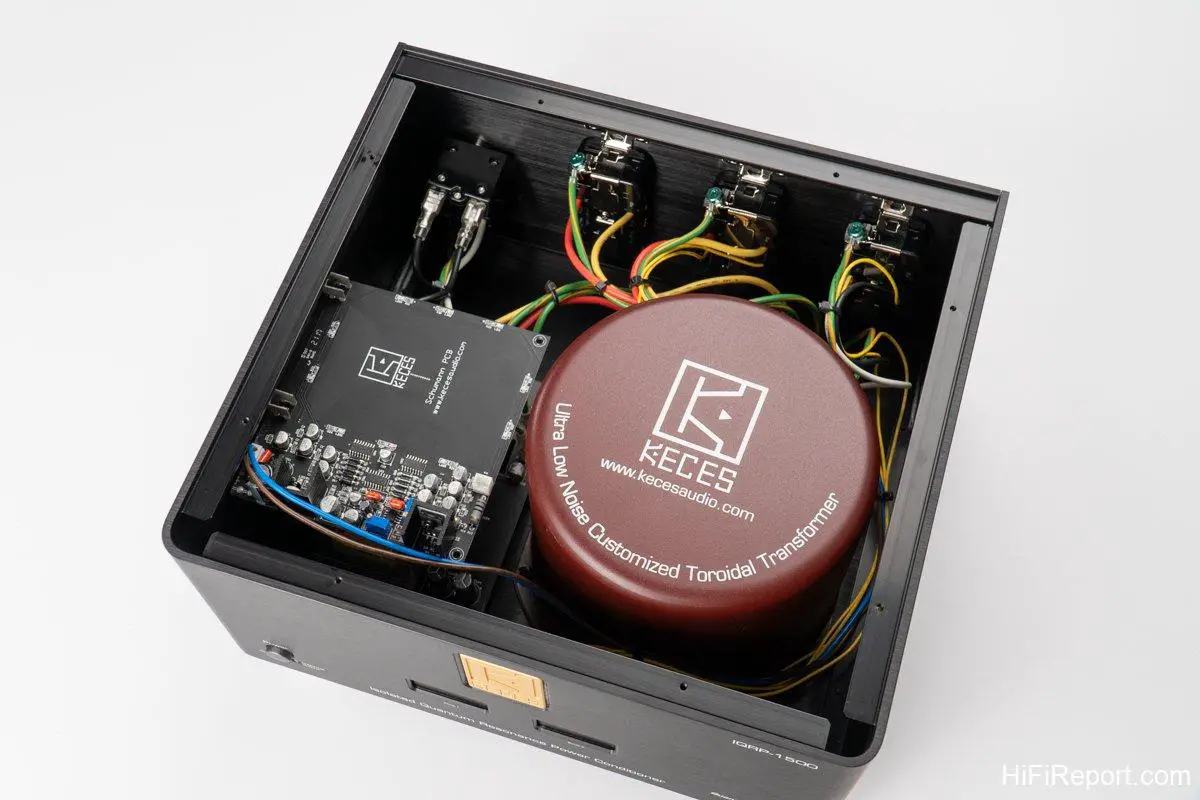
However, the IQRP is not solely about Schumann wave generation. Its true strength lies in the balanced isolation transformer, developed and manufactured in-house by KECES.
Balanced Power Technology Rooted in BP Series
Several years ago, KECES introduced the BP series of Balanced Isolation Power Conditioners. Their core design utilizes an isolation transformer where the primary and secondary windings are not electrically connected, effectively filtering out noise from the mains power to achieve a cleaner power supply.
Unlike typical isolation transformers with 110V-0V outputs, KECES innovatively configured the output as +55V, -55V, and Ground. This allows KECES to ground through the transformer, providing a zero-potential reference for equipment. Furthermore, subtle noise generated by audio equipment is blocked and eliminated by the isolation transformer, preventing it from contaminating other components.
This ingenious design addresses power-related issues in audio systems at an accessible price point. Currently, KECES offers four balanced power conditioners: BP-600, BP-1200, BP-2400, and BP-5000, catering to systems with varying power demands.
Common isolation transformers often use EI transformers. To achieve higher VA output, these transformers become bulky. Large EI transformers carrying high currents are prone to core vibrations and audible hum. Additionally, EI transformers may exhibit higher magnetic leakage, potentially causing electromagnetic interference in audio systems. This is a key reason why some audiophiles are hesitant to use isolation transformers – solving one problem while potentially creating others.
KECES, however, utilizes their own toroidal transformers. Toroidal transformers inherently offer compact size, high efficiency, and low magnetic leakage. Leveraging their extensive experience in toroidal transformer manufacturing, KECES has created isolation transformers that overcome traditional drawbacks, becoming an asset to audio systems.
Dual Output Zones for Digital and Analog Separation
But does such power conditioning restrict musical dynamics? I will address the sonic impact shortly. Technically, the manufacturer recommends selecting a KECES isolation transformer with a VA rating three times the maximum power of your amplifier. For instance, a 100W amplifier would require at least a 300VA unit.
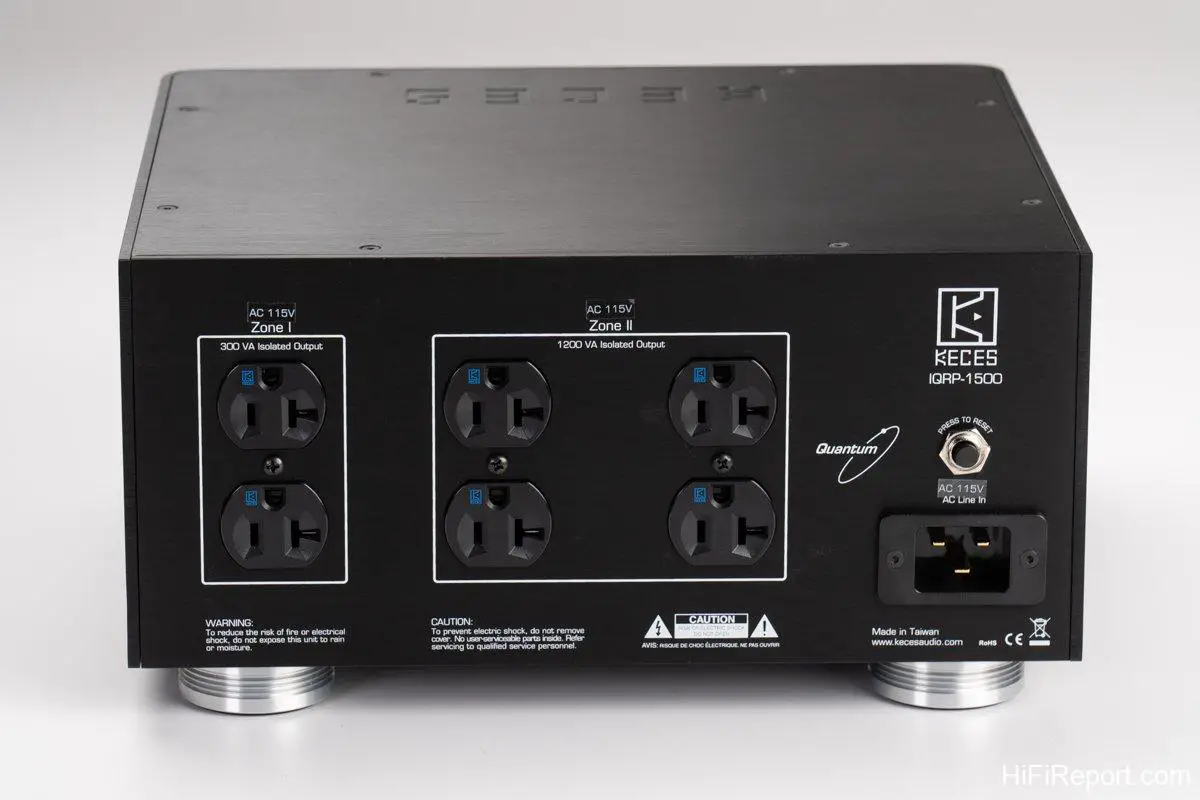
The IQRP-1500 features two output zones. Zone I provides a smaller 300VA output, while Zone II offers a higher 1200VA output. The larger IQRP-3600 provides up to 3000VA on its high-output zone, sufficient even for power-hungry monoblock amplifiers, according to KECES’ formula.
Custom-Made Red Copper Rhodium-Plated Sockets
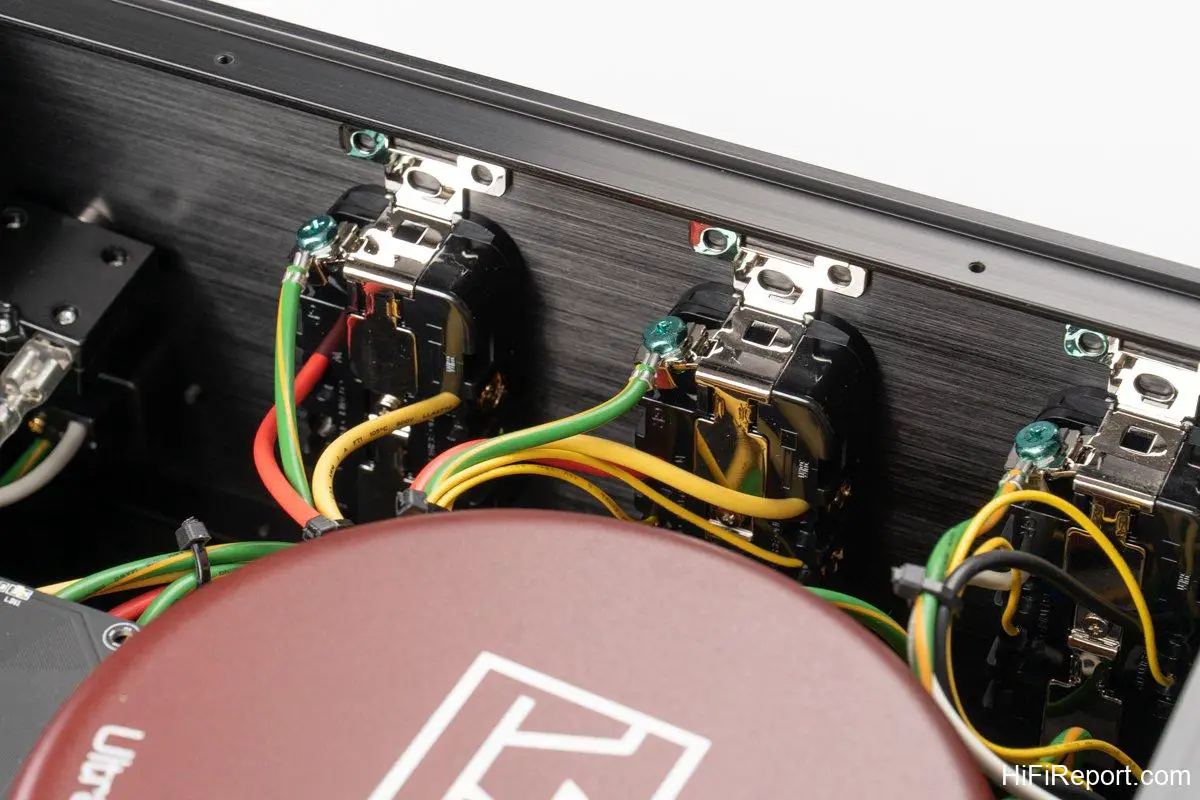
The transformer inside the IQRP-1500 has two sets of taps: one for 300VA and another for 1200VA. The former is connected to a single US standard socket with two outlets, while the latter powers two US standard sockets, totaling four outlets. The IQRP-1500 provides six outlets in total, sufficient for simpler home audio setups.
Notably, earlier KECES power conditioners used commercially available sockets. However, the IQRP-1500 features custom-made sockets with red copper clips and rhodium plating. This aims for optimal conductivity and high durability. In terms of components, it’s a step up from the earlier BP series isolation transformers.
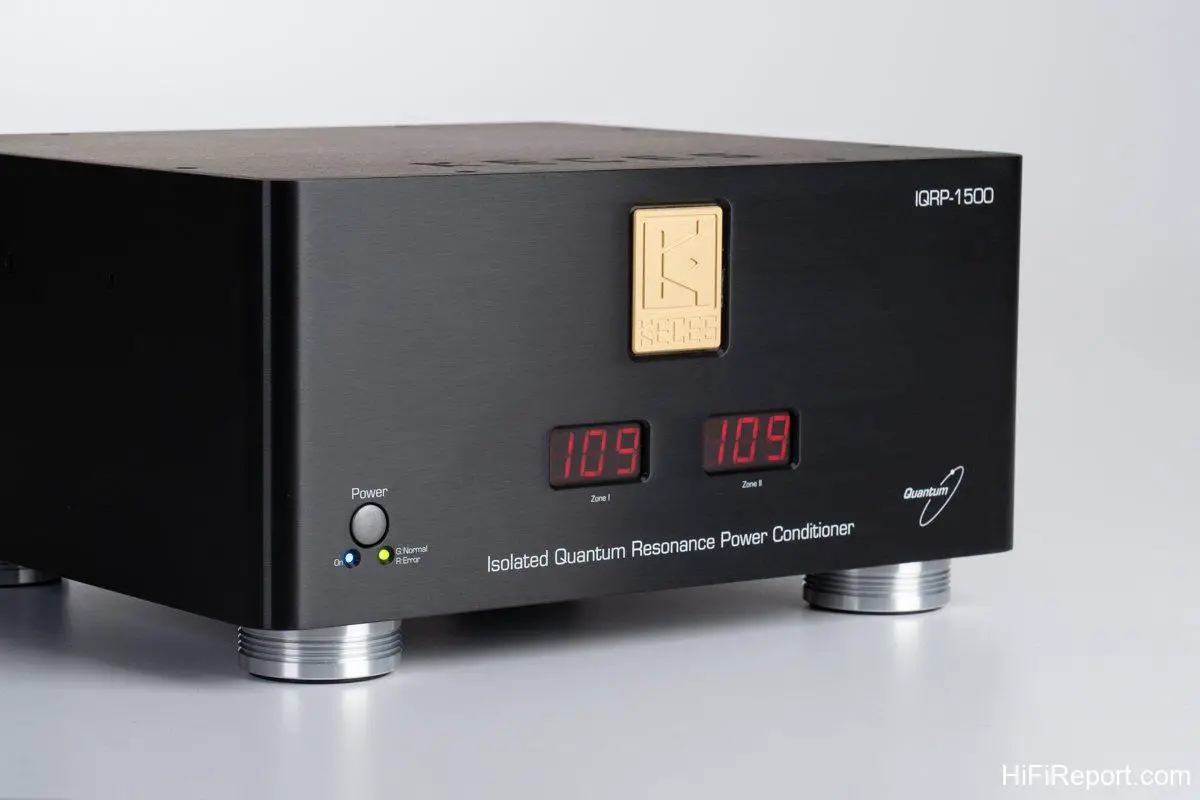
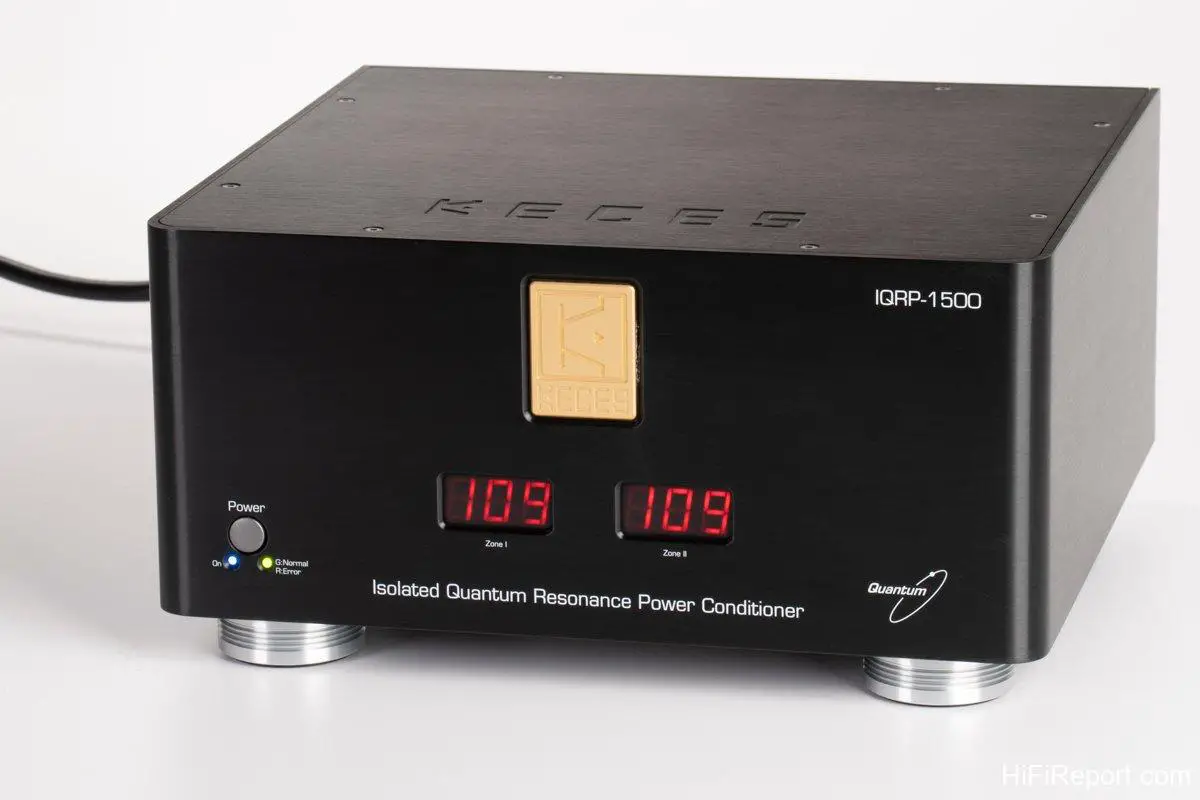
The chassis is crafted from aluminum alloy with rounded corners. The top cover is etched with the KECES logo, and a gold-colored emblem is embedded in the front panel. Below the emblem are two displays showing the current voltage. A power button is located on the bottom left, activating the IQRP-1500 when pressed. Large stainless steel feet at the bottom provide a stable foundation.
A crucial detail is the IQRP-1500’s 20A power inlet, not the standard 15A. The manufacturer includes a 2.0mm² power cord. If you wish to use a different power cord, you’ll need to find (or create) one with a 20A female connector.
Immediate Improvement in Apartment Settings Without Dedicated Lines
I previously tested BP series isolation transformers at the office, where the listening room uses dedicated power lines free from other electrical appliances. The power quality there is already quite good, theoretically minimizing the potential improvement from an isolation transformer. Yet, even in that environment, noticeable improvements were observed: enhanced sonic focus and solidity, clearer imaging, blacker backgrounds, and more detail retrieval, resulting in richer and more engaging music.
Based on my BP series experience, I had high expectations for the IQRP-1500. This time, I tested it at home. My audio system uses a dedicated wall outlet, but not a dedicated circuit. My home environment is typical of many users: a standard apartment in a residential area without dedicated audio power lines. In such conditions, the IQRP-1500 delivered immediate and significant improvements.
I connected my Lavardin IS Reference integrated amplifier to Zone II and my Audiobyte Black Dragon DAC to Zone I. The overall effect aligned with my BP series experience. With the IQRP-1500, the sound became more controlled, yet the soundstage didn’t shrink; instead, images became fuller and more solid. Furthermore, subtle musical nuances became clearer, and micro-dynamics became more discernible. The soundstage expanded, particularly in depth.
Focused and Full Images, Clearer Lines and Textures
Regarding imaging, vocals are most revealing. Listening to Anne Sofie von Otter’s “Naive” recordings, the IQRP-1500 made her vocal image more concrete and substantial. In comparison, connecting the power cord directly to a power strip sounded looser, with less precise staging and imaging. With the IQRP-1500, vocal images were focused and full, vocal lines became clearer, and sonic textures more defined.
Otter’s singing became more vivid and expressive. Even at low volumes, the vibrancy remained. In “Dis, quand reviendras-tu,” the almost spoken-word passages, enhanced by the solid image and richer detail, conveyed emotions more directly and powerfully. In “La vie en rose,” the subtle, gravelly, deep, and whispering sounds of the double bass in the middle section became vivid and distinct.
Rounded and Powerful Double Bass Notes
Does the IQRP-1500 improve bass reproduction? It appears so. Using Diana Krall’s “Love Scenes” album, “All or Nothing at All” opens with pizzicato double bass. The notes are typically full and rich, but with the IQRP-1500, they became even rounder, shedding a slight muddiness. Did the double bass sound leaner? Not at all; instead, the notes had more punch and impact, making for a thrilling listen. When Diana Krall’s vocals entered, the vocal vibrancy also significantly improved. This vibrancy manifested in image clarity—a sense of tangible form and presence. Combined with richer articulation and vocal nuances, it was akin to upgrading from 2K to 4K or even 8K resolution, revealing more performance details.
Transparent Resolution of Musical Structure
Similarly, Cassandra Wilson’s “Death Letter” from the “New Moon Daughter” album showcases her unique interpretation of Son House’s blues roots. Her vocals were focused and three-dimensional, with palpable vocal texture. The rich accompaniment, with percussion driving a steady, bouncy rhythm, and the subtle organ chords laying a deep melodic foundation with the bass, creating a dreamy atmosphere. With the IQRP-1500, the musical structure became more transparent and clearly defined.
Balanced Micro and Macro Dynamics
When playing large-scale orchestral music, the IQRP-1500 created a vast stage, precisely positioning performers. Listening to Anne-Sophie Mutter’s “Across the Stars” album, her violin tone was full and solid, assertively present. In “Rey’s Theme” from “Star Wars: The Force Awakens,” Mutter’s violin skillfully conveyed the resilient female protagonist, while the orchestra, driven by the IQRP-1500, sounded exceptionally grand. In “Yoda’s Theme” from “The Empire Strikes Back,” the solo violin unfolded gently, the music gradually blooming from delicate to expansive. The violin lines were clear, defined, and substantial. Triangle, harp, and pizzicato strings all possessed rich timbral colors, depicting a textured and dynamic soundscape. The former piece showcased grand dynamics, while the latter highlighted nuanced micro-dynamics.
In “Hedwig’s Theme” from “Harry Potter,” the celesta at the beginning was delicate and bright. The music started gently, accelerated in the middle section, then slowed down, with the violin showcasing virtuosity before building to a powerful climax. The IQRP-1500 made this music sound more vibrant, dynamic, and captivating.
Improvement Comparable to Amplifier Upgrade
I cannot definitively say whether the remarkable performance of the IQRP-1500 stems from KECES’ excellent isolation transformer design or the ingenious integration of Schumann wave technology. To investigate further, you can compare BP series and IQRP models at a dealer to assess the impact of Schumann waves. However, after my testing, I can confidently state that the IQRP-1500 has significantly benefited my home audio system, which lacks dedicated power lines. The sonic improvement is comparable to upgrading an amplifier or loudspeakers.
Power Solution That Delivers
If you are on a budget, lack dedicated power lines, and believe in the benefits of power conditioning for system improvement, KECES offers solutions worth considering. For simpler, lower-power systems, the IQRP-1500 is sufficient. For greater headroom, the IQRP-3600 is available. Remember, when it comes to power processing, KECES delivers.
Specifications
* Type: Balanced Isolation Power Conditioner
* Outputs: 6 US standard sockets (Zone I: 110V-125V, Max 2.5A (300VA); Zone II: 110V-125V, Max 10A (1200VA))
* Total Harmonic Distortion: < 0.3%
* Output Impedance: < 0.008 Ohm
* Dimensions: 300 x 279 x 133 mm (W x D x H)
* Weight: 14 kg