
KECES S4 Preamplifier Review
KECES’s previous preamplifier, the S3, was released in 2017. It included DAC and headphone amplifier functions, primarily targeting users with computer sources (CAT), active speakers, or headphone enthusiasts. The goal was to provide a convenient way for these users to enjoy music with high-quality sound.
Years later, the second preamplifier, the S4, has finally arrived. This time, the target audience is different: demanding audiophiles who place stringent requirements on sound quality. To meet this challenge, KECES has incorporated a wealth of high-end features designed to satisfy even the most discerning palates.
128-Step R-2R Volume Control
Let’s start with a brief overview of the S4’s features and design before diving into the details.
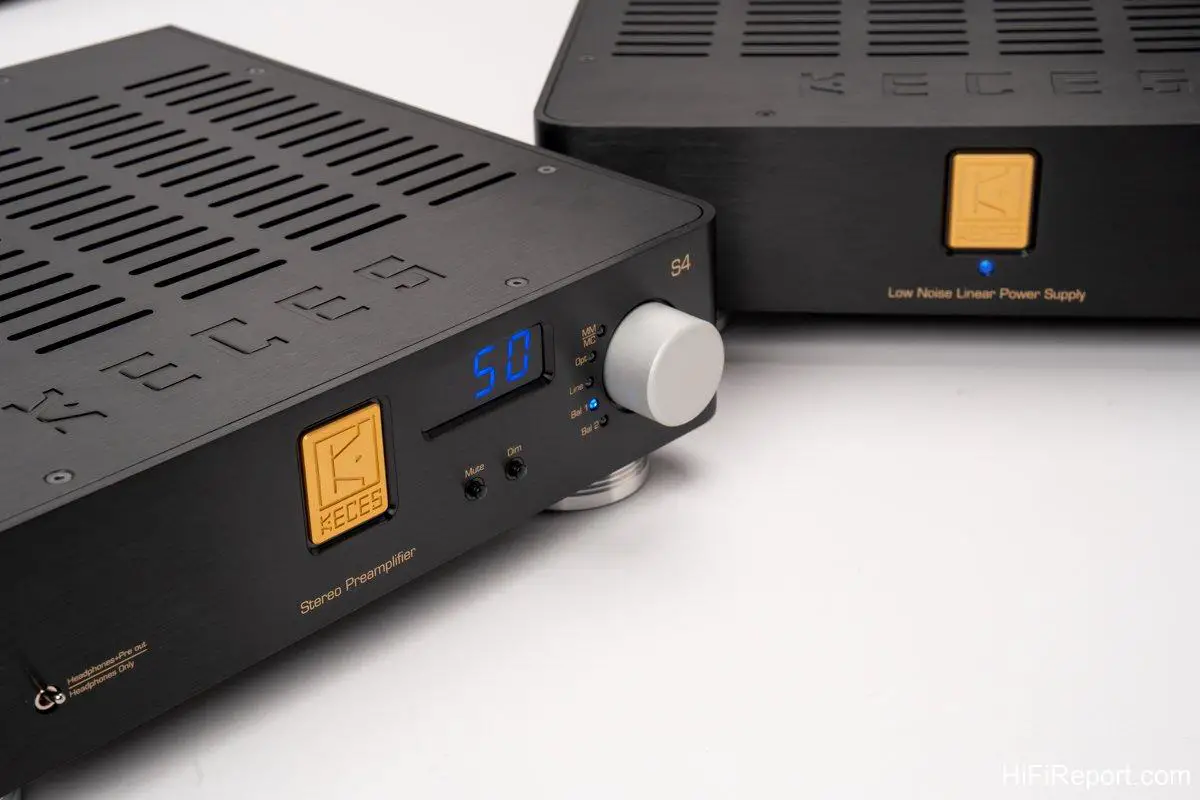
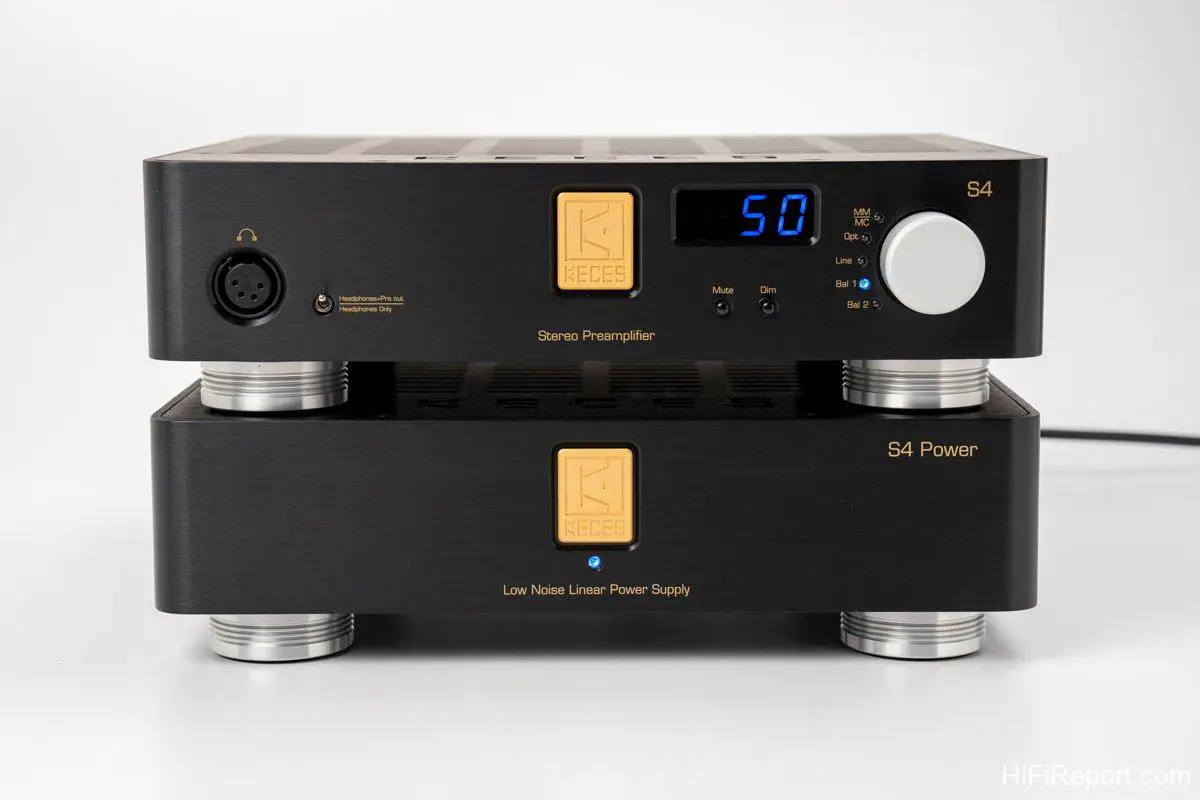
The S4 is a pure analog, two-box preamplifier with a separate power supply. In addition to line-level amplification, it offers MM/MC phono stage capability, support for DS Audio optical cartridges, and includes a built-in headphone amplifier.
The S4’s circuitry features a dual-mono, fully balanced, zero-feedback, pure Class A amplification design. It utilizes a highly precise 128-step R-2R volume control, with the volume level clearly displayed on the front panel’s large digital readout.
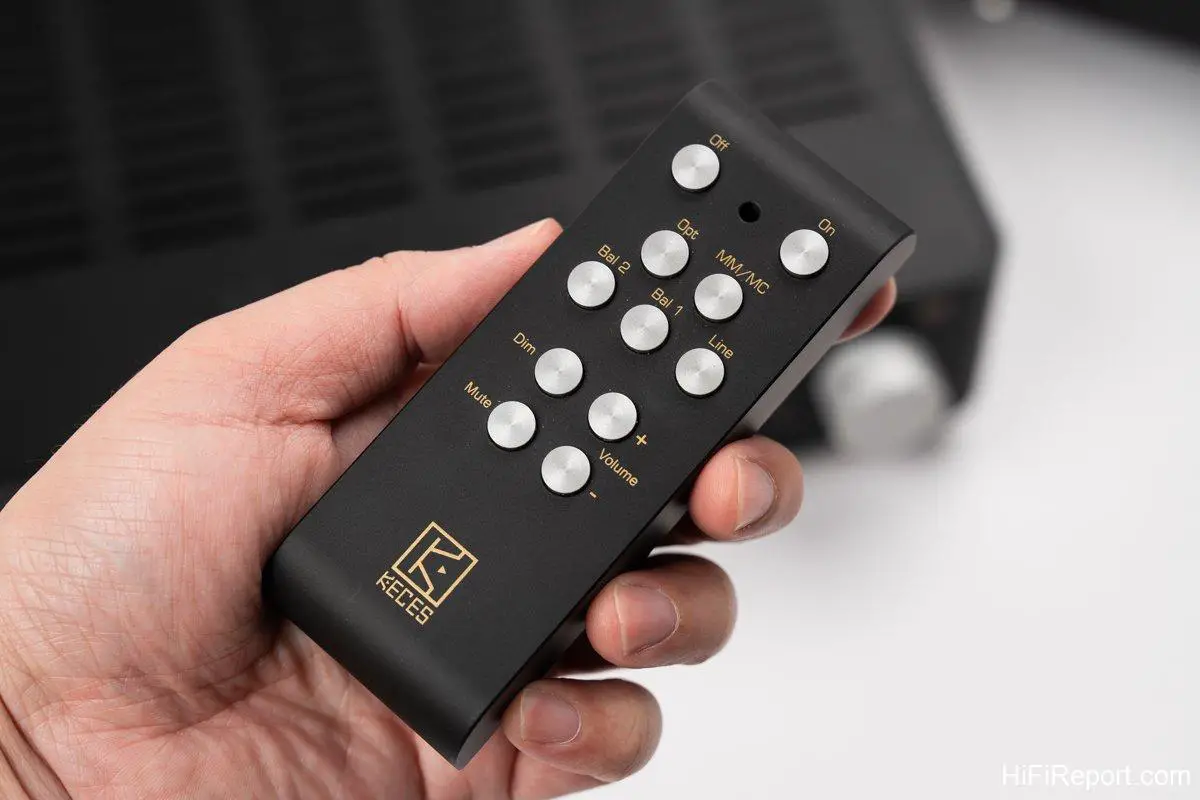
For ease of operation, a full-function, aluminum-alloy remote control is included.
Even this brief introduction takes up several lines, which speaks volumes about the S4’s rich feature set and sophisticated design.
Separate Power Supply
KECES began its journey as a linear power supply manufacturer, so linear power is naturally their forte.
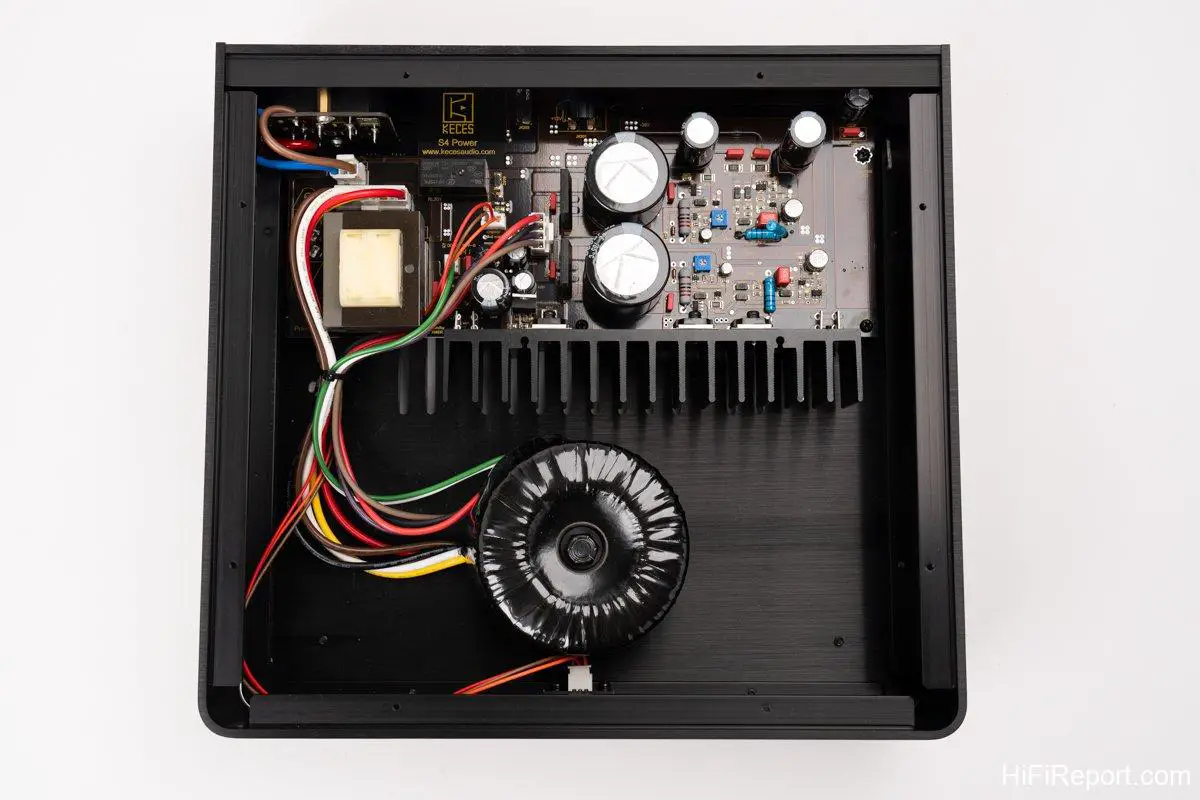
The S4 is essentially paired with a high-quality external linear power supply. By housing the toroidal transformer in a separate chassis, KECES ensures more thorough isolation from transformer magnetic leakage and vibration interference.
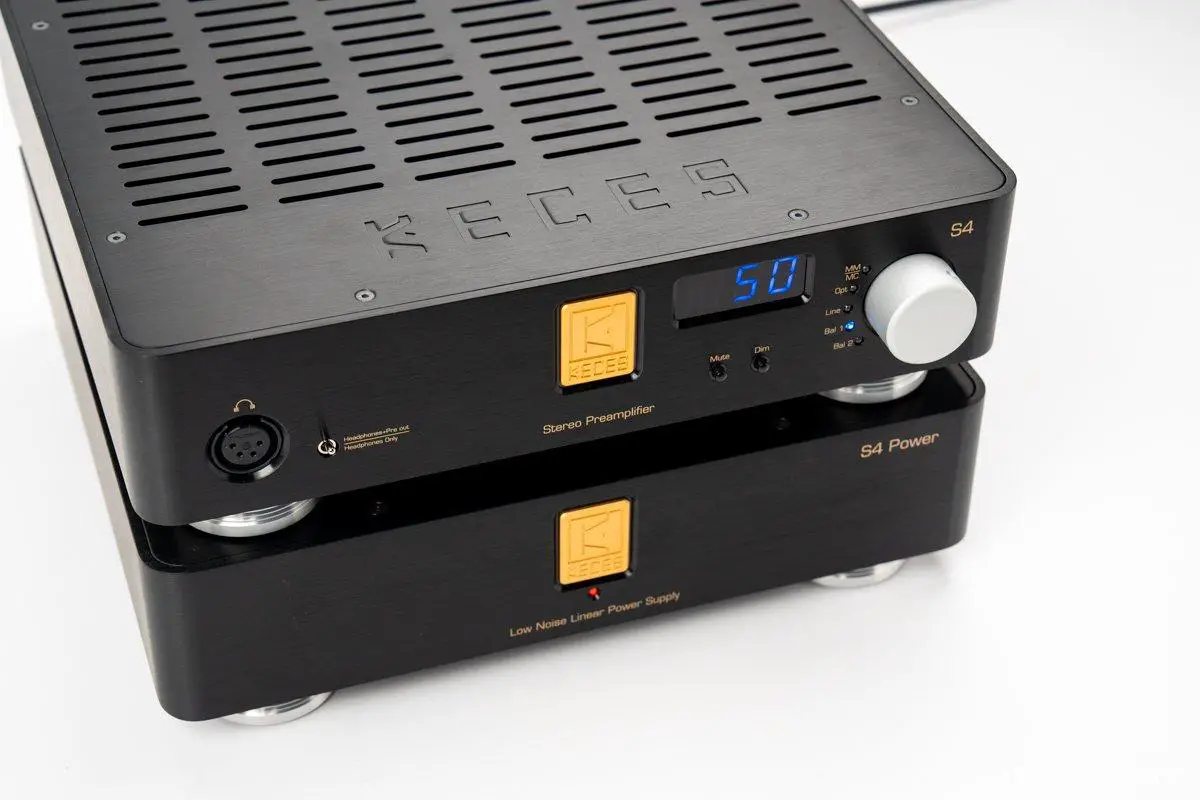
The power supply chassis shares the exact same size and appearance as the preamplifier unit. Both chassis are constructed from a U-shaped aluminum plate combined with rear, top, and bottom panels. Each aluminum plate is notably thick, resulting in a remarkably solid enclosure that resists resonance – a clear benefit for sound quality.
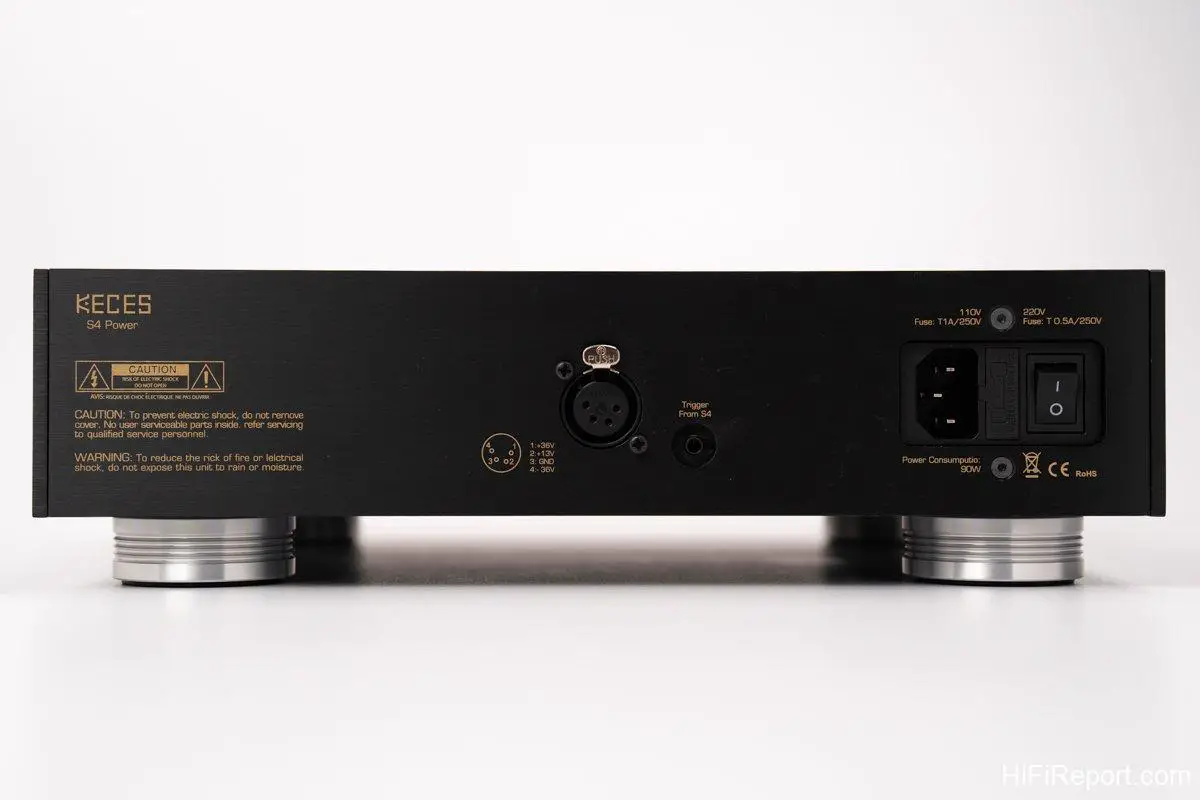
Clean, regulated linear power is delivered to the preamplifier via a DC cable fitted with 4-pin XLR connectors at both ends.
After connecting the DC cable, I noticed an accompanying trigger cable, presumably for linking with a power amplifier.
Next, I flipped the main power switch on the back of the power supply chassis. The power supply’s front panel lit up red, but the preamplifier remained dormant. I then pressed and held the volume knob for 2 seconds, and the preamplifier finally powered on.
However, strangely, although the preamplifier unit was active, there was no sound. What was going on? I spent a long time double-checking everything, but still, no sound.
Left with no other option, I consulted the manual. Only then did I discover that the trigger cable connection between the power supply and the preamplifier is essential to activate the audio circuit’s power. Without the trigger cable connected, only the control circuitry receives power.
This reveals that the S4’s power design separates the power supply for the control circuitry from that for the audio amplification circuitry, another measure aimed at reducing interference.
I also noticed that once the trigger cable is connected, the moment the preamplifier is turned on, the indicator light on the power supply’s front panel immediately changes from red to blue, signaling readiness for operation.
Why this specific design? I suspect it’s related to the preamplifier’s front panel display and lights, which can be turned off. If they are off, it’s impossible to tell if the unit is on or off. In this scenario, the color of the power supply indicator provides a clear visual cue.
I found this design quite ingenious.
Being a pure Class A design, the S4 preamplifier unit gets quite warm during operation, almost too hot to touch. Therefore, it’s likely not suitable for being left on continuously for extended periods. If you typically turn off the front display while listening, you might forget to power down afterward. The additional reminder from the power supply’s indicator light can help reduce the chances of leaving it on inadvertently.
Instant DS Audio Optical Cartridge Playback
When it comes to catering to vinyl enthusiasts, few brands go as far as KECES. Not only do they already offer two different levels of stand-alone phono preamplifiers, but with the S4, they’ve integrated both MM/MC phono stages and support for DS Audio optical cartridges into a single unit, making it unique in its price range.
This means that if you’re interested in using a DS Audio optical cartridge, you just need to purchase the cartridge itself – there’s no need to buy a separate dedicated phono stage.
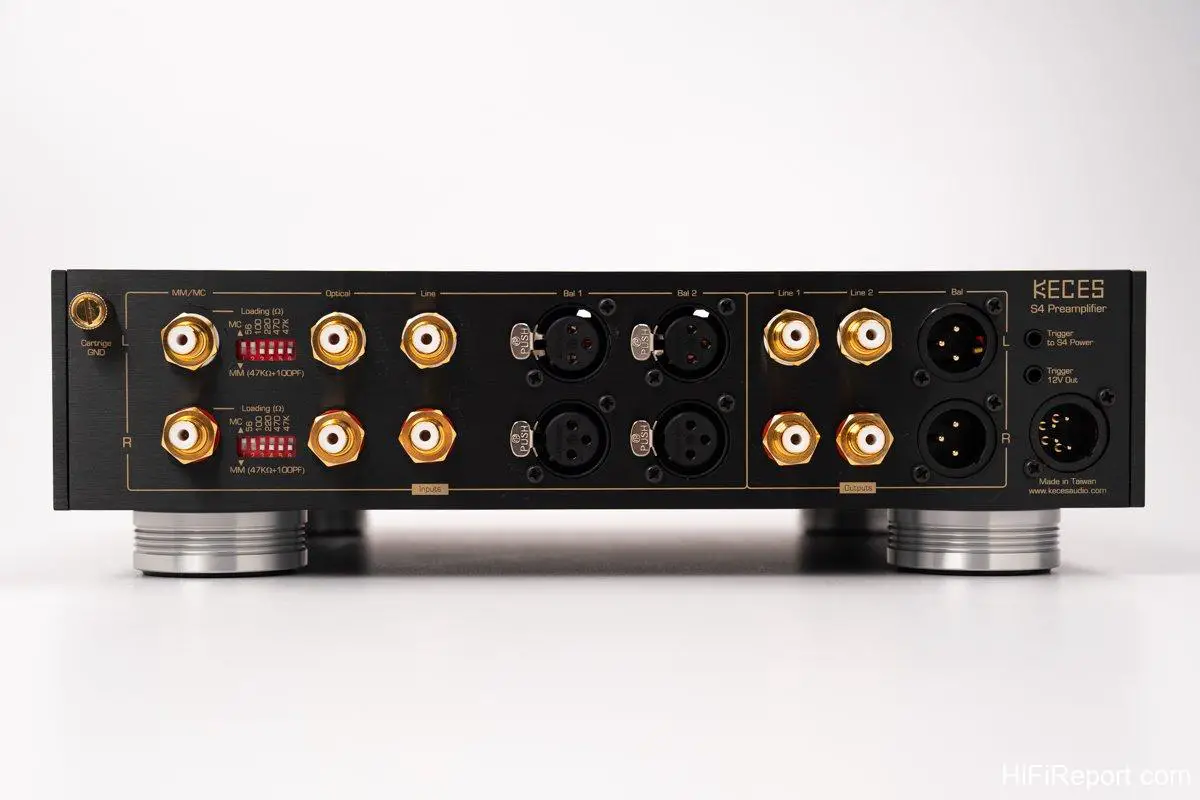
In terms of connectivity, the S4 provides a single set of RCA inputs for both MM and MC cartridges. A DIP switch located next to the RCA sockets allows switching between MM and MC modes. The input impedance for both MM and MC is also adjusted via this DIP switch. MM impedance is fixed at 47kΩ, while MC offers settings including 56Ω, 100Ω, 220Ω, 470Ω, and 47kΩ.
The DS Audio optical cartridge input is a separate set of RCA sockets labeled “Optical.”
For line-level inputs, the S4 offers 1 set of RCA and 2 sets of XLR. Preamplifier outputs include 2 sets of RCA and 1 set of XLR, which should be more than sufficient for most setups.
One of the most critical functions of a preamplifier is volume control. The S4 employs a high-precision R-2R resistor ladder volume control.
An R-2R ladder uses resistors with two resistance values (R and 2R) arranged in a ladder network. By controlling relays, various resistance values can be combined to achieve different attenuation levels. The advantage is that the music signal passes through only a few relays and resistors, minimizing loss. Crucially, the input impedance remains constant at every volume step, ensuring consistent sound quality regardless of volume level. Left and right channel volume is also precisely matched, providing optimal channel balance.
Furthermore, with a properly designed R-2R ladder, obtaining a linear volume change is straightforward. The S4 boasts 128 volume steps, allowing for very fine adjustments.
Independent Channel Boards
Internally, the S4 features a zero-feedback, pure Class A amplification circuit. Both balanced and unbalanced input and output interfaces are provided, ensuring high compatibility with upstream and downstream components.
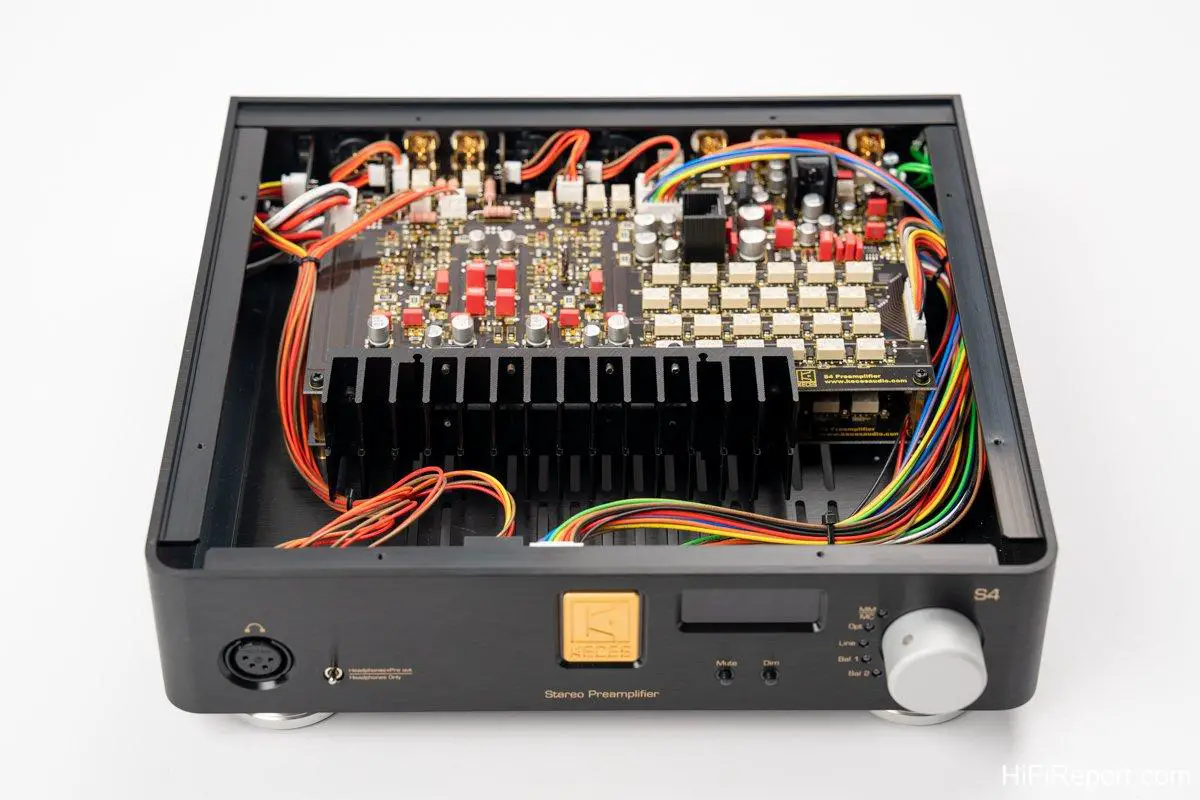
The circuit layout follows a left/right channel separation design, with each channel having its own identical circuit board to maximize channel separation.
The two audio circuit boards are stacked vertically and located in the rear section of the chassis. The logic control board is mounted behind the front panel.
A large heatsink is placed between the audio circuit boards and the logic control board, providing a degree of isolation.
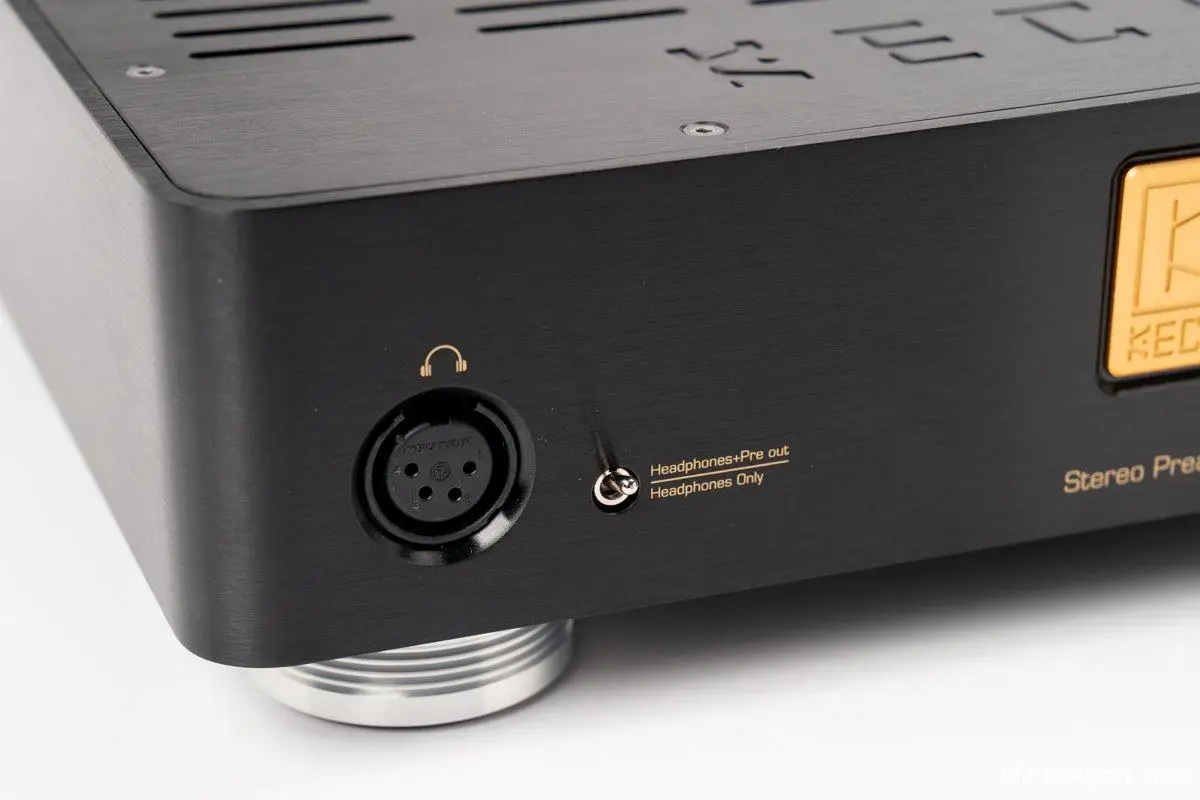
To allow audiophiles to enjoy music to the fullest, even late at night, the S4 includes a built-in headphone amplifier with a 4-pin XLR output.
A toggle switch next to the headphone socket allows users to select between simultaneous preamplifier and headphone output (up position) or headphone output only (down position). This means you don’t need to turn off your power amplifier when listening through headphones.
Ample Gain
Before discussing the sound, I want to highlight a few user-experience advantages of the S4.
Firstly, the volume control. The R-2R volume control implemented in the S4 is indeed an excellent solution. With its ample 128 steps, it allows for very fine adjustments with high precision. A slight turn of the knob or a single press of the remote button changes the volume by exactly one step. Turning faster or pressing repeatedly quickly gets you to your desired level.
Traditional motor-driven volume attenuators often struggle to achieve this level of sensitivity and precision, and they typically have greater left/right channel discrepancies.
The R-2R volume control maintains a balanced and full sound even at low volumes; you don’t feel like the bass is weak or the treble is overly prominent when listening quietly.
Furthermore, due to the relay operation, adjusting the S4’s volume produces a clicking mechanical sound. If you don’t mind this, it adds a rather enjoyable tactile feel to the user experience.
Another characteristic of the S4 is its generous output level, contributing to a particularly full-bodied sound.
According to the specifications, the S4’s line-level input gain is 20dB, equivalent to a 10x amplification factor. For modern digital sources with relatively high output levels, this is quite substantial, leading to very sufficient overall gain.
Additionally, due to the S4’s volume attenuation curve settings, the initial attenuation is quite rapid, while the rate of attenuation slows down in the mid to upper range. This means a small turn from the minimum volume setting results in a significant increase in loudness, with subsequent volume increments being more gradual.
When listening to typical pop music recordings with the S4, turning the volume knob to just ’10’ can already produce substantial loudness. However, the volume increase is quite linear, so the experience feels natural and not abrupt.
Low Noise Floor for a Clean Background
The listening test took place in the HiFiReport listening room. The system included a Sforzato DSP-05EX network player, a Linear Acoustic A200 solid-state power amplifier, a Ray Audio KT150 tube power amplifier, and Dynaudio Contour 60 speakers. The reference preamplifier for comparison was the Electrocompaniet EC 4.8.
Upon first listen, it was immediately apparent that the S4 has a very clean background with a remarkably low noise floor.
Its maximum volume is 128. Without music playing, I turned the volume up to 100 and placed my ear close to the tweeter. The hiss from the tweeter increased only slightly, while the midrange and bass drivers remained silent.
A clean background greatly contributes to a sense of quietude in the musical backdrop, making the sound transparent and bright, and allowing details to emerge more easily.
In terms of tonal quality, the S4 leans towards being fast, clear, and crisp – in other words, more analytical. Richness and smoothness are not its primary characteristics; instead, its style is agile, neutral, and realistic.
This characteristic became even more pronounced when paired with the equally fast and direct-sounding Ray Audio KT150 tube power amplifier.
Take, for example, the second track, “Otono Porteno” from Piazzolla’s “Estaciones Portenas,” on the album “The Piazzolla Project” by the Artemis Quartet and pianist Jacques Ammon. This piece has significant tempo variations and strong melodic ebb and flow. Played through the S4, the dramatic emotional shifts in the music were further highlighted.
The S4 reproduced the gritty texture of bow on strings with exceptional clarity, without artificial smoothing or embellishment. It presented a faithful, objective, and realistic rendition. Subtle dynamic changes in quiet passages were easily conveyed, while in forte sections, the delineation of musical lines was remarkably clear and powerful, full of tension, expanding the emotional range even further. The positioning of different instruments was quite accurate, with excellent separation, precisely defining the location of each instrument.
Similarly, on renowned flutist Emmanuel Pahud’s album “French Connection,” which features flute, clarinet, and oboe, the S4’s reproduction didn’t emphasize the warm and rounded qualities of the instruments. Instead, it highlighted clear lines, vivid dynamics, and transparent textures, giving the music a youthful and energetic feel.
Don’t Overlook RCA
The S4 offers both balanced and unbalanced interfaces. Next, I switched the Sforzato DSP-05EX network player to an RCA connection to see how the sound changed.
Firstly, the volume setting needed to be increased. Since the source output was now single-ended, the signal level dropped by half, reducing the output in the initial volume range. I could now turn the S4’s volume up to higher numbers.
Secondly, the tonal quality became softer and more rounded.
While the resolution and transparency via RCA might not be as strong as with XLR, it offered a different, more comfortable, and listenable feel.
This result was quite a pleasant surprise. The XLR and RCA outputs offer different sonic characters, essentially providing the experience of having two preamplifiers with different tonalities. This flexibility allows for better matching with various sources or power amplifiers, offering a richer listening experience.
Simply put, XLR delivered a blacker background, sharper dynamics, higher resolution, and a wider, more open, and deeper soundstage, with a clearer tonal palette, faster speed, and a harder texture – providing a stimulating listening experience. RCA resulted in a more focused, centered, and closer soundstage, lending greater body to the sonic images. The speed was slightly slower, the sound quality richer, and the midrange and bass were thicker and fuller.
Since both the Ray Audio KT150 tube power amplifier and the Linear Acoustic A200 solid-state power amplifier I had on hand only have XLR inputs and no RCA, I couldn’t test the S4 to power amplifier connection using RCA cables. However, I believe that option would also yield different performance characteristics.
Unparalleled in the Market
For the final listening session, I switched the power amplifier to the Linear Acoustic A200, keeping the source connected to the S4 via RCA cables.
Comparing the pairings, the sound with the A200 and S4 was more to my taste.

The KT150 and S4 both belong to the direct, realistic, and lively school of sound. Pairing them together amplified these characteristics, resulting in a sound that was perhaps a bit too bright and analytical. While exhilarating, it wasn’t as enduringly listenable.
The A200, being more composed and substantial, with a softer and smoother texture, and having slightly less gain than the KT150, achieved better overall balance when paired with the S4.
Listening to one piece after another with the S4 paired with the A200, the S4 performed like a calm, objective third party, faithfully conveying the original recording information.
Overall, thanks to its excellent build quality and rigorous design, the S4 inherently possesses a clear background and superior resolution, allowing the listener to receive all the intended musical information. While not a thick-sounding component, it has appropriate overall body and a balanced frequency response with natural extension at both ends – performing squarely within expectations. The soundstage is appropriately sized and accurate, handling large-scale pieces with ease. Essentially, it’s faultless.
Most importantly, beyond its comprehensive input and output interfaces, including both MM and MC phono stages, the S4 even includes the rare DS Audio optical cartridge phono stage functionality, offering vinyl enthusiasts greater flexibility and enjoyment.
To be honest, finding another preamplifier like this on the market is simply not possible.
Specifications
* **KECES S4**
* **Type:** Two-box preamplifier with separate power supply
* **Inputs:** MM/MC Phono × 1, Optical × 1, RCA × 1, XLR × 2
* **Outputs:** RCA × 2, XLR × 1, XLR-4pin Headphone Out × 1
* **THD+N:** MM < 0.02%, MC < 0.05%, Opt < 0.04%, RCA / XLR < 0.0015%
* **Signal-to-Noise Ratio:** MM / 78dB, MC / 70dB, Opt / 75dB, RCA / 110dB, XLR / 110dB
* **Gain:** MM / 52dB, MC / 72dB, Opt / 32dB, Line Level / 20dB
* **Dimensions:** 300 × 279 × 66 mm (W×D×H) per unit
* **Weight:** Power Supply / 4.5 kg, Preamplifier / 3.5 kg