
LALS Multi-Channel System Review
The appointment was set at HiFiReport, to meet with HiFiReport’s proprietor for an audition of a multi-channel system comprised of LALS dual 12-inch horn center channel and 12-inch horn main speakers.
Arriving ahead of schedule, I found myself at the given address but no storefront was immediately visible. HiFiReport was located on the second floor, yet even looking up, there was no sign to be seen.
Just as I began to wonder if I was in the right place, a resident exited the main door on the ground floor. I seized the opportunity to enter and followed the stairs to the second floor. Upon ringing the doorbell, Mr. Hsu (Xiao Hsu), the owner of HiFiReport, greeted me at the door. It turned out there was indeed a HiFi shop, albeit discreetly hidden. The reason for the lack of signage? Mr. Hsu’s primary business revolves around home theater systems and audio-visual room planning, rather than individual component sales. Even walk-in customers seeking single units might find his inventory lacking, thus rendering a storefront sign unnecessary.
In essence, Xiao Hsu is a seasoned expert in theater system design. It seemed my listening session today was set to be quite an enjoyable experience.
Pre-Installation Focus
Before diving into the audition, I inquired about what sets Xiao Hsu’s theater and audio-visual room planning apart. He explained, “My core focus is on pre-installation groundwork. Solid pre-planning provides flexibility for future upgrades or modifications without constraints.”
This approach, he elaborated, is rooted in years of accumulated experience from countless project sites.
Xiao Hsu’s passion for home theaters runs deep, dating back to his early involvement in the field. He even served as a moderator for a well-known audio-visual community website, demonstrating his profound enthusiasm for home theater. To what extent? Before establishing his own audio shop, while working in real estate sales and new home marketing, he often encountered un-renovated house plans. Unlike others who would first consider spatial planning, layout, or interior design styles, Xiao Hsu’s immediate thought upon seeing a floor plan was always how to design the audio-visual room.
With extensive exposure to floor plans, he developed a knack for visualizing optimal layouts. Consequently, online users frequently sought his advice on planning queries, which he readily provided.
During his real estate days, some friends, aware of his multi-channel expertise, enlisted his help in designing audio-visual rooms and home theaters. Initially a hobby, these projects led to connections with various manufacturers. Later, a close friend, a certified electrician and fellow home theater enthusiast, proposed a business partnership. This cross-industry collaboration marked the beginning of their venture, coinciding with Xiao Hsu’s career shift away from real estate, prompted by his wife’s aversion to the industry’s social demands. This led to the formal establishment of HiFiReport Audio.
In the early days post-transition, operating as a sole proprietorship, despite connections with design firms from his previous career, initial collaborations were hesitant. However, through persistent effort and the support of a former construction company owner, HiFiReport gradually built a reputation. Securing projects for public facilities, conference rooms, and audio-visual spaces in landmark construction projects, the business steadily gained momentum with a continuous flow of planning engagements.
The partnership with HiFiReport further propelled Xiao Hsu’s showroom, with LALS horn speakers becoming a standard fixture in his demonstrations.
He asserts that LALS horn speakers excel in detail retrieval, dynamic range, and responsiveness, while being relatively easy to drive – making them ideally suited for home theater applications.
Conduit-Grade Wiring Infrastructure
Why is pre-installation groundwork so crucial in audio-visual space planning? Xiao Hsu explains that his on-site observations of various construction projects, coupled with insights gained from visiting numerous homes as a forum moderator, provided invaluable lessons in wiring and conduit practices.
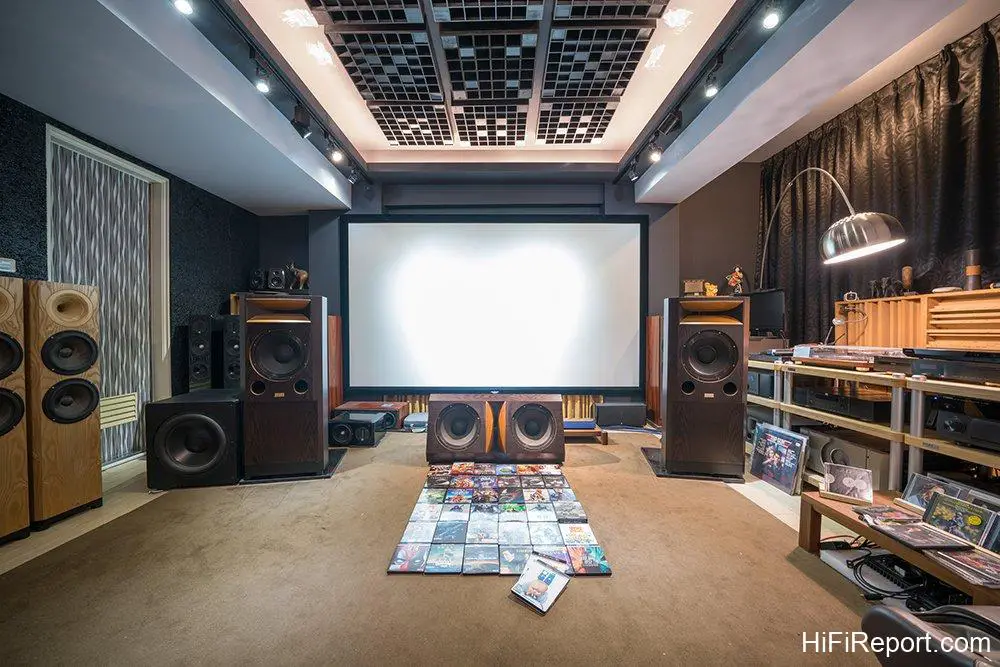
He noticed a common flaw in many home theater setups: insufficient pre-wiring or lack of conduit for cables. This oversight creates difficulties for future upgrades or cable replacements, often forcing unsightly exposed wiring solutions.
While audiophiles might tolerate visible cables, spouses rarely do.
The image above illustrates Xiao Hsu’s wiring standard for client projects. He emphasizes not only generous pre-wiring but also conduit for every cable. This foresight ensures seamless future upgrades.
Years ago, Xiao Hsu already anticipated the need for network cables for projectors, even when network capabilities were limited to newer televisions. Projectors lacked such features then, but he foresaw their eventual integration. Therefore, his standard practice includes recommending pre-installation of network cables to future-proof the system.
Furthermore, drawing from his extensive experience in subwoofer calibration, Xiao Hsu notes that optimal subwoofer placement isn’t fixed. Experimentation across different locations is often necessary. Sometimes, a single subwoofer is insufficient. Hence, his planning includes pre-wiring for subwoofers in multiple locations to accommodate various configurations.
The same logic applies to Atmos speakers. While a client might not initially require numerous Atmos channels, pre-wiring provides the flexibility for future expansion.
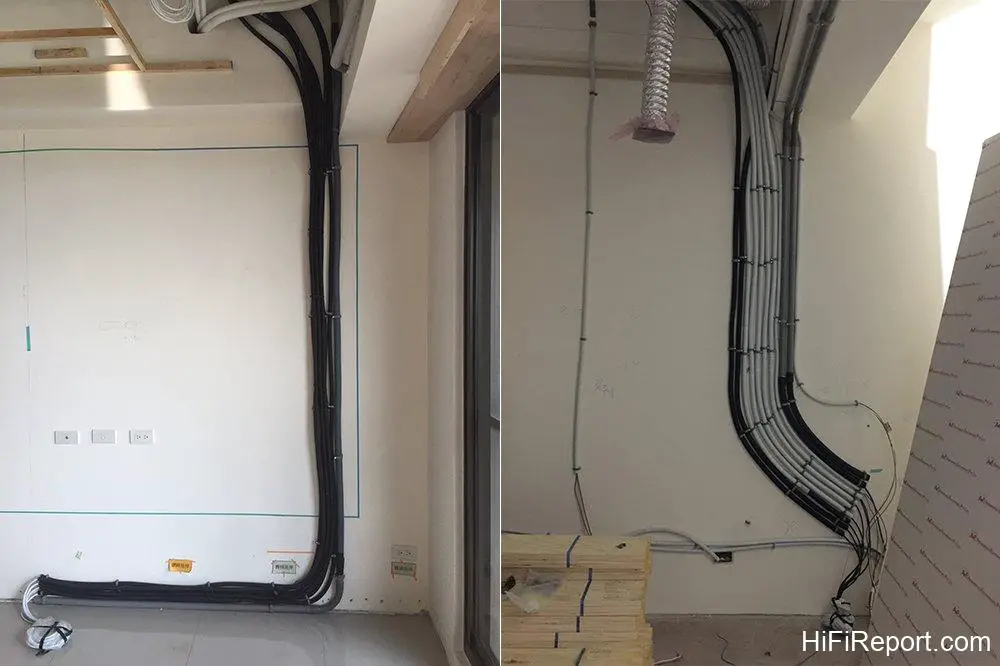
He confidently states, “No one in the industry installs conduit and wiring like I do. My standards are almost on par with professional electrical installations. The meticulousness can sometimes deter even electricians.”
He showed me photographs from his project sites. Indeed, the sheer volume of wiring and the robustness of the conduits were striking. Future upgrades to thicker audiophile-grade cables would pose no problem.
This meticulous pre-planning approach has earned Xiao Hsu consistent praise from his clients, preventing future complications and ensuring customer satisfaction.
Curated Demo Content
Beyond meticulous pre-planning, Xiao Hsu’s approach to multi-channel demonstrations in his showroom is equally distinctive.
Typically, shop owners showcase content that best highlights their equipment’s capabilities. However, navigating menus and searching for specific scenes can be time-consuming and disrupt the flow, especially if scene locations are unclear. To address this, Xiao Hsu meticulously curates and edits demo clips, creating seamless playlists that eliminate any waiting time.
He mentions having compiled over 300 clips since 2006, tailored to diverse client preferences. Whether it’s content for husbands, wives, children, families, music enthusiasts, or hardcore audiophiles, he has pre-selected material ready to impress, ensuring maximum satisfaction in minimal time.
High Power for Horns
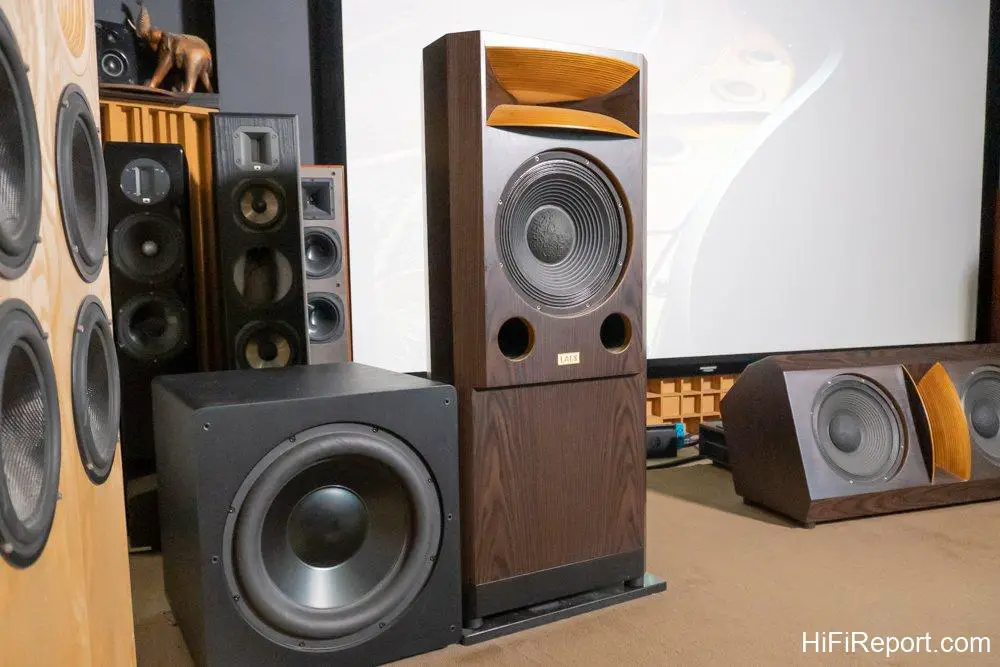
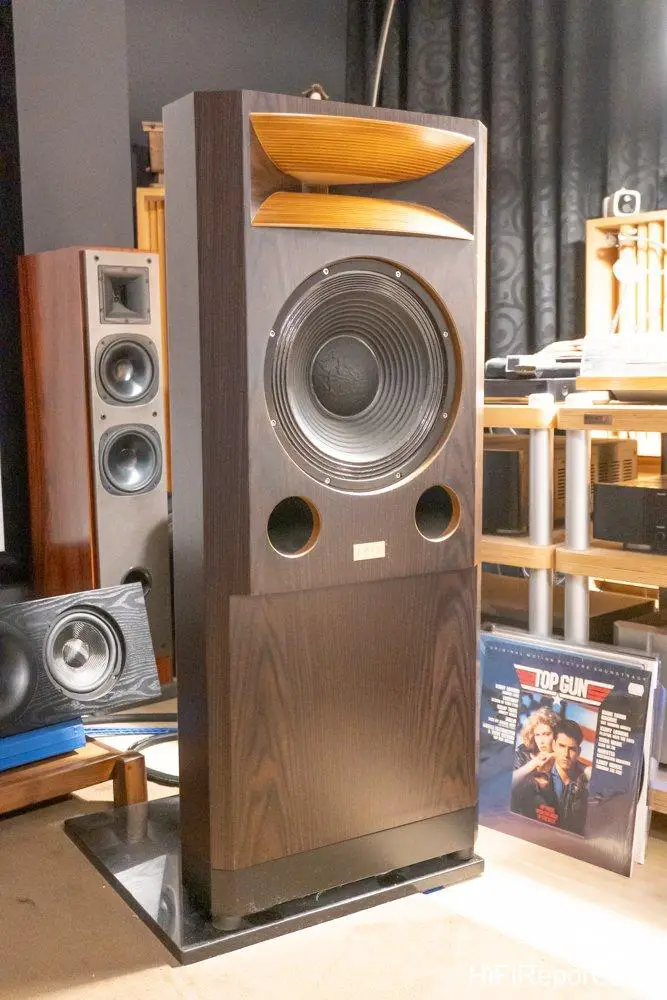
For the audition, Xiao Hsu set up a 5.1.2 channel system. The center channel was the LALS Classical 12 Center horn speaker, flanked by LALS Classical 12 SE floor-standing horn speakers as the main channels. Surround and Atmos channels were handled by conventional wall-mounted speakers.
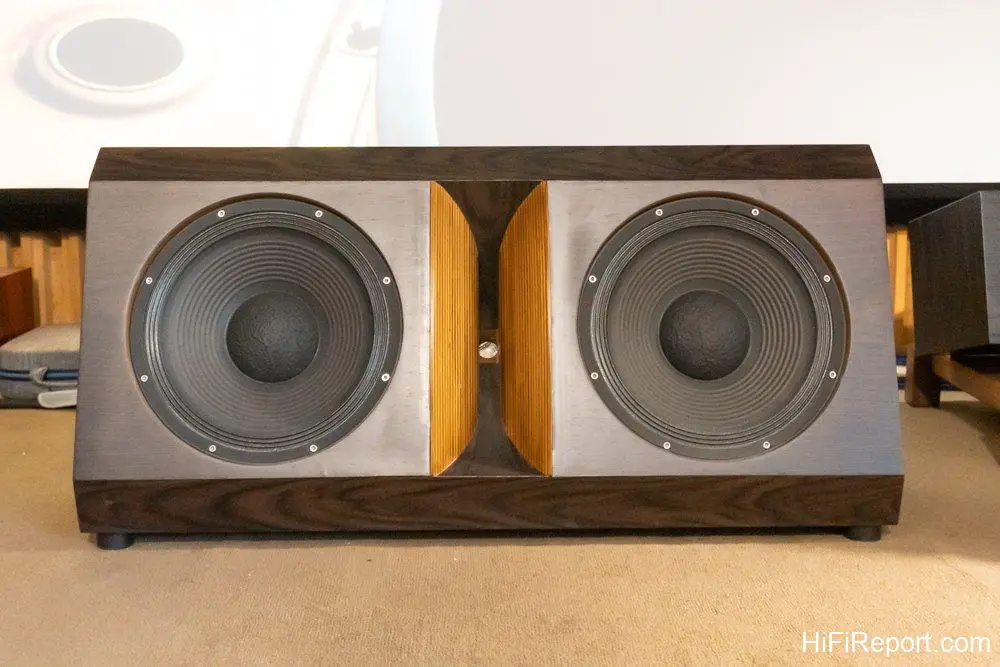
I had previously experienced the Classical 12 Center at HiFiReport’s residence over two years prior. This iteration, however, features a design modification: the horizontal wooden horn, originally positioned centrally above the panel, is now vertically oriented, nestled between two 12-inch paper cone woofers with cloth surrounds. This change slightly widens the speaker but significantly reduces its height from 54 cm to 46 cm, facilitating placement below projection screens or televisions, allowing for lower screen mounting.
Both the Classical 12 Center and Classical 12 SE employ genuine compression driver tweeters with substantial 44mm diaphragms, significantly larger than typical 25mm tweeters. Driven by powerful magnets, their extension reaches beyond 30kHz, and even through the horn, they achieve down to 20Hz. Crucially, their exceptional low-frequency performance allows for a low crossover point at 800Hz, seamlessly integrating with the woofer.
The woofer units are newly designed 12-inch paper cone drivers with cloth surrounds. The cone formula has been refined for optimal home listening characteristics, and the magnetic circuit’s efficiency has been enhanced. This results in improved low-frequency extension, richer mid-bass depth, and a balance of relaxed and impactful bass response.
The cabinets of both Classical 12 Center and Classical 12 SE are constructed from Russian birch plywood, unlike the MDF commonly used in most speakers. This is a signature feature of LALS speakers. Birch plywood, with its superior density compared to MDF, creates more rigid and inert cabinets that effectively suppress vibrations, minimizing energy loss and resulting in a more expansive sound. A real wood veneer further enhances the aesthetic, elevating the speakers to the level of fine furniture.
High efficiency is another hallmark of LALS horn speakers. The Classical 12 SE boasts a sensitivity of 96dB, while the Classical 12 Center reaches an impressive 98dB. What does this imply? A 3dB decrease in speaker sensitivity necessitates doubling amplifier power to achieve the same volume. The Classical 12 Center, being approximately 10dB more efficient than a typical center channel speaker, requires only a quarter of the power for equivalent loudness. This significantly simplifies the selection of a suitable AV receiver.
Tangible Impact
While LALS horn speakers are easy to drive, they truly shine when paired with high power amplification, unleashing their full performance potential. Xiao Hsu understands this well, employing a powerful Usher amplifier to drive the Classical 12 Center and a Pass Labs 250-watt amplifier for the Classical 12 SE in his showroom, creating a formidable sonic presence.
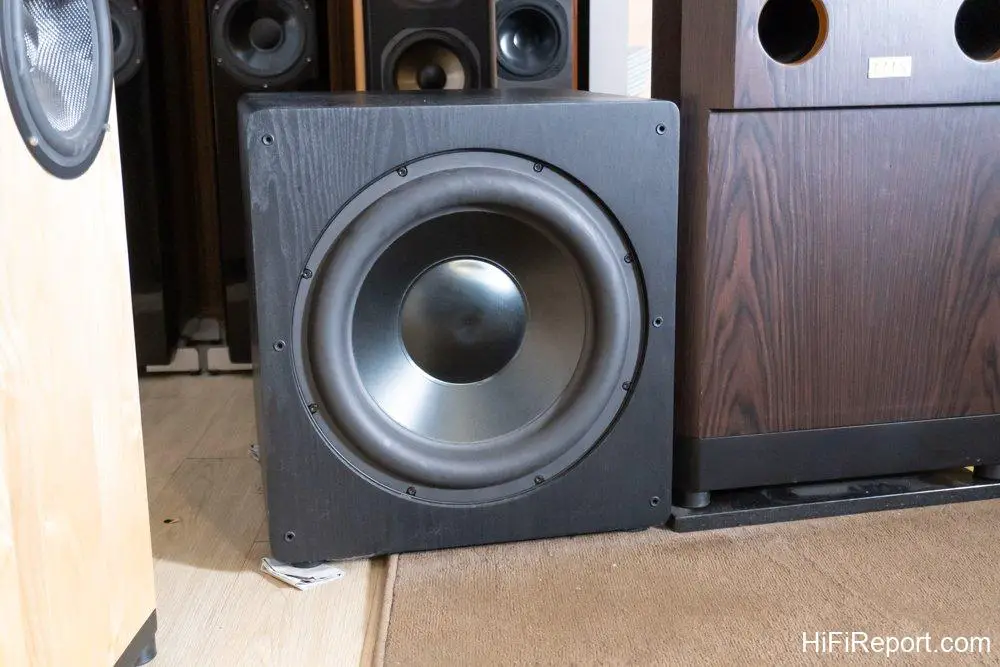
The subwoofer in the system was the “Qin Dynasty” BQ3115D active subwoofer, which Xiao Hsu also distributes. Featuring a 15-inch driver in a sealed enclosure, it houses a built-in 580-watt (1200-watt peak) Class AB amplifier. Weighing nearly 50kg, it incorporates three parametric EQ bands, allowing for precise adjustment of bandwidth and level at three frequency points, offering both potent performance and versatile features.
Xiao Hsu mentioned his subwoofers are competitively priced, and he often personally delivers and sets them up for customers. This, combined with his theater system calibration services, has led him to tune over a thousand systems over the years, building his current success step by step.
With Xiao Hsu’s expert calibration, what ensued was a series of captivating, breathtaking, yet nuanced and balanced movie scenes.
Xiao Hsu’s dedication to selecting and editing movie clips, dating back to the early days, was evident. The first clip he played was from the 2007 Hong Kong action film “Flash Point,” starring Donnie Yen. The sounds of hand-to-hand combat, punches and kicks landing, were truly visceral – “flesh on flesh” as the saying goes. The sound was thick, solid, and explosively impactful, like firecrackers detonating. Most strikingly, each strike sounded as large as the screen itself. This is the effect of listening to large horns up close. I had only experienced this previously at HiFiReport’s home, and never a third time until now, but here at Xiao Hsu’s showroom, the scale was even grander, likely due to the closer listening distance.
Next was “Dragon Tiger Gate,” another Donnie Yen film also starring Nicholas Tse, released even earlier in 2006. A scene depicting Nicholas Tse’s character, Wang Xiaohu, taking on a gang in a restaurant was shown. As thugs were thrown through doors and crashed to the ground, the impact wasn’t just loud; the volume surged instantaneously to a peak – fast, powerful, and focused, creating a palpable sense of sonic impact. It felt like being physically struck by the sound, incredibly thrilling and exhilarating.
This raw, unrestrained impact, a hallmark of horn tweeters paired with paper cone woofers, is uniquely LALS.
Immense Volume, Smooth Sound
Moving on, we watched a scene from “A Star is Born.” Xiao Hsu selected the moment where Jackson (Bradley Cooper) invites Ally (Lady Gaga) to join him on stage during his concert. During “Shallow,” Jackson sings the first verse, then Ally takes over.
The scene depicted a live concert, and through the Classical 12 Center/12 SE, I experienced the authentic atmosphere of being at a concert. It wasn’t just the immense sound pressure; the soundstage was also enormous. The room, though not small, was completely filled with sound, engulfing me entirely. Crucially, despite the close proximity and immense volume, the sound remained smooth and un-fatiguing, pure exhilaration. If you’re a concert enthusiast, you’ll undoubtedly be captivated by this sonic experience.
Another example was the flying fish swarm scene from “Life of Pi.” The tiger roars fiercely at Pi while vying for the largest tuna, amidst a flurry of flying fish.
Through the Classical 12 Center/12 SE, the tiger’s roar was exceptionally robust, focused, and deep, emanating powerful energy that sent shivers down my spine. If the frequency integration between the horn tweeter and woofer, and between the woofer and subwoofer, weren’t seamless, the impact of this roar would certainly be diminished.
Furthermore, the thudding sounds of flying fish falling into the boat and hitting the hull were remarkably loud and solid. The rapid and dense movement of the flying fish in flight was vividly portrayed, highlighting the horn’s superior detail retrieval.
The Allure of Home Theater Excellence
The next musical piece was even more breathtaking.
Xiao Hsu played a live concert performance by film score maestro Hans Zimmer in Prague, specifically a segment from the “Pirates of the Caribbean” score. Before playing it, Xiao Hsu warned, “The volume will be extremely loud; be prepared.”
Even with the prior warning, the sheer sound pressure during the latter part of the piece was almost overwhelming. The dynamic range was terrifyingly wide, maximizing the impact of Hans Zimmer’s music. Crucially, the intensity was not harsh or unpleasant. Even at extreme volume, the system maintained excellent overall balance, with discernible sonic layers.
This experience further deepened my understanding of the LALS horn speakers’ capabilities.
Sensing my slightly overwhelmed state, Xiao Hsu transitioned to a selection of pleasant pop songs to ease the tension and conclude the audition.
His eclectic taste was evident, encompassing artists like Utada Hikaru, Ayaka, Jay Chou, Sammi Cheng, She, and various Korean girl groups, many unfamiliar to me but equally captivating. I can only imagine the vastness of his digital music library. However, I am certain that every visitor here will be satisfied, experiencing the allure of superior home theater through LALS horn speakers.
Seeking a home theater system comparable to, or even surpassing, commercial cinemas, while also serving as a high-fidelity music playback system? If you reside in the Hsinchu area, a visit to HiFiReport Audio is a must. Their LALS theater systems will not only impress but will open your eyes to a new level of home entertainment.
If space constraints preclude the Classical 12 Center and Classical 12 SE, Xiao Hsu also offers LALS horn speakers with 8-inch or 6-inch woofers, ensuring a vivid and engaging listening experience even in smaller rooms.
Specifications
**LALS Classical 12 Center**
* Type: 3-driver, 2-way horn center channel speaker
* Drivers: 44mm compression driver + 35cm wooden horn tweeter × 1, 12-inch paper cone woofer × 2
* Sensitivity: 98dB
* Impedance: 4 ohms
* Frequency Response: 50Hz – 20kHz
* Crossover Frequency: 800Hz
* Power Handling: 600 watts
* Dimensions: A-type vertical horn — 920 × 460 × 440 mm (W×H×D), B-type horizontal horn — 800 × 540 × 520 mm (W×H×D)
* Weight: 45kg
* Reference Price: NTD 98,000 (Approx. USD 3267)
**LALS Classical 12 SE**
* Type: 2-driver, 2-way horn speaker
* Drivers: 44mm compression driver + 37cm wooden horn tweeter × 1, 12-inch paper cone woofer × 1
* Sensitivity: 96dB
* Impedance: 8 ohms
* Frequency Response: 35Hz – 20kHz
* Crossover Frequency: 1200Hz
* Power Handling: 500 watts
* Dimensions: 450 × 1085 × 390 mm (W×H×D)
* Weight: 46 kg