
Marantz SA-KI RubyvPM-KI Ruby Review
Review by Editor-in-Chief Liu: Marantz SA-KI Ruby, PM-KI Ruby – Enjoying Ken Ishiwata’s Legacy
The “KI” in KI Ruby Signature stands for Ken Ishiwata, “Ruby” signifies the 40th anniversary, and “Signature,” of course, means these two pieces of equipment bear Ken’s signature. Why introduce a KI 40th Anniversary Signature Edition? This requires starting from the beginning. Ken Ishiwata was Japanese, born in 1947 and passed away in November 2019 at the age of 72.
As early as age 10, Ken DIYed a tube monoblock amplifier. In 1958, at age 11, he encountered his classmate’s father’s Marantz 7C preamp and McIntosh MC275 power amp at his friend’s home. Listening to Beethoven’s symphonies and Julie London’s singing, the beautiful sound completely transformed Ken’s perception of audio, and he secretly resolved to pursue a career in the audio industry.
Later, he studied International Radio Communication, obtained a radio license, and worked as a communicator on merchant ships.
After a short stint at sea, traveling to several countries, Ken realized this wasn’t the career he wanted and decided to change paths. Since he not only understood electronics but was also fluent in English, he applied to Sony and Pioneer. Both companies accepted him. Sony offered him a position in the video department, while Pioneer offered one in the audio department. This was in 1968. Which one do you think Ken Ishiwata chose? Pioneer, of course! He was an audio enthusiast!
Besides, Pioneer was incredibly famous at the time.
After joining Pioneer and working briefly in Japan, Ishiwata was sent to Switzerland as an overseas marketing manager. In 1970, he was transferred to the newly established Pioneer European branch in Belgium, where he traveled across Europe for several years. In 1973, Ishiwata left Pioneer to join a German company, tasked with selling Sony and Pioneer products in Italy. In 1978, Ishiwata joined Marantz Japan, but his workplace was in Europe. He remained with Marantz for 41 years until May 2019.
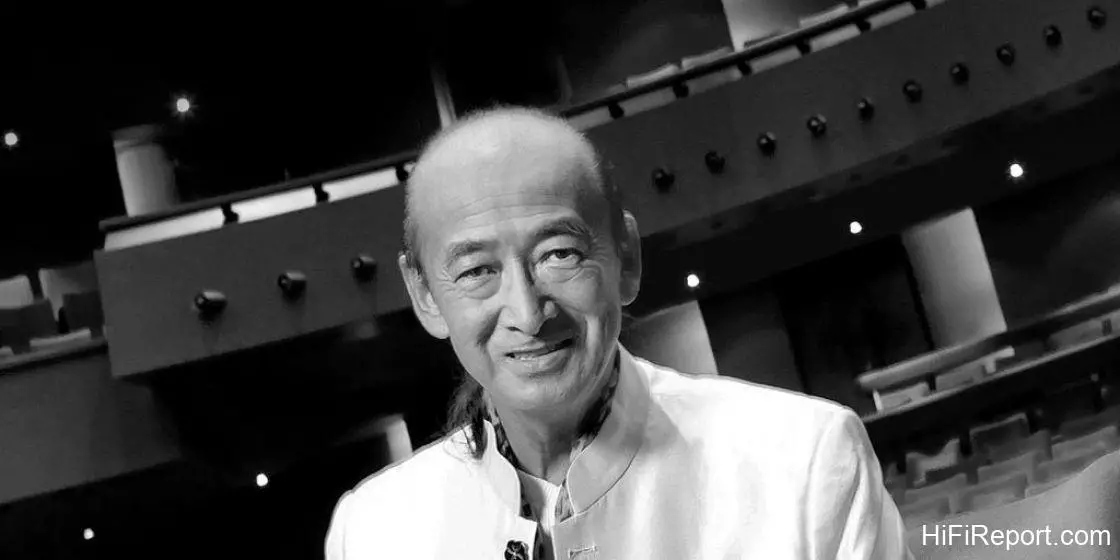
A little story here: Ken said Marantz Europe actually approached him for an interview in 1977, but they thought his salary demands were too high, so negotiations fell through.
In 1978, Marantz Europe approached him again, saying they still couldn’t afford his salary, but Marantz Japan could. That’s why Ken Ishiwata joined Marantz Japan in 1978, working in Europe. Although his official title was Brand Ambassador, Ishiwata was involved in almost all new product development and played the crucial role of listening and tuning. Therefore, he had a direct impact on Marantz’s products.
At almost every Munich High End show, you could see Ken Ishiwata at the Marantz booth, amiably chatting and taking photos with visitors. I saw him there in 2018. I never expected him to announce his departure from Marantz in May 2019 and pass away in November 2019.
In the 1980s, when Philips owned Marantz, they asked Ishiwata to develop speakers specifically for sale in Europe. At that time, Ishiwata used OEM drivers from the Japanese manufacturer Tonegen and assembled them in Belgium. At its peak, they sold 260,000 speakers a year (130,000 pairs), a truly astounding number. Ishiwata said it was a shame that Philips later insisted on using their own speaker drivers. Ishiwata’s protests were in vain, and he had to comply.
From then on, Marantz speakers declined steadily in the European market.
A Brief Marantz History
Having briefly introduced the key figure, Ken Ishiwata, let’s touch upon a brief history of Marantz. We know that Marantz was founded in 1951 or 1952 by Saul Marantz. In 1964, Marantz was sold to the American company Superscope. Judging by the name, you might guess it was related to the Hollywood film industry, and you’d be right. At that time, the company had just ended its partnership with Sony and was looking for an audio brand, thus purchasing Marantz.
However, Superscope did not have its own manufacturing facilities, so they entrusted Marantz production to Standard Radio in Japan. By 1975, Standard Radio’s share structure changed, and it was renamed Marantz Japan. In 1980, Superscope sold Marantz Japan to Philips. After many years, in 2001, Marantz Japan surprisingly bought back most of the company’s shares from Philips. In 2002, D&M (Denon & Marantz) Holding was established.
In 2008, Philips sold its remaining shares back to D&M, ending its long relationship with Marantz. In 2017, Sound United acquired D&M, which it holds to this day.
Throughout this long history, having visited the headquarters and factories of both Marantz and Denon, I have gained some understanding of them. Let’s talk about Marantz. As a company that started in high-end audio, it has maintained that lineage throughout its history. Due to its relationship with Philips, it possessed unique expertise in CD players. Ken Ishiwata, being in Europe at the time and fluent in languages, became a bridge between Philips engineers and Japanese Marantz designers.
In 1983, Philips launched Europe’s first CD player, the CD-100, while Marantz also launched the CD-63 in Japan. Ishiwata was fully involved in the design of the CD-63. The CD-63 was essentially a modified version based on the CD-100. The biggest modification internally was the analog circuitry, which was always a Marantz strength.
Philips, focusing on the mass market, did not put the same level of high-end audio engineering effort into the analog amplification circuitry, which helped make Marantz’s CD players an instant hit. Subsequently, Ishiwata was involved in the development and promotion of most Marantz products.
Because he insisted that Marantz’s pricing should remain accessible to ordinary people, even though Marantz products were meticulously designed and manufactured with attention to detail, the prices remained affordable.
Unique Marantz Technologies
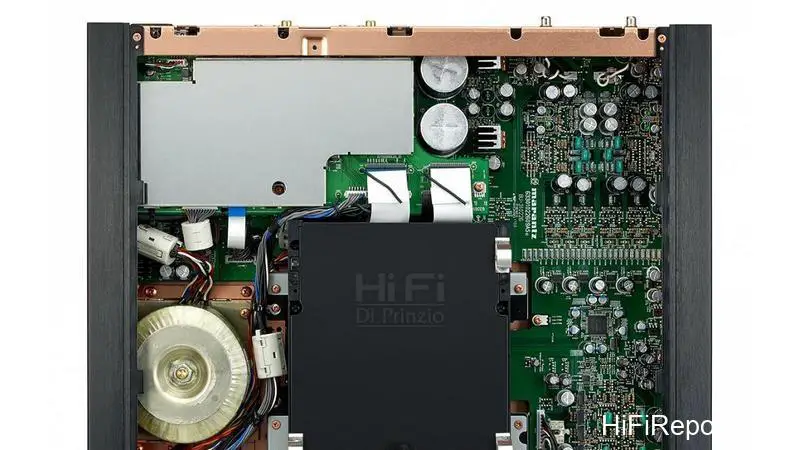
Let me give two examples to illustrate what makes Marantz unique. The first is their developed HDAM (High Definition Amplifier Module). This is a block module made of discrete components, sealed in a small box. This serves two purposes: shortening the music signal path and keeping the components at a consistent temperature, which greatly helps improve sound performance. The second example is Marantz engineers’ intense focus on noise reduction and elimination.
When I visited the factory, I saw design engineers spending their entire day facing machines, using probes to test various parts of the circuit board, identifying sources of noise generation or contamination from external sources.
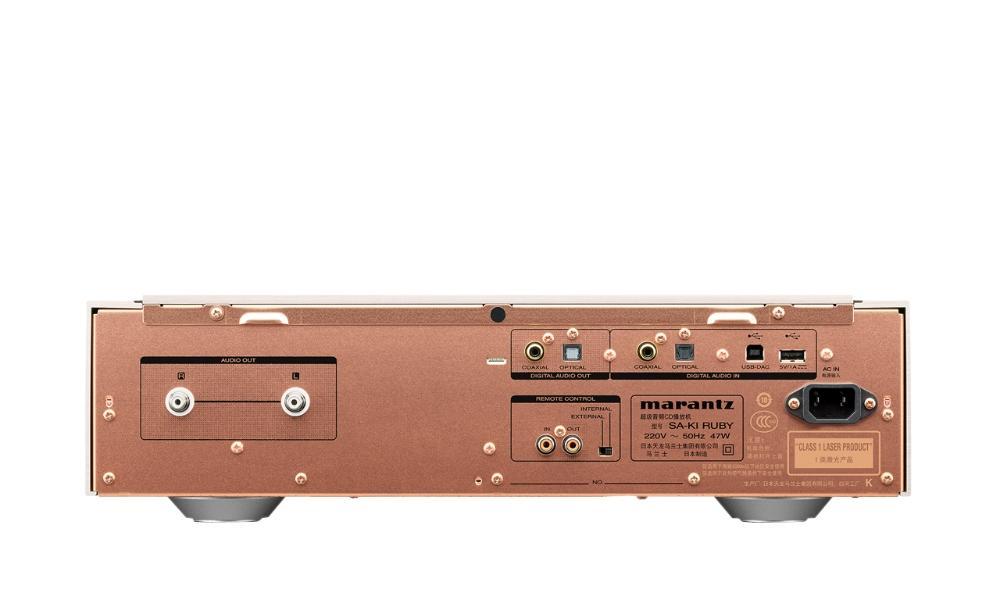
Furthermore, in some high-end models, Marantz uses copper-plated steel chassis. Why copper-plated steel? Because steel can block low-frequency electromagnetic waves, and copper can block high-frequency electromagnetic waves. Copper-plated steel not only has enough rigidity to support the weight of internal components but also simultaneously blocks both low and high-frequency electromagnetic waves, making it an excellent material for reducing electromagnetic pollution.
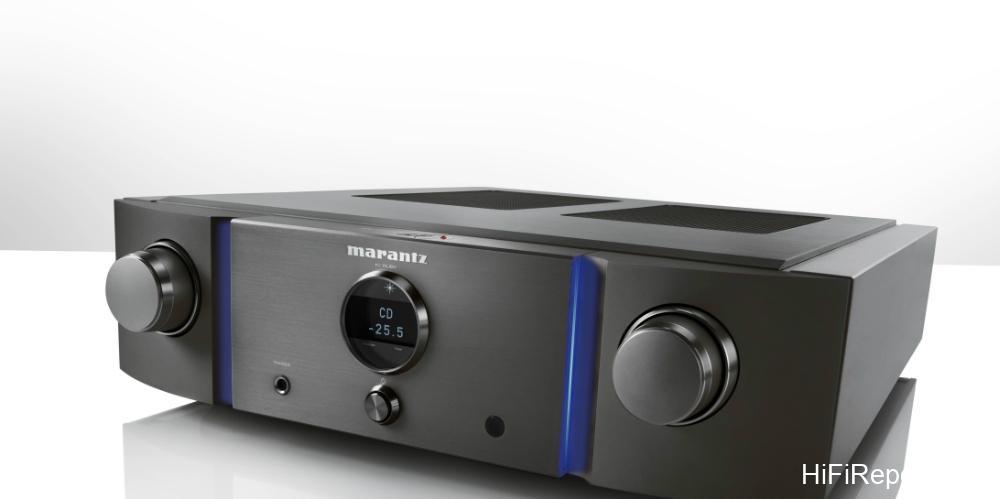
Both the Marantz KI Ruby integrated amplifier and SACD player utilize copper-plated steel chassis.
The Birth of KI Signature
The first Marantz KI commemorative model was the CD-63 II KI Signature SACD CD player and the PM66 KI integrated amplifier. This CD player was not originally on the scheduled product development list. Ishiwata initially used the CD-63 player for upgrade experiments. After completing it, he really liked it, and others who heard it also felt it had great musicality. This is how the KI version began.
Ishiwata said that this CD player didn’t sound neutral but was full of musicality, making people enjoy listening.
The second KI commemorative model was the Pearl 30th Anniversary edition, released in 2008. The third KI commemorative model is, of course, the Ruby in 2018. In May 2019, Ken Ishiwata was interviewed by the British magazine What Hi-Fi? and was asked which Marantz product set was his favorite. Ishiwata firmly replied: the Ruby KI SACD player and integrated amplifier. He said this not because it was his 40th-anniversary commemorative model, but because of its sound performance capabilities.
Perhaps you’re curious why Marantz is still producing SACD players today. The main reason is that Ken Ishiwata believed that DSD digital signals are superior to PCM digital signals. He said that PCM signals use fixed sampling rates and resolutions, such as 24-bit, 192kHz, but not all music signals require the full 24 bits, leading to waste. Ishiwata believed that 90% of a 24/192 data stream is wasted.
He felt that DSD sounds better because it is closer to the original analog signal. Therefore, Marantz’s SACD players convert PCM signals to DSD signals (as in the KI Ruby). Some people worry they won’t be able to buy SACDs, but there’s no need to worry; a few audiophile record labels continue to release SACD discs, ensuring there’s no shortage. Ishiwata also strongly believed that audio equipment test numbers cannot represent sound quality performance. Why?
He said because test numbers are measured in static conditions (test signals), while music signals are dynamic, and many parameters interact with each other to affect sound performance. Therefore, test specifications cannot represent sound quality performance.
Another viewpoint expressed by Ishiwata concerns the quality of DAC chips. He said that DACs in the 1980s used BiMOS technology, but most modern DAC chips use CMOS technology. The advantage of CMOS technology is its fast response, low power consumption, and impressive spec numbers, but these are requirements for the computer industry, not the audio industry. Audio needs power because dynamics in music require power, and high power consumption contradicts the low power needs of the IT industry.
KI Ruby vs. SA/PM-10
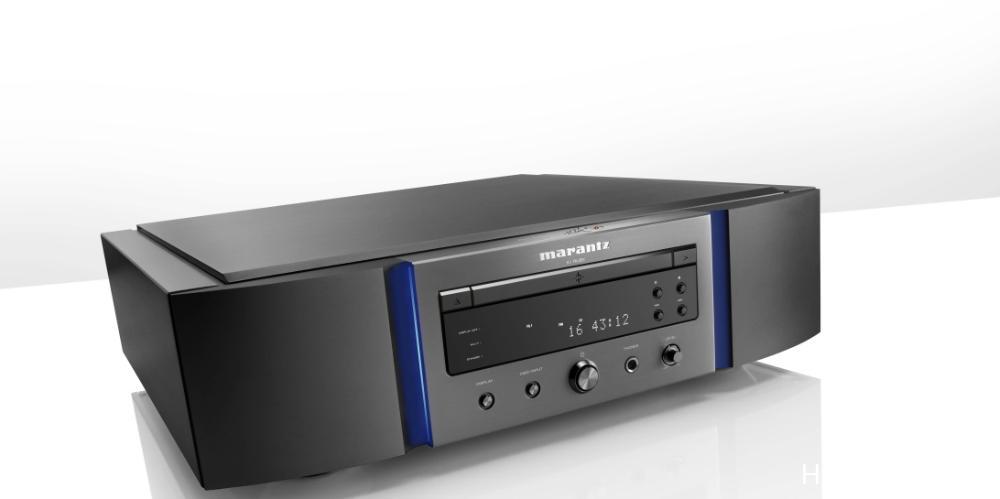
After understanding the background of the SA-KI Ruby and PM-KI Ruby, let’s look at these two pieces of equipment. Many people assume that the SA-KI Ruby is just the SA-10 SACD player, and the PM-KI Ruby is just the PM-10 integrated amplifier. This can be said to be both right and wrong. More precisely, the SA-KI Ruby is derived from the SA-10, and the PM-KI Ruby is derived from the PM-10.
The reason it’s “right” is that their appearances are almost identical, and the internals are similar, the only difference being that the PM-10 chassis is slightly taller than the PM-KI Ruby. The reason it’s “wrong” is that the SA-KI Ruby and PM-KI Ruby are single-ended designs, while the SA-10 and PM-10 are balanced designs. Furthermore, the price of the SA-KI Ruby and PM-KI Ruby is almost half that of the SA-10 and PM-10.
Let’s compare the chassis size and weight of these two sets.
**PM-KI Ruby Specifications:**
* Weight: 15.7 kg
* Dimensions: 440x127x453mm
* Output Power: 100 watts per channel
**PM-10 Specifications:**
* Weight: 21 kg
* Dimensions: 440x168x453mm
* Output Power: 200 watts per channel
The difference in chassis size is the 41mm height difference.
**SA-KI Ruby Specifications:**
* Weight: 17.1 kg
* Dimensions: 440x419x127mm
**SA-10 Specifications:**
* Weight: 18.4 kg