
Mingus Septet Review
Having visited the Marten factory, I was profoundly impressed by their commitment to high-end audio. To ensure a truly neutral listening environment, they spared no expense in commissioning a professional acoustic design firm to create a near-perfect listening room within the factory. Among the many factory tours I’ve taken, this is certainly unique. This space is not only used for evaluating new products but also for recording – their released albums are recorded right here.
Another aspect that left a deep impression was their relentless pursuit of top-tier speaker drivers and crossover components. Marten has a long-standing partnership with Accuton in Germany, utilizing their most premium drivers or specifically customized versions. The components used in their passive crossovers are also the most appropriate high-end products, with absolutely no intention of cutting costs.
Looking at the specifications, you might assume Marten’s preferred first-order crossover design is simple and inexpensive. However, if you ever get the chance to see one in person, you’ll be astonished at how massive and complex they are, employing numerous components.
Marten’s pursuit of the extreme is also evident in their cabinet construction. The top-tier Coltrane series cabinets are made from carbon fiber, and feature curved profiles, which you can imagine comes at a significant cost. The next level down, the Mingus series, while built from MDF, also utilizes curved cabinets. Even the Parker series, though not curved, features a trapezoidal shape that is narrower at the front and wider at the rear, minimizing internal standing waves along the side walls.
Even the most affordable Oscar series boasts impeccable veneer work and finish. Some might find Marten speakers expensive, but delve into the details of their products, and you have to admit the price is justified.
The Marten Product Range
Marten’s product lineup is divided into four series: the top-tier Coltrane series, followed by the Mingus series, then the Parker series, and finally the entry-level Oscar series. The Coltrane series includes the Supreme 2, Momento 2, Coltrane 3, and Tenor 2, all featuring carbon fiber cabinets. The Mingus series has three models: Orchestra, Mingus Septet, and Quintet 2. The Parker series also has three models: Quintet, Trio, and Duo. The Oscar series has just two models: Trio and Duo.
Mingus Septet: Design and Build
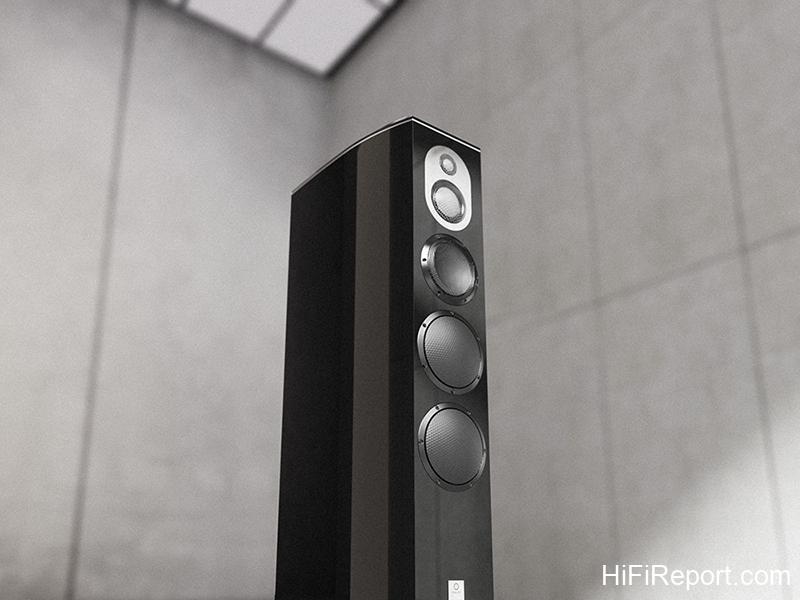
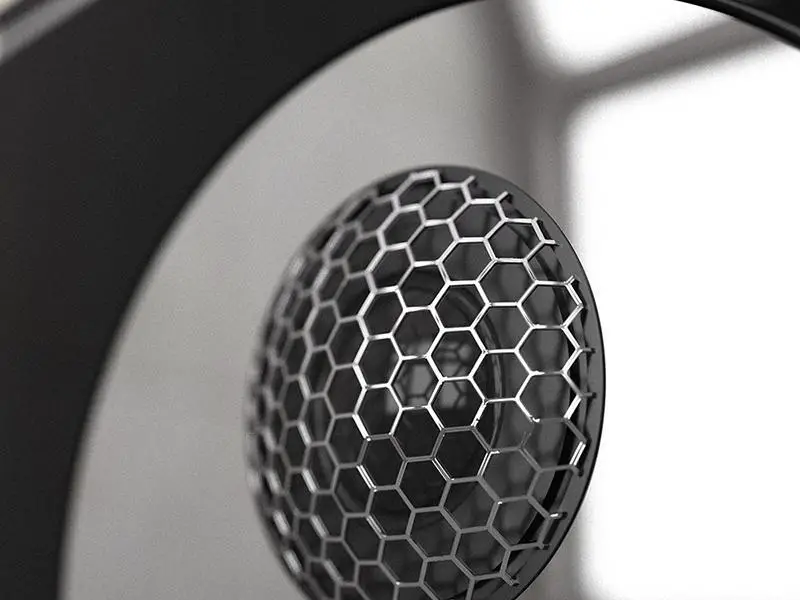
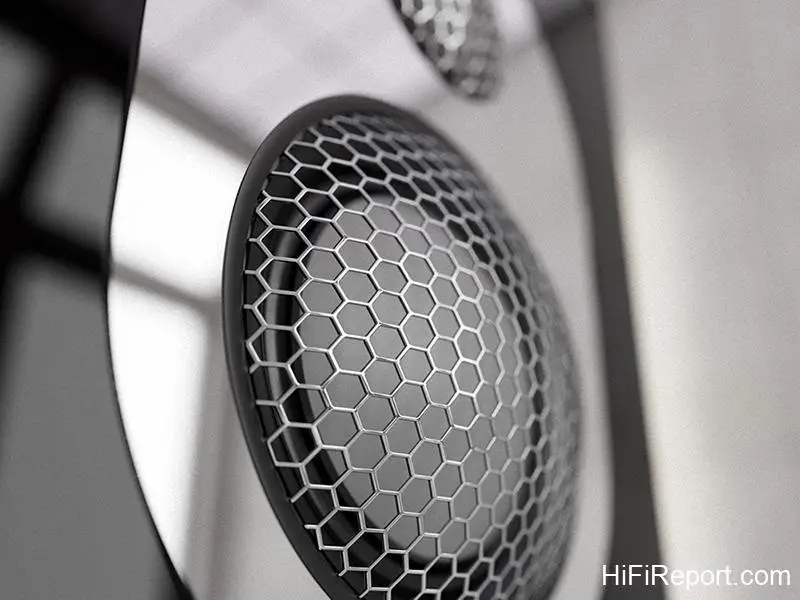
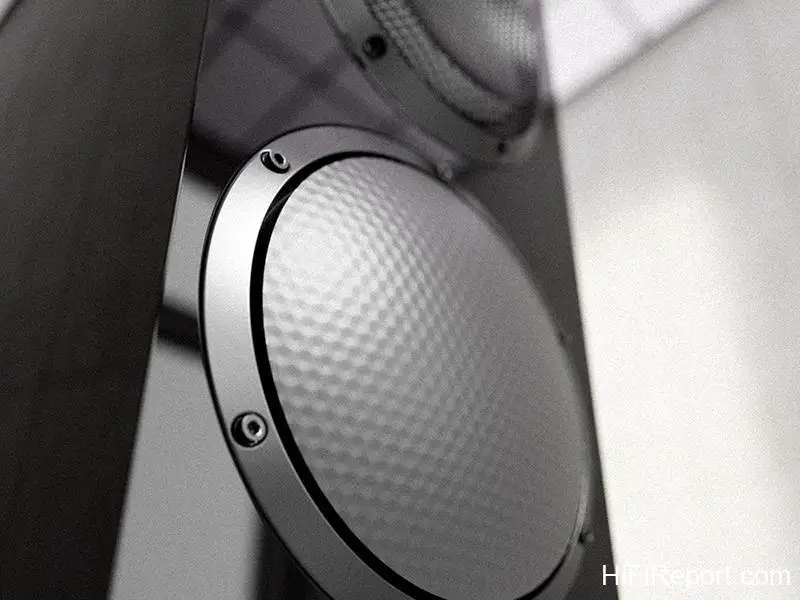
The Mingus Septet is a four-way, seven-driver design. It features a custom 1-inch diamond tweeter, a custom 3-inch hemispherical beryllium mid-tweeter. Below that is a 7-inch cone mid-bass driver, followed by two 8-inch concave aluminum sandwich membrane woofers. Additionally, there are two 10-inch passive radiators on the rear panel.
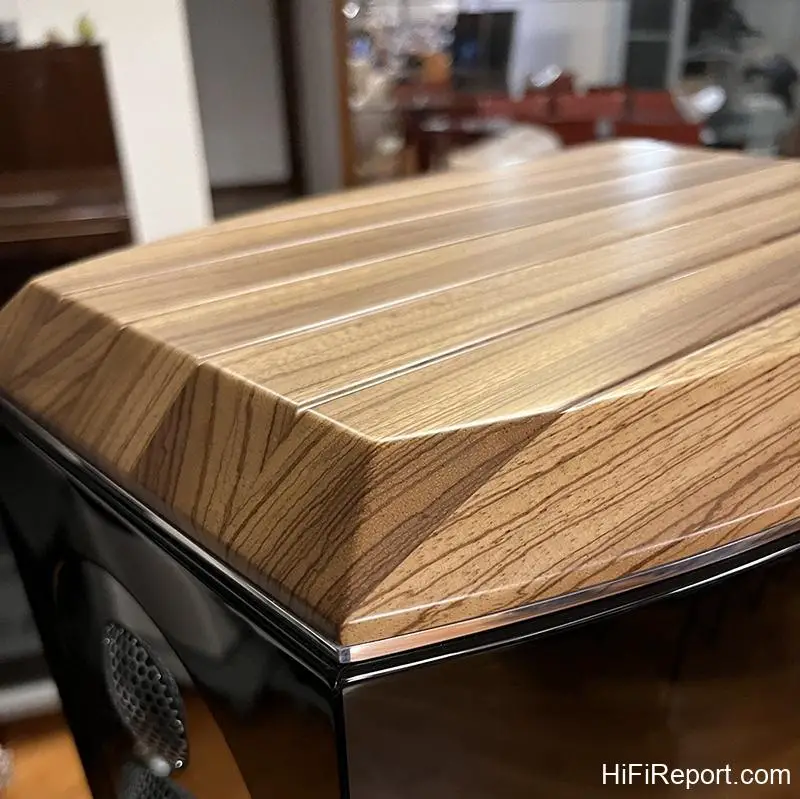
The Mingus Septet cabinet is meticulously crafted from selected 25-40mm MDF, with slightly curved front sides and flat front and rear panels. A 4mm thick aluminum plate is fitted on the front baffle around the tweeter and mid-tweeter, working in conjunction with the solid wood grooved top and bottom plates to provide excellent vibration damping. The plinth is made of stainless steel, polished to a mirror finish, giving it a very high-end look.
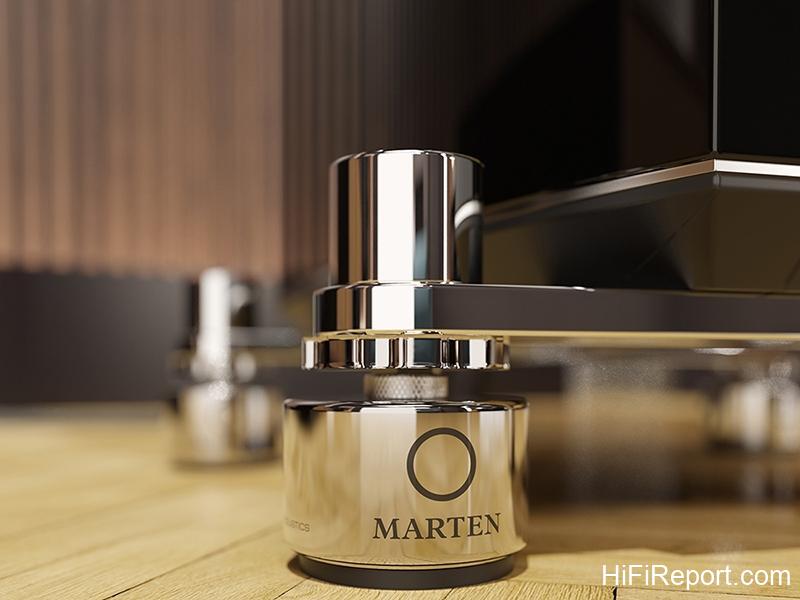
For ease of movement and placement, the Mingus Septet comes fitted with four casters under the base. Once the desired position is set, these casters are replaced with Marten IsoAcoustics Isolators. These four isolation feet effectively decouple the cabinet from the floor, preventing vibration transfer.
You might also notice that the five drivers on the front baffle of the Mingus Septet are aligned along the same vertical axis, ensuring the sound waves from all five drivers reach the listener’s ears simultaneously – a design known as Time Alignment.
Driver Technology: Diamond, Beryllium, and Ceramic
The diamond tweeter in the Mingus Septet handles frequencies from 6kHz to 40kHz. No wonder when I leaned close to listen, I barely heard any instrument sounds, mostly just a “hiss” – which is the realm of harmonic overtones from instruments and voices. However, this “hiss” is critically important, imbuing instruments with more accurate timbre, a more beautiful sheen, a sweeter flavor, and so on.
I don’t need to elaborate on the benefits of diamond drivers; they raise the breakup point, avoiding any aggressive sound. They boast an exceptionally high Stiffness-to-Weight Ratio, allowing them to respond very sensitively to even tiny input signals, while resisting distortion even with large signals. Diamond is also an excellent thermal conductor, quickly dissipating heat from the voice coil and enabling the driver to handle greater input power.
The custom beryllium mid-tweeter used in the Mingus Septet covers the frequency range of 800Hz to 6,000Hz. Beryllium diaphragms are lighter than ceramic ones, offering faster transient response. Furthermore, this wide frequency range already covers a significant portion of what a mid-range driver would typically handle. This crossover strategy is quite unusual and allows the mid-bass driver to focus on a narrower frequency range for optimal performance.
Frankly, speakers that use both diamond tweeters and beryllium mid-tweeters are rare; Marten has truly gone all out with premium components.
The grey ceramic mid-bass driver on the front of the Mingus Septet handles the 200Hz to 800Hz range. This is another unusual crossover point, and it’s surprising to see a mid-bass driver of this size dedicated to such a narrow frequency band. This essentially splits the work traditionally done by a single mid-range driver across two drivers, leaving no excuse for subpar performance.
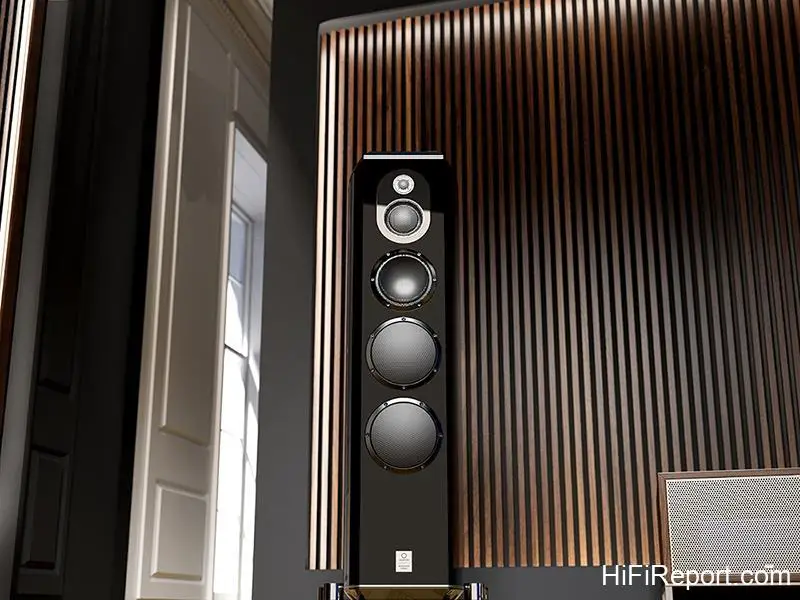
The two concave woofers at the bottom of the Mingus Septet’s front baffle are responsible for the 45Hz to 200Hz range. Honestly, a single woofer could handle this narrow range well, but the Mingus Septet uses two, again to allow the drivers to reproduce this frequency band more effortlessly. With this configuration, it seems the five drivers on the front of the Mingus Septet are designed to operate with minimal distortion, achieving the best possible musical reproduction.
Passive Radiators and Crossover Network
And let’s not forget the two 10-inch passive radiators on the back of the Mingus Septet. These passive radiators have aluminum sandwich membranes and are essentially speaker drivers without magnetic systems. They are used instead of traditional bass reflex ports to extend the low-frequency response down to 23Hz to 45Hz.
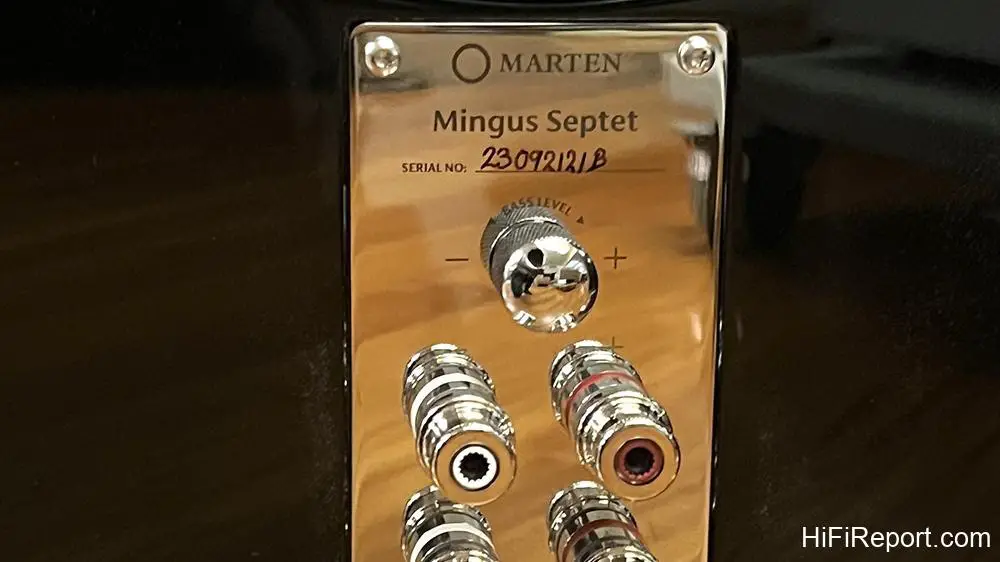
In addition to the two passive radiators, the rear panel also features bi-wire speaker terminals and a 4-step bass level adjustment knob, allowing users to tailor the bass quantity to their preference.
The Mingus Septet’s crossover has always utilized the simplest first-order design, the reasoning being minimal phase distortion. However, this also means maximum frequency overlap at the crossover points, requiring careful compensation and correction. Therefore, the first-order crossover in the Mingus Septet is not as simple as you might imagine with few components; a four-way crossover, even a first-order one, is quite complex.
It’s fair to say that the Mingus Septet’s crossover is one of the key determinants of its sound performance. It uses Copper foil air core coils, Silver/Copper in oil/paper capacitors, Silver/Gold capacitors, and custom resistors.
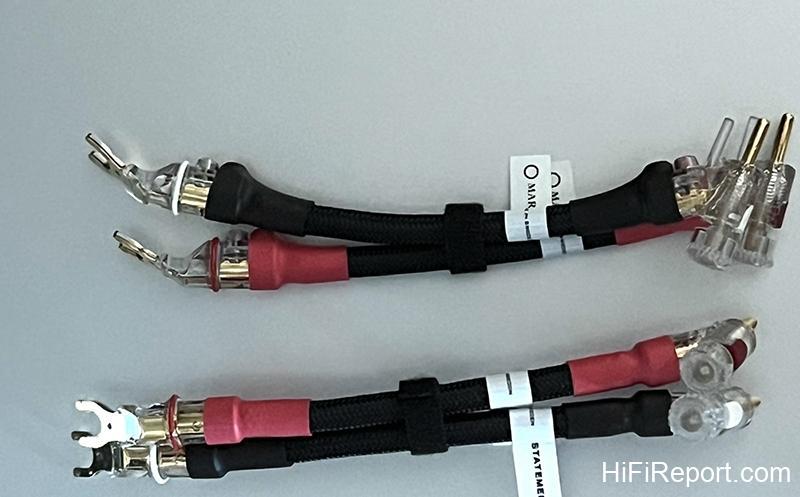
Furthermore, the internal wiring of the Mingus Septet uses Jorma cables. Jorma cables are handcrafted in Sweden and are known as high-priced, high-quality cables, now owned by Marten. Most speakers use various nameless cables for internal wiring since they aren’t visible, but Marten insists on using premium cables, even for the jumpers, which are also made from Jorma cable. This small detail reveals the manufacturer’s meticulous pursuit of quality.
Oh, and the Mingus Septet can be upgraded to the Statement Edition. What does the upgrade entail? Firstly, the internal wiring is upgraded to Jorma Statement cables, and secondly, the crossover components are upgraded.
Listening Setup and Environment
My listening sessions with the Mingus Septet took place in my large open-plan space. I used three different amplifier setups: a Spectral DMC 30SS preamplifier paired with a Pass X350.5 power amplifier, the complete Naim 300 series, and a Robert Koda Takumi K-10 MK2 preamplifier paired with Papworth M200 monoblock tube amplifiers. Digital sources included the emmLabs TSDX and DAC 2 SE version, and for streaming, the Weiss DAC 502 4ch.
Among these three amplifier setups, the Naim wasn’t the best match for the Mingus Septet. The high frequencies sounded a bit prominent, leading to occasional aggressiveness with certain music. This prominence in the high end also made me reduce the listening volume, which consequently made the bass feel slightly lacking. The Spectral/Pass combination had no major issues with the Mingus Septet.
The high, mid, and low frequencies were quite balanced, the midrange was full, and the bass was sufficient and solid. However, compared to the Robert Koda with Papworth setup, the Spectral setup fell short. Where did it lose out? Firstly, in sound quality, and secondly, in listenability. The Robert Koda setup sounded warmer, with more of a “woody” texture. To be honest, I had never heard Marten speakers produce this kind of sound before, so naturally, I prioritized using this combination.
Firstly, I must emphasize that the Mingus Septet’s sound is characterized by high resolution, exceptional transparency, lightning-fast transient response, and tightly focused imaging. Such speakers are very revealing of amplifier shortcomings. Furthermore, an acoustically ‘hard’ listening room is not suitable for the Mingus Septet.
Excessive reflections (both high and low frequency) will blur the Mingus Septet’s excellent sonic characteristics and create an imbalance between the high and low frequency ranges. Fortunately, Marten anticipated this issue and provides a four-step bass level adjustment. This serves both to adapt to different room sizes and to fine-tune the balance between the high and low frequency levels. Even so, I still recommend a ‘soft’ room acoustic for the Mingus Septet.
A hard room is detrimental not just to the Mingus Septet, but to most speakers.
General Sound Characteristics
The sound quality of the Mingus Septet is exceptionally good. Unfortunately, this advantage isn’t something that every audio enthusiast can readily discern, nor can it be fully appreciated in severely distorted rooms. When I listened to Li Tai-Hsiang’s album “Since I Met You,” the beautiful tone quality of the tenor and soprano vocals, as well as the main accompanying instruments – violin, cello, and piano – was immediately apparent.
I believe many listeners who hear this album might, due to room acoustics and equipment distortion, mistakenly think the recording is too sharp or thin. In reality, that’s a problem with their system and room, not the recording itself.
In my acoustically ‘soft’ room, paired with excellent equipment, the beauty of the Mingus Septet’s sound quality truly does justice to Li Tai-Hsiang’s recording. Thinking about it with simple logic, it’s clear that this album couldn’t have a poor recording. It was personally supervised by Li Tai-Hsiang himself.
Given his rigorous demands for music and his appreciation for the quality and timbre of instruments, how could he possibly allow the recording engineer to produce a sound he wasn’t satisfied with? I’ve said it more than once: this album can serve as a touchstone for testing equipment and listening rooms. If listening to it moves you with its sound quality, then your system is on the right track.
Conversely, if you think the recording is bad, then your audio system’s tuning is still not up to par.
Performance with Various Music Genres
Next, I pulled out a few CDs from Chasing the Dragon Records. Chasing the Dragon is a personal record label founded by Mike Valentine in recent years, dedicated to achieving natural, balanced, and authentic sound reproduction. I listened to his compilation albums Volume 1 and 2, Beethoven’s Symphony No. 5, Egmont Overture, and Beethoven’s Piano Concerto No. 5, among others.
The Mingus Septet reproduced them with incredibly beautiful sound quality, and the sound was warm, with exceptionally clear reverberation, excellent layering, and very high resolution – like the picture rendered by a 4K or 8K display.
Then, I randomly picked up an old recording, cellist Huang Hong-Ren’s “Reveries” (Begonia Records), recorded between 2010-2013. This two-CD set was recorded in France and Kaohsiung. The cello’s tone quality was absolutely gorgeous and incredibly realistic, and the piano sound was certainly no less impressive. The recording quality of this CD is absolutely comparable to Mike Valentine’s.
If you can listen to it on a well-balanced audio system, you’ll appreciate the beauty and natural balance of the recording. Of course, listening with the Mingus Septet brought out even more exquisite sound quality. I believe this outstanding recording didn’t sell many copies, which is a real shame.
Listening next to Fauré’s “Romance” performed by Bruno Philippe (cello) and Tanguy Williencourt (piano) (Harmonia Mundi), the tone quality and timbre of the piano and cello were completely different from Huang Hong-Ren’s recording. The differences were very distinct, but both conveyed the beautiful quality of the cello and piano equally well.
When I listened to Alexandra Conunova’s performance of Prokofiev’s “Violin Sonatas” (Aparte Music), both the violin and piano produced breathtakingly beautiful sounds. The texture of the instrument performances was so realistic, every note on the piano felt so palpable, and the overtones were so rich. The violin, in particular, was exquisitely delicate, sweet, and refreshing.
I deliberately leaned close to the Mingus Septet to carefully listen to the violin sound coming from the diamond tweeter, beryllium mid-tweeter, and ceramic mid-bass driver. I found that the violin sound from the mid-bass driver was restrained and warm, the sound from the beryllium mid-tweeter was prominent and bright, and the sound from the diamond tweeter was mostly the “hiss” mentioned earlier.
However, when listening from the listening position, the violin sound I heard was a blend of these three sounds. It’s truly magical; listening to each driver separately, the sound isn’t beautiful, but when the sounds from the three drivers are blended at the listening position, it becomes incredibly beautiful. This demonstrates the true wonder of the crossover design!
The Mingus Septet’s sound can be both delicate and powerful, entirely dependent on the recording itself. For instance, when I listened to Anne Bisson’s album “Be My Lover,” the overall music sounded soft. The thud of the kick drum and the bass working together created a very elastic and full “thump.” Anne Bisson’s voice was full of gentle beauty and magnetic charm.
However, when I listened to Hugh Masekela’s album “Hope,” the Mingus Septet seemed to transform, exhibiting a wild, fierce energy, full of powerful beauty. Although the personalities of these two recordings are diametrically opposed – one soft, one powerful – they share a common trait: extremely fast transient response. This is an unchanging characteristic of the Mingus Septet’s sound.
Key Sonic Attributes: Speed, Accuracy, Charm
Next, I want to highlight another excellent performance aspect of the Mingus Septet, which can be described with five words: “Fast, Fierce, Accurate, Delicate, Refreshing.” “Fast” refers to its extremely quick transient response, and it’s clean speed, without any drag. “Fierce” means it has strong power, is very solid, and elastic. “Accurate” means precise imaging and clear layering.
As for “Delicate and Refreshing,” this describes the Mingus Septet’s high frequency performance with violins, which possesses a kind of delicate and refreshing quality, and its purity is also very captivating.
When I listened to “Rhythm Art Duo,” an album recorded by Marten Recordings, featuring music played by Marimba and Vibraphone, flute, soprano, double bass, and some percussion instruments. From this CD, you can clearly hear the texture at the very moment of impact from the percussion instruments, whether struck lightly or heavily. Especially in the thirteenth track, the palpable sense of impact and the rapid transient response of the percussion are truly breathtaking.
Honestly, this kind of quick response to subtle taps is something you might not appreciate without a comparison; you need experience to fully recognize its outstanding performance capability.
Recordings of percussion instruments like this also present the Mingus Septet with a rigorous test: dynamic range. Some high-frequency percussion sounds are very subtle, while some low-frequency instruments (like the plucked double bass in the fourteenth track) have strong energy. Some speakers require turning up the volume to sound good, but then the midrange and high frequencies might distort.
The Mingus Septet, however, allows you to fully experience the contrast between the quietest and loudest passages even at normal listening volumes.
Listening to “Napoli” (Aparte Music) performed by cellist Opheile Gaillard, which features Baroque music with the cello as the main instrument, I found myself constantly thinking of the words “Delicate and Refreshing.” The cello’s sound isn’t that of a violin, so how could it sound delicate and refreshing? It truly did. The sweetness, agility, and smoothness of that cello immediately brought those two words to mind.
Furthermore, the other accompanying instruments and violin in the music were also incredibly fast and refreshing in their response. That lively, pulsating bounce in the rhythm fully demonstrated the Mingus Septet’s character.
When listening to Shostakovich’s “Symphony No. 4,” the Mingus Septet fully conveyed the immense contrast between the quiet and explosive passages in the music, and it was “fierce” in its presentation. If it were merely “fierce,” it wouldn’t be that remarkable, but the Mingus Septet maintained the beauty of the instrument timbres, the clarity of each section’s layering, and the precision of imaging even under intense sound pressure.
This is not an easy feat, and I believe it’s related to the Mingus Septet’s seven drivers and crossover design. With so many drivers effectively sharing the workload, each driver can perform optimally within its narrow frequency band.
Listening next to Yuja Wang with Dudamel conducting the Los Angeles Philharmonic in their Rachmaninoff Piano Concertos and Rhapsody on a Theme of Paganini, the first thing that grabs your attention is the immense presence of the orchestra – thick, full, and energetic. When the piano enters, the palpable, large, crisp, and distinct piano notes are not only fast but also “fierce.” The overall music is full of fast-reacting vitality.
The Mingus Septet renders the piano timbre especially beautifully, with a slightly golden hue combined with warmth, giving it a gorgeous, textured wood grain-like sheen.
The Mingus Septet has strong sonic energy and very high resolution. When I listened to Abbado conducting Brahms’ “Symphony No. 1,” the overwhelming force of the music in the first movement filled the entire space. Here, not only were the string and wind sections clearly layered, but even the low string section had clear resolution. This should be attributed to the two front woofers dedicatedly handling the 45Hz-200Hz range.
After listening to many large orchestral recordings, I began to understand why the Mingus Septet’s crossover network is designed this way; it feels as though it’s designed according to the vocal ranges of the different sections of an orchestra.
The Mingus Septet makes jazz music sound particularly lively and bouncy. For example, listening to Oscar Peterson trio’s “Time and Again,” the piano was truly refreshing and palpable, and the brush sweeping the drumhead was equally refreshing. The bass notes were tight, distinct, and popped with a hard plucked texture. Although the music’s tempo was relaxed, listening to it immediately made you feel the Mingus Septet’s extremely fast transient response.
Another example is listening to “Crying” from James Blood Ulmer’s “Live at the Bayerischer Hof.” The thudding of the kick drum was incredibly fast, solid, and powerful. The vocals were refreshing with depth and magnetism, and the other instruments presented a completely unfuzzy sense of localization within the extremely transparent soundstage. All of this made the music played by the Mingus Septet feel undulled and untethered, just like a live performance.
And when listening to Alanis Morissette’s “You Oughta Know,” the full, solid thud of the kick drum produced by the Mingus Septet was startling – how could it be so full and so fast? The quantity of bass was completely different from “Crying.” This made me feel that the Mingus Septet’s bass performance was unfathomable, as if it could always squeeze out more bass quantity, extend lower easily when needed, and yet maintain such excellent resolution.
Marten’s Coltrane series is the dream of many audio enthusiasts, but I feel the Mingus series is even more noteworthy. While it doesn’t use carbon fiber cabinets, its sound performance is absolutely undiminished. Especially the Mingus Septet, you can enjoy the combined charm of the diamond tweeter, beryllium mid-tweeter, and ceramic mid-bass driver – an unforgettable sound that is fast, fierce, accurate, delicate, and refreshing.
If your listening space is under 350 square feet (approximately 10 Ping), and you want to own Marten speakers, the Mingus Septet should be your best choice.
Specifications and Ratings
Specifications
* Product Type: Four-way, seven-driver floorstanding speaker
* Launch Year: 2023
* Drivers: 1-inch Diamond tweeter ×1, 3-inch Beryllium mid-tweeter ×1, 7-inch Ceramic mid-bass driver ×1, 8-inch Aluminum sandwich woofer ×2, 10-inch Passive radiator ×2
* Frequency Response: 23Hz-40kHz (±2dB)
* Nominal Impedance: 4 ohms
* Sensitivity: 88dB (2.83V)
* Crossover Points: 200Hz, 800Hz, 6,000Hz
* Weight: 95 kg (approx. 209 lbs)
* Dimensions (WHD): 335×1,260×460mm (approx.13.2×49.6×18.1 inches)
Highlights
* Uses the best speaker drivers and crossover components.
* Rare combination of diamond tweeter, beryllium mid-tweeter, and ceramic mid-bass driver.
* Four-way, seven-driver design with unusual crossover points.
* Equally adept at handling delicacy and power; Fast, Fierce, Accurate, Delicate, and Refreshing.