
Merason DAC1 MK II Review
What? A DAC in this day and age with only 24Bit/192kHz decoding capability and no DSD support? You read that right, and I’m not mistaken either. The Merason DAC1 from Switzerland is indeed such a device, and it’s selling very well. Recently, they even released the MK II second generation. You might think that with a second generation, the manufacturer would surely have upgraded the decoding specifications, right? Sorry, no.
The MK II remains steadfastly committed to the same decoding specifications as the first generation, topping out at 24Bit/192kHz.
You might be wondering what gives them the audacity to stick to 24Bit/192kHz in this era of high-resolution digital streaming. However, the moment we connected the Merason DAC1 MK II and started listening, we immediately understood. The Merason DAC1 MK II simply sounds exceptionally good. Unsurprisingly, it earned unanimous recommendation from our editorial team.
Think back for a moment. While many DACs on the market can decode extremely high-resolution formats, what percentage of the music we actually listen to exceeds 24Bit/192kHz or is in DSD format? It’s probably not a lot. Popular digital streaming services like Tidal and Qobuz mostly offer content at or below 24Bit/192kHz. We rarely encounter those ultra-high-resolution recordings in our daily listening. You might argue that higher decoding specifications don’t hurt, even if unused.
However, Daniel Frauchiger, the founder and designer of Merason, thinks differently. When designing products and selecting components, sound quality is his paramount consideration. This is why he insists on using the Burr Brown PCM1794A chip, which only decodes up to 24bit/192kHz, in Merason products to this day. In his experience, it delivers the best sound performance.

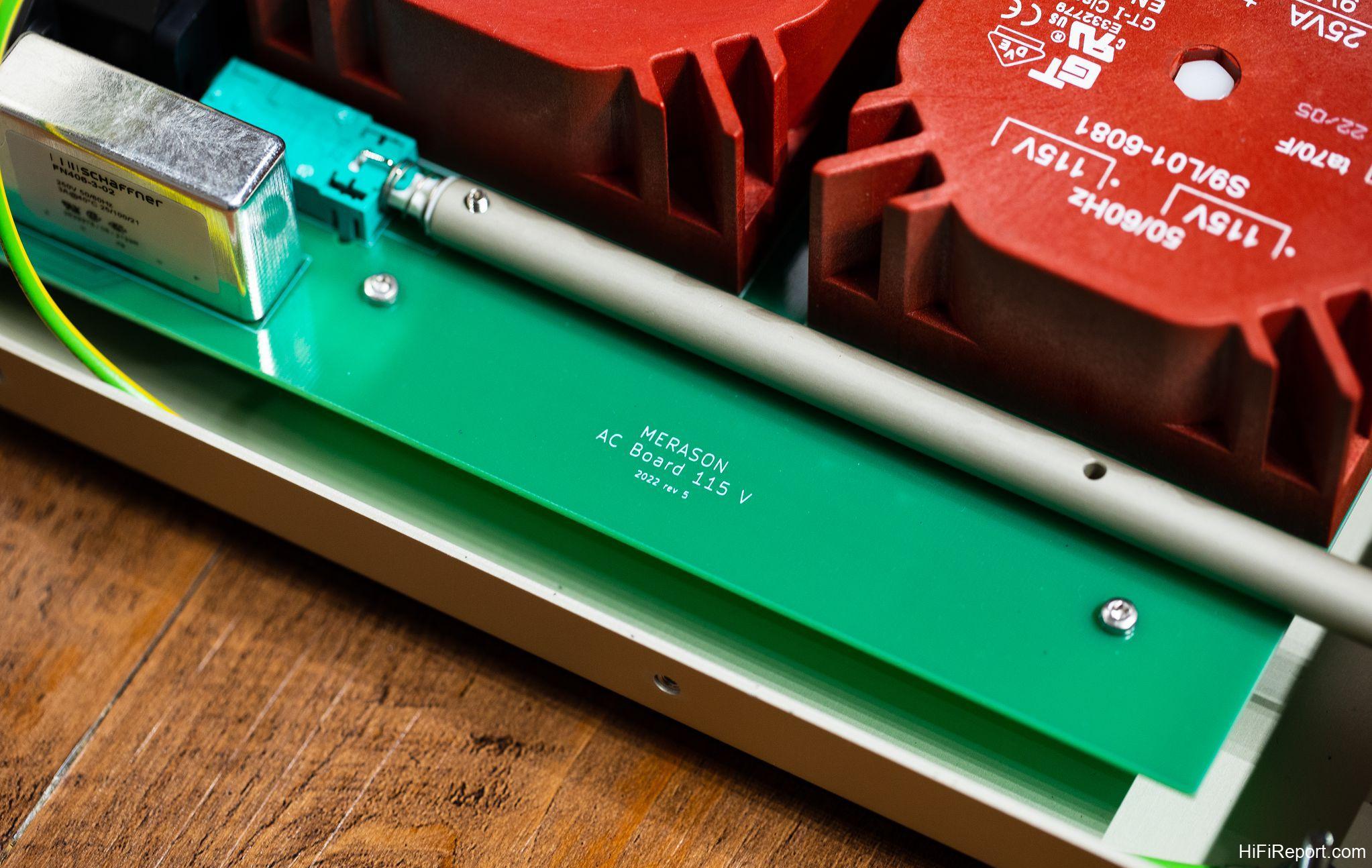
Of course, a great-sounding DAC is not solely reliant on the decoding chip. Circuit design, power supply, chassis, and all other details are crucial factors influencing the sound. The Merason DAC1 MK II may appear identical to the first generation in terms of and interface, but the internal circuitry has been completely redesigned. The good news is that first-generation owners can upgrade for a fee. Interested parties can contact (Ark Audio).
Merason DAC1 MK II: Front Panel and Color Options
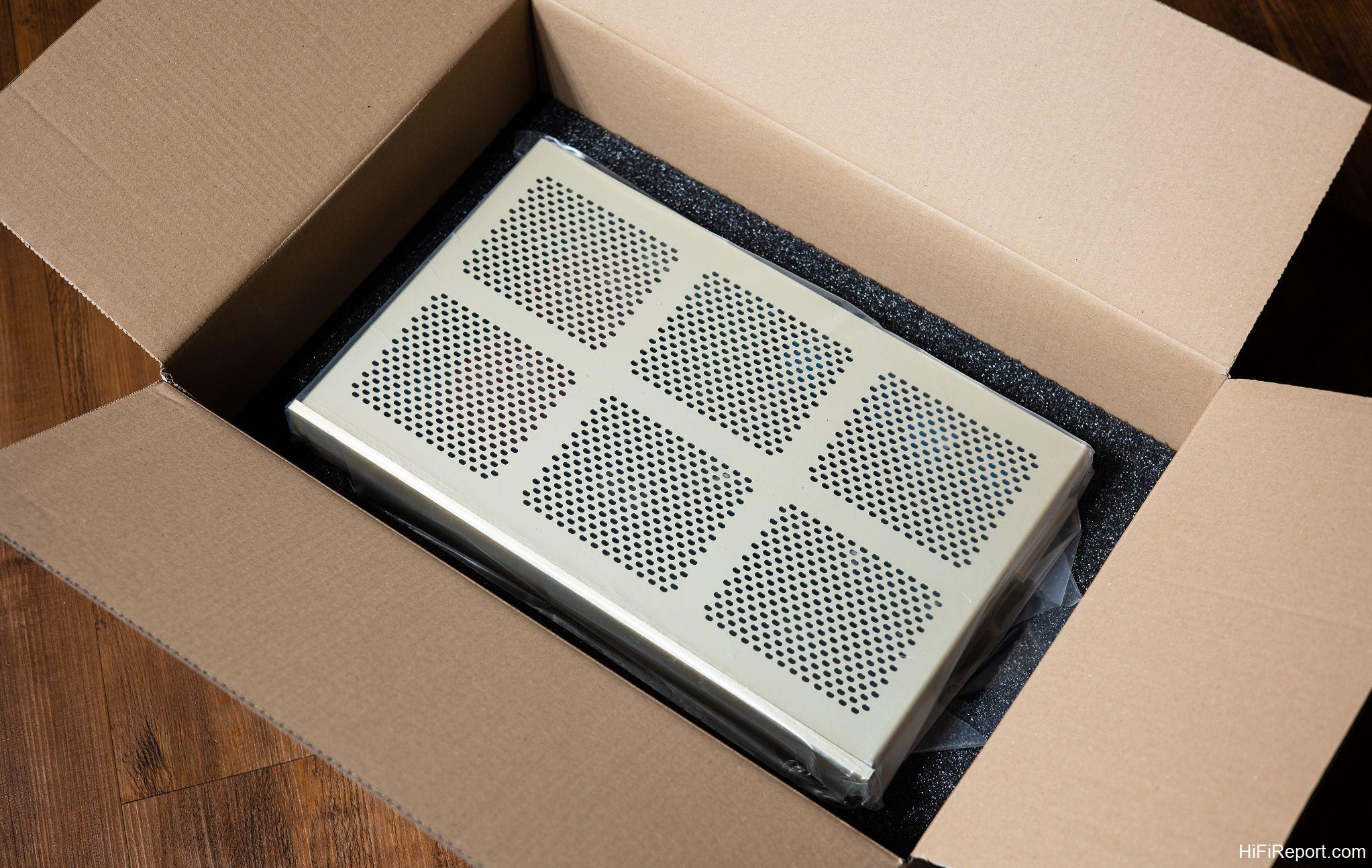
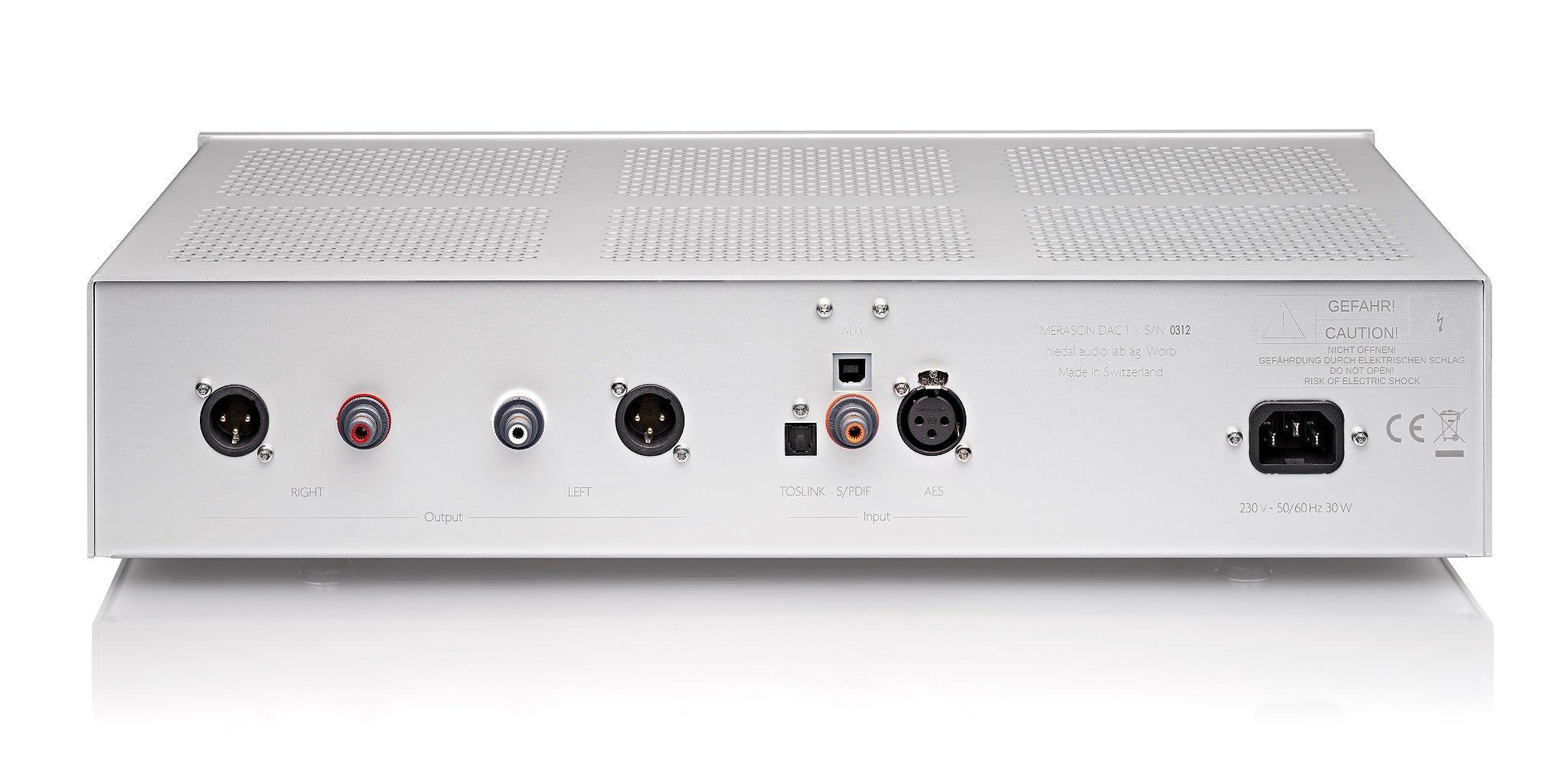
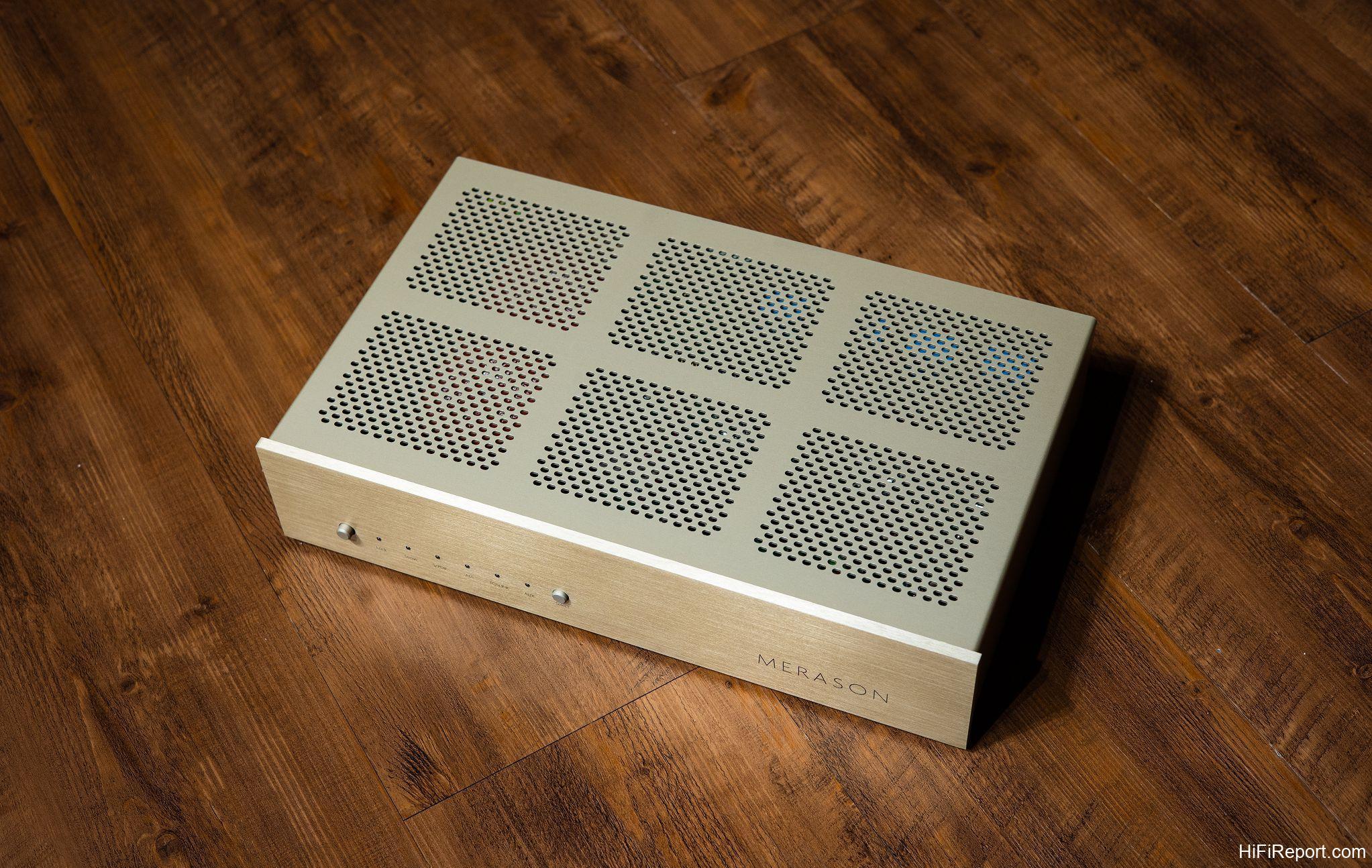
The standard color options for the Merason DAC1 MK II are silver, black, and gold. Our review unit is the gold version. The front panel design is remarkably minimalist, featuring a power switch, a signal source selector, and six LED indicator lights displaying the status.
Merason DAC1 MK II: Rear Panel and Connectivity
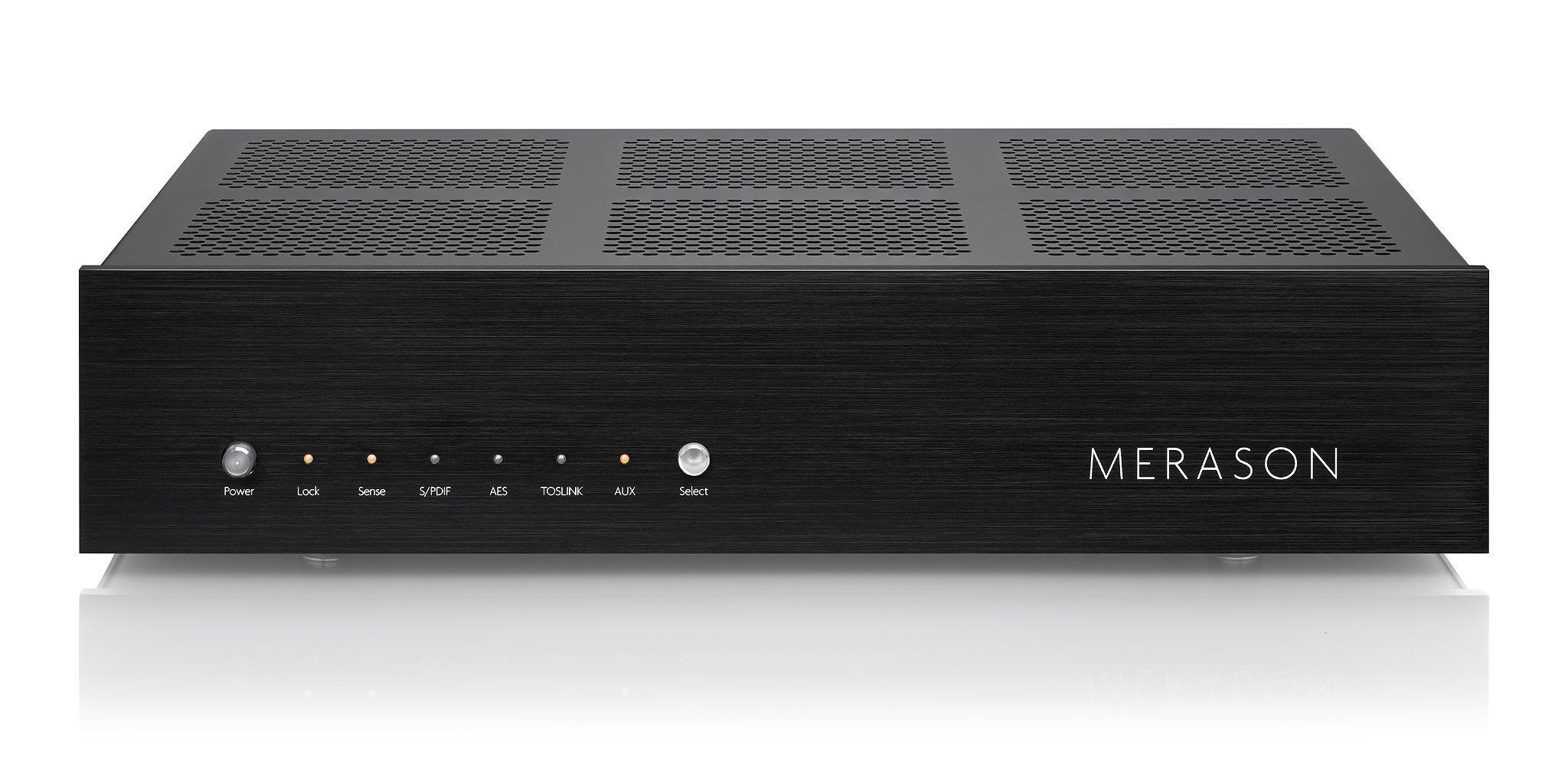
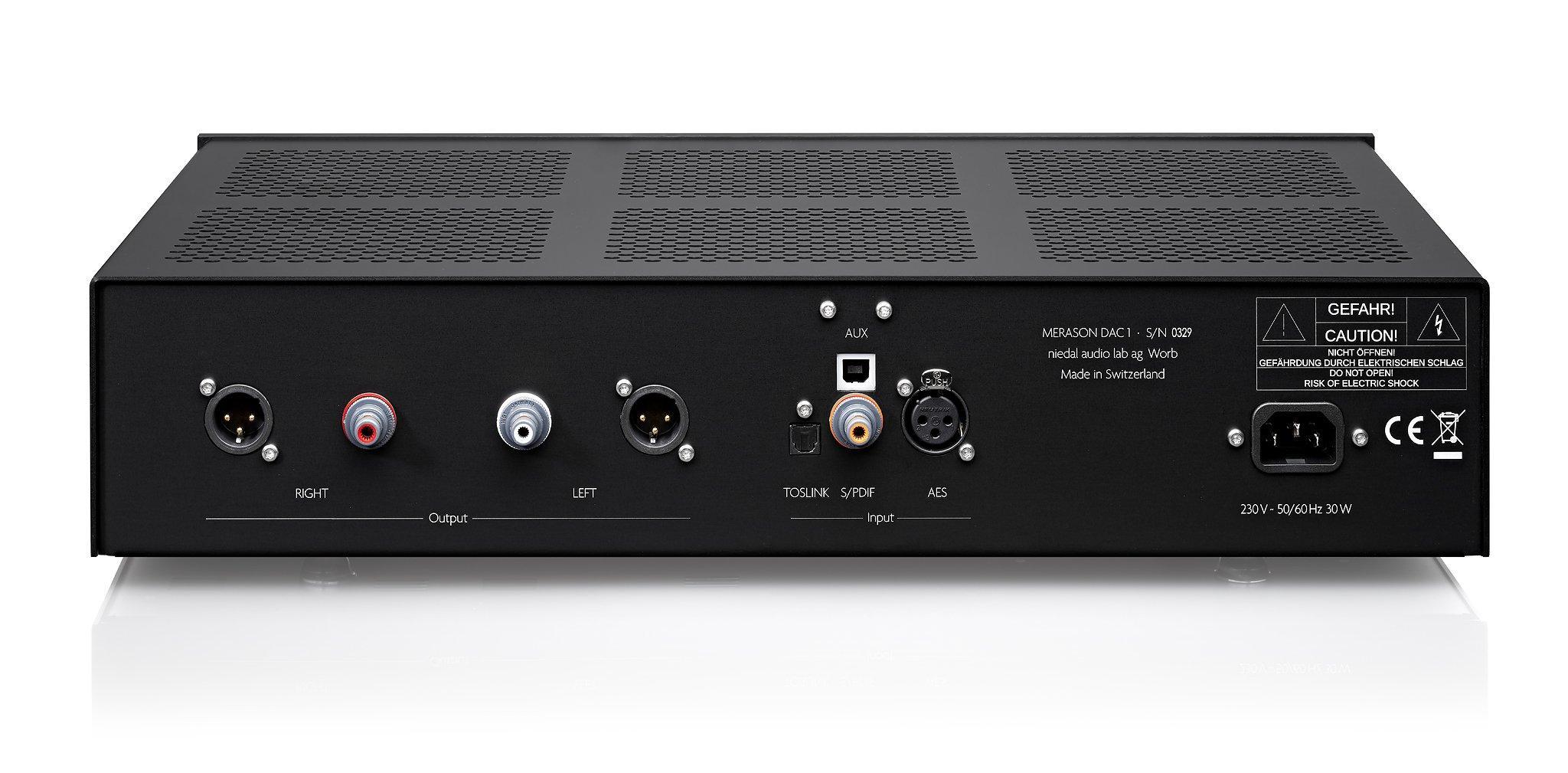
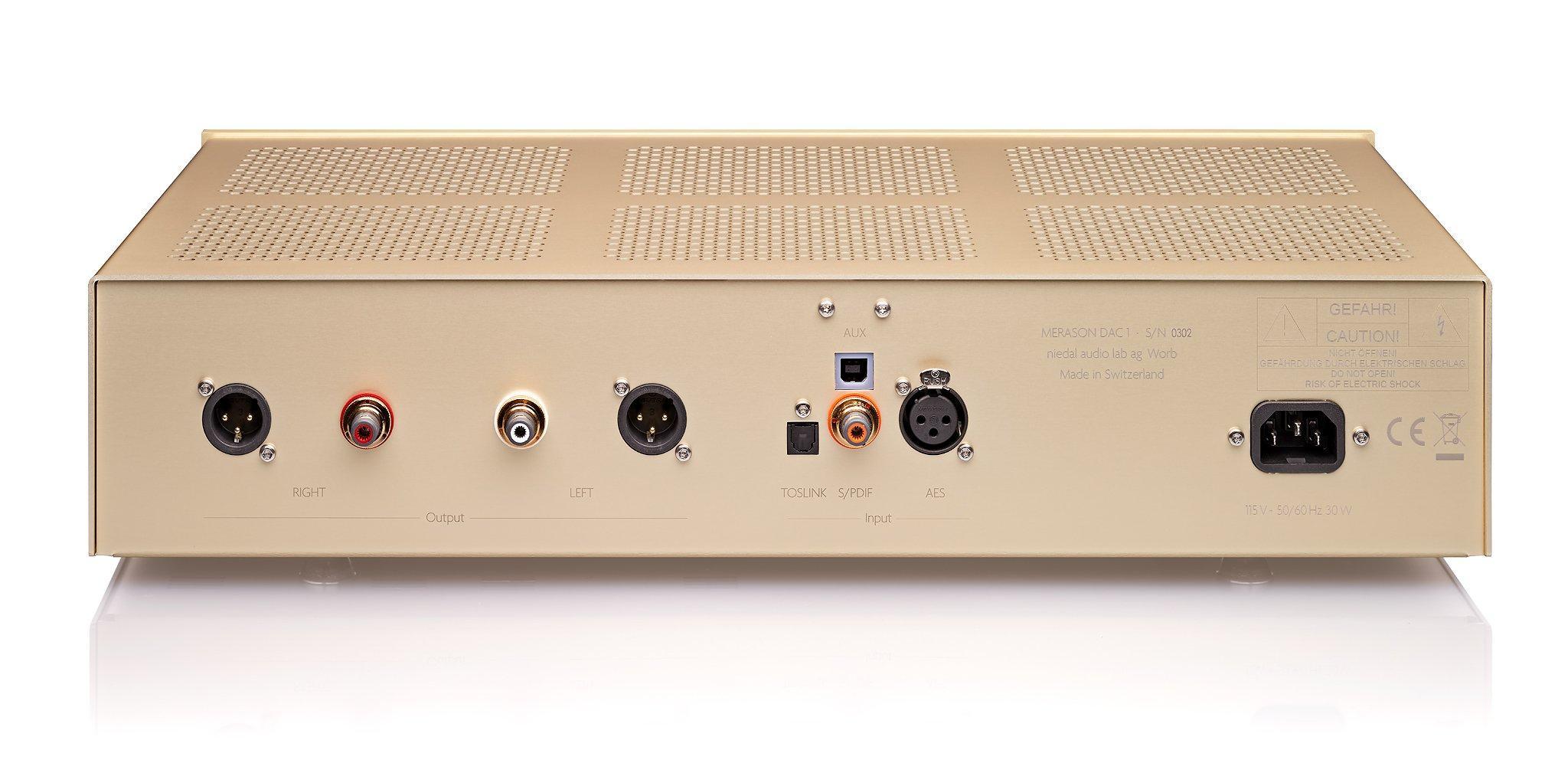
The rear panel of the Merason DAC1 MK II provides one set each of RCA and XLR balanced analog outputs. Digital inputs include USB, AES/EBU, coaxial, and optical. High-quality German WBT Nextgen RCA connectors are used. Notably, Merason labels the USB input as “AUX.” This is somewhat unique and reportedly due to users having the option to purchase either USB or I2S versions, leading the manufacturer to use “AUX” as a general term.
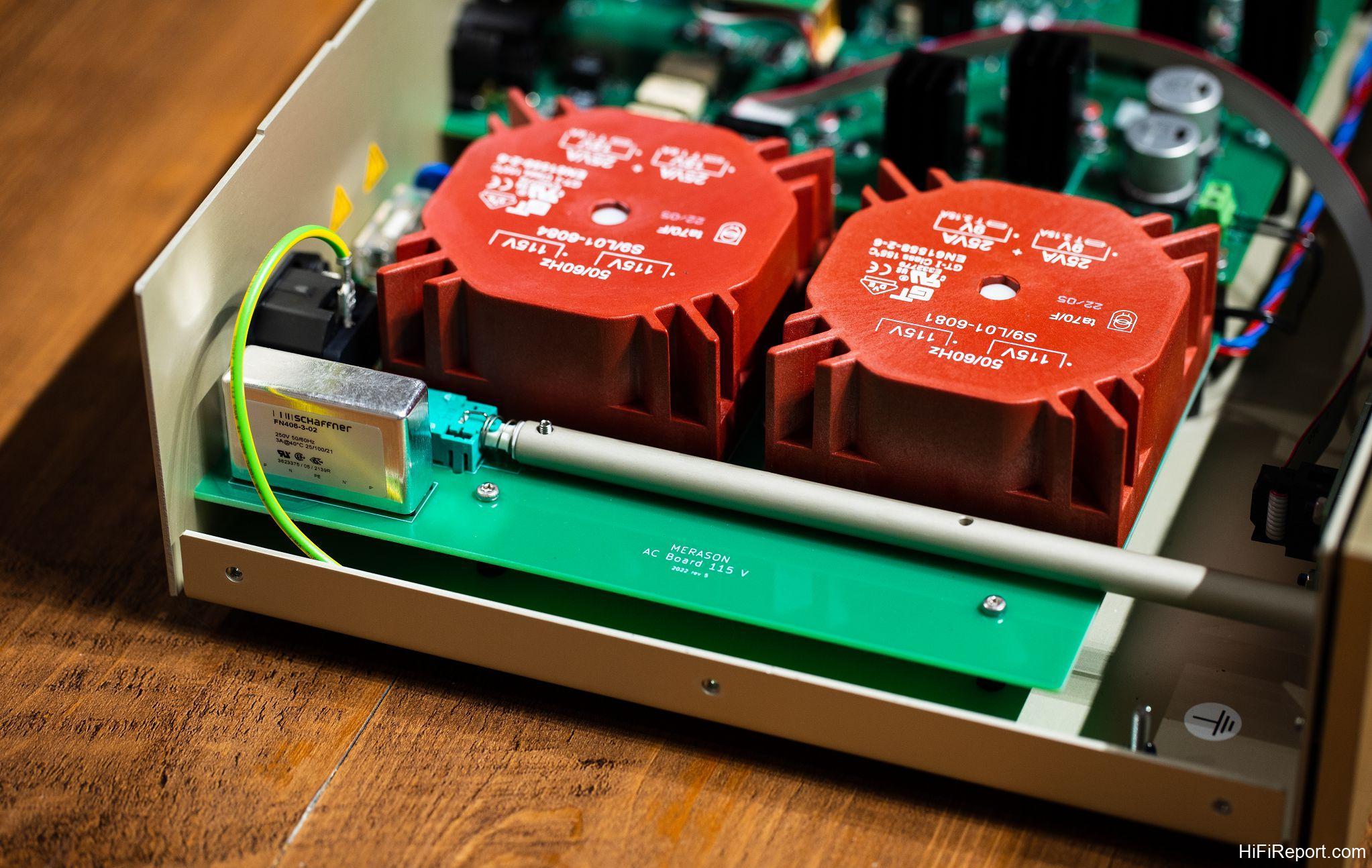
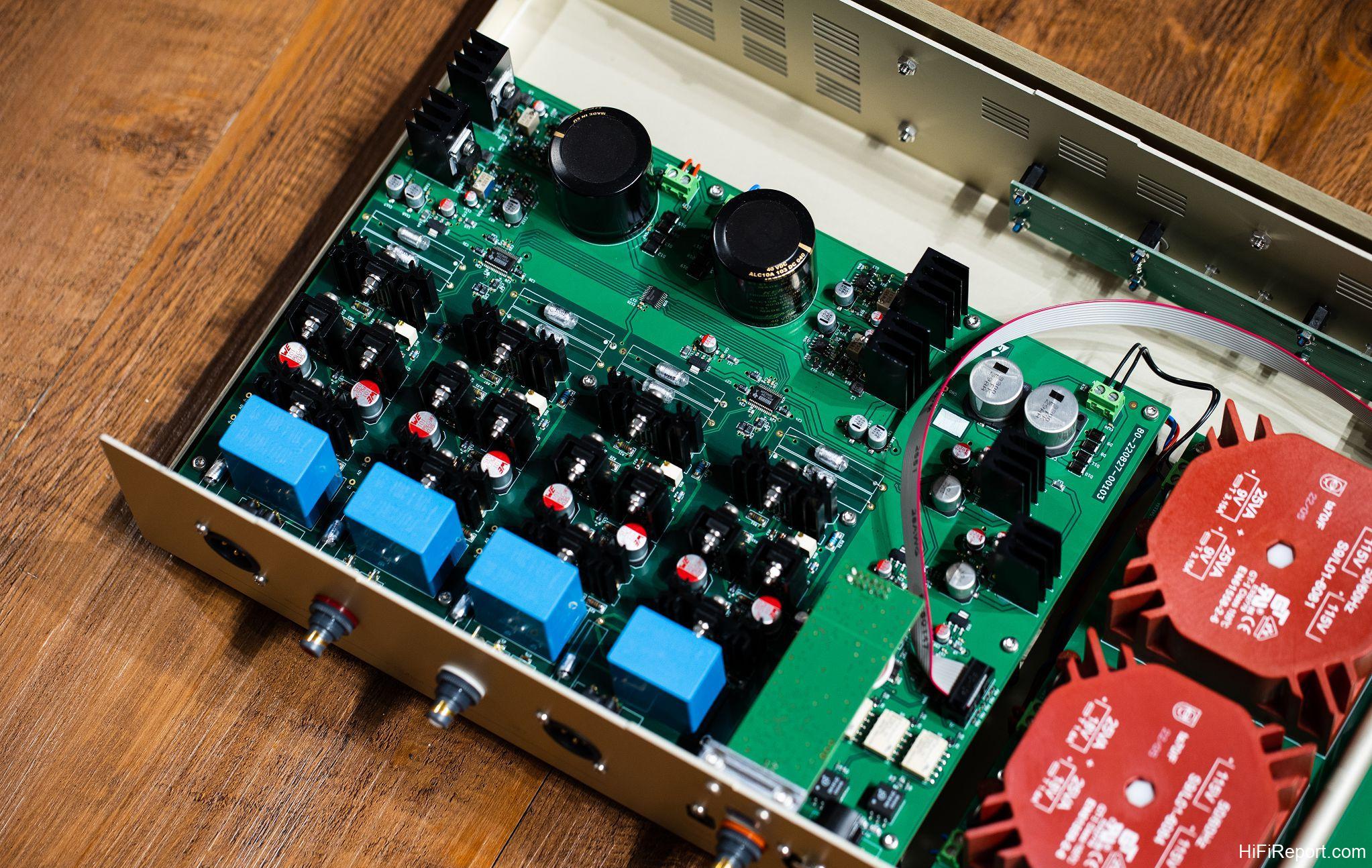
According to the manufacturer’s information, the MK II’s circuitry has been optimized to minimize impedance, provide a purer power supply, and enhance component shielding to block external interference. The primary component assembly now utilizes SMD (Surface Mount Device) technology, resulting in extremely short signal paths.
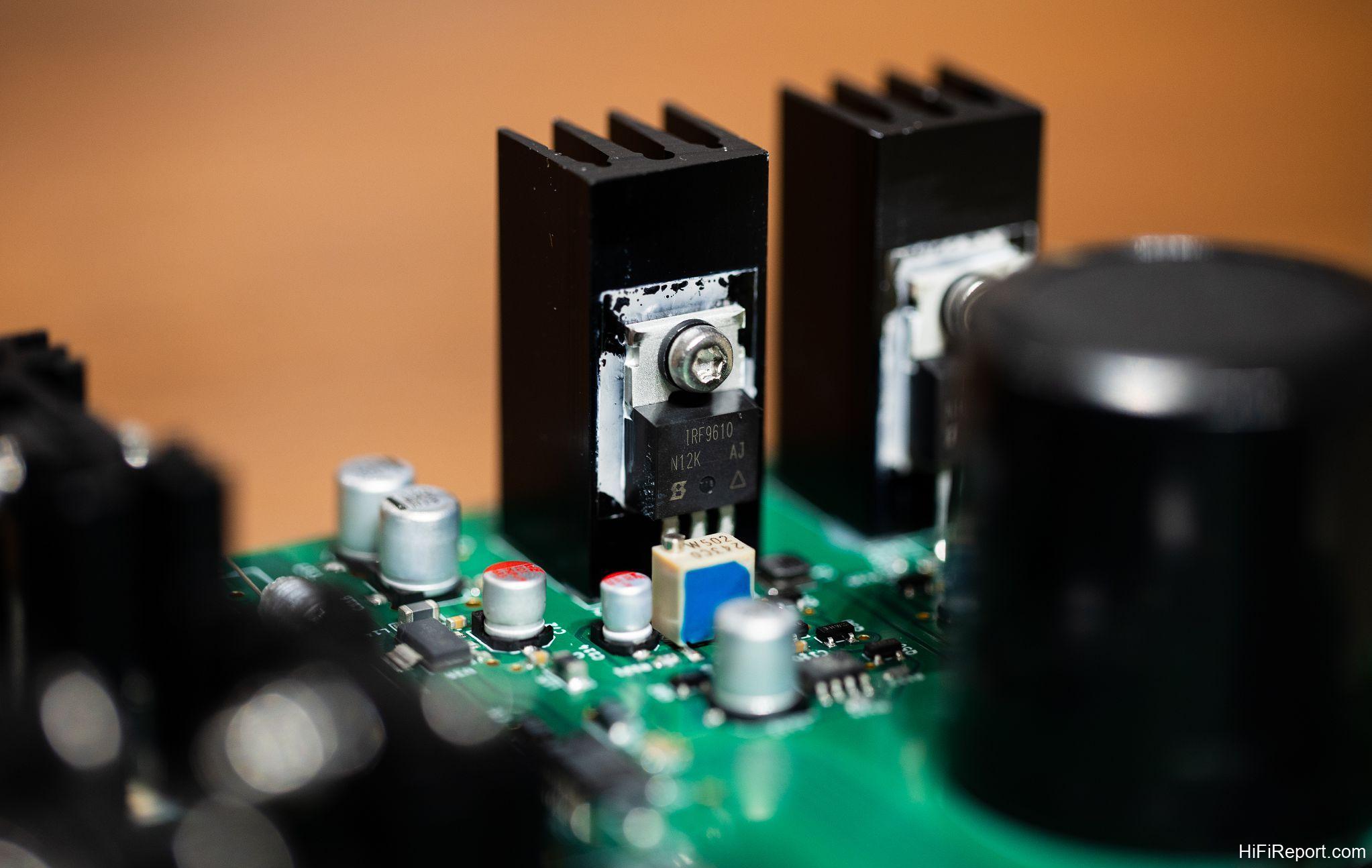
The MK II incorporates new capacitors, and precisely matched transistors are mounted on dedicated heat sinks for excellent temperature control, further reducing harmonic distortion. The chassis is now constructed from fully anodized aluminum alloy. Like its predecessor, the MK II retains a fully balanced, differential Class A amplification circuit.
Merason DAC1 MK II Key Features:
* Employs Amanero USB module
* Dual clock oscillators for high precision and low jitter
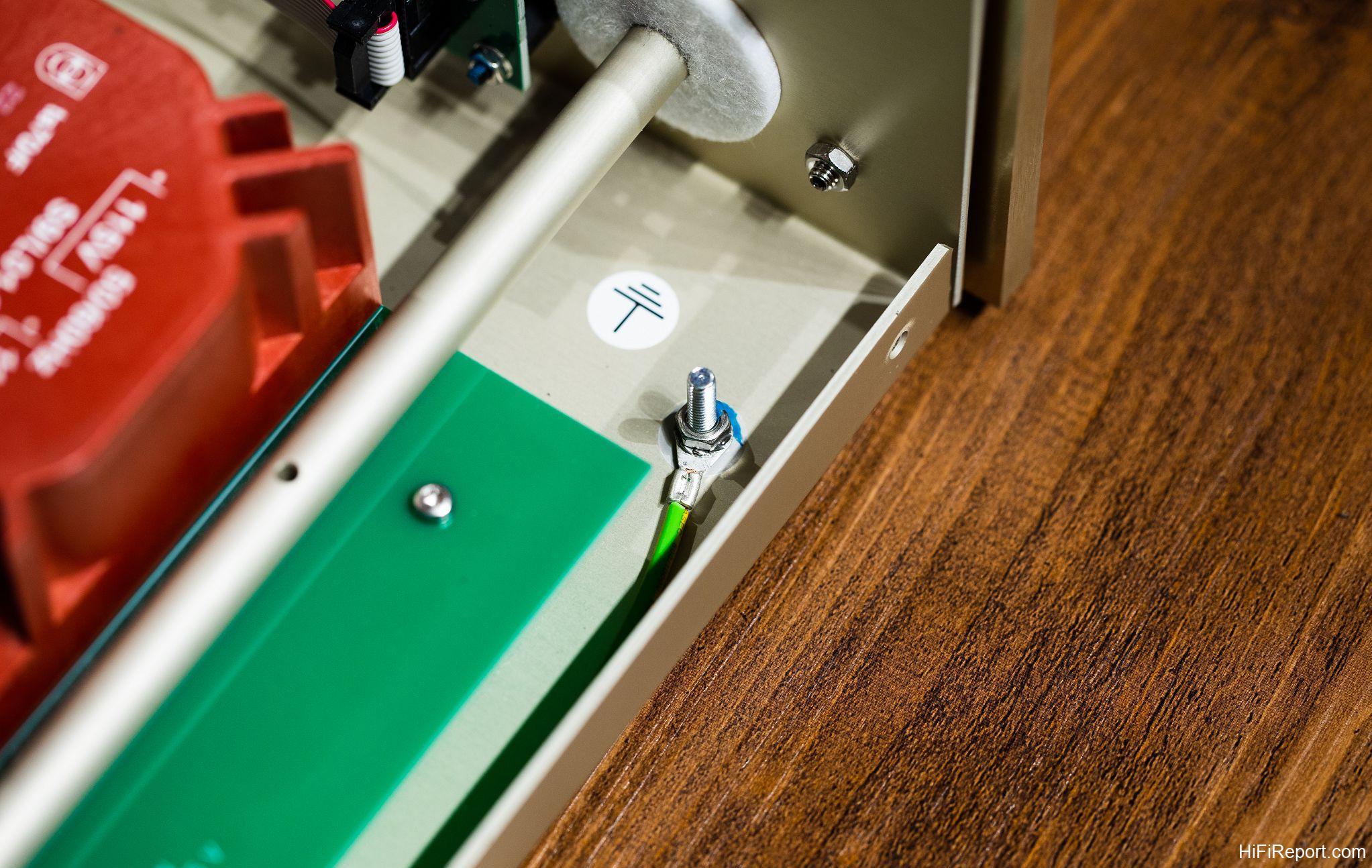
* Galvanic isolation to prevent interference between components and circuits
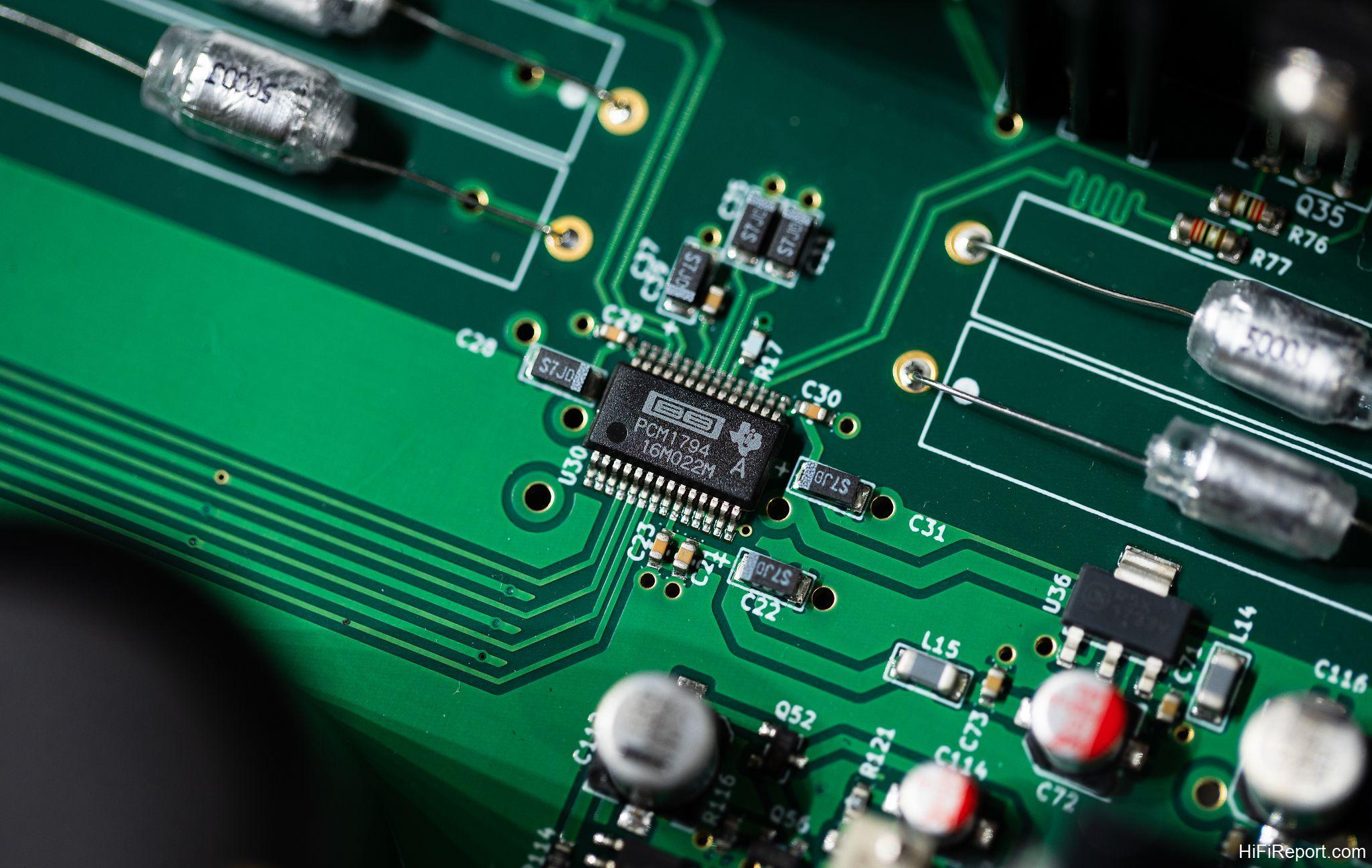
* Two Burr Brown PCM1794A DAC chips
* Fully balanced, differential Class A amplification circuit with four independent channels for stereo output
* Each circuit section has its own power supply, totaling 12 sets
* Each channel is powered by a dedicated, oversized linear power supply
* Every component is selected after extensive listening tests
* Designed and manufactured in Switzerland

Merason’s factory is located in Burgdorf, Switzerland, which is also the headquarters of dafraud GmbH. dafraud GmbH houses three high-end brands: Merason, Lab12, and Bernola. Daniel Frauchiger also runs niedal audio lab, specializing in OEM manufacturing, a common practice in Switzerland, given the country’s strong R&D capabilities. Daniel possesses a solid academic and professional background, having earned a degree in mechanical engineering in 1986.
From a young age, he was deeply fascinated by music reproduction technology and even designed his own speakers. Upon completing his internship, he finally acquired his first hi-fi system. At the age of 45, Daniel became a professional audio engineer, dedicated to researching digital products that could reproduce the warmth of analog sound.
Through relentless R&D, he finally developed a digital-to-analog conversion circuit that met his satisfaction, enabling digital playback to evoke the same analog emotion as vinyl and tape. Thus, the Merason DAC1 was born, allowing music lovers to enjoy beautiful music without breaking the bank.
Swiss Craftsmanship: Premium Yet Accessible (Ted Chen)
Merason is a recently introduced Swiss brand distributed by Ark Audio. Our familiarity with the brand is still growing, but the “Swiss Made” label generally signifies high standards. The market is filled with renowned Swiss audio brands, with very few causing disappointment. The primary drawback of Swiss audio equipment might be the price, as the meticulous craftsmanship involved in producing high-end audio is inevitably affected by local labor costs.

Fortunately, despite being the brand’s top-tier DAC, the Merason DAC1 MK II’s market price is not prohibitively expensive.
Staying True: Sound Quality First
Merason designs products with a “less is more” philosophy. They avoid adding unnecessary features or specifications and refrain from meaningless component stuffing. The internal circuitry is clean and well-defined, focusing on perfecting the essentials. For example, the crucial power supply is meticulously segmented, and electrical isolation is carefully implemented to prevent interference between different circuit sections.
A highly rigorous balanced design is employed, and the use of two DAC chips in a 4-channel fully balanced configuration enhances dynamic range. However, Merason’s entire product line does not support DSD or MQA decoding. They clearly communicate to users that their focus is solely on PCM decoding, striving to excel in this area. This commitment to “less is more” is particularly appealing to audiophiles who share a similar dedication to sonic purity.
The Merason DAC1 MK II offers USB and a range of traditional digital inputs. In fact, USB input is arguably now a standard “traditional” input, becoming the most common source selection. While USB transmission has its pros and cons, many manufacturers have developed technologies to address these. Merason is no exception. Therefore, during our listening tests, we focused on comparing USB input with other input methods to provide a basic reference for interested readers.
Clean, Deep, and Unrestricted Sound
Initially, I listened using the AES input, which was recommended by the distributor as the optimal connection for the best sound. I auditioned several albums, including “Eyes Don’t Lie (Acoustic)” by Australian singer Tones and I. While many singers possess excellent vocal penetration, few achieve her level of distinctiveness and lasting impression. Her global fame, starting with the single “dance monkey,” is relatively recent.
In “Eyes Don’t Lie (Acoustic),” she fully showcases her vocal technique and unique voice. Both new and traditional music fans should find her captivating. Listening through the Merason DAC1 MK II was a pure pleasure. This device presents sonic details comprehensively, transparently, and naturally, without distortion. The background silence is undoubtedly top-tier. Throughout the listening session, I felt no sense of bandwidth limitation or compression.
The expansive soundstage depth was particularly striking. The songs mostly feature her vocals accompanied by simple piano, guitar, and harmonies. The separation between instruments and the clarity of the sonic image were excellent. In short, the sound was clean, deep, unrestricted, and possessed a natural, analog-like quality.
Different Inputs, Consistent Quality
Next, I switched to USB input and listened to the same set of tracks for comparison. Surprisingly, the sonic differences between the two input methods were quite noticeable. USB input delivered more energy, with the sound being more forward and prominent. The delineation of details was more pronounced. The same music sounded more energetic, and I even perceived a relative enhancement in the mid-bass frequencies.

For example, listening to vastly different musical styles like Hozier’s “Take Me To Church” and “John Williams in Vienna,” I could still discern the overall energy and frequency range variations. However, compared to AES connection, the soundstage depth and background silence were slightly reduced. The sense of music detaching from the speakers was also diminished, resulting in a slightly less natural presentation.
Nevertheless, both inputs offered excellent sound quality, potentially catering to different personal preferences. Experiencing two distinct sonic flavors from the same device was a rather unique experience. Overall, I found the performance of the Merason DAC1 MK II to be outstanding, delivering high-caliber music and enjoyment. It’s a highly recommendable piece of equipment that generates excitement and anticipation.
Exceptional Separation and Clarity
For my evaluation, I primarily used AES input, listening to Andrew Belle’s “Oh My Stars” as a reference track. At the song’s beginning, the instrumental arrangement feels rich and seemingly complex, yet the separation of each sound is remarkably distinct. Each instrument’s voice is independent and clear, without any muddling or interference. The overall impression is one of richness without being cluttered.
The instrument placement is also excellently rendered, with each instrument’s directionality and detail presented clearly and naturally. The tactile sensation of piano key presses is particularly noticeable, and the high frequencies are presented with vibrant brilliance, like a scattering of luminous jewels, beautiful to hear.
The string sounds are rendered with a flowing elegance. The highs are smooth, clear, and non-fatiguing. The overall tonal balance is restrained and even. Even at higher volumes, the sound maintains its natural and comfortable character. The subtle ambience and air within the music are remarkably palpable. It’s hard not to be captivated by the piano and string sounds.
The legato piano notes dance before you like a waltz, while the silky strings fill the space with melody, enveloping the listener in a gentle, tender embrace as the vocals gradually enter.
Clear, Clean, and Graceful Vocals
Next, I listened to Michael Bublé’s “Cry Me a River.” The Merason DAC1 MK II presented the vocals with remarkable clarity and beauty, enhancing the texture of many subtle details within the song. The low-frequency brass instruments sounded exceptionally full and weighty, with a robust and grounded vocal quality. The subsequent high frequencies vividly portrayed the texture of the brass instruments. The sonic edges had clear trailing resonances, adding a touch of reverberation.
These subtle details made the already full-bodied low frequencies even more prominent, so rich and full that they seemed almost juicy to the touch. The song’s opening immediately delivered a satisfying sense of impact and expanded sonic horizons.
When Michael Bublé began singing, his voice was remarkably clean and focused, significantly enhancing the song’s richness. Even a single phrase like “Cry Me a River” conveyed a sense of vocal weight and nuance. The graceful vocal curves felt liberated and unrestrained.
With the dynamic instrumental backdrop building in intensity, each vocal phrase’s conclusion felt like the sound was gradually fading from substance, like words transforming into wisps of smoke, slowly dissipating while leaving lingering resonance. This sensation was particularly strong at the song’s ending. The initially rousing accompaniment and the resonant voice gradually receded, creating a grand, theatrical performance reminiscent of Michael Bublé commanding the stage.
Exquisite and Captivating Sound
Finally, I listened to Oh Wonder’s “All We Do” for reference. The piano sound at the song’s beginning was immediately striking, presenting a completely different piano timbre compared to “Oh My Stars.” Each note was remarkably full, with an exceptionally rounded quality. The sonic edges were very focused, like luscious, ripe fruit, radiating a gentle luster, like fresh fruit on a tree reflecting the warm sunlight.
Following the series of focused, full-bodied piano notes, the trailing resonances extended beautifully and exquisitely, as if fearing listener dissatisfaction. The piano sound continued to fade gently and slowly into the space, yet maintained the same soft and beautiful timbre, making the piano performance utterly captivating throughout the entire track.
Synergy with Antipodes
When the vocals joined, the female voice was remarkably delicate, so light and airy that one couldn’t help but want to treat it with tenderness. The male vocals, subtly present in the background, were still clearly discernible through the Merason DAC1 MK II. Their interplay felt like the male voice gently protecting the female voice, creating a remarkably nuanced presentation.
As the drums entered, the sonic picture instantly opened up, and the song’s scale broadened to become vast, like a boundless starry sea. Within this grand backdrop, the delicate, subtle vocals felt like precious gems, inviting careful attention and focused listening.
Specifications
* Analog Output:
* XLR balanced: max. 3 V RMS
* RCA unbalanced: max. 1.5 V RMS
* Digital Input: USB DAC, AES/EBU, Coaxial, Optical
* Frequency Response: 20 Hz to 20 kHz +/- 0.3 dB
* Total Harmonic Distortion THD+N: < 0.006 % * Signal-to-Noise Ratio SNR: > 120 dB
* DAC Chip: Dual BurrBrown 1794A, discrete I/V stage
* Dimensions: 45 x 10 x 29cm
* Weight: 5.5 kg