
Mission 770 Speaker Review
What does “Modern Vintage” truly mean? If we borrow a term from Ming dynasty furniture, it would be “new works in antique style.” The newly released Mission 770 speakers from the UK perfectly embody this “Modern Vintage” aesthetic, exuding a classic charm with contemporary engineering.
Mission’s Bestselling Speaker
The original Mission 770, launched in 1978, is arguably Mission’s all-time bestseller, not just one of their bestsellers, but *the* bestseller.
Back then, Mission was a young and ambitious company in the UK. Founder Farad Azima, a graduate of Leeds University in 1972, established Mission in 1976. A true prodigy, Azima launched the Mission 770 in 1978, which quickly became one of the most popular affordable loudspeakers on the market. This success laid the foundation for Mission’s empire. Azima later went on to found Cyrus and NXT, building a veritable audio kingdom.
Farad Azima’s partner in those early entrepreneurial days was his brother, Henry Azima. The Mission 770 was a collaborative effort between the two brothers. Due to its market popularity, Mission subsequently released second and third generation versions of the 770. Later models like the 780 Argonaut, 770 Freedom, and Leading Edge took over the mantle. However, the most significant difference between the original Mission 770 and modern Mission speakers lies in the tweeter placement. The classic 770 adopted a traditional configuration with the tweeter positioned above the woofer, whereas contemporary Mission designs predominantly feature an inverted arrangement with the woofer above the tweeter.
As Mission’s most successful loudspeaker ever, the 770’s iconic status is a primary reason for its revival. Another key factor behind this reissue is current Head of Acoustic Design, Peter Comeau. Back in 1978, when the Mission 770 was launched, Peter Comeau was a young reviewer at *Hi-Fi Answers* magazine. The market impact of the Mission 770 inspired Comeau to venture into the audio industry himself. In 1979, he co-founded Heybrook loudspeakers with friends. Therefore, the Mission 770 reissue is not merely about nostalgia; it’s also a rekindling of the ambition that propelled Peter Comeau from audio journalism into the world of speaker manufacturing.
Return of PP Cone Innovation
What innovative technology did the Mission 770 incorporate to become such a market darling? The answer lies in the Polypropylene (PP) cone material.
Is it really that simple? In those days, paper cones were still dominant, with metal cones being chosen for higher rigidity. PP plastic cones were a relatively novel material. Many questioned how the seemingly soft and pliable PP could be used for speaker cones. However, it is an engineer’s duty to overcome challenges and explore different formulations for driver diaphragms. While PP cones appear commonplace now, back then, they represented cutting-edge technology, rapidly becoming a trend in loudspeaker design.
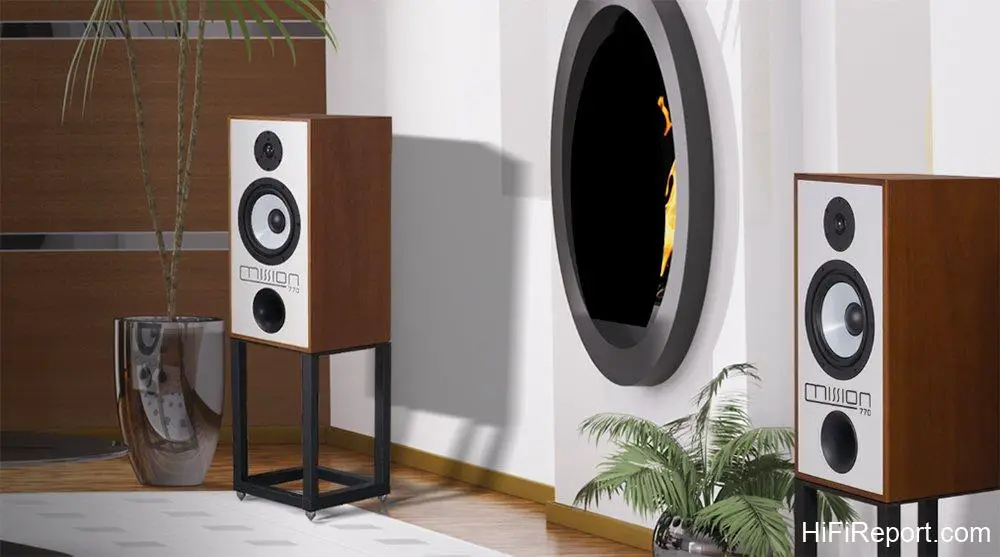
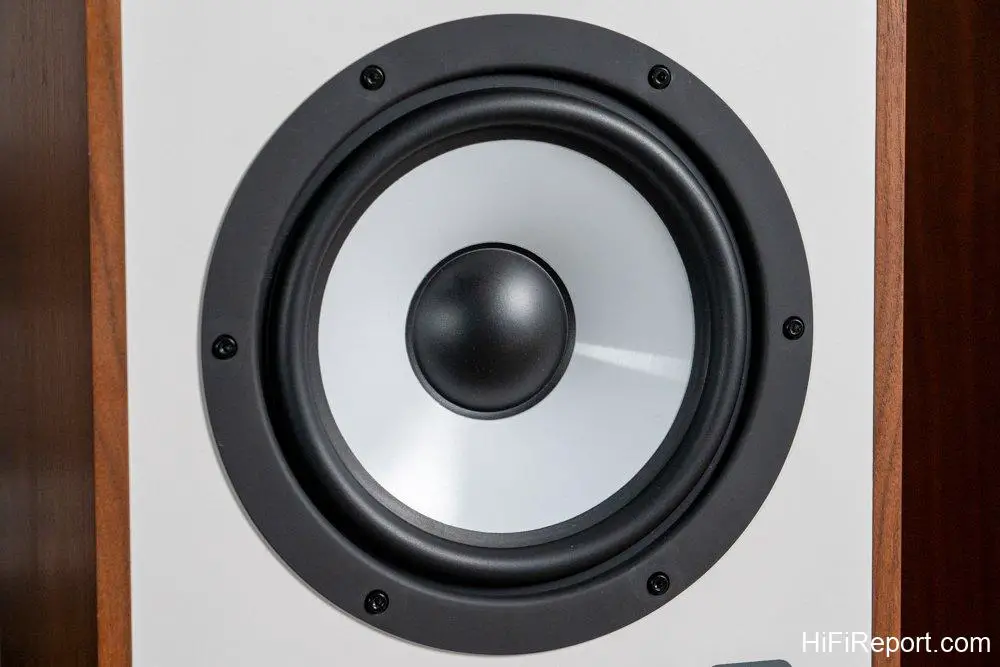
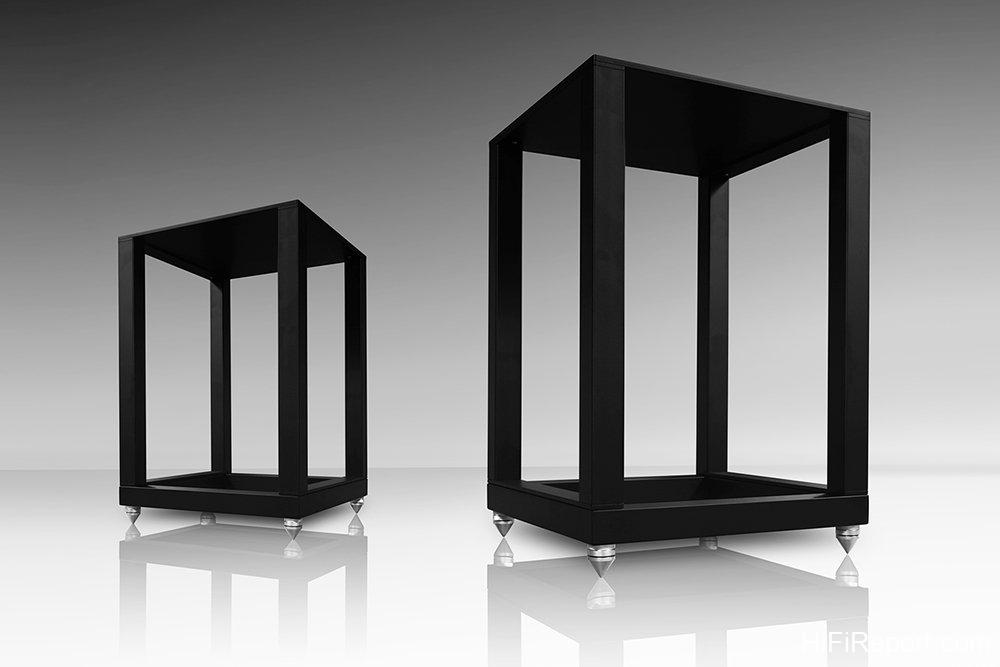
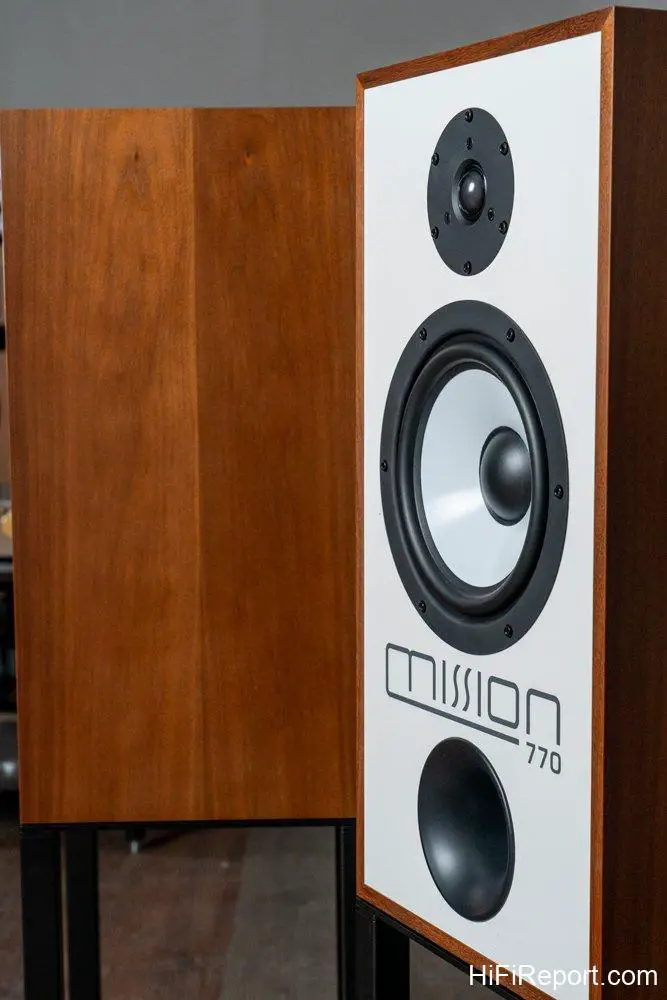
Comparing the reissue Mission 770 to the original, there’s only one visually apparent difference: the PP cone of the mid-bass driver. The original Mission 770 featured a semi-translucent, milky-white PP cone, while the reissue sports a solid white cone, indicating a redesign and material selection for the mid-bass unit. Another noticeable difference is the speaker stand. The reissue Mission 770’s stand resembles the square, open-frame iron stands of classic BBC monitors, whereas the original version used a thicker central support.
Apart from these details, visual distinctions are minimal. Even the prominent “Mission 770” lettering on the white front baffle is identical, perfectly capturing the elegant “Modern Vintage” aesthetic.
(Image Credit: Mission Official Website)
Redesigned Driver Units
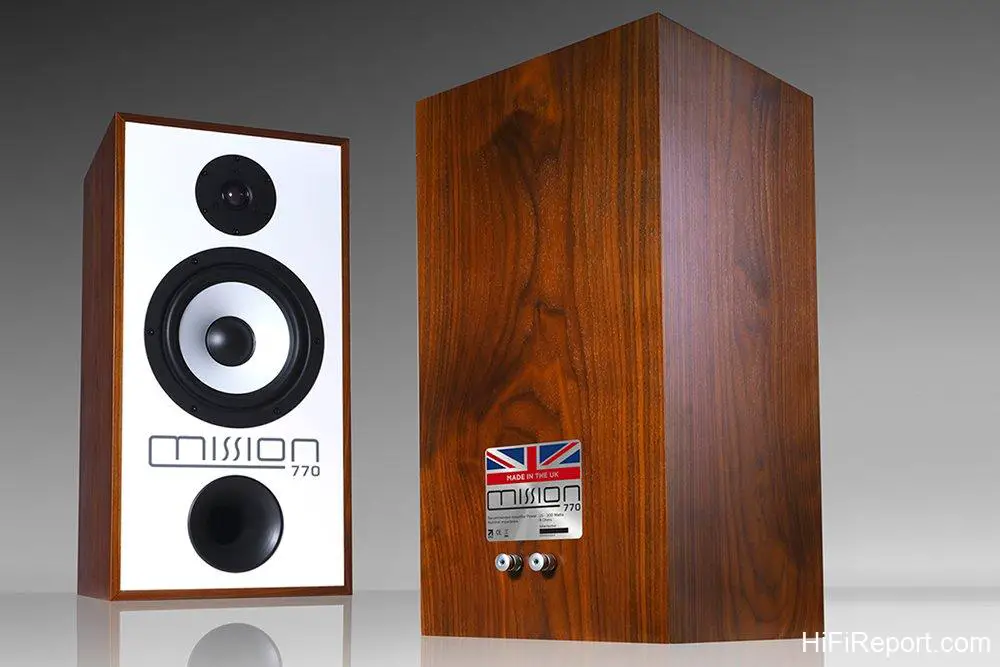
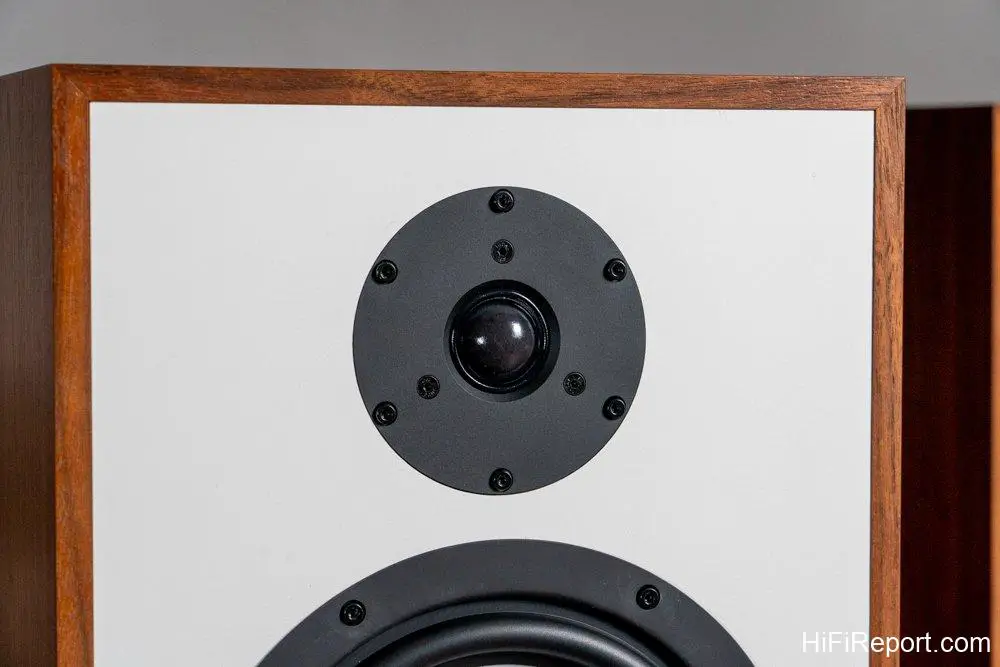
The design of the Mission 770 loudspeaker is straightforward and clear: a 1.25-inch silk dome tweeter paired with an 8-inch mid-bass driver, with a front-firing bass reflex port. It’s a classic point-source design. However, the new Mission 770 only pays homage to the classic in appearance. All driver units have been completely redesigned using modern, higher-performance materials to elevate the sonic performance to a new level.
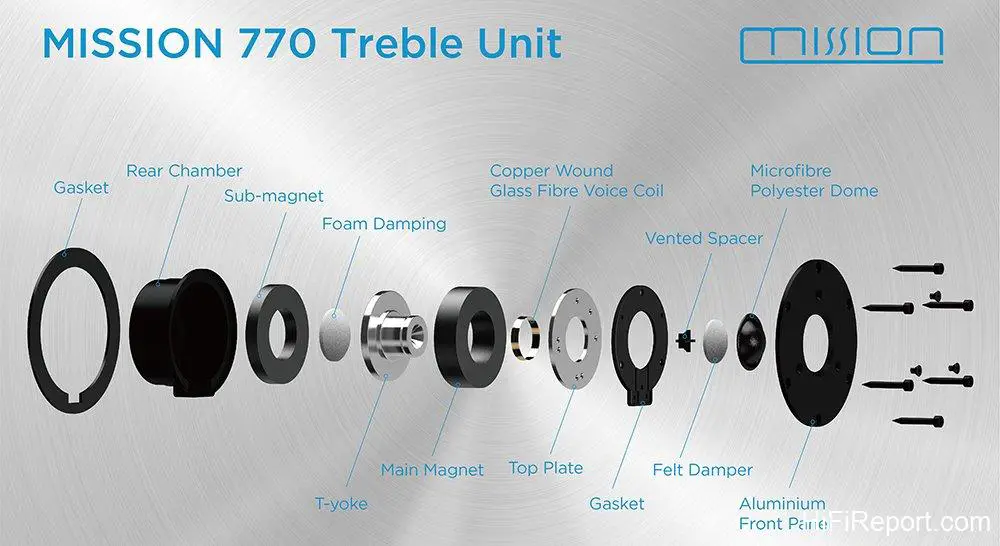
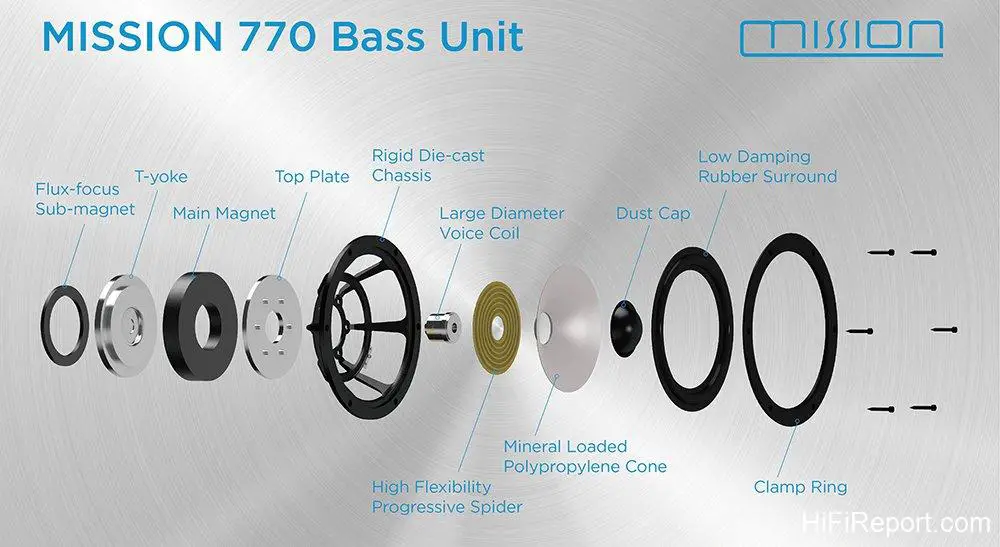
(Image Credit: Mission Official Website) For instance, the 1.25-inch silk dome tweeter utilizes an ultra-fine textile weave for the diaphragm surround, effectively reducing mass and extending the tweeter’s bandwidth. The 8-inch mid-bass driver’s PP cone is now mineral-loaded to enhance rigidity. Coupled with a more powerful magnet system, the new Mission 770 boasts improved efficiency and power handling, making the speaker easier to drive while also being capable of handling powerful amplifiers.
(Image Credit: Mission Official Website) Unseen improvements also include adjustments to the bass reflex port, allowing the Mission 770’s low-frequency extension to reach deeper. The factory specification lists a frequency response of 43 Hz to 20 kHz. For a bookshelf speaker of this size, this is already a respectable figure. However, at -6 dB, the low-frequency extension reaches below 30 Hz, rivaling that of larger floor-standing speakers.
Classic Resonance Control Cabinet
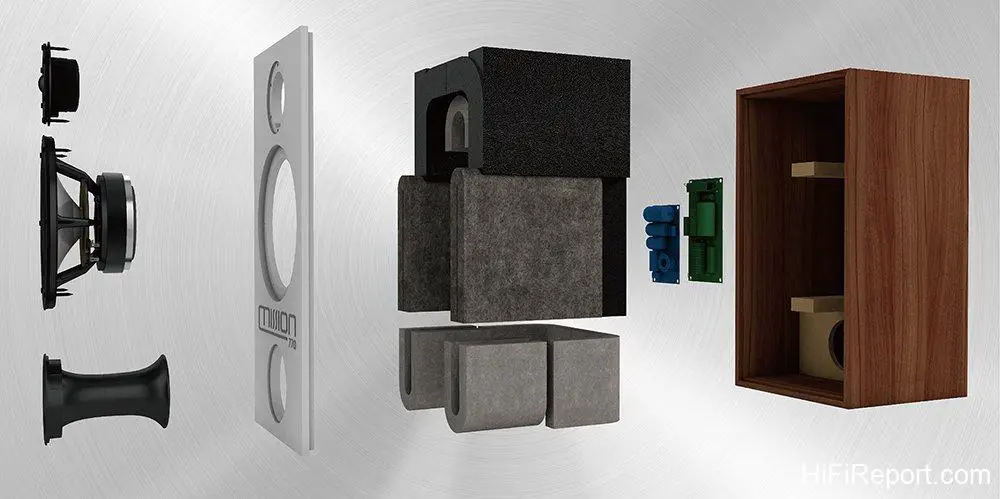
The Mission 770 emerged during the era of BBC monitor loudspeakers. Thin-wall cabinet designs were popular at the time, exemplified by brands like Harbeth, Rogers, and Spendor. The ingenuity of these designs lay in the varying bracing configurations and internal damping materials used by each manufacturer. The new Mission 770 follows a similar approach, employing what they call a “Resonance Controlled Cabinet.”
Mission 770’s official website openly presents a 3D engineering diagram showcasing the new design’s internal structure, including the resonance-controlled cabinet’s internal damping. However, one aspect not visible in the 3D diagram is the front baffle material. It employs a sandwich construction, using two layers of MDF with a layer of particle board in between. By combining materials with different hardness and densities, resonance is controlled and shifted to frequencies beyond the audible range.
(Image Credit: Mission Official Website) The ultimate test of design is always real-world listening. Mission 770 was personally overseen by Chief Engineer Peter Comeau, who constructed over 170 simulated combinations, including crossover components with different PP capacitors and air-core inductors. Extensive measurements and listening sessions were conducted, with over 1,000 hours dedicated to sonic tuning alone.
This is the most challenging aspect of loudspeaker design. While computer-aided design can significantly shorten development time, the final component selection still relies heavily on extensive listening comparisons. This also tests the designer’s auditory acuity, repeatedly comparing instrument measurements with subjective listening experiences to define the speaker’s ultimate sonic character.
100% British Design and Manufacturing
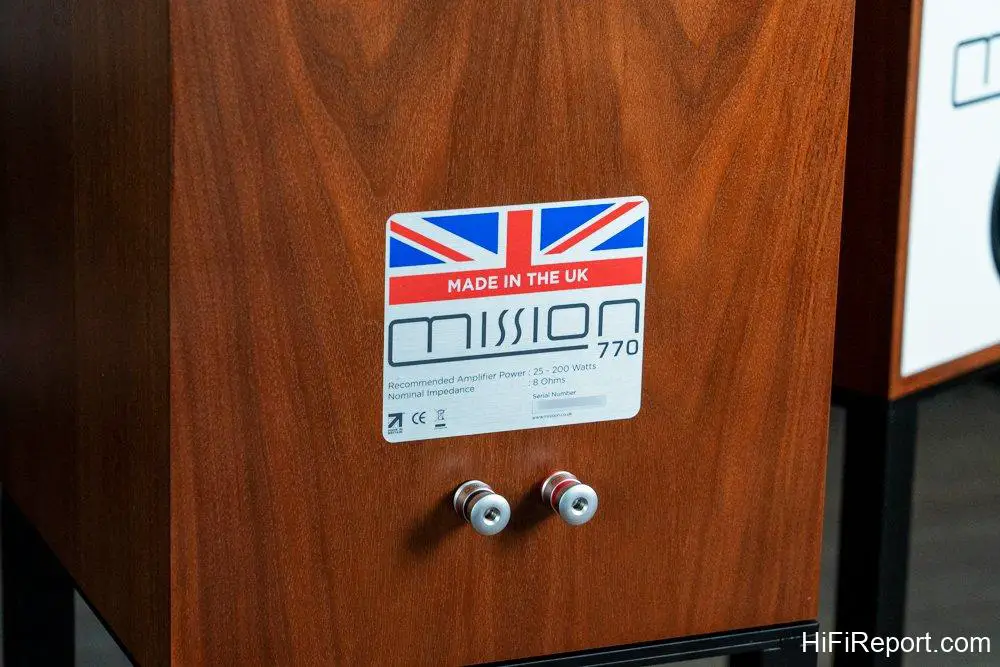
Mission 770 also heralds the beginning of Mission’s “New British Manufacturing” era. The Huntington factory, previously primarily focused on loudspeaker design, has undergone significant expansion to reinstate UK manufacturing. A new 9,000 square foot extension has been added, bringing the total factory area to 25,000 square feet. This encompasses R&D labs, offices, and factory space, including an anechoic chamber. The Mission 770 is the flagship product announcing this return to British manufacturing.
Will Mission completely return all production to the UK? Probably not. A 25,000 square foot factory, roughly 700 pings in Taiwanese measurement, might not be large enough to meet international market demands. Therefore, I believe Mission will continue to use the Huntington factory as a R&D center, while mass-produced models will remain manufactured in China. Niche products or brand-defining models, however, will be made in the UK. This strategy allows Mission to maintain price competitiveness while enhancing brand image. For consumers with a “Made in Britain” preference, they can now purchase UK-designed and UK-made Mission speakers at a premium.
Vintage Sound with Lower Efficiency
During the Mission 770 audition, I paired them with two amplifier setups: a Linear Acoustic LA-V 120 integrated amplifier and a full EAR vacuum tube system, including an 868P preamplifier and 509 MKII power amplifiers.
The solid-state LA-V 120, with its ample power, drove the Mission 770’s mid-bass with substantial authority. For a focus on pure sonic performance, the LA-V 120 is an excellent choice. However, given the Mission 770’s “Modern Vintage” billing, the vacuum tube pairing felt more appropriate. Ultimately, I opted to finalize my listening impressions using the 868P and 509 MK II combination.
The initial impression of the Mission 770 was its relatively low efficiency. Whether with the LA-V 120 or the 868P, I needed to turn up the volume a bit higher than usual to achieve the desired sound pressure level. An 86 dB efficiency rating, while not exceptionally low, is certainly better than the old LS3/5a’s 83 dB. Still, the Mission 770 requires adequate power to truly shine. Otherwise, it might sound a bit lacking in dynamism. The two amplifiers I used both delivered around 100-120 watts, which drove the Mission 770 without issue. The factory recommends amplifier power between 25 and 150 watts, but I feel at least 50 watts or more is necessary to fully unleash the Mission 770’s potential. 25 watts might be somewhat marginal.
The second impression was the speaker’s rounded, vintage sonic character. What is the allure of classic British speakers? It’s that rich, warm midrange. The Mission 770’s midrange possesses this quality, but without being overly thick like some older British designs. Instead, it extends appropriately at both ends, presenting a modern sense of both richness and transparency. The midrange thickness doesn’t obscure musical details; rather, it conveys a smooth, dense musical expression, showcasing the Mission 770’s unique sonic personality—both vintage and contemporary.
Listening to Perlman and Argerich’s “Schumann, Bach & Brahms Sonatas,” Schumann’s Violin Sonata No. 1 in A minor, HiFiReport, is imbued with romantic sentiment. The first movement, led by the violin, features a lingering, tender melody echoed by the piano. Violin and piano then intertwine and respond to each other, the piano introducing restless rhythms, urging the violin to become increasingly passionate. On the Mission 770, both instruments possess substantial body and present a pleasingly warm tonality. The piano sounds broad and full, while the violin is focused and vibrant, with rounded, dense reverberations, creating a very enjoyable and listenable sound.
Easy Speaker Placement
Listening to Perlman and Argerich also highlighted the Mission 770’s ease of placement. I positioned the speakers about 2 meters apart, with the listening position centered 2 meters in front of the speakers. The Mission 770 effortlessly produced a natural and expansive soundstage. Fine-tuning the toe-in angle can sharpen the focus of instrument imaging, but without toe-in, the overall soundstage width is even more impressive. I ultimately opted for no toe-in, showcasing the Mission 770’s relaxed and spacious presentation.
Chamber music is a forte of the Mission 770. That slightly rich, yet not overly so, British flavor is perfect for pieces like Kashimoto Daishin and Lifschitz’s Beethoven Violin Sonatas, HiFiReport. Listening to the familiar “Spring” Sonata, directly to the relaxed Rondo finale, Lifschitz’s piano leads the melody, followed by Kashimoto Daishin’s violin. The two musicians adopt a leisurely pace, adding a touch of brightness to the music. The Mission 770 delivers a slightly rich and spacious sound, yet with a sense of space that points to its modern recording quality. During the more passionate sections in the middle of the movement, where violin and piano challenge each other, the Mission 770 can also convey appropriate energy. When the Rondo theme returns, it releases a soothing musical emotion. If you prioritize musicality over sheer audiophile performance, the Mission 770 will undoubtedly appeal to you.
Perhaps Not Ideal for Electronic Music
Alas, I’ve inadvertently touched upon the distinction between musicality and audiophile performance again. These terms are admittedly somewhat nebulous. Let me use a different analogy: the Mission 770 is more like a refined, smooth luxury sedan. Cruising leisurely is supremely comfortable, but if you want to floor the accelerator, it can still deliver a burst of speed, albeit still maintaining its inherent smoothness. If you crave pounding, beat-driven electronic music, the Mission 770 might not be your top choice. Its bass lacks a certain raw punch. However, if you appreciate a smooth, elegant sound with a relaxed and gentle character, the Mission 770 is highly attractive.
I’m not suggesting the Mission 770 is limited to chamber music or classical genres. It’s just that ultra-bass-heavy electronic music isn’t its strongest suit. However, it handles virtually all other musical styles with aplomb.
Vivid Soundstage Imaging
Consider Tommy Emmanuel and Jason Isbell’s collaboration on “Deep River Blues.” Tommy Emmanuel’s brilliant fingerstyle acoustic guitar work opens with a rich bluesy flavor. A bass guitar subtly underpins the acoustic guitar. The Mission 770’s firm foundation ensures the bass notes are full and rounded, complementing Tommy’s bright steel-string guitar. Clear soundstage localization places Jason Isbell’s vocals slightly to the right of center, while Tommy Emmanuel is positioned to the left. The Mission 770 effortlessly renders a vivid soundstage image. During the final section, when they sing in harmony, their distinct left-right positions, coupled with a spacious ambience, create a truly enjoyable country music experience.
While I’ve described the Mission 770 as having a vintage British sound, its detail retrieval is undeniably modern. Listening to Eva Cassidy’s “Live At Blues Alley,” specifically her cover of “Bridge Over Troubled Water,” the live recording highlights that the Mission 770 is not just about smoothness; it also conveys a clear sense of live atmosphere. The intro’s guitar solo is accompanied by subtle background sounds of clinking glasses and ambient chatter from the bar, enhancing the live recording’s ambiance.
Eva Cassidy’s voice is clear and captivating. The Mission 770 adds a touch of body and density to her vocal trails. The sweet and smooth midrange and high frequencies are beautiful. When the band joins in, the electric bass notes become prominent, and the Mission 770 delivers a palpable sense of low-frequency fullness. Listen closely to the electric bass, and you’ll hear how it truly energizes the rhythm. The Mission 770’s clear bass lines intensify the live atmosphere of “Bridge Over Troubled Water.”
Nuanced Soundstage of Double Piano Concerto
Finally, I want to discuss the Mission 770’s soundstage portrayal capabilities. Using Rypdal and Pletnev’s performance of Mozart’s Concerto for Two Pianos, K. 365, I listened to the third movement, the Presto. The string section opens with a bright Mozartian theme. The woodwinds then join, expanding the music’s scale, before the pianos take over. Note that this is a double piano concerto, so the piano positions will shift between the left and right sides of the soundstage. This is a crucial piece for evaluating soundstage imaging. If both pianos sound as if they are located in the center, lacking the interplay between left and right, it doesn’t sound like a double piano concerto. Moreover, the two pianos have different timbres—one brighter, the other fuller. The interplay of their positions across the soundstage is fascinating. If the speakers cannot reveal these subtle nuances in the recording, the listening pleasure is significantly diminished.
How does the Mission 770 perform? The positions and timbral variations of the two pianos are captivating. The two pianos are not widely separated in the soundstage but are clustered in the center, presenting a nuanced sense of left-right separation. Furthermore, perhaps due to the 509 MK II amplification, the piano’s warm and rich tone is utterly captivating. As the two pianos either alternate or weave in counterpoint, the Mission 770 presents a harmonious and comfortable musical picture, easily allowing one to relax and immerse themselves in the music.
Authentic 80s Modern Vintage
The Mission 770’s core appeal is clear: “new works in antique style.” It recreates the look and feel of 1980s British loudspeakers but incorporates modern material technology. It enhances the inherent warmth with rich musical detail and expands the bandwidth to create a wider and more transparent soundstage. Except for perhaps electronic music, the Mission 770 sounds excellent across diverse genres. Its warm and elegant sonic character not only evokes the spirit of the 80s but also provides access to rich musical detail. If you missed the Mission craze that swept the audio market in the 80s, revisiting it with the Mission 770 is the authentic “Modern Vintage” experience.
(Image Credit: Mission Official Website) (Image Credit: Mission Official Website)
Specifications
* Type: 2-way, 2-driver bookshelf speaker, bass reflex
* Drivers: 1 x 1.25-inch soft dome tweeter, 1 x 6.5-inch PP cone mid-bass driver
* Frequency Response: 42 Hz – 20 kHz
* Recommended Amplifier Power: 25 – 150 Watts
* Sensitivity: 86 dB
* Impedance: 8 Ohms
* Crossover Frequency: 3.0 kHz
* Dimensions: 510 × 260 × 270 mm (H×W×D)
* Weight: 12.8 kg