
Monitor Audio Anthra W15 Review
The Monitor Audio Anthra W15, despite holding the flagship position in the series, boasts a surprisingly approachable price point. Examining the hardware reveals clear distinctions from its siblings. The W10, W12, and W15 feature long-throw drivers measuring 10, 12, and 15 inches respectively. Their built-in Class D amplifiers deliver rated power outputs of 390W, 700W, and 1400W when operating at 120V AC (with peak power figures of 450W, 1325W, and 2500W).
My reason for recommending the Anthra series for music previously was their exceptional speed. Indeed, the entire range emphasizes control in its design. All models feature cabinets constructed from substantial 3.6 cm thick MDF, with internal bracing and support frames made from 1.9 cm MDF. This high degree of rigidity effectively minimizes cabinet vibrations, reducing coloration. The cabinets are sealed (acoustic suspension) designs.
As the driver cone moves outward, increasing the internal volume, the external air pressure exceeds the internal pressure, pushing the cone back inward. Conversely, as the cone moves inward, it compresses the air inside, and the internal pressure pushes the cone outward. This difference in pressure between the inside and outside of the cabinet acts as a control mechanism, helping the cone return to rest more quickly.
Driver Technology
Achieving superior control also necessitates higher damping, primarily provided by the driver’s spider. In older or “old-school” subwoofer and woofer design concepts, damping from the spider wasn’t meant to be excessively high, as excessive damping could suppress the reproduction of smaller signals. Modern thinking takes a different approach: incorporate a stronger motor (powerful magnets and multi-layer voice coils) to increase the cone’s motive force.
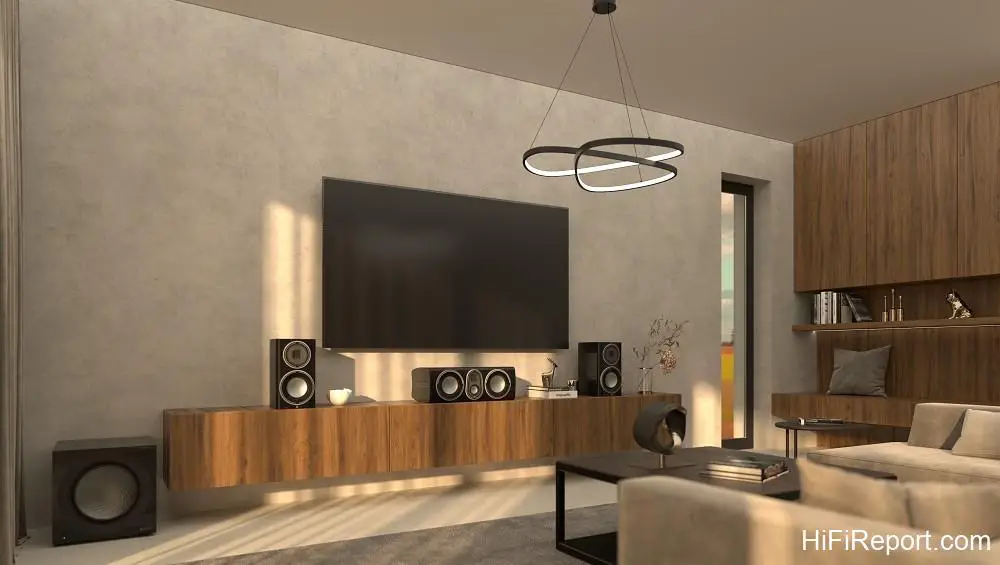
This allows for higher damping levels to enhance control without sacrificing sensitivity to small signals. Furthermore, modern subwoofers almost universally employ “highly capable” built-in Class D amplifiers to drive the cone.
The Anthra W15 embodies this modern, high-end design philosophy. It is equipped with a brand-new custom 15-inch long-throw driver featuring a dual spider, dual magnets, and a dual-layer voice coil wound with copper-clad aluminum wire. This perfectly aligns with the “high damping, strong motor” principle I discussed earlier. Key aspects of this subwoofer driver’s construction also include a high-rigidity cone. This cone utilizes two pivotal Monitor Audio technologies.
The first is the long-standing C-CAM technology, where the cone is based on an aluminum-magnesium alloy, treated with micro-arc discharge to form an extremely hard layer of aluminum oxide (a type of technical ceramic) on its surface. This not only increases cone rigidity but also allows the composite alloy and ceramic materials to suppress parasitic cone vibrations.
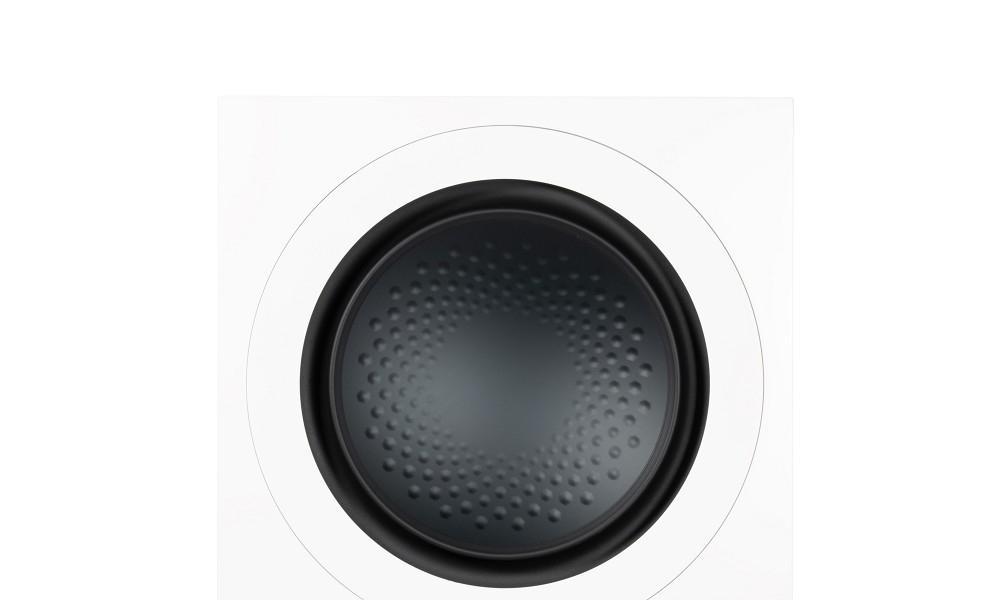
Additionally, the Anthra series marks the first time Monitor Audio’s RST II (Rigid Surface Technology II) has been applied to their subwoofer drivers. This involves pressing numerous hexagonal dimples of varying sizes onto the cone surface in a radial pattern. This technique further enhances cone rigidity, suppresses distortions caused by instantaneous cone deformation during motion, and reduces cone resonances to minimize coloration.
Deep Bass Extension
Another characteristic feature of advanced subwoofers is their astonishing deep bass extension, especially considering they often use relatively compact sealed enclosures (unlike ported or passive radiator designs which are typically more favorable for low-end extension). This leaves many seasoned enthusiasts scratching their heads: in the past, even much larger active subwoofers or massive floorstanding speakers couldn’t extend into the “teens” (below 20Hz)!
Could it be that today’s specifications are just marketing hype?
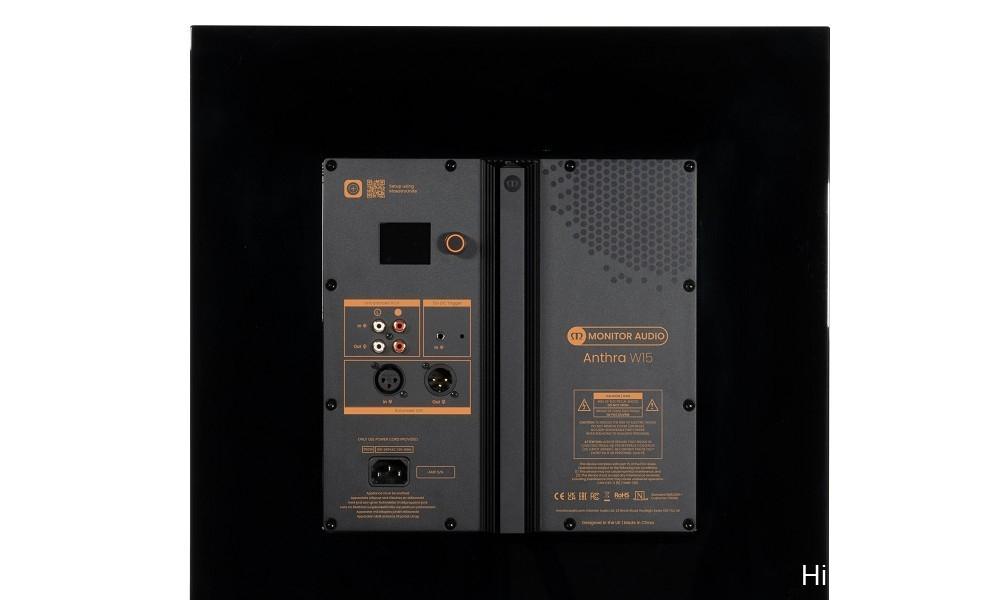
Certainly not. Provided the built-in amplifier delivers ample output, the driver is highly durable, and techniques like boundary gain (placing the subwoofer in a corner is recommended) are utilized along with DSP compensation for low-end roll-off, a subwoofer can achieve deep bass extension far exceeding its physical size. The Anthra W10 we reviewed previously, a cube with sides measuring just 32.1 cm, already extended down to 17 Hz (-6dB).
The W15, equipped with a 15-inch driver and approximately 44 cm per side, extends down to 16 Hz (-6dB). It stands to reason that the Anthra W15’s built-in DSP requires less aggressive compensation for low-end roll-off than the W10, making it less strained. Furthermore, its amplifier output is more than three times that of the W10, guaranteeing the Anthra W15 will be significantly more powerful.
DSP and App Control
Another objective of the Anthra series’ built-in DSP is digital equalization. To fully configure and calibrate all of the W15’s functions, users must first install the Maestro Unite setup App on their smartphone or tablet. Once the Anthra W15 is connected, all functions become accessible. Adjustment parameters include equalization, low-pass filtering (setting the subwoofer’s own LPF frequency), gain, phase (adjustable in one-degree increments!), and more.
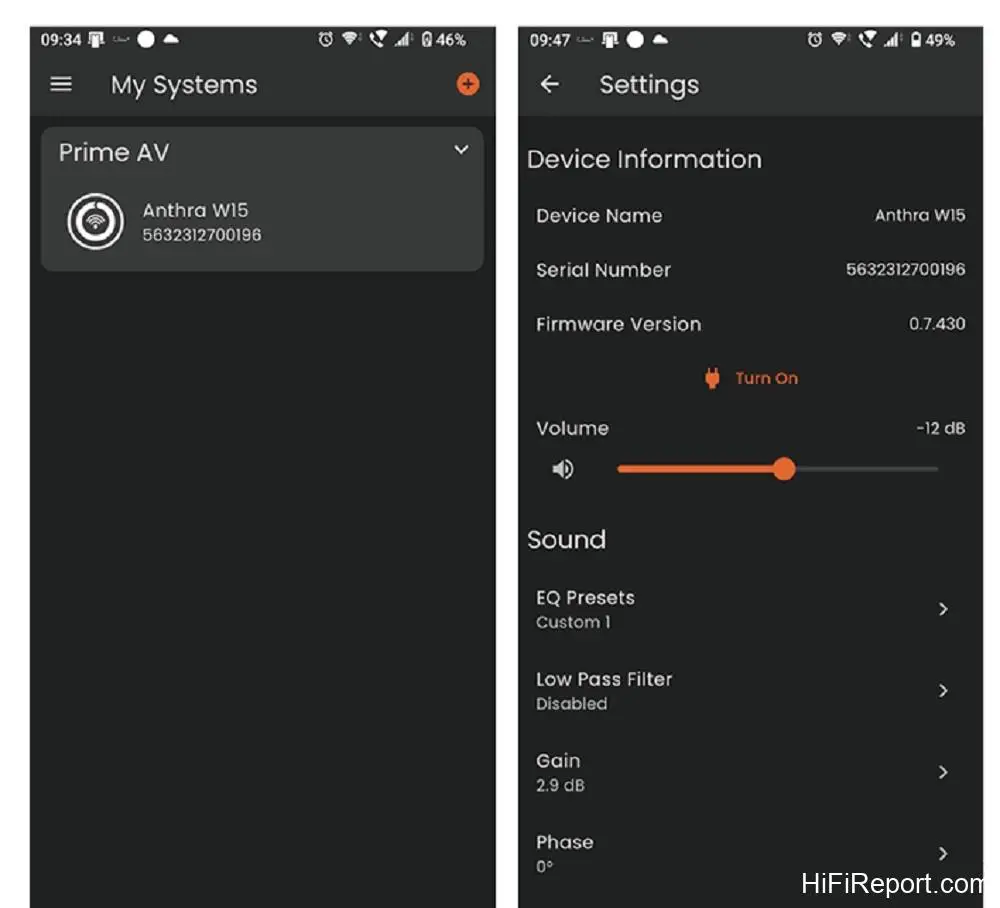
The Anthra W15 comes with three factory preset EQ modes: Music, Movie, and Impact. To be frank, these three modes are primarily for “subwoofer beginners.” For genuine enthusiasts, there are three sets of Custom 1 through 3 manual EQ settings available. The digital equalization filter types include Parametric Bell Curve (i.e., PEQ), Low Shelf, High Shelf, and High Pass.
Advanced Calibration with REW
Experienced users know how to use software like REW to measure the frequency response at the listening position, import the response curve into REW’s EQ section, set a target curve, and then manually (my preference) or automatically adjust the frequency, Q value, and gain of several PEQ filters. The REW EQ screen then displays the original response curve alongside the “adjusted” frequency response curve resulting from the applied PEQ filters.
Here, I must emphasize a crucial point: the REW EQ adjustments made at this stage are only for simulation and modeling. To understand the actual effect of the PEQ settings, you must meticulously enter the parameters for the multiple PEQ filters determined in REW into the Maestro Unite setup App, let the Anthra W15 apply them, and then re-measure the frequency response with REW. Only then can you confirm if the W15’s calibration is ideal.
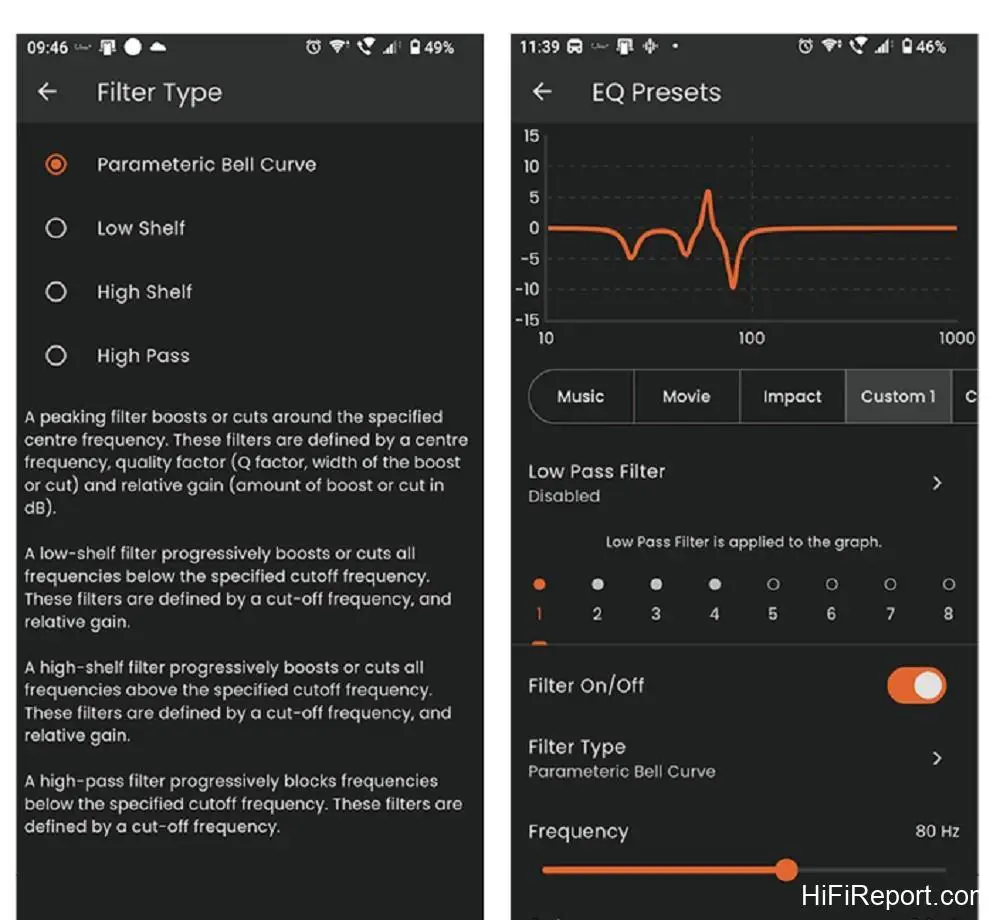
In fact, when I previously set up and calibrated the other two Anthra subwoofers, I already knew that when using the custom PEQ method described above, the “actual measured” frequency response after equalization was almost identical to what was seen on the REW EQ page during the simulation stage. In other words, as long as the user knows how to perform manual EQ adjustments in REW, the Anthra W15 can perform exactly as you desire, achieving a remarkably flat frequency response.
For this review, I only configured 4 PEQ filters for the Anthra W15. Aside from intentionally preserving some of the peak below 30Hz (to make extremely low frequencies sound more impactful for movie effects), the frequency response between 30Hz and 80Hz (my crossover point) was corrected to within ±3dB. It’s like a high-performance manual car; if you have the skill to drive it, you can make it do exactly what you want.
Deep Bass Measurements
Regular readers are accustomed to my approach of seeking answers through testing rather than merely restating factory specifications. This time, I used REW to generate sine wave frequencies and observed the lowest effective frequency using RTA with 4-time averaging. The listening position was approximately 290 cm from the Anthra W15.
Since I didn’t calibrate around 20Hz, this band was inevitably affected by room modes, but the overall results were still quite exciting: 25Hz was +1.5dB compared to 40Hz, 20Hz was -4.9dB, and 16Hz was only -2.4dB (this is the result of boundary gain and simultaneously confirms the factory specification of extending to 16Hz is not exaggerated). Testing at 12Hz also showed only a -7.2dB attenuation.
Furthermore, during testing, I confirmed that the harmonics (2nd, 3rd, and others) were significantly lower than the test frequency. Therefore, I determined the Anthra W15’s “effective deep bass extension lower limit” to be 12Hz (it rolls off significantly below 12Hz). This greatly exceeded my expectations and is lower than the lowest frequency I can audibly perceive (16 to 18Hz).
The Value of Inaudible Bass
What is the use of extending to extremely low frequencies that even the human ear cannot hear? I believe the greatest significance is that it ensures “normal deep bass” can be reproduced more effortlessly with lower distortion. But can sub-bass truly have discernible quality? Frankly, you can’t tell the difference with most active subwoofers. The Anthra W15, however, is one of the very few products where you can genuinely perceive the quality of the extreme low frequencies.
Audible Performance and Sound Quality
I hadn’t anticipated that this subwoofer, equipped with a 15-inch driver, would exhibit speed comparable to the 12-inch W12 and the 10-inch W10 from the same series. If a perfect score for speed is 10, I would give it 9.5. Setting the subwoofer crossover point to 80Hz this time was specifically to evaluate the speed of the kick drum.
Listening to Epica: Consign To Oblivion (Live At Paradiso), the rapid double bass drumming characteristic of heavy metal rock resulted in each drum hit being distinct, tight, and powerful. It presented high-quality low and extreme low frequencies with purity and clarity. As long as the settings aren’t wildly off, the W15 will surprise many 2-channel enthusiasts by not muddying or blurring the bass when added to their system.
It consistently presents the contours, punch, dynamics, and pitch variations of each bass note with clarity. Whether I was listening to natural instruments (like a pipe organ) or fast-paced electronic bass in pop music that goes down to 30Hz, the Anthra W15 always delivered fast, high-resolution, fresh, energetic, and elastic low and extreme low frequencies. Audiophiles should no longer assume that a subwoofer’s speed cannot keep pace with their main 2-channel speakers.
Its low and extreme low-frequency resolution, balance, and complete low-end extension are capable of surpassing the vast majority of floorstanding speakers (regardless of price).
Comparison and Use Cases
Having listened to all three models in the Anthra series, I can honestly say that in terms of texture and speed, the three siblings are equally matched. For small to medium-sized spaces where music listening is the primary focus, I would recommend the W10 or W12.
However, for enthusiasts who want to “recreate the sense of a live pop music performance” and those who enjoy “brutal” movie sound effects, I would suggest going straight for the W15, as it offers significantly greater headroom to indulge your desires.
Movie soundtracks contain far richer content below 30Hz than music recordings. Even in scenes not explicitly designed for bass impact, the Anthra W15 already made me feel subtle low and extreme low frequencies. This creates a more complete sense of acoustic space for the listener and makes the feeling of being immersed more realistic. The Anthra’s speed is quite unusual, resulting in a noticeable difference compared to most subwoofers in movie sound effects: impact.
The highly controlled Anthra W15 always settles quickly after the cone’s motion produces sound. Subsequent sudden impacts, crashes, and explosions feel particularly impactful due to the higher dynamics. Its quick and agile response, combined with tight bass, makes watching war films and action movies feel faster-paced and more intense.
The W15, with its larger driver and more powerful built-in amplifier, is indeed fiercer than its two siblings and can better satisfy home theater enthusiasts who crave exaggerated bass energy. What’s commendable is that the Anthra W15 remains clean and precise in any state.
This allows users to better perceive the difference between “dense and clear/open” sonic textures and the changes in spatial ambience between different scenes, all thanks to the varying amounts of low and extreme low frequency content.
Conclusion
This is a product capable of changing the stereotypical image of subwoofers held by veteran audio enthusiasts (especially 2-channel listeners). The Anthra W15 boasts exceptional speed. With proper testing and calibration, it can provide a near-perfectly flat low and extreme low-frequency response. Its resolution is incredibly high, allowing users to realize just how significant the difference in “sound information content” can be among subwoofers.
I believe it is currently one of the best choices for music use. With its ability to extend below 20Hz and deliver powerful impact, the Anthra W15 remains effortlessly capable for movie effects in medium to large rooms. Without a doubt, it deserves to be considered one of the representatives of high-performance subwoofers currently available. Both its absolute performance and price point are sufficient to earn it our Best Recommendation award.
Specifications
* Active Subwoofer
* Cabinet Structure: Sealed
* Driver: 15-inch C-CAM cone long-throw woofer
* Frequency Response: 16Hz-400Hz (-6dB)
* Built-in Amplifier Type: Class D
* Built-in Power: RMS 1400W, Peak 2500W
* DSP: 28 Bit 50 MIPS processing, App control supported
* Crossover Setting: 20-200Hz continuously adjustable
* Phase Setting: 0-360 degrees continuously adjustable
* EQ Function: 3 Presets (Music, Movie, Impact), 3 Custom
* Dimensions (H.W.D.): 439×439×439mm
* Weight: 40.3 kg