
Monitor Audio PL 300 II Review
HiFiReport’s Zhang, a young entrepreneur in the audio industry, possesses both expertise and passion for audio system matching and speaker placement. Recently, he assembled a system featuring the British Monitor Audio PL 300 II and the Japanese Soulnote A-2, deeming it an exceptional value combination. He invited me to audition it, and I scheduled a visit to the south after the New Year to experience it firsthand.
Monitor Audio’s Flagship Model
The PL 300 II, the subject of this review, had previously been at HiFiReport. It stands as a highly competitive high-end speaker from Monitor Audio, boasting significant technological prowess. It incorporates technologies exclusive to the top-tier Platinum II series and represents the culmination of Monitor Audio’s current speaker technology, second only to the flagship PL 500 II. The primary distinction between the two lies in size, while the technological foundation remains virtually identical.
The second-generation Platinum II marks an evolution from the aluminum ribbon tweeter to a new Micro-Pleated Diaphragm (MPD) Air Motion Transformer tweeter. This advancement extends the high-frequency response to 100 kHz, resulting in a more effortless listening experience. Coupled with the latest generation RDT II mid-range and low-frequency drivers, featuring C-CAM ceramic-coated aluminum alloy diaphragms and a triple-layered composite structure of Nomex and carbon fiber, these drivers achieve both lightweight construction and high internal damping. Monitor Audio claims these are their lowest distortion mid-range and bass drivers to date.
Luxurious Leather Finish
Other advanced technologies integrated include DCF (Dynamic Coupling Filter), ARC (Anti-Resonance Composite), TLE (Tapered Line Enclosure), and HiVe II bass reflex ports. These have been detailed in previous reviews and will not be reiterated here.
However, I must emphasize the Anderw Muirhead leather wrapping on the PL 300 II’s baffle. This exquisite leather is handcrafted by a traditional Scottish family business, established in 1840 and now in its fifth generation. Sourced from “animal-friendly” ranches, the leather undergoes a century-old hand-dyeing process, resulting in a texture and quality comparable to top-tier furniture, imbuing the PL 300 II with an understated yet luxurious visual appeal.
Soulnote A-2: Affordable Powerhouse
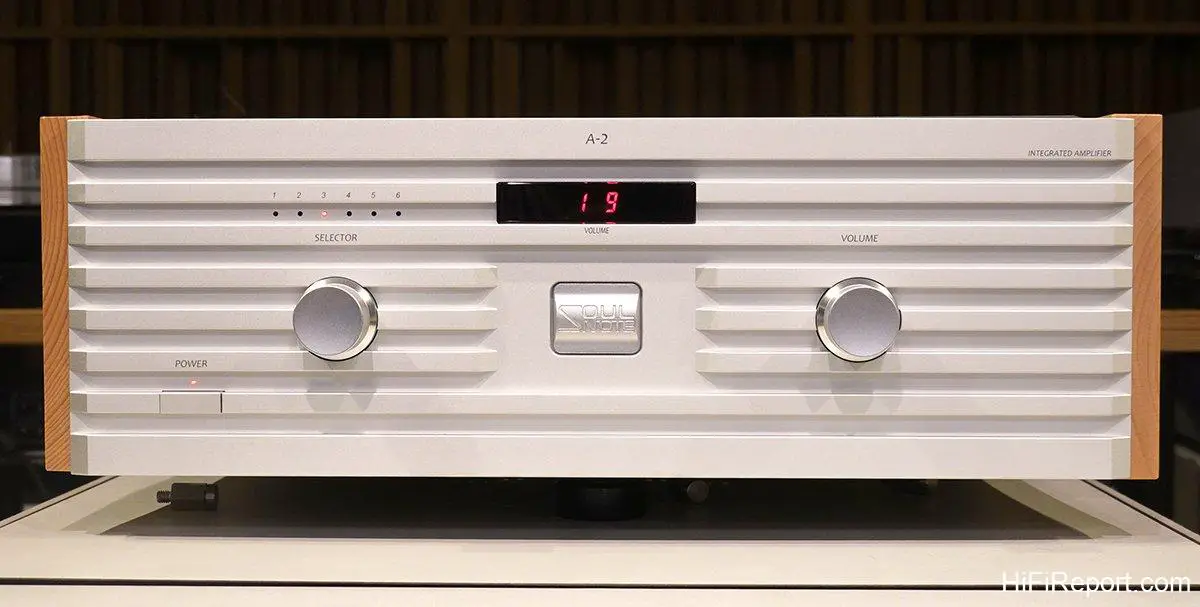
HiFiReport’s chosen amplifier for this “designated hitter” pairing is the Japanese Soulnote A-2 integrated amplifier.
Mr. Zhang, the owner of HiFiReport, mentioned that he previously favored the Analogue Domain ISIS M75D integrated amplifier with the Platinum series speakers, achieving excellent sound. However, due to its higher price point, he sought an amplifier around the 200,000 NTD price range (approximately 6,200 USD) that could effectively drive the PL 300 II. After extensive searching, he discovered the Soulnote A-2, which allows for a more price-competitive system without significantly exceeding budget constraints.
My prior experience with Soulnote was limited to the P-3 preamplifier, which left a very positive impression. The A-2 integrated amplifier, reviewed by Dai Tiankai, is particularly noteworthy within the 200,000 NTD price bracket. It embodies genuine Japanese design and manufacturing, aligning perfectly with audiophile expectations, and offers excellent future upgrade and expansion possibilities.

Designed for Upgrades
The A-2, in its single-unit configuration, is a 100-watt integrated amplifier, providing ample power for most applications. However, its unique design feature lies in its bridgeable mode for mono operation, boosting output power to a substantial 400 watts (8 ohms). Consequently, purchasing two A-2 units allows for a mono-mono setup. For the price, owning two 400-watt monoblock power amplifiers is undeniably exceptional value.
Switching to bridged mode is straightforward, requiring only a flick of a switch on the rear panel to toggle between bridged or bi-amp driving modes.
For discerning audiophiles, the A-2’s design highlights include a traditional R2R resistor ladder network for volume control, fully balanced internal circuitry, dual-mono configuration, and zero negative feedback. Soulnote clearly understands audiophile desires, incorporating these circuit characteristics commonly found in high-end brands into the A-2.
Soulnote’s chassis design is meticulously engineered. The base features three footers, with both flat and pointed options provided for mechanical grounding. The side panels incorporate concave-convex grooves to enhance chassis rigidity and increase heat dissipation surface area. The top cover employs a floating lock mechanism rather than being rigidly fixed.
While these audiophile-centric features are not exclusive to Soulnote, their integration at this price point is rare. Soulnote demonstrably aims to maximize the A-2’s price-to-performance ratio.
Optimized Soundstage with Room Placement
HiFiReport’s listening space is approximately a 700 square foot open area. The PL 300 II speakers are positioned roughly one-third of the way into the room, creating substantial distance from both the back and side walls. This arrangement favors the formation of a wide and deep 3D soundstage. However, it also places greater demands on the amplifier, as the speakers’ distance from the back wall reduces low-frequency reinforcement from reflections. This results in cleaner bass, but without this lower-end support, the amplifier must work harder to “extract” bass. Mr. Zhang’s invitation to audition the A-2 with the PL 300 II suggests his confidence in this pairing.
I began my listening session with Katja Werker’s “Contact Myself 2.0.” “Yes” opens with crisp acoustic guitar, the studio recording placing two guitars distinctly in the left and right channels. Katja Werker’s fingerpicked chords occupy the left, while a decorative second guitar resides on the right. Werker’s vocals emerge from the center stage before the track is joined by a fretless bass in the center, providing lower-end support. The PL 300 II presented a clean and expansive 3D soundstage. The acoustic guitar’s timbre was crisp and focused, while the bass, though not overtly emphasized, subtly enriched the guitar’s root notes with depth.
The PL 300 II effortlessly revealed the nuances of guitar plucking, the subtle friction of fingertips on strings, and the vocal inflections in Katja Werker’s voice. The air motion tweeter delivered a relaxed and natural high-frequency presentation.
HiFiReport’s Sound Tuning Expertise
Mr. Zhang of HiFiReport explained that this sonic profile aligns with his preferences: avoiding artificial bass enhancement and prioritizing clarity, transparency, and natural 3D soundstage reproduction. When setting up systems for clients, he typically starts with this configuration, allowing customers to listen for a month. If further bass reinforcement or heightened high-frequency sharpness is desired, he re-adjusts based on client preferences. Ultimately, individual musical tastes vary, but adjustments require a baseline. Therefore, clients are encouraged to first experience HiFiReport’s standard setup before requesting modifications.
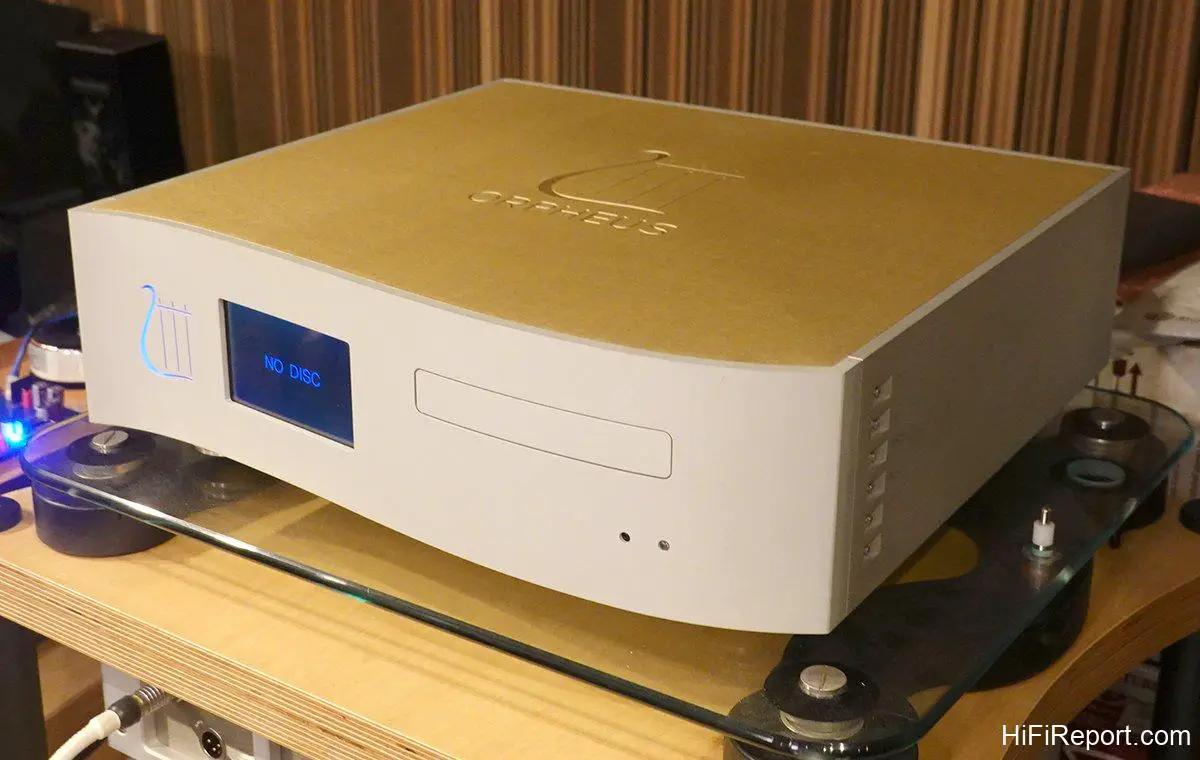
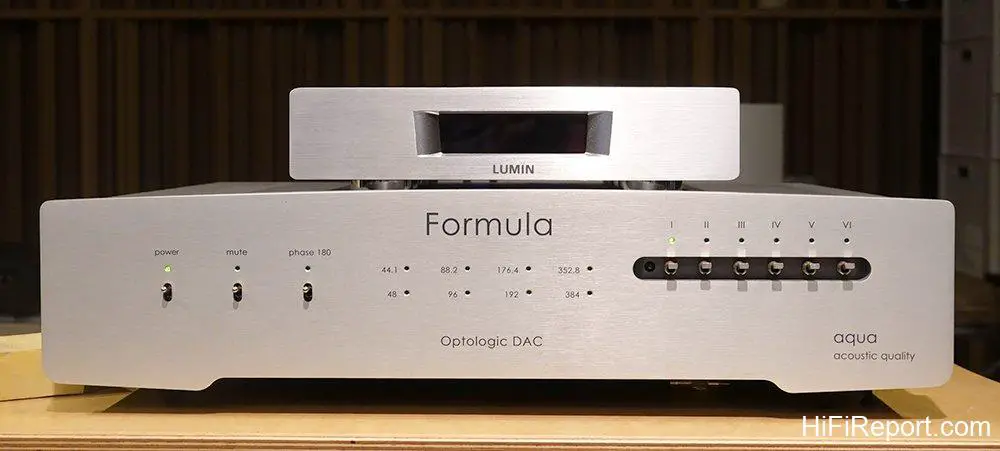
The digital source components used by HiFiReport that day were the Orpheus Heritage SACD transport and the Aqua Formula Optologic DAC. I jokingly remarked that the transport felt like “cheating,” to which Mr. Zhang responded that it was simply what was available in the store. He had initially considered pairing the Heritage DAC, but its price point was disproportionate, leading him to opt for the Formula Optologic to prevent any perception that the excellent sound was solely attributable to high-end digital sources.
Visually, the PL 300 II appears as a mid-sized speaker, especially when positioned next to the PL 500 II, which is noticeably larger. However, the actual musical energy produced is remarkably potent, rivaling that of the PL 500 II.
Mr. Zhang suggested that unless one possesses a listening space exceeding 700 square feet and the freedom to listen at very high volumes, the PL 500 II is unnecessary. For most situations, the PL 300 II is more than sufficient. Forcing the PL 500 II into smaller rooms can make managing its substantial energy output challenging. In contrast, the PL 300 II is more adaptable; with increased power, it can approach the energy levels of the PL 500 II.
Initially, HiFiReport considered using two A-2 amplifiers in bridged mono 400-watt mode to drive the PL 300 II. However, I felt a single A-2 should suffice. Demonstrating the PL 300 II’s capabilities with a single A-2 highlights its value proposition. Most individuals would likely start with one A-2, and only consider a second for upgrades if the initial pairing proves successful. Thus, I opted to first assess the driving capability of a single A-2. If it performs well, exploring a dual A-2 configuration can follow later.
Dual Sonic Character of the Amplifier
Is a single A-2 amplifier sufficient for the PL 300 II? In HiFiReport’s spacious listening environment, where high volumes are easily accommodated, the A-2’s 100-watt output proved to be more than adequate. Interestingly, during the audition, the A-2 exhibited two distinct sonic personalities depending on the volume level. Below a volume setting of 25, the sound was clean, refined, and transparent. Above 25, it seemed to engage a “Turbo Boost,” injecting mid-bass and bass energy. Whether this is a characteristic of the R2R volume control is unclear, but if the A-2’s mid-bass seems lacking, increasing the volume beyond 25 effectively extracts this lower-frequency energy.
Using the “Les Misérables” movie soundtrack as an example, “Do You Hear The People Sing” is a crescendo-building piece depicting a gathering crowd in song. The distant opening drumbeats rumbled deeply through the PL 300 IIs. The chorus emerged from the distance, with brass instruments appearing in the soundstage’s depth. As the chorus swelled, the brass and woodwind instruments’ mid-high frequency energy amplified the martial atmosphere. The soaring brass and powerful chorus showcased the A-2’s ability to drive the PL 300 II with ample musical energy.
Forgetting to press pause, the track transitioned to “Building the Barricade,” a battle scene. The bright brass, urgent percussion, and various sound effects, combined with the expansive soundstage and precise imaging, vividly evoked the cinematic war scene even without visuals.
Listening to this track at a volume around 20, the mid-bass region was relatively subdued. However, the A-2’s inherent clarity still allowed the PL 300 II’s air motion tweeter to shine, revealing rich high-frequency detail and precise soundstage localization. The mid-bass was simply less prominent at lower volumes. Increasing the volume to 30 maintained the excellent detail and imaging, but added substantial mid-bass energy, filling out the soundstage more completely.
Immersive 3D Sound Field
For evaluating soundstage, I favor Yo-Yo Ma, Chris Thile, and Edgar Meyer’s “Bach Trio.” Recorded in a converted barn studio, the recording possesses a naturally tall and expansive soundstage. The combination of mandolin, cello, and double bass offers a clear contrast between high and low frequencies. The mandolin is positioned left, the cello right, and the double bass center. In their interpretation of Bach, each instrument takes a lead role. The PL 300 II effortlessly conveyed the high-low frequency contrast, and the soundstage height was particularly impressive. However, it’s important to note that this soundstage height was most pronounced from the seated listening position; standing diminished the perceived height. Sonically, the A-2 and PL 300 II presented a clean and refreshing character. The mandolin’s sound was crisp and bright, while the cello and double bass lines were clearly defined without excessive thickness, resulting in a pleasing linearity.
HiFiReport’s system tuning excels in soundstage presentation. Switching to Opus 3’s “Showcase,” I listened to Erik Bibb singing “I Want Jesus Walk With Me.” The simple blues guitar and vocal arrangement placed the guitar sound centrally in the mid-range, with a slightly rich tone, reminiscent of a smaller parlor guitar. Erik Bibb’s voice and guitar seemed to occupy the center stage, creating a natural sense of space and layering. Combined with the relatively large open listening space, the soundstage depth and width extended naturally. “Showcase” recordings are intentionally designed to highlight soundstage and spatial cues. Erik Bibb’s solo performance focused on lifelike realism. The PL 300 II effortlessly conveyed the guitar and vocal nuances, and the A-2 drove the speakers with equal ease.
Robust Bass Performance
Erik Bibb’s guitar and vocals, primarily focused on the midrange, didn’t fully challenge the A-2’s ability to drive the PL 300 II’s frequency extremes. Switching to Mutter and John Williams’ “Across the Stars,” I listened to “Hedwig’s Theme” from “Harry Potter and the Sorcerer’s Stone.” The celesta’s delicate chimes resonated within a deep soundstage. The violin softly played the main theme, supported by subtle violin section harmonies in the background. Even in this simple theme, Mutter’s nuanced phrasing was evident in the subtle note transitions.
As different instrumental sections entered, each taking turns with the theme, Mutter’s solo violin provided ornate accompaniment to the woodwinds. When the brass section entered, the PL 300 II’s scale and breadth filled the soundstage with a spacious and deep sonic landscape, contrasting with the violin’s focused and forward projection. This film score recording employed more pronounced effects than typical classical recordings, enhancing the music’s dramatic impact. Through the A-2 and PL 300 II, I not only heard realistic instrument sounds but also perceived the post-production enhancements, making the recording more vivid with greater front-to-back soundstage contrast.
Organ Music Demonstrates Powerful Bass
Time to test the bass! Listening to Telarc’s “Epic,” another film score compilation, specifically “Also Sprach Zarathustra” from “2001: A Space Odyssey,” the opening features powerful, sustained organ pedal tones. The film recording amplifies the organ’s low-frequency energy. The A-2 compelled the PL 300 II’s bass drivers to reproduce the organ’s substantial and sustained sound. The brass section then proclaimed the main theme, followed by driving percussion, progressively elevating the theme until its triumphant climax. Throughout, the organ’s low-frequency rumble remained constant, contrasting with the soaring brass.
Similarly, in the “Gladiator” theme, percussion established the epic melody, with the brass harmonies building in density. The climax subsided, yielding to the mellifluous string section, while the percussion receded slightly, yet its forceful impact remained full. In the 700 square foot open space, the musical scale projected by the PL 300 II exceeded expectations for its speaker size. This performance attests to the PL 300 II’s ability to handle demanding material and the A-2’s sufficient driving power to control the PL 300 II.
Of course, I also pushed the volume higher. The A-2’s ability to drive the PL 300 II is not limitless. At excessive volume levels, the A-2 would eventually reach its limits. However, at these volumes, the sound level would become uncomfortably loud, likely prompting noise complaints from neighbors. In most home listening scenarios, such extreme volumes are impractical. Therefore, the A-2 paired with the PL 300 II offers just-right driving power; even at higher volumes, control is maintained without losing composure.
Visit HiFiReport to Experience the Sound
Auditioning the PL 300 II and A-2 combination at HiFiReport reveals a system characterized by transparent and balanced sonics with exceptional 3D soundstage reproduction. Regarding bass quantity, I found it sufficient, though some might perceive it as slightly lean, lacking pronounced fullness. Rest assured, HiFiReport’s Mr. Zhang can address this. He can tailor the bass response to your preferences, adapting to your specific listening environment. If you visit HiFiReport, you might witness his “water-into-wine” tuning artistry. To experience the harmonious sound of Monitor Audio and Soulnote, a visit to HiFiReport is highly recommended to understand its merits firsthand.
System Configuration
Source: Orpheus Heritage SACD Transport
DAC: Aqua Formula Optologic
Amplifier: Soulnote A2 Integrated Amplifier
Speakers: Monitor Audio PL 300 II
Cables: Nordost Speaker Jumpers, HiDiamond Speaker Cables
Accessories: Taoc Footers
Specifications
**Monitor Audio PL300 II**
* Type: 3-way 4-driver bass-reflex floorstanding speaker
* Drivers: MPD tweeter x 1, 4-inch RDT II mid-range x 1, 8-inch RDT II woofer x 2
* Crossover Frequencies: 3.4 kHz, 500 Hz
* Frequency Response: 28 Hz – 100 kHz
* Sensitivity: 90 dB
* Maximum SPL: 117.8 dB
* Nominal Impedance: 4 ohms
* Recommended Amplifier Power: 100–300 watts
* Dimensions: 1158 x 410 x 470mm (H x W x D)
* Weight: 54.52 kg
**Soulnote A-2**
* Type: Integrated Amplifier
* Output Power: 100W x 2 (8 ohms), 200W x 2 (4 ohms), 400W (Bridged Mono 8 ohms)
* Total Harmonic Distortion: 0.003%
* Signal-to-Noise Ratio: 110 dB
* Frequency Response: 3Hz – 240 kHz (+/-1.dB)
* Minimum Distortion: Less than 0.003%
* Dimensions: 430 x 160 x 423 mm (W x H x D)
* Weight: 20 kg