
Naim Uniti Atom Headphone Edition Network Streaming Player Review
As an audio reviewer, I believe it’s essential, regardless of experience, to maintain a sense of curiosity about new developments. Sometimes, when I report on new product releases on the ProAV website, I’m actually writing a kind of “wish list” – hoping to hear the new unit soon, even if I’m not the one assigned to review it. Perhaps it’s my frequent wishing, but occasionally I end up with a “global first review.”
However, this isn’t a common occurrence; new products are often first reviewed by critics in the brand’s home country. Take the subject of this article, the Naim Uniti Atom Headphone Edition, for instance. On the very day it was announced, I saw reviews popping up in professional UK media, followed by pieces in other magazines and online publications.
Being a bit late to the review party is fine by me. I always need to experience the gear firsthand to satisfy my curiosity and expand my mental database of audio equipment. This time, the situation was a little unusual. I had already read several magazine and online reviews of the Naim Uniti Atom Headphone Edition. After reading them, I had a distinct feeling: were they missing something? And if they were, I should definitely fill in the gaps.
The Uniti Atom Headphone Edition is a member of the Naim Uniti family. Its closest relative, the “Uniti Atom,” was released in 2018 and is a streaming integrated amplifier rated at 40 watts per channel. The Uniti Atom is perfectly capable of meeting the listening needs of most urban living rooms, forming a complete streaming audio system with just a pair of speakers.
The Uniti Atom Headphone Edition, however, is not an integrated amplifier. Until now, most reviewers and enthusiasts have treated it as a “streaming headphone amplifier.” Compared to a USB-DAC headphone amp, its main advantage is the ability to stream music and play digital files directly without needing a computer. Previously, most headphone amplifiers were considered “desktop” audio components, and initially, I placed this one on my desk and connected my headphones.
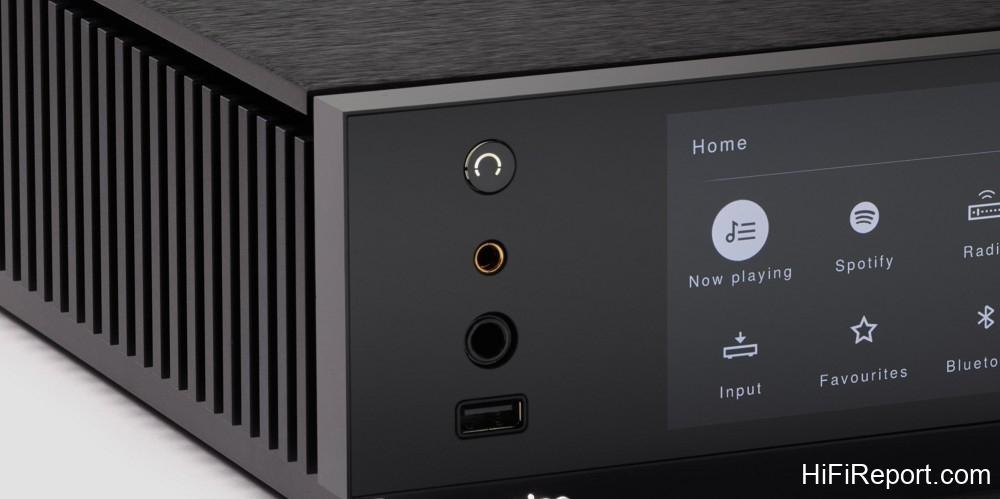
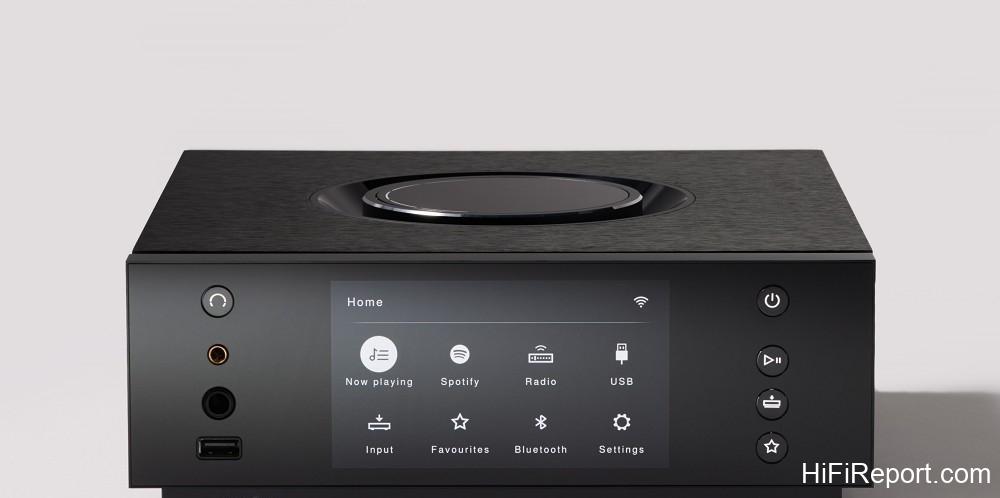
However, as soon as I started using it, something felt off. I sensed that Naim didn’t really design the Uniti Atom Headphone Edition to be primarily a desktop unit. The full-color display on the front panel isn’t touch-sensitive; the only physical control within easy reach is the volume knob. Track selection and playback require using the Naim App or the remote control.
Therefore, I believe the primary intended use of the Uniti Atom Headphone Edition is as a “streaming preamplifier” for a conventional audio system. It is equipped with balanced and single-ended preamplifier outputs, allowing it to connect directly to a power amplifier to drive speakers or pair with a set of active speakers to create a streaming audio system.
This setup removes the limitation of the Uniti Atom’s built-in power amplifier, giving users the freedom to choose a more powerful amplifier based on their room acoustics and speaker requirements.
Conversely, this unit replaces the Uniti Atom’s “speaker amplifier circuit” with a “headphone buffer amplifier circuit,” providing greater driving force and a balanced headphone output to fully unleash the potential of headphones. So, I prioritize the Uniti Atom Headphone Edition’s “music streaming and preamplifier functions” slightly more than its headphone amplification capabilities.
After all, spending nearly $5,000 on a high-quality streaming preamplifier feels more justifiable than spending it on just a headphone amp.
Streaming Features
In terms of streaming capabilities, this unit features built-in Chromecast, AirPlay 2 compatibility, and Roon Ready certification. It supports TIDAL, Qobuz, Spotify, and internet radio. When connected to a network, it can play music files shared from NAS drives, music servers, computers, and portable devices via UPnP. Supported file formats include WAV, FLAC, AIFF, ALAC, MP3, AAC, OGG, WMA, and DSD. Lossless high-resolution audio is supported up to 384kHz/24bit and DSD128.
Besides streaming music files from the network, users can also organize music files on a USB storage device, treat it as their music library, and plug the USB device into the Uniti Atom Headphone Edition for playback. Currently, most streaming players that can play music files from USB storage devices are compatible with FAT32 (mostly for USB drives). If you need to use large-capacity USB hard drives, the player must support NTFS format (a significant number of devices now do).
If you plan to use a USB SSD, I recommend formatting it with exFAT (SSDs tend to last longer with this format). However, I’ve rarely encountered devices compatible with exFAT in the past, so I decided to give it a try and plugged in an exFAT-formatted 512GB USB SSD into this unit. To my surprise, it read it without a hitch.
Internal Design
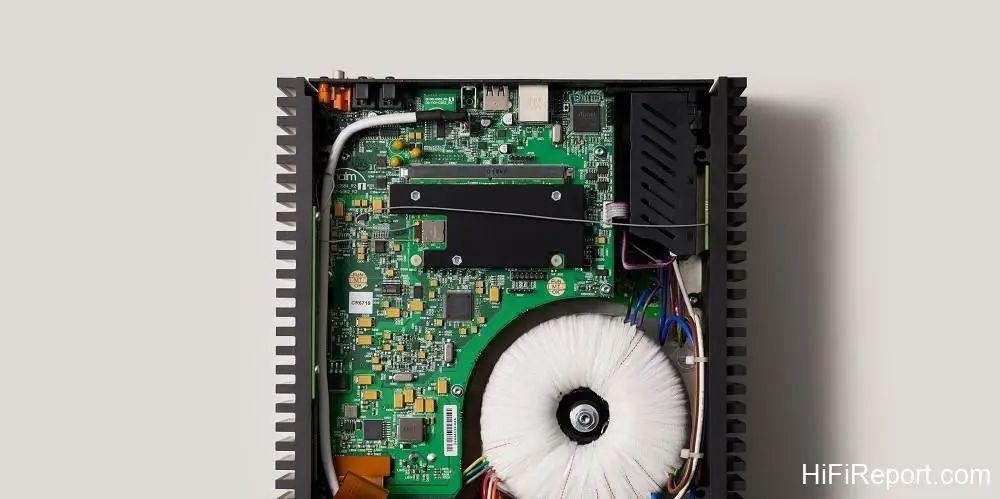
Although the Uniti Atom Headphone Edition and the Uniti Atom belong to different product types, their internal layout is remarkably similar. Power is supplied by a large toroidal transformer located in the front right of the chassis. This transformer has three secondary windings, providing separate power to the digital circuits, the DAC and small-signal audio circuits, and the headphone amplifier circuits.
This linear power supply with separated feeds is designed to reduce power supply noise and interference between different circuits, effectively improving the signal-to-noise ratio.
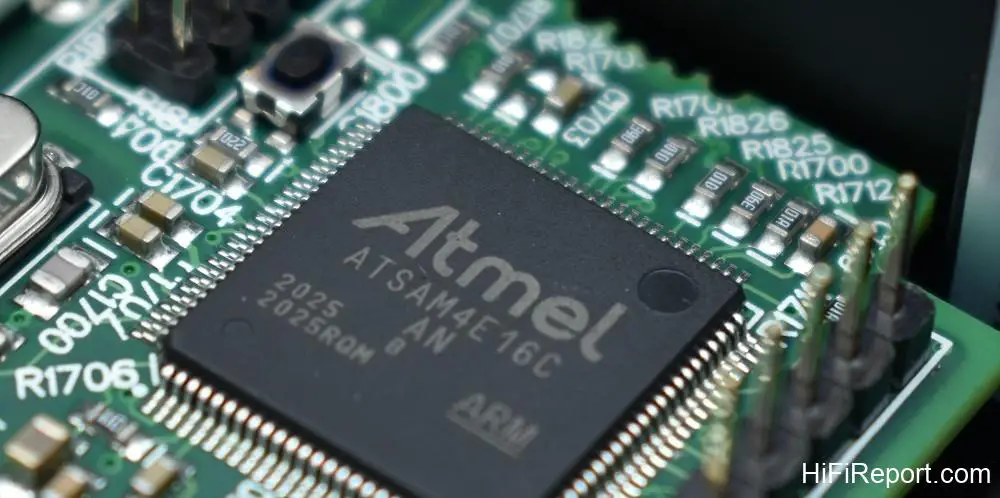
The main circuits inside are largely divided into two layers. The upper layer includes the network module and digital input interfaces. The system is based on an Atmel ATSAM4E16C 32bit ARM Cortex-M4 chip. Last month, when I reviewed the Naim NDX 2 streaming player (priced around $10,000), I mentioned that it uses an Analog Devices SHARC DSP chip, the ADSP-21489, to expand the digital audio bit depth to 40 bits.
It performs 16x oversampling digital filter calculations developed by Naim’s Head of Electronic Design, Steve Sells (converting digital audio to 705.6kHz or 768kHz 40bit). This DSP is also used for high-precision digital volume control, effectively reducing loss of sound quality and dynamics and achieving the design goal of a high signal-to-noise ratio.
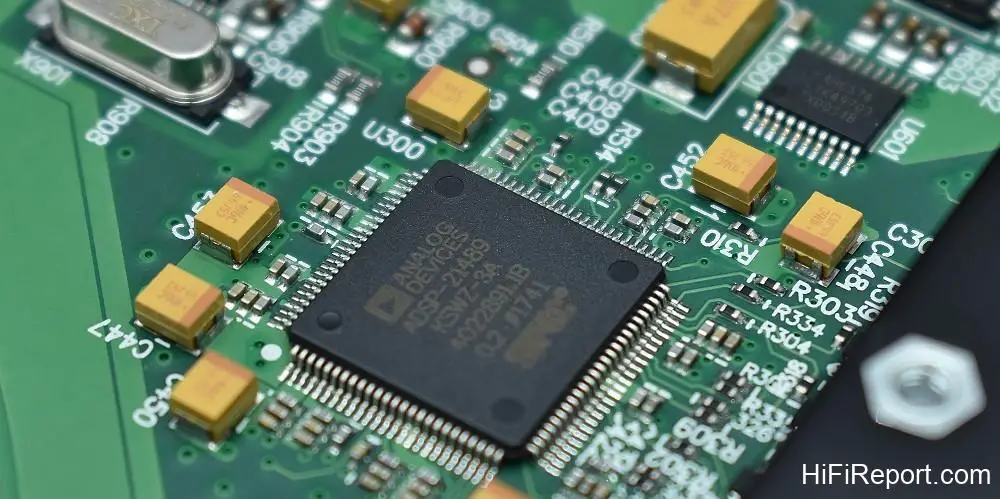
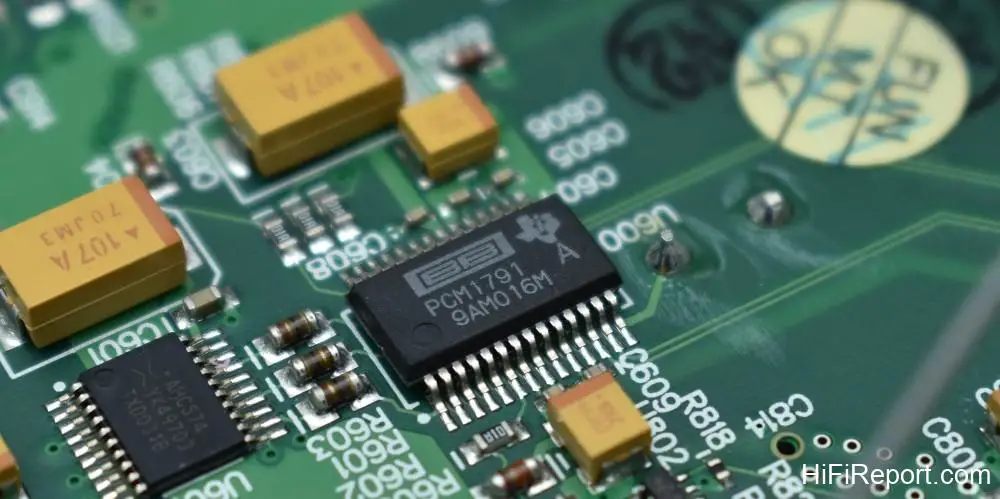
The Uniti Atom Headphone Edition, priced at roughly half the NDX 2, adopts the same approach here, using the SHARC DSP ADSP-21489 for 40-bit digital filtering and volume control. After the DSP chip, a Burr-Brown PCM1791A 192kHz/24bit DAC chip is used for digital-to-analog conversion.
The lower layer circuit was quite different from what I initially expected. This area contains multiple sets of rectification, filtering, and voltage regulation circuits, the audio circuit for the preamplifier outputs, and the buffer amplifier circuits driving the headphones. I initially thought the power supply and amplifier circuits for a “headphone amp” would be quite “normal.”
However, the power supply and headphone amp circuits in the Uniti Atom Headphone Edition look like they’re meant for an integrated amplifier, several times larger than those typically found in headphone amps. I even spotted Sanken 2SA1868/2SC4382 high-power transistors being used in the headphone amp circuit!
The design here suggests that Naim took the Uniti Atom as a base and modified it. The first key change was, of course, switching from single-ended to balanced amplification (including the buffer amplifier circuits for both the preamplifier and headphone outputs) and employing Class A amplification. Secondly, a headphone amplifier doesn’t require the same high output voltage and current as an integrated amplifier.
Therefore, reducing the output power, decreasing the number of amplification stages, and lowering the gain can also reduce noise. Observing the circuit, it’s easy to see that using the Uniti Atom Headphone Edition to drive headphones is like using a cannon to shoot a sparrow; there’s no question about the driving power. The main considerations are sound quality and sufficiently low noise floor.
Listening Impressions
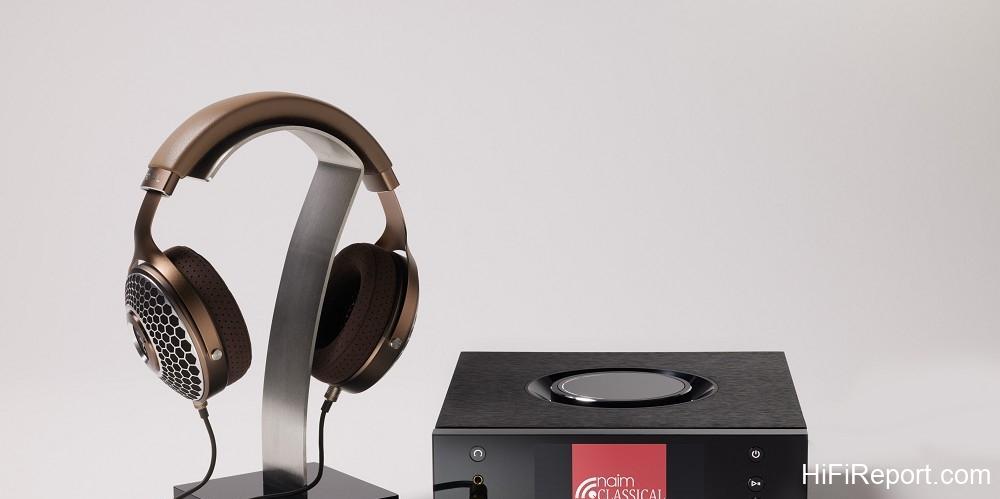
In the first phase of listening, I tested the unit’s performance as a streaming “headphone amplifier,” primarily pairing it with Focal CLEAR headphones. The Uniti Atom Headphone Edition offers three headphone connectors: 4.4mm Pentaconn balanced and 6.35mm single-ended outputs on the front panel, and a 4-pin XLR balanced headphone output terminal on the rear. For this test, I used the rear 4-pin XLR balanced output to drive the Focal CLEAR.
Under these listening conditions, I could feel the Uniti Atom Headphone Edition completely mastering the Focal CLEAR. The bass quantity was rich, remaining effortless even at deliberately high volumes while maintaining excellent balance across the three frequency ranges. The bass in strong rhythmic hip-hop music had superb control – weighty without being bloated, with powerful, fast-decaying punches that were clean, sharp, and very dynamic.
The midrange is a characteristic strength of British audio products. Most British-made gear gives seasoned enthusiasts an impression of warmth and fullness. However, in headphone output mode, this unit’s midrange is neutral leaning slightly warm – appearing slightly younger and more open than typical British sound. It leans towards neutral and realistic, making the layering and texture of the midrange more distinct and the resolution higher.
In terms of treble, I believe it maintains a good balance. On one hand, it allows the listener to easily discern high-frequency details and harmonics, possessing a moderate sense of shine without feeling suppressed or overly smoothed. On the other hand, I could still feel that it restrained any harsh or grating tendencies, resulting in a smooth sound that doesn’t cause fatigue during extended listening sessions.
Overall, as a headphone amplifier, I believe the Uniti Atom Headphone Edition successfully combines audio performance (including speed, power, clarity, and low noise floor) with musicality that immerses the listener.
Preamp Performance
For the second phase of listening, I used the Uniti Atom Headphone Edition as a streaming preamplifier, connecting its balanced output directly to a power amplifier driving floorstanding speakers. The main difference between listening with speakers and headphones is, of course, the soundstage.
This unit’s soundstage performance maintains a typical British style: it doesn’t push forward towards the listener but unfolds in a fan shape behind the speakers, naturally presenting the distance of each sonic image, the depth of the stage, and the layers from near to far.
In terms of sonic character, I found a significant difference between the unit’s preamplifier output and its headphone output. The preamplifier output leans more towards traditional British sound – the sound is richer and denser, centered around a lush and juicy midrange with delicate texture and quality. It has a strong sense of physicality and weight. The mid-bass and bass are relaxed and full. Piano timbre is noble and proper. The treble is delicate and slightly sweet.
The fine, smooth texture of violin bowing makes you feel as if you’re listening to vinyl or master tapes, completely devoid of any stiff digital feel. It doesn’t need to be aggressive; instead, it reveals the characteristics of high-resolution music through a quiet background and refined sound quality. Compared to the headphone output, I believe the preamplifier output displays a more mature character, smoother and more flavorful, while still retaining a youthful, quick pace.
Verdict
So, is the Uniti Atom Headphone Edition worth it? If you only view it as a headphone amplifier, a price tag of nearly $5,000 is certainly steep. However, if users consider using it as a streaming preamplifier, I believe it’s highly worthwhile.
This isn’t just because it includes a built-in streaming player and a Class A balanced headphone amplifier circuit, but because within the price range of under $7,000, I’ve rarely encountered a streaming source and preamplifier with such perfect midrange performance – sound that has flesh and blood and truly draws you into the music. Given its exceptional performance, it rightfully earns our Highest Recommendation.
Specifications
* Type: Network streaming player / Digital-to-Analog Converter / Preamplifier / Headphone Amplifier
* Supported File Types: WAV, FLAC, AIFF, ALAC, MP3, AAC, OGG, WMA, and DSD
* Supported Maximum Music File Specification: 384kHz/24bit and DSD128
* Bluetooth Compatibility: SBC, AAC, aptX, aptX HD
* Preamplifier Output: RCA (single-ended) x1 pair, XLR (balanced) x1 pair
* Headphone Output: 4.4mm Pentaconn (balanced) x1, 6.35mm (single-ended) x1, 4 pin XLR (balanced) x1
* Headphone Amplifier Output Power: 1.5 Watts RMS per channel (16 ohms)
* Network Connection: Ethernet (10/100Mbps), WiFi (802.11 b/g/n/ac)
* Input Terminals: Digital Coaxial RCA x1, Toslink Optical x2, USB 2.0 Type A x2, Analog Stereo RCA x1
* Dimensions (W×H×D): 245×95×265 mm
* Weight: 7 kg