
Naim CD5si CD Player Review
When my colleague mentioned sending over a Naim CD5si for review, I immediately decided: this CD5si is mine.
In the history of CD players, numerous designs have left a lasting impression. When you count those classic designs, have you ever overlooked Naim? Naim launched their first CD player in 1991, the flagship CDS and CDI models, adopting a top-loading disc mechanism. The CDS even featured a separate power supply, becoming a two-box unit.
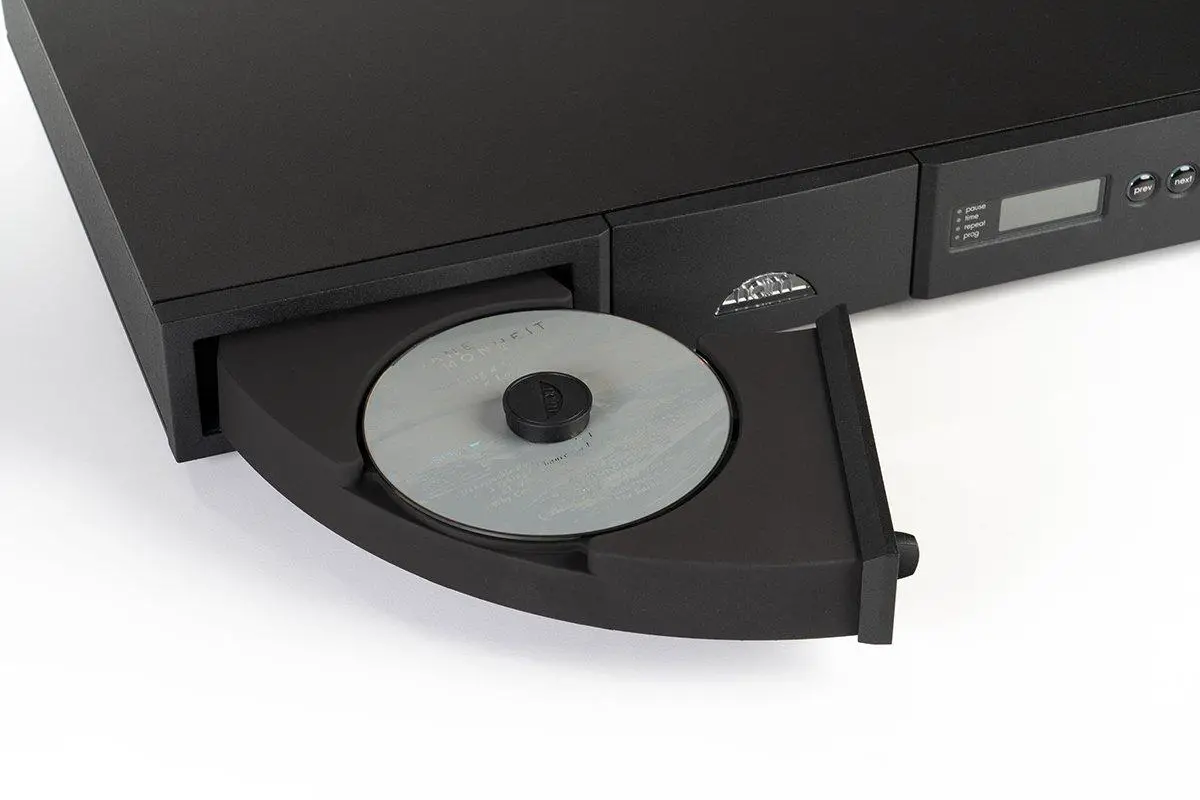
Later, Naim developed an unprecedented and perhaps unmatched (fan-shaped track) drawer-type disc tray, seen in the CD2 and CD3, followed by the CD5. Since then, this design, exclusive to Naim, has become a coveted collector’s item for many enthusiasts.
For a time, Naim invested heavily in CD player development, offering multiple models. The flagship CD555, also a two-box design, was breathtakingly beautiful. For drawer-type mechanisms, they offered the CDX2, CD5XS, and CD5si at different levels.
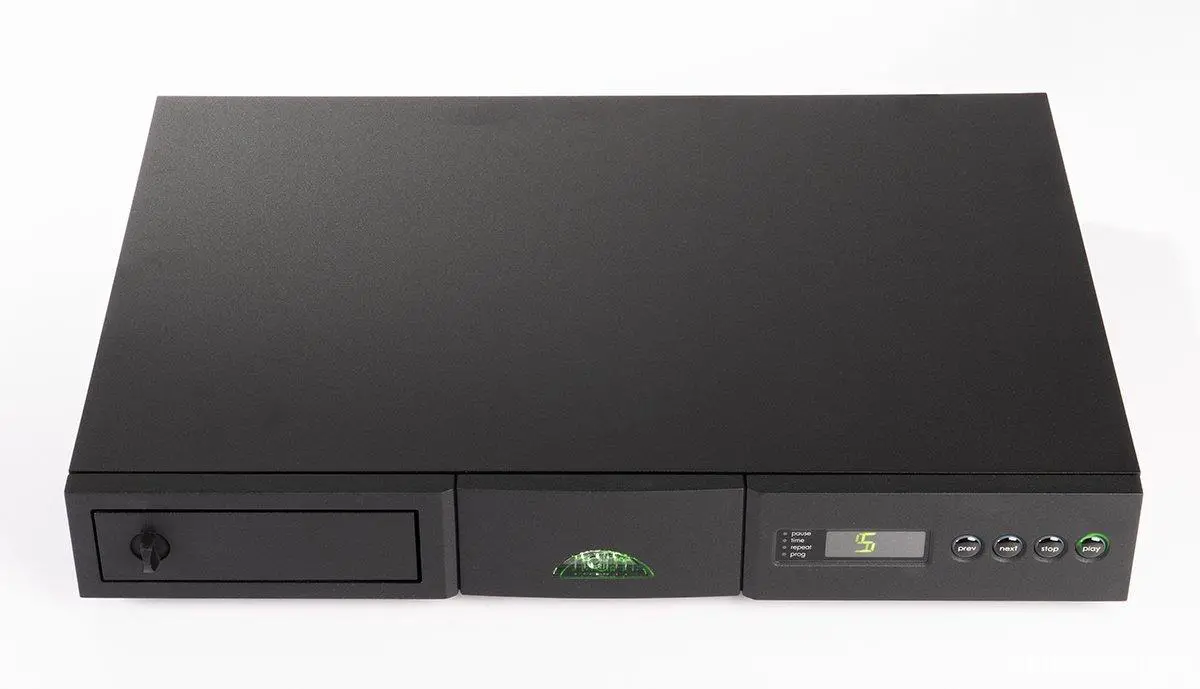
However, with the rapid rise of network streaming sweeping the music market, physical CD sales have declined year by year, and the CD player market has also shrunk. Network streaming players have risen to prominence, and audio manufacturers have begun to develop streaming devices, embracing streaming functionality. Some audio companies have even announced that they will no longer produce CD players.
Naim also sensed the changing market atmosphere. They even started strategizing for digital streaming early on, using Mu-so to appeal to the mass consumer market, aiming to capture markets beyond traditional audiophiles and explore future business opportunities. They launched one streaming device after another. The entire Uniti series was Naim’s declaration to the new era and new market, allowing middle-class elites with limited budgets but a focus on quality of life to step into the realm of music listening through the network, wireless, and digital platforms familiar to this generation.
Network streaming has, on one hand, disrupted the traditional audio industry system, and on the other hand, become a new opportunity for the audio industry. Naim clearly understands this is the general trend. They quietly shifted their production focus towards streaming playback. When I noticed, Naim surprisingly only had one CD player left in their lineup: the CD5si.
Reasons for Eagerly Awaiting a Review
Why was I so keen to write a review of the CD5si? In fact, it’s not a new machine. The CD5si has been out for many years, and you can find numerous reviews online introducing this entry-level Naim CD player. HiFiReport also published a review written by Cai Chengrong in early 2014. So why would I want to add to the pile? Two reasons drove me.
First, I really wanted to experience Naim’s (fan-shaped track) drawer mechanism firsthand. As I mentioned, this is a unique design in the world, and the tactile feel is excellent. Manually pull out the cast drawer tray, place the CD, put on the CD clamp, and push the drawer back in. This process, like the ritualistic feel of operating a manual top-loading player, gives digital music a more analog flavor. Regardless of how well-designed a motor-driven drawer tray is, the lack of manual push-pull operation makes music playback feel less warm. I had to try it.
Second, given Naim’s efforts in launching streaming products in recent years, I don’t know when Naim will stop producing the CD5si, nor do I know if there will be future opportunities to experience this classic design. I’ve used many Naim streaming devices, and I know the quality of their streaming equipment. I believe they will continue to launch even better streaming products in the future. If the CD5si really is Naim’s last CD player, missing out on it would be a lifelong regret. Therefore, I want to seize the opportunity to leave some words for the CD5si, so that future generations will know that in the summer of 2021, CD players were still around, Naim’s classic drawer mechanism was still around, and the mainstay that preserved the beautiful memories of Naim’s golden age of CD players was the CD5si.
Solid Chassis and Vibration Isolation
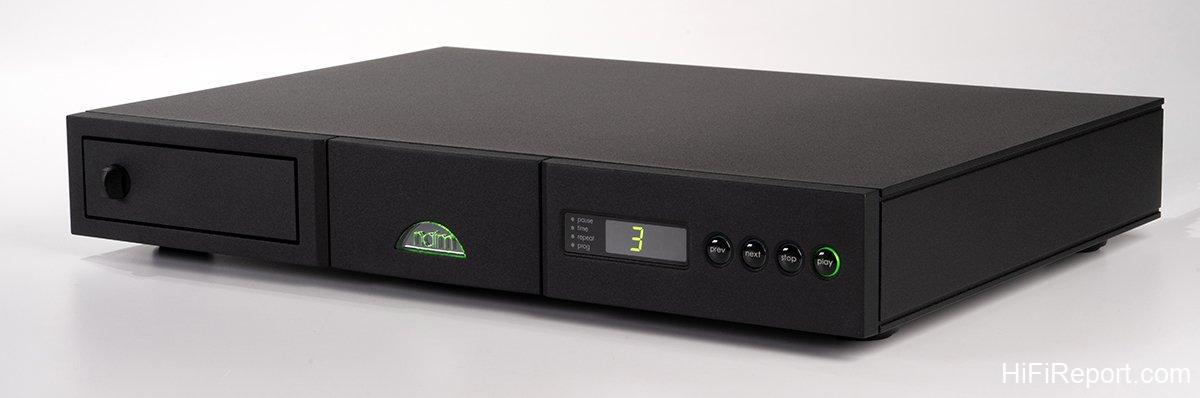
As Naim’s entry-level model, the CD5si, while not large in size, has a very solid chassis structure. The chassis is not made of thin pressed steel plates like typical entry-level players, but of thick aluminum alloy plates, making the overall structure sturdy, with lower resonance, and less susceptible to external vibration interference. The matte sandblasted surface finish makes the CD5si look understated, yet with the designed green lighting and lettering, it exudes a hint of mystery. The square but simple shape gives a sense of visual stability. This exterior design has been used for 20 years, and it still looks impressive today. The skill of design lies not in being extravagant, but in being simple. Understanding this principle is truly not simple.
Naim’s Best CD Technology
Naim did not neglect the design of the CD5si just because it is an entry-level model. On the contrary, it utilizes all of Naim’s best and latest digital source technologies available at the time of the CD5si’s release. This includes the drawer mechanism improved for the CDX2 and the latest optical disc read head, both used in the CD5si. The new tray design reduces overall resonance and the moment of inertia of disc rotation, thereby improving reading accuracy. Paired with a newly written error correction system, digital reading capability is further enhanced. It also uses the then-latest Burr Brown DAC chip PCM1793, the same DAC chip used in Naim’s flagship NDX streaming player at the time.
In addition, Naim also designed a discrete architecture power supply circuit, with separate power supplies for analog and digital circuits, featuring high voltage transmission characteristics. The CD5si also uses a more precise clock to reduce jitter. The analog filter circuit has also been modified to improve sound quality. Although it looks no different from its predecessor, the CD5i, almost every aspect that can be counted has actually been changed.
Believer in DIN
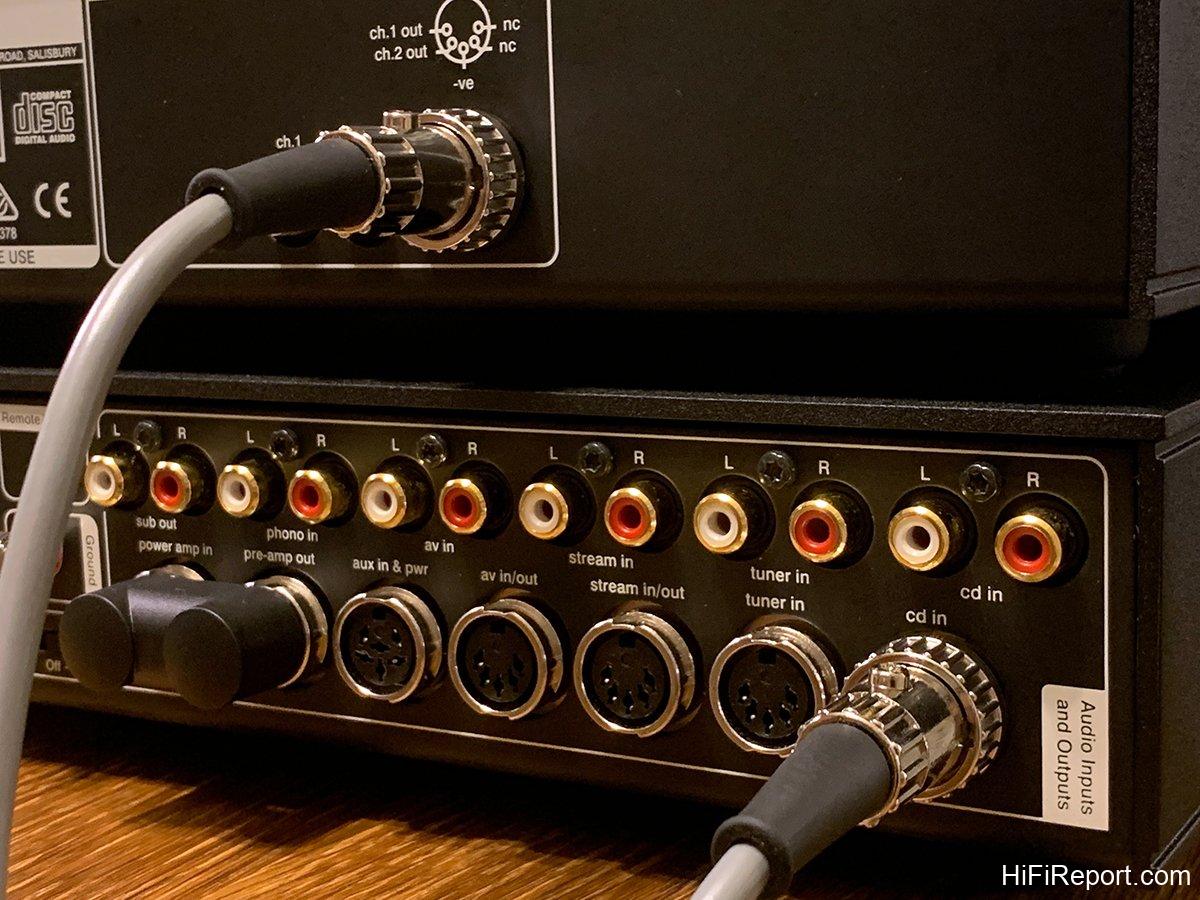
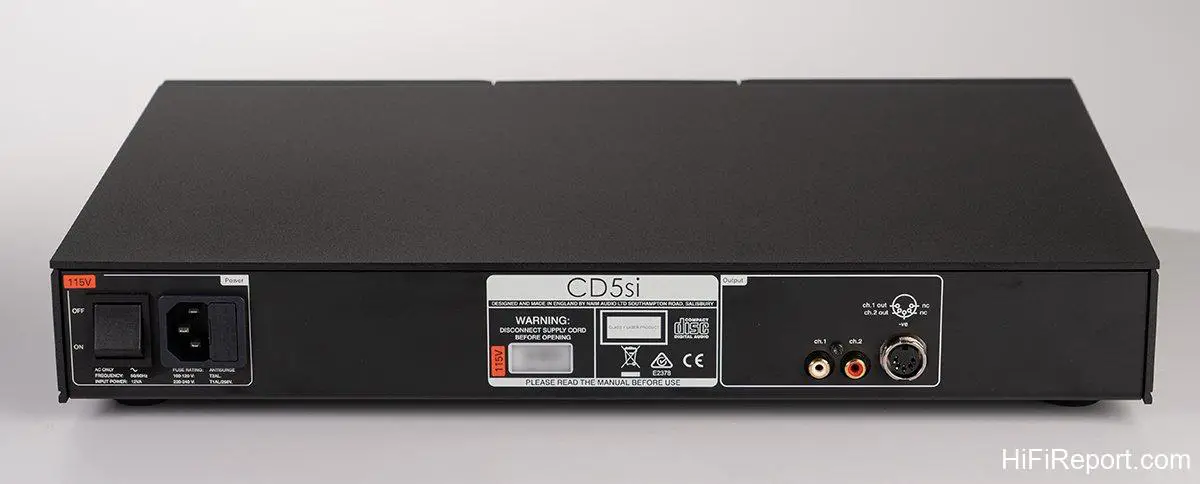
To use Naim equipment, you need to have a basic understanding: they are firm believers in DIN connectors. Since the early 1970s, when the DIN standard was established, Naim has considered it the most ideal transmission interface and leaned towards it. Naim even once did not provide other connectors, leaving only DIN outputs and inputs, forcing Naim users to adopt a “full suit” system configuration. However, today’s Naim is no longer so inflexible. They still believe DIN is more ideal, but they have also included RCA connectors on their machines, allowing their equipment to be paired with other brands.
The CD5si has one set of DIN analog outputs and one set of RCA outputs for selection. When using it, users must first set whether to output from DIN or RCA, or both simultaneously. What about the effect? Of course, DIN is best, RCA is second. The factory recommends that users choose one for better results and not choose both outputs simultaneously, which can degrade sound quality. Where to get DIN signal cables? They are indeed not easy to buy on the market. But don’t worry, a cable is included in the Naim CD5si box. If you want to upgrade, the factory also offers higher-grade DIN signal cables for purchase.
When the machine was sent over, a Nait XS 3 was sent along with it. Excellent! When I reviewed the SuperNAIT 3 not long ago, I only had an amplifier and no source to pair with. Now, with both a CD player and an integrated amplifier sent over, I can try the effect of DIN. This DIN signal cable is unassuming, with a thin cable body and no printed markings, looking no different from an engineering cable. But don’t underestimate it. Compared with Divini’s pure silver signal cable S-S12, each has its own merits. While it lacks the gorgeousness and refinement of the S-S12 in sound, this DIN cable brings clear and distinct image outlines, a more recessed soundstage, and solid density, making the sound more substantial and the background very black, which is more conducive to musical imaging. If pairing with Naim’s own amplifier, the factory-recommended DIN signal cable is indeed worth considering as a priority.
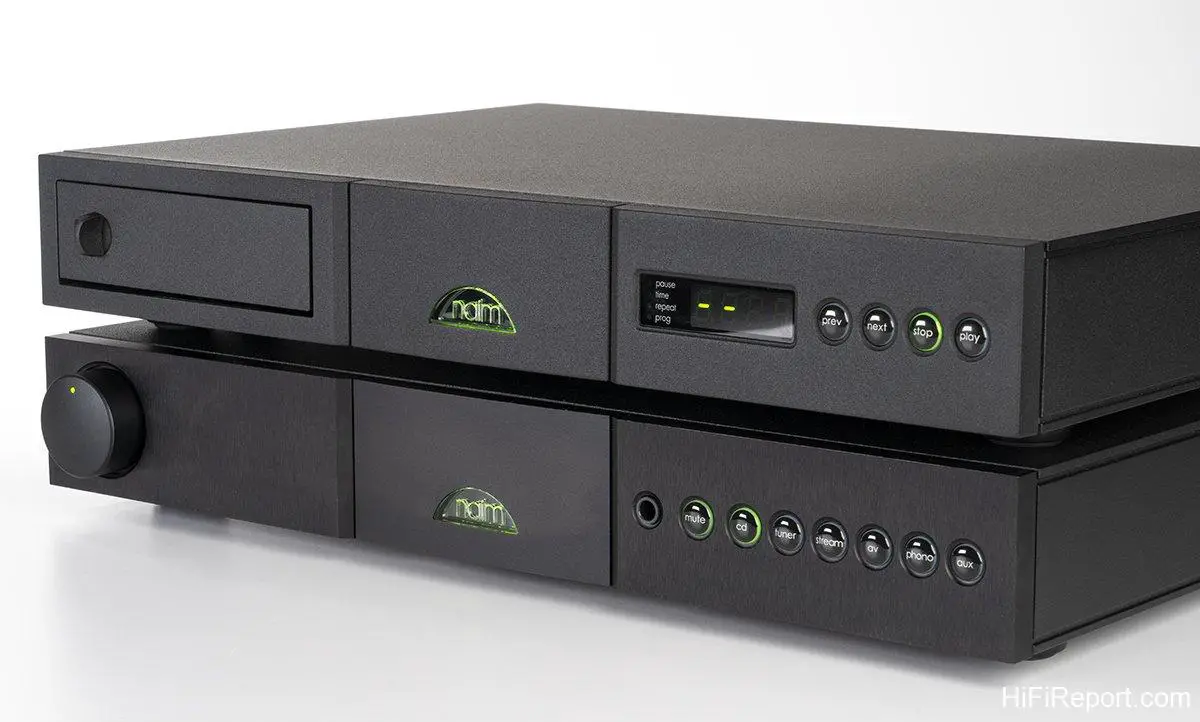
The Naim CD5si does not have digital outputs, only analog outputs, so it cannot be used as a transport to connect to other DACs. Also, the CD5si cannot be connected to an external power supply or upgraded, which makes the CD5si slightly regrettable compared to the earlier, more high-end models CD5 XS and CDX2 of the same period. Perhaps this is Naim’s strategy, clear product positioning: the CD5si is an entry-level product, hence the pursuit of simplicity.
Performance Beyond Entry-Level
Even with a simple design, the CD5si’s sound performance is not simple. It has a wide and deep soundstage, and the sound is cohesive and solid, without any harshness. The high frequencies are smooth and not harsh, the midrange is full and three-dimensional, and the low frequencies go deep. Especially the low frequencies, it is rare to hear such low-frequency performance on a CD player in this price range. With a slightly warm tone, it organizes a sound with a dense texture. The full frequency range has thickness, details are rich and clearly discernible, without any ambiguity, and without that sense of instability floating in the air. What you hear, whether loud or soft, is stable and reliable, firmly rooted. If this kind of sound appeared on a CD player priced at 4,000 to 5,000 USD, I wouldn’t be surprised. That is naturally a kind of composure and confidence in preparation for entering the Hi-End realm. However, hearing this kind of sound on the CD5si is a pleasant surprise.
Cohesive, Solid, Dense Texture, and Realistic
Small ensemble chamber music with fewer instruments makes it especially easy to discern the texture of the sound. Taking Beethoven’s Violin Sonata No. 10 performed by Liza Ferschtman and Inon Barnatan as an example, this lovely piece is full of warmth and shared emotion. The Naim CD5si uses a high-density approach to express the texture of the violin and piano. Both the violin and piano sound full and solid, yet cohesive and focused. The sound heard through the CD5si is not bloated at all, which is consistent with all Naim equipment I have heard, even for such an entry-level component. The piano reveals a warm color, the piano sound is firm yet smooth. Naim’s presentation of the piano has always carried a hard texture, paired with a gentle luster, making the piano sound particularly concrete and more impactful. When the piano lingers in the bass range, or occasionally pauses on a low chord, the CD5si not only brings out that depth but also gives the music weight and power. The violin has no cold, hard, or dry feeling. Even when playing in high positions, there is no harshness or roughness. And the frictional texture when the bow and strings meet can be clearly expressed, making the music more immersive. Naim conveys details not for the sake of details, but to bring music to you. This is what I realized on the SuperNAIT 3, and today I feel the same sincerity on the CD5si.
Instruments are Three-Dimensional and Prominent, Excellent Deep Bass Performance
In Schubert’s Piano Quintet “Trout” performed by Renaud Capucon and a group of French musicians, this clean and natural recording, under the CD5si’s playback, further highlights the physicality and richness of the instruments. The violin is delicate and beautiful, with moisture and luster in the transitions between notes. The piano sound is bright and warm, with full notes and clear articulation. The cello hums in a nasal tone, which sounds truly harmonious and beautiful. Schubert replaced the second violin with a double bass, which made the lower register of the piece fuller and more stable. The CD5si’s bass performance is truly outstanding, bringing out the richness and depth of the double bass, pushing this easily overlooked role to the front of the stage. In addition, I must also say that the CD5si completely lacks the noise that may be present in players at this price point. On the contrary, its background is black enough, making it easier for people to focus on the protagonists illuminated by the spotlight. Those roles are not flat and indistinct, but three-dimensional and prominent, clearly and surely present.
Wide and Deep Soundstage, Good Dynamic Performance
In my memory, Naim’s CD players can decode HDCD. I wanted to try it. I flipped through my CD collection and found a Reference Recording disc, an orchestral collection recorded by Eiji Oue conducting the Minnesota Orchestra, featuring Mussorgsky’s Pictures at an Exhibition as the main course. The opening track is Ravel’s “Alborada del gracioso.” This short orchestral piece is a good test of musical dynamics. The piece begins with pizzicato strings, followed by soft woodwind responses, and then powerful fortissimo orchestral chords with percussion. In just one minute, there are both micro-dynamics and macro-dynamics performances. When playing small-scale chamber music, the CD5si clearly and three-dimensionally outlines the shapes of the instruments. When playing orchestral music, it expands the depth and width of the stage, creating a wide and deep soundstage, filling my living room with various sections and instruments.
The factory does not specify the signal-to-noise ratio of the CD5si, but the feeling it gives is that the background is black. This consequently means that many subtle details and information in the music are not obscured. Listening to the rich percussion in this piece is a great pleasure. Although the CD5si’s speed performance is not lightning-fast, it is by no means sluggish. Those sudden fortes, those unexpected percussion strikes, are all blood-pumping. As for the “Promenade” from Pictures at an Exhibition, the muted trumpet sounds thinner, but not stiff. It is a very realistic sound of a muted trumpet. In the “Gnomus” movement, the low murmuring of the bass strings, paired with percussion, creates a bizarre atmosphere. I have mentioned several times that the CD5si sound leans towards being thick and solid, but here, I heard the warm and golden, brilliant cymbal decay, and the bright and crisp glockenspiel. Its mid-bass performance is excellent, and the high frequencies are also of good quality. In the “Bydło” movement, there are dense and thick strings, and the timpani and snare drum tell you how good the CD5si’s ability to depict soundstage depth is. The most exciting part is from “Baba Yaga’s Hut” to “The Great Gate of Kiev,” which is even selected by RR’s own orchestral Tutti compilation. As an entry-level CD player, I must say that the CD5si’s performance is truly excellent. It provides the rich instrumentation in these two pieces, as well as the colors brought out by those instruments. When you hear the surging, rich power, you will be convinced by Ravel’s outstanding orchestration techniques. And in such a large and complex ensemble, the CD5si can still maintain considerable stability without losing control; this is real skill. More advanced sources can express dynamics with more confidence, can dig out more subtle information, and can perform better in larger systems. But users who buy the CD5si mostly will not use such large systems. At sound pressure levels that the system can support, the joy brought by the CD5si is undeniable.
Regrettably No HDCD Decoding
However, I never saw any message on the CD5si’s display screen telling me that it was doing HDCD decoding. After checking the manual, I learned that the CD5si cannot decode HDCD. Only CD5XS and higher models can decode HDCD. Alas, a pity. Naim’s product segmentation is very clear. The CD5si is purely and thoroughly a CD player, and nothing else. Even so, just listening to CDs is still enjoyable. For CD collectors like me with large CD collections, over 90% of the discs are CDs. Special formats are ultimately in the minority, and those SACDs and HDCDs can be read in regular CD players. To really listen to music, a pure CD player is actually enough.
Vocals are Vivid and Present
If you like listening to vocals, then Naim will never disappoint you, just like all the Naim equipment I have heard, and like the CD5si as well. Take Sarah Vaughan’s self-titled album recorded in 1954 as an example. Although this album is a monophonic recording, it is exceptionally wonderful, with excellent sound quality, detail, and dynamics. Sarah Vaughan’s voice is particularly full. Various vocal changes during singing, those resonance point shifts, throat vibrations, articulation and pronunciation, and other vocal details are all heard vividly. The original record already has very rich information. On the CD5si, these are heard even more clearly and concretely. This is what I have emphasized many times: the CD5si’s ability to express details is first-rate. It does not highlight details by enhancing the mid-high frequencies, but faithfully excavates and expresses the information that should be presented. I dare not say for sure, but I can infer that the (fan-shaped track) drawer mechanism that I love, along with the optical disc read head and digital servo circuits within, must have contributed to this, allowing the information to be so rich. As for the back-end analog amplification, it further endows the sound with a solid texture, so that all information can be clearly and distinctly presented.
Rediscovering the Beauty in CDs
During the days of living with it, the CD5si, like a teacher and friend, led me to revisit many CD records that I had shelved for years, giving me the opportunity to dust them off, and even wash away the surface mold, and relive those beautiful moments that were once enjoyed but forgotten. When I revisited these CDs, these pieces of music seemed new to me, bringing many new discoveries and new emotions. CD5si, thank you.
Lowest Price Ever
I could continue to tell more stories of discovery and emotion, but what good would that do for you? However, I must remind you of one thing: according to HiFiReport’s data, the CD5i (previous generation model) was priced at NTD 79,800 (~USD 2474) during the Jully Audio () agency period. After Wintec Audio () became the agent, Naim launched the CD5si with a price of NTD 82,500 (~USD 2558). And now, the CD5si is priced at NTD 74,900 (~USD 2322). In the past ten years or so, audio inflation has been at least 30%, but the CD5si price has become lower and lower. If you see this, and consider that this is already Naim’s only CD player, and among affordable CD players under USD 3,000, few have this level of performance. If you are looking for an affordable CD player, what reason do you have to reject the Naim CD5si?
Specifications
* Type: CD Player
* Frequency Response: 10Hz – 20kHz (-0.6dB @ 20Hz)
* Total Harmonic Distortion: <0.007%
* Analog Output: RCA x1, DIN x1
* Output Voltage: 2.1V RMS @ 1kHz
* Dimensions: 70 x 432 x 301 mm (H x W x D)
* Weight: 5.9kg