
Neo Stream Wireless Streamer Review
The newly launched Neo Stream wireless streamer perfectly exemplifies this relentless pursuit.
Versatile Streaming Options
As a network streamer, the Neo Stream naturally aims to support as many streaming formats as possible.
Note that we are discussing *transmission formats*, not streaming services. It boasts compatibility with DLNA/UPnP, Roon Ready, Tidal Connect, Spotify Connect, Apple AirPlay, NAA, and AIO interfaces, allowing you to control playback from various platforms and devices.
A particularly noteworthy and less common feature is NAA (Network Audio Adapter). This allows users of HQPlayer playback software to utilize the Neo Stream as a streaming transport, sending HQPlayer’s unique network audio signal via Ethernet cable to NAA-supporting DACs.
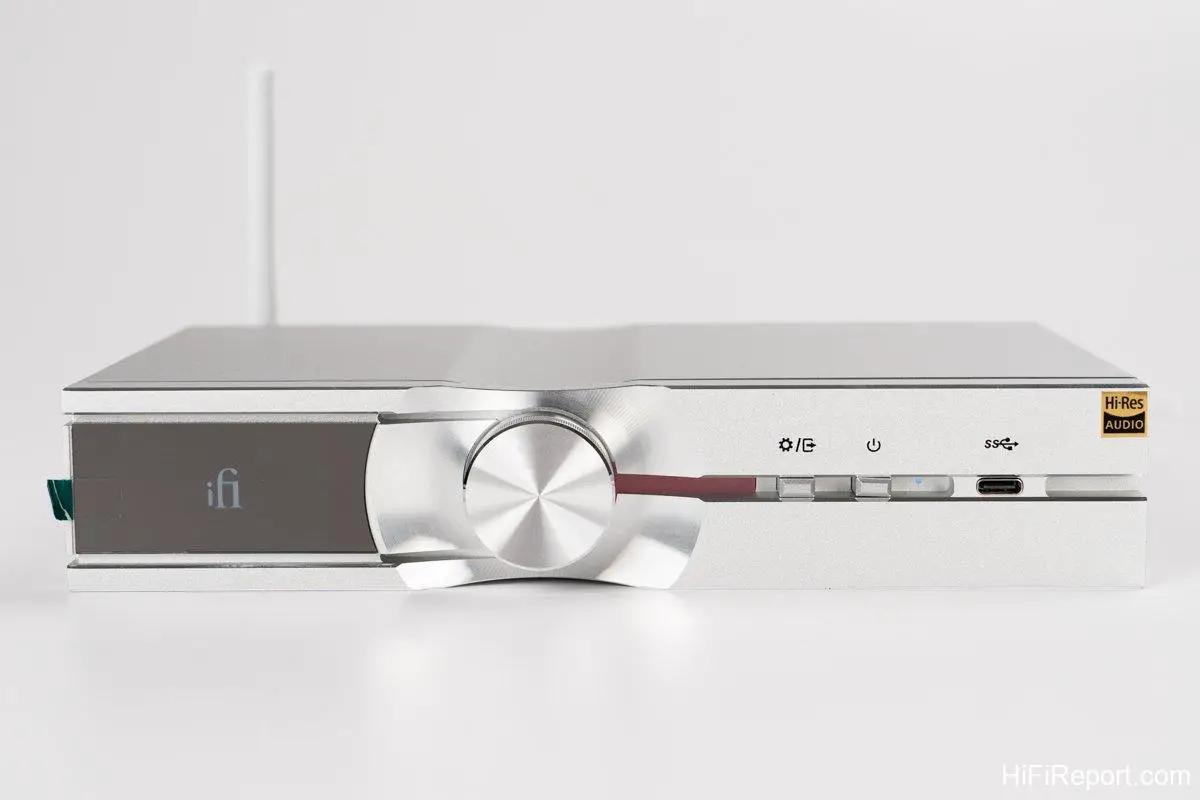
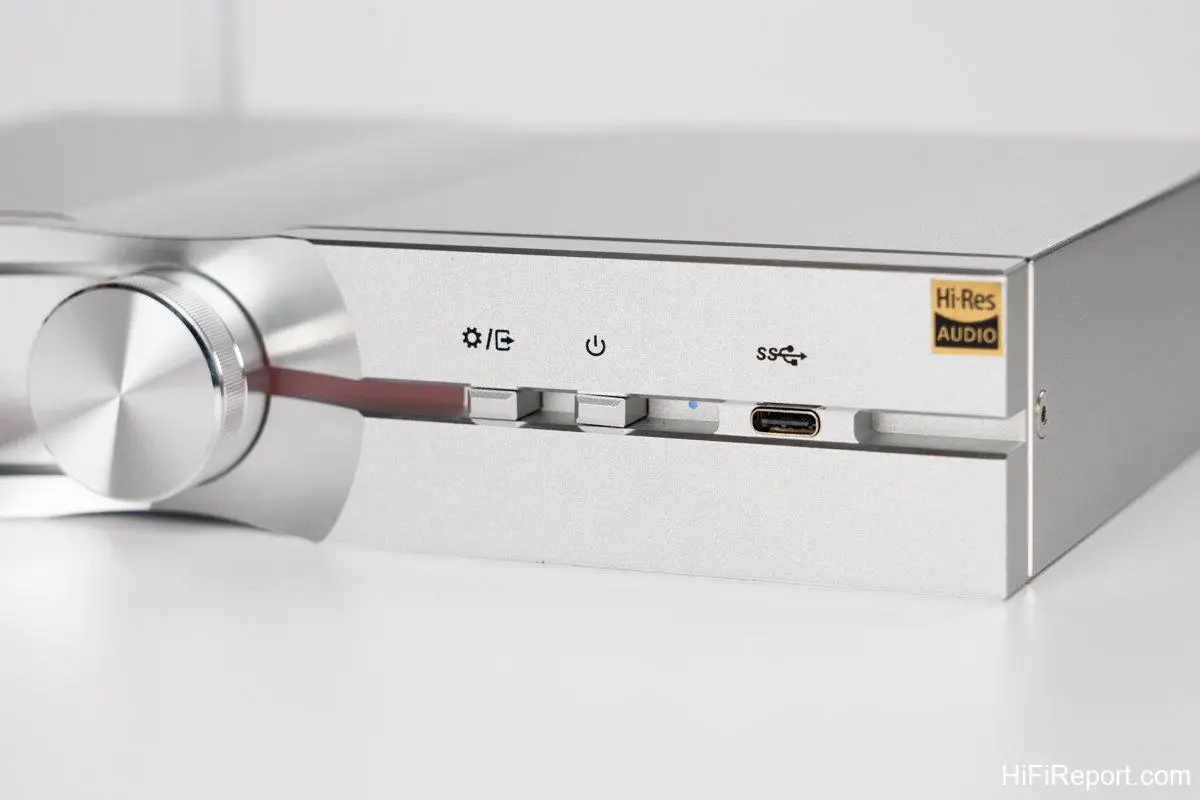
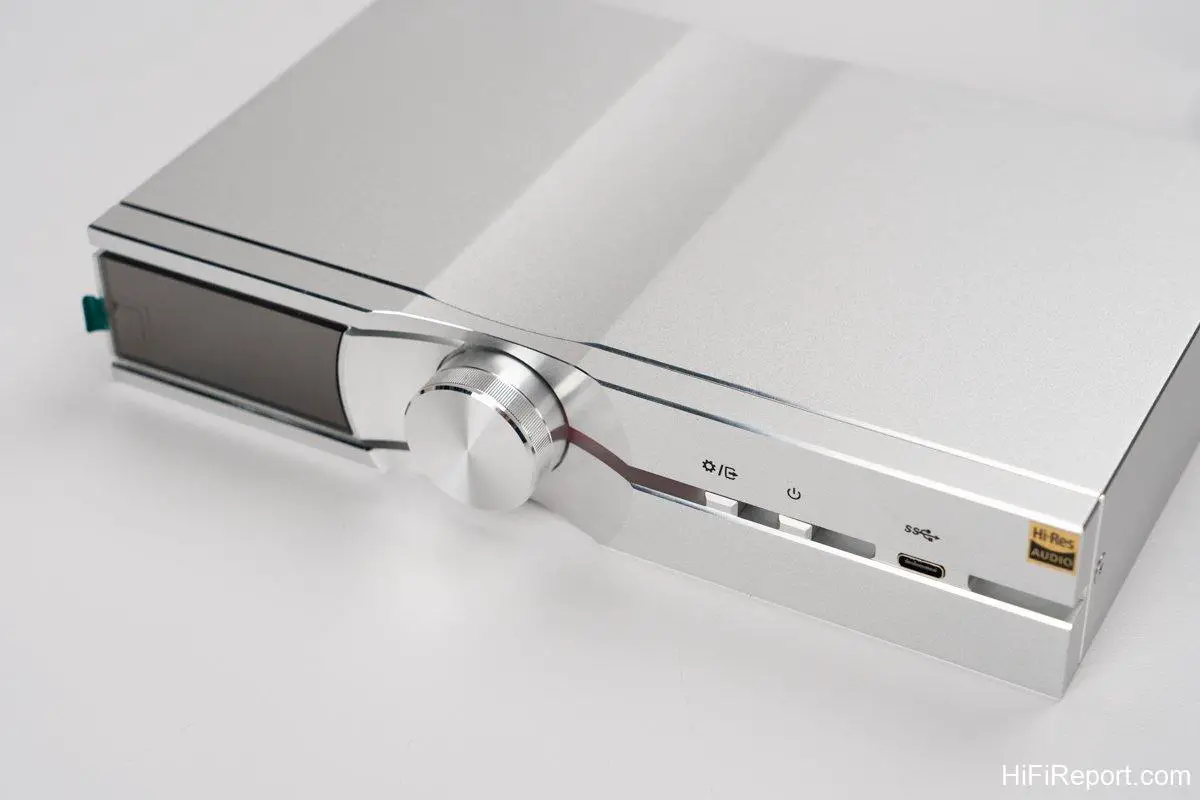
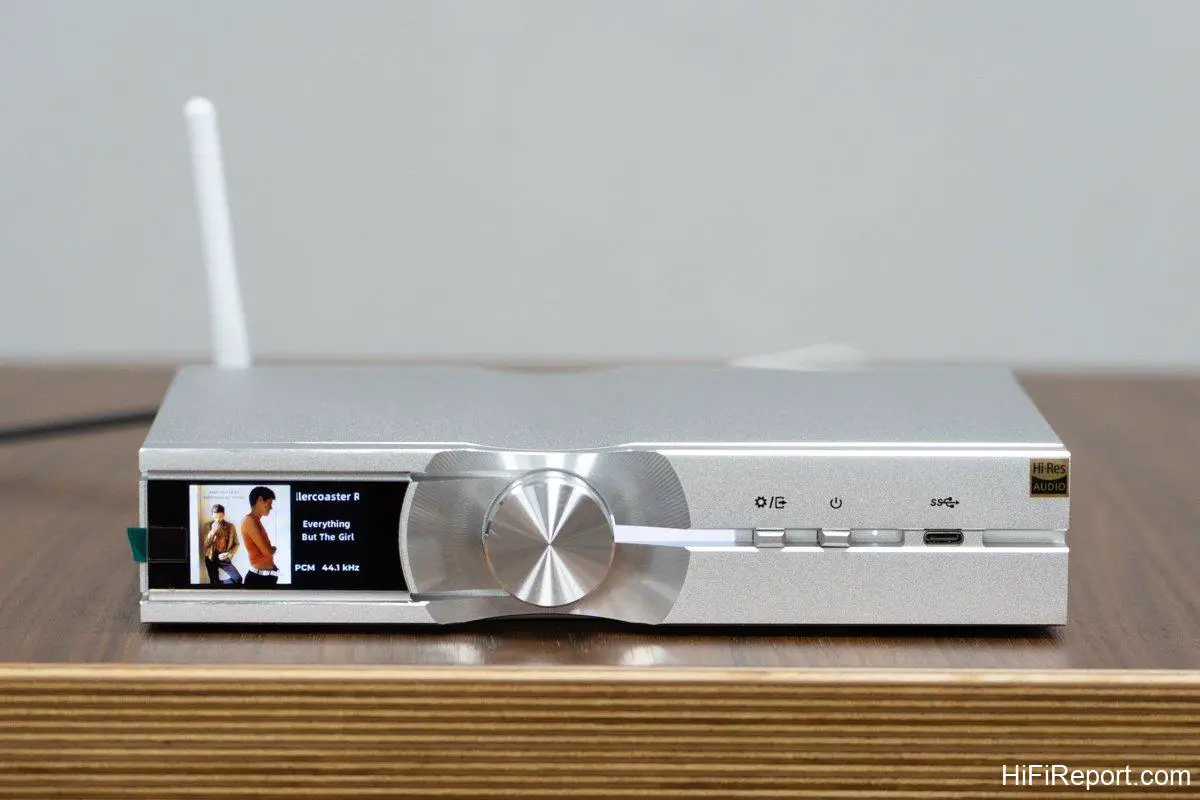
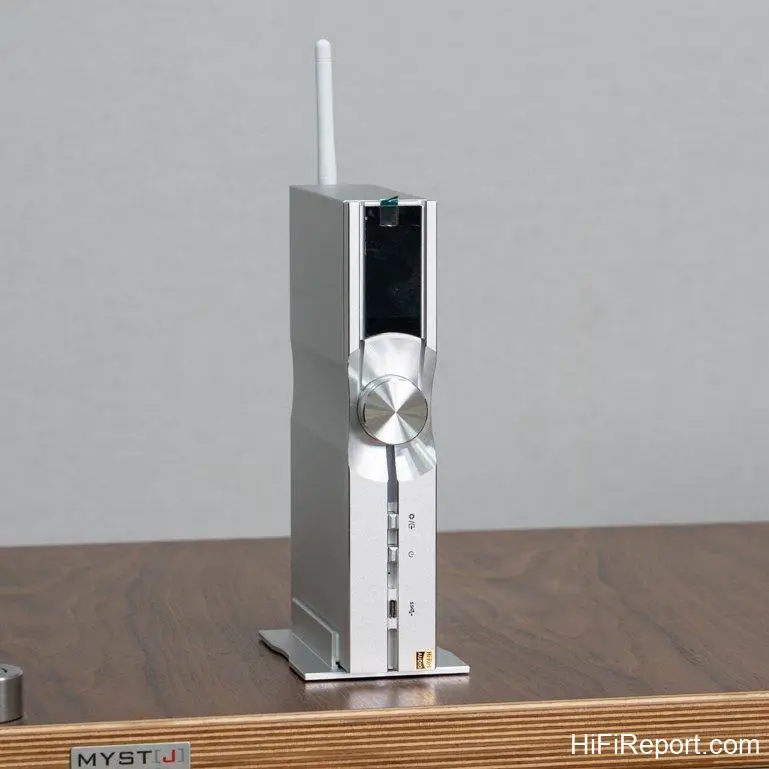
The Neo Stream’s front panel features a small color display screen on the left, a central volume knob (which also functions as a push button), and function keys and a power button on the right. These, in conjunction with the screen, knob, and buttons, enable you to switch between the aforementioned transmission formats and other operational functions. However, the operation is not entirely intuitive and requires reading the manual and practicing a few times to become proficient.
SC Fiber Optic Network Interface
Another standout feature of the Neo Stream is its remarkably diverse range of network connection interfaces.
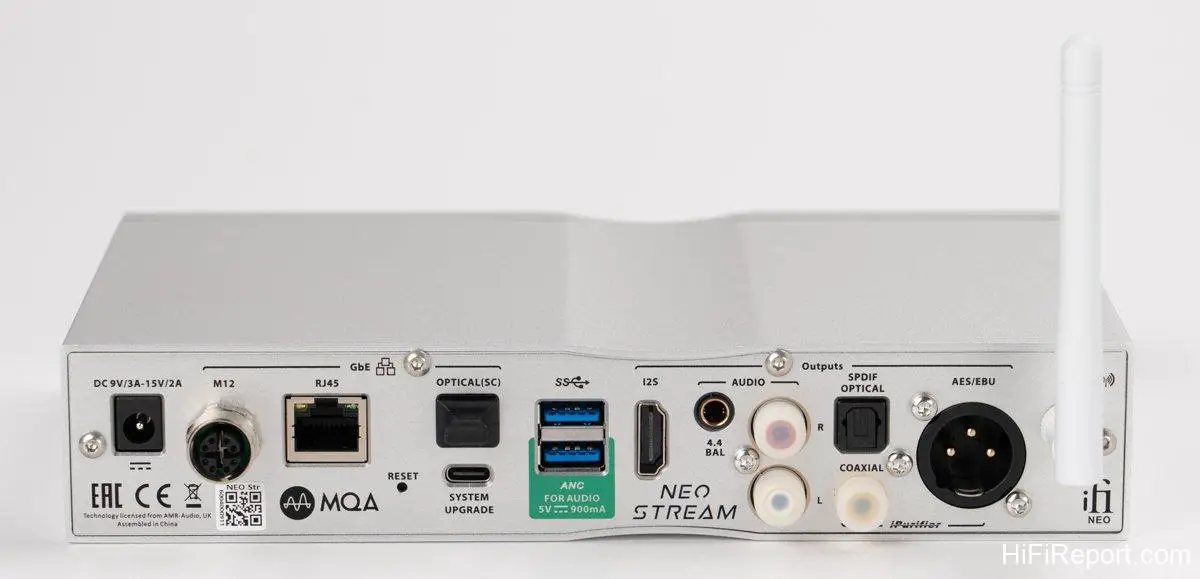
Most streamers offer only RJ45 Ethernet ports, and some add Wi-Fi for wireless transmission. Neo Stream not only includes both but also adds two more: M12 and fiber optic network connections.
M12 is an industrial-grade Ethernet connector, typically found in harsh environments like factories, outdoor settings, vehicles, and ships, rather than homes. I personally became aware of the M12 network cable specification when reviewing the Telegärtner M12 Switch IE Gold network switch.
M12 connectors utilize a screw-in mechanism for secure and vibration-resistant connections. The metal construction of both the plug and socket also provides excellent shielding, making it ideal for discerning audiophile applications. However, most home streamers only have RJ45 ports. Even if you use a high-performance Telegärtner M12 switch, the cable connecting to your streamer will still need an RJ45 connector on that end, thus only realizing half the benefits of M12.
The Neo Stream addresses this by directly providing an M12 socket, allowing for the use of network cables with M12 connectors on both ends.
Even more remarkably, the Neo Stream includes a fiber optic network interface.
Fiber optics excel at noise immunity, impervious to electromagnetic or external noise interference. This ensures signal purity during transmission, and signal degradation is extremely low even over long distances. For home use, even with long fiber optic cables, signal loss is negligible. If your switch needs to be located far from the Neo Stream, fiber optic transmission is an excellent solution.
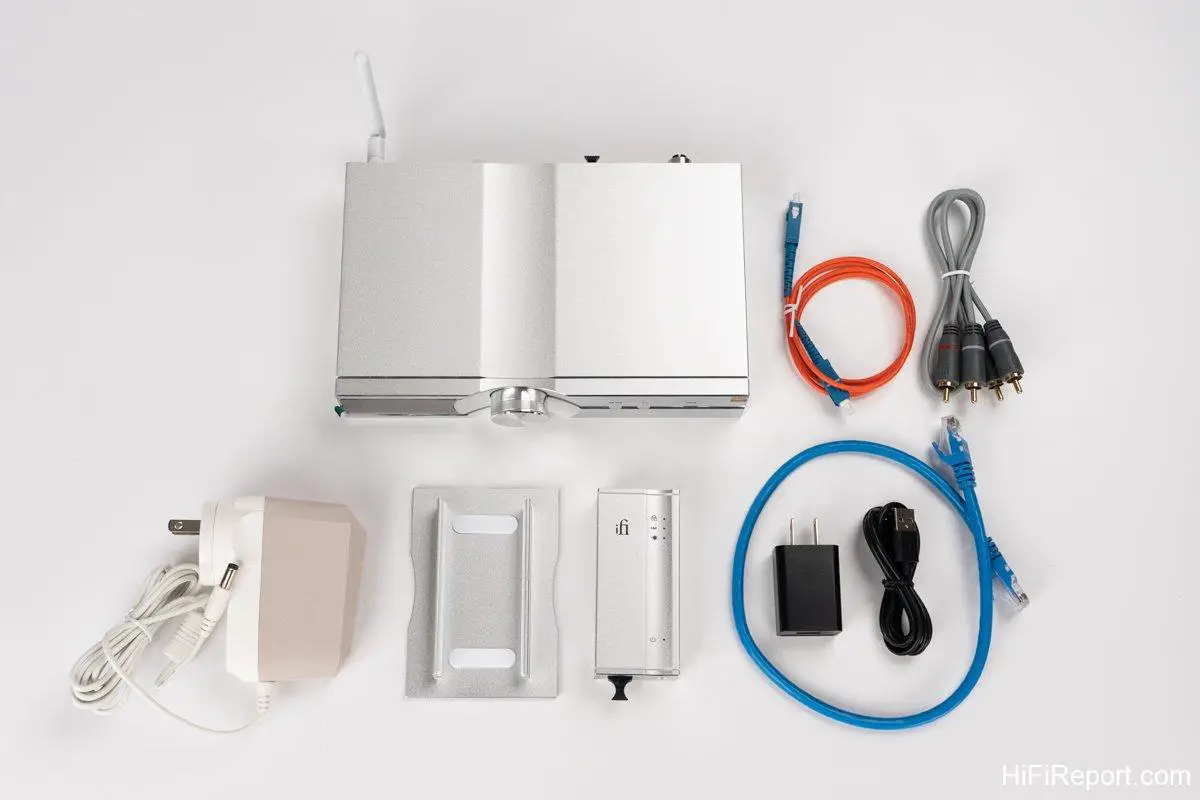
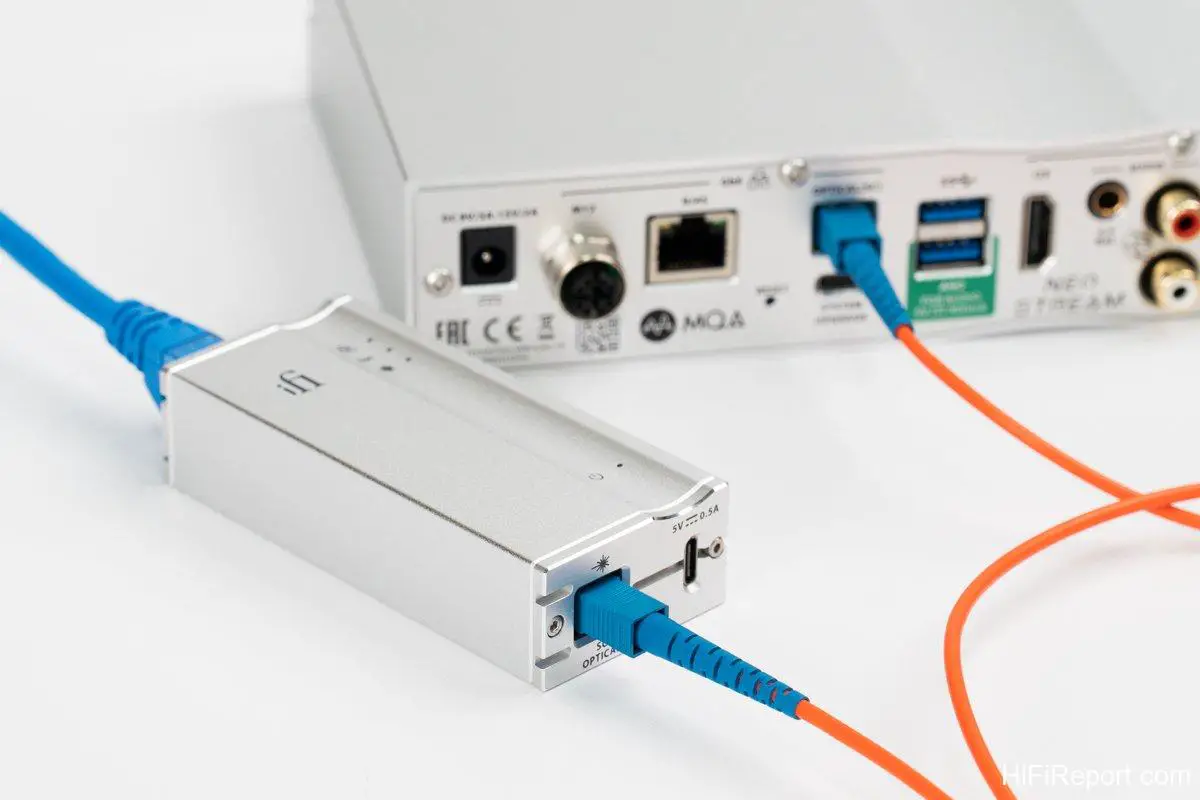
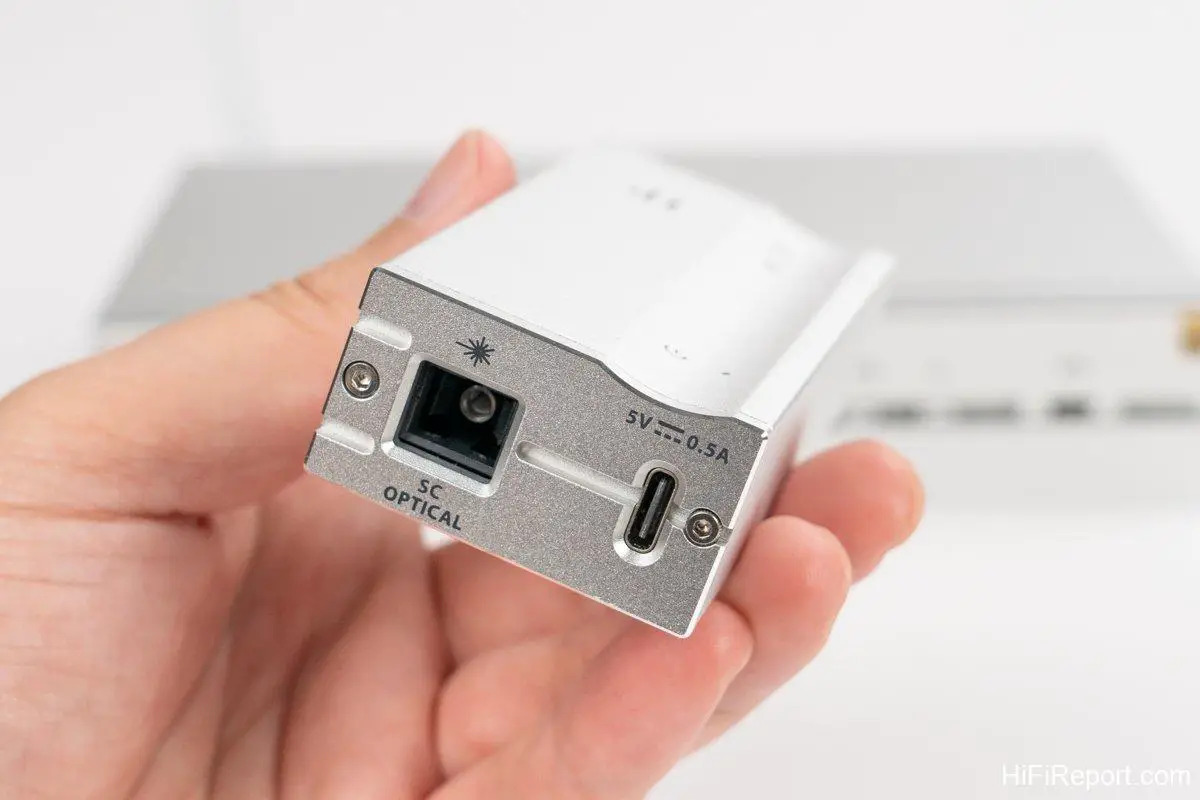
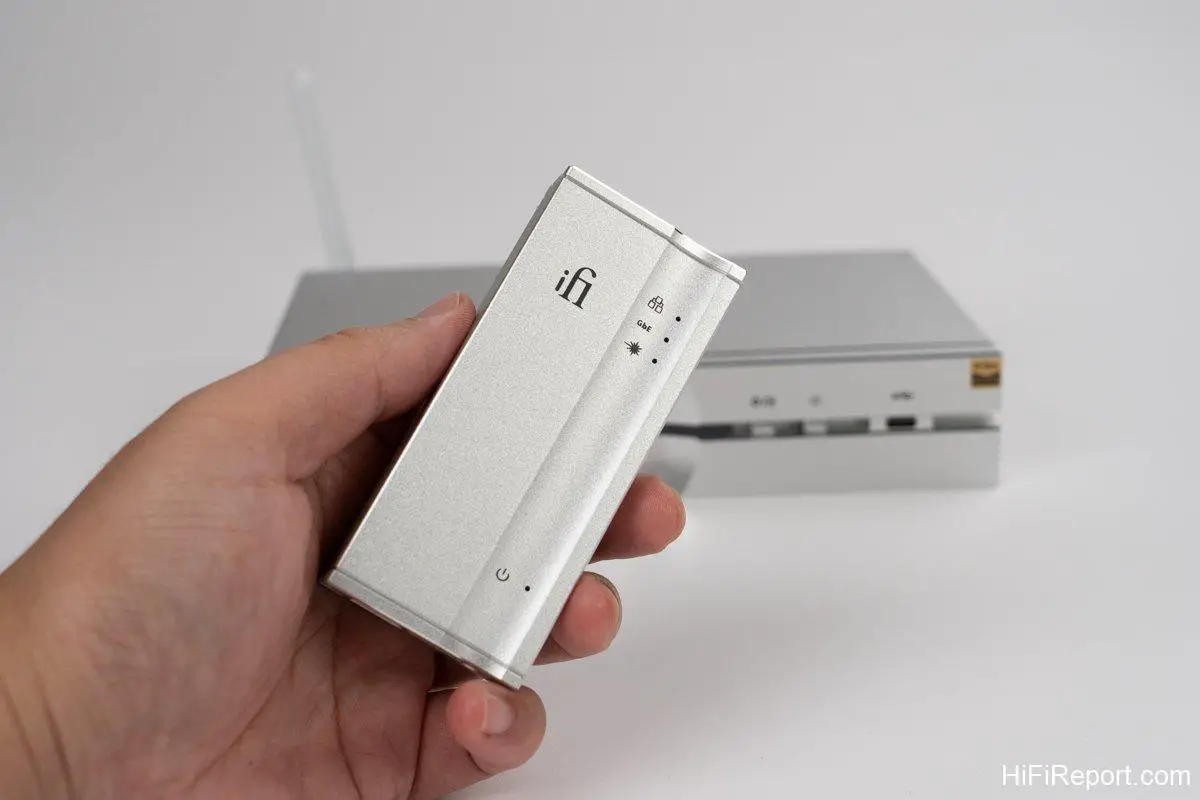
Crucially, the Neo Stream comes bundled with an OptiBox and a matching fiber optic cable, enabling immediate use right out of the box.
The OptiBox is a fiber optic receiver. Its input is RJ45, for connecting to your home network switch, and its output is SC fiber optic, connecting to the Neo Stream’s Optical port.
You might wonder which of the Neo Stream’s numerous network interfaces sounds best. My recommendation is to experiment and compare to find your preference.
There’s no definitive “best” interface, but there will likely be one that best suits your system and ears. The Neo Stream provides all options, offering both extensive flexibility and ample room for fine-tuning your system for optimal sound.
Comprehensive Output Interfaces
Moving on to the Neo Stream’s output interfaces, again, they are exceptionally comprehensive! The Neo Stream features both analog and digital outputs to accommodate a wide range of downstream equipment.
For analog, it offers a pair of RCA stereo outputs and a 4.4mm balanced stereo output. Connecting to amplifiers or headphone amplifiers with balanced inputs is easily achievable with a 4.4mm to XLR adapter cable.
Digital output options are even more extensive. The rear panel includes AES/EBU, optical, RCA coaxial, and I2S (HDMI, with pinout details in the manufacturer’s specifications) outputs, each provided as a single set, along with two USB A ports. Additionally, a USB C port is located on the front panel.
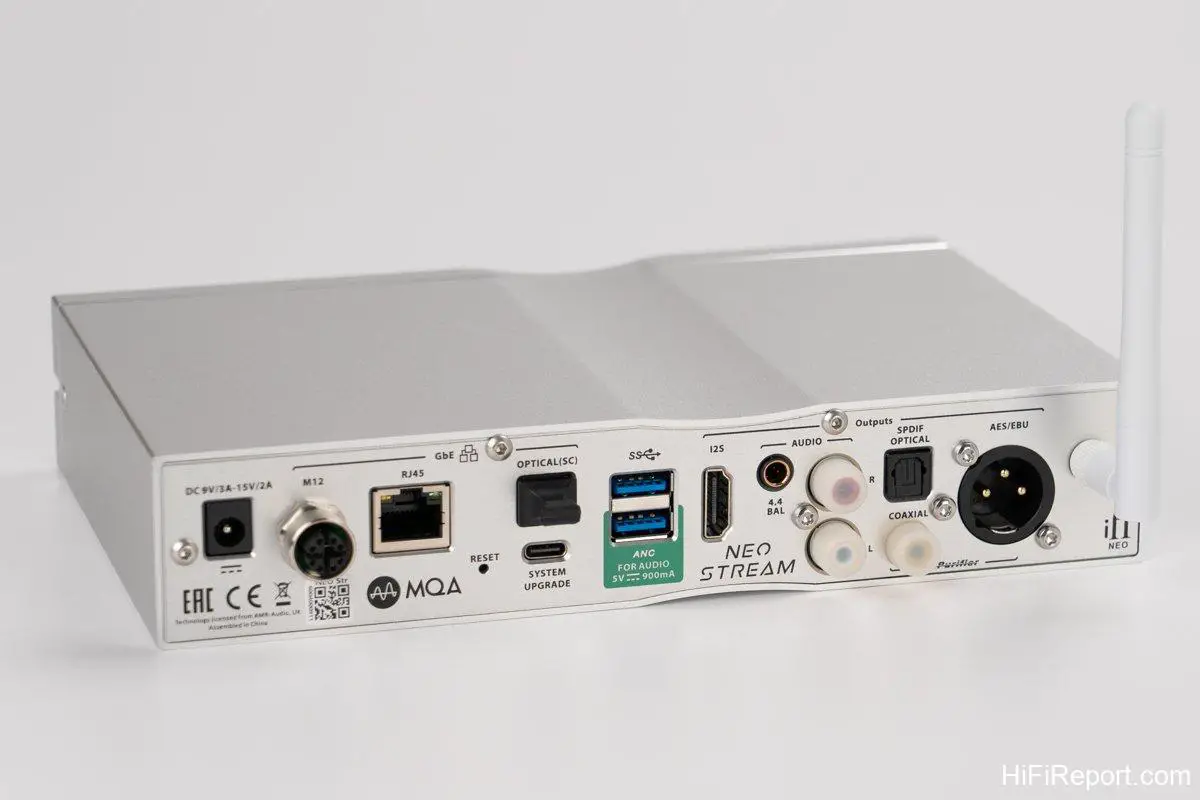
Both the rear USB A and front USB C ports on the Neo Stream can connect to USB DACs or USB storage devices. This means you can output audio to a DAC or read files directly, offering great convenience. Furthermore, all USB ports incorporate iFi Audio’s proprietary ANC II (Active Noise Cancellation) technology to minimize noise interference from USB connections.
Moreover, the Neo Stream’s SPDIF output interface also benefits from iFi Audio’s iPurifier technology, designed to isolate digital noise.
For its DAC section, the Neo Stream employs a 4-channel Burr-Brown True Native DAC chip, supporting PCM up to 768kHz and DSD512 playback. Utilizing a 4-channel design, PCM and DSD have separate signal paths. When playing DSD, it remains in its native bit-perfect format throughout the digital-to-analog conversion process, without first being converted to PCM.
The Neo Stream is powered by a 16-core XMOS processor, enabling full MQA decoding.
Adding to its versatility, the Neo Stream offers four selectable digital filter modes: Bit-Perfect, GTO (Gibbs Transient Optimised), Minimum Phase, and Standard. This allows users to tailor the sonic character to their preferences and enjoy diverse listening experiences. Despite its small size, the Neo Stream’s color screen displays comprehensive information, including volume, input source, output, audio format, sampling rate, IP address, track information, album art, and more, keeping users fully informed.
The screen also features automatic orientation adjustment. The Neo Stream can be placed horizontally or vertically using the included stand. When the orientation is changed, the screen automatically rotates 90 degrees, just like a smartphone.
Fiber Optic vs. RJ45 vs. Wi-Fi
Listening tests were conducted in the HiFiReport listening room.
The Neo Stream offers four network connection interfaces. Since each interface can have a different sonic signature, I spent some time comparing them before commencing critical listening. Lacking M12 network cables and switches, I focused on comparing RJ45 Ethernet, fiber optic, and Wi-Fi.
As the Neo Stream’s Wi-Fi and Ethernet connections can be active simultaneously, making it unclear which is contributing to the sound, I disabled Wi-Fi initially to compare RJ45 and fiber optic.
For the listening setup, the Neo Stream’s AES/EBU output was connected to a Merging NADAC, followed by an EC 4.8 preamplifier, EAR 509 tube power amplifiers, and Wilson Audio Alexia 2 loudspeakers. Music files were played from a NAS.
iFi Audio emphasizes that their OptiBox fiber optic receiver is custom-designed, not a generic off-the-shelf optical-to-electrical converter. It regenerates and re-clocks the LAN signal from the router before transmitting it to the Neo Stream via SC fiber optics, eliminating parasitic capacitance and inductance issues and offering immunity to external noise.
Through listening comparisons, the fiber optic connection exhibited a more transparent and cleaner sonic character, bright and clear, almost ethereal and detached from the mundane, like dissecting music layer by layer.
This isn’t to say that the RJ45 connection is unclean; in fact, the Neo Stream’s RJ45 sound is also exceptionally clean and crisp, surpassing many comparable or similarly priced products.
One advantage of the Neo Stream’s fiber optic network connection is its enhanced clarity in quiet passages. The gradations between loud and soft musical passages are more finely delineated, and the contrast in dynamics is clearer and richer, particularly noticeable when playing large-scale or dynamic orchestral pieces.
In contrast, the RJ45 connection offered a more direct and immediate energy output, with more focused power and a thicker sound, resulting in a bolder, more forceful, and more exciting presentation.
The soundstage presentation also differed between fiber optic and RJ45.
Fiber optic produced a narrower but deeper soundstage, with more distinct layering of the orchestra from front to back. Images were slightly smaller, separation was clearer, and the overall soundstage and spatial presentation were superior, with longer reverberation.
RJ45 created a wider and more forward soundstage, opening up to the sides but lacking the depth of fiber optic. Images were larger and more prominent, offering a greater sense of scale and a stronger sense of sonic authority.
What about Wi-Fi? Compared to the previous two, Wi-Fi’s sonic character was less transparent, even slightly veiled. However, it was also more relaxed, softer, and warmer, with more “moisture” and a meatier quality. It sounded more natural, comfortable, and easy to listen to for extended periods.
In essence, each interface has its strengths, advantages, and unique listening appeal, making it difficult to choose a definitive “best.” But with the Neo Stream, there’s no need to choose – it provides them all, allowing you to explore and enjoy at your leisure.
Music Image as a 3D Perspective
I favored the fiber optic network connection for its outstanding resolution, separation, and layering. Listening to the “Tutti!” orchestral demonstration recording from RR Records, the precise sound became more focused and tight. Every instrument section and every sound was remarkably clear, with sharply defined outlines, making it easy to discern their positions and forms. The separation between sections, both front-to-back and left-to-right, remained distinct.
While the sonic authority and weight were slightly less prominent with fiber optic, the musical image resembled a clear 3D perspective, with the relationships between foreground, midground, and background meticulously organized and easily discernible.
I also appreciated the RJ45 network connection’s well-rounded performance, combining clarity, fullness, and energy.
Playing the “Uncompressed World Vol. III” test disc, known for audiophile male vocals and excellent low-frequency reproduction, the Neo Stream demonstrated all the essential qualities of a high-quality streaming transport. The bass was not only defined in its lines and contours with appropriate scale, but the balance between high, mid, and low frequencies was also well-proportioned, creating a beautifully columnar soundstage rather than an unbalanced triangle or rhombus.
Furthermore, the Neo Stream’s sonic density was quite substantial, giving male vocals both richness and agility, creating a highly atmospheric presentation.
However, I found myself even more drawn to the Wi-Fi connection’s more open soundstage, greater sense of scale, enhanced weight, and more relaxed and gentle presentation. While transparency, separation, and image definition might not match the other two, musicality was certainly not lacking.
Playing “Uncompressed World Vol. III” again via Wi-Fi, the musical images grew larger, and the soundstage felt closer. The warmth in the vocals increased, and the sonic expressions became softer, enhancing the emotional depth.
The bass became slightly more relaxed and full, and the separation between vocals and accompanying instruments lessened slightly, yet still retaining clear outlines and organization, resulting in a very wholesome and enjoyable sound.
Pure, True, Lively
The previous listening sessions primarily utilized the Neo Stream as a streaming transport, without exploring its analog outputs. How did they perform? It was time to put them to the test.
The system was switched to components of a similar price range and scale, including a Linear Acoustic LAV-60 MKII integrated amplifier and Castle Richmond Anniversary Edition bookshelf speakers. For this test, the Neo Stream was connected via Wi-Fi.
In short, the Neo Stream’s analog performance can be described with three words: pure, true, and lively.
The Neo Stream, consistent with many iFi Audio products I’ve experienced, is clean and quiet.
This is particularly impressive given the multitude of functions packed into the Neo Stream’s compact chassis, including network streaming. Yet, it manages to avoid complex interference and reproduce a pure signal, resulting in a transparent and crisp sound. This demonstrates iFi Audio’s truly remarkable engineering prowess.
Secondly, the excellent signal-to-noise performance allows resolution to shine, revealing more detail, resulting in more realistic timbres, more concrete images, and a richer sense of atmosphere – hence, “true.”
Furthermore, iFi Audio’s sound is never sterile. The Neo Stream is no exception. It’s not only dynamically expressive, with lively peaks and troughs and crisp contrasts, but also vibrant in its sonic colors, making the musical picture more vivid – hence, “lively.”
The compact Neo Stream is arguably the most powerful small-form-factor streamer available today. It caters to diverse needs, allowing users to enjoy streaming music in their preferred way. It also boasts the most diverse range of network input interfaces in the industry, with the inspired inclusion of SC fiber optics being a stroke of genius. The inclusion of the OptiBox fiber optic receiver further enhances its user-friendliness, ensuring immediate plug-and-play compatibility. All that’s left for you to do is to play and enjoy!
Specifications
* Type: Wireless Streaming Player
* Inputs: Wi-Fi, RJ45 Ethernet, M12 Ethernet, SC Fiber Optic Network
* Supported Streaming Protocols: Tidal Connect, Spotify Connect, Roon Ready, AirPlay, DLNA/UPnP, NAA
* Analog Outputs: RCA Stereo, 4.4mm Balanced
* Digital Outputs: USB A, I2S, RCA Coaxial, Optical, AES/EBU, USB C
* Digital Inputs: USB A, USB C
* Maximum Supported Formats: PCM 768 kHz, DSD512, MQA
* Dimensions: 214 × 151 × 41 mm
* Weight: 1 kg