
NuPrime CDT-10 CD Transport Review
In this day and age, is there still a market for CD transports? Digital streaming has surged into the audio market with unstoppable momentum, reshaping people’s music listening habits step by step.
Global CD sales are declining year after year, and physical record stores are closing down or shrinking in scale. The record store owners who remain deserve our utmost respect.
Similarly, audio brands that persist in producing CD players are also to be admired. Twenty years ago, making CD players was the norm when the CD market was booming. Today, manufacturing CD players not only faces a shrinking CD market but also the growing challenge of fewer suppliers for disc mechanisms. Building a CD player is becoming increasingly difficult.
Undeterred by Market Shrinkage: Affordable CD Transports
NuPrime is not afraid of challenges. Three years ago, they launched their first CD player, the CDP-9. This was not just a CD player; it was also a USB DAC, complete with volume control, allowing direct connection to a power amplifier. It even featured a headphone output with a built-in headphone amplifier circuit, effectively combining a CD player, DAC, preamplifier, and headphone amplifier into one unit.
Moreover, the CDP-9’s SRC upsampling function allowed users to select their preferred sampling rate, upsampling CDs to high-resolution audio, even enabling CD playback to approach SACD quality. More importantly, the CDP-9, as their first CD player, foreshadowed NuPrime’s future plans. Its digital output included an I2S connection via an HDMI terminal, marking the first time NuPrime digital equipment featured I2S.
The following year, they introduced the CDT-8 Pro, removing the DAC circuitry, preamplifier, and headphone amplifier. It was more compact, yet retained the SRC upsampling technology and I2S digital output. In its price range, it was arguably the only CD transport of its kind on the market. Now, they are taking the CDT-8 Pro to the next level. The newly launched NuPrime CDT-10 adopts the 10 series chassis design. Compared to the CDP-9 and CDT-8 Pro, the CDT-10 boasts improved cabinet vibration damping and rigidity.
High Rigidity Chassis Construction
The new CDT-10 utilizes the 10 series chassis design, providing enhanced vibration damping and rigidity compared to the CDP-9 and CDT-8 Pro. Inheriting the larger and heavier chassis of the 10 series, the manufacturer describes the CDT-10’s chassis design as having a narrow width, long depth, and low height, resembling a submarine’s tubular structure, thereby enhancing rigidity.
Enhanced Vibration Damping and Shielding for Disc Mechanism
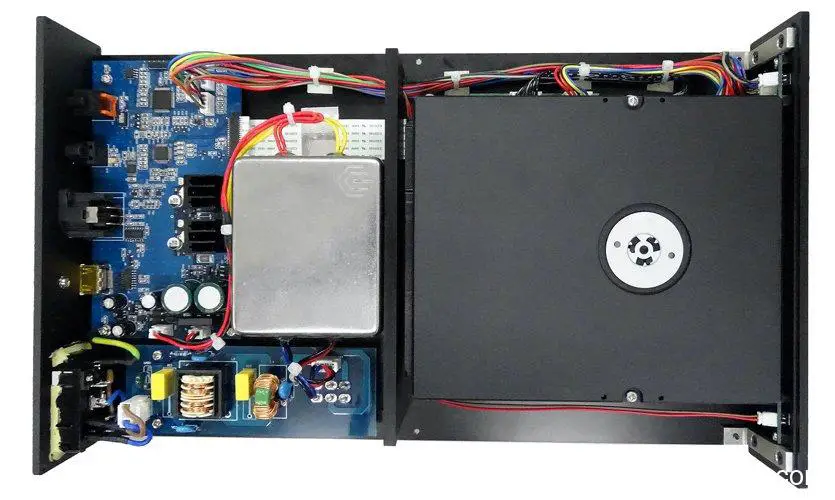
Beyond its increased chassis rigidity, the CDT-10’s disc mechanism is also more refined than its predecessors. While the servo circuitry seems similar to the CDP-9 and CDT-8 Pro, it still uses a laser head manufactured by Stream Unlimited, a company founded by former Philips Austria factory employees. This is paired with the Philips SAA7824HL chip for reading and decoding, and an ARM LPC2103F chip for error detection during reading. Consequently, it can read not only standard CDs but also CD-R and CD-RW discs.
A new algorithm further reduces jitter, minimizing the sources of harshness and digital artifacts in the sound. The CDT-10 also encases the entire disc mechanism in a metal enclosure, providing more comprehensive shielding to prevent interference from external electronic circuits and power supply-induced electromagnetic waves. Furthermore, the manufacturer emphasizes that they have enhanced the vibration damping and stability of the CDT-10’s disc mechanism, making it superior to its smaller siblings.
AC Filter Technology Transplanted from EVO DAC
In addition to physical vibration damping and stability enhancements, the CDT-10 further refines its power supply. NuPrime has incorporated the AC filter technology, pioneered in their flagship Evolution DAC, and employs a custom R-core transformer encased in a metal shield to block electromagnetic interference. This effectively minimizes noise interference from the power source.
The CDT-10’s chassis is compact, yet densely packed internally. The disc mechanism occupies the front half of the space, further enclosed in a metal shield to prevent interference. The CDT-10 also adopts the AC-4 power filtering technology from NuPrime’s flagship Evolution DAC and uses a custom R-core transformer, shielded with a metal enclosure to block electromagnetic waves.
Equipped with I2S Digital Output
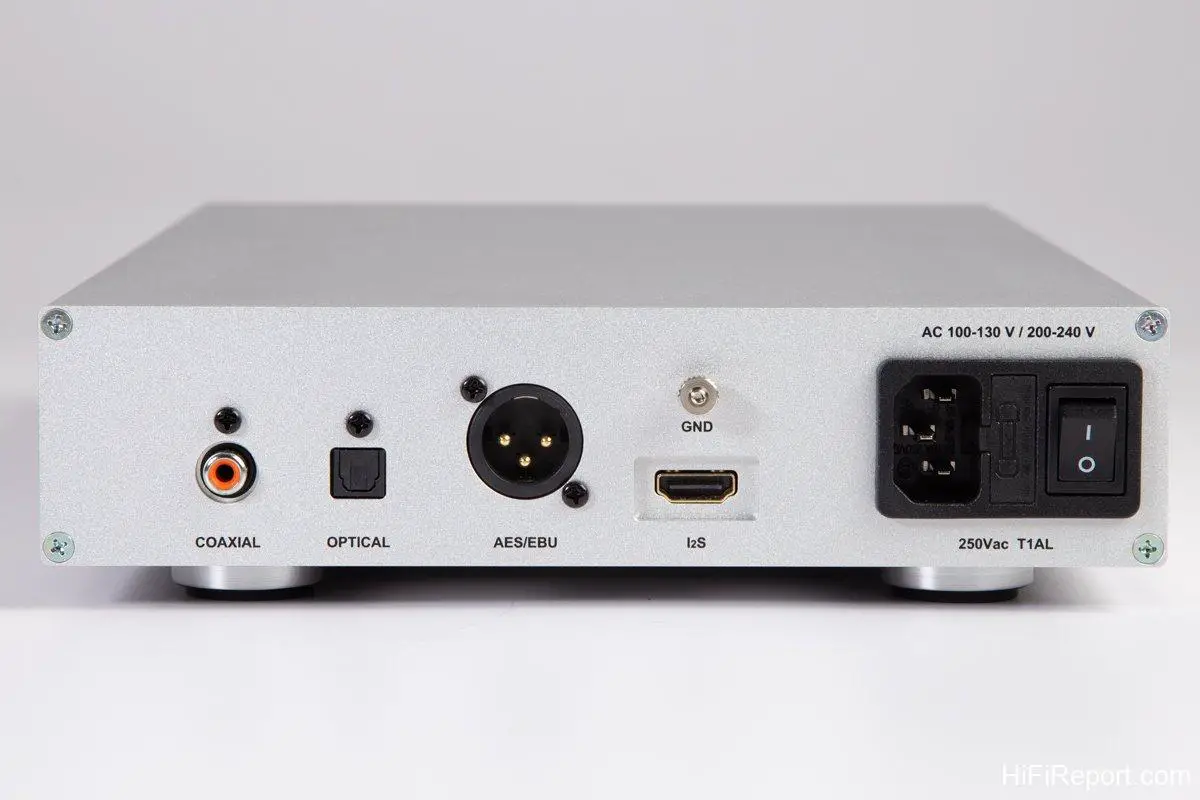
In terms of digital outputs, the CDT-10, in addition to traditional RCA coaxial, optical, and AES/EBU outputs, each provided as a set, also features an HDMI-interfaced I2S output. This I2S is undoubtedly the highlight, offering a dedicated clock signal channel compared to other traditional digital output interfaces. This ensures error-free digital packet transmission.
NuPrime’s existing Evolution DAC, DAC-9SE, and Alita DACs are compatible with I2S. Moreover, the manufacturer indicates that its HDMI pin configuration is compatible with PS Audio equipment. Whether it works with DACs from other brands that also use HDMI for I2S remains to be tested.
If you, like me, own an Audiobyte Black Dragon, I must apologize on behalf of NuPrime—it’s not compatible. Precisely because my Black Dragon has HDMI I2S, I excitedly borrowed the CDT-10 for a listen, only to find that the signal wouldn’t pass, likely due to different pin definitions. Without I2S available, a portion of the CDT-10’s potential is sealed off, limited to RCA coaxial digital output. Alas, a pity.
The CDT-10 is equipped with traditional digital output terminals such as coaxial, optical, and AES/EBU, one set each. Furthermore, it features an I2S output, compatible with NuPrime’s own DACs equipped with I2S. The manufacturer states it is also compatible with PS Audio DACs.
New Member of the 10 Series Family
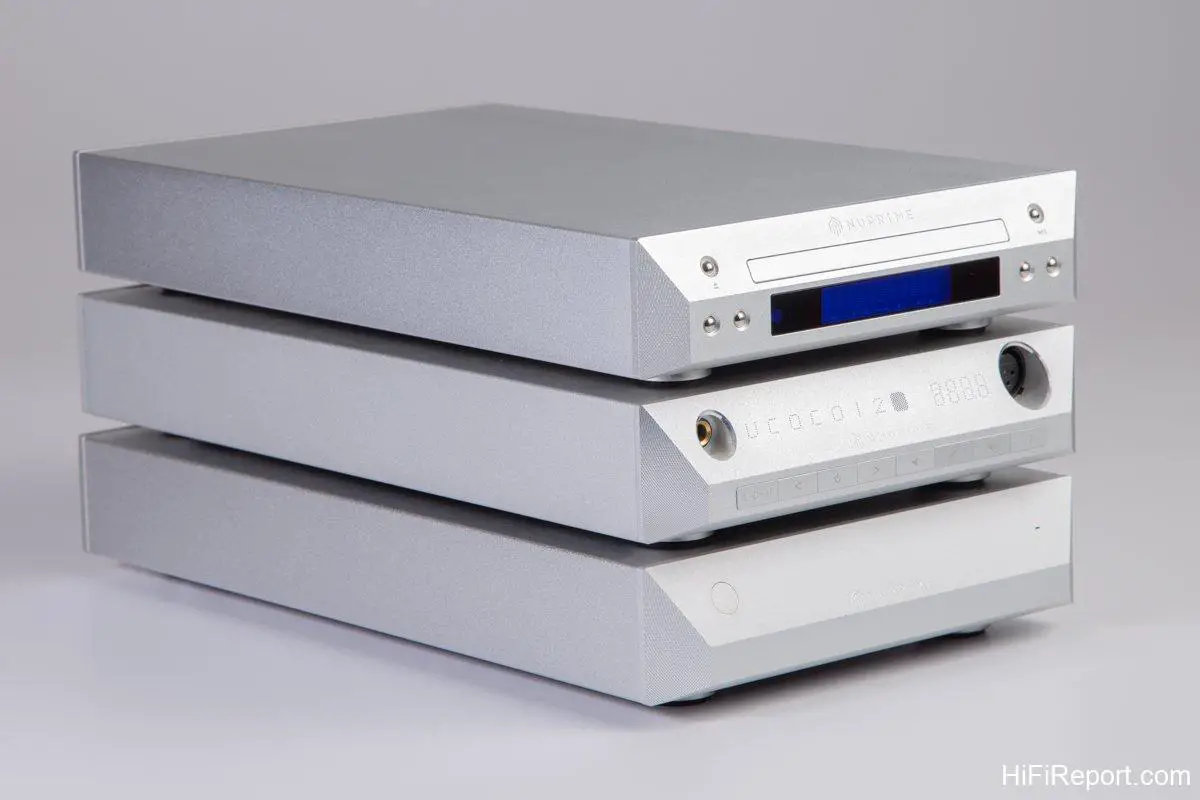
To envision a complete system, I brought out the DAC-10H and ST-10 to pair with the CDT-10. These two components were impressive creations from NuPrime’s early days. At that time, NuPrime had not yet introduced CD transports, and their DAC products lacked I2S. Will the manufacturer update the DAC-10/DAC-10H, adding I2S input and improving decoding specifications? We can look forward to that.
On the day I brought the CDT-10 home, I was frustrated by its incompatibility with the Audiobyte Black Dragon. Without I2S to play with, a transport becomes arguably the most challenging audio component to review—digital transports in general, and CD transports specifically.
The Difficulty of Reviewing Transports: What to Do?
However, after using it, I must say: if you, like me, need at least one wall in your home to house your CD collection, you really need to find a good CD player or transport. Since transitioning to digital streaming, I rarely play CDs at home anymore. I probably play CDs less often than vinyl records.
My primary sources of streaming music are twofold: online streaming and my own ripped files. I’ve been using Tidal for years. Digital streaming is incredibly convenient, and the cloud database is constantly updated, becoming increasingly vast and rich. You can find all kinds of music, making it a great tool for expanding my musical horizons. I’ve also tried ripping my CD collection into files stored on a NAS. The advantage of digital playback is convenience—no more rummaging through cabinets to find music.
Yet, I still miss the feeling of playing CDs. It seems music on physical discs feels more like music. In truth, transports are the most difficult components to review. All analog domain components carry their own personality. Speakers have personality, amplifiers have personality, DACs have personality, not to mention vinyl systems. Analog domain components all possess their own DNA, outlining their unique characteristics.
However, the digital domain is different, especially CD transports. It’s challenging to discern their personality immediately upon hearing them. Without direct comparisons to help us delineate their relative characteristics, reviewing a transport becomes truly difficult. Because even they themselves struggle to articulate their identity clearly.
Given this, I decided to use a comparison to understand it, strengthen my confidence, and allow me to continue listening and continue writing.
Blu-ray Player Comparison: A Decisive Victory
I didn’t compare it to other transports. My comparisons targeted two things: a Blu-ray player and digital streaming. Because CD players are becoming scarce, and CD transports even rarer, some have long used DVD or Blu-ray players as makeshift transports. Online discussions abound, with some enthusiasts going to great lengths, modifying power supplies and outputs. Even with modifications, the overall cost is still lower than buying a dedicated CD transport.
Is this truly effective? Yes, modifications can improve playback compared to the original performance. However, these DIY approaches, while fun, are not ideal solutions. After all, even a single component constitutes a system in itself, requiring optimization of every internal aspect. Most enthusiasts lack the capability to handle these intricacies.
Furthermore, even if power supplies, components, and outputs are enhanced, the stability of the mechanism itself, reading accuracy, servo circuitry, and other factors remain challenging for enthusiasts to optimize on their own. Without addressing the core issues, merely tinkering around the edges, using budget video players as substitutes for CD transports, is more about the fun than actual effectiveness.
The CDT-10’s disc tray is slim but operates very smoothly, exuding a sense of high quality. I used an unmodified Sony BDP-S590, both outputting digitally via RCA coaxial to the DAC-10H. The NuPrime CDT-10’s sound quality was significantly better, by a wide margin. The CDT-10 was audibly louder and exhibited greater and more pronounced dynamic range. The Blu-ray player’s music sounded relatively flat and lifeless, lacking vitality.
Moreover, the Blu-ray player’s sound was muddy and loose, with noticeable harshness. In contrast, the CDT-10’s sound was much cleaner, with smooth and even sonic edges, tight and solid, possessing excellent physicality. The soundstage expanded outwards to the sides and rear, creating a more spacious and three-dimensional soundscape. Need we compare further? I didn’t want to listen to the Blu-ray player’s music any longer. Life is too short!
Digital Streaming Comparison: Another Victory
The second comparison was against digital streaming. I’ve been streaming for several years and have long been accustomed to using Roon in conjunction with Tidal and local NAS file playback at home. My NAS is filled with files ripped from my CDs, allowing me to find music in my Roon library faster without searching for physical discs. Subscribing to streaming services like Tidal makes listening to music even more convenient. CDs I haven’t ripped, CDs I haven’t bought, albums I’ve never even heard of, can all be found and played through streaming providers’ cloud databases.
But, compared to streaming playback, does the CDT-10 playing CDs directly sound better? To eliminate cable differences, I used an Auralic Aries Mini as a streamer, outputting via USB to the DAC-10H, and compared it to the CDT-10 outputting via coaxial. The NAS was a QNAP TS-473 8G, with Roon Core installed directly on the NAS.
Using Alfred Brendel’s performance of Beethoven’s “Eroica Variations” and piano pieces as a test, this streaming setup sounded much better than the Blu-ray player, with better density and fullness, and lower harshness. It completely eliminated the unsettling and tiring issues of the Blu-ray player’s playback.
However, upon further comparison, the CDT-10 playing physical CDs offered even more. The sound density was further improved, notes were more three-dimensional and elastic, the attack and decay of piano notes were clearer and more defined, and the soundstage depth improved again. The most beautiful aspect was the variation in the piano’s reverberation. When listening through streaming, I could perceive the brilliance of the overtones. But when switching to CD, the variations in the overtones’ brightness and color became even clearer.
These are subtle nuances, difficult to articulate precisely, yet undeniably perceptible. As I said before, music on physical discs feels more like music.
Arpeggios and Tremolos: Proof of Signal Retrieval Capability
Not only was this true for Brendel’s Beethoven piano pieces, but also for Horowitz’s performance of Schubert’s D. 960, which was equally captivating. Brendel’s playing is objective and sincere; he never exaggerates, yet elegantly expresses the balanced beauty of the music. Horowitz, on the other hand, always maintains a distance from propriety and rigor to preserve the poetry, sentiment, and inspiration of his performances. Brendel convinces with reason, while Horowitz creates legends with emotion.
The opening melody of the first movement, like a song and a poem, is truly beautiful. Schubert then adds a tremolo in the low register in the left hand. After several repetitions of this theme, the second theme is introduced. Horowitz’s playing is full of freehand and improvisational poetic imagery. His pauses, his syncopation, his rubato, and his tonal palette, as if bewitched by Dionysus, exude an air of freedom.
As a result, Horowitz plays this D. 960 as if it were his own composition, discarding the purity and simplicity inherent in Schubert’s music, creating his own unrestrained tone and spirit. This D. 960 is full of stark contrasts—dynamic contrasts, tempo contrasts, and color contrasts. The CDT-10 articulates these contrasts with remarkable clarity. Horowitz’s rapid arpeggios and tremolos are all clearly rendered by the CDT-10’s retrieval capabilities.
Rich, Rounded Sound, Full of Density, Clear and Three-Dimensional Layers
Beyond piano music, the benefits of a good transport are also evident with vocals. The most captivating aspect of the CDT-10 is that it retrieves ample information without introducing harshness to the sound. In fact, I feel that precisely because it retrieves sufficient information, the sound is particularly rich and rounded.
Without I2S transmission and paired with a DAC that isn’t the latest model, the CDT-10 still exhibits a remarkably rich sonic texture, with a full and dense sound, clear layers, and three-dimensionality. This characteristic is particularly noticeable when listening to vocal recordings.
Vocals Flowing with Fluency
Listening to Belgian soprano Lore Binon’s album of songs by Debussy and others, the CDT-10 renders vocals with captivating charm. Binon’s musical journey is unique. She started learning violin at a young age and majored in violin when she entered the Royal Conservatory of Brussels. However, during her studies, she discovered her vocal talent and immersed herself in it, studying both violin and vocal performance.
The tracks on this CD are not commonly heard, including works by Debussy and Hahn (Reynaldo Hahn), as well as contemporary American composer George Crumb. The vastly different styles of these three composers create a layered and varied listening experience on this CD. Debussy’s pieces are instantly recognizable. I also know Hahn and can identify his beautiful melodies. When the music reveals an unknown, jumpy, and unpredictable logic, you know it’s Crumb’s work.
Binon’s voice is soft and delicate, with a slightly thin and light timbre, perfectly suited for these 20th-century composers’ works. The CDT-10 makes Binon’s vocal lines smooth and flowing, full of fluency in her vocal undulations. Debussy and Crumb’s songs often feature wide-ranging melismas, soaring up and then falling, heavily reliant on vocal technique. Binon’s interpretation of these works carries a sense of detachment, yet her exceptional performance draws listeners into this unfamiliar territory, exploring it with her.
I also ripped this CD into audio files (ALAC). Compared to the CD, the ALAC files were noticeably looser, the image was slightly blurred, and the soundstage was flatter. With each CD change, the CDT-10 seemed to be persuading me: don’t rely so much on digital streaming, quickly return to the world of physical CDs!
Rich in Detail, Lively Microdynamics, Large Dynamic Contrast
Besides fully retrieving signals, another key aspect of a source component is its low noise floor. This raises the signal-to-noise ratio, making the music’s dynamics more vivid. Why is this important for a source component? Because noise introduced at the front end cannot be removed downstream; subsequent components can only amplify it.
The manufacturer does not provide specific data, but through music, the CDT-10 can demonstrate its capabilities. Listening to Beethoven’s Symphony No. 5, Paavo Järvi conducting the Deutsche Kammerphilharmonie Bremen. Although using modern instruments, the performance adheres to the original score markings and instrumentation. The smaller orchestra size creates a remarkably compelling “Fate.”
From the very first four-note fate motif, Järvi declares how different his version is. While others emphasize the music’s power and impact, he employs a classical, restrained, brisk, decisive, and insightful approach to present Beethoven’s most famous motif. Despite the smaller orchestra size, it exhibits vigorous energy, large dynamic contrasts, and Järvi brings out a lively character and bright timbre from the orchestra. The ensemble’s cohesion is highly unified while maintaining excellent transparency.
The CDT-10 acts like a clean, dust-free, and seamless lens, allowing you to view the musical stage beyond. In the third movement, due to the smaller orchestral size, the low strings lack the weighty density of other recordings, yet the texture of the double basses is revealed unequivocally. After a short fugato passage, the double basses move with vigorous energy, their texture truly vibrant! The CDT-10’s resolution in the low frequencies is outstanding. When it renders the pizzicato of the violins, it showcases its microdynamic prowess.
Equally adept at both power and finesse, the CDT-10, with its almost personality-less presence, faithfully fulfills its role as a CD transport—decoding the information buried within CDs and delivering it. Simple tasks, done earnestly, can bring unparalleled listening pleasure and satisfaction.
SRC Upsampling Adds Playful Fun
Finally, I also want to tell you that if you buy the CDT-10, you must try its SRC upsampling technology. Upsampling is a matter of personal preference, with varied opinions. Some love it, some don’t agree. For me, SRC upsampling is simply an option; I can choose to use it or not. Like salt and pepper on the dining table, you can choose to add them or not.
Generally, higher sampling rates result in better sound density, more solid and focused imaging, clearer separation of sound sources, and the effect of 44.1kHz is better than that of 48kHz. Personally, I prefer the native sampling rate more. Although upsampling makes it sound more Hi-Fi and the sonic effect is more immediately pleasing, I always feel the native specification is more natural.
But this also varies. If you have NuPrime’s CD player (CDP-9) or transport (CDT-8 Pro), or if you are going to a store for a listening session, you may want to compare the SRC Off state with the 44.1kHz setting. Logically, 44.1kHz should be equivalent to no upsampling. However, when listening in the 44.1kHz setting, I always feel the sound is livelier and more three-dimensional, while still maintaining naturalness. I share this experience with you for your reference.
The CDT-10 continues NuPrime’s consistent tradition of incorporating SRC functionality, capable of upsampling CDs to high-resolution specifications.
Pouring Out the Fine Wine Hidden in CDs
Do you still listen to CDs? If you don’t listen to CDs at all, of course, you probably wouldn’t even read this far. If you’ve patiently read this article, it means you have a CD collection, and a CD transport is something you need. Then, the CDT-10 might help you better understand your CDs. At least, my experience tells me: Blu-ray players cannot replace CD transports, and ripped CDs are still inferior to the sound of physical CDs played by the CDT-10.
If you have CDs, you shouldn’t abandon them. Conversely, you should find them a faithful and reliable transport to unearth all the music hidden within those CDs. No matter how precious the wine, its true value lies in pouring it out, letting you savor it, letting it become one with you. No matter how vast your CD collection, it’s no match for releasing that music, allowing you to experience life and enjoy life through music. If you don’t know how to pour the wine, let the NuPrime CDT-10 help you.
NuPrime’s 10 series shares the same chassis size and front panel aesthetic, making a complete system look quite handsome.
Specifications
* Type: CD Transport
* Digital Output: SRC Resolution: PCM 44.1kHz-768kHz; DSD 64 – DSD 256 (thru DoP)
* Bit Depth: 24 bit
* Dimensions: 215 x 382 x 59 mm (W x D x H)
* Weight: 4.5 kg