
Onkyo TX-SR3100 Review
Recently, quite a few friends around me have decided to jump into their first audio system. What surprised me was their focus wasn’t on two-channel integrated amplifiers, but rather on entry-level AV receivers. Upon reflection, this is actually a rather shrewd and budget-conscious approach! In recent years, the price of digital TVs has dropped significantly, and streaming platforms like Netflix and Disney+ have become indispensable parts of our lives.
It’s only natural that when people consider an audio system, integrating it with their TV is a top priority.
An AV receiver is an ideal solution for this, maximizing audio value. On one hand, it dramatically improves the sound quality for binge-watching and movie nights. Compared to soundbars, it also offers the experience of a proper two-channel audio system. Audio manufacturers have clearly caught onto this user demand, and in recent years, they’ve been actively promoting entry-level AV receiver setups paired with two-channel speakers.
This not only provides significantly better sound than TV speakers but also allows users to expand to a multi-channel system later for an even more immersive experience.
You might think that entry-level AV receivers can’t stack up against dedicated two-channel amplifiers. However, if you’ve been keeping an eye on recent entry-level AV receiver models, you’ll notice their connectivity is becoming increasingly comprehensive, and their sound quality is getting more refined. They are becoming well-suited for both music listening and movie watching. The Onkyo TX-SR3100 AV receiver, which we’re reviewing today, is a perfect example of this excellent trend.
Features and Connectivity
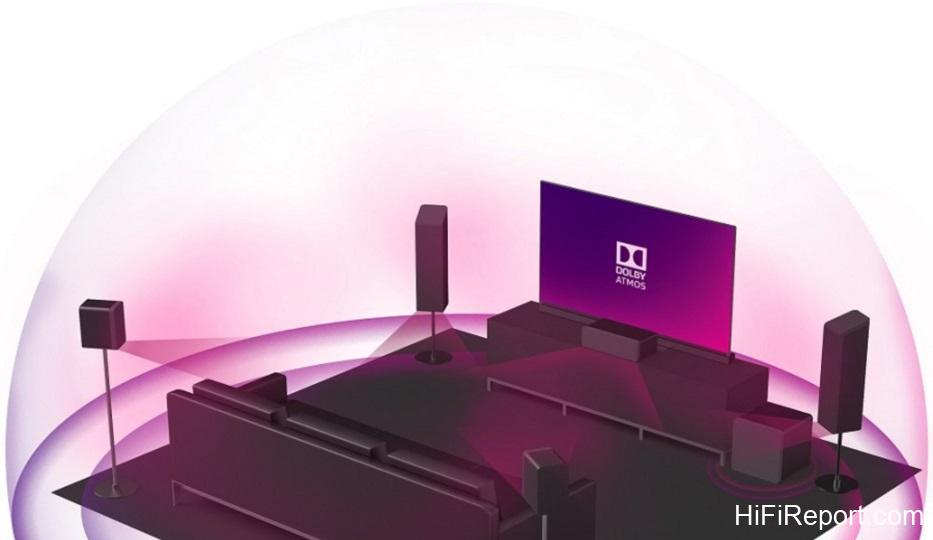
The Onkyo TX-SR3100 is the brand’s latest entry-level AV receiver. It supports 5.2 channels of speaker output and boasts standard Dolby Atmos and DTS:X audio formats. You might be wondering how a five-channel output can handle Dolby Atmos. Don’t worry, the surround channel outputs on this unit can also be configured as height channels.
For users with limited space who can’t install surround speakers, you can build a 3.2.2 home theater configuration, using front and height speakers to meet Dolby requirements. If you want a more complete sound experience in the future, you can expand by connecting a two-channel power amplifier via the pre-out analog outputs.

Furthermore, this unit supports virtual sound effects like DTS Virtual:X and Dolby Height Virtualization. These enhance soundstage height and increase the surround envelopment in a 5.2-channel setup, allowing you to achieve an audio experience comparable to Dolby Atmos with a simpler speaker configuration. For typical small to medium-sized rooms where installing height channels isn’t feasible, the TX-SR3100’s setup options ensure you get the most bang for your buck.
Catering to the common habit of enjoying music videos on YouTube, the TX-SR3100 also supports Dolby Surround and DTS Neural:X upmixing functions. These convert two-channel audio signals into multi-channel sound. This means all left-side speakers reproduce the left channel signal, and similarly for the right. Even if the music video you’re watching only has a two-channel signal, you can still experience a wider, multi-channel soundstage.

Moreover, considering that most entry-level home theater users don’t have dedicated listening spaces, the TX-SR3100’s included ACCuEQ automatic room calibration feature becomes particularly important. With this function, users just need to set up their speakers basically, then use the included microphone to perform a test. The system automatically corrects the speaker output characteristics. Even when setting up a theater in an open living room space, the AV receiver can perform at its best.
Looking at the channel count, the TX-SR3100 is similar to the TX-SR393, but its overall specifications are more comprehensive. Firstly, it features 4 HDMI inputs and 1 HDMI output. The output is HDMI 2.1, supporting 8K/60p and 4K/120p resolutions, along with video specifications like Dolby Vision, HDR10+, HLG, BT.2020, and HDCP2.2.

It also includes the eARC audio return channel function, perfectly pairing with digital TVs to fully transmit Dolby audio signals from sources like Netflix or Disney+.
For users primarily interested in pure music listening, besides playing audio signals from the TV via HDMI, the unit also supports wireless Bluetooth transmission for direct playback from mobile devices. Simultaneously, it features Onkyo’s renowned “Music Optimizer” function.
When listening to streaming music from platforms like Spotify or KKBOX, this function automatically compensates for frequency information lost in compressed audio files (like MP3s), resulting in a more complete frequency response and better sound quality.
Furthermore, the TX-SR3100 provides high, mid, and low-frequency three-band equalization for user adjustment. To ensure ease of use, Onkyo has placed the Music Optimizer function button and EQ control interface directly on the front panel, allowing users to adjust preferences while listening and customize their preferred sound style.

Klipsch Optimize Mode & Internal Design
If you’re a customer of the distributor Shih Hwan, chances are you might have invested in a home theater system combining an Onkyo AV receiver with Klipsch multi-channel speakers. Conveniently, Onkyo has recently strengthened its connection with its partner, Klipsch. This unit newly supports the “Klipsch Optimize Mode.”
If you pair it with Klipsch Reference or Reference Premiere series multi-channel speakers, this mode customizes the subwoofer crossover point based on the Klipsch speakers’ low-frequency response characteristics. This eliminates potential “misjudgments” during automatic calibration, ensuring you hear the most balanced sound performance from your speakers directly.

The internal circuit design of this unit also carries on Onkyo’s excellent tradition. Opening the chassis reveals a standard separate power supply design. One switching power supply handles the display and digital signal power, while a large EI transformer provides stable power for the audio circuits. This is complemented by two specially manufactured large-capacity filter capacitors, enhancing the dynamic performance of the audio.
For digital audio processing, a CS49844A-CQZ DSP chip handles functions like AccuEQ room calibration, Music Optimizer equalization, and virtual sound processing. The processed signal then passes through a Texas Instruments 8-channel PCM1690 DAC chip for multi-channel audio decoding, supporting sampling rates up to 192kHz/24bit. A separate two-channel PCM9211 DAC chip handles decoding for Zone B.

Finally, in the amplification section, the unit utilizes discrete components to build Class A/B amplifier circuits. Each channel delivers 80 watts (into 8 ohms), with a powerful peak instantaneous output of up to 155 watts per channel (into 6 ohms). Driving demanding speakers is certainly not an issue.
Listening Impressions
For testing, I paired the TX-SR3100 with the Pioneer Excellence series multi-channel speakers from our office and an SVS active subwoofer, configuring a 5.1 channel system. A Sony A80J 4K OLED TV served as the source, playing music via eARC from YouTube. The sound signature of the TX-SR3100 was quite surprising. Previous entry-level Onkyo models often gave me the impression of being “powerful but lacking in finesse.”

They were great for movies but had a noticeable gap compared to two-channel amplifiers for music.
This unit, however, offers higher sound resolution and a quieter background. It even presents a good sense of sonic density, without the typical harshness often found in entry-level AV receivers. The sound quality is a completely different league.
For instance, playing Chopin’s “Nocturnes” performed by Portuguese pianist Maria João Pires, the piano notes were focused and transparent. The brilliance of the high keys was well-rendered, and the nuances in key presses were quite clear. Furthermore, the TX-SR3100’s soundstage was very open. In Dolby Surround mode, you could feel the decay and reverberation details of the performance filling the space, creating a complete sense of being enveloped by the piano sound.
It sounded richer than pure two-channel playback. The unit’s clean and transparent music style also pairs well with a full-bodied subwoofer. With the assistance of the SVS 12-inch driver, large-scale classical music was reproduced with considerable presence.
Listening to American violinist Hilary Hahn perform Sibelius’s “Violin Concerto,” the violin lines were delicate and refined. You could hear the tight texture of the bow on the strings, and the instrument’s form felt more distinct. In contrast, string passages on older entry-level models sometimes sounded inflated and lacked clarity.
When encountering the orchestral tutti passages in this piece, the instantaneous dynamics were quite powerful, and the energy was controlled smoothly, without any bloated excess. It presented a clean and sharp low-end texture, fully demonstrating the musical advantages of a multi-channel system.
Next, when I started watching movies, I initially wasn’t entirely accustomed to the TX-SR3100’s clean sound signature. At first listen, it seemed to lack some of the full-bodied energy of previous Onkyo models. But after listening for a while, I realized it was actually due to the unit’s higher sound resolution and faster transient response. The absence of excessive standing wave energy allowed the finer details of the sound effects to become more prominent.
Playing the Netflix movie “Extraction 2” highlighted these advantages. In the scene where the protagonist and his group confront antagonists on a train, you first notice the detailed rendering of ambient sounds and the expansive soundstage. You can hear the sound of biting wind enveloping you from all directions, as if you were standing alone in the snow and ice.
When the scene shifts inside the train car, the loud wind noise immediately gives way to silence, and you can feel the oppressive sense of a confined space, demonstrating the excellent surround envelopment.
With the help of the subwoofer, in scenes involving gun battles, you feel the impact of bullets being fired with force, and you can hear the clear trajectory of the rounds. The energy is controlled sharply, making the surround effects more vivid and realistic. When the protagonist uses a machine gun to shoot down a helicopter, the instantaneous sound dynamics are full of explosive power. Even with only a 5.1 channel setup, it still manages to create a good sense of soundstage height.
You can feel the massive wreckage descending from the sky, with distinct sounds of tumbling and falling movement, all the way down to the detailed sound of snow being kicked up upon impact. For an entry-level AV receiver, this is already truly outstanding performance!
Conclusion
Compared to previous Onkyo AV receivers in the same class, this TX-SR3100 doesn’t just offer significant improvements in sound transparency and precision; its features and connectivity are also more comprehensive than before. It’s an excellent recommendation for the “living room audio crowd” who use their TV as the primary source, being equally well-suited for both music listening and movie watching.
For entry-level users, it’s a perfect starting point, allowing you to pair it with two-channel speakers initially and then gradually upgrade to build a complete multi-channel home theater, progressively maximizing the audio quality of your living room!
Specifications
* Type: 5.2 Channel AV Receiver
* Maximum Power Output per Channel: 155W (1kHz, 10% THD, 1ch @ 6 ohms)
* Frequency Response: 10 Hz–100 kHz/+1 dB, -3 dB (Direct Mode)
* Signal-to-Noise Ratio: 109 dB (Line, IHF-A)
* Speaker Terminals: 5 pairs
* Subwoofer Outputs: 2
* Headphone Jack: 6.3mm output x 1
* HDMI Ports: 4 in, 1 out (eARC)
* Analog Output Terminals: Line Out x 1
* Analog Input Terminals: RCA x 3 pairs
* Digital Input Terminals: Optical x 1, Coaxial x 1, FM/AM antenna terminals x 1 each
* USB Power Output: 5V/1A x 1
* Dimensions (W x H x D): 435 x 160 x 328 mm
* Weight: 8.2 kg