
Origin Live Gravity One Record Weight Review
For vinyl enthusiasts, a record weight is an indispensable accessory. In the realm of pure analog vinyl playback, even the slightest alteration can influence the sound. Consequently, the material and mass of a record weight and their impact on vinyl reproduction are well-understood aspects within the vinyl community. However, the precise method of “weighting down” to achieve superior sound quality is the nuanced domain of audio manufacturers. In this review, I delve into the Origin Live Gravity One record weight from the UK, a product undoubtedly imbued with the manufacturer’s proprietary secrets. Its most distinctive characteristic is its unusual lightweight design, setting it apart from the majority of record weights on the market.
Rare Lightweight Design
Why are lightweight record weights so uncommon? Most record weights emphasize mass, relying on their weight to manage vibrations, either by channeling or suppressing them. There’s a prevailing notion that “heavier is better,” implying that a heavier weight more effectively “suppresses” resonance. Moreover, there’s a perception that heavier record weights justify a higher price tag. Consequently, fewer manufacturers consider designing lightweight alternatives. Take the Gravity One, for instance, weighing a mere 67 grams. How much would you be willing to pay for it? If it weighed 670 grams, it could likely command a higher price, right? Yet, Origin Live has defied this trend, deliberately engineering a lightweight record weight. This is no mere accident; it’s the culmination of twenty-five years of meticulous experimentation by Mark Baker, the owner of Origin Live, to perfect the Gravity One’s unique formula.
From Shipbuilding to Hi-Fi
Origin Live is helmed by Mark Baker, whose family background lies in shipbuilding. Immersed in this industry from a young age, he spent his holidays assisting in the construction of fiberglass boat hulls at the factory. He furthered his education in science at the University of Southampton, seemingly destined to take over the family business. However, after graduation, he joined the UK’s minehunter vessel construction project. Despite competing against mostly postgraduate applicants, the recent graduate Baker was selected. He attributes this to the project’s focus on minehunters, which, unlike typical warships, must be entirely non-magnetic to avoid magnetic mines. His experience in fiberglass boat construction gave him an edge, leading him to outcompete postgraduate candidates and participate in minehunter development.
After a decade, however, he departed the shipbuilding industry due to UK defense budget cuts and the company’s failure to secure a Ministry of Defence shipbuilding contract. At this juncture, Mark Baker contemplated his future and decided to pursue his true passion: crafting audio equipment. Since founding Origin Live in 1986, the company, while not massive, has established a thirty-plus-year history. Impressively, 80% of its turntables and related accessories are exported to over forty countries worldwide.
Learning from Failure
Initially, the company wasn’t named Origin Live but Cable Design, clearly indicating its focus on audio cables. Mark Baker designed unique solid-core cables, which he believed sounded exceptional. However, the product was commercially unsuccessful because the conductors were too thick and fragile, easily damaging connectors with repeated use. In 1978, he rebranded as Origin Live and launched a range of vinyl audio peripherals, aiming to deliver “original and live music” to listeners. Thus, the brand name is a portmanteau of “Original” and “Live.”
Over the years, Origin Live has expanded its product line to include turntables, loudspeakers, and various vinyl upgrade accessories. Their reputation for offering excellent value, often exceeding expectations for their price point, combined with their British heritage, has garnered significant attention from UK audio publications. However, reviewing vinyl upgrade accessories like platter mats, drive belts, spindle oils, and headshell shims can be challenging. Therefore, I chose to focus on the Gravity One for this review. After listening, I’m seriously considering keeping this record weight, especially for use with the Linn LP12 Klimax.
Inspired by Shun Mook Record Weight
According to Origin Live, they had been experimenting with record weight design and production for a considerable time but had yet to create a prototype that met their standards. They found that while high-mass record weights could effectively enhance bass presence or solidify bass definition, they often diminished the music’s liveliness, resulting in a somewhat dull sound. Consequently, they refrained from releasing unsatisfactory products. It was during an audio show, sharing an exhibition space with Shun Mook Audio, that Origin Live discovered the exceptional performance of Shun Mook’s record weight. It completely avoided the issue of high-mass weights reducing musical vibrancy. It elevated vinyl playback across the board – everything was improved – except for one aspect: the price. At €2,000 per record weight, it was prohibitively expensive. Nevertheless, it sparked inspiration within Origin Live, leading them to experiment with various wood materials.

It’s often said, “The secret is simple, once revealed.” However, to assume Gravity One is merely a lightweight record weight made of wood would be to underestimate it.
While drawing inspiration from Shun Mook and experimenting with wood, Gravity One incorporates numerous proprietary design elements.
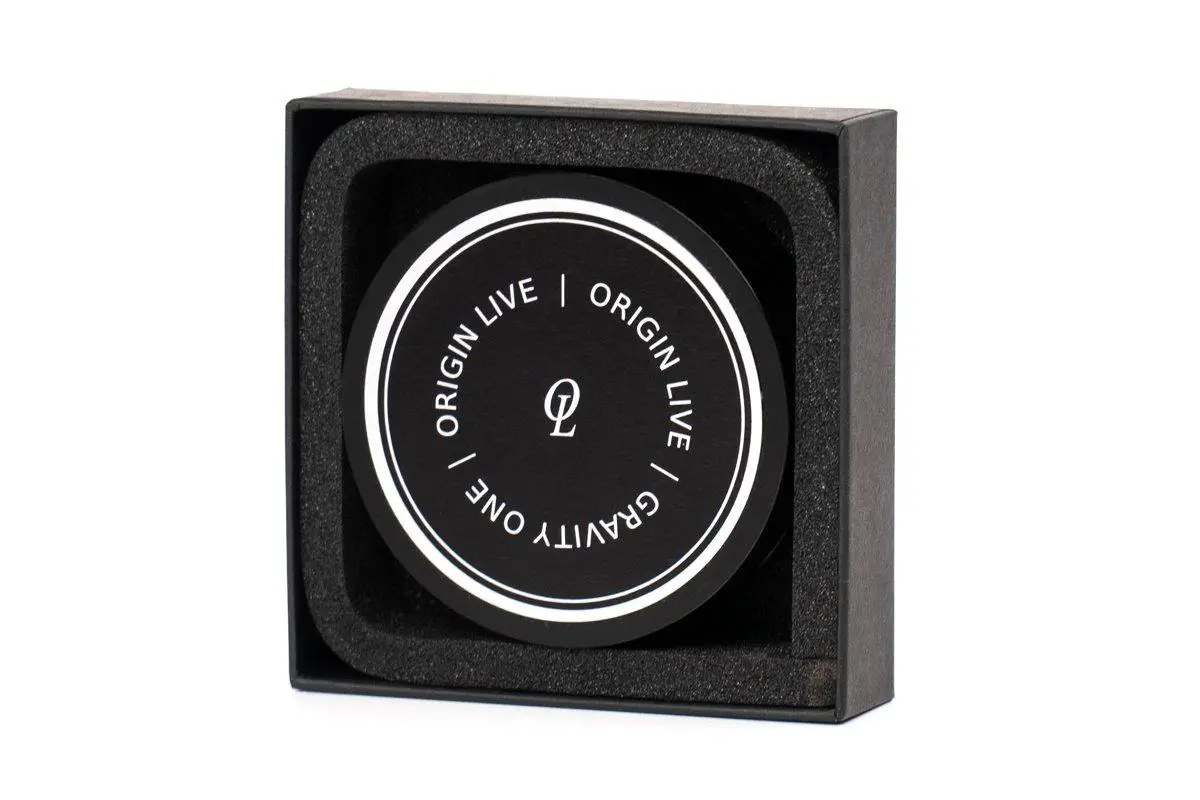
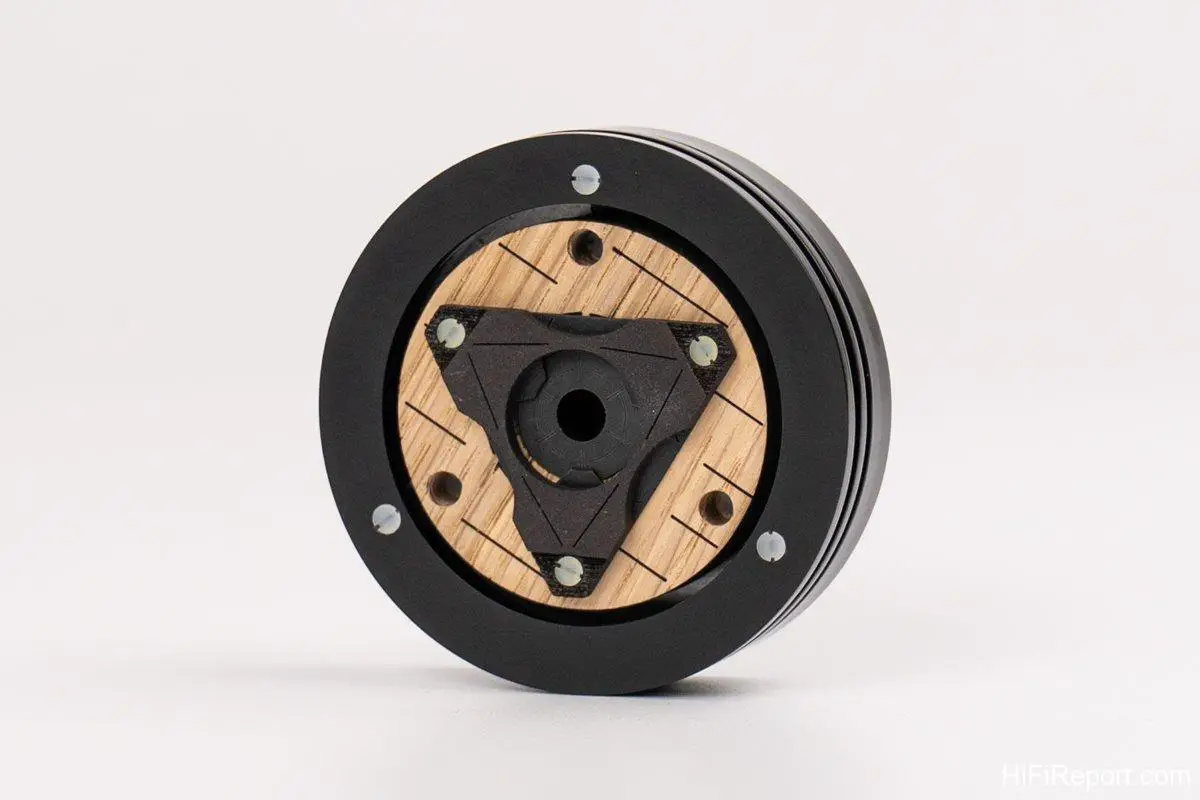
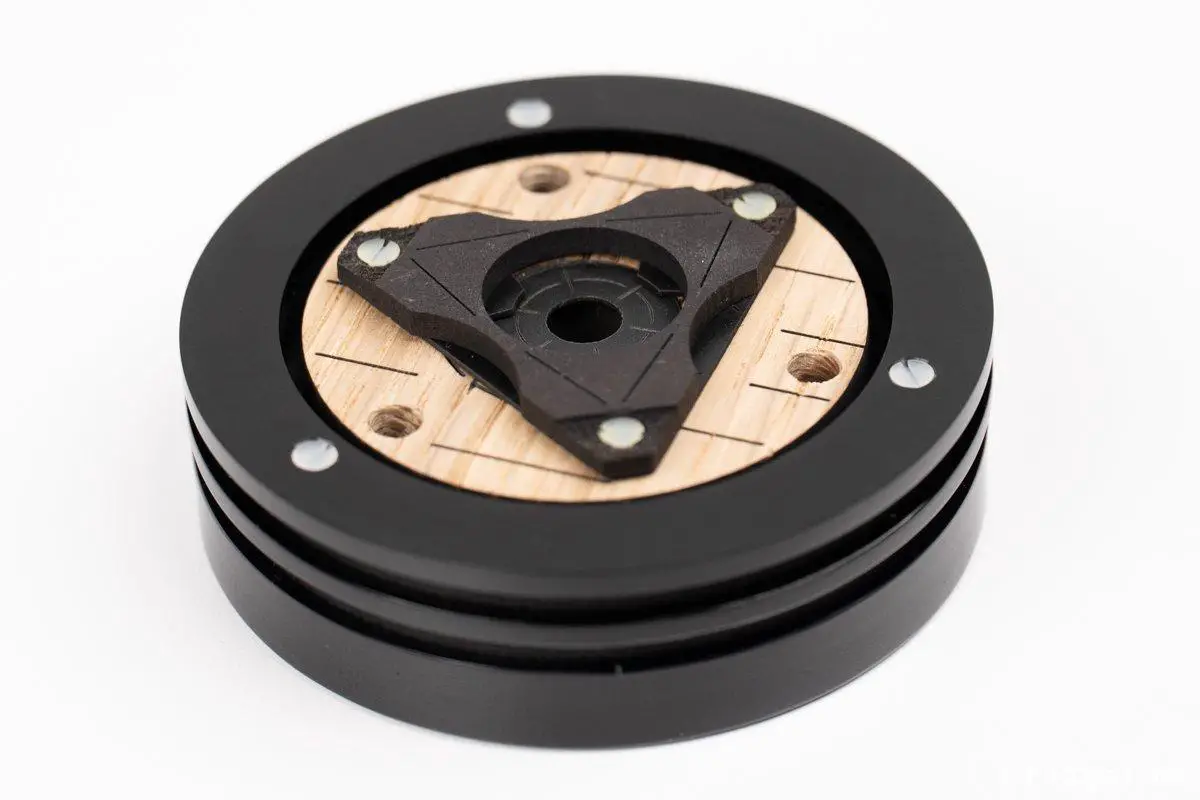
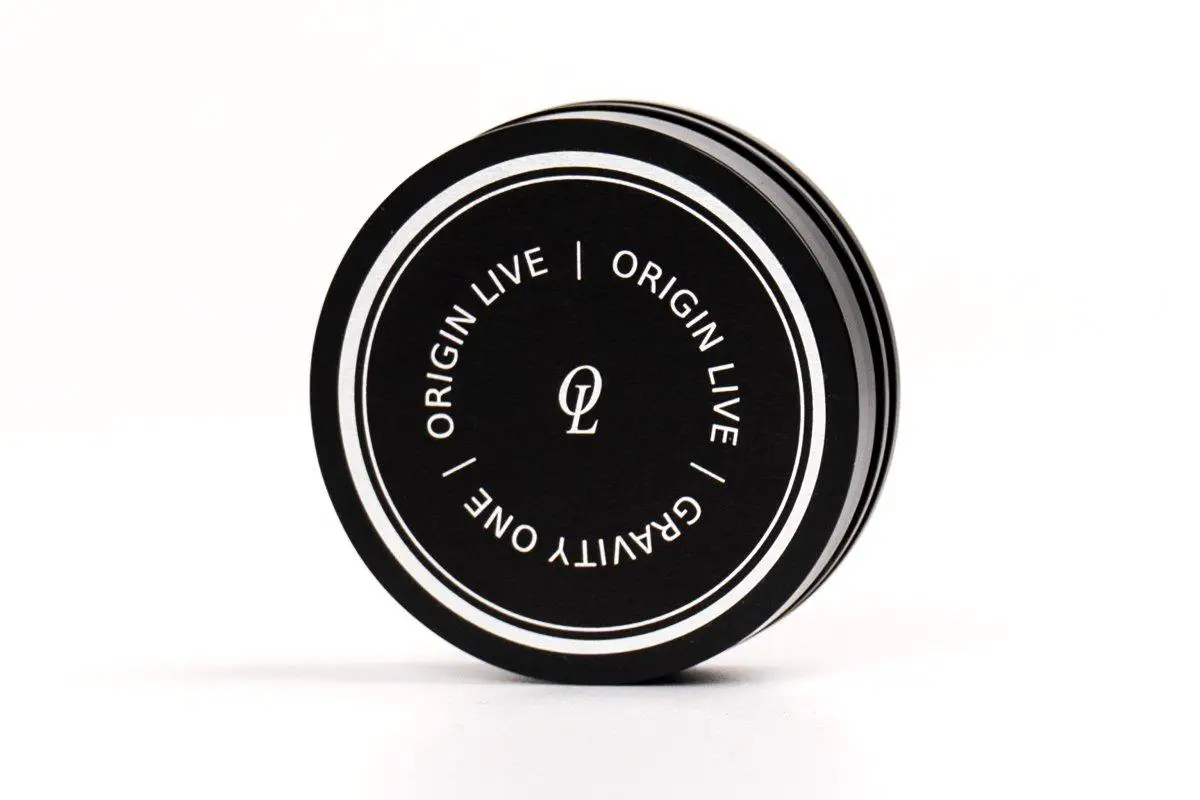
The circular record weight’s black housing comprises three layers, with a feel somewhat akin to acrylic, though tactile assessment alone is insufficient. It features an oak interlayer and a triangular damping pad at the base, secured by three plastic screws. The three black rings of the housing are also fastened with three plastic screws, but these are not fully tightened. Holding the record weight, one can discern slight gaps between the three-layer structure and the oak layer, indicating a semi-active state.
Center Dampening Contact
When placed on a turntable, it’s noticeable that only the central triangular damping pad of the Gravity One makes actual contact with the vinyl record. The entire weight appears to float above the record’s surface. I recall using similar designs only from Japanese manufacturer Harmonix. Their record weights also feature wood at the base, directly contacting the record, while the metal components remain separate. However, Harmonix record weights are considerably heavier, indicating a different design principle compared to the Gravity One.
Where does the technical ingenuity lie? Gravity One’s purpose isn’t to simply “weigh down” the record or press it firmly against the platter. Instead, it utilizes the contact between the damping pad and oak to channel vibrations generated by the spindle’s rotation into the Gravity One itself, thereby modifying the original resonance. Hence, Gravity One’s three-layer structure is not rigidly fixed but remains in a semi-active state. This allows the contact point to effectively guide resonance. The manufacturer emphasizes that screw tightening is performed using specific torque wrenches, and users should never attempt to adjust the screws themselves.
It seems the key lies not solely in the wood but also in the synergistic combination of materials and structure to effectively manage resonance.
Rare Compatibility with LP12
HiFiReport currently employs two active turntables: an Elac Miracord 90 and a Linn LP12 Klimax – one with a rigid plinth, the other suspended. This deliberate pairing allows our editors to understand the distinctions between these two turntable types, preventing generalizations and facilitating a deeper understanding of their setup and adjustment variations.
When using the Miracord 90, I typically employ a Clearaudio metal record weight, weighing approximately 300 grams – not particularly heavy, but not lightweight either. However, with the LP12 Klimax, I rarely use any record weight. The added mass could potentially skew the balance of the three-point suspension. Moreover, in my experience, adding a record weight to the LP12 isn’t always beneficial. Echoing Origin Live’s observations, it might increase bass presence and density, but often at the expense of midrange and treble liveliness.
Therefore, encountering the lightweight Gravity One was a welcome opportunity. I pitted both the Miracord 90 and LP12 Klimax against each other to compare Gravity One’s sonic effects on both rigid and suspended turntables.
For the HiFiReport listening session, the Miracord 90 was equipped with a Goldring Legacy MC cartridge, paired with an EAR Phonobox. The LP12 Klimax was a complete Linn system, including an Ekos tonearm, Akiva cartridge, Klimax power supply, and phono stage.
Amplification consisted of a Soulnote P-3 preamplifier and EAR 509 II vacuum tube power amplifiers, driving Wilson Audio Alexia 2 loudspeakers.
Piano Performance Smoother
Starting with piano music, I selected Anne Queffelee’s performance of “Satie: Gymnopédies, Gnossiennes & Other Piano Works,” specifically “Trios Gymnopedies.” This piece, sometimes translated as “Gymnopédies” or “Naked Dances,” is in 3/4 time. The piano’s left hand plays slow, two-note chords in 3/4 time (one short, one long), while the right hand overlays a leisurely melody. Anne Queffelee’s interpretation is understated, conveying the music’s tranquil mood with measured pacing.
First, I listened on the Miracord 90. The piano image was stable, with clear separation between the left-hand bass chords and the right-hand melody. Then, I placed the 67-gram Gravity One on the platter and listened again from the beginning. Wow, the piano’s left-hand chords gained thickness, the right-hand notes shone with brighter luminescence, the piano’s touch became more expressively nuanced, the midrange sounded richer, and the overall sonic texture became smoother.
No Impact on Suspended Turntable Balance
Next, it was the LP12 Klimax’s turn. Without the Gravity One, the suspended LP12 already possesses a naturally softer sonic character, with even better piano note roundness. I was already satisfied with this piano sound. Could the Gravity One improve it further? I approached the turntable, lifted the tonearm, repositioned it to the beginning of track one on side B, placed the Gravity One, and prepared to listen to “Trios Gymnopedies” once more.
Due to Gravity One’s light weight, placing it on the LP12 didn’t cause the platter to sink, indicating it wouldn’t disrupt the three-point suspension’s balance.
Did the Gravity One enhance the LP12 Klimax’s performance? I almost wish I could say no, to avoid the dilemma of whether to keep it. However, the musical expression genuinely became more vibrant. It seemed Gravity One didn’t alter specific frequency band balances, but the 3D imaging became more focused, and the soundstage deepened. The piano’s bass chords gained a touch of richness, contrasting beautifully with the light, echoing right-hand melody. Satie’s notes always flow freely, and with the Gravity One, the seamless connection between notes became more pronounced, and the musical expression’s ebb and flow felt more intimate.
Truthfully, I typically test record weights only on rigid-plinth turntables, rarely on suspended designs. Most record weights rely on mass to modify sound, and on suspended turntables, the springs tend to mitigate the mass effect. However, Gravity One’s lightness prompted me to try it on the LP12. And after trying it, I find myself deeply tempted. I’d never considered a record weight for the LP12 before, but now, should I adopt the Gravity One?
Adding Freshness to Mono
Continuing with the LP12 and Gravity One, I listened to several more records with consistent results: enhanced image focus, expanded soundstage depth and width, and heightened musical vibrancy. Okay, let’s try something challenging: Busch Quartet’s “Beethoven Late String Quartets,” specifically the fourth movement of String Quartet No. 16.
What’s challenging about string quartets? Not particularly difficult, but this is a historical recording from 1937-38, in Mono. Despite being a 2020 remaster, making a mono recording sound vibrant remains a challenge.
Listening on the LP12 without the Gravity One first, the mono remaster still retains its historical recording characteristics. The image is substantial, but soundstage depth is limited, understandably for a mono recording. However, this remastered version boasts significantly reduced background noise, and the string instruments possess considerable fullness.
Adding the Gravity One, excellent! The layering of the four string instruments becomes more vivid. Before the introduction to the first theme, the violin’s sustained note’s fingertip variations are more clearly articulated. While mono recordings lack soundstage positioning, the four string instruments still exhibit tonal variations in vertical layering.
Rarely have I encountered a record weight that improves the LP12, but the Gravity One is one of them.
Noticeable Improvement in Musical Freshness
The changes brought by Gravity One aren’t about deliberately emphasizing any specific frequency band; rather, they’re about enhancing musical freshness.
I’ll use Mutter and John Williams’ “Across The Stars” as an example. Being a 45-rpm record, I switched both the Miracord 90 and LP12 Klimax to 45 rpm and listened to “Rey’s Theme” from “Star Wars: The Force Awakens.” The rigid-plinth Miracord 90 presented a more defined sonic outline, while the LP12 Klimax was comparatively softer – different sonic flavors. However, with the Gravity One added, both turntables exhibited improved musical freshness. The mid-bass and lower frequencies became more taut and springy, and the violin’s expression became more uplifting.
Crucially, Gravity One didn’t alter the inherent sonic personalities of the Miracord 90 and LP12 Klimax. The rigid-plinth turntable retained its clarity, while the suspended design maintained its Q-softness. Yet, both experienced an elevation in musical vibrancy.
Improved Jazz Flow
After a round of classical music, it was time for jazz.
I pulled out Miles Davis’ classic recording “Kind of Blue” and listened to the familiar “So What.” On both the Miracord 90 and LP12 Klimax, the added Gravity One noticeably enhanced musical freshness. The instruments’ spatial positioning became remarkably clear: double bass center-right, piano on the left, drums emerging on the right as the bass played the theme, and saxophone and trumpet responding on the left. The jazz ensemble’s stage presence was both distinct and fluid.
Gravity One’s bass enhancement wasn’t just about volume but also about the springiness and tautness. The double bass pizzicato in “So What” is a source of musical vitality, mirroring the bright brass. When the brass solos with intensity, the double bass doesn’t merely follow the score but varies along with the solo. Gravity One accentuated the high-low contrast within the jazz band, bringing out a more vivid expression, as if the musicians were performing with greater fervor.
Wider Soundstage, More Energetic Imaging
For another jazz classic, I chose The Oscar Peterson Trio’s “We Get Requests,” a record I’ve listened to countless times over two decades without tiring of it. “Quiet Nights & Quiet Stars” opens with a double bass pizzicato – full-bodied notes, piano leading the melody, and drums gently tapping the rim, with the subtle hi-hat sounds conveying jazz’s swinging rhythm. A record that never gets old – not just the music itself, but also the constant exploration of its nuances across different audio equipment. Listening on the Miracord 90, the notes were clear and transparent, while the LP12 Klimax added a touch of Q-springiness in the mid-bass.
With the Gravity One in place, both turntables gained in musical freshness. One could perceive a sense of soundstage expansion outwards and backwards, with instrument images becoming slightly larger, making the entire soundstage’s 3D rendering more vivid, as if one were closer to the band but with expanded spaciousness. The piano was on the left, the drummer closer to the piano, with rim shots originating from the left, interacting with the double bass pizzicato on the right.
Gravity One brought out the instruments’ “immediacy,” and the musicians’ relaxed, jazzy atmosphere became highly infectious, making it impossible not to sway along with the rhythm.
Should I Keep it for LP12?
In the current market, lightweight record weights like Gravity One are relatively rare. Upon first handling it, the immediate thought is, “How can it be so light?” However, Gravity One demonstrably enhances musical freshness – not through simple frequency band alterations, but by enriching the musical atmosphere and expanding soundstage transparency. It delivers both sonic thickness and clarity. Moreover, I’ve finally discovered a record weight that complements the LP12’s suspended design. This creates a genuine dilemma: should I keep the Gravity One or not? Considering its price of approximately $280 USD, which is equivalent to the cost of just a few vinyl records, yet its exceptional synergy with the LP12, it’s highly likely I’ll end up keeping it.
Specifications
* Type: Record weight
* Dimensions: 80 mm diameter x 25 mm height
* Weight: 67 g