
Thorens TD 235 EV Vinyl Review
Thorens, a venerable Swiss brand in the realm of vinyl record players, boasts a rich heritage dating back to 1903 when they first started producing phonographs. By 1928, they had introduced their inaugural record player powered by an electric motor, and the 1950s marked their foray into the production of audiophile-grade equipment. Despite changes in ownership over the years, the brand has remained steadfast in its dedication to vinyl turntables.
Leveraging its Swiss pedigree as a nation renowned for precision craftsmanship, Thorens continues to navigate the analog world with expertise and experience. Their commitment to quality ensures that Thorens turntables hold a distinguished position, from the pinnacle of high-end audio to the entry-level segment.
Entry-Level Semi-Automatic Turntable
Today, we delve into the TD 235 EV, an entry-level offering from Thorens. Distinguishing itself from previous models, the TD 235 EV is a semi-automatic turntable. Operation is initiated by simply moving the tonearm towards the platter, which automatically starts the motor and spins the platter. Once the record concludes, the motor automatically ceases operation.
Furthermore, the TD 235 EV incorporates a built-in phono preamplifier, simplifying setup for users who only need to connect it to a basic amplifier and speakers.
Equipped with TP 19-1 Tonearm and Cartridge
The TD 235 EV shares a similar mechanism with another Thorens model, the TD 240-2, including the standard-equipped TP 19-1 tonearm. The primary difference lies in the TD 240-2 being fully automatic, where the tonearm automatically returns to its resting position after playback. The TD 240-2 also offers a 78 RPM speed setting and the ability to switch to play 17cm single records (LP records are 30cm).

In comparison, the TD 235 EV adopts a more streamlined approach, focusing on the essential 33 or 45 RPM speed selections. The TD 235 EV also includes a transparent dust cover, providing protection from dust when not in use.
Integrated Phono Preamplifier
A key feature of the TD 235 EV is its integrated phono preamplifier. This is exceptionally convenient for those new to vinyl, eliminating the need to worry about selecting a compatible phono stage. While Thorens offers excellent standalone phono preamplifiers, they represent an additional expense for the user.
With the phono stage already incorporated into the TD 235 EV, users can get started with just an integrated amplifier and a pair of speakers, making it an incredibly accessible entry point for audiophiles looking to explore vinyl or add an analog flavor to their existing digital systems.
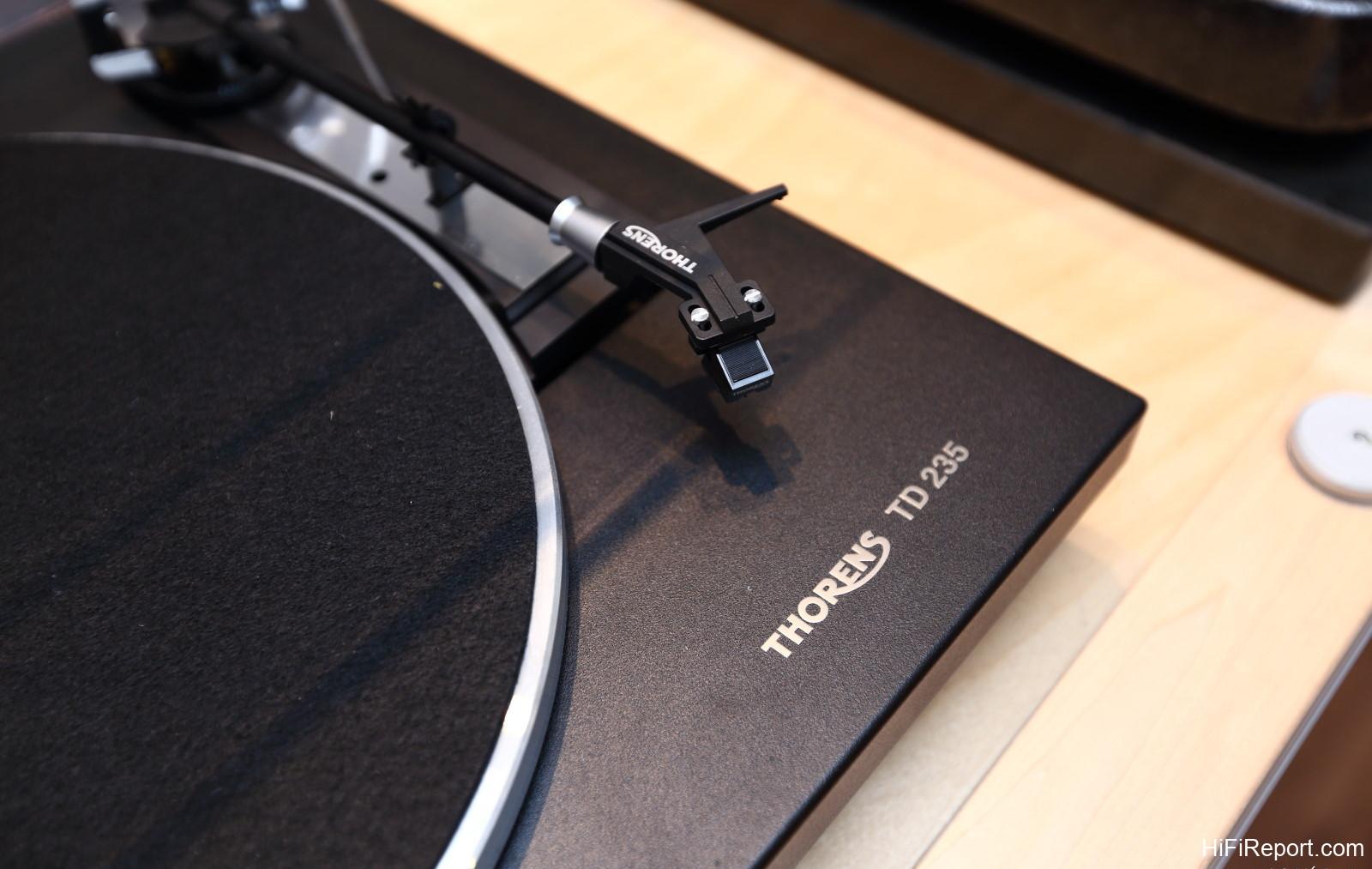
Despite being an entry-level turntable, the TD 235 EV doesn’t compromise on essential adjustments. The cartridge allows for horizontal angle adjustments, ensuring the stylus remains perpendicular to the record grooves during playback. Typically, this setting is meticulously calibrated at the factory before the turntable ships, alleviating concerns for the user.
Optimizing Sound Through Adjustment
While the turntable is pre-calibrated at the factory, users who wish to replace the cartridge will need to realign the cartridge angle. For this purpose, Thorens includes a setup gauge. By placing this gauge flat on the platter and positioning the tonearm over points A and B, aligning the cartridge with the dotted lines ensures the correct angle is achieved.
Since the sound information on vinyl records is etched into the grooves, an incorrect cartridge angle will result in the stylus misaligning with the groove. This skewed contact will lead to inaccurate sound information retrieval, ultimately compromising the audio quality. Maintaining stylus perpendicularity and centering within the groove is paramount for optimal vinyl playback.
Three Adjustable Parameters
The TD 235 EV tonearm design incorporates three adjustable elements: the counterweight at the rear of the tonearm, tracking force, and anti-skating. These three aspects are interconnected, meaning adjusting one often necessitates fine-tuning the others. Their collective purpose is to ensure the stylus maintains an optimal position during playback, enabling accurate sound information extraction.
The rear counterweight can be rotated to adjust its position. Based on leverage principles, varying the counterweight position alters the tonearm’s horizontal balance. The initial setup involves adjusting the counterweight until the tonearm achieves horizontal equilibrium.
Tailoring Sound Characteristics Through Adjustment
Located on the right side of the tonearm base is a rotatable dial with markings, used to adjust the tracking force. Tracking force refers to the pressure exerted by the stylus on the record. Given the grooved nature of vinyl records, a heavier tracking force causes the stylus to delve deeper into the grooves. This typically results in capturing more low-frequency signals, as these frequencies are etched deeper within the grooves. A heavier tracking force also enhances playback stability.
However, the trade-off can be a less agile sound, potentially sounding somewhat muffled. Conversely, a lighter tracking force tends to capture more mid- and high-frequency signals, resulting in a more nimble sound. The downside can be reduced low-frequency presence, and the sound might become less stable, or even exhibit high-frequency harshness.

The manufacturer provides a standard recommended tracking force value. When using the factory-installed tonearm and cartridge, users can refer to the instruction manual and set the tracking force to the suggested value. Of course, subtle adjustments can be made based on personal sonic preferences. If a different cartridge is used, fine-tuning by ear becomes necessary.
Circular Anti-Skating Adjustment
On the underside of the plinth, a circular dial with markings is used to adjust anti-skating. Vinyl playback involves physical interaction; the rotating record creates friction against the stylus, generating a force. While at rest, the stylus is vertically oriented. However, during playback, this frictional force can cause the stylus to skew, again leading to inaccurate sound information retrieval. The anti-skating mechanism compensates for this by applying a counterforce to realign the stylus.
Initially, it’s recommended to use the manufacturer’s suggested anti-skating setting.
If replacement or adjustment is needed, observe the stylus’s deviation angle while playing a record, then stop the turntable before making any adjustments. Styluses are delicate, and it’s crucial to avoid adjusting any settings while music is playing, as this can easily damage the stylus.

Two Common Speed Settings Provided
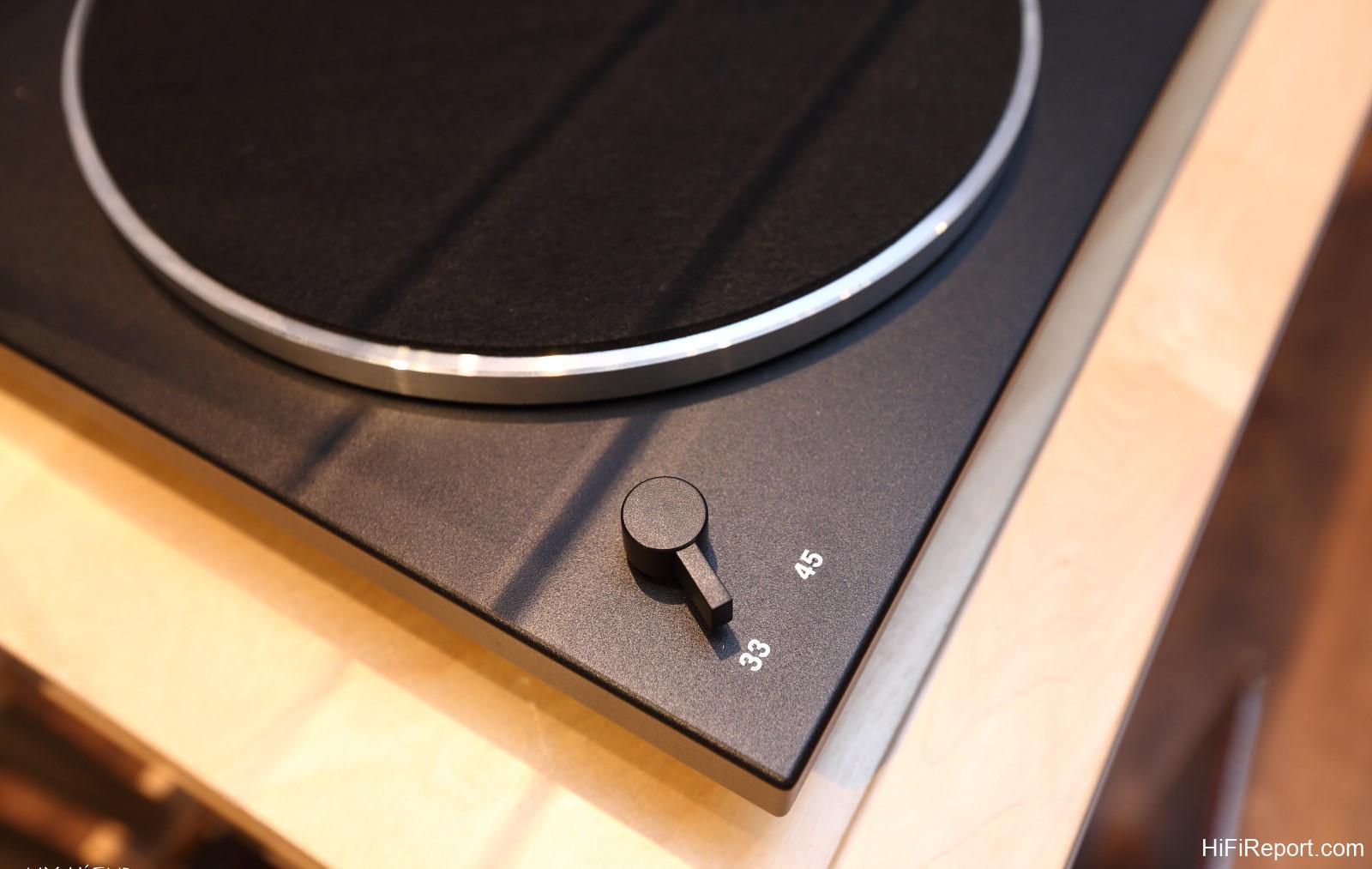
By this point, we’ve covered almost all adjustable aspects of the TD 235 EV, except for speed selection, which depends on the record’s RPM. Most vinyl records are either 33 or 45 RPM. The speed should be selected accordingly. Usually, the record label indicates the speed, but if not, it’s generally 33 RPM. If unsure, it’s not a problem; incorrect speed will sound obviously wrong, prompting you to switch to the correct setting.
The TD 235 EV and TD 240-2 share a similar structural design. The TD 240-2 adds a 78 RPM speed, offering three speed positions. Therefore, the TD 235 EV also features three speed positions. In the photo, a position exists between 33 and 45 RPM, but it still corresponds to 33 RPM and doesn’t offer any special function. Users need not be puzzled by this.
Semi-Automatic Design Enhances Stylus Protection
The TD 235 EV’s semi-automatic design means it lacks a separate power switch for the motor. Simply moving the tonearm over the platter initiates platter rotation. Then, engaging the lever to the right of the tonearm gently lowers the tonearm and stylus onto the record, commencing playback. To stop playback or when the record finishes, returning the lever to its original position lifts the tonearm, allowing it to be moved back to its rest.
A key benefit of the semi-automatic design is that the platter automatically stops spinning once the record ends, protecting the stylus and preventing wear if the listener is not present.

The TD 235 EV’s motor is housed within the plinth. AC power is supplied via a plug to an internal transformer, which converts it to DC power to drive a smoother and quieter DC motor. This motor, in turn, drives the platter rotation via a belt.
Silent Playback, Free from Noise
Using the TD 235 EV to play several vinyl records, upon placing a record and moving the tonearm towards the platter, the motor automatically starts. Engaging the lever gently lowers the stylus. While there’s a slight sound at the moment of platter startup, it quickly becomes silent, and during rotation, there’s virtually no audible noise. This is a testament to the quality expected from a Swiss brand like Thorens.

The stylus lowering onto the spinning record is remarkably smooth, eliminating concerns about stylus damage, a significant advantage over manual stylus drop turntables.
Fine-Tuning Sound with Tracking Force
Playing , the TD 235 EV showcased its ability to reproduce large-scale orchestral pieces and dynamic range. The TAS 267 cartridge on the TD 235 EV demonstrates excellent detail retrieval, effortlessly capturing the richness of orchestral performances and accurately presenting subtle dynamic nuances. Low-frequency sound pressure and reproduction are related to tracking force.
Experimenting with a slightly heavier tracking force aligned better with my personal preference for low-frequency reproduction. This isn’t to say the factory setting is deficient, but rather reflects individual taste.
Excellent Soundstage and Separation
Next, I played , a superbly produced record that has yielded exceptional results on higher-end turntables in the past. Even as an entry-level model, the TD 235 EV still reveals the value of this record, delivering natural and balanced vocals and a soundstage with excellent instrument separation.
On the first track, Chris Jones’ “No Sanctuary Here,” his vocals are remarkably clear and forward in the mix, while the guitar accompaniment exhibits excellent separation on both sides, positioned deeper in the soundstage. Combined with the deep background vocals, this creates a compelling 3D sonic image.
Superior Recordings Shine on Quality Turntables
by Daft Punk, the masked duo of Guy-Manuel de Homem-Christo and Thomas Bangalter, is an electronic-infused album featuring numerous vocal collaborations. Conceived as a tribute to late 1970s and early 1980s music, the album blends vintage vibes with modern sounds. With a production budget exceeding a million dollars, many sounds on the album were meticulously recorded live multiple times. It garnered three Grammy Awards in 2014 and is a highly recommended pop album.
Despite being an electronic mix album, many sounds, including vocals, woodwinds, strings, harmonies, restaurant ambiance, and water droplet effects, were recorded using high-end equipment. The TD 235 EV’s reproduction not only captures the album’s electronic essence but also delivers natural sonic textures, rich soundstage layering, and the album’s vintage melodies. “Get Lucky” exemplifies this, reportedly mixed using high-end Focal professional studio monitors.
Natural and Balanced Playback
Jack Johnson’s music is consistently soothing. evokes a tranquil atmosphere, as the title suggests. The music incorporates many natural sounds, including ocean waves and various instrumental timbres. The TD 235 EV renders these elements with balance and stability, naturally immersing the listener in the music.
Sound Quality and Approachability: An Ideal Entry to Vinyl
The TD 235 EV offers convenience and commendable sound quality. While not a mid-to-high-end model within the Thorens lineup, it’s a highly worthwhile option for those new to vinyl systems. It strikes a balance between user-friendliness and the rewarding experience of vinyl adjustments, making it an excellent stepping stone for audiophiles venturing into the world of analog.
The integrated MM phono preamplifier in the TD 235 EV not only eliminates the need for a separate phono stage but also allows for a wide selection of MM cartridges when upgrading in the future. The TD 235 EV is reasonably priced, and its Swiss manufacturing and brand prestige alone justify the purchase, especially considering its genuinely impressive sound performance.
Thorens TD 235 EV Turntable Specifications
* Operation: semi-automatic
* Drive System: internal flat drive belt
* Motor: electronically controlled DC motor
* Speeds: 33-1/3, 45 rpm
* Speed Select: electronically
* Platter: 12” / 0.6 kg (aluminum, non-magnetic)
* Tonearm: THORENS® TP 19-1
* Pick-up Cartridge: THORENS® TAS 267
* Anti-skating (Bias): by spring (adjustable)
* Automatic Shut-off: opto-electronically
* Cable Capacitance: 160 pF
* Power Supply: external mains adapter (115-230 V / 50-60 Hz depending on type)
* Dimensions: 420 x 130 x 365 mm (W x H x D)
* Weight: 6.7 kg