
PureTek Audio Solo Network Switch Review
In today’s high-end audio landscape, where digital streaming has firmly established itself as the mainstream source, many enthusiasts hit a familiar bottleneck: even after upgrading to a flagship DAC or streamer, the sound retains a stubborn hardness, a gritty edge—that unmistakable “digital glare.” The cause lies in the streaming domain itself, which is rife with interference of every description.
The new brand PureTek Audio hails from a technology powerhouse. Its R&D team comprises veteran network/communication engineering experts and multinational researchers deeply immersed in high-end audio. They refuse off-the-shelf solutions, instead pursuing ground-up, in-house development guided by a purely audiophile philosophy.
The PureTek team firmly believes that although network gear does not process analog signals directly, the “operating state during data packet transmission, clock precision, and ground noise” severely pollutes downstream decoders. Consequently, they insisted on in-house R&D starting at the PCB level, using the discerning ears of audiophiles as the ultimate tuning benchmark.
Driven by a no-compromise pursuit of perfection, PureTek’s debut, the α (Alpha), carries a price tag of **$7,873 (NTD 248,000)**. Within a single chassis, it houses “two completely isolated, non-common-ground custom multilayer PCBs”—effectively two high-end switches in physical series, linked solely by fiber optics to utterly sever electrical interference.
However, the Alpha’s flagship positioning and steep price put it out of reach for most. To let more enthusiasts experience the gains of “optical isolation,” the more accessible PureTek Solo **[ $2,794 (NTD 88,000) ]** was born.
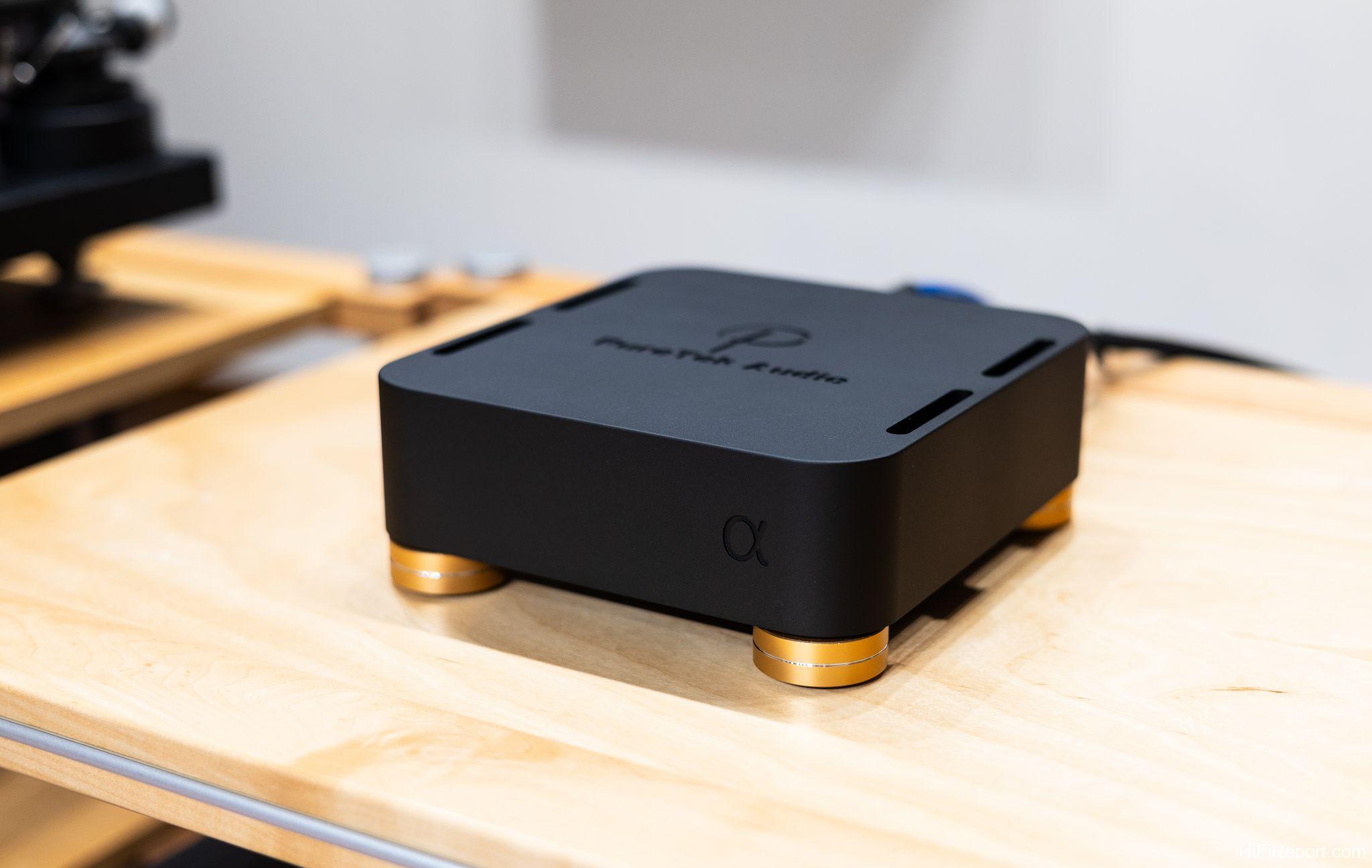
Build Quality & Design
The Solo’s body is CNC-machined from a solid block of aerospace-grade aluminum. This isn’t merely cosmetic; it serves a dual practical purpose: physical shielding that completely blocks external RF interference (RFI) from Wi-Fi, Bluetooth, or mobile signals, plus highly effective heat dissipation and vibration damping. The thick metal chassis conducts heat away rapidly and suppresses minute physical resonances from the internal PCB.
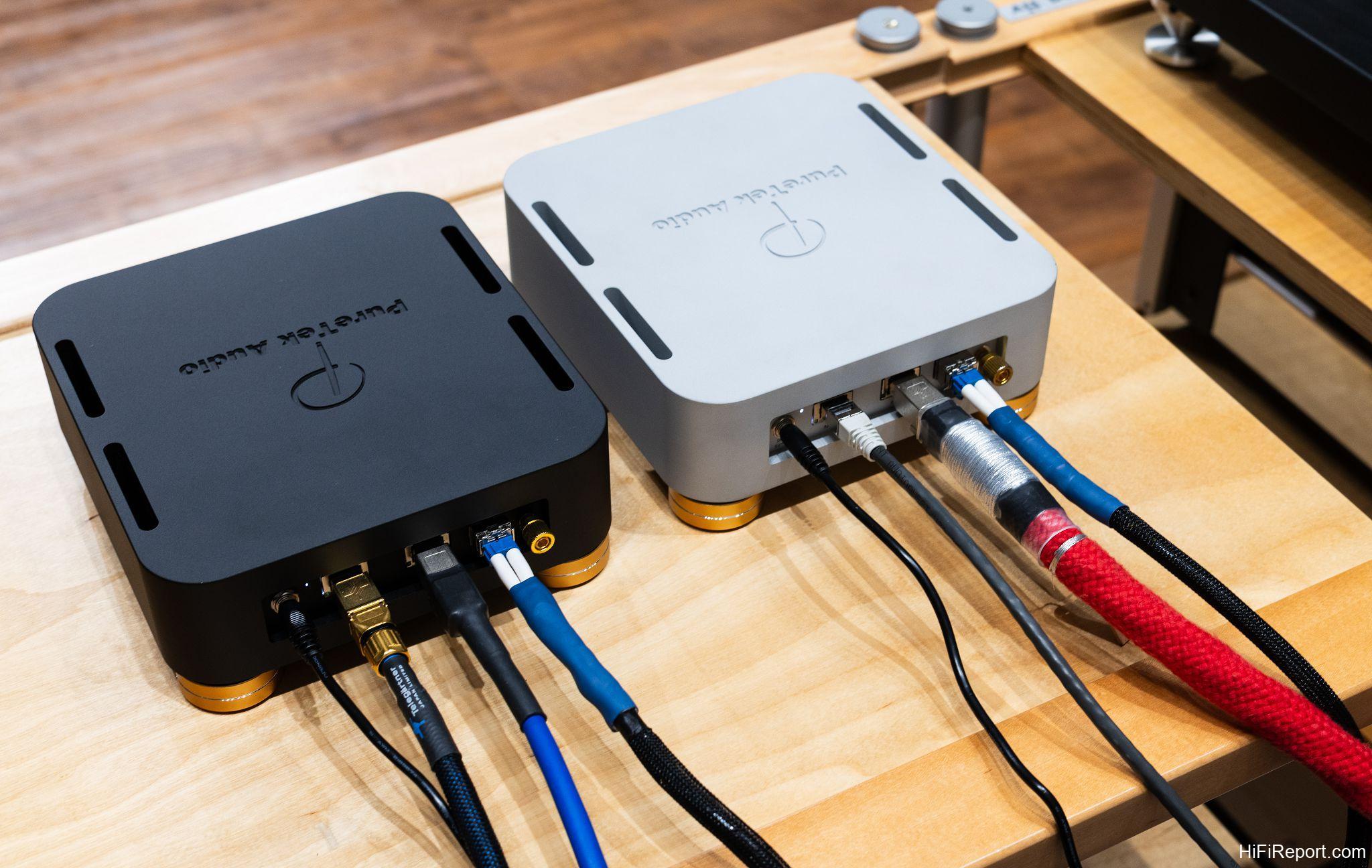
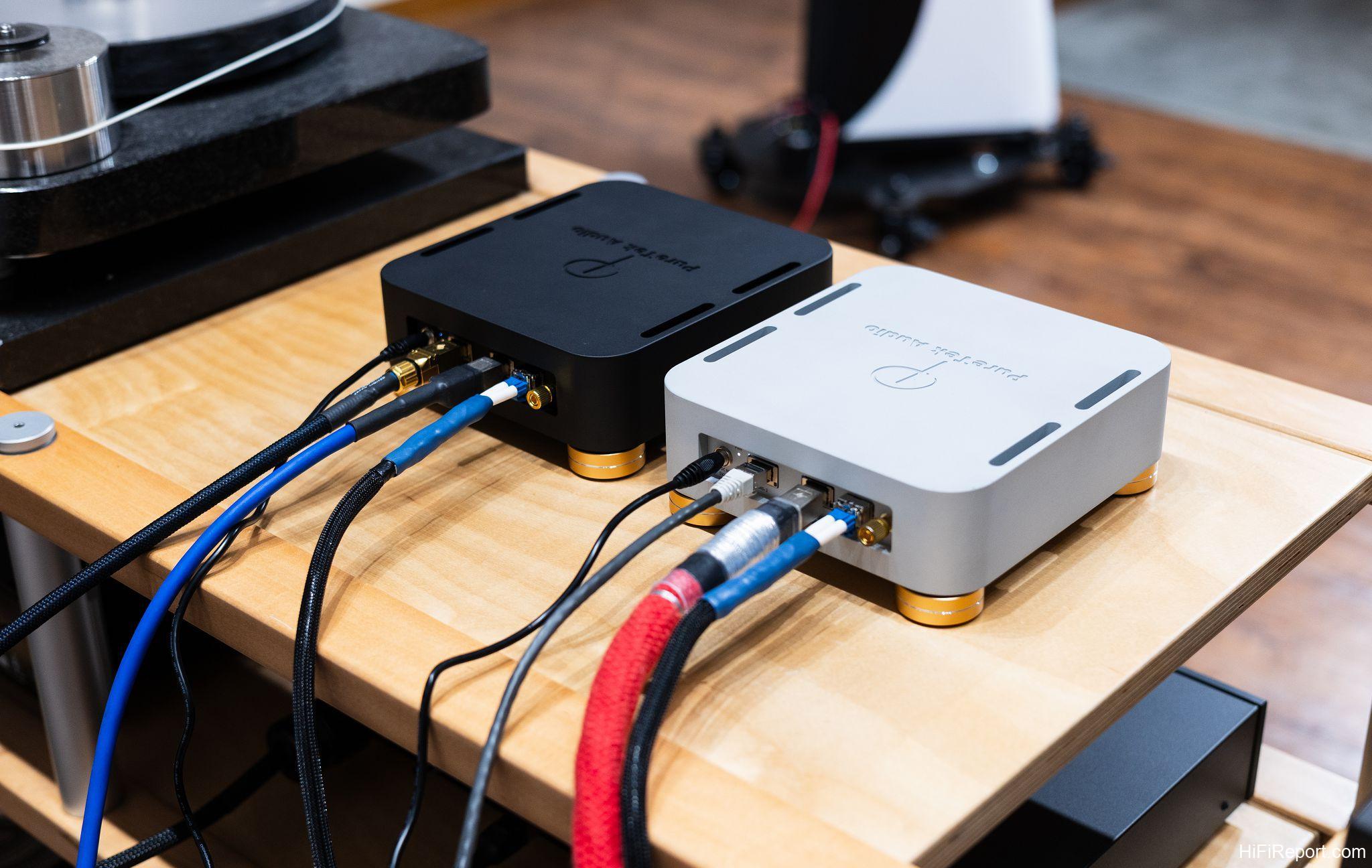
The Solo inherits the Alpha’s core technology but streamlines the I/O (down to two RJ45 ports and one SFP port) and shrinks the footprint by nearly half. Per the manufacturer, the Solo’s key technical highlights:
* Custom multilayer PCB
* Independently powered, custom low-noise quartz oscillator (0.21 ppm)
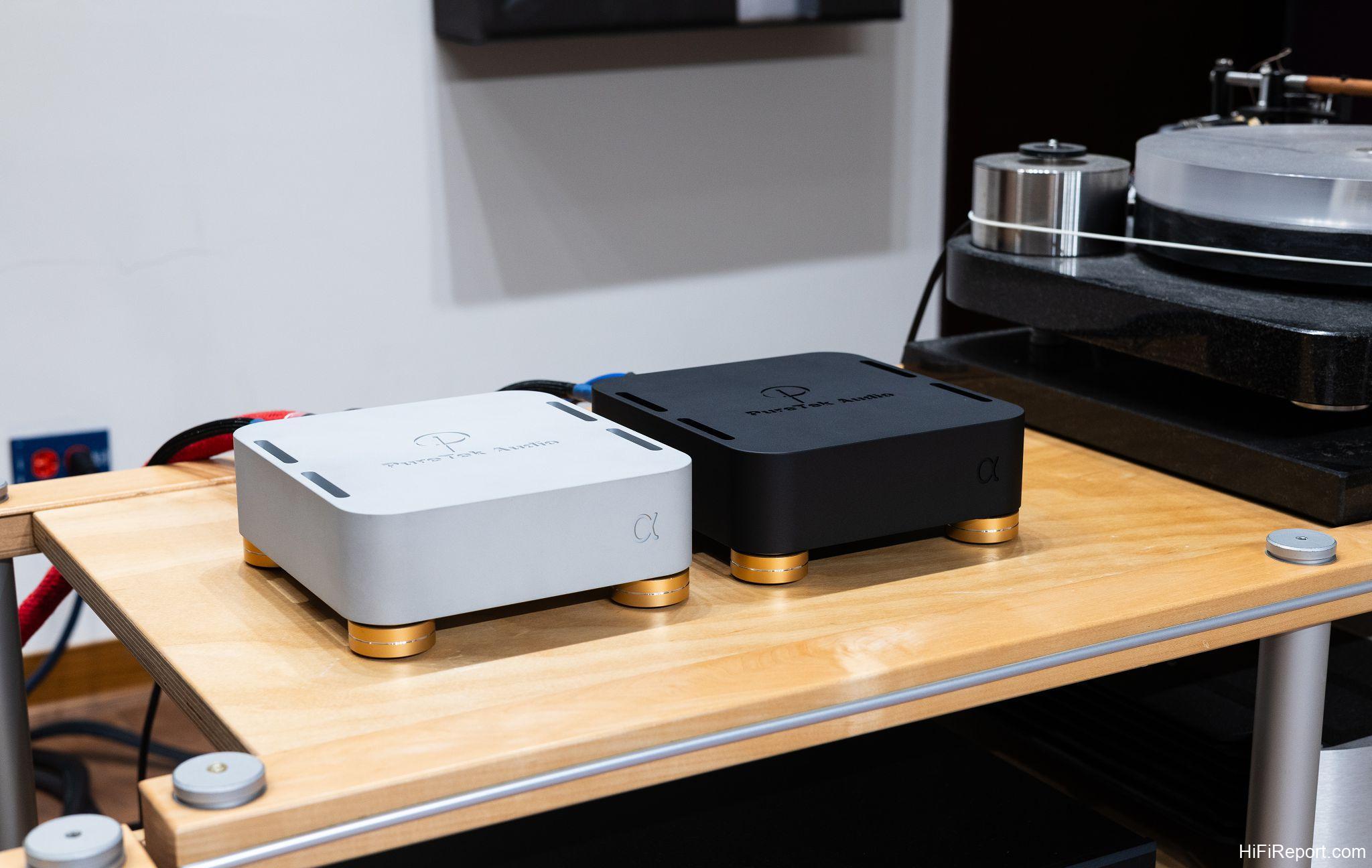
* Multiple low-noise LDOs (linear regulators) for power supply
* Special circuit design employing two RJ45 network ports with distinct sonic signatures, allowing user preference selection:
* **RJ45-1:** Transparent / High resolution / Fast — more “audiophile” presentation
* **RJ45-2:** Warm / Smooth / Slow — more “musical” presentation
* User-replaceable M6 isolation feet
The stock footers are already quite competent, but the M6 standard makes swapping in aftermarket options trivial.
Available in black or silver, the distributor sent two units for this review, enabling a comparison of the sonic differences when using two in series. An SFP-to-RJ45 media converter is also included for users without SFP infrastructure, so even without a fiber router at home, one can easily reap the purity of optical isolation.
Josh Ritter: Black Background & Vocal Intimacy
Two PureTek Audio Solo units arrived for this review. I began by using a single unit, connected via the SFP-to-RJ45 adapter. Cueing up Josh Ritter’s “The Curse,” the presentation immediately struck a pitch-black, silent backdrop. The background was pristine, devoid of artifacts—as if the stage lights had cut to black, leaving only a single spotlight.
Against this ink-black canvas, piano notes gained weight and transparency; previously slightly hard edges were replaced by a liquid warmth, and the decay and dynamic contrast of the keystrokes became far more nuanced. Ambient textures lurking in the background stretched out a vast sense of space, rendering the entire piece in three-dimensional, layered depth.
Vocals possessed a magnetic pull. As the song unfolded, the narrative-driven voice rose center-stage with razor-sharp image focus. The singer’s corporeal outline was sharply drawn and firmly anchored, never wandering amid musical peaks. Midrange vocals were full-bodied yet free of grain, with ideal body; every diction nuance and breath intake was laid bare with exquisite clarity.
In the latter half, melancholic brass entered languidly, and the soundstage’s depth and width expanded palpably. Treble extension was rounded and airy; transients sliced through the space vividly—sharp but never piercing—perfectly capturing a musicality that was both lively and atmospherically weighty.
Simple Plan: Energy & Control
Next, Simple Plan’s “Crazy.” Vocals were cohesive and tangibly realistic, with perfectly judged body. Even during the most impassioned screams, the gritty texture and tearing timbre were rendered with delicate precision and emotional intent—never thin or harsh.
The lateral soundstage was expansive; the vocalist locked dead-center while electric guitars staked out precise left/right positions. This separation untangled a potentially messy arrangement into outstanding three-dimensionality and clear spatial relationships, instantly collapsing the distance between listener and live band.
At the chorus, with all instruments firing, the background remained transparently clear, reproducing a pure, uncluttered stage. Energy exploded ferociously, yet every instrument’s character came through spot-on. Electric guitars had dense, creamy texture; aggressive pick attacks were smooth and warm, with weighted transients that never scratched. Drums carried serious heft—stable, instantaneous attacks and releases.
Even as layers piled up—densifying instrumentation stacked against soaring backing vocals—the presentation stayed composed, three-dimensional, and unmuddled, maintaining adrenaline-fueled drive without sacrificing refinement.
Green Day (Dual Unit): Holographic Separation
**SFP Fiber Optic Cable**
Next, I chained two Solo units via their SFP ports and cued Green Day’s “Lazy Bones.” Refinement and soundstage took another significant leap.
The opening drum hits were viscerally satisfying—crisp wood-toned stick attacks rendered with startling clarity; decays were lightning-fast and articulate, captured with thorough precision in the blink of an eye. Kick drums plunged deep with snappy transients; guitar grain was transparent and tonally liquid, hardness erased. Strings and synths separated into distinct dynamic layers, delivering explosive impact with genuine weight.
Vocals remained focused and texturally rich; even amidst the sonic onslaught, the voice stood forward, untouched—conveying the world-weary, decadent scream with profound intensity. The force behind the vocal rasp and the detail of every breath were palpable; the track projected tremendous scale, drive, and pinpoint detail retrieval.
From vocal nuance to instrumental placement, everything lined up before me in a holographic row; front-to-back depth was equally palpable. With pop/rock, you get not just the thrilling energy but a thoroughly satisfying, detail-complete performance.
Elton John (Dual Unit): 3D Space & Atmosphere
Finally, Elton John’s classic “Rocket Man,” opening with a sparse piano-and-vocal duet. Keystrikes had a rounded, granular solidity; notes were delicate yet possessed full, weighted bodies, with decays stretching naturally and effortlessly through the air.
The vocal was rich in micro-detail and dynamic contrast, delivering power with an easy grace—sibilants and warm chest resonance rendered with exceptional finesse, conveying an undercurrent of lonely tension.
At the chorus, guitars, bass, cymbals, and stacked backing vocals erupted, each occupying a distinct, three-dimensional coordinate without interference. The drum-driven low end delivered stable thickness and authoritative slam, contrasting dynamically with the lively strings above.
The system portrayed dynamic layering with unshakeable composure—no smearing, no hash, just purity. The overall presentation was rock-solid, holographic yet orderly—elegant in its silence, poignant in its ease—delivering a deeply moving atmospheric portrait.
PureTek Audio Solo Audiophile Network Switch: Specifications
Ports
* **1G SFP Port:** 1 (includes SFP-to-RJ45 media converter module in box)
* **1G RJ45 Ports:** 2 (special circuit design; Ports A and B use different components and tuning for two distinct sonic signatures)
* **Ground Terminal:** 1 (for connection to ground box or system ground to further drain noise)
Power & Circuit
* **Input Voltage (DC-IN):** Supports wide-range DC 5V ~ 12V
* **Connector Spec:** 5.5 x 2.1 mm; Current requirement: 2A minimum
* **Clock System:** Independently powered, custom low-noise quartz oscillator (extremely low clock error: 0.21 ppm)
* **Regulation:** Multiple low-noise LDOs (Linear Regulators) filter supply noise
* **PCB Structure:** Dedicated high-grade multilayer PCB layout
Structure
* **Chassis Material:** Single block of aerospace-grade aluminum, CNC machined
* **Vibration Control:** User-replaceable M6 isolation feet
* **Dimensions:** 180 x 192 x 70 mm (W x D x H)
* **Weight:** Approx. 3.4 kg