
Rega Saturn MK3 CD Player Review
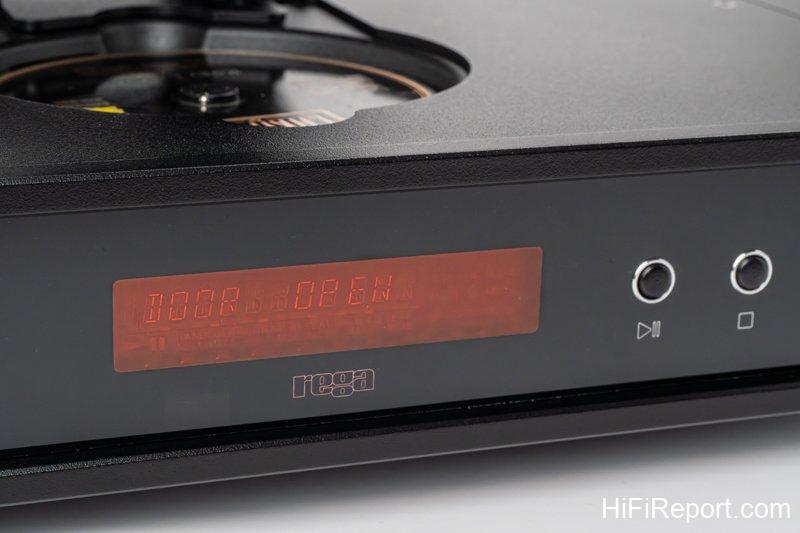
Long time no see, Rega! Long time no see, Saturn MK3 CD Player! Seeing the CD cover resembling the USS Enterprise, unchanged for twenty years, you know just how classic the Saturn MK3’s industrial design is!
Rega’s cautious digital entry
Rega, a British company founded in 1973 with a focus on turntables, thrived during the golden age of analog records. It expanded from turntables to amplifiers and speakers, always following a high-value-for-money approach that was neither excessively expensive nor cheap, making it a top choice for many audio beginners and enthusiasts.
However, despite the invention of the CD in the 1980s and the burgeoning digital music scene, which clearly surpassed vinyl sales by the 1990s after a decade of development, Rega did not venture into the CD realm until 1997 when it released its first CD player, the Planet. The Io DAC followed the next year, marking Rega as a relatively late entrant compared to its competitors.
Why the late entry into CD players? Perhaps Rega’s vinyl sales were so successful that they felt comfortable staying put. On the other hand, it’s likely due to the leadership of Roy Gandy, a highly cautious manager who never rushes into markets he isn’t confident about. Roy Gandy, now over eighty, still participates in Rega’s operations and insists on keeping it a private company, deliberately avoiding large-scale expansion. This maintains Rega’s relatively small-yet-beautiful operational style and stable management. It’s truly rare to find an audio brand like this that prioritizes the company’s sustainability over maximizing profit.
First Planet CD Player in 1977
Starting with the first Planet CD player in 1997, Rega quickly picked up pace in the digital field. In 2000, they released the Jupiter 2000 and Planet 2000 CD players, and in 2004, they unveiled the first-generation Saturn CD player.
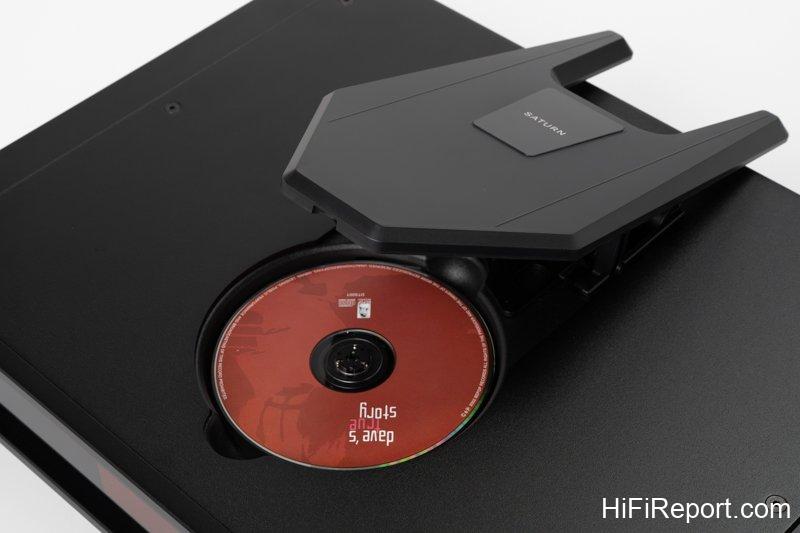
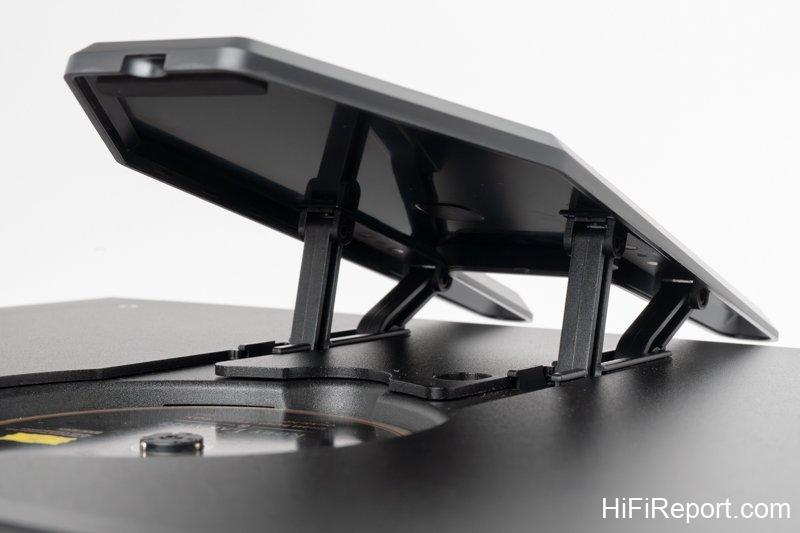
The most eye-catching feature of the original Saturn CD was its top-loading design. The smooth mechanical feel of manually lifting the lid made changing CDs feel like a ritual, similar to listening to vinyl. You lift the lid, place the CD, and press play. While the music carrier changed from vinyl to CD, and the needle became the play button, the purely analog operation process was full of charm.
Evolved to third generation in twenty years
The Saturn MK1, released in 2004, didn’t have the MK1 designation back then as it was the only one. This classic CD player wasn’t updated until 2013, when the Saturn-R was introduced. You can see how slowly Rega’s equipment evolves and how cautiously they take steps. So, when you buy their equipment, you don’t have to worry about a model change happening too soon; they are very deliberate about releasing new machines.
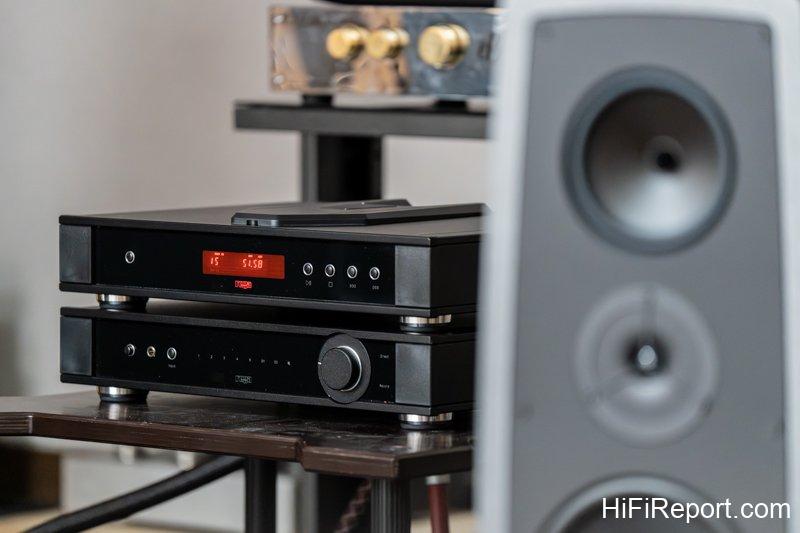
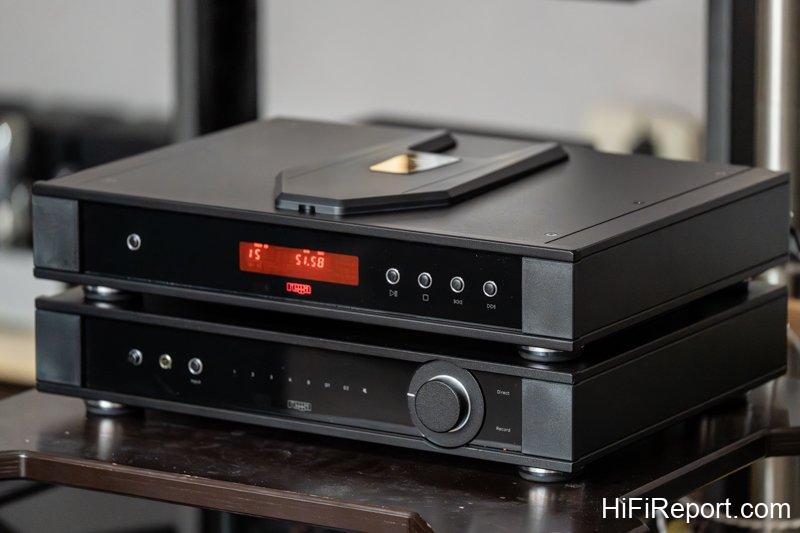
The Saturn MK3 I have is the new model launched in 2022. There are two main points of this update. First, to match the updated Elicit MK5 integrated amplifier, the Saturn MK3 is fitted with a custom metal chassis of the same size. Second, it adds digital inputs and outputs, allowing the Saturn MK3 to serve as a digital music hub, increasing flexibility in setup and application.
Five digital inputs, plus two digital outputs
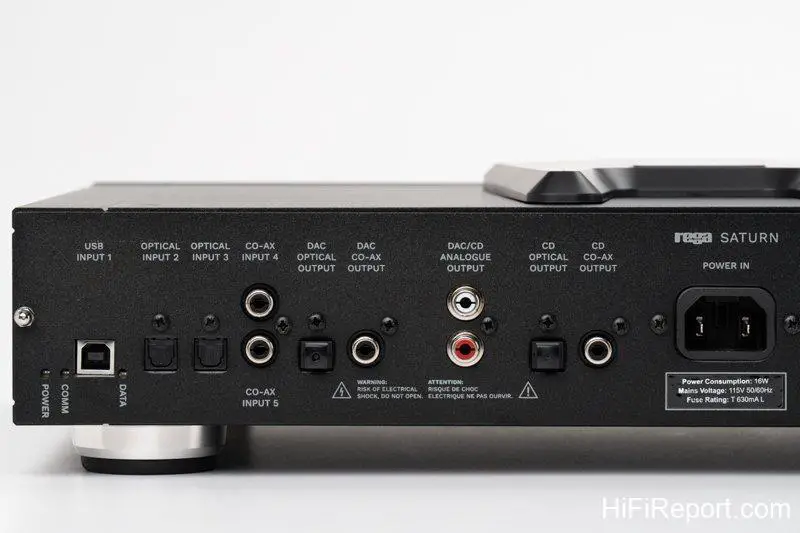
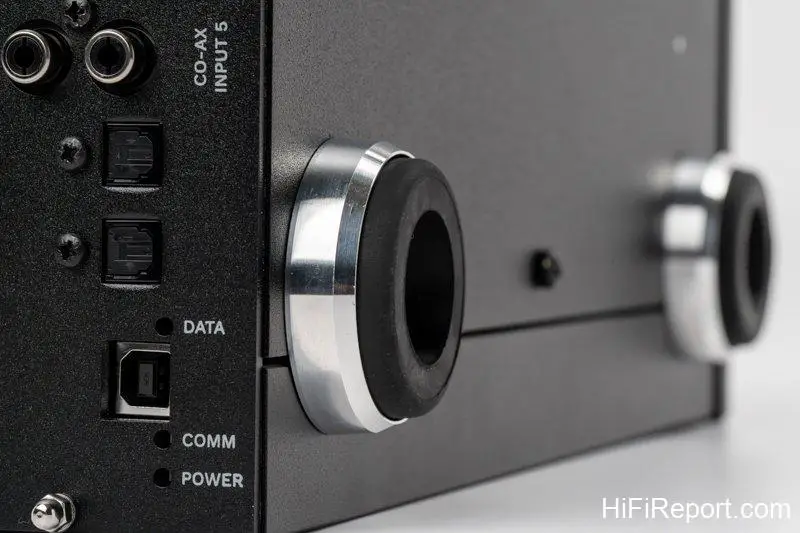
Let’s look at the Saturn MK3’s digital input terminals. Rega provides two coaxial inputs, two optical inputs, and one asynchronous USB input, totaling five digital inputs. The USB makes it easy to connect a computer to the Saturn MK3, and five digital inputs are sufficient.
Of course, some might say, “Why no Ethernet?” That means it can’t play digital streaming, right? Well, this is where Rega is a bit old-fashioned. According to Rega’s design philosophy, the Saturn MK3 itself is a high-quality CD transport, and the five digital input terminals are simply for connecting other digital streamers, turning the Saturn MK3 into a standalone DAC. It’s that simple.
If you want to listen to streaming music online, sorry, you’ll need to buy a digital streamer from another brand! Rega’s CD player design follows an old-school approach of a CD transport plus a DAC, allowing both functions to be used independently.
DAC chip selection is also relatively old-fashioned
Where else is it old-fashioned? Wolfson WM8742! Most DACs encountered these days tend to use ESS Sabre or AKM chips, seemingly to achieve high specifications and facilitate promotion. It’s rare to see Wolfson anymore, mainly because the company was acquired by Cirrus Logic, significantly reducing its market presence.
However, Rega has used Wolfson chips for many years and likely has considerable expertise. Coupled with their deliberate avoidance of advertising, using Wolfson doesn’t add or detract from marketing; all design decisions are driven by sound quality, regardless of marketing jargon.
The most important part is still the analog amplification
I must remind audiophiles that while looking at DAC chip specifications can indicate processing speed and sampling rate, the performance of a DAC chip requires corresponding analog output stage amplification and precise coordination of every power supply point. These factors greatly influence the expressive power of music reproduction. Simply using a specific DAC chip does not automatically make a CD player or DAC sound good. Otherwise, why is there such a huge difference in sound between inexpensive portable DACs using the same chips as devices costing hundreds of thousands of dollars? The key to design is not just the DAC specifications, but the symbiotic relationship with the power supply and analog amplification circuits surrounding the DAC’s operation.
Therefore, the official Rega literature for the Saturn MK3 states that Rega has upgraded the output stage amplification circuit and simultaneously enhanced the power supply for the digital circuits. The digital output and analog output stages have been redesigned. Although these are simple sentences, they highlight the key design points of the Saturn MK3’s update. The crucial factor is not the DAC chip itself, but the comprehensive consideration and upgrade of the peripheral circuits necessary for the DAC to function.
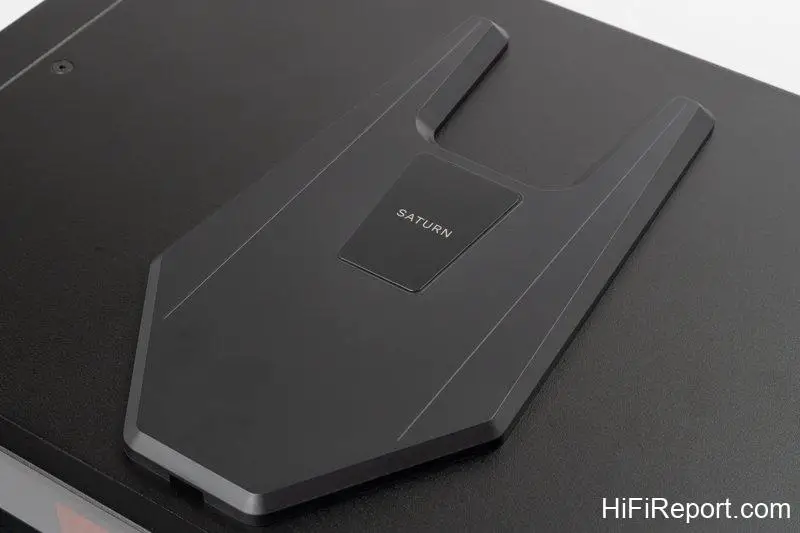
Understated praise for high stability clock
Another design aspect that avoids marketing buzzwords is the clock. Rega simply states understatedly that the Saturn MK3 uses a high-stability calibrated clock paired with a large-capacity power supply. That’s it.
Ah, other companies boast about their clock accuracy reaching femtosecond precision and discuss temperature control to ensure clock stability. Why doesn’t Rega boast about anything, only mentioning a large-capacity power supply and a high-stability clock? How can a reviewer even elaborate on this! However, when I read Rega’s description of the Saturn MK3, I truly feel they are seriously addressing the most practical technical issues. Every straightforward sentence hides the fundamental craftsmanship required for designing a CD player.
Personal preference for top-loading CD lids
Regarding the Saturn MK3 CD player, what I love most is its unique top-loading design. In fact, throughout my years in audio, my preference for CD players has always been top-loading designs. My first relatively high-end CD player as a student was the Sony CDP-X5000, which had a sliding top cover. When HiFiReport was first established, the first reference source, North Star Design, also had a sliding tray design. The YBA CDT-450 transport currently used in the editorial department is the same. This shows my personal “bias” when choosing CD players.
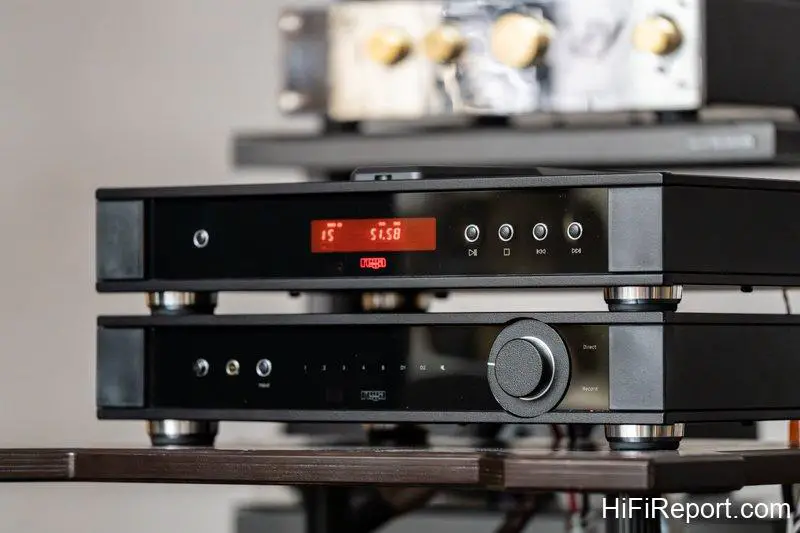
Why do I prefer top-loading or sliding-cover designs over the more common drawer-type designs? The most important reason is, of course, the “ritual” of playing a CD, similar to listening to vinyl records. Another consideration is that the internal space of the transport is larger, and the influence of airflow during high-speed CD rotation is relatively smaller. Finally, durability is a factor. With drawer-type trays, the internal drive belt can age and become brittle over time. While repair is not difficult, if such problems might occur, it’s better to invest in the simpler mechanical structure of a sliding or top-loading cover.
Less common spindle-only design
Unlike most sliding or top-loading CD players, the Saturn MK3 does not use a CD puck. You simply fix the CD onto the central spindle. Skipping the step of placing a CD puck reduces the ritualistic feel slightly and eliminates the fun of experimenting with different puck materials, but it is actually more convenient.
Furthermore, when I first bought the CDP-X5000, I tried using different materials for CD pucks and felt the difference was minimal. After all, it’s digital retrieval. Compared to vinyl record weights, the effect of vinyl weights is much more significant, so I didn’t explore CD pucks much afterward, and very few people make them anyway.
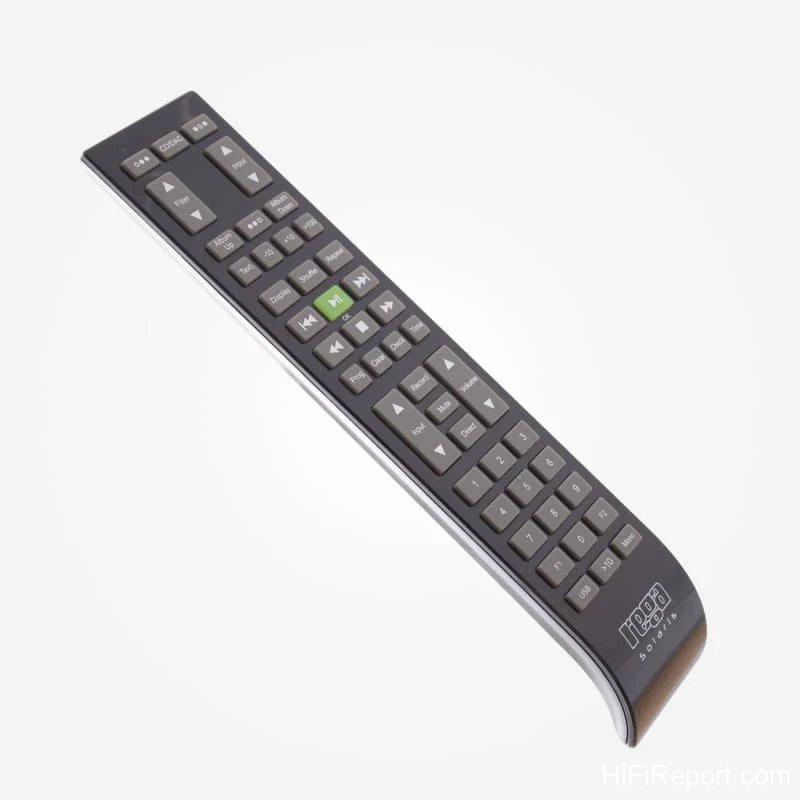
If you have the opportunity to audition the Saturn MK3, be sure to change a CD yourself. Try it out, and you’ll appreciate the excellent mechanical feel. The smoothness is truly captivating only when experienced firsthand.
USB input uses the proven stable XMOS
Regarding the newly added digital inputs on the Saturn MK3, the traditional S/PDIF inputs are straightforward. The focus should be on the USB input. Rega uses XMOS for asynchronous USB input, which is widely recognized as one of the best products on the market. However, the most notable feature of the Saturn MK3’s USB input is its digital filters: five options are available for 44.1/48 kHz, and five options are available for 88.2/96 kHz or 176.4/192 kHz. These digital filter adjustments are only active when using the USB input.
What do digital filters do? They filter out digital noise from the DAC decoding process. How to filter is a huge topic. Simply listing the names of each digital filter option would take a lot of text. In short, different digital filters subtly change the tone. How to experiment? Switch them yourself and find the one you like!
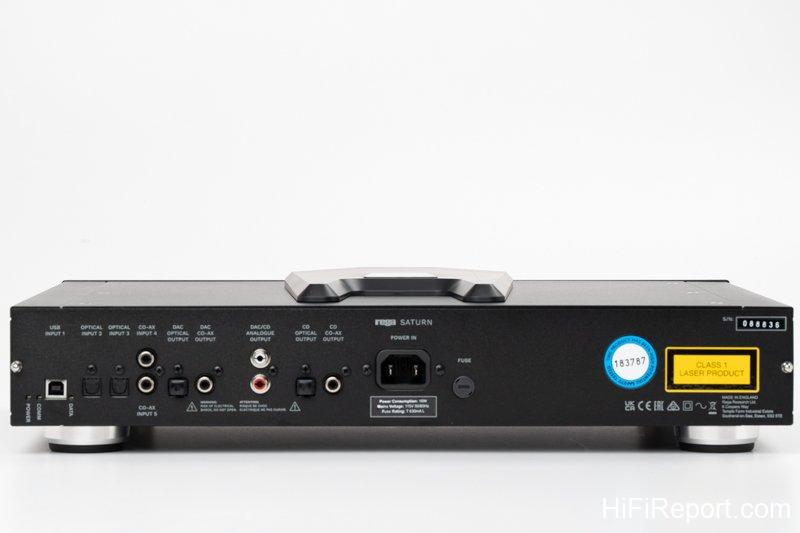
Five digital filters for tonal variation
So, why is the switchable digital filter a fun feature of the Saturn MK3’s USB input? Because it allows for tonal variations! You essentially have ten different tonal options to choose from. Isn’t that fun? If that’s not enough, let me tell you that dCS provides six digital filters, plus their proprietary Mapper technology, resulting in 18 tonal variations. The Saturn MK3 offers a total of ten digital filters, which is less than dCS, but their price is many times higher! So, isn’t experimenting with the Saturn MK3’s USB input a lot of fun! Finally, I want to mention one design aspect of the Saturn MK3 that I don’t quite understand: the power input has no ground wire, only positive and negative. This is not just the Saturn MK3; even the Elicit MK 5 integrated amplifier is the same.
This differs from most audio brands. Perhaps Rega’s grounding method is unique, and adding a ground wire might instead cause interference from different ground loops, so they simply omit the power ground. I must ask the Rega factory personnel about this next time I see them at the Munich High End show.
Full Rega system is the best match, budget-friendly
During the audition of the Saturn MK3 CD, I paired it with two amplifiers: Rega’s own Elicit integrated amplifier and the Linear Acoustic LA-V120 integrated amplifier. The speakers were Rega Aya and Wilson Audio Alexia V. Using the Alexia V was to test the Saturn MK3 CD’s full-range balance and the solidity of the bass. However, using a full Rega system, both in terms of price and sound performance, was the most harmonious match. Therefore, the final review is based on the full Rega setup.
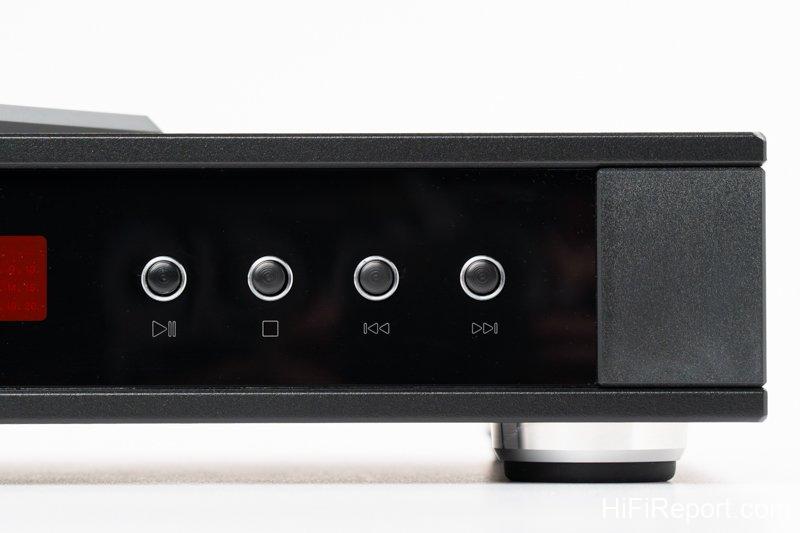
As a mid-range CD player, the Saturn MK3 CD is quite competent. The top-loading CD transport part has a great feel, and you don’t have to worry about it developing problems over time. The purely mechanical manual operation is more durable compared to drawer-type trays. The physical button layout, without any touch controls, is relatively more reliable in terms of durability. Or rather, Rega’s old-school designs are all aimed at lasting durability, not at being flashy for the sake of technological novelty.
Next is the robust chassis design. It uses a metal chassis of the same size as the Elicit amplifier, with a heavy structure. Although the Saturn MK3 CD doesn’t look big, it weighs 9.3 kg, indicating substantial material usage in the chassis.
Old-school design emphasizes “lasting appeal”
In terms of functionality, Rega is a pure PCM camp, so it doesn’t support DSD. However, if you download music files from the internet, you can burn them onto a CD-ROM, and the Saturn MK3 CD can read them. I admit this is still a quite old-fashioned approach, but it indicates that the Saturn MK3 CD might use a modified CD-ROM drive as its reading mechanism. This type of old-school computer peripheral, although relatively outdated, still has a demand, meaning it shouldn’t be difficult to find parts in the future.

From these old-fashioned designs, you can see that Rega wants the Saturn MK3 CD to last a very long time. Even if some issues arise after extended use, it can still be repaired without worrying about being unfixable.
Smooth, natural, fluid musical expression
As for the sound performance, I must return to Rega’s own straightforward statement: circuit design requires decades of accumulated experience. The Saturn MK3 CD has a strong Rega identity, which is smooth, natural, and fluid. For a traditional CD player dedicated to CD reading, decoding, and analog output, the most important aspect when choosing the Saturn MK3 CD is its analog output, which exhibits a smooth, natural, and fluid musical expression.
I would like to cite the self-titled album by Fourplay. This fusion group formed in the early 1990s, bringing together four excellent musicians: keyboardist Bob James, guitarist Lee Ritenour, bassist Nathan East, and drummer Harvey Mason, blending jazz fusion with rhythm and blues.
The album opens with “Bali Run,” starting with a keyboard arpeggio, followed by light drumming. Then the electric bass and kick drum expand the musical soundstage a bit, still maintaining a relatively low volume. The fast 1/16 notes on the hi-hat build the gradually intensifying musical scene. The Saturn MK3 CD subtly conveys the changes in musical dynamics, transitioning from light sounds to increasingly energetic fusion jazz. The full-bodied notes of the electric bass and the power of the kick drum become more percussive and bouncy. The electric guitar solo sounds like it has reverb added, but the focus is still quite good.
Listening to the Saturn MK3 CD, whether with Aya speakers or Alexia V speakers, the overall experience has a comfortable sense of ease, and the musical notes have appropriate weight. On the “Fourplay” album, percussion instruments and electric bass have appropriate compression effects added, enhancing the bouncing elasticity of the bass. The Saturn MK3 CD effortlessly brings out the bounce in the lower frequencies, and the bass decays quickly and smoothly.
Balanced mid-bass with bouncy feel
When listening to jazz crossover, how can we miss Jacques Loussier? Listening to their best-selling “Vivaldi: The Four Seasons,” adapted into jazz crossover, the Aya floorstanding speakers, though not large, paired with the Saturn MK3 CD and Elicit integrated amplifier, deliver bouncy bass, along with clear and thick bass definition. The rhythm is truly excellent. The piano melodies are relaxed and have beautiful mid-high frequency extension. The jazz drums play shimmering cymbals. The Saturn MK3 CD creates a vivid musical scene, while the mid-range presents appropriate weight and thickness.

The smooth, natural, and fluid tone of the Saturn MK3 CD makes listening to jazz effortlessly enjoyable. For instance, “Cookin’ With The Miles Davis Quintet,” one of the classic RVG (Rudy Van Gelder) series recordings, naturally has a vivid and realistic sound profile. Listening with the Saturn MK3 CD retains the vividness and realism, but the texture and smoothness of the instruments add a captivating atmosphere to the swing of the jazz.
For example, Miles Davis’ trumpet playing has a clear and distinct brass tone, but the high-frequency decay is beautiful, not harsh or irritating, yet it doesn’t lose any vividness. The jazz flows more smoothly and softly. In this recording, the pianist is Red Garland instead of the previous Bill Evans, whose tone is brighter and piano melodies more joyful, contrasting with Miles Davis’ relatively melancholic blues style. Listening to “My Funny Valentine,” the trumpet sounds more like a heartbroken male protagonist, while the piano seems to mock fate.
Expressive violin and piano
Switching to classical music, I listened to Perlman and Ashkenazy’s collaboration on Beethoven’s “Kreutzer Sonata.” This old Decca recording captures the youthful vigor of both musicians. Being young, they naturally had more energy and intensity. The first movement of “Kreutzer” begins with the violin. Perlman’s double-stop bowing demonstrates his youthful power. Ashkenazy’s piano responds, feeling a bit more reserved, but once the allegro theme is reached, the piano and violin are equally assertive.
The Saturn MK3 CD brings out the beautiful power of the violin and piano, with different weights. The variations in violin bowing and spiccato are focused and powerful, while the piano creates a broad shape, expanding the soundstage. The violin’s tense performance of the theme is surrounded by the piano, creating a dynamic interplay of tension and release that characterizes the intensity of the “Kreutzer” first movement. When it finally softens, the smooth tone of the Saturn MK3 CD further highlights the gentle affection contained within the music.
Listening to romantic power and tenderness
Bringing in something powerful, I listened to Sviatoslav Richter’s piano solo with the London Symphony Orchestra conducted by Andre Previn performing Schumann’s Piano Concerto. The first movement’s explosive orchestral forte is met by powerful piano chords. The woodwinds emerge gracefully from the depth of the soundstage, and the piano responds tenderly. The strings build a romantic atmosphere, gradually increasing in intensity.
The Saturn MK3 CD presents the layers of music precisely. The piano is in front, slightly to the left, with the orchestra behind. The woodwind solos create a sense of 3D depth in the soundstage. These portrayals of soundstage positioning feel effortless, outlining the scale of the orchestra in a relaxed and comfortable manner.
To discuss the epitome of romance, I’d like to cite Rubinstein’s performance of Chopin’s Piano Concerto No. 2, Second Movement. Listening with the Saturn MK3 CD captures the atmosphere perfectly. The string section’s slow opening, echoing the woodwinds, is rendered with a wide soundstage by the Saturn MK3 CD. The mid-range carries the dense quality of early analog recordings, and the piano tone is particularly so. The sound of the hammers hitting the strings has a slightly rich tone, a characteristic of analog recordings from that era, which the Saturn MK3 CD faithfully reproduces.
When the piano theme of the second movement emerges, Rubinstein plays steadily, with only slight hesitations on a few repeated notes, conveying Chopin’s indecisive musical style. When the piano theme returns, played an octave higher, Rubinstein pours out the full romantic atmosphere. The intricate variations in the arpeggios are fully reproduced by the Saturn MK3 CD. The appropriate mid-range density brings out an analog flavor reminiscent of vinyl. I want to say that choosing the Saturn MK3 CD is truly for the decades of research in analog amplification circuits that have refined this balanced yet romantic tone.
Decades of design expertise result in charming musicality
Judging by the sound quality relative to the price, the Saturn MK3 CD is genuinely not expensive. Although some might say that at this price, it doesn’t support DSD and the highest PCM is only 24bit/192 kHz, meaning the digital specifications are not up-to-date, I would argue that Rega’s old-school approach results in the Saturn MK3 CD having less flashy specifications not to win based on numbers, but to build upon “decades of accumulated audio circuit design” to create a tone that is both realistic and romantic.
If you are looking for smooth, natural, and fluid music reproduction, then please listen to the Saturn MK3 CD. Once you are captivated by its tone, the decoding specifications that only impress with numbers will likely become unimportant.
Specifications
* Type: CD player
* Digital Inputs: USB x1, Optical x2, Coaxial x2
* Digital Outputs: Optical x1, Coaxial x1
* Analog Output: RCA x1
* Total Harmonic Distortion: 0.006%
* Frequency Response: 17Hz~20.5kHz
* Signal-to-Noise Ratio: -109dB
* Built-in DAC Chip: Wolfson WM8742 x2
* Supported Max Sampling Rate: 24bit/ 192kHz
* Dimensions: 435 x 180 x 400 mm (WxHxD)
* Weight: 9.7kg