
Rockport Atria II Review
Ahead of the upcoming TAA Hi-End Audio Exhibition in November, the newly imported Rockport Technologies Atria II floorstanding speakers from the USA are undergoing rigorous break-in at their showroom. The aim is to showcase their best possible sound at the event. MY-HiEND is offering a first-hand listening report before the exhibition opens. Founded by audio genius Andy Payor, Rockport Technologies initially gained fame for its tangential tracking air-bearing turntables.
Later, Andy dedicated himself to speaker design. The discontinued Sirius turntable still holds a revered status, treasured by many audiophiles.
Since the debut of the first Procyon speakers in 1993, each subsequent speaker release from Rockport has caused a market sensation. Their performance has consistently pushed the boundaries of perceived speaker reproduction limits. Currently, Rockport offers four speaker models, ranging from smallest to largest: Atria II, Avior II, Cygnus, and Lyra. The Atria II, reviewed here, is the latest iteration of the Atria.

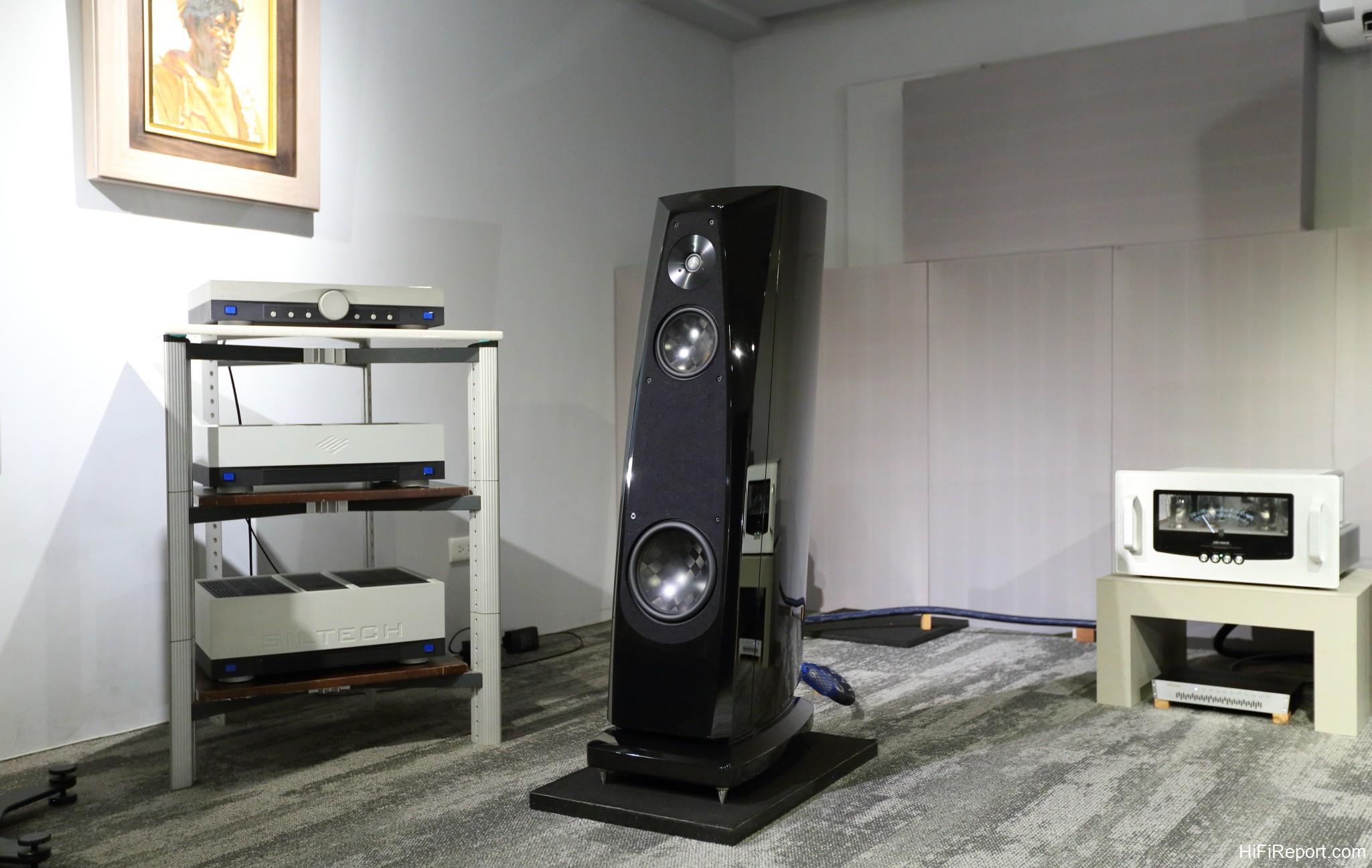
It features the latest waveguide technology with a 1″ beryllium tweeter, next-generation carbon fiber sandwich composite midrange and bass drivers, and a redesigned crossover. Every component is 100% developed in-house by Rockport engineers from the ground up. The 6″ midrange and 9″ bass drivers utilize a revolutionary new carbon fiber diaphragm, significantly improving the strength-to-weight ratio. This ensures perfect pistonic motion throughout the operating range.
Both drivers are equipped with ultra-linear, high-energy magnet drive systems and robust die-cast aluminum frames, resulting in extremely low distortion, high resolution, and powerful dynamic range.

The Atria II’s cabinet construction is exceptionally meticulous. It employs a three-layer damped structure, composed of High-Density Fibreboard (HDF)/damping layer/HDF. The front baffle is a substantial 4″ thick, while other parts of the cabinet vary in thickness up to 2.5″. The curved side panels are not only elegant but also enhance cabinet rigidity and minimize potential resonances.
The Atria II cabinet incorporates numerous angles and varying front baffle dimensions to eliminate unwanted diffraction. The angled cabinet design is not merely aesthetic; it is crucial for achieving time-phase coherence of the drivers. A luxurious piano lacquer finish completes the Atria II, making it as visually stunning as it sounds. The solid construction and premium materials contribute to a substantial weight of 68kg per speaker.
This angle provides a clearer view of the Atria II’s multi-faceted cabinet. Sound-absorbing material is applied to the front baffle to mitigate unwanted sound waves and resonances.
Even the speaker terminal block receives Rockport’s meticulous attention to detail. No aspect is overlooked. The Atria II uses a single-wire design, with the metal bass reflex port located above the speaker terminals.

Listening Environment & System
The listening session took place in the HiFiReport audio room. The accompanying equipment was equally impressive:
* Speakers: Rockport Atria II
* Source: Playback Design MPT-8 transport, Playback Design MPD-8 DAC
* Preamplifier: Audio Research Reference 6SE

* Power Amplifiers: Audio Research Reference 160M monoblocks (x2)
* Cables: Siltech Double Crown

First Encounter with Rockport (Ted Chen)
The Rockport Atria II employs a beryllium diaphragm tweeter and carbon fiber diaphragm midrange and bass drivers. Keen observers might notice similarities to driver combinations used by other brands. However, after listening, I can confirm that due to differences in internal and cabinet design, the sound signature is distinctly different. Many speaker brands utilize similar materials, yet achieve noticeably different sonic outcomes.
This highlights that speaker design is about holistic integration, and one cannot judge merits or flaws based solely on a few noteworthy material choices. I had not previously had the opportunity to thoroughly evaluate Rockport’s sound. This session served as my first true experience with the Atria II.
Familiar Gear, New Perspective
Upon entering the HiFiReport listening room, the equipment was already warmed up. The system featured familiar Audio Research components: a Reference 6 preamplifier and two Reference 160M monoblock power amplifiers. Music was streamed via Innuos network streamer, USB to the Playback Design MPT-8 flagship transport, and then via Playback Design’s proprietary Plink optical interface to the MPD-8 flagship DAC for decoding. Siltech cables were used throughout.
This system configuration is planned for the HiFiReport audio exhibit at the upcoming TAA audio show. The Playback Design flagship components are supported by HiFiReport Audio, meaning audiophiles will have the chance to experience this impressive system at the show. My initial impression upon entering the room was remarkably positive. Having visited this space countless times, I had never experienced such an immediate sense of sonic excellence.

Even at low volumes, density and richness permeated the room, leaving a profound first impression of Rockport and setting high expectations.
Captivating High-Density Sound
Playing the renowned audiophile recording *Jazz at the Pawnshop*, the instrumental images were clearly defined and full-bodied. The spaciousness and density of the sound were exceptional, instantly creating a palpable jazz club atmosphere. The recording also captured the sounds of the live audience, further enhancing the sense of being present at the performance.

The soundstage, shaped by the system and room interaction, was effortlessly wide and expansive, without any sense of strain or limitation. The details and timbre of each instrument were clear and distinct. Despite the beryllium tweeter, there was no harshness or sharpness that could fatigue the ears. The mid-bass fullness was excellent, with a solidness that was not oppressive. The absence of excessive room modes, a benefit of the large space and careful setup, was evident.
Tonally, the Atria II offered thickness and density, leaning slightly towards warm neutrality. This might be influenced by the system synergy, as other components from these brands tend towards a similar sonic character. The sound possessed a degree of moisture and richness, avoiding any dryness, and leaning towards a stately and dignified presentation.

In comparison to Dynaudio, which I frequently hear in this room, Dynaudio offers more vibrancy and musical liveliness, while the Atria II exudes greater composure and gravitas. The pairing with Audio Research proved surprisingly synergistic. The Atria II’s sensitivity of 87dB is moderate by today’s standards; not particularly high, but not overly demanding to drive. The two monoblock amplifiers provided ample power.
In bass-heavy tracks, the overall control and low-frequency impact were readily apparent, both exceptionally good. The speed was neither too fast nor too slow, and the clarity was outstanding. Notably, despite the Atria II featuring a 9-inch bass driver, the perceived air movement in the room felt more substantial than a typical 9-inch driver, with remarkably controlled bass reproduction.

Vivid, Engaging, and Excellent Bass
Switching to Yosi Horikawa’s *Wandering*, an album ideal for evaluating soundstage depth and width, image precision, sonic naturalness, and bass speed and impact. We’ve played this album on countless systems. The opening footsteps immediately reveal soundstage depth and the subtlety of changes as they approach. The subsequent birdsong assesses soundstage width and height. The rustling leaves in the forest, stirred by the wind, test density and naturalness.
The birdsong further confirms soundstage height. While the Atria II’s soundstage height is limited by its physical height of 110.5cm, making it challenging to fully recreate towering trees, its other strengths were quickly validated. Despite its overall sonic character being more (steady/composed), the Atria II is by no means lacking in sonic agility; it is not dull or uninteresting.
Whether listening intently in the sweet spot or moving around the room, the music remained vibrant and nimble, providing a comfortable and enjoyable experience.
Luminous Transparency (Emma Lin)
Playing track 5, , from Ariana Savalas’ album *Sophisticated Lady*, the song’s arrangement is quite interesting. The prominent accompaniment is plucked string instruments, unlike typical jazz with a fuller instrumental soundscape. Listening through the Atria II, the introduction creates a background reminiscent of a cat’s light footsteps. Each note’s full-bodied timbre is remarkably buoyant, almost staccato-like.
The room was quiet, and the background was black, resulting in an overall clear and smooth musical presentation. The low-frequency extension lent a stable and grounded quality to each descending note. Ariana Savalas’ voice possesses a captivating allure. Her melodic lines are distinct yet not sharp. Her vocal technique is highly polished.
While not a smoky-voiced powerhouse, she possesses a vocal skill I greatly admire: the natural and fluid rendering of musical dynamics, crescendo and diminuendo. The Atria II reproduced her vocal nuances and technique with exceptional clarity and focus, thanks to sufficient coherence. The tonal quality, to my ears, was luminous and polished, transparent and bright. The bass and treble performance left a lasting impression.
Rockport Technologies Atria II Speakers
* Design: 3-way, 3-driver bass reflex
* Bass Driver: 9″ carbon fiber sandwich composite
* Midrange Driver: 6″ carbon fiber sandwich composite
* Tweeter: 1″ beryllium dome (waveguide)
* Frequency Response: 28 Hz – 30 kHz, -3dB
* Impedance: 4 ohms
* Sensitivity: 87.5 dB SPL/2.83 v
* Minimum Amplifier Power: 50 watts
* Dimensions: 110.5 x 31.8 x 50.8 cm
* Weight: 68 kg