
Rockport Avior II Floorstanding Speaker Review
Before the audio show, I visited HiFiReport Audio to audition two setups with the Rockport Atria II. After the show, I returned to HiFiReport to audition the larger Avior II. Initially, I assumed the Avior II was simply an Atria II with an additional woofer, a slightly larger cabinet, and marginally better bass. However, I was mistaken. The Avior II is not just a little better in the low frequencies; it elevates every aspect of musical performance, presenting a more authoritative and realistic listening experience.
Noticeably Larger Scale Than Atria II
The current Rockport speaker lineup comprises five models. Taurus is the center channel, while the other four are floorstanding speakers, ranging from top to bottom: Lyra, Cygnus, Avior II, and Atria II. I previously auditioned the Atria II at both Jia-Ying and HiFiReport Audio. When I came to audition the Avior II this time, I expected only a slight improvement over the Atria II. However, audio performance cannot be judged by assumptions alone; experiencing it firsthand reveals its true capabilities.
Comparing the specifications of the Atria II and Avior II, both extend to 30 kHz in the high frequencies. The Atria II reaches down to 28 Hz in the low frequencies, while the Avior II extends even further to 25 Hz. In terms of efficiency, the Atria II is rated at 87.5 dB, and the Avior II at 89.5 dB. The cabinet construction is similar, employing a sandwich structure of HDF with damping material. However, the Avior II is 3 inches taller and 70 pounds heavier than the Atria II.
Looking solely at the specifications, you might consider the Atria II to be a better value proposition, with the Avior II seemingly only incrementally better, perhaps not justifying the price increase.
Indeed, this was my initial thought before visiting HiFiReport. However, after listening, it became clear that the Avior II’s ability to reproduce music with authority significantly surpasses that of the Atria II.
Rockport: Leading the Hi-Fi Design Trend
The evolution of Rockport speakers can be roughly categorized by their driver selection. Before 2000, Rockport utilized Dynaudio silk dome tweeters paired with Eton mid-range and bass drivers. This driver combination became widely imitated. Consequently, after 2000, Rockport transitioned to custom-made drivers from Danish manufacturer Audio Technology. These drivers were built to Rockport’s unique specifications and unavailable on the open market. This move also sparked imitation, with many speaker brands touting custom Audio Technology drivers.
However, specifying and ordering custom drivers with unique performance characteristics is far more complex than simply claiming “custom-made.” Rockport’s driver choices sparked industry imitation, indicating their leadership in high-end speaker design. It seemed adopting Rockport’s driver approach was a shortcut to creating excellent speakers.
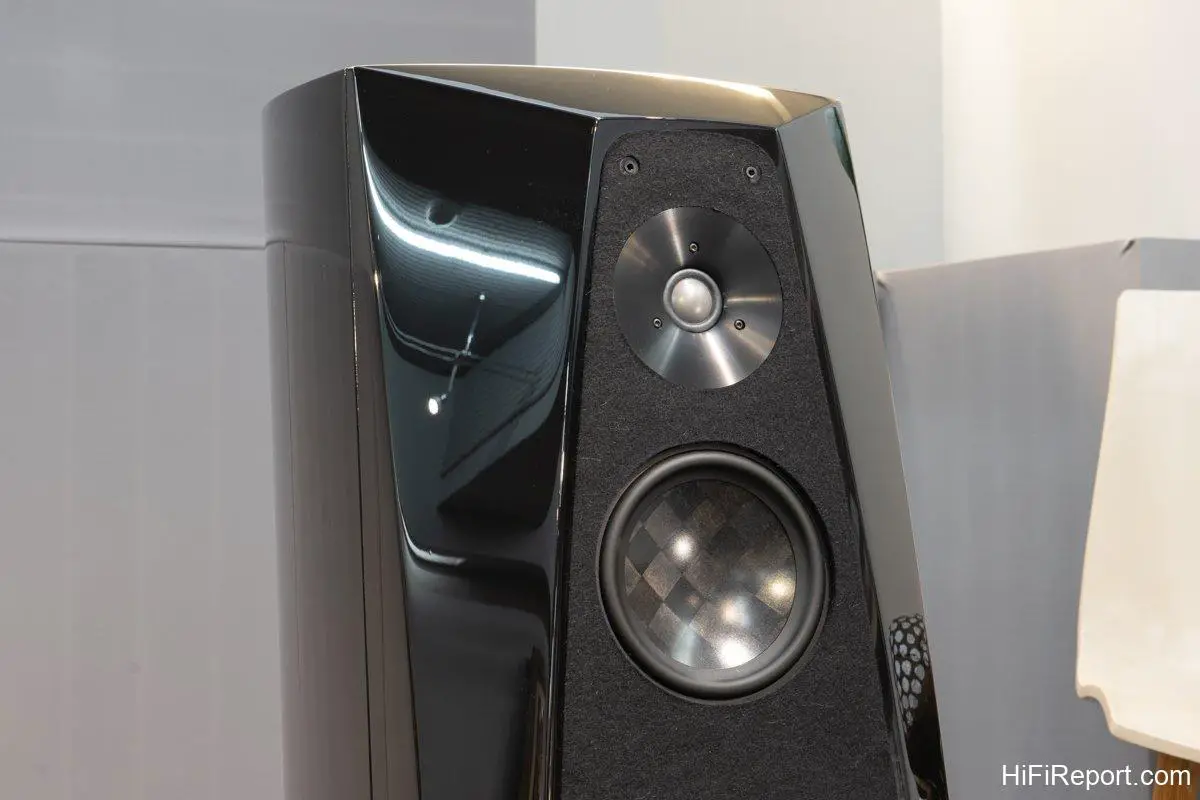
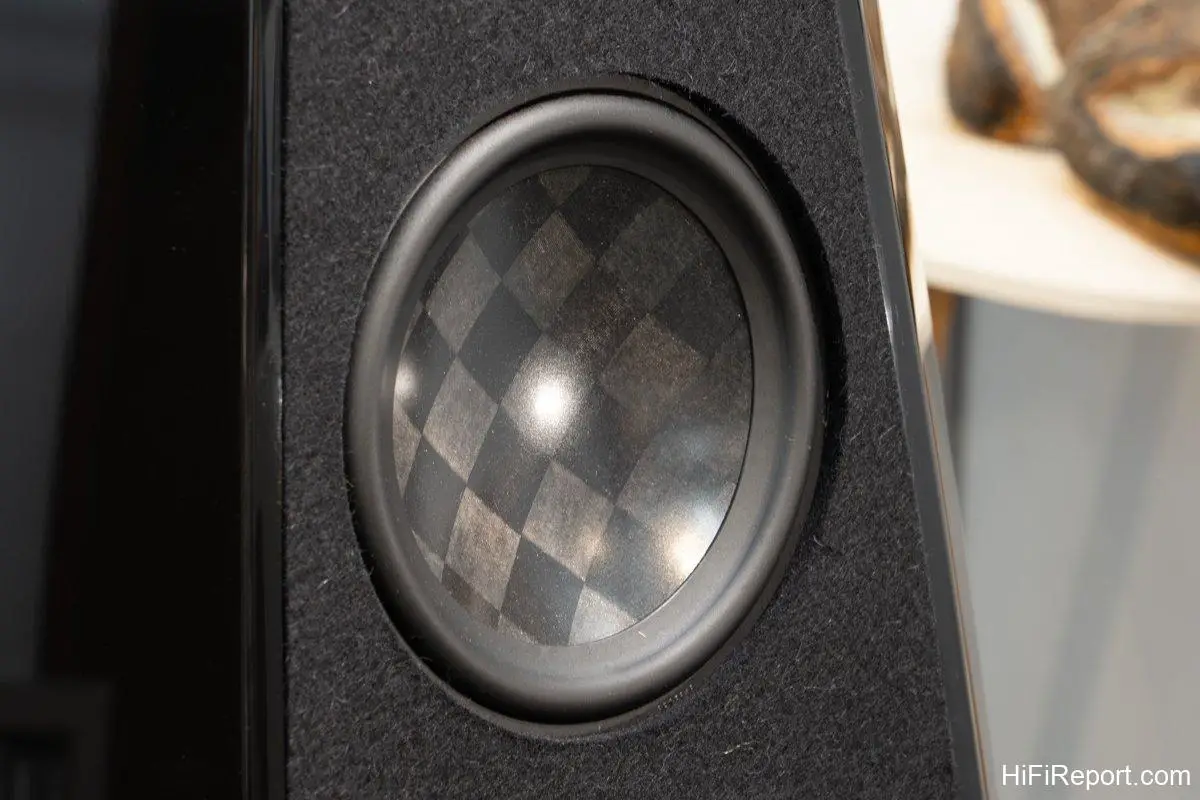
Being a leader is often a solitary path. Rockport’s innovations are frequently followed by others. Therefore, after 2010, Rockport decided to manufacture their own drivers in-house, guaranteeing exclusivity. This marked the birth of the first-generation Avior. In 2017, the Avior II was introduced, maintaining the same appearance but upgrading the mid-range and bass drivers with new carbon fiber woven composite diaphragms. The tweeter remained a beryllium dome unit, thus becoming the Avior II.
Sandwich Composite Cabinet Material
For the cabinet material, the Avior II employs an HDF sandwich structure. HDF (High-Density Fiberboard) offers higher material density and rigidity compared to commonly used MDF (Medium-Density Fiberboard), resulting in superior vibration damping. However, a single material alone is insufficient to manage vibrations across all frequencies. Therefore, Rockport utilizes a sandwich structure, incorporating damping material between two layers of HDF. This three-layer composite structure provides more effective vibration control than solid HDF. Using only HDF, inherent resonances persist; combining it with damping materials effectively eliminates these resonances.
Rockport is not alone in using composite or sandwich structures to address resonance issues. However, the expertise lies in the details, primarily in shifting cabinet resonances beyond the audible range.
Vibrations from driver operation transmitted to the cabinet will not dissipate spontaneously, leading to resonance. Due to the law of conservation of energy, these resonant energies are difficult to eliminate. Composite materials are used to alter resonance characteristics. By pushing the resonant frequencies outside the audible range, unwanted sonic coloration is avoided.
While the principles are generally understood, the art lies in material selection and resonance management, moving it beyond the audible spectrum. Rockport reveals the use of damping material between two HDF layers but understandably keeps the specific damping material composition a proprietary secret, a key element of their competitive advantage.
Cabinet Design: A Masterclass in Acoustics
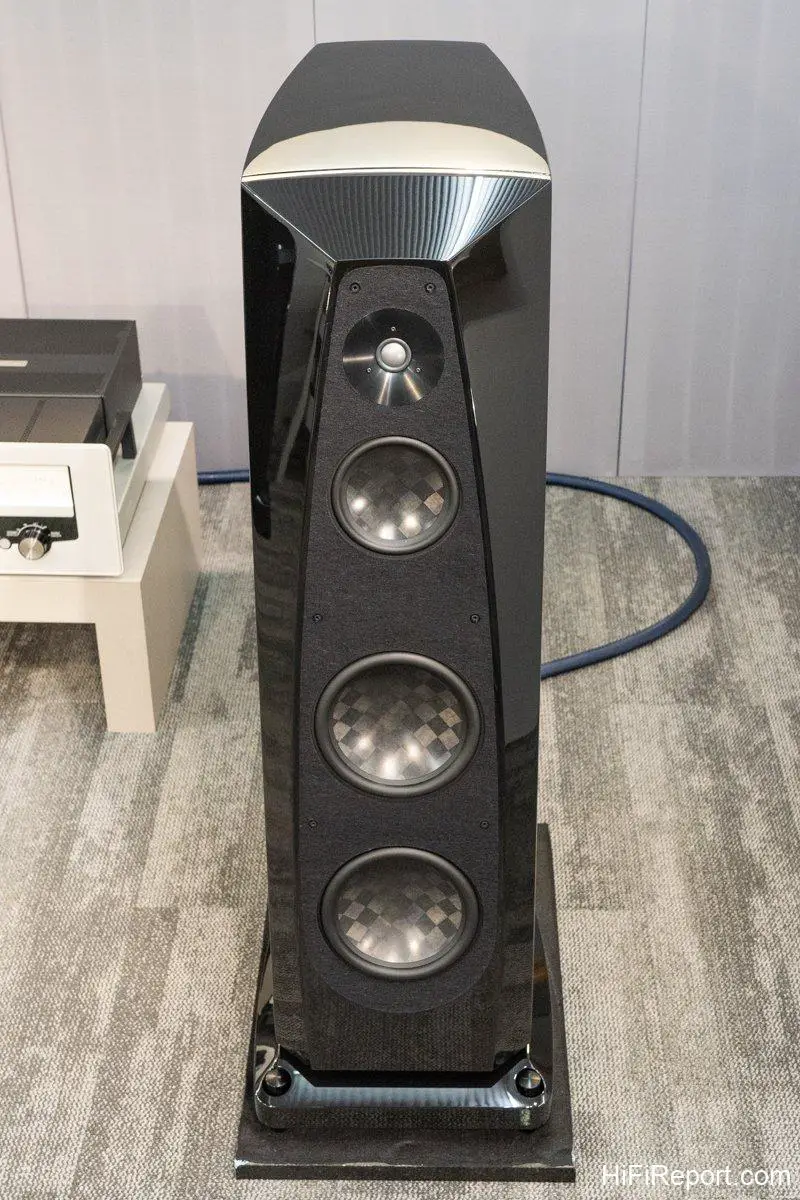
The Avior II’s cabinet shape remains virtually unchanged from the first generation, at least to the naked eye. However, the Avior II’s design is not merely aesthetic; it embodies numerous acoustic principles. Four key aspects stand out: First, the Avior II’s front baffle slopes backward to achieve time-phase correction, ensuring high, mid, and low frequencies reach the listener’s ears simultaneously. Second, the front baffle’s width tapers from bottom to top, with edges nearly flush with the drivers. This minimizes front baffle diffraction, enhancing image focus. Third, the design maximizes internal cabinet volume while minimizing the footprint. This explains the narrower upper front baffle, preserving as much internal volume as possible. Fourth, the cabinet sides curve inward towards the rear, eliminating internal parallel surfaces to prevent standing wave interference within the enclosure.
As you can see, the aesthetically pleasing Avior II is underpinned by substantial acoustic engineering. The original Avior cabinet was already highly refined, likely explaining the minimal changes in the Avior II.
Exceptional Performance from 6-inch Custom Midrange
The crucial upgrade in the Avior II lies in its newly designed 6-inch carbon fiber woven composite midrange driver. Upon seeing its specifications, I was tempted to acquire a pair for experimentation. The bandwidth is exceptional! Rockport claims this midrange covers six octaves with extremely low distortion—both second and third harmonic distortion below -60 dB. Considering a piano’s 88 keys span seven octaves, and this 6-inch midrange covers six, it encompasses nearly 85% of the piano’s range. Using it as a full-range driver in an experiment would be intriguing.
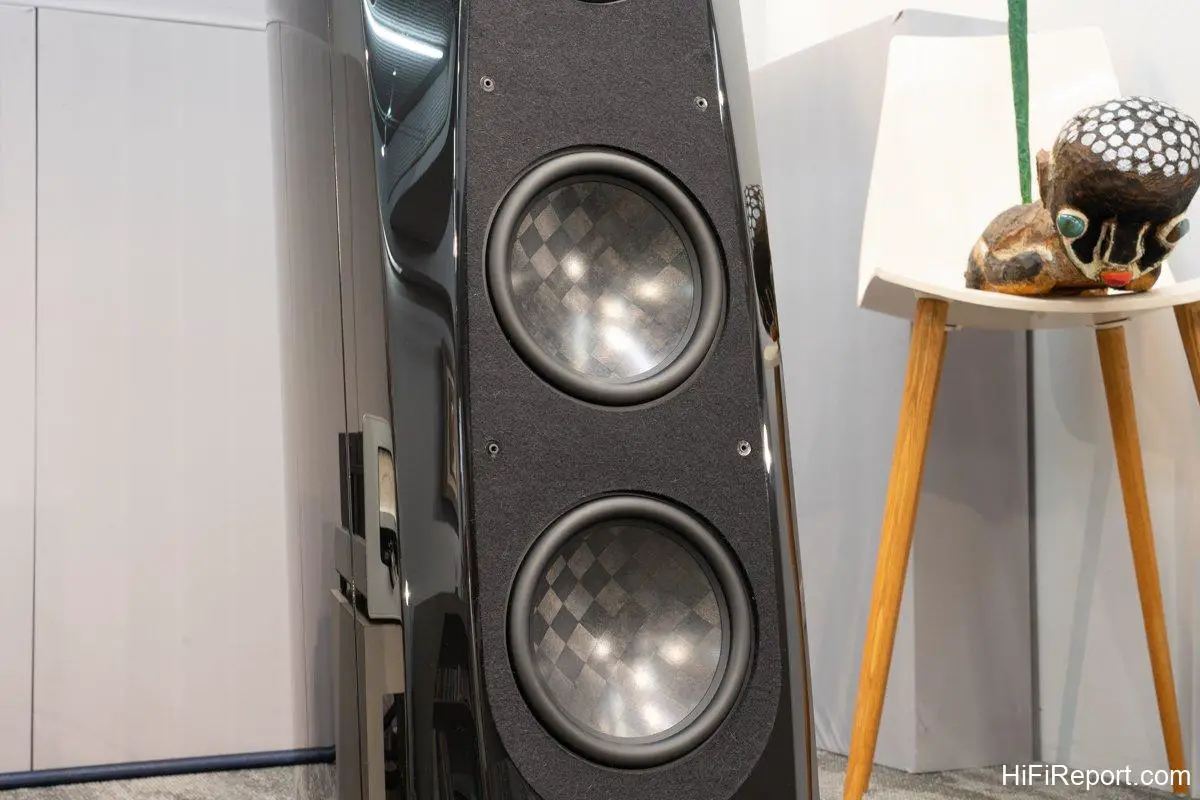
One can consider the Avior II’s 6-inch midrange as the heart of the music, covering nearly 85% of the piano’s frequency range. The remaining frequencies, the top and bottom octaves, are filled in by the beryllium tweeter and dual 9-inch woofers. Because the 6-inch midrange is so capable, extending the frequency range at both ends is less demanding, facilitating a natural integration.
The crossover points for the high and low frequencies can be raised or lowered, moving them away from the ear’s most sensitive range. Conversely, if the midrange driver has a narrower bandwidth, the woofer crossover point must be raised, and the tweeter must extend lower, potentially placing crossover points in the ear’s sensitive frequency range. In such cases, even slight irregularities in the crossover frequency response can become audible. Therefore, an excellent midrange driver is fundamental to a good speaker design.
The breakthrough in carbon fiber sandwich diaphragm technology is also applied to the Avior II’s woofers. Equipped with dual 9-inch woofers, the Avior II offers improved bass output, lower frequency extension, and increased efficiency. Compared to the single 9-inch woofer in the Atria II, the Avior II is 2 dB more efficient, making it more amplifier-friendly.
Full Audio Research System with Siltech Cables
My audition at HiFiReport Audio was conducted with a complete Audio Research system. The CD player was the CD6, the preamplifier the GS Pre, and the power amplifier the GS 150. A notable configuration was bridging the GS 150 stereo amplifier to operate as monoblocks, doubling the output power and enhancing speaker control. Cabling was entirely Siltech, including Mountain power cables, Princess interconnects, and Double Crown speaker cables.
Since the CD6 allows for digital filter mode adjustments, I began by comparing a couple of tracks with different settings. I settled on the “Slow” filter and engaged the upsampling function before focusing on evaluating the Avior II.
Why “Slow” filter and upsampling? This is simply my personal preference when using Audio Research CD sources.
Effortlessly Reveals Authentic Recording Authority
I started with gentle jazz, playing Miles Davis’ “Cookin’ With Miles Quintet” (Prestige 7094), specifically the classic “My Funny Valentine.” The light piano chords, the soft brush strokes on the drums, and Miles Davis’ bright trumpet melody unfolded freely. I had auditioned the Atria II in the same location with the same record, so starting with Miles Davis provided a familiar reference. I initially expected the Avior II to be only “a little better,” but I was mistaken. The Avior II’s expansive and generous presentation painted a relaxed and effortless jazz scene. This was not just “a little better,” but a more authoritative reproduction of the music.
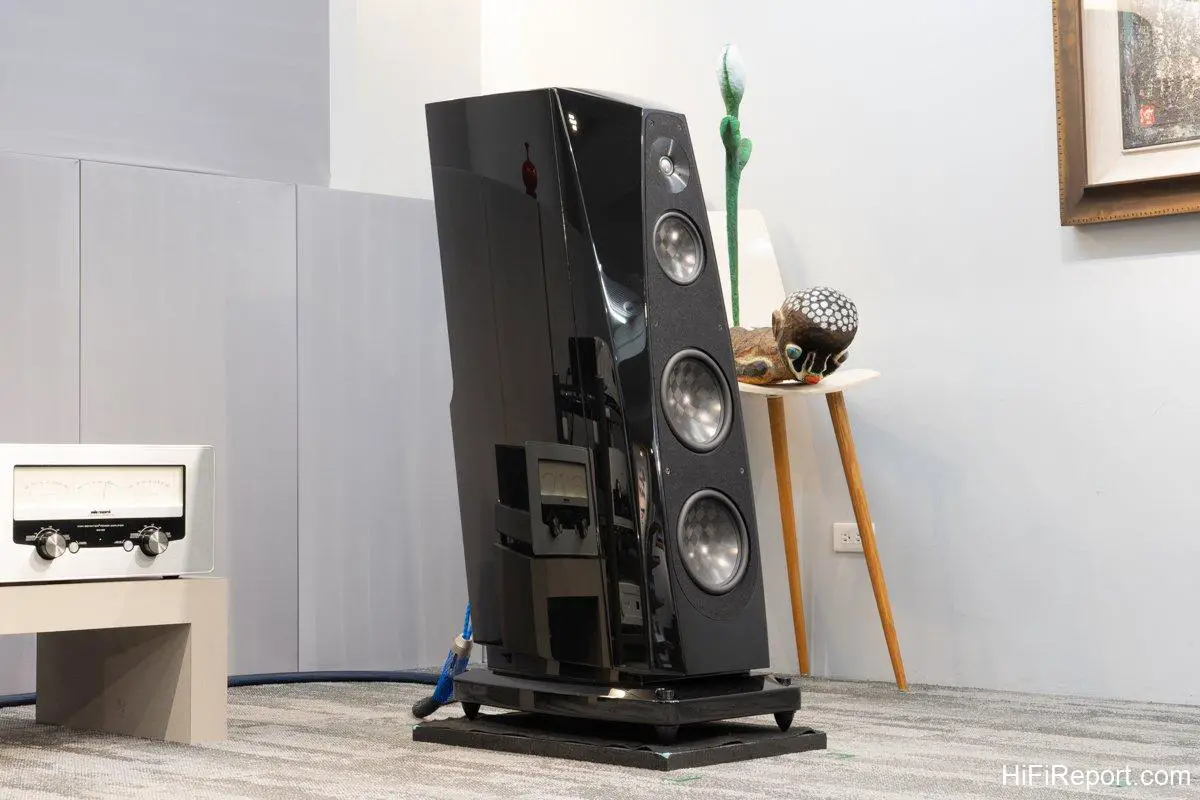
The 1956 recording, undoubtedly from analog master tapes and entirely analog throughout, still retains its vintage character even after digitization. The Avior II reproduced a clear and transparent soundstage, yet the subtle tape hiss remained discernible, revealing high fidelity to the recording. Miles Davis’ trumpet was bright and penetrating; the beryllium tweeter brought out the vibrancy of the brass. However, the mid-bass fullness filled the entire soundstage, rich and substantial. The double bass notes were full and rounded. Contrasting the bright trumpet, the subtle changes in breath control and the delicate variations of the mute were all present. While the Atria II conveyed similar timbres, the Avior II demonstrated a more relaxed and spacious soundstage, along with fuller and more substantial sonic images.
Indeed, this is the advantage of larger speakers. Although the Avior II is only 3 inches taller and has just one additional 9-inch woofer, it noticeably elevated the ease and effortlessness of music reproduction to a higher level.
The Atria II remains an excellent speaker, but in HiFiReport’s large listening room, the larger Avior II is even more at home, performing with greater ease and composure. Even at higher volumes, the sound remained relaxed and unstrained. In comparison, pushing the Atria II louder felt somewhat compressed, as if the amplifier was straining. Therefore, in smaller listening spaces, the difference between Avior II and Atria II might be less pronounced, as their sonic signatures are consistent. However, in a larger space, the Avior II’s more expansive and effortless soundstage portrayal becomes distinctly superior.
Exceptional Soundstage Reproduction
Switching to Opus 3’s “Test CD 4,” a compilation focused on recording spatial cues, I listened to track 13, “Reunion Blues.” The Avior II effortlessly expanded the soundstage, wide and deep. The drum kit was centrally positioned, slightly recessed. The piano was positioned slightly to the left, and the vibraphone to the right. The double bass notes were large and focused, underpinning the rhythmic foundation. The drum strikes were crisp and clear, yet not harsh or aggressive, capturing the lively essence of jazz. The saxophone solo was tightly focused, and when the band swelled for the piano solo, aiming for a climax, the piano solo continued with a soft vocal accompaniment. These rich recording details were effortlessly presented by the Avior II, painting a vivid and dynamic soundstage.
Comparing the Opus 3 and Prestige recordings highlighted the Avior II’s ability to reveal recording authenticity. The Prestige recording, from older analog master tapes, had rounder, fuller notes but less transparency and some tape hiss in the background. In contrast, Opus 3, a digital recording emphasizing audiophile quality, was remarkably clean and transparent, with precise soundstage localization. The Avior II accurately conveyed the warmth of the analog master tapes and the transparency of the Opus 3 audiophile digital recording.
Expansive Soundstage, Crisp Definition
The Avior II’s effortless soundstage portrayal was truly enjoyable with “Bach Trio.” HiFiReport’s speaker placement was clearly carefully optimized. I could simply relax in the sweet spot and relish the experience of the speakers disappearing into the space, leaving only the music. The trio of cello, double bass, and mandolin presented a challenge in distinguishing the cello and double bass timbres. Both are low-frequency instruments; the cello is more melodic, while the double bass offers more depth.
The Avior II’s mid-bass was not only rich but also remarkably detailed. The timbres of the cello and double bass remained distinct and easily differentiated. This is why I often bring this CD for auditions. If a system lacks low-frequency resolution, the timbres of these two low-register instruments can easily blend together, lacking definition.
Furthermore, soundstage height is crucial for “Bach Trio.” The Avior II effortlessly conveyed a sense of vertical soundstage expansion, creating a 3D soundscape with excellent height, width, and depth. When the speakers vanish from the listening space, what remains is the essence of the music, allowing one to fully immerse in the musical experience and forget about the audio equipment.
Nuanced and Dynamic Musical Expression
Switching to Chen Pi-Hsien’s “Mozart Piano Works,” I listened to the cheerful “Sonata C Major KV. 279 (189d).” The lively arpeggios opened the Allegro movement. The crystalline piano notes, through the Avior II, sounded as if freshly polished, radiant and clear. The left-hand bass arpeggios and the constantly evolving theme, combined with the balanced finger strength across both hands, showcased the pianist’s mature and rounded performance. Within the bright and crisp notes, Mozart’s playful and joyful emotions were palpable.
The Avior II delicately rendered the piano’s subtle expressions. The brilliance of the right-hand treble register and the solidity of the left-hand bass, the full-bodied notes in the lower register, and the slight woody resonance during key strikes—while the treble was not just bright, the upward-inflected trails at the end of phrases—these subtle nuances reflected the pianist’s decades of accumulated artistry, captured in the recording. Listening through the Avior II, I could almost visualize Chen Pi-Hsien’s expression during the recording, her complete focus on her fingertips, conjuring a joyful and flowing Allegro movement with the piano.
Crossover Recording Enhancements Clearly Audible
Next, I listened to Mutter and John Williams’ “Across the Stars,” specifically the familiar “Rey’s Theme.” The Avior II’s ability to reveal recording characteristics was evident. The enhanced bass in this crossover classical recording was immediately noticeable. In comparison, “Bach Trio” and “Mozart Piano Works” featured more traditional classical recording techniques with a more natural and smooth sonic texture. “Across the Stars,” however, featured a richer mid-bass, creating a stronger contrast with the violin’s definition.
The bass enhancement in “Rey’s Theme” was immediately apparent from the pizzicato double bass. The Avior II powerfully rendered the weighty bass notes. The violin seemed to have some compression applied, making its lines more prominent and dynamic, creating a more dramatic and lively soundstage. As a film score adaptation, the recording naturally incorporated more effects to enhance the atmosphere. Through the Avior II, these recording technique differences were clearly audible.
Accurate Opera Stage Presentation
The Avior II’s clear and authoritative soundstage reproduction also made opera listening particularly engaging. Listening to Netrebko and Villazón’s “La Traviata,” a live recording from the 2005 Salzburg Festival, and the famous “Brindisi” (Drinking Song), the Avior II conveyed a light and graceful quality in the strings, smooth and refined. Tenor Villazón began singing “Libiamo, ne’ lieti calici” (Drink, from these joyful cups) from the right stage, while the chorus responded slightly recessed. Soprano Netrebko then sang “Invan fra tanto giubilo” (Amidst such gaiety, I must share my joy with you) from a slightly left-of-center position.
The Avior II’s expansive soundstage reproduction brought a fresh sense of realism to the opera stage’s sonic movement.
Of course, I am familiar with the recording, and I had expectations regarding the stage positions of the tenor and soprano. However, the Avior II’s accurate soundstage portrayal was truly remarkable.
Mahler Symphony No. 3: The Ultimate Test
Finally, I selected the most challenging CD to test the Avior II’s ability to reproduce orchestral grandeur: Bernstein conducting the New York Philharmonic in Mahler’s Symphony No. 3. I rarely use this CD for audio equipment testing because it is exceptionally demanding. However, the Avior II is no ordinary speaker and surely capable of passing this test.
The first movement opens with a brass fanfare, eight French horns delivering a weighty tone. Percussion explodes forward, reaching a climax before subsiding into a slow march, with muted trumpets producing a piercing sound. Brass fanfares surge and recede, giving way to major-key music symbolizing summer, the “Summer marches in, Bacchic procession” theme forming the first movement.
Is the music challenging? Absolutely! It took repeated listening and research to grasp Mahler’s musical intentions. Through the Avior II, the dynamic contrasts allowed Mahler’s vast dynamic range to express dramatic emotions. The quietest passages were as delicate as a mosquito’s buzz, while the orchestra at full power was earth-shattering. The Avior II rendered the timpani’s explosive strikes with weight and elasticity, creating a vast and imposing soundstage.
As the first movement neared its conclusion, affirming the arrival of summer, the orchestra intensified. Alone in HiFiReport’s listening room, I was engrossed in the music. The finale’s bright and joyful major-key theme, the march rhythm, the strings’ exuberant expression, and the brass’s brilliant colors painted a vivid summer atmosphere. Harp arpeggios, combined with brass, percussion, and woodwinds, accelerated towards the conclusion, ending the first movement with a resounding crash. This movement, lasting over thirty minutes, was captivating on the Avior II. The rich musical detail, dynamic nuances, and clear dynamic contrasts kept me engaged throughout the entire movement, rather than just using the opening fanfare for a quick sound test.
Enduring Impression, Lingering Desire
People often ask me, “What constitutes good audio?” I always reply, “Audio that makes you want to keep listening to music is good audio.” Listening to the Avior II at HiFiReport, encompassing the entire Audio Research system and Siltech cabling, showcased music in its full splendor. The Avior II’s authoritative soundstage reproduction brought orchestral layers and dynamic contrasts to life in a captivating manner. Even a brief encounter with the Avior II leaves an enduring impression and a lingering desire to own them.
Specifications
* Type: 3-way 4-driver bass-reflex floorstanding speaker
* Drivers: 1 x 1-inch beryllium dome tweeter, 1 x 6-inch carbon fiber sandwich composite cone midrange, 2 x 9-inch carbon fiber sandwich composite cone woofers
* Frequency Response: 25 Hz – 30 kHz (+/- 3dB)
* Sensitivity: 89.5 dB
* Impedance: 4 ohms
* Dimensions: 46.5 × 15 × 24.5 inches (H×W×D)
* Weight: 220 lbs (per channel)