
Rockport Atria II Speaker Review
Haven’t I just visited HiFiReport Audio to listen to the Rockport Atria II speakers? Why am I back again to listen to the same speakers at HiFiReport? This is precisely where the fun of HiFi lies. The same speakers, different pairings, different spaces, and different placements can all reveal different musical facets of the speakers, offering endless HiFi enjoyment.
Solid-State to Tube Amplification
Rockport Technologies speakers are known for being “heavy,” which makes it difficult for audio media outlets to borrow them for review. It’s not just a logistical challenge; the process of moving these heavy speakers is fraught with risk. Mishandling could easily damage the speakers. Therefore, almost every review of Rockport speakers takes place at dealerships or dedicated listening rooms, with systems already meticulously set up.
However, the sound naturally differs depending on the equipment paired with the speakers. After experiencing the MSB digital source and a full Burmester front-end and power amplifier setup at JY Audio, I was left wanting more. I then inquired with HiFiReport if it would be possible to listen to the Atria IIs again, but this time paired with Audio Research. My reasons were twofold: first, Audio Research is American-made equipment, and pairing it with Rockport would create a truly authentic American sound. Second, I was curious to hear how Rockport speakers would sound with tube amplification.
HiFiReport mentioned that they were preparing equipment for the 2021 TAA Audio Show, and their chosen pairing was indeed Audio Research and Rockport. So, naturally, I seized the opportunity to get a sneak preview at HiFiReport before the audio show.
Innovation and Influence
Rockport’s ascent to becoming a coveted brand among top audiophiles isn’t solely due to its high price tags, but rather its market-leading application of innovative technologies.
As early as the 1990s, Rockport was already using fiberglass and epoxy to create unique composite materials for speaker cabinets. Back then, almost all speaker cabinets were made of MDF. Rockport’s move sparked a wave of imitation in the market, with everyone scrambling to find composite materials and even attempting to replicate their driver choices of Dynaudio tweeters and Eton mid-bass drivers.
The audio industry is, in essence, quite traditional. Breaking away from convention and daring to innovate is already a challenge, let alone leading trends with innovation and proving that such changes are the right direction.
The spirit of innovation has always been embedded in Rockport’s DNA. Rockport’s official website states their goal is to pursue ultimate sonic performance in their speakers, and they don’t follow the typical “Me Too” (imitative) approach. Instead, they focus on applying extraordinary and relevant technologies and executing them meticulously.
This statement carries two layers of meaning: first, to seek out and utilize exceptional technologies suitable for speaker design, and second, to ensure diligent manufacturing.
There’s an old saying, “The secret is worth nothing once revealed.” This speaks to technology. Anyone can buy composite materials, but the precise formulas and recipes are closely guarded secrets, representing years of research and accumulated intellectual property. In such a mature industry as audio, finding true innovation is genuinely difficult. Moreover, any successful innovation will inevitably attract imitators. Therefore, the path of technological innovation requires continuous forward momentum, leaving imitators behind to maintain a leading position.
In-House Driver Design
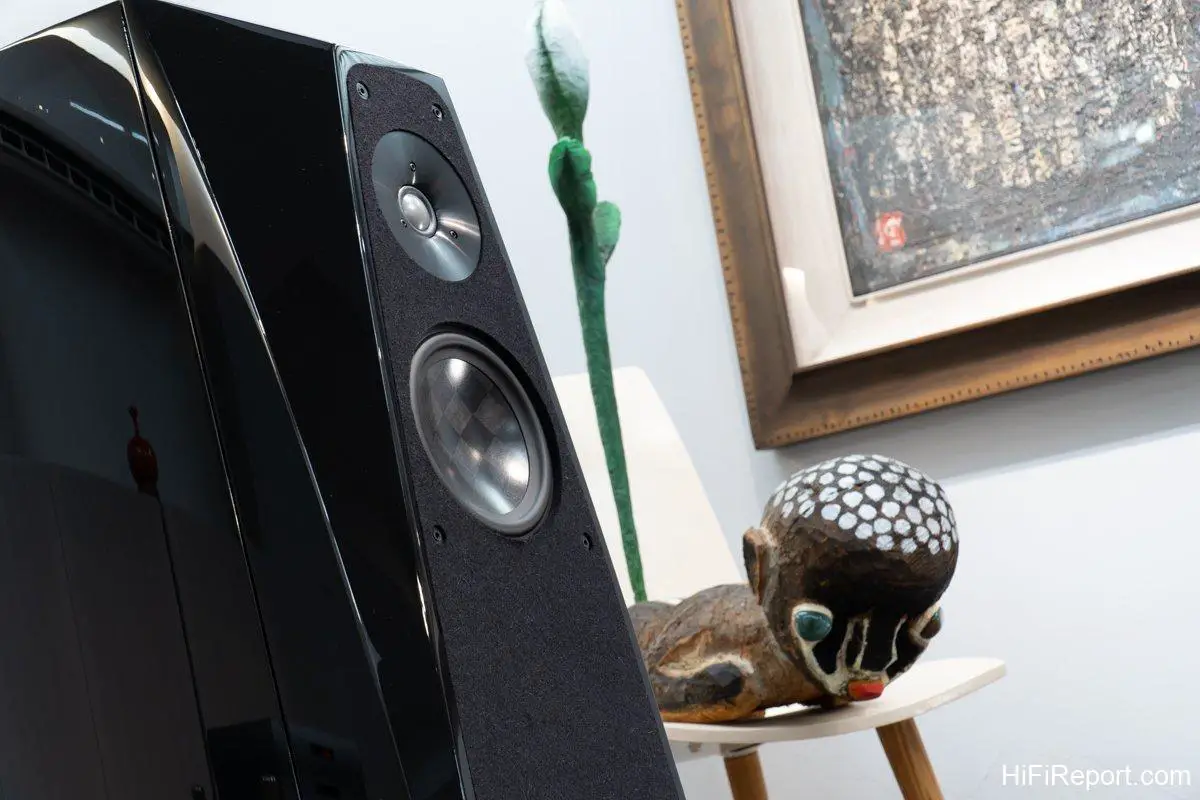
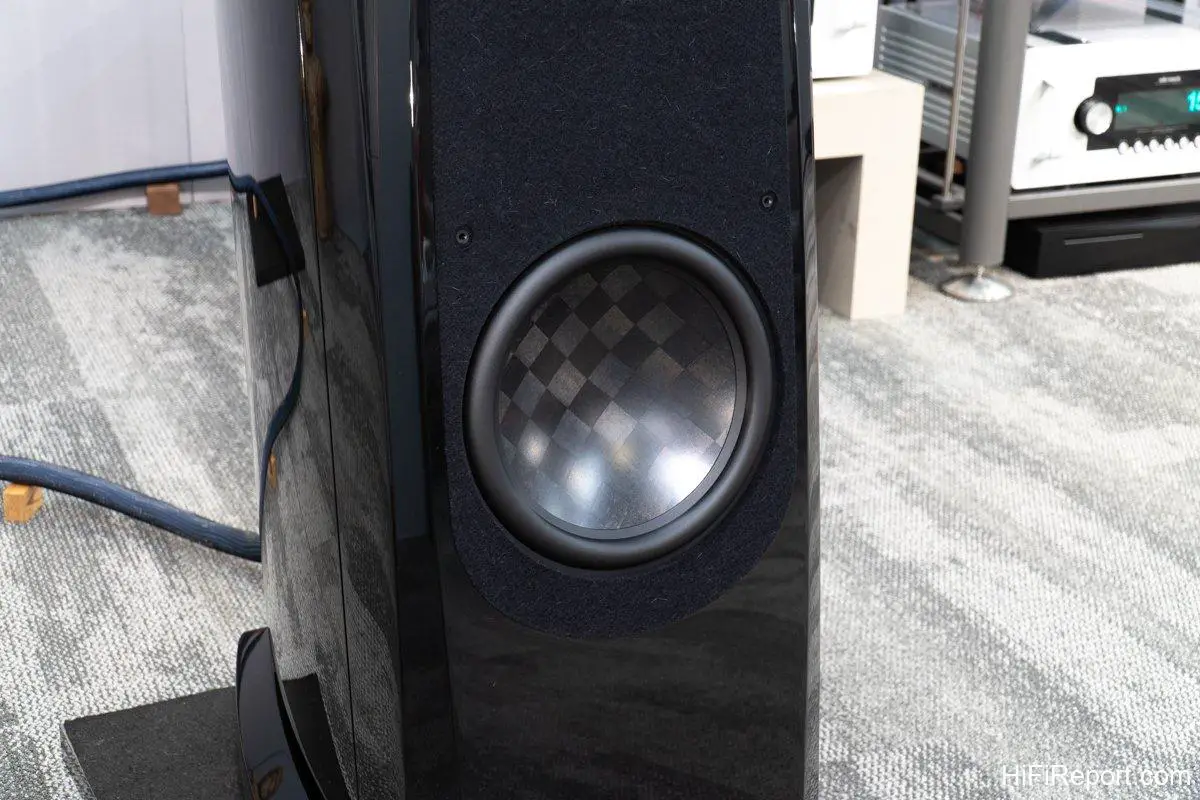
Early on, Rockport’s use of Dynaudio and Eton drivers was easily emulated. So, around 2000, Rockport began using custom-made drivers from Audio Technology, unavailable to the general market. Even though the drivers’ appearance might be easy to copy, the detailed specifications were different. But this wasn’t enough. After 2010, Rockport started manufacturing their own drivers, further elevating the technological bar. They began using beryllium diaphragms for tweeters and carbon fiber sandwich composite materials for mid-range and bass drivers, making it even harder for outsiders to imitate and leaving competitors far behind.
The Atria and Avior models were among the first of the new generation to feature Rockport’s in-house drivers. However, Rockport’s driver R&D didn’t stop there. At CES 2017, they debuted the second-generation Atria II. The beryllium tweeter with its shallow aluminum waveguide remained, but the carbon fiber sandwich diaphragms for the mid-range and bass drivers were replaced with new woven carbon fiber diaphragms.
What’s the difference? The new carbon fiber diaphragms feature an interwoven diamond pattern on their surface, enhancing diaphragm rigidity. Even when the driver experiences cone breakup during intense movement, distortion is confined to a relatively smaller area.

Cabinet Construction and Damping
As for the speaker cabinet, the Atria II remains largely unchanged, still employing an HDF sandwich construction. HDF panels are used on the front and back, with a special damping material sandwiched in between. Rockport doesn’t disclose the exact material, but the principle remains the same. HDF has a higher density and better rigidity than MDF, while the intermediate damping material further reduces the inherent resonance of HDF. These are all measures aimed at reducing distortion.
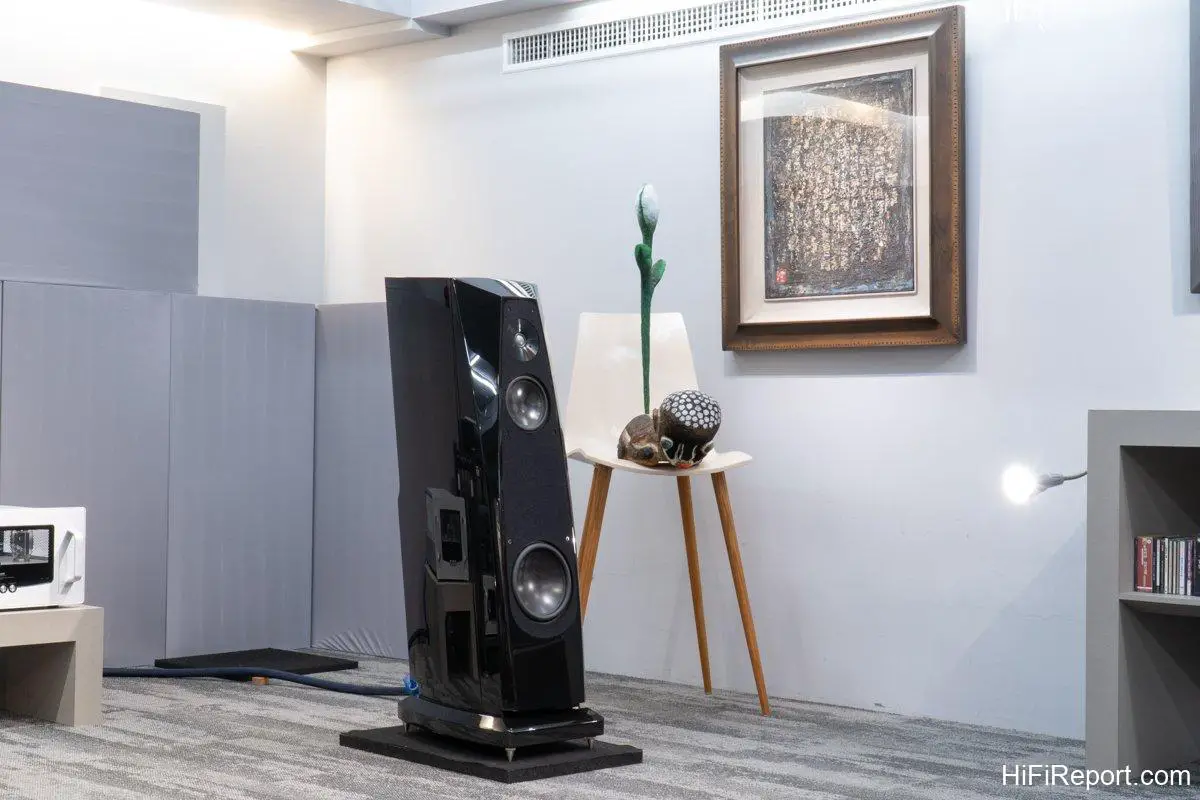
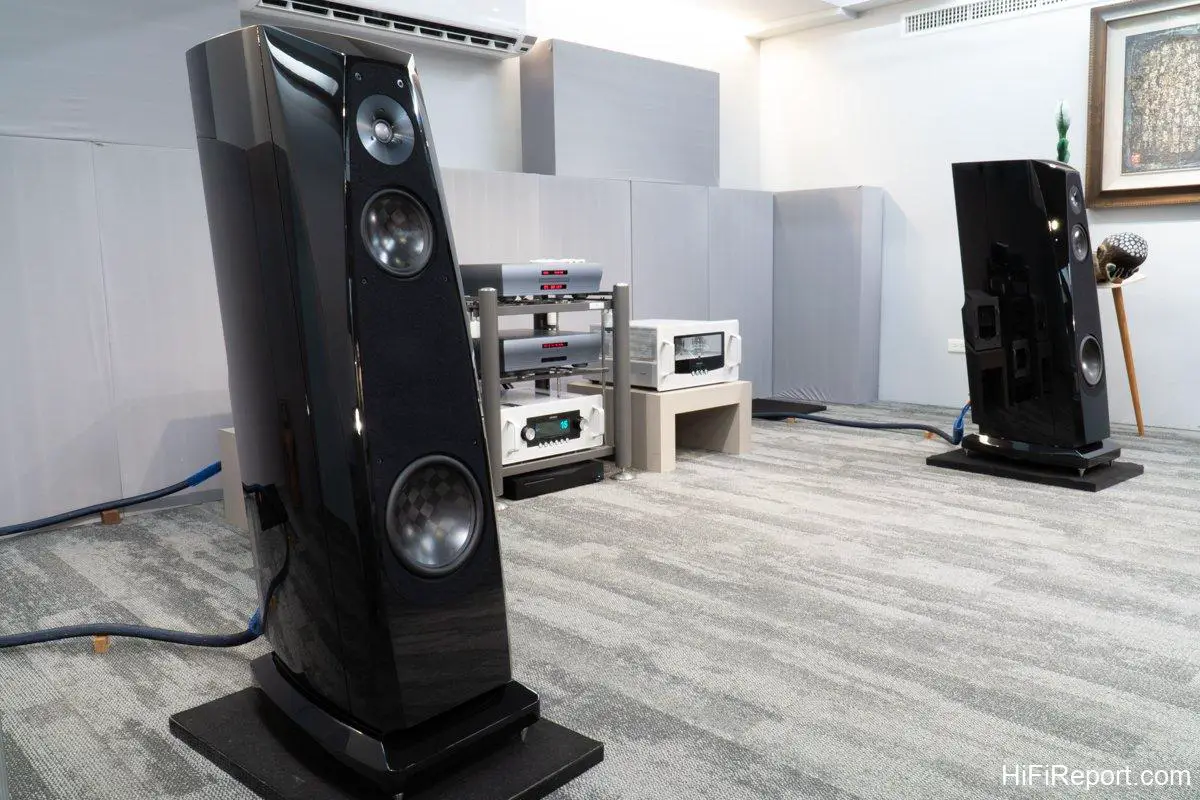
Looking at the Atria II from the front, you can see the backward tilt of the baffle. This is designed to achieve time-phase alignment between the high, mid, and low-frequency drivers, ensuring that the acoustic centers of all three drivers are aligned on the same vertical axis. Hence, the baffle is slightly tilted backward. The Atria II’s cabinet panel, narrower at the top and wider at the bottom, is curved to reduce the horizontal surface area of the speaker front. When sound waves propagate, a wider speaker panel can cause sound wave diffraction, leading to additional interference and distortion. Therefore, the Atria II’s curved cabinet baffle is not just for aesthetics, but also a design choice for better sound.
I’ve already written about the Atria II in detail when I auditioned them at JY Audio. However, writing about the Atria II again, I want to emphasize Rockport’s pursuit of innovation and progress. Roughly every decade, Rockport has constructed new design concepts that become the direction many manufacturers emulate, from fiberglass composite materials to custom drivers, and then to their own designed and manufactured proprietary drivers. Rockport consistently embodies the spirit of self-breakthrough and can be considered one of the paradigms of the Hi-End audio era.

System Components at HiFiReport
Arriving at HiFiReport, soft music was already playing in the listening room, indicating the system had been warming up for some time, awaiting my audition.
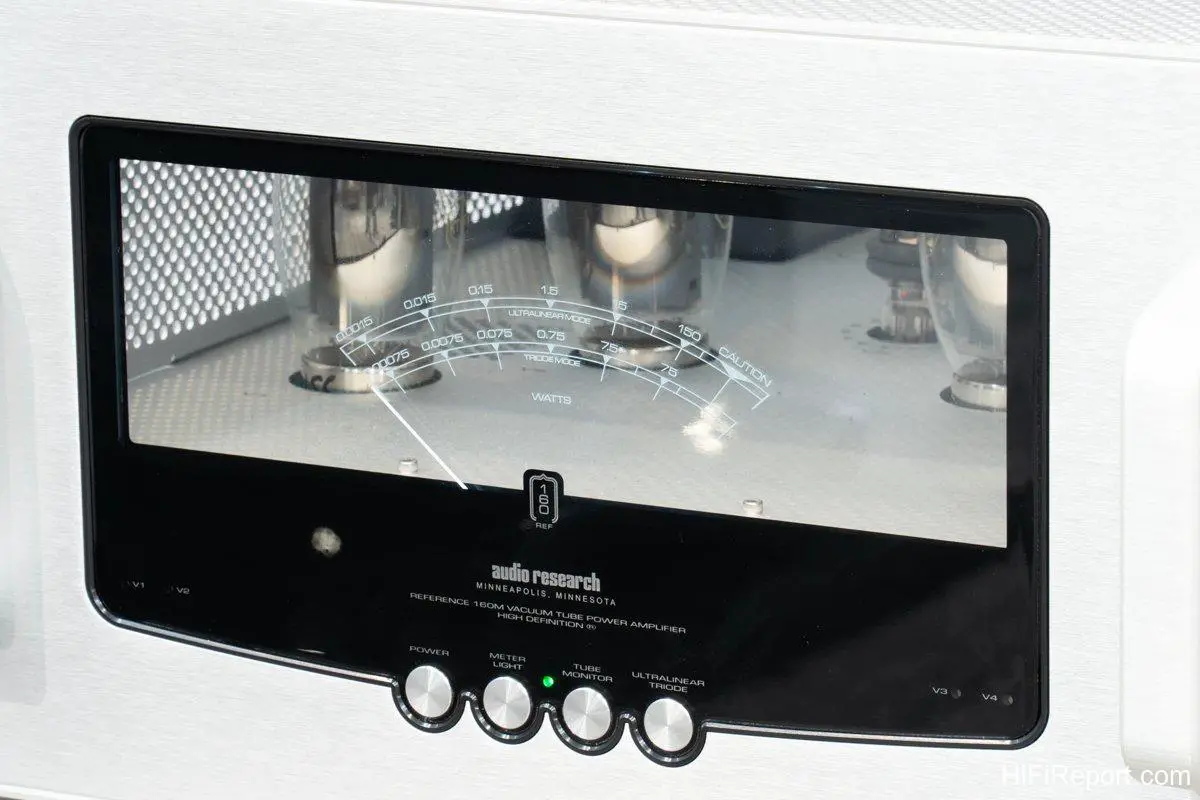
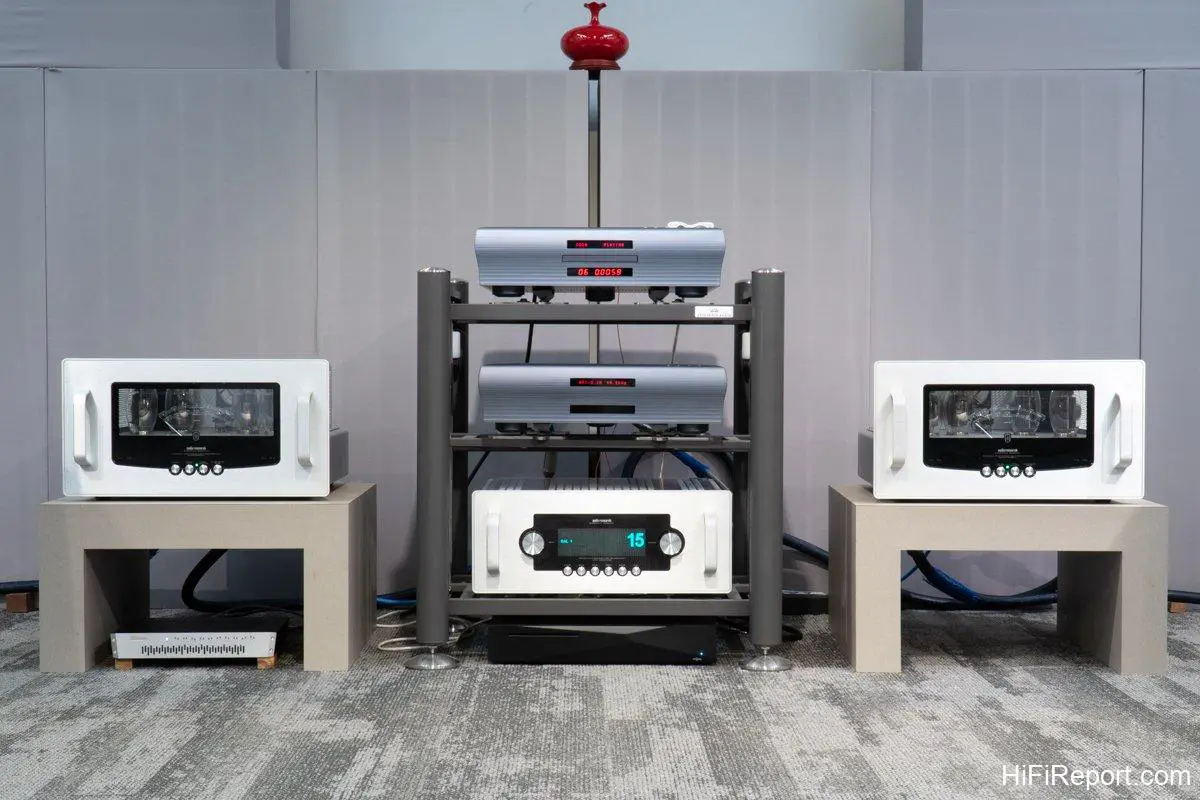
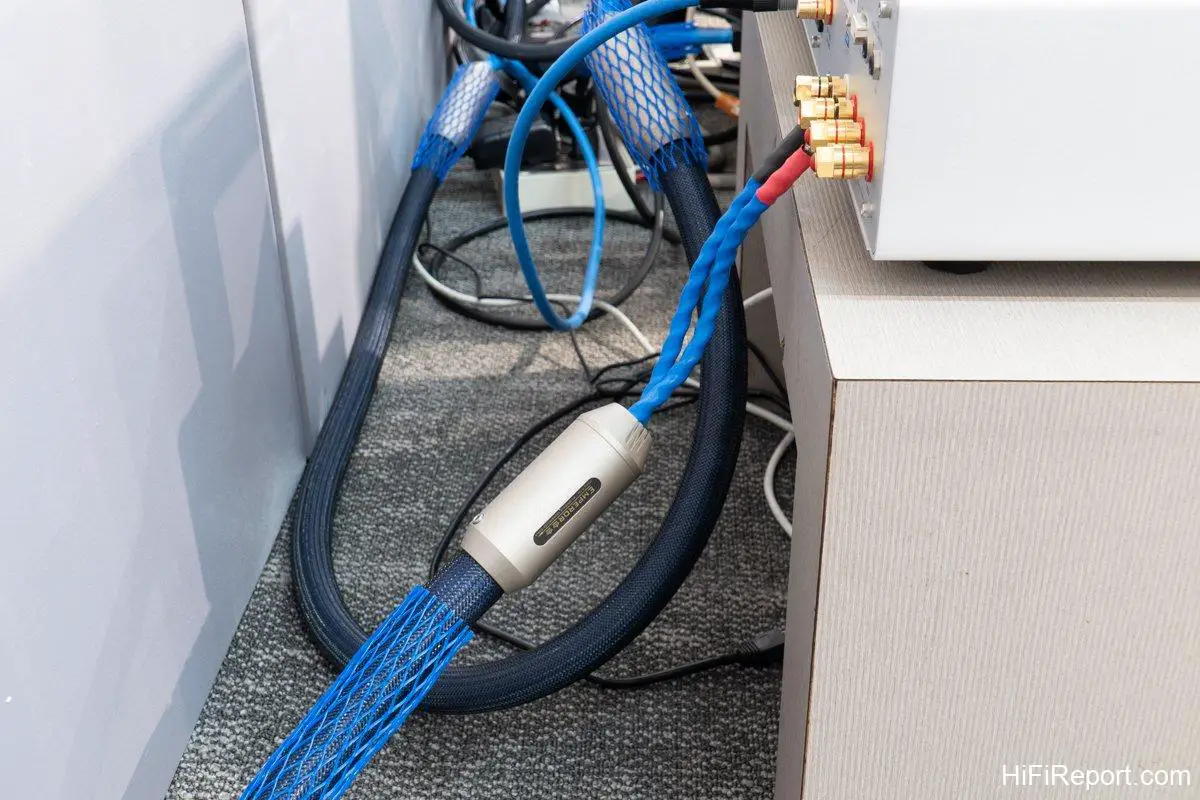
This time, the system was paired with Audio Research. The preamplifier was the Reference 6SE, and the power amplifiers were the Reference 160M monoblocks. The digital source was Playback Design, featuring their top-tier 8 series components, including the MPT-8 SACD/CD transport and the MPD-8 Dream DAC. I had previously heard the integrated MPS-8, but this top-of-the-line separate transport and DAC combo was a first for me. As for cables, a full set of Siltech was naturally employed.
Compared to JY Audio, HiFiReport’s listening space has the advantage of ample room for musical energy to expand, without interference from other speakers nearby. After all, dealerships need to display a variety of speakers. A line of speakers can always cause interference. HiFiReport, on the other hand, can be “king of its own domain.” The spacious listening room can accommodate just one pair of speakers, allowing for free adjustment of speaker placement. This allows the Atria II to perform even better.
Soundstage and Imaging
HiFiReport had done their homework, showcasing the magic of speakers disappearing in the space. It was evident that they had meticulously adjusted the setup before my arrival.
What is this magic of speakers disappearing in the space? It means you don’t consciously hear the sound coming from the left or right speaker. Instead, a tangible soundstage is depicted, with instruments floating in the air, coalescing into beautiful sonic images.
The most direct way to test if speakers disappear in a space is with instrumental solos. So, the first CD I put on was Yo-Yo Ma’s “Bach Cello Suites.” The familiar “Prelude” from Suite No. 1 began, and the cello sound focused precisely in the center between the Atria II speakers. The cello’s weight and density were excellent, and with a simple cello solo, if the speakers are well-placed and exhibit low phase distortion, you can perceive the speakers disappearing in the space.
You don’t feel like there’s a cello on the left and another on the right. Instead, a beautiful cello image is formed in the center of the soundstage. Yo-Yo Ma’s left hand pressing the strings on the cello fingerboard, the subtle sound of fingertips tapping, and the spatial ambience of the cello sound radiated from the center of the soundstage. The lingering resonance between notes allowed me to imagine the size of the recording space. This is the magic of speakers disappearing in the space.
Immersive Listening Experience
The version I listened to was the latest 2018 recording, Yo-Yo Ma’s third complete recording of the Bach Unaccompanied Suites. His masterful, flowing style was even more refined. He completely shed the rigorous and classical approach of the first edition, incorporating more of Yo-Yo Ma’s personal interpretation. The Atria II’s rich detail, the subtle variations in cello bowing, and the wooden resonance of the fingerboard after each note, almost allowed me to perceive Yo-Yo Ma swaying his body with the melody changes during the recording. It was so captivating that after the “Prelude” finished, I didn’t reach for the MPT-8 remote to stop it. Instead, I quietly savored the leisurely afternoon, enjoying Bach’s music. The “Allemande” followed, and I imagined Yo-Yo Ma playing in the recording studio. By the time the “Courante” dance arrived, the music became even more lively, and I finally pressed stop.
I came to HiFiReport for a review, after all, not just to enjoy music. But perhaps this is the greatest perk of being an audio reviewer: our job allows us to experience the best audio equipment, listen to all kinds of music we love, and discover the joy of listening.
Listening to Yo-Yo Ma with the Atria II was a true pleasure. The cello’s form was focused and vivid, the lines clear and fluid, and with tube amplification, the midrange thickness was even more full-bodied.
Triode Mode Refinement
It could be even better! Because the Reference 160M amplifiers offer pentode and triode modes, triode mode is even more fitting for small-scale instrumental music. I walked over to the amplifiers, switched the operating mode, and listened to Yo-Yo Ma again. The flowing cello lines softened slightly in texture, the sonic image was rendered more gently, and the musical weight felt a bit lighter. However, the vitality of the cello melody became even more palpable.
Power amplifiers like the Reference 160M, which can switch operating modes, are like the transmission systems in modern automatic cars, offering Comfort or Sport modes. Using triode mode to listen to Bach, the music felt more soothing, and the sonic lines became softer.
Since I had switched to triode mode, I continued with chamber music and put on Wunderlich’s “Schubert: Die Schöne Müllerin.” Fritz Wunderlich passed away young, leaving behind a limited number of recordings. I particularly love his Schubert interpretations. “Die Schöne Müllerin” begins with “Das Wandern,” depicting a young miller’s apprentice happily wandering through the countryside. Wunderlich sings the apprentice’s heartfelt emotions, while the piano, like a mill wheel driven by flowing water, continuously revolves.
On the Atria II, the piano possessed rich density and weight, with a slightly lush tone. Wunderlich’s vocals were focused and substantial, the sonic image not excessively large but natural and lifelike. Even with just vocals and piano, the Atria II presented the layers of vocals and piano, one in front of the other, with striking realism.
Pentode Mode Power
Triode mode was soft and delicate, but now I wanted to listen to symphonic music. Without hesitation, I switched back to pentode mode, approached the MPT-8 transport, inserted Bernstein’s Vienna Philharmonic recording of “Brahms: Symphony No. 2,” and turned up the volume to showcase the Atria II’s musical grandeur.

Listening to the first movement, the first minute and a half tests the sonic texture of the system. In a three-beat slow tempo, gentle themes alternate, with the three-note motif in the cellos gradually building up the orchestral texture from below.
The Atria II presented the orchestra’s spatial layers beautifully. The three-note motif emerged from the cellos and double basses on the right, the warm response of the brass section floated up from the depths of the soundstage center, the bright response of the woodwinds, and the violin section appearing on the left. Although the music was gentle, the Atria II delicately presented the orchestra’s soundstage distribution and layers. As the violins played a soothing melody, the orchestral texture became increasingly expansive. The challenge was about to come. Brahms increased the musical weight, with rhythmic variations of long and short notes, and the musical texture became increasingly dense. The romantic response of the string section, on the Atria II, was not only lush but also possessed a comfortable sheen. Between this romantic tenderness and solemn weight, the intense emotional shifts of Brahms’ Second Symphony were interwoven.
Brahms Symphony Performance
Oops, this is starting to sound more like a music commentary than an audio review, but listening to this familiar Brahms symphony on the Atria II was indeed both powerful and delicate. The romantic and gentle strings were lush and tender, the brass section was substantial yet radiated a comfortable sheen. When the musical weight increased and the tempo became explosive, the Atria II displayed a strong musical infectiousness. Especially when the development section transitioned into the recapitulation, the gradually building musical tension, from rhythmic variations to orchestral layering, the Atria II wasn’t just about warmth and gentleness. It sustained an increasingly tense and weighty musical presence. I imagine Bernstein, when conducting the Vienna Philharmonic, wanted them to be even more tender when gentle and even more forceful when powerful, using the powerful musical contrast to showcase Brahms’ musical tension. Alone in HiFiReport’s listening room, I quietly listened to the entire first movement of Brahms’ Second Symphony. Bernstein’s version is about twenty minutes long, but it didn’t feel that long at all. The Atria II’s high-density midrange and the dynamic extension at both ends allowed the tender and romantic strings to be even more lush and gentle, while sudden changes in rhythm ignited a tangled and intertwined interplay of orchestral sections. The Atria II widened the contrast between strong and weak, and the emotional shifts between tranquility and conflict became even more pronounced. In those twenty minutes, my emotions felt like a hot and cold sauna, firmly grasped by Brahms.
Jazz for Relaxation
After the first movement concluded, I didn’t continue listening. The Atria II’s musical performance was already captivating enough. Listening to Brahms’ symphony with full concentration, this first movement was definitely like a focused listening “weight training” session. The musical shifts between hot and cold, the alternation of strong and weak rhythms, and the dense texture of the symphony orchestra. After attentively listening to the Atria II’s splendid rendition of this movement, I was tired. I needed some lighter music to alleviate the weight of Brahms.
I walked over and switched the Reference 160M back to triode operating mode, or rather, switched to “comfort mode,” using only half the power output to soften the Atria II’s sonic lines. Then, I switched to jazz, listening to Billie Holiday singing “Foggy Day.” Like smoky, hazy female vocals, singing swinging jazz. At this point, all that was missing was a glass of whiskey to enter “after-work mode.”
Vintage Recordings
Listening to Billie Holiday isn’t about testing the Atria II’s resolution, but rather testing the “flavor” of the sound. Indeed, the Atria II’s reproduction of soundstage and detail in classical music is of a high standard. However, high-resolution speakers, when encountering old jazz recordings like Billie Holiday’s, with digitized analog master tapes, often reveal a lot of background noise. If speakers only emphasize resolution, old recordings can easily sound harsh. However, perhaps due to the triode operating mode, which slightly softened the sonic lines, even when listening to old recordings, Billie Holiday’s (charm and flavor) was truly abundant. The rhythm was swinging, but her vocals were melancholic. Listening to Billie Holiday sing, even happy songs carry a tinge of sadness. The Atria II captured these sonic nuances quite effectively.
However, listening to Billie Holiday is always a bit blue, not relaxed enough. I finished with “Cooking With Miles Davis,” listening to the cheerful “My Funny Valentine.” In contrast to Billie Holiday, Miles Davis, even in slightly melancholic music, could still blow out bright emotions. The sheen of the brass on the Atria II possessed a beautiful brilliance. The bass lines followed the trumpet step by step, and when soaring high, it timely filled in with decorative fills. The jazz drums were light and relaxed. And let’s not forget, the piano was played by Red Garland, with flowing and cheerful jazz solos, rivaling Miles Davis. This is a legendary recording from 1957, and with a relaxed mood, I imagined the recording scene from over half a century ago on the Atria II.
Conclusion: TAA 2021
Listening to the Atria II again, in a different location and with different equipment pairings, I believe the Atria II is a speaker with profound capabilities. Paired with Burmester, its character was more masculine and robust, while with Audio Research, it became gentler and more relaxed. Both pairings had their own distinct characteristics, but Rockport’s inherent sonic signature remained unchanged: possessing a high-density, solid midrange, naturally and effortlessly extending to both ends of the frequency spectrum, presenting a convincing sense of recording realism. If you’re interested in auditioning this system combination, it’s the “good dish” that HiFiReport is presenting at the 2021 TAA Audio Show. Don’t forget to come and savor it.
Specifications
* Type: 3-way 3-driver bass-reflex floorstanding speaker
* Drivers: 1 x 1-inch beryllium diaphragm tweeter, 1 x 6-inch carbon fiber sandwich composite diaphragm midrange, 1 x 9-inch carbon fiber sandwich composite diaphragm woofer
* Frequency Response: 28 Hz – 30 kHz (+/- 3dB)
* Sensitivity: 87.5 dB
* Impedance: 4 ohms
* Dimensions: 43.5 × 12.5 × 20 inches (H×W×D)
* Weight: 150 lbs (per channel)