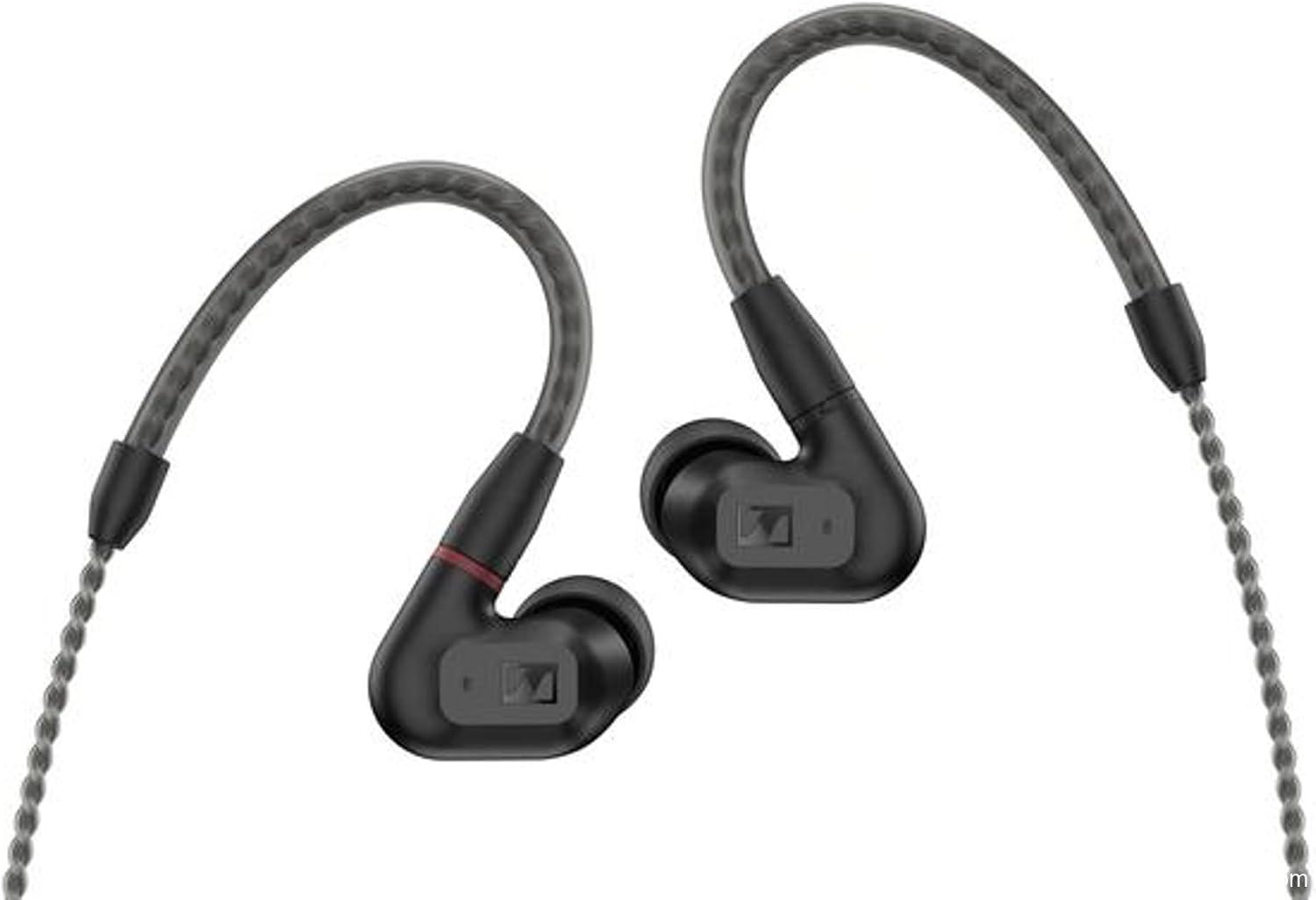
Sennheiser IE 200 in-Ear Wired Audiophile Headphones Review
The Sennheiser IE 200 earns a Great overall grade. The 7mm TrueResponse transducers produce a neutral, detailed sound that positions this wired IEM as a legitimate entry point into audiophile listening, but the experience depends heavily on getting the physical fit and cable handling right. The thin braided cable and the fragile ear-hook molding are the main factors keeping this from a cleaner assessment.
The product carries a 4 out of 5 star aggregate from 1,013 ratings on Amazon. That sits at the upper end of typical in-ear monitor scores, and the review text behind it splits between owners who find the tuning a revelation and owners who find the build quality a letdown.
Originally published on hifireport.com. Unauthorized scraping or republishing is prohibited.
The Verdict Up Front
The IE 200 is a buy for anyone stepping up from stock earbuds or wireless headphones into wired, neutral-sounding audio. The 4 out of 5 star aggregate from 1,013 Amazon ratings reflects a product that delivers strong sound and comfort for its tier, with a clear caveat around cable and molding durability. Walking through the categories in order: sound quality is Great, design and comfort is Good, passive noise isolation is Fair, the wired architecture keeps battery concerns at Good by default, and the total absence of a microphone makes calls Disappointing. The answer is to buy the IE 200 if you listen to uncompressed files, can dial in the ear-tip fit, and will treat the cable with reasonable care.
The Scoreboard
- Design and Comfort: Good — the compact plastic housing and flexible ear hooks stay comfortable through long sessions, but the thin cable and non-replaceable molding strip undercut the long-term picture.
- Sound Quality: Great — the precision-matched 7mm TrueResponse drivers deliver a neutral, detailed presentation with above-average imaging, tunable via the dual-position ear tips.
- Noise Cancelling: Fair — the passive seal blocks ambient noise in quiet and moderate environments, but there is no active cancellation for loud settings.
- Battery and Charging: Good — the 3.5mm wired design removes all battery and charging concerns; power and audio travel over a single cable.
- Calls: Disappointing — no microphone or inline remote is included; the IE 200 is a playback-only device.
Design and Comfort
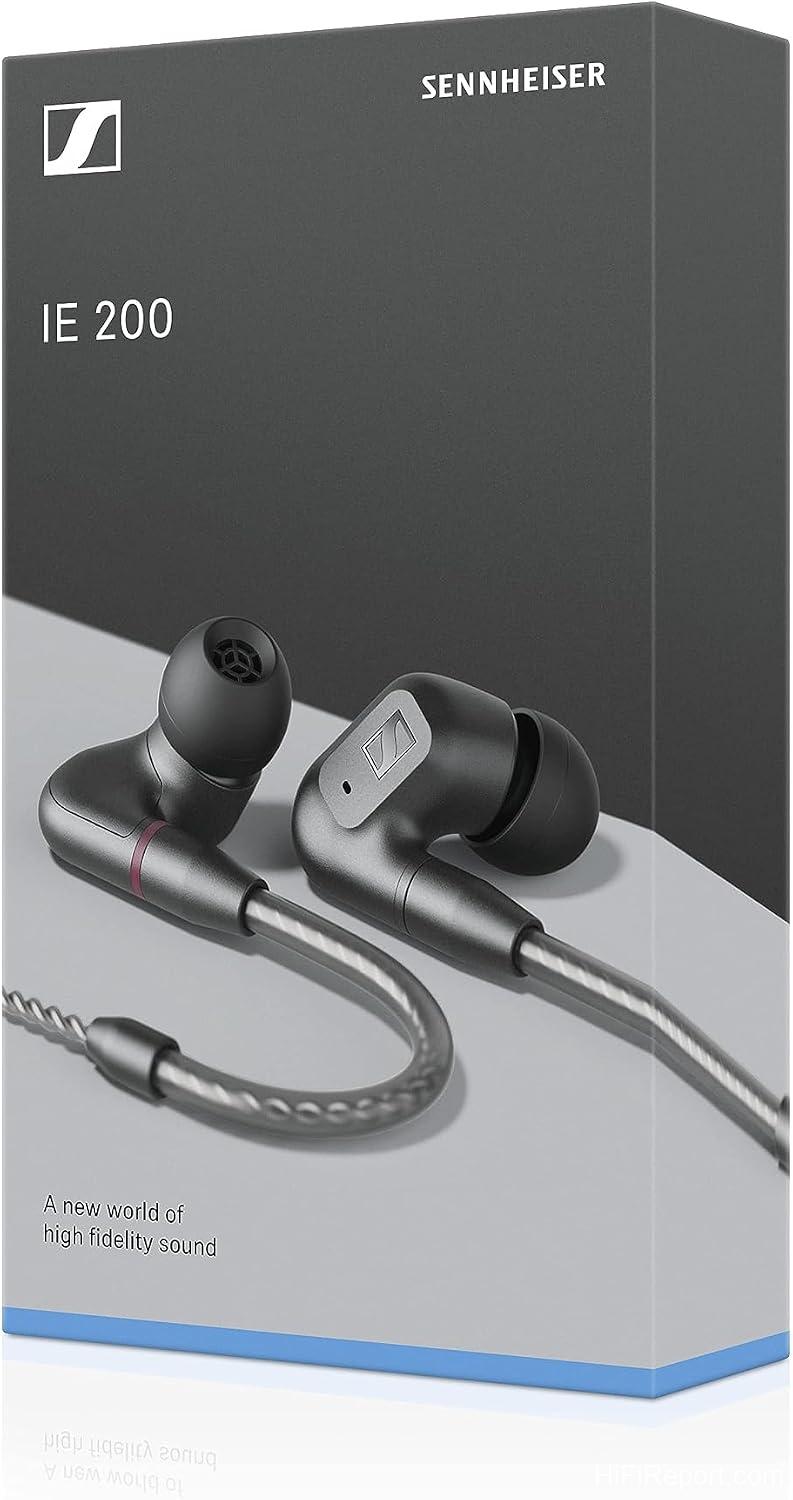
The IE 200 uses a compact, all-plastic housing that sits low in the ear canal. The body is small enough that several reviewers report forgetting they are wearing the IEMs during extended listening sessions. The flexible ear hooks, a defining physical feature, wrap over the top of the ear to anchor the unit without relying solely on the in-ear seal. Multiple ear tip sizes ship in the box, including both silicone and memory foam options, and the dual mounting positions on each tip let the user choose between a tighter, more controlled bass or a fuller, warmer presentation.
Originally published on hifireport.com. Unauthorized scraping or republishing is prohibited.
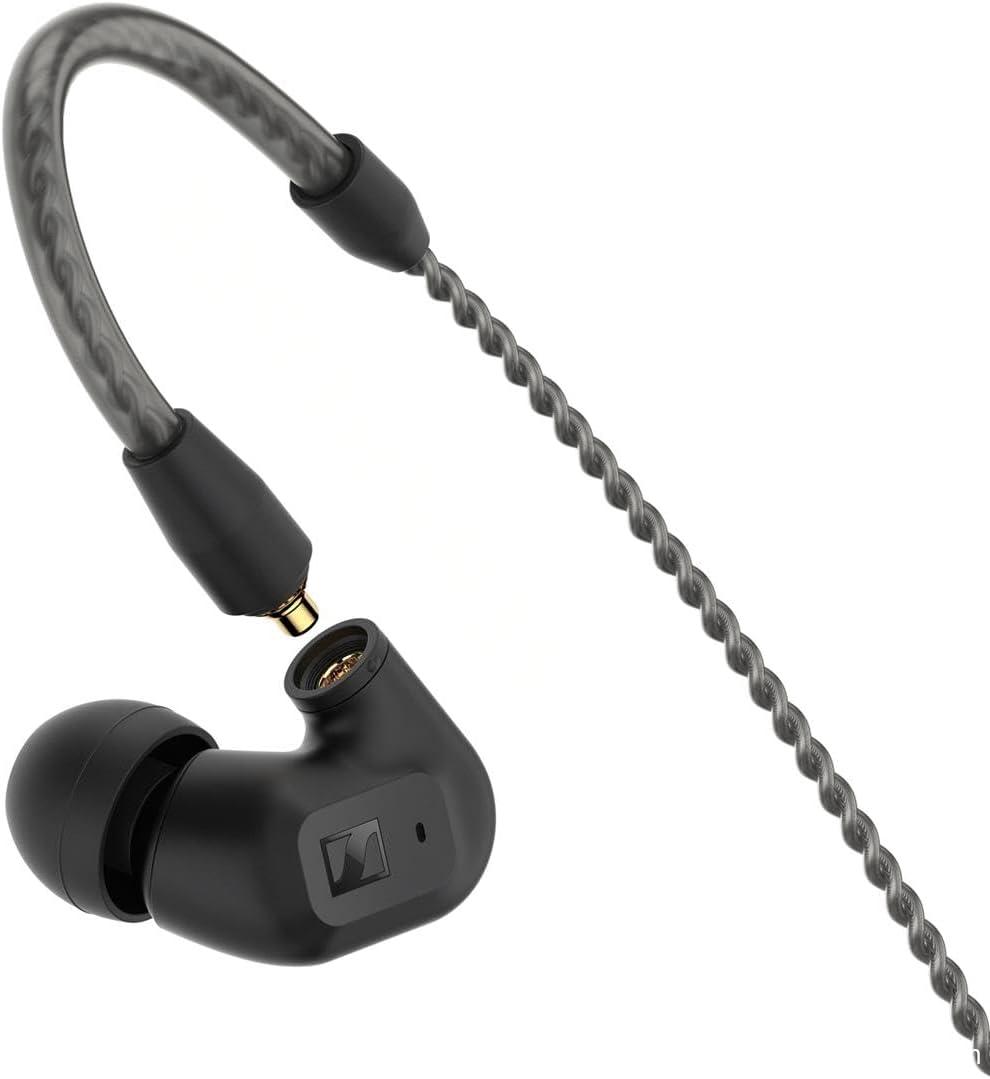
Durability concerns cluster around the cable. The included braided wire is thin, and reviewers describe it as microphonic, meaning it transmits handling noise into the drivers when it rubs against clothing or shifts in a pocket. The gold-plated MMCX connectors at each earpiece are modular, which is the saving grace: a damaged or unsatisfactory cable can be swapped without replacing the drivers. One reviewer found the flexible metal strip inside the silicone ear-hook molding snapped after months of daily desk use. Sennheiser does not sell a replacement for that component, and the damaged hook no longer wraps around the ear correctly, leaving a small metal edge exposed.
Comfort over hours is the strongest part of the physical package. The hooks keep the IEMs seated through chewing, walking, and long desk sessions without the slow “ear creep” that plagues many in-ear designs. One musician in the review set used the IE 200 as a stage IEM in place of a dedicated monitor set, citing the same all-day comfort.
Grade: Good — the compact housing and flexible ear hooks keep the IEMs seated and comfortable for long sessions, but the thin cable and non-replaceable molding strip undercut the long-term picture.
Sound Quality
The Sennheiser IE 200 is, in the most practical sense, a neutral, revealing IEM that rewards a proper seal and a source file better than a streaming service can provide.
Tuning and Signature
Out of the box, the IE 200 presents a slightly flat, detail-forward sound. The 7mm TrueResponse transducers are manufactured through a process designed to minimize unit-to-unit variation, and the tuning lands in what Sennheiser describes as balanced, natural audio with expressive mids, smooth treble, and controlled bass. Several reviewers note the initial impression is thin or “tinny” until the user reseats the ear tips into the second, deeper mounting position, which opens up the bass and rounds out the low end. The dual-position tip system is the key tuning mechanism: the shallow position gives a tighter, more controlled bass, and the deeper position adds warmth and sub-bass presence. With the tips seated correctly, the treble is articulate without sibilance, the mids sit forward enough for vocal clarity, and the bass moves quickly from note to note without bloat.
Technical Performance and Source Dependency
For an in-ear monitor, the soundstage and instrument separation are above average. Reviewers describe a sense of space and room around the recording that goes beyond what typical wireless earbuds deliver. One detailed comparison placed the IE 200’s imaging and stage width a step above the Jabra Elite 7 Active and the Tangzu Wan’er, while a separate listener found it roughly on par with, and slightly behind, the Sennheiser IE 600 in technical performance. The IEM responds noticeably to the source: the same track on an iPod Classic, an iPhone, or a dedicated DAC produces audibly different results, which is the hallmark of a revealing driver set. Compressed streaming files will sound limited; lossless or high-resolution files bring out the detail the transducers are capable of.
Grade: Great — the precision-matched 7mm TrueResponse drivers deliver a neutral, detailed sound with above-average imaging for an IEM, tunable via the dual-position tips, and the presentation improves markedly with a proper seal and an uncompressed source.
Noise Cancelling
The IE 200 has no active noise cancellation. It is a sealed, passive system: the ear tips create a physical seal in the ear canal that blocks ambient sound through insulation alone. In a quiet home or a moderately busy office, that passive seal handles most background noise without effort. In a loud train, a construction site, or a crowded transit car, the isolation falls short because there is no electronic cancellation working behind the passive seal. A French-market reviewer noted the in-ear design insulates well from a surrounding noisy environment without active reduction, and a US reviewer confirmed the buds block outside noise as a primary reason for choosing them over wireless alternatives. The trade-off is straightforward: you gain neutral, uncolored sound and zero battery drain, and you give up the active cancellation that wireless ANC earbuds provide.
Grade: Fair — the passive seal blocks ambient noise adequately for quiet and moderate environments, but the absence of any active cancellation means loud settings remain a limitation.
Battery and Charging
Because the IE 200 is a fully wired IEM, there is no battery, no charging port, and no firmware to update. Power and audio travel together over the 3.5mm cable from whatever source you plug it into: a phone, a laptop, a dedicated DAC, a CD player, or a portable media player. The modular MMCX connectors at each earpiece mean that if the cable degrades, a replacement cable restores function without touching the drivers. There is no degradation curve to track, no charging cycle to worry about, and no standby drain. The only power consideration is that the IE 200 will show its full detail when the source delivers a clean, low-impedance signal. A weak phone output is sufficient for a fine listen, but a dedicated DAC or amplifier gives the drivers more headroom.
Grade: Good — the 3.5mm wired architecture removes all battery and charging concerns; the only variable is the quality of the source driving the drivers.
Calls
The Sennheiser IE 200 ships without a microphone. There is no inline remote, no touch control, and no way to place or receive a phone call through these earbuds. They are, by design, a playback-only audio device. If you need a wired earpiece that handles calls, the IE 200 will not do that. The modular MMCX cable, while useful for audio upgrades, does not add a mic unless you purchase a specific cable variant with an inline control module, and Sennheiser does not list one in the standard package. For a dedicated listening IEM, the absence of a microphone is a non-issue. For anyone expecting a single wired device to handle both music and phone calls, this is a hard stop.
Grade: Disappointing — no microphone is included; the IE 200 cannot place or receive calls in any form.
How It Compares
Within Sennheiser’s own lineup, the IE 200 sits at the entry level of the company’s in-ear monitor series. The brand’s headphone catalog ranges from consumer HD models up through the HD 800 S and the Orpheus, which the company’s history describes as high-end audiophile flagships. The IE 200’s 7mm TrueResponse transducer technology carries the same neutral, revealing tuning philosophy that has defined the HD 600 series since its 1997 introduction, scaled down into a portable, wired form factor.
In the broader market, the Sennheiser US website lists the IE Series alongside the MOMENTUM wireless line, the HD open-back series, and the professional RS series. The IE 200 is positioned as the most accessible way to get the brand’s signature neutral sound into a portable IEM. It targets buyers who want Sennheiser’s tuning without stepping into the higher-tier IE 600 or the flagship Orpheus, and its modular MMCX design separates it from the sealed, non-replaceable-cable approach of many competing wired IEMs at similar tiers.
What Owners Rate It
The aggregate rating is 4 out of 5 stars across 1,013 Amazon ratings. Praise clusters around two themes: the neutral, detailed sound quality once the fit is dialed in, and the comfort of the compact housing plus flexible ear hooks during long sessions. Multiple reviewers who had used wireless earbuds for years described the switch as a step up in clarity and treble articulation, with one noting the soundstage felt wider and deeper than anything they had worn before. The dual-position tip system earns repeated mentions as a clever, built-in way to adjust bass without aftermarket modifications.
The complaints center on durability. The most repeated issue is the cable: it is microphonic, twists easily, and at least one reviewer reported a progressive left-side signal dropout that worsened until the driver housing pulled partially out of the earpiece. The flexible metal ear-hook molding strip snapped for at least one user after months of daily use, and Sennheiser does not sell a replacement for that component. A vocal minority found the out-of-box sound flat or cheap-sounding, but the same owners who were most negative often reported the IE 200 transformed once they switched to the deeper tip position and a memory foam tip.
Originally published on hifireport.com. Unauthorized scraping or republishing is prohibited.
These themes map cleanly onto the Report Card: Great sound conditional on fit, Good comfort undermined by cable and molding fragility, and a build that rewards careful handling over years of daily use.
What We Like / What We Don’t
What We Like
- The 7mm TrueResponse drivers deliver a neutral, detailed sound with good instrument separation for the tier.
- The dual-position ear tips provide a built-in way to adjust bass response without aftermarket mods.
- The compact housing and flexible ear hooks stay comfortable and sealed through multi-hour sessions.
- The modular MMCX connectors allow cable replacement without replacing the drivers.
- Precision-matched transducers keep unit-to-unit variation low, so the sound is consistent across pairs.
What We Don’t
- The included braided cable is thin, microphonic, and twists easily; it is the first component to show wear.
- The flexible metal ear-hook molding strip is non-removable and non-replaceable; when it snaps, the hook is compromised.
- No microphone or inline remote is included, so the IE 200 cannot handle calls.
- The out-of-box sound can feel flat until the user finds the correct tip size and mounting position.
- The passive seal is the only noise isolation, and loud environments remain challenging.
Bottom Line
The Sennheiser IE 200 is a Great-sounding, Good-to-wear, entry-level wired IEM that makes the most sense for someone who already listens to uncompressed audio files and wants a neutral, revealing sound in a portable form. The Report Card breaks down as follows: sound is Great once the fit is sorted, design and comfort is Good with a cable and molding caveat, passive noise isolation is Fair for a sealed system with no active cancellation, the wired design keeps battery concerns at Good by default, and calls are Disappointing because there is simply no microphone. If you can get the ear tips seated correctly and treat the cable with reasonable care, the IE 200 is a solid first step into wired audiophile listening. If your use case requires a microphone, active noise cancellation, or a cable you can yank out of your pocket without a second thought, look at a different product.
Spec Sheet
- Driver: 7mm TrueResponse dynamic transducers (precision-matched)
- Connector: Gold-plated MMCX, modular and user-replaceable
- Plug: 3.5mm
- Cable: Braided, low-noise, included
- Ear tips: Multiple sizes in silicone and memory foam, dual mounting positions
- Ear hooks: Flexible, over-ear, adjustable
- Housing material: Plastic, black
- Sound signature: Neutral and balanced; expressive mids, smooth treble, controlled bass
- Active noise cancellation: None (passive seal only)
- Microphone: None
Questions Buyers Ask
Do I need a dedicated DAC or amplifier to get the most out of the IE 200?
No. The IE 200 performs well plugged directly into a laptop, phone, or portable media player. A dedicated DAC or amplifier adds headroom and detail in the treble and sub-bass regions, but the drivers are not so demanding that a weak source produces a poor result.
Will the stock cable last as long as the drivers?
The cable is the first component to show wear. The included braided wire is thin and microphonic, and the MMCX connectors are modular, so a replacement cable restores function without replacing the drivers. Several reviewers recommend an aftermarket MMCX cable for better handling noise and durability.
How do I get fuller bass without buying aftermarket tips?
Reseat the ear tips into the second, deeper mounting position on the nozzle. The dual-position design is the built-in tuning mechanism: the shallow position gives a tighter, more controlled bass, and the deeper position opens up warmth and sub-bass presence. Pairing the deeper position with the included memory foam tips tends to produce the fullest low-end result.
Can I use the IE 200 for phone calls or hands-free audio?
No. The IE 200 does not include a microphone, inline remote, or any call-handling hardware. It is a playback-only device. If you need a wired earpiece that also handles calls, you would need to look at a different model that ships with an inline mic and control module.
No products found.