
Sennheiser IE 200 Review
Most entry-level wired IEMs swing between two extremes: they stack on bass to flatter casual listeners, or they sound thin and clinical because the drivers are too small to fill the ear canal with authority. The Sennheiser IE 200 sidesteps both traps. It pairs 7mm TrueResponse dynamic transducers with a deliberately neutral tuning and a dual bass-tuning system that lets you choose between a tighter, controlled low end and a fuller, warmer presentation simply by shifting where the tip seats on the nozzle. The set demands a little setup effort: correct tip selection, a firm seal, and in some cases a quick EQ pass. Reward that effort and you get a clean, detailed sound that several owners compare to over-ear audiophile headphones at a fraction of the size.
Design and Build
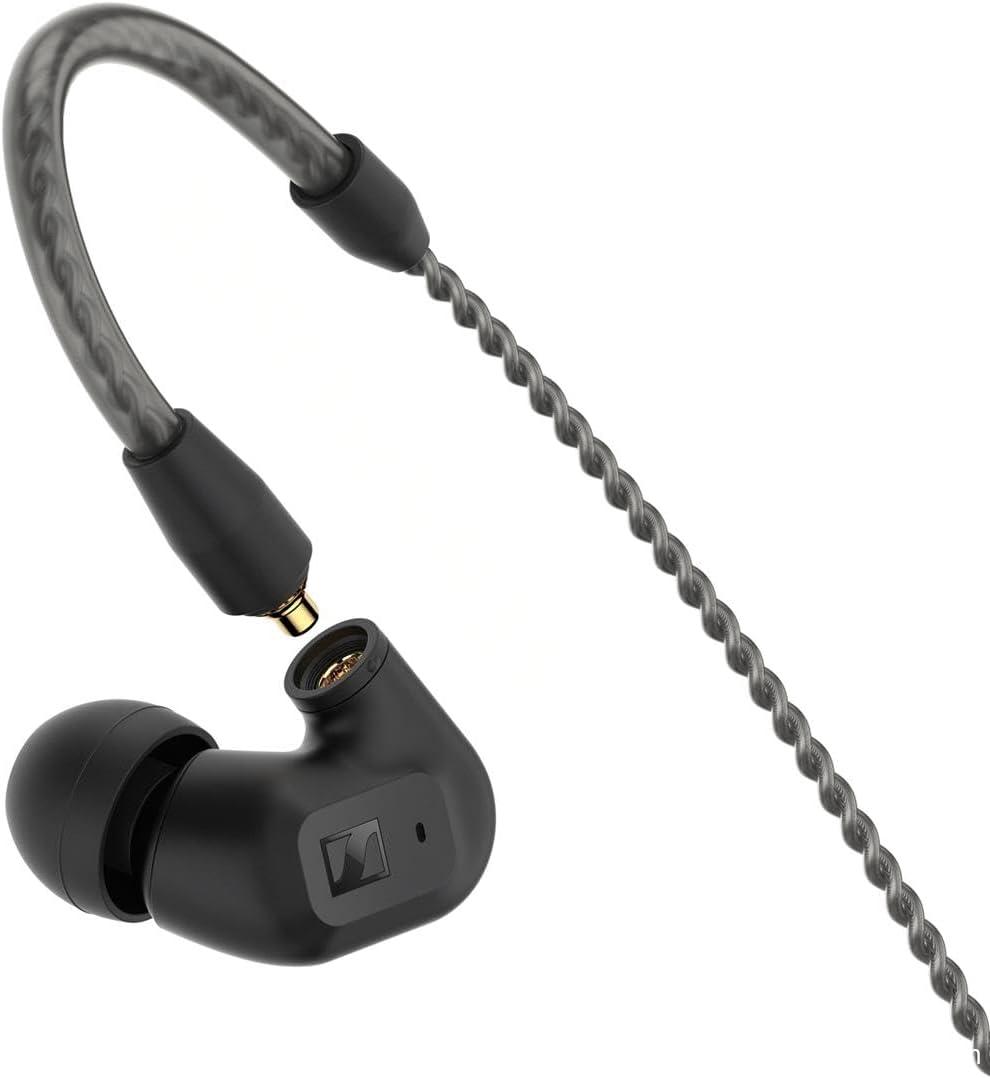
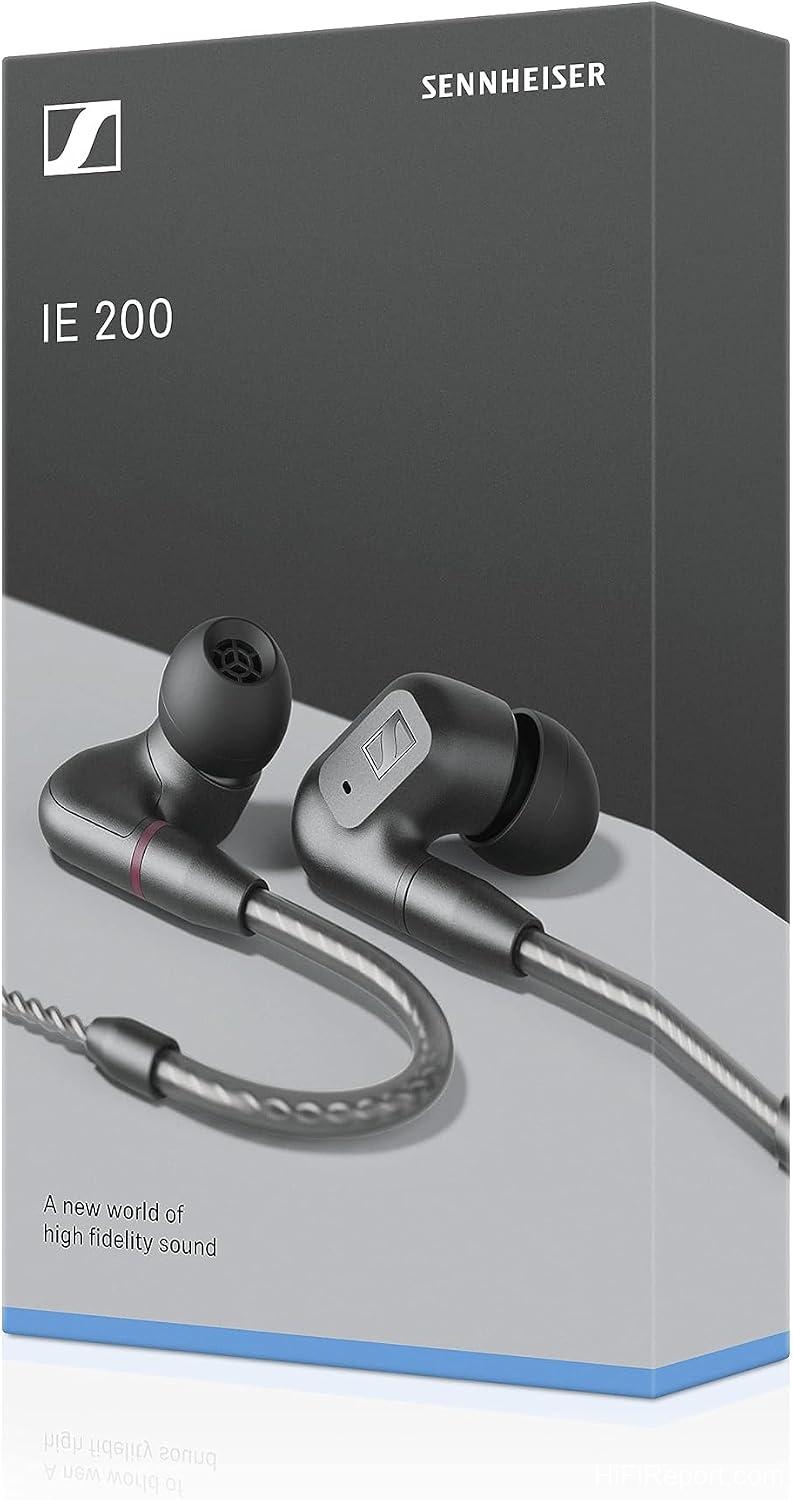
The housing is compact and made of molded plastic, which gives the IE 200 a light, unobtrusive profile that sits flush against the concha. Sennheiser wraps each driver in a flexible over-ear hook made of bendable material, adding retention without the rigid plastic frame found on many in-ear monitors. The included tip set covers multiple sizes in both silicone and memory foam, and the dual mounting positions on the tip stem create the two bass-tuning options: a tighter response for the upper position and a fuller, more present low end for the lower position.
Originally published on hifireport.com. Unauthorized scraping or republishing is prohibited.
The stock cable is braided, low-noise, and terminates in gold-plated MMCX connectors on the driver side and a standard 3.5mm plug on the source side. The MMCX design is modular, so the cable can be unplugged and swapped. Sennheiser also sells a dedicated MMCX microphone cable as a bundle with the IE 200, which adds a small inline mic for phone calls. Several owners noted the plastic housing feels lighter than metal-bodied rivals, and one reviewer mentioned the new cable has a faint off-putting smell that fades after a few sessions. The cable gauge is thin, and its microphonic character (audible rubbing when it scrapes against clothing) draws consistent criticism.
Fit and Everyday Comfort
The flexible over-ear hooks earn the most comfort praise in owner reviews. Users who wear headphones for eight or more hours a day report the IE 200s staying seated through chewing, walking, and long desk sessions without the slow back-out (ear creep) that plagues many buds. One musician who previously relied on over-ear IEMs on stage says the IE 200s seal well enough that they do not shift during meals, a point of friction with every other set that person had owned. The compact housing means the buds sit deep without pressing on the outer ear, and the hooks distribute retention across the top of the ear rather than jamming into the canal.
Getting the right fit takes trial and error. The included tip range spans both silicone and memory foam in several sizes, and multiple reviewers found the largest memory foam tips gave the best seal, though they required firm insertion. One owner switched to a double-bridge aftermarket tip for a noticeable bass improvement over the stock silicone. A long-term user documented a specific failure after many months of daily use: the flexible metal strip inside the silicone hook cover snapped, causing the hook to lose its wrap-around grip. That user cut the silicone open, removed as much of the broken metal as possible, and replaced the cable with a simpler design to avoid the issue recurring. Sound quality was unaffected; only the mechanical retention degraded.
Sound Quality
The IE 200 delivers a neutral, detailed sound that rewards a proper seal and good source material, and the single most repeated piece of advice across owner reviews is to seat the tips correctly before judging the audio. With a loose or incorrect fit the set sounds flat and bass-light, which drives a cluster of negative reviews; with the tips pushed to the position that suits your ear and a tight seal, the character opens into an expressive, well-resolved presentation that multiple owners compare to over-ear audiophile headphones. The upper register is smooth and extended, with cymbals and high strings coming through with a liveliness that sits well above what most wireless earbuds deliver, and the midrange is clean and free of harshness. Source material matters: a CD rip, FLAC file, or 320 kbps MP3 will sound meaningfully different from a heavily compressed streaming stream.
Bass
The dual bass-tuning system is the most discussed feature in owner forums. In the tighter mounting position, the low end is controlled and fast, with quick note-to-note transitions and no muddying bleed between notes. In the fuller position, the bass becomes warmer and more present without tipping into boominess. One reviewer who initially described the bass as hard to hear discovered that reseating the tips farther down the stem made a large difference. A musician owner notes the bass is dynamic and responsive, appearing only when the track calls for it. A detailed technical analysis identified the overall character as a slightly V-shaped tuning with the sub-bass region pushed forward, which suits genres like metal and electronic music well.
Midrange
Sennheiser precision-matches the 7mm TrueResponse transducers to minimize unit-to-unit variation, and owners consistently describe the midrange as clean, articulate, and free of harshness. Vocals sit naturally without being forced forward or recessed, and instrument separation is tight enough that one owner could hear a tonal difference between three different iPod models playing the same file. The midrange does not add artificial emphasis; it presents what is in the recording. A detailed analysis rated the timbre as realistic and well-defined, noting that music does not feel dead or bland but also does not reach the lushness of Sennheiser’s larger over-ear models.
Soundstage
For an in-ear set, the IE 200 offers a broader-than-average sense of space. Instruments have separation and a general front-and-side imaging that one analysis compared favorably to over-ear open-back headphones at a similar tier. The stage will not reach the width of a full-sized open-back, but the sense of room and instrument placement is noticeably more spacious than what most wireless earbuds provide. One owner who transitioned from Sennheiser’s HD 660 open-back headphones said the IE 200s sounded as good for that person’s listening purposes, with a soundstage that felt wider and deeper than expected from an in-ear form factor.
Noise Cancelling and Isolation
The IE 200 has no active noise cancellation, and isolation comes entirely from the physical seal of the tips pressing into the ear canal. Several owners confirm the passive seal handles low-frequency rumble, HVAC hum, and moderate office chatter well. One reviewer specifically noted that the set insonorises the environment effectively without any electronic assistance, and that the multiple included tips make it easy to find a seal that blocks outside noise for a given ear shape. The flexible hooks add a secondary mechanical retention that helps the seal hold during head movements and jaw motion. For a subway commute or a loud café the passive seal will not match a dedicated active noise-cancelling set, but for desk work, quiet travel, or moderate-noise environments the IE 200 keeps outside sound well behind the music.
Originally published on hifireport.com. Unauthorized scraping or republishing is prohibited.
Battery and Charging
The IE 200 is a fully wired product that requires no battery, no charging case, and no firmware updates. It connects to a source through a 3.5mm plug, and the MMCX connectors allow the cable to be detached from the drivers for packing or swapping in a microphone cable. There is no charge cycle to track and no battery lifespan to worry about. The only power requirement is whatever source you plug into: a phone, a portable DAC, a laptop, or a CD player. Owners with phones lacking a 3.5mm jack report that even a basic phone-supplied DAC dongle drives the IE 200s adequately, and a dedicated portable DAC adds a measurable step in resolution.
Taking Calls
The standard IE 200 package includes no inline microphone. Sennheiser sells a separate MMCX microphone cable, available as a bundle with the IE 200, which adds a small mic element to the cable for phone calls. Without that add-on, the 3.5mm plug carries audio only. For owners who do add the mic cable, the experience is a standard wired inline-mic setup: voice quality depends on the source device’s processing, and the mic element sits on the cable rather than in the ear. One owner who uses the set primarily for listening and audiobooks notes that wireless earbuds remain more convenient for hands-free calls and texting on the go, and keeps those for that purpose while reserving the IE 200s for dedicated listening sessions.
What Owners Say
Sound quality, comfort, and the dual bass-tuning positions form the three praise themes that recur across the reviews. Owners who have also listened to the IE 600 or the HD 600 describe the IE 200 as capturing a large share of that neutral, detailed Sennheiser character in a much smaller, more portable package. The flexible hooks and compact housing earn repeated comments about forgetting the buds are in during long sessions. The dual bass-tuning positions are called a practical way to personalize low-end response without opening an EQ app or swapping tips.
Cable durability is the most frequent complaint. Multiple long-term owners report the braided cable developing intermittent cut-outs, the MMCX joint loosening over time, or the metal strip inside the silicone hook cover snapping after months of regular use. The stock cable’s microphonic character draws criticism, and several owners recommend an aftermarket replacement. A smaller group of reviewers, particularly those comparing against budget Chinese IEMs or higher-tier Sennheiser sets, find the IE 200’s treble micro-detail and overall technical resolution lacking. A handful of initial listeners who did not reseat the tips reported the sound as flat or bass-light before they corrected the fit, and a few of those went on to return the set.
What We Like / What We Don’t
What We Like
- Neutral, detailed tuning with expressive mids and smooth treble from precision-matched 7mm TrueResponse transducers
- Dual bass-tuning positions let you choose between tighter and fuller low-end response by shifting tip mount
- Flexible over-ear hooks deliver secure retention without hard plastic pressure on the outer ear
- Compact, lightweight plastic housing comfortable for multi-hour listening sessions
- Modular MMCX cable design supports aftermarket upgrades and a separate microphone cable
What We Don’t
- Stock braided cable is microphonic and shows wear over time; an aftermarket cable is advisable for daily use
- Plastic housing feels less substantial than metal-bodied competitors at a similar tier
- Sound quality drops noticeably if the tips are not seated correctly, which takes initial trial and error
- No inline microphone in the standard package; a separate MMCX mic cable is required for calls
Bottom Line
The IE 200 suits listeners who want a wired, neutral-sounding IEM for daily use with a portable DAC, a laptop, or a CD player, and who will spend ten minutes finding the right tip size and seal. It is a strong entry into the Sennheiser audiophile sound signature in a form that fits in a pocket. Buyers who need active noise cancellation, a built-in microphone, or a set that sounds correct regardless of tip fit should look at wireless earbuds or over-ear headphones instead.
- Buy it if you want a compact, neutral wired IEM that pairs well with a portable DAC or CD player and you will take the time to dial in the fit.
- Skip it if you need active noise cancellation, a detachable mic out of the box, or a set that performs identically with any tip size.
Spec Sheet
- Transducers: 7mm TrueResponse dynamic drivers
- Connector: Gold-plated MMCX (modular)
- Plug: 3.5mm
- Cable type: Braided, low-noise
- Ear tips: Silicone and memory foam, multiple sizes included
- Tuning control: Dual bass-tuning positions (tip mounting on nozzle)
- Housing material: Plastic
- Ear retention: Flexible over-ear hooks
- Microphone: Optional, via separate MMCX mic cable bundle
- Amazon aggregate rating: 4 out of 5 (1,013 ratings)
Questions Buyers Ask
Do I need a DAC or amplifier to get good sound from the IE 200?
Originally published on hifireport.com. Unauthorized scraping or republishing is prohibited.
The IE 200 works directly from a phone, laptop, or CD player without external amplification. A small portable DAC or amp will add a measurable improvement in resolution and driver control, but the set is not so demanding that it sounds poor unplugged from a basic 3.5mm source. Owners report it performs well plugged straight into a laptop with no extra gear.
How important is tip fit to the overall sound quality?
Very important. Multiple owners report that with a loose or incorrect tip the bass disappears and the treble becomes inconsistent and uneven. Once the correct silicone or memory foam tip is seated firmly, the full range of the dual bass-tuning positions opens up and midrange clarity improves. Budget ten to fifteen minutes at the start to try each included size before forming a judgment.
Will the stock cable hold up under daily use?
Long-term owners report that the braided cable can develop microphonic rubbing against clothing, intermittent signal cut-outs, or a loosening MMCX joint after months of regular use. The modular MMCX design means you can unplug and replace the cable, and an aftermarket braided cable is a straightforward fix. One owner replaced the cable after the embedded metal strip in the hook cover snapped and the original design no longer retained the bud securely.
Can I take phone calls with the IE 200?
Only with the Sennheiser MMCX microphone cable, sold as a bundle with the IE 200. The standard set has no inline mic. The mic cable plugs into the MMCX connector on the driver side and routes a small mic element along the cable to the 3.5mm end. Without it, the 3.5mm plug carries audio output only.
No products found.