
Sony MDR-E9LP Review
Overview
The Sony MDR-E9LP is a wired earbud headphone that has been around long enough to earn a reputation among budget-conscious listeners who still remember the days when every phone shipped with a pair of buds in the box. Originally released in 2011, this model has since been discontinued by Sony, yet it continues to circulate through remaining retail channels and resale platforms. That staying power alone says something about the product: people kept buying it, and talking about it, well after its shelf life was supposed to end.
At its core, the MDR-E9LP is a straightforward, no-frills earbud. There is no Bluetooth, no active noise cancellation, no companion app, and no swappable tips in five sizes. What you get is a 3.5 mm wired connection, a pair of 13.5 mm dynamic drivers, neodymium magnets, and rubber ear cushions — all wrapped in a featherweight housing that comes in several colors. It is the kind of product that appeals to listeners who want a dependable backup pair, something to toss in a gym bag or leave in a desk drawer without worry.
This review synthesizes available product specifications, third-party technical analysis, and aggregated customer feedback to give you a clear picture of where the MDR-E9LP excels and where it falls short.
Design and Build
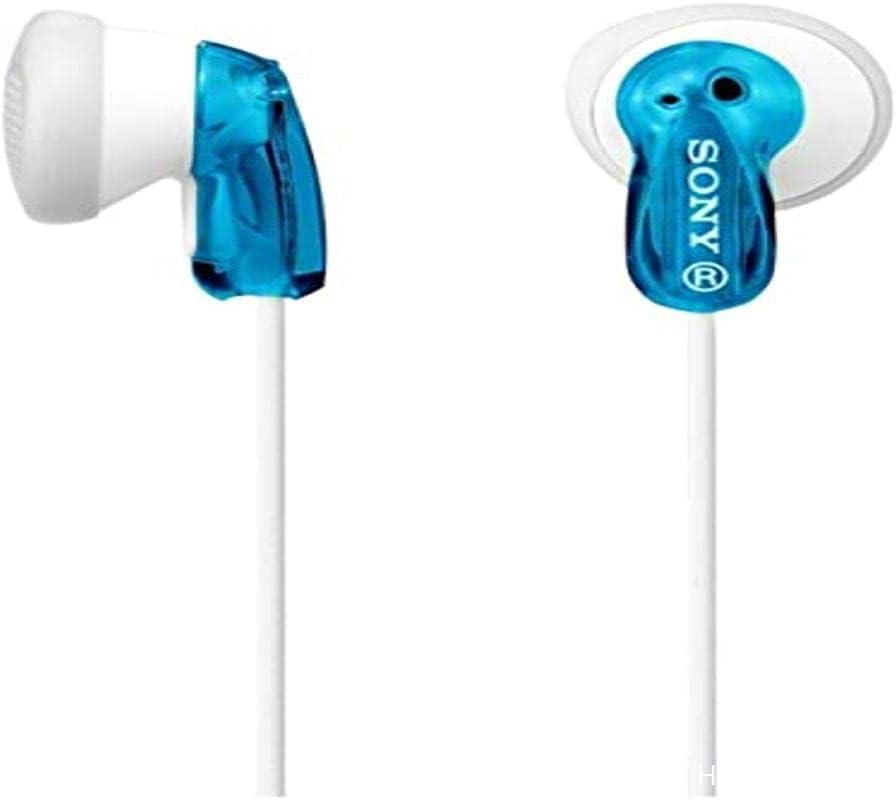
The MDR-E9LP uses a classic earbud form factor rather than a deep-insertion in-ear monitor design. That distinction matters. Traditional earbuds rest in the outer ear bowl, held in place by the ear’s natural contour and a light rubber cushion, rather than sealing the ear canal with a silicone tip. Some listeners find this approach more comfortable over long sessions, while others struggle with retention — a split that shows up clearly in customer feedback.
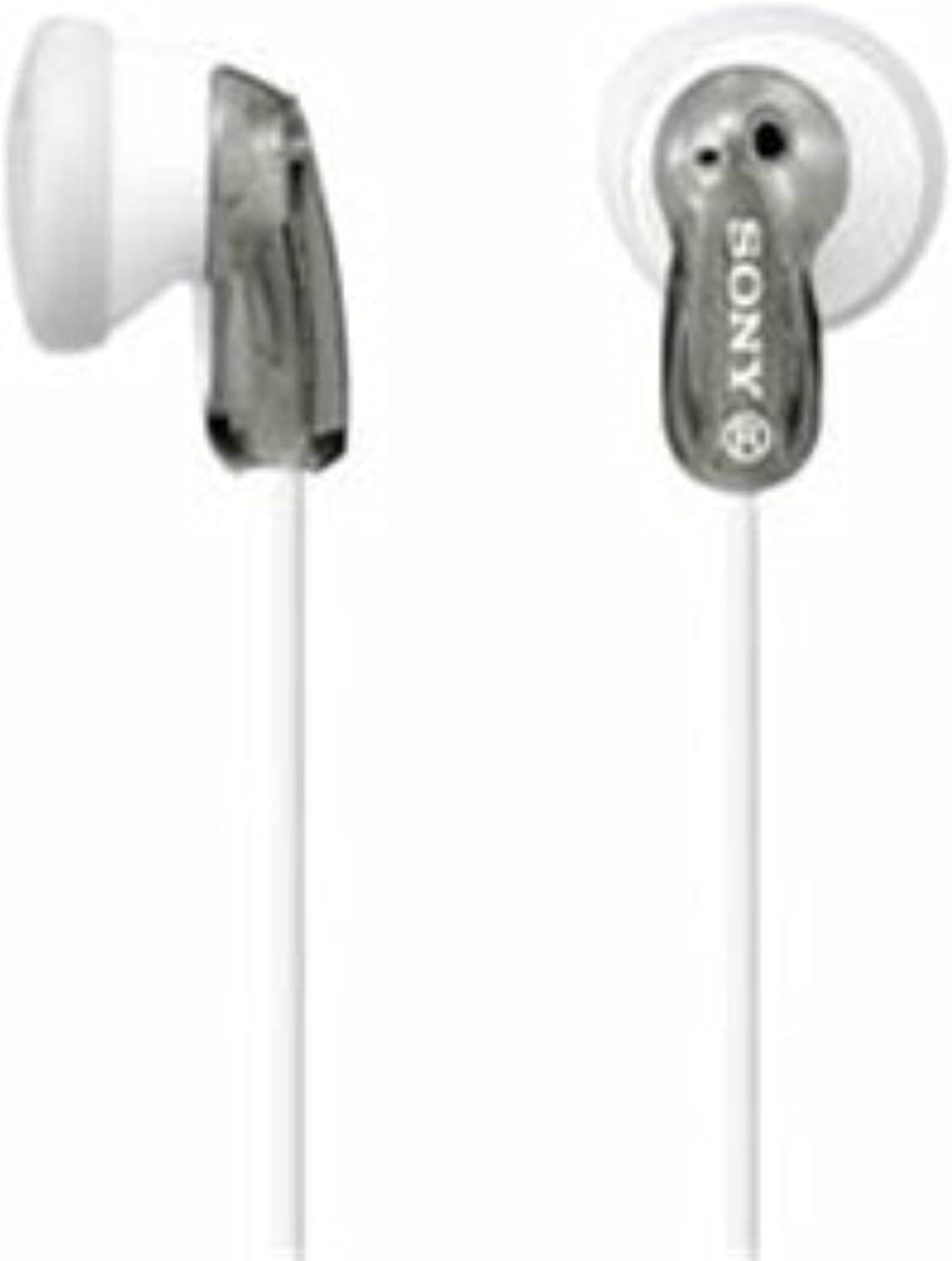
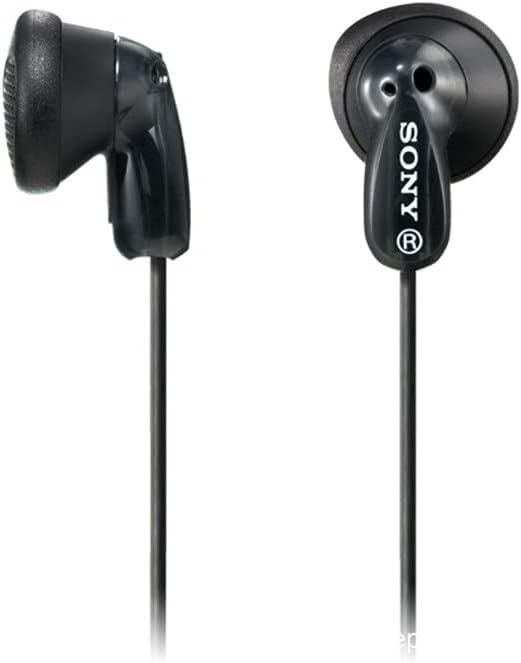
Sony offers the MDR-E9LP in a range of colors, including green, blue, black, orange, pink, and grey. The variety is a nod to personal preference that you don’t always see in this category, and it gives the product a bit of personality beyond pure utility. The housing is plastic, as you would expect, but the overall weight comes in at just 6 grams — light enough that you barely notice them sitting in your ear.
According to comparative data from ProductInDetail, that 6-gram weight ranks better than roughly 81% of in-ear headphones in their database. For a product in this tier, that is a meaningful advantage. Lighter earbuds reduce fatigue during extended listening and put less mechanical stress on the ear, which directly supports the comfort story that runs through much of the positive customer feedback.
The cable is a standard wired affair terminating in a 3.5 mm stereo plug. There is no inline remote or microphone on the base model, which keeps things simple but also means you will need to control playback from your source device. The cable itself has drawn a few complaints from users, primarily around tangling and durability over time — a common issue with lightweight earbud cables and not unique to this product.
Sound Quality
Sound quality is where the MDR-E9LP draws its strongest praise. The combination of 13.5 mm PET dynamic drivers and neodymium magnets produces a sound signature that multiple sources describe as clear and crisp, with a bass response that benefits from the earbud design directing sound into the ear canal rather than letting it dissipate outward.
Looking at the specifications, the frequency response spans 18 Hz to 22,000 Hz. That range extends slightly beyond the typical 20–20,000 Hz band you see on most consumer earbuds. The lower 18 Hz floor suggests the drivers are capable of reaching into sub-bass territory, though real-world sub-bass performance in an unsealed earbud will always be limited compared to a properly fitted in-ear monitor with a deep seal. ProductInDetail’s comparative data places this frequency response better than about 68% of in-ear headphones rated in their system — respectable, if not class-leading.
Sensitivity is rated at 104 dB/mW, which ProductInDetail notes is better than approximately 59% of in-ear headphones. In practical terms, this means the MDR-E9LP plays loudly without demanding much power from the source device. That efficiency is particularly relevant if you are driving them directly from a smartphone headphone jack or a low-powered portable DAC. You will not need a dedicated amplifier to reach satisfying volume levels.
The impedance sits at 16 ohms, reinforcing the same story: these earbuds are easy to drive and well-suited to portable electronics. You will not be straining your device’s battery or struggling to hit adequate volume.
The diaphragm material is PET — a common choice in dynamic drivers that balances stiffness and lightness for reasonable transient response. ProductInDetail ranks the 13.5 mm diaphragm size better than 80% of in-ear headphones in their database, which is worth noting. Larger diaphragms in earbuds can move more air, potentially delivering fuller bass and a more spacious soundstage than the tiny 6 mm or 8 mm drivers found in some competing models.
The dynamic range is listed at 30 dBV/uBar, though this is a less commonly cited specification in consumer reviews and is difficult to contextualize without direct comparison data. The magnet material is neodymium, which Sony highlights as offering sound reinforcement — a claim that holds up given neodymium’s strong magnetic properties relative to size.
In terms of overall character, customer feedback from Best Buy — where the product carries a 4.3-star rating across 73 reviews — consistently highlights sound quality as the top pro, mentioned in 33 of those reviews. That makes it the most frequently cited positive attribute by a wide margin. Listeners describe the audio as clean and enjoyable, particularly for casual music listening, podcasts, and audiobooks. The sound signature leans toward a balanced presentation with reasonable bass extension, rather than the heavily boosted low end that dominates many modern budget earbuds.
Comfort and Fit
Comfort is the MDR-E9LP’s second strongest suit. The rubber ear cushions are designed to provide a soft interface between the hard plastic housing and the ear, and Sony explicitly calls out their role in ensuring comfort during extended listening. The lightweight 6-gram body complements this by minimizing the downward pull that can cause fatigue or soreness over time.
Best Buy’s customer feedback bears this out. Comfort is the second most mentioned pro, appearing in 17 of 73 reviews. Multiple users report wearing them for long periods without discomfort, and some specifically note preferring the earbud style over deeper-insertion in-ear designs that can create pressure in the ear canal. ExtremeHiFi’s summary of blogger and YouTuber opinions echoes this point, noting that the fit is comfortable for many users and that some reviewers actually prefer it over in-ear designs that go deeper.
The fit issue, however, is real and worth addressing honestly. Six Best Buy reviewers cited fit as a con — the most common complaint. The earbud form factor, by its nature, does not create a seal in the ear canal the way a silicone-tipped IEM does. Instead, it relies on the geometry of the individual ear to hold the bud in place. For some users, particularly those with smaller or differently shaped ear bowls, the buds can work loose during movement. This is an inherent limitation of the earbud design rather than a flaw specific to Sony’s implementation, but it is something prospective buyers should weigh.
One Best Buy reviewer noted a minor but interesting issue: a crinkling sound from one of the internal components when first inserting the earbud. This appears to be an isolated complaint rather than a widespread pattern, but it does point to the kind of minor build-quality variance that can occur in lightweight, mass-produced earbuds.
Connectivity and Compatibility
The MDR-E9LP is a purely wired headphone. It connects via a 3.5 mm stereo plug — the standard that has been the backbone of portable audio for decades. There is no Bluetooth, no USB-C, no proprietary connector. In an era where many smartphones have dropped the headphone jack entirely, this is both a strength and a limitation.
On the positive side, a wired connection eliminates latency, pairing hassles, and battery management. You plug in, and the sound is there. There is no need to charge the headphones or worry about firmware updates. ProductInDetail notes that wired connections remain the standard for studio and professional DJ applications precisely because they reduce audio transmission delays and prevent the battery drain associated with wireless operation.
Copyright protected. First published on hifireport.com; any unauthorized copy violates the intellectual property rights of hifireport.com.
The trade-off, of course, is compatibility. If your phone lacks a 3.5 mm jack, you will need a dongle adapter, which adds a small layer of inconvenience and an additional point of potential failure in the signal chain. For devices that retain the headphone jack — many laptops, portable music players, dedicated DACs, and some smartphones — the MDR-E9LP is plug-and-play with zero friction.
The 16-ohm impedance and 104 dB/mW sensitivity make these earbuds compatible with virtually any source device. You do not need a high-output amplifier to drive them to satisfying levels. A smartphone, a budget DAP, or even the headphone output on a laptop will suffice. This broad compatibility is one of the reasons the MDR-E9LP remained popular for so long — it works with everything, no questions asked.
Real-World Performance
In everyday use, the MDR-E9LP fills a specific niche: it is the dependable, grab-and-go earbud you reach for when you do not want to think about your audio gear. One Best Buy reviewer described keeping a pair in a gym bag, valuing the durability and sound quality enough to replace an older Sony pair that had survived until water damage finally did it in. That anecdote captures the product’s identity well — it is practical, resilient, and good enough that when a pair eventually fails, the owner buys the same model again.
The sound output mode is stereo, and the headphones use dynamic driver technology, which is the most common and well-understood transducer type in consumer audio. Dynamic drivers are known for their ability to move significant amounts of air, which typically translates to punchy, engaging bass and a sense of dynamic ease. The 13.5 mm driver size in the MDR-E9LP is on the larger side for an earbud, which helps explain the positive feedback around bass response and overall sound fullness.
That said, the earbud design means there is no passive noise isolation to speak of. You will hear your surroundings while wearing these — which can be a safety benefit in environments where situational awareness matters, such as running outdoors or working in an office where you need to hear colleagues. If you are looking for isolation to block out a noisy commute or a plane cabin, the MDR-E9LP is not the right tool. This is an open-earbud design, and it behaves like one.
The absence of an inline remote or microphone means the MDR-E9LP is purely a listening device. You cannot take calls, adjust volume, or skip tracks from the cable. For some users, this is a non-issue. For others who have grown accustomed to the convenience of inline controls on modern earbuds, it will feel like a step backward. The product’s 2011 origins are most apparent here — at that time, inline controls were not yet ubiquitous on budget earbuds.
What Customers Are Saying
Amazon’s aggregate rating for the MDR-E9LP stands at 4.2 out of 5 stars across an impressive 12,140 ratings. That volume of feedback is significant — it represents over a decade of accumulated user opinions, and a 4.2 average across that many ratings suggests a product that has consistently met or exceeded expectations for the majority of buyers. Individual review text from Amazon was not available for this analysis due to access restrictions, but the high rating volume and strong average tell a clear story: this is a product that has earned and maintained a broad base of satisfied users.
Best Buy’s customer feedback, drawn from 73 reviews with a 4.3-star average, provides more granular detail. The rating distribution skews heavily positive: 42 five-star reviews, 19 four-star reviews, 7 three-star, 2 two-star, and 3 one-star. That means roughly 83% of reviewers rated the product four stars or higher, and 86% said they would recommend it to a friend.
Sound quality is the dominant theme in positive reviews, mentioned in 33 of 73 reviews — nearly half. Comfort follows as the second most cited pro, at 17 mentions. Customers describe the audio as clear and enjoyable for the price tier, and many specifically note wearing the earbuds comfortably for extended periods. Several reviewers frame the purchase in terms of value, emphasizing that the sound and build quality exceeded what they expected.
On the complaint side, fit is the leading issue at 6 mentions, followed by the cord at 3 mentions and bass at 1 mention. The fit complaints are consistent with the inherent characteristics of earbud designs — they do not seal the canal and can shift during activity. Cord complaints center on tangling and durability over time. The single bass complaint suggests that while most users find the low-end response satisfactory, at least one listener expected more punch than an unsealed earbud can deliver.
ExtremeHiFi’s summary of third-party reviewer opinions reinforces the customer feedback pattern. Their noted strengths focus on comfort and fit, with some reviewers preferring the earbud style over deeper in-ear designs. The product’s discontinued status is flagged, with a recommendation to explore Sony’s newer offerings if the MDR-E9LP is unavailable.
Pros and Cons
Pros:
© hifireport.com – Original review content by hifireport.com. Reprinting without written permission is not allowed.
- Lightweight at just 6 grams, reducing fatigue during extended listening
- 13.5 mm PET drivers deliver clear, crisp audio with good bass extension for an earbud
- Neodymium magnets provide sound reinforcement and efficient driver operation
- Broad frequency response of 18 Hz – 22,000 Hz
- High sensitivity (104 dB/mW) and low impedance (16 ohms) make them easy to drive from any source
- Comfortable rubber ear cushions and earbud design preferred by many over deep-insertion IEMs
- Available in multiple colors (green, blue, black, orange, pink, grey)
- Strong long-term customer satisfaction with over 12,000 Amazon ratings averaging 4.2 stars
- Simple plug-and-play wired connectivity with no charging or pairing required
Cons:
- Discontinued by the manufacturer; availability is limited to remaining stock and resale
- Earbud design does not seal the ear canal, providing minimal passive noise isolation
- Fit can be inconsistent — some users report the buds falling out during movement
- No inline remote or microphone for call management or playback control
- Cable durability and tangling are recurring complaints
- Sub-bass performance is inherently limited by the unsealed earbud design
- Requires a 3.5 mm headphone jack or adapter, which many modern smartphones lack
Verdict
The Sony MDR-E9LP is a product that has outlived its official production run and continues to find an audience — and for good reason. It does a few things well and does them without pretense. The 13.5 mm drivers and neodymium magnets produce sound that thousands of listeners have found satisfying, particularly for casual music listening, podcasts, and spoken-word content. The 6-gram weight and rubber ear cushions deliver comfort that holds up over long sessions, a point that both customers and third-party reviewers consistently highlight.
The weaknesses are equally clear. The earbud design means no seal, no isolation, and a fit that depends heavily on individual ear geometry. There are no modern conveniences like inline controls or a microphone. And the product is discontinued, which means availability is uncertain and you may need to look to Sony’s current lineup if stock has dried up.
For the right listener — someone who values simplicity, comfort, and dependable sound over isolation and smart features — the MDR-E9LP remains a worthwhile choice. It is the kind of product that earns its place not by doing everything, but by doing the essentials consistently well. If you still have a headphone jack and appreciate the straightforward reliability of a wired earbud, this is a model worth seeking out.
Specifications
- Product Name: Sony MDR-E9LP
- Manufacturer: Sony
- Release Year: 2011
- Product Status: Discontinued
- Headphone Type: Earbud
- Form Factor: Ear-bud
- Connectivity: Wired
- Connector: 3.5 mm stereo jack
- Sound Output Mode: Stereo
- Driver Technology: Dynamic
- Diaphragm Material: PET
- Driver Size: 13.5 mm
- Magnet Material: Neodymium
- Frequency Response: 18 Hz – 22,000 Hz
- Sensitivity: 104 dB/mW
- Impedance: 16 ohms
- Dynamic Range: 30 dBV/uBar
- Weight: 6 g
- Ear Cushions: Rubber
- Available Colors: Green, Blue, Black, Orange, Pink, Grey
- Recommended Use: Portable electronics
- Inline Remote: No
- Microphone: No
- Amazon Rating: 4.2 out of 5 (12,140 ratings)
- Best Buy Rating: 4.3 out of 5 (73 reviews)

- Sony écouteurs E9 gris