
Sony WI-XB400 Wireless Neck-Band Headphones Review
These are neckband wireless earbuds aimed at listeners who want a deep, punchy bass response without stepping up to full-sized over-ear cans. The WI-XB400 wraps Sony’s extra-bass tuning around a light behind-the-neck cable, magnetic in-ear housings, and a 15-hour battery, making it a practical option for commuters, gym-goers, and anyone who has moved past the 3.5mm jack.
Design and Build
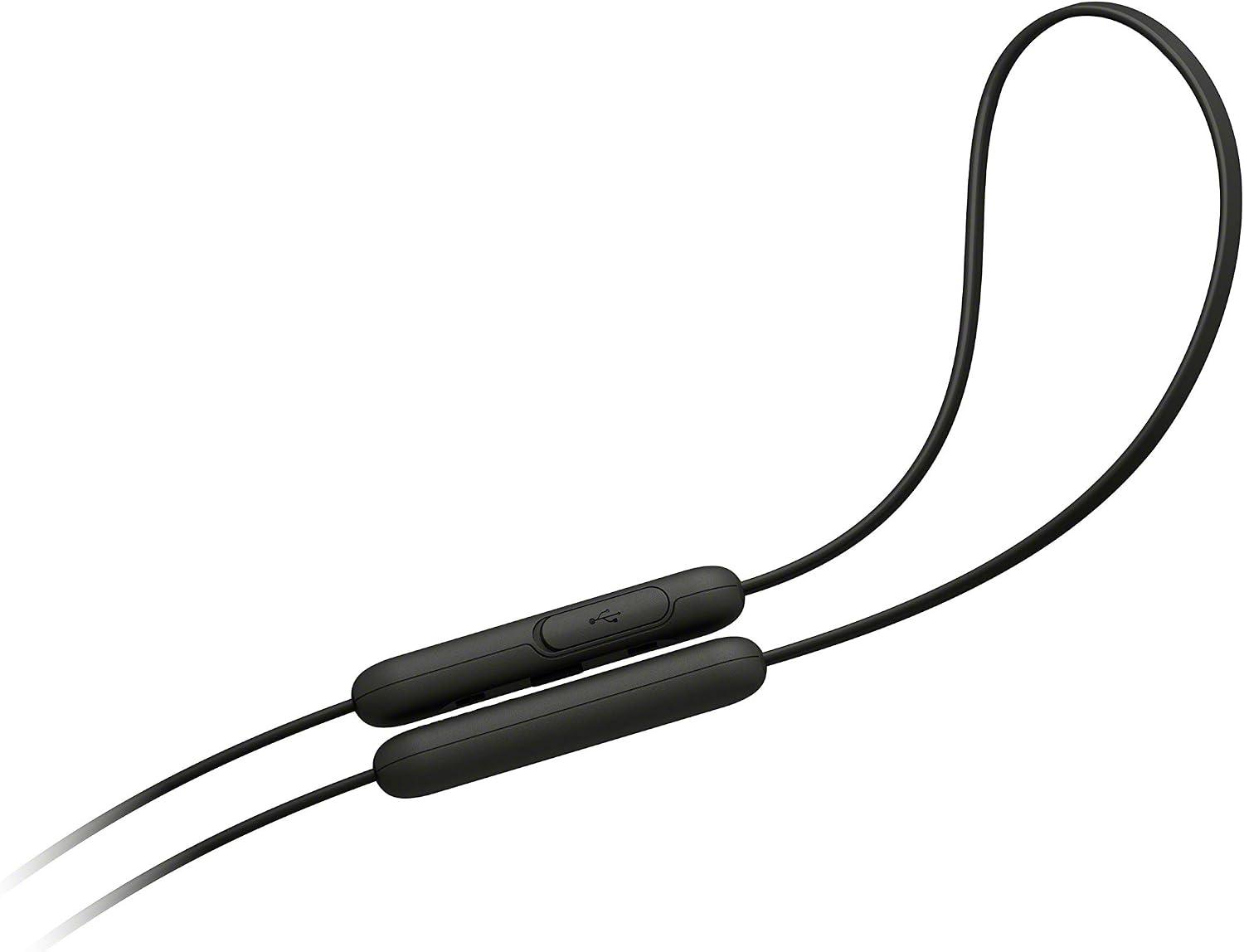
The WI-XB400 routes two small in-ear housings from a flexible, lightweight cable that loops around the back of the neck. Each housing is built around a 12 mm driver unit, and the whole cable-and-hub assembly is thin enough to sit flat against the back of the head without catching on a collar or a helmet strap. The earbuds are compact and low-profile; a motorcycle rider noted they do not stick out under a shell the way bulkier true-wireless buds can, and the same small footprint keeps them from pressing into a beanie or a helmet liner during winter rides.

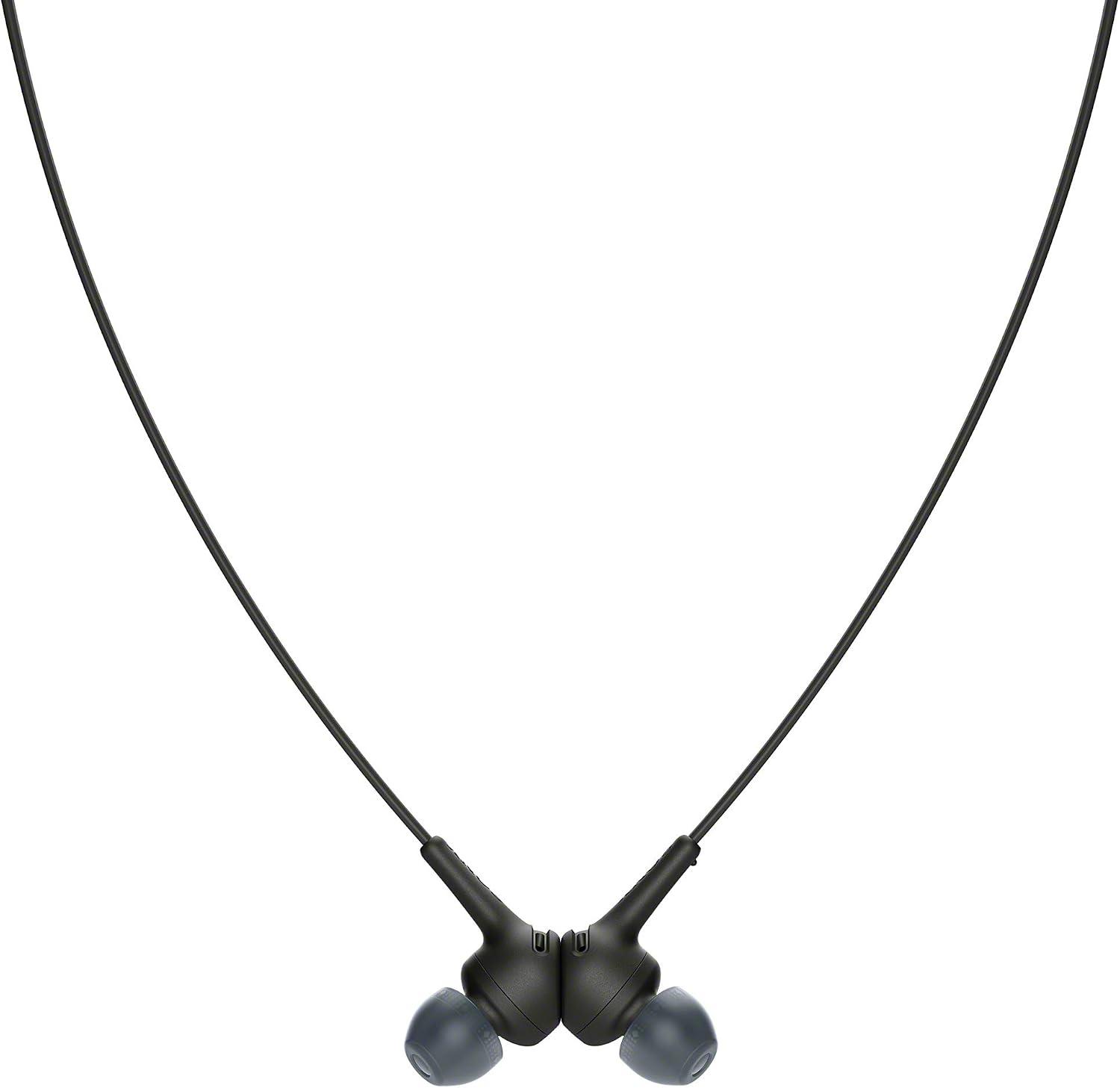
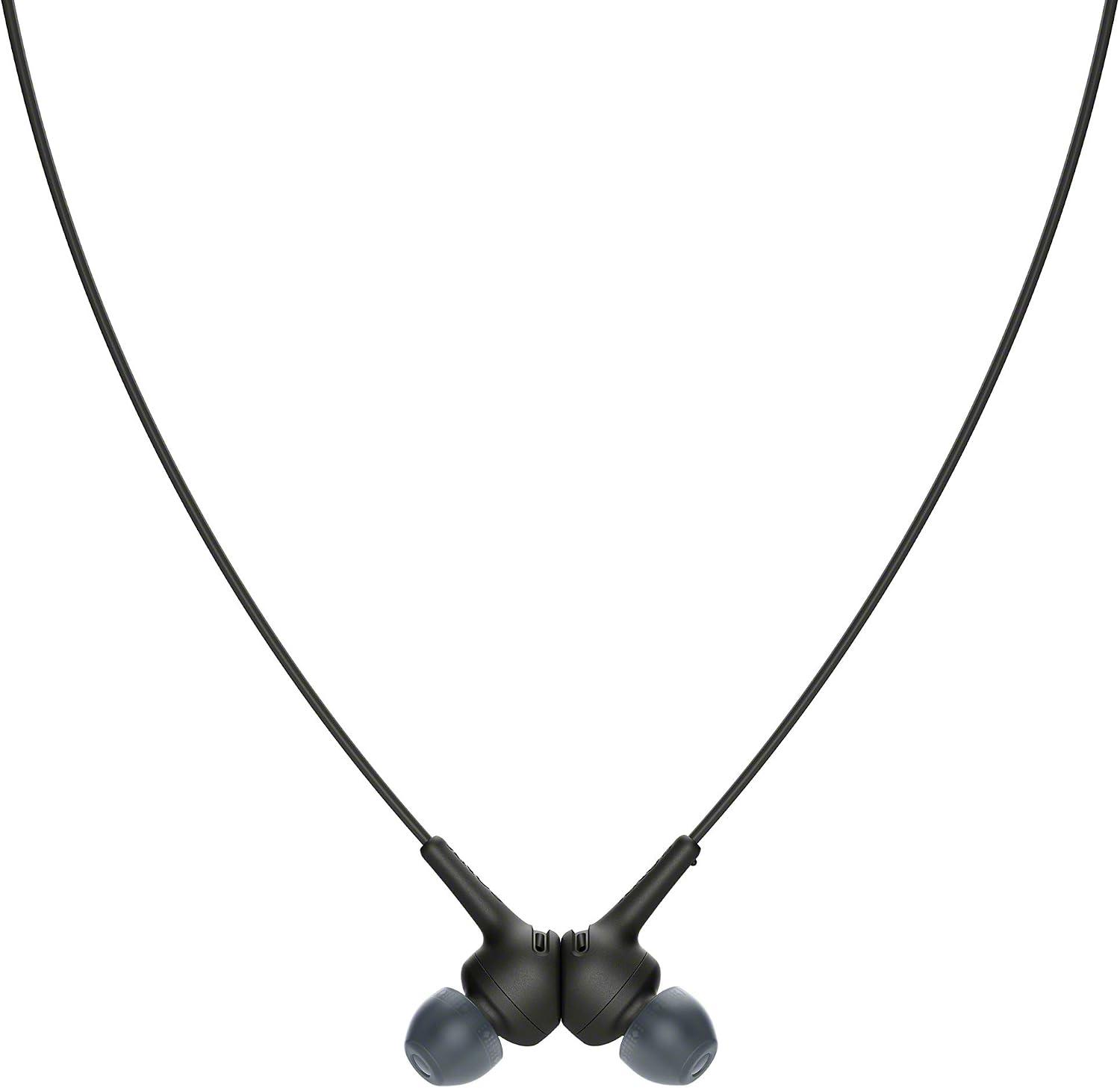
Controls sit on a small hub worked into the cable rather than on the earbuds themselves. Separate volume-up and volume-down buttons require a deliberate press, so they do not trigger accidentally when the cable brushes against clothing or gear. A single multi-function button handles play, pause, and incoming calls, and a dedicated key routes to the phone’s built-in voice assistant. Magnetic contacts on the outer face of each bud snap the two halves together when you set them down, and the same magnets let you hang the pair around your neck like a necklace between sessions. The included USB Type-C cable plugs into the hub for charging. The product data lists a single color, black, in a matte plastic finish, and the flexible cable comes in two short reaches that connect the hub to each earbud housing.

Wearing Comfort
Most owners describe the neckband as light enough to forget it is there, even in hot and humid conditions. One long-term user who cycled a previous pair five hours a day, five days a week, for three years called the build durable and the neck loop comfortable through extended sessions without the cable digging into the skin. A motorcycle rider found the small bud housings stay put when a helmet goes on and off, and that the taut cable does not shift during hard riding. Several owners report sleeping on their side with the buds in place, the compact shape and light cable keeping pressure off the ear and the neck through the night.

The comfort story does split by user. One one-star reviewer said the soft neckband cable keeps sliding to one side and had to be readjusted at least ten times a day, a frustration he called the reason he went back to an older headset. The included ear tips, which come in a few sizes, did not seal for that same user; the buds kept popping out of the ear canal. The product note on the listing warns that if the tips do not fit snugly, sound quality and call performance both drop, so swapping to a smaller or larger tip from the included set is the first step before judging the fit. For riders, sleepers, and gym users the compact housing is a real advantage over bulkier TWS models, but people with larger ear canals should test the seal before committing.
Copyright hifireport.com. Republishing, scraping, or reselling this text is prohibited.

How They Sound
Bass
The low end is where the WI-XB400 earns its “extra bass” label, and the weight of owner feedback points in the same direction. One longtime user who lined the earbuds up against his studio headphones said they handled low-frequency material with a depth and volume the larger cans could not match, and called the bass driver the strongest he had encountered in any earbud at this tier. A motorcycle rider who does not normally chase bass described the lift in the lower frequencies as a welcome trait when cutting through wind and engine drone on the highway. A UK reviewer compared the pair against Sony’s WF-C500 true-wireless model and found the C500 had barely any bass, with songs sounding entirely different because the mix skewed toward treble, while the WI-XB400 matched a wired Deep Bass earphone in low-end output and in some passages pushed further into the sub-bass region.

Midrange and Treble
Mids and highs come through with clean separation; the bass does not mask vocals or instrument texture the way cheaper earbuds tend to. One reviewer specifically noted that the sound stays clear and does not get muddy or blend across frequency bands, even at higher volume. The overall tuning leans warm and forward-biased toward the lows, so listeners who prefer a flat, reference-like response will find the mids slightly recessed and the top end quieter. An owner who upgraded from an earlier production run of the same model said the newer units sound a touch less crisp in the upper mids, though the bass section held steady. A few users coming from wired in-ear monitors called the WI-XB400 good but not on par with a well-tuned cable pair, and one four-star reviewer summarized the sound as “ok for what they are,” adding that he still preferred his corded earbuds for detail and reach.
Keeping the World Out
The WI-XB400 has no active noise cancellation; all isolation is passive, coming from how well the in-ear tips seal against your ear canal. A motorcycle rider described the isolation as medium: engine drone drops enough that music is audible at normal volumes, but wind and traffic still bleed through the open back of the ear. In a quiet office or a calm bus ride that level of passive isolation is workable, but anyone trying to block out a jackhammer, a subway carriage, or an open-plan office will want a pair with ANC. The small bud housings do not create the bulky, pressurized seal that over-ear cans do, so the isolation ceiling is modest by design. If you plan to use these in a loud gym or a busy street, keep the volume at a comfortable level and expect a fair amount of ambient noise to come through the open tip geometry.
Copyright hifireport.com. Republishing, scraping, or reselling this text is prohibited.
Battery Life
The spec sheet lists up to 15 hours of continuous playback on a full charge, and a Dutch owner confirmed the figure in his review, saying the buds last well over 15 hours of real-world listening. Quick charging delivers about 60 minutes of playback after 10 minutes on the USB Type-C port, and a full charge takes roughly 3 hours. A long-term user who cycles the buds five hours a day, five days a week, reports no capacity issues across three years of daily use. If you fall short of the rated 15 hours, check that the Bluetooth connection is stable; one reviewer noted that occasional random dropouts can make the unit seem less efficient than it actually is, and the simplified voice prompts on this revision mean you no longer get a battery-level announcement when you power the buds on.
Call Quality
The built-in mic handles hands-free calls in a quiet room without issue, but the product note warns that a poor ear-tip seal will degrade performance, and that is the main variable. The WI-XB400 is listed as compatible with voice assistants, so you can route phone calls and assistant commands through the buds without reaching for your phone. A motorcycle rider explicitly said he has not tested the pair as a two-way communication device over a helmet intercom and could not comment on microphone clarity in a high-wind environment. For office calls or a quiet café, the setup works as a straightforward convenience. For cycling or running in wind, expect the same limitations as any open in-ear mic with no dedicated windscreen, and keep the volume moderate so background noise does not drown out the far end.

App and Connectivity
The buds pair over standard Bluetooth and hold a connection within roughly 10 meters of the source, the effective range Sony lists for this model. Sony’s companion app provides an equalizer, and at least one confirmed owner used it to apply custom EQ settings to the WI-XB400 without issue. Volume is adjustable on three independent layers: the physical buttons on the neckband hub, the volume on the phone, and any software EQ or system-level limit, which gives you fine-grained control without overdriving the small 12 mm drivers. The product data does not name a specific Bluetooth codec beyond standard Bluetooth audio, and there is no mention of multipoint pairing or a low-latency mode in the available information. One reviewer noted that the status voice prompts on this revision are simplified compared to the original production run, which announced battery level on power-up; the newer firmware keeps the prompts to “Power on” and “Connected,” and a few owners flagged random Bluetooth hiccups that the earlier units did not show.
Customer Feedback Highlights
The most common praise centers on bass. Owners consistently describe the low end as deep, loud, and clean, with several comparing it favorably to wired earbuds and to Sony’s own WF-C500. Durability shows up again and again; one user survived three years of daily abuse, repeated water submersion, and pressure-washing sessions on an earlier pair of the same model. Battery life, comfort for long sessions, and the convenience of the tethered cable over lost-prone TWS buds round out the positive themes, with the magnetic contacts getting their own shout-out as a simple, effective way to carry the pair without a charging case.
On the complaint side, the soft neckband cable slips to one side and needs constant readjustment, a frustration one owner called the reason he went back to his old headset. The included ear tips either fit too large or the housing shape means the buds pop out of the ear canal for some wearers, and the product note acknowledges that a poor seal degrades both sound and call quality. A bright blue LED on the cable hub flashes every five to ten seconds while the buds are on or playing, and two separate reviewers found it distracting, especially at night. A handful of owners also report random Bluetooth connectivity hiccups that did not affect the earlier production run, a quirk the current firmware has not smoothed out.
What We Like / What We Don’t
What We Like:
- Deep, clean bass that outperforms smaller TWS buds and matches wired deep-bass earphones
- 15-hour battery with 10-minute quick-charge over USB Type-C
- Tethered cable design removes the lost-bud problem and the need for a charging case
- Compact housings stay put under a helmet or while sleeping on your side
- Durable build that has held up under years of daily use and water exposure
What We Don’t:
- Soft neckband cable slides to one side and needs frequent readjustment
- Included ear tips do not seal for every ear canal; buds can fall out
- Bright flashing blue LED on the cable is distracting in low light
- No active noise cancellation; passive isolation is medium at best
- Occasional random Bluetooth dropouts reported by several owners
Bottom Line
The Sony WI-XB400 is the pick for listeners who want a neckband pair that delivers a strong bass response, lasts a full workday on one charge, and keeps the buds tethered so they stay where you put them. It suits commuters, gym users, and riders who want a light, warm-sounding set without the bulk of over-ear cans. The simplified voice prompts, the flashing LED, and the soft neck cable are small annoyances, but they are easy to live with if the bass and battery win your vote. Look elsewhere if you need active noise cancellation, a flat reference tonal curve, or a fully wireless design with a separate charging case.
Best for bass-forward listeners who want a tethered neckband without the weight of over-ears; look elsewhere if you need ANC, a flat tonal curve, or separate wireless buds with a charging case.
Specifications
- Driver size: 12 mm
- Connectivity: Bluetooth, approx 10 m effective range
- Battery: up to 15 hours playback; 10 min quick charge gives 60 min; full charge approx 3 hrs
- Charging port: USB Type-C
- Earbuds: magnetic, in-ear
- Call: hands-free with built-in mic; voice-assistant compatible
- Design: behind-the-neck cable, flexible and lightweight
- Color: Black
- Model: WI-XB400 (W128298864)
FAQ
Do the WI-XB400 work with a motorcycle helmet?
Yes. A rider tested the pair under a full-face shell and found the small bud housings stay in place through helmet on-and-off cycles. The slight bass lift helps cut through engine noise, though wind and traffic still come through because there is no active isolation.
Can I change the ear tips if the stock ones do not fit?
The product note on the listing says to swap the tips for a size that seals snugly in your ear canal. If the current tips are too large or the buds keep falling out, try a smaller tip from the included set. A poor seal reduces bass output and call mic performance.
Is there a separate charging case to carry the buds around?
No. The WI-XB400 uses a tethered neckband cable, so there is no separate case to stash in a pocket. The magnetic contacts on the outer face of each bud snap together when you are not using them, and the whole unit hangs around your neck between sessions.
Will the Sony app equalizer work with these buds?
Yes. At least one confirmed owner used Sony’s companion app to apply custom EQ settings to the WI-XB400. The buds pair over standard Bluetooth, and volume adjusts on three layers: the physical buttons on the cable, the phone volume, and the app or system EQ.

- Feel the power of extra bass.Note : If the size of the earbud tips does not match the size of your ear canals or the headset is not worn properly in your ears, you may not obtain the correct sound qualities or call performance. Change the earbud tips to ones that fit more snugly in your ears.Control Type:Voice
- Product Note : If the size of the earbud tips does not match the size of your ear canals or the headset is not worn properly in your ears, you may not obtain the correct sound qualities or call performance. Change the earbud tips to ones that fit more snugly in your ears
- Wireless Audio with Bluetooth technology, Driver Unit - 12MM