
Soulnote S-3 Ver.2 SACD/CD Player Review
I had only heard of the Soulnote brand in the past, and other editors at the magazine had written about their products, but I had never truly experienced one in my own home. After listening to the S-3 Ver.2 this time, it gave me a deeper understanding of the capabilities of Japanese audio manufacturers. For a long time, Taiwanese audio enthusiasts have seriously underestimated the strength of Japanese Hi-End audio manufacturers.
This likely stems from the affordability of Japanese AV receivers, leading to the assumption that Japan only produces budget audio equipment. Now, Soulnote proves once again that in the realm of Hi-End audio, Japan is formidable against its European and American counterparts, unless you are prejudiced.
Soulnote launched the DC 1.0 DAC in 2006, followed by the DA 1.0, SA 1.0 amplifiers, CD 1.0 CD player, SS1.0 speakers, SC 1.0 CD player, and more in 2007, although these products have since been discontinued. In recent years, their product aesthetics have undergone a significant transformation, becoming much more attractive and premium-looking than before – the style we see today.
Currently, Soulnote’s active product lineup includes the A-0, A-1, and A-2 integrated amplifiers; D-1N and D-2 DACs; E-1 and E-2 phono preamplifiers; C-1 CD player; P-3 preamplifier; and the S-3 Ver.2. A streaming player is also expected to be released soon.
The S-3 Ver.2 is Soulnote’s first SACD/CD player, introduced in 2019. Less than a year after its release, it was quickly updated to Ver.2. This was due to the discovery that replacing two relays significantly improved the sound quality. Did you know? The S-3 Ver.2 weighs a substantial 27 kilograms (about 60 pounds), while their A-2 integrated amplifier is only 20 kg (about 44 lbs), and the P-3 preamplifier weighs 25 kg (about 55 lbs). What reason could an SACD/CD player have to weigh 27 kg?
This is precisely where the S-3 Ver.2 shines, and I will elaborate below.
Exterior Design and Controls
The S-3 Ver.2’s chassis is quite large and squarely built, giving it a very stable appearance, truly reminiscent of a tank. Its front panel design is distinctive and highly recognizable, ensuring it won’t be confused with products from other brands. The most striking feature is the raised and recessed elements on the front panel. I’m unsure if these raised parts are machined from a solid block of aluminum or applied, but in any case, this panel looks very imposing.
Another distinctive feature is the wooden side panels. This design is a favorite among Japanese manufacturers, but upon closer inspection, you’ll notice the two wooden side panels have a central concave curve, making them unique. The manufacturer states this isn’t a damping measure but purely an aesthetic design.
While the S-3 Ver.2’s front panel is large, the control buttons and text above them are quite small. The chassis resembles heavy armor, yet the buttons and lettering are delicate – perhaps a stylistic choice by the designer? To the left of the Power button are four small buttons: CAS (Calculate Algorithm Select), INV (Phase Inversion), LPF (Low Pass Filter), and Input. CAS selects whether to use oversampling.
If you press it and the NOS (Non-Oversampling) light illuminates, it means there is no oversampling. If the NOS light is off, it indicates oversampling is active. Oversampling here means 32bit/8x oversampling, while NOS is the original 16bit/44.1kHz. Note that oversampling is only effective for PCM; it is inactive when playing SACD discs.
I have a question here: according to the manufacturer’s website data, in NOS mode, the signal exhibits no ringing, whereas in oversampling mode, the measured signal shows ringing. Logically, a signal without ringing should sound more accurate. However, I found that when switched to NOS, the imaging of instruments and vocals seemed to recede and wasn’t as prominent or three-dimensional.
When oversampling was selected, the shapes of instruments and vocals were more prominent, and the layering felt more distinct. My point is, listening on my system, I would choose oversampling because it better matches the sound I prefer. But the manufacturer’s measured data clearly indicates NOS is better! It’s puzzling.
INV is for phase inversion. If you feel the imaging isn’t focused enough, localization isn’t clear, or the bass seems weak, try pressing this button to listen to the inverted phase. The LPF (Low Pass Filter) is specifically for SACD playback, used to filter out frequencies above 100kHz (at 8dB). This LPF button is only active when the LPF switch on the rear panel is set to Manual. If set to Auto, it automatically engages when playing SACD, so there’s no need to press it.
Input selects the source, and the S-3 Ver.2 offers four input options. The first and second inputs are for USB DAC. The third input is coaxial digital, and the fourth input is shared between AES/EBU digital input and the proprietary Zero Link. Above these four small buttons are eight small indicator lights. The four on the right indicate the selected input source. Among the four on the left, only one needs explanation: Sync.
When using the USB DAC, this light illuminates, indicating that the input digital signal is synchronized with the internal Master Clock.
If the Sync light is off, it indicates the unit is in DPLL (Digital Phase-Locked Loop) mode, which is the clock state when playing CDs. However, I found it strange that when I played music files via the USB input, the NOS light would illuminate and I couldn’t switch to upsampling (the green light wouldn’t turn off). This suggests that when playing music files, the S-3 Ver.2 might be forced into NOS mode without upsampling.
But then the Sync light also didn’t illuminate, which seems contrary to my understanding.
I should point out here that if the fourth input is selected as AES/EBU, a red light will illuminate; if the proprietary Zero Link is selected, a blue light will illuminate. The Zero Link connector on the rear panel resembles a DVI video terminal and is reserved for Soulnote’s upcoming streaming player. Will the streaming player use the S-3 Ver.2’s DAC for digital-to-analog conversion? If so, it would imply that Soulnote’s upcoming streamer doesn’t have a built-in DAC.
At this point, you might feel that the S-3 Ver.2’s front panel has a wealth of “mechanisms.” But we’re not finished yet; there are more indicators on the right side, including SACD, CD, ALL Rep, Single Rep, and MHz/kHz. The SACD and CD lights indicate whether the SACD layer or CD layer is being played. If you play an SACD disc but the SACD light doesn’t illuminate, it means the CD layer is being read.
To prioritize SACD layer reading, you need to turn off the power, press and hold the SACD/CD toggle button, and then turn the power back on. This allows you to switch between prioritizing SACD or CD reading.
ALL Rep means repeating the entire disc, and Single Rep means repeating a single track. Both of these functions are operated via the remote control, not on the front panel. MHz and kHz display the sampling frequency for DSD or PCM. The display window will show the specifications of the input signal, such as 352.8, 768, 11.2, etc.
Rear Panel Features
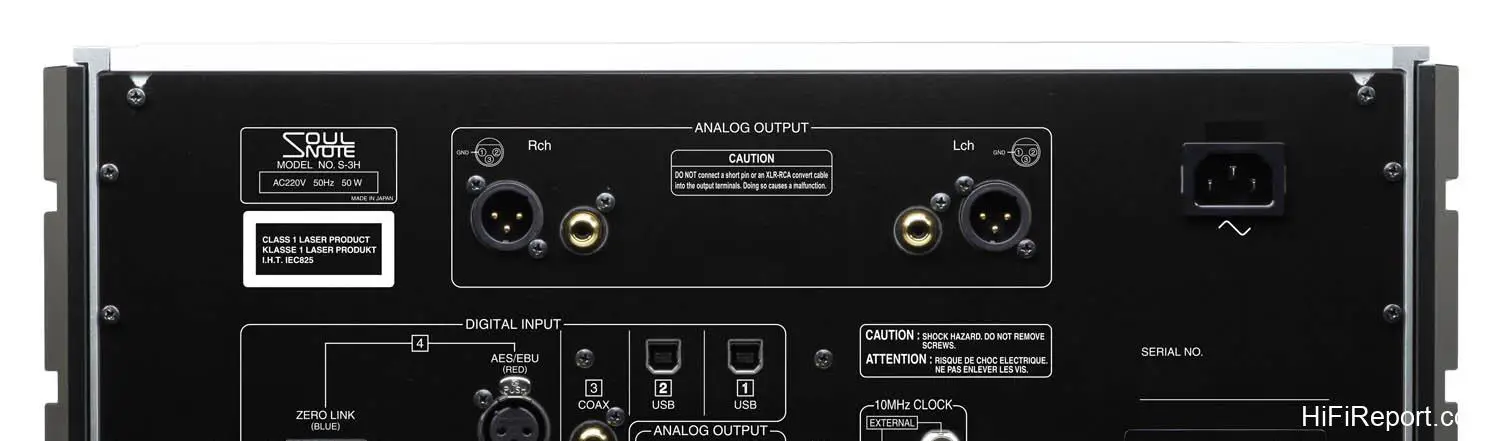
Moving to the S-3 Ver.2’s rear panel, you’ll find two sets of analog output terminals, one XLR and one RCA. The RCA output voltage is 2.8V, and the XLR output voltage is 5.6V, both higher than the typical 2V or 4V. Digital inputs include one Zero Link, one AES/EBU, and one coaxial RCA, while the USB DAC input is unusually provided with two sets.
The manufacturer specifically instructs in the manual not to repeatedly turn the power on/off when using the USB input, nor to repeatedly press the input selection button on the panel, or repeatedly plug/unplug the USB cable, as this might cause connection issues between the computer and the S-3 Ver.2. If a connection problem occurs, there will be no signal, and the relevant indicator lights on the panel will flash.
Also, the manual advises users to preferably power off the unit before plugging/unplugging signal cables to avoid unnecessary problems.
On the rear panel, there is also a switch for toggling between American and European XLR pin configurations, a thoughtful feature to prevent phase inversion with different wiring standards. Furthermore, there is a 10MHz external clock input terminal and a corresponding switch. Finally, there is a switch for the Low Pass Filter, allowing selection between Manual and Auto modes. If set to Auto, the LPF button on the front panel is disabled; it is only activated when the switch is set to Manual.
Unique Mechanical Design and Isolation
The design of the S-3 Ver.2’s top cover is quite special. If you don’t touch it, you might think it’s just a top cover with large cutouts. However, upon touching it, you’ll realize the cover feels like it isn’t securely fastened and can wobble. Upon closer inspection, it becomes clear that this top cover is supported by three pointed feet. The two rear feet are attached to the top cover, with their points facing downward and contacting the chassis.
The central point is attached to the chassis, pointing upward and contacting the top cover. This isolation design is truly unique.
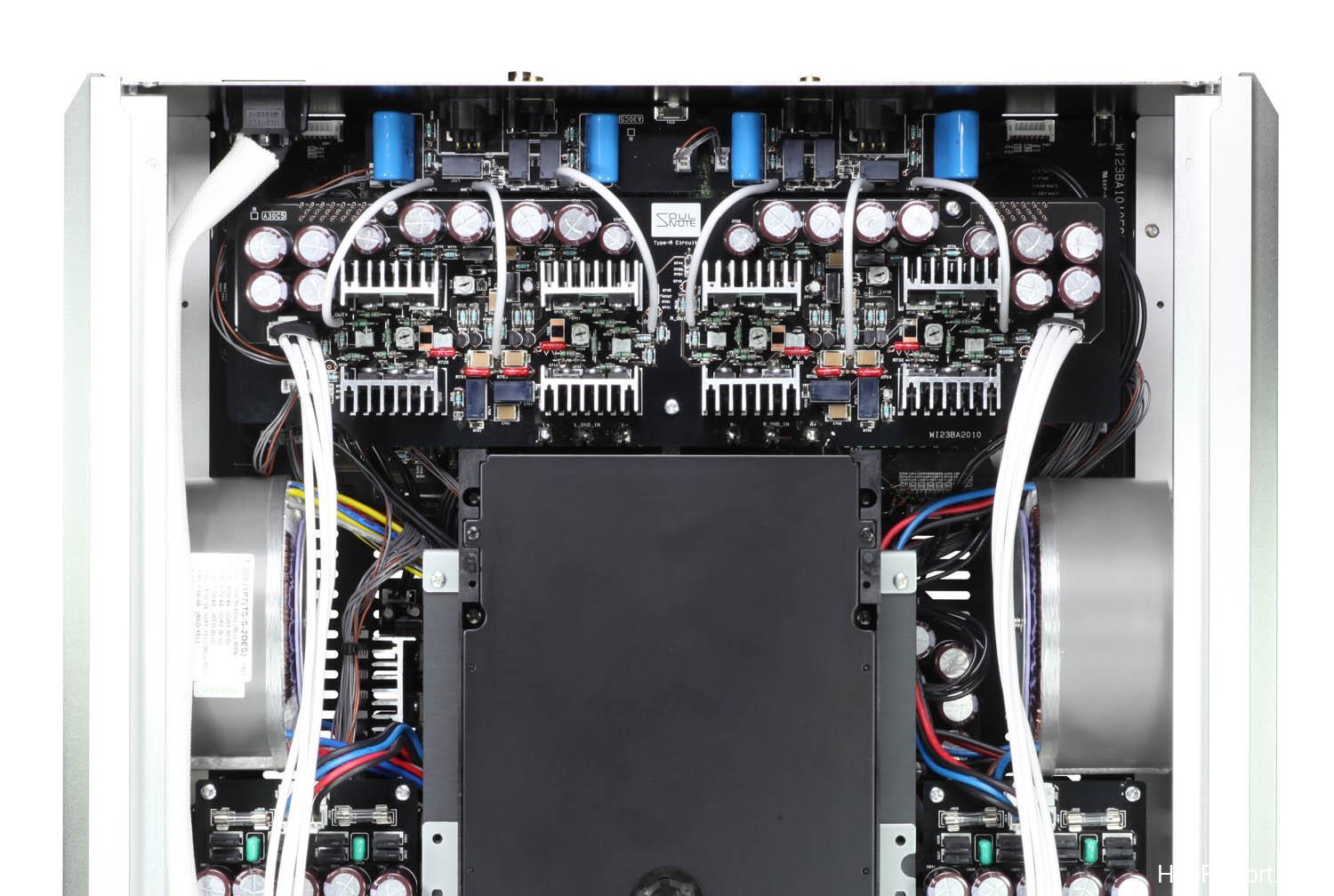
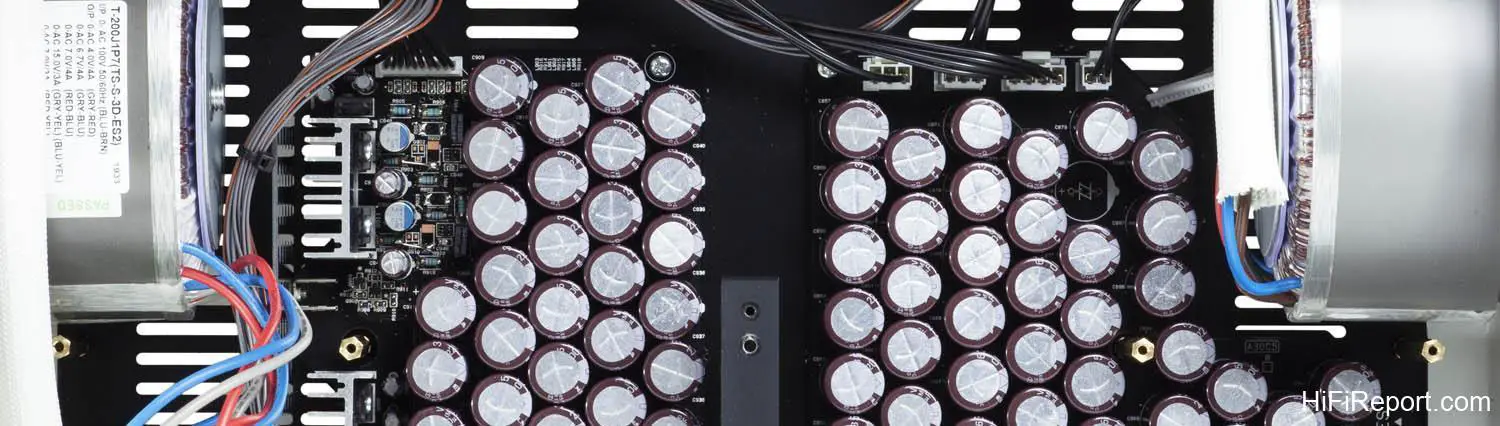
Opening the top cover reveals two toroidal transformers, positioned upright and bolted separately to the especially thick side panels on the left and right. The contact points between the transformers and the side panels use titanium pads for three-point contact, and sandwich structure materials are used for bottom isolation.
The S-3 Ver.2 is not the first DAC or CD player to use two power transformers, but placing the two transformers far apart on opposite sides to minimize magnetic field interference, combined with well-designed isolation measures, is indeed uncommon.
The large central section houses the laser mechanical reading mechanism, which appears to be sourced from Marantz. Adjacent to each toroidal transformer are 14 small filter capacitors. Just this arrangement indicates the S-3 Ver.2’s strong emphasis on power supply, with independent regulation for both digital and analog circuits. As if that weren’t enough, the rear of the chassis is packed with an array of voltage regulators, filling all available space.
You might ask, where are the other circuits? They are all hidden underneath the mechanical reading system. Furthermore, the internal wiring uses Teflon-coated cables.
From the outside, these two toroidal transformers in the S-3 Ver.2 appear unremarkable, but their construction differs from the norm. Typically, after winding the coils, toroidal transformers undergo an impregnation process to reduce internal vibrations. However, Soulnote’s engineers discovered that transformers treated this way sounded inferior. But if not impregnated, how is the transformer’s own vibration addressed?
Their solution is to bolt the transformers to the thick side panels, combined with a mechanical grounding design.
If you thought the S-3 Ver.2’s isolation measures were limited to the above, you’d be mistaken. The bottom of the S-3 Ver.2’s chassis has three feet (two types are included: spiked and flat). Two of these feet are located directly beneath the transformers on the left and right sides, and the third is located beneath the mechanical reading system. Clearly, this design employs mechanical grounding, intending to transmit vibrations from inside the chassis to the outside.
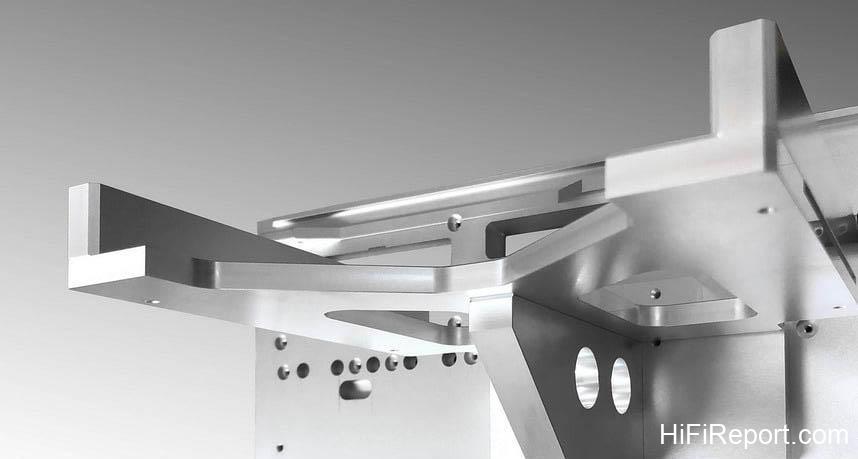
Given these steps, one might think enough care has been taken. But it doesn’t stop there. The S-3 Ver.2 has a specially designed heavy aluminum frame internally, whose purpose is to support the entire mechanical reading system, keeping it from contacting other parts of the chassis. The bottom center of this supporting aluminum frame rests on a single spike.
This spike is clearly a standard mechanical grounding design, corresponding to the central one of the three feet on the bottom of the S-3 Ver.2.
And still, it’s not finished. The S-3 Ver.2 comes with a dedicated Soulnote isolation board. When in use, the S-3 Ver.2 is placed on this board, providing yet another layer of isolation. Therefore, the S-3 Ver.2’s overall isolation measures are comprehensive, covering internal and external aspects. Such thorough isolation is genuinely rare.
Internal Circuitry and Technical Details
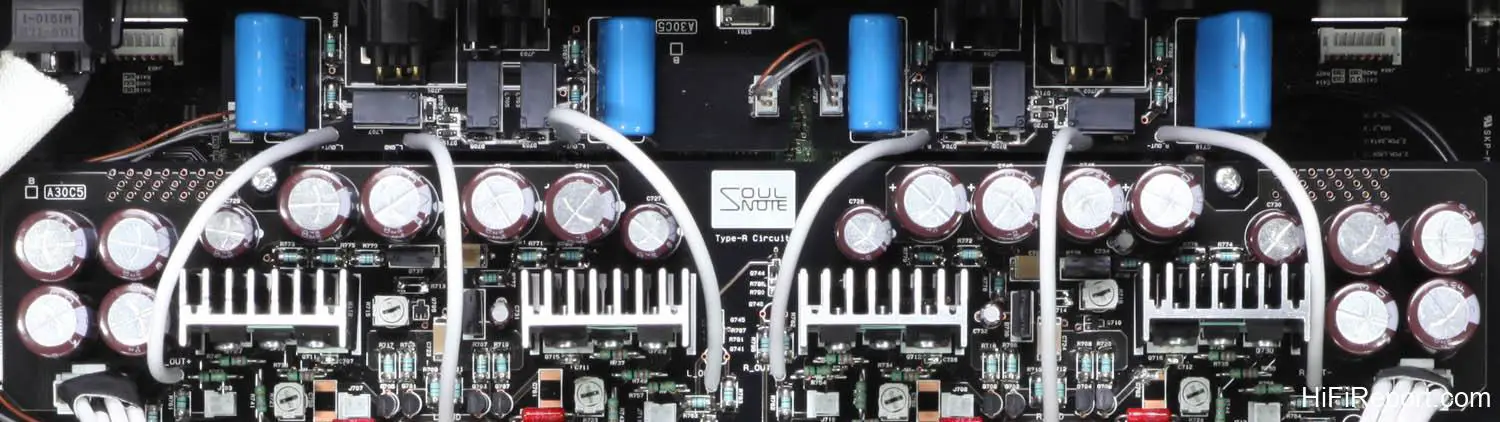
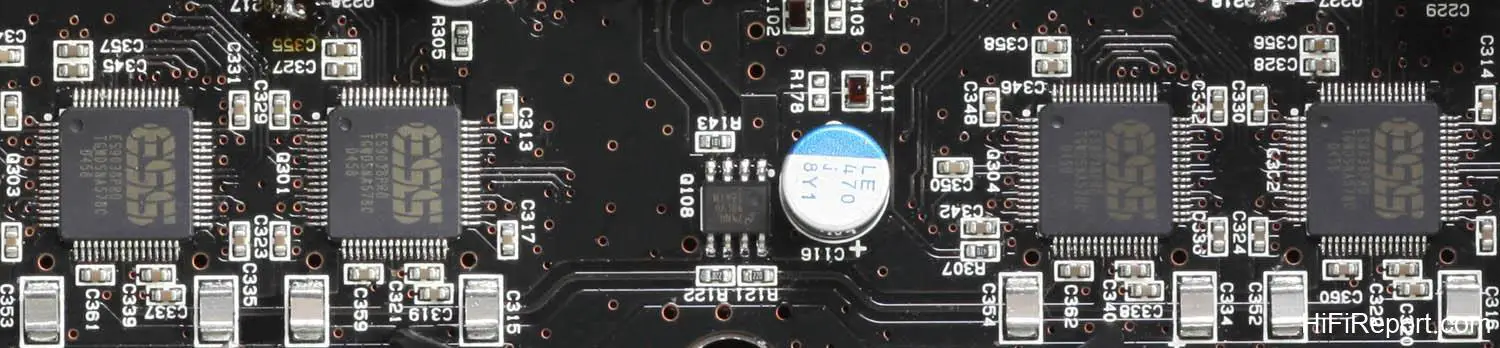
The S-3 Ver.2 employs two ESS 9038 Pro DAC chips per channel, a luxurious approach likely indicating a balanced architecture. The clock used is the DDSLMX2594. This Ver.2 upgrade involves replacing two glass-sealed relays. They are used for switching between external and internal clocks and for switching the phase of the master clock to match the optimal phase based on the signal source’s sampling rate – I suspect this is switching between 44.1kHz and 48kHz domains?
These two relays were originally used in the latest P-3 preamplifier. The development team discovered that these two relays resulted in a wider and deeper soundstage, cleaner sound, and better depth perception, prompting them to notify dealers worldwide about the necessary replacement shortly after the S-3 Ver.2’s release.
Thus, the primary difference between the first and second generations lies solely in these two glass-sealed relays. Although it’s just two relays, Soulnote remained uncompromising, wanting to provide users with the best possible sound quality. The upgrade for the S-3 Ver.2 is free. The challenging part is that these two relays are located underneath the mechanical reading system, requiring the entire reading system to be disassembled before the relays can be replaced.
Local dealers have invested time and effort to provide this free upgrade for first-generation S-3 Ver.2 owners. This approach builds greater confidence in the brand.
The S-3 Ver.2’s analog output circuit design is also distinctive. They employ a simplified circuit, specifically the claimed non-negative feedback Type-R circuit. The circuit uses only four transistors and eight resistors, and the emitter resistance in the output stage is reduced from the usual 22 ohms to 1 ohm. Reducing the output impedance so low significantly increases the output current, which is also uncommon among other manufacturers.
Frankly, judging by the numerous small capacitors and voltage regulators, the S-3 Ver.2 places a very strong emphasis on power supply. I’ve said many times that the quality of the power supply is absolutely crucial for good sound.
Listening Environment and Overall Impressions
The listening environment for the S-3 Ver.2 was my large open-plan living space. The accompanying equipment included a Spectral DMC 30SS preamplifier, directly feeding an ATC SCM 100ASL active twin-speaker system. Listening material included SACD, CD, and music files. The S-3 Ver.2 was placed on the special Soulnote wooden isolation board during listening sessions.
Several characteristics of the S-3 Ver.2’s sound performance are particularly impressive. Firstly, the sound quality is excellent. Secondly, the imaging of instruments and vocals is exceptionally prominent, with large and focused forms. Thirdly, the sense of localization, layering, and depth is outstanding, resulting in a soundstage that feels three-dimensional. Fourthly, the sound density is remarkably high, with exceptional tangibility and weight.
Fifthly, the transparency is superb, coupled with exceptionally high resolution and an abundance of detail. Sixthly, the sound is particularly full and energetic. Seventhly, transient response is fast, and dynamic contrast is wide.
Detailed Sound Performance
I enjoy using chamber music, especially ensembles, to test audio equipment because it allows me to clearly discern the timbre and realism of each instrument. For example, when testing with the piano quintet on the Rhymoi Music album “Eternal Charm,” what first captivated me was the beautiful timbre of the cello, followed by the exquisite timbre of the piano, and then the violin and viola.
The S-3 Ver.2 rendered the timbre of these instruments beautifully and their performance texture was very realistic. Combined with its ability to fully convey the dynamics of the performers, the music became utterly captivating.
Listening to the Allegri String Quartet’s recording of Beethoven’s “String Quartet Op. 131” (Naim Records), I again found that the S-3 Ver.2 presented the timbre of the four string instruments beautifully, and their performance texture was very realistic. The four string instruments produced enchanting harmonies, making this Beethoven piece sound very engaging, unlike how some systems can make string quartets sound dry and lifeless.
Whether a quintet or a quartet, you can feel the high density of the instruments’ sounds, the solid outlines, and the weight of the piano notes.
When I listened to Heifetz’s recording of Sibelius’s “Violin Concerto,” as the orchestra and violin entered, I heard a performance that surprised me: the timbre was simply magnificent! Yes, whether it was Heifetz’s violin or the sound of the Chicago Symphony Orchestra, their timbre was so beautiful that it was instantly appealing. It was like tasting a better grape; the subtle balance of sweetness, acidity, and aroma could be judged intuitively, without needing layers of learned analysis.
The S-3 Ver.2’s portrayal of the violin, while refined, was also very sweet and (moist/rich). On one hand, it wasn’t aggressive, yet on the other, it was sufficiently clear. This kind of violin sound is bound to be universally loved. Furthermore, you’ll also notice that the timbre and tone of the woodwinds in the orchestra are particularly lovely, elevating the overall orchestral timbre.
Listening to Bruno Philippe (cello) and Jerome Ducros (piano) perform Rachmaninoff and Myaskovsky’s “Cello and Piano Sonatas” (Harmonia Mundi), the cello sound produced by the S-3 Ver.2 was absolutely exquisite. It was a warm, slightly nasal, and refined cello tone that immediately conveyed a sense of excellent sound quality. The piano also clearly revealed the beautiful characteristics of a Steinway, with each note distinct and resonant. The decay of the low keys extended naturally and deeply.
This further confirmed the S-3 Ver.2’s beautiful timbre and the density and weight of the instruments’ sounds.
When listening to Maitane Sebastian’s performance of Bach’s Cello Suites (Paraty), the cello sound produced by the S-3 Ver.2 was again movingly beautiful. The density of that cello was truly high! Just listening to a single cello could trigger endorphins, making one feel very happy. Based on the beautiful timbre and high resolution of the violin, cello, and piano, I can almost definitively state that the S-3 Ver.2 is an exceptionally good SACD/CD player.
After listening to Bach’s solo cello suites, I pulled out the CD soundtrack for “Nie Zi” (Crystal Boys). I frequently use this CD to test if a system’s timbre is good enough and its control is sufficient. If the cello’s timbre sounds rough and lacks the beauty inherent in a wooden instrument, then the tested equipment’s performance isn’t good enough.
If the low frequencies are bloated and uncontrolled, and the piano lacks focus and coherence, and both aren’t solid enough, it also indicates poor control from the equipment. This test consistently proves effective. When the S-3 Ver.2 played this CD, both the cello’s beautiful timbre and the control over the bass and piano met my requirements, reaffirming the S-3 Ver.2’s beautiful sound quality.
Furthermore, while listening to “Nie Zi,” one could also sense the S-3 Ver.2’s high sound density and excellent control. The instruments’ sounds didn’t become unruly or thin; they simply sounded solid and composed. I’ve devoted a lot of space to describing the S-3 Ver.2’s timbre performance because it’s immediately striking and requires no special discerning ability. Honestly, excellent timbre provides a solid foundation for a SACD/CD player to deliver great sound.
Coupled with its numerous other outstanding qualities, it’s undoubtedly a superior piece of equipment.
The S-3 Ver.2 excels at making instruments and vocals particularly prominent, with large and focused forms. Listening to “The Perlman Edition,” the violin lines were solid and full, not thin. Piano notes were also resonant and tangible. The violin sound was very realistic, and double-stops sounded beautiful and sweet. Listening to the KEF SACD test disc, the imaging was vivid and prominent, powerful, with ample low-frequency quantity, a fuller midrange, and clearer highs.
The sound was more focused, more penetrating, and had better weight and tangibility. Piano notes were full, tangible, and weighty. Piano decay was long, sweet and smooth, with fast note articulation.
Listening to Anne Bisson and Belanger’s “Conversations,” Anne Bisson’s voice was incredibly full and prominent. The cello timbre was beautiful, the bowing texture was very realistic, and the lines were similarly prominent. The plucked Double Bass had a hard finger-plucking texture and sounded bouncy. Overall, the forms were full, prominent, and sweet, with a beautiful sheen. Every piano key press generated full string vibrations and overtones, and the piano had great energy.
I should say all instruments and vocals had great energy. The soundstage was wide, seemingly filling the entire sonic picture with no empty space.
Resolution, Transparency, and Spatial Rendering
The S-3 Ver.2’s resolution is very high. Listening to the Gennaro Desiderio Ensemble “Plays Astor Piazzolla,” the piano resolution was astonishing. The details of the sound produced when the hammer struck the strings were incredibly clear. When playing together, the resolution of the various instruments was equally sharp. If the audio equipment cannot resolve this CD clearly, it will sound chaotic and noisy.
While the S-3 Ver.2 played this CD with liveliness and excitement, it didn’t sound noisy at all, clearly indicating high resolution. Furthermore, the cello sound on this CD, particularly in the fifth track, was especially beautiful through the S-3 Ver.2 – a beauty that is truly moving.
The S-3 Ver.2 offers excellent transparency and layering. Listening to Charles Mackerras conducting the Scottish Chamber Orchestra in Mozart’s opera “Don Giovanni,” the depth and layers of the stage were clearly rendered. The layering between the accompanying instruments and the singers was also distinct, not jumbled together. The S-3 Ver.2’s transparency is gentle, yet you can see through it very clearly, like the kind of transparency in a mountain stream that lets you see the bottom.
Especially when several singers appeared and sang simultaneously, their individual forms were very prominent, and the apparent distance of their voices during dialogue was also clear.
The S-3 Ver.2’s ability to render space is excellent. Listening to the first track “Sleep Awhile” from Accustic Arts Audiophile Recordings Volume 2 “Female Voices,” there were very subtle percussive sounds at the beginning of the soundstage. Although these sounds were very quiet, the texture of the strike upon contact was clearly audible. The spatial sense throughout the entire piece was excellent.
Of course, this was a spatial effect “arranged” by the recording engineer, positioning instruments forward, backward, left, and right, combined with artificial reverberation, creating a wide and deep soundstage. The S-3 Ver.2 rendered every instrument very prominently, and the front-to-back layering and positioning were incredibly clear, with exceptionally high transparency.
Similarly, when listening to the aforementioned recording of Mozart’s four great operas by Charles Mackerras conducting the Scottish Chamber Orchestra, the recording presented a clear sense of space, bringing the stage picture to life in my mind. Frankly, if you can’t hear the sense of space, the sonic picture feels two-dimensional.
When you can hear the sense of space, the sonic picture immediately transforms into something like the popular 3D physical paintings online – so realistic that you want to reach out and touch it. The S-3 Ver.2’s spatial rendering gives you that 3D physical painting feeling.
Orchestral Performance
When I listened to several orchestral performances, I immediately felt the S-3 Ver.2’s expansive soundstage, fast transient response, and wide dynamic range. The overall orchestral sound was full and energetic, and the sonic picture was rich, not empty. For instance, listening to Mariss Jansons conducting the St. Petersburg Philharmonic in Rachmaninoff’s “Symphony No. 3, Symphonic Dances” (EMI), the music had great elasticity and was very lively.
Subtle string passages sounded incredibly real, drums hit with significant impact, and there was immense tension between the delicate playing and sudden loud tuttis.
Listening to Carlo Maria Giulini conducting the Philharmonia Orchestra in Rossini’s “Opera Overtures” (EMI), the S-3 Ver.2 displayed excellent layering and a very transparent soundstage. The string sections were very elastic, and the brass sounded very realistic. Despite the rapid tempo, the orchestral layers remained clearly discernible, not blurring together – truly high resolution! The woodwind sound was exceptionally beautiful, sweet, lustrous, and warm.
The entire overture sounded full of vibrant elasticity and had plenty of power.
Conclusion: A Formidable Contender
The Soulnote S-3 Ver.2 is an SACD/CD player designed with incredible meticulousness, a hallmark of Japanese engineering. However, its sonic performance is anything but the traditionally perceived delicate, understated Japanese sound. Instead, it embodies the characteristics of European and American high-end audio: grand, open, full-bodied, robust, yet exceptionally refined. Here, I must declare: the giants of the SACD/CD player world need to beware.
The S-3 Ver.2 truly possesses the strength to challenge them. It is one of the best SACD/CD players I have ever heard.
Specifications
* Type: SACD/CD Player
* Launch Date: 2020
* Frequency Response: 2Hz-150kHz (+0/-1dB)
* Inputs/Outputs: Digital inputs including AES/EBU, RCA coaxial, USB (x2), and Zero Link. Analog outputs including XLR and RCA (x1 each). External 10MHz clock input. * Unbalanced Output: 2.8V
* Balanced Output: 5.6V
* Total Harmonic Distortion: 0.008%
* Signal-to-Noise Ratio: 110dB
* Maximum Audio Support: USB input compatible with PCM 768kHz, DSD 22.6MHz.
Coaxial input compatible with PCM 192kHz, DSD 2.8MHz. * Dimensions (WHD): 454×170×393mm (approx. 17.9 x 6.7 x 15.5 inches)
* Weight: 27 kg (approx. 60 lbs)
* Distributor: Please consult local distributor.
Associated Equipment
* Preamplifier: Spectral DMC 30SS
* Speakers: ATC SCM 100ASL
Key Features
* Exceptionally solid chassis with meticulous isolation.
* Two transformers separated far apart to prevent mutual interference.
* Extraordinary attention to power supply design.
* Sound is solid, full, grand, with excellent timbre.
* Highly versatile, enhances performance with various systems.