
Spendor Classic 200 Review
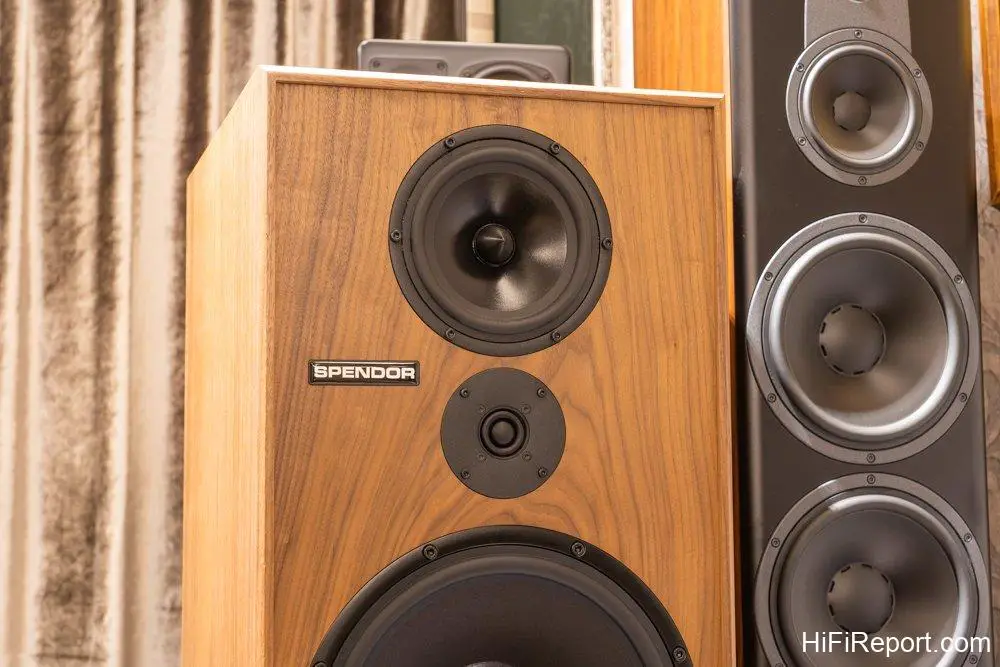
Spendor, a British brand, is a familiar name to Hi-Fi enthusiasts. Back in the heyday of BBC monitor loudspeakers, the three major brands were Rogers, Harbeth, and Spendor. This time, at HiFiReport Audio in Ximending, the focus of our listening session is the Spendor Classic 200 floor-standing speakers, the largest floor-standing model in the Classic series and arguably Spendor’s current flagship.
Tribute to Classics
The Classic series, as the name suggests, pays homage to classic designs. Their appearance evokes the style of the 1970s. Choosing the Classic series is akin to collecting vintage cars, but with modern engines under the hood – classic yet contemporary. However, if you’re aiming for the most authentic classic look, the Classic 100, a large three-way bookshelf speaker paired with low stands, might be even closer, exuding a stronger sense of nostalgia. But why did Spendor later introduce the floor-standing Classic 200 in the Classic series? I believe it’s to flex their muscles. If someone asks me what makes high-end audio expensive, I usually say: it’s the bass.
If you just want to casually enjoy music, two-way bookshelf speakers can sound beautiful. But don’t delve too deeply into whether the bass is good enough, because lower frequency response and fuller bass require larger speaker cabinet volume and more powerful amplifiers – all of which cost money. So, while the Classic 100 embodies the most classic BBC monitor speaker look, Spendor still wanted to showcase their capabilities by extending the cabinet downwards, increasing the internal volume, and adding another woofer. Using dual woofers demonstrates bass power, achieving full-range music reproduction.
Achieving Full Range Reproduction
Full range? What does that mean? It means extending the low frequencies down to the human ear’s lower limit of 20 Hz. Comparing the Classic 100 and Classic 200, both offer high-frequency extension up to 25 kHz, exceeding the human hearing limit of 20 kHz. However, the low-frequency performance differs. The Classic 100 extends down to 25 Hz, while the Classic 200 goes even lower, reaching 20 Hz. This 5 Hz difference might not be easily discernible without test tones, but it pushes the Classic 200 to achieve true full-range music reproduction specifications, showing everyone what Spendor is capable of.
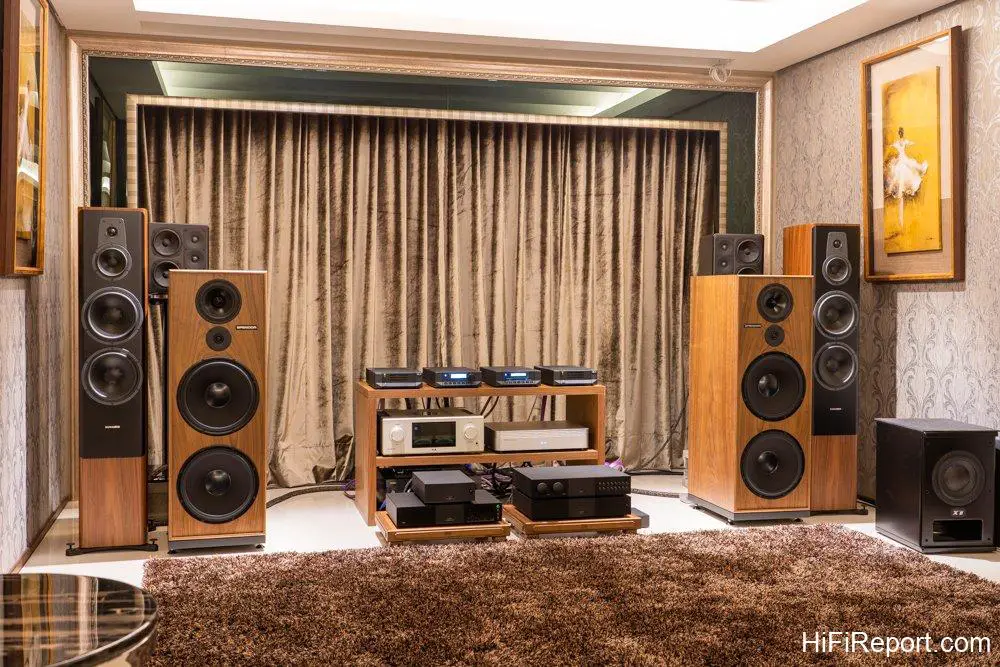
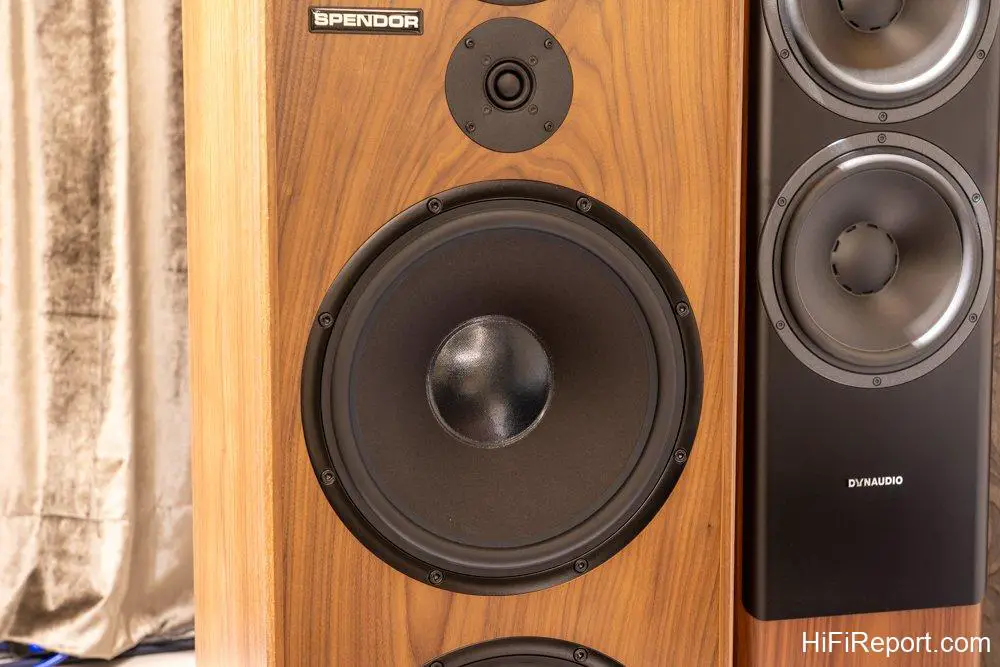
Both the Classic 200 and Classic 100 are three-way designs. In terms of driver count, the Classic 200 adds a 31 cm Kevlar cone woofer. However, technically, it’s not just a simple cabinet enlargement. Instead, the cabinet is redesigned. The larger bookshelf Classic 100 uses a bass-reflex cabinet, while the Classic 200 becomes a sealed cabinet. This cabinet design change is not as simple as just enlarging the cabinet and omitting the bass reflex port. All internal structures and bracing pillars need to be redesigned.
Switch to Sealed Enclosure
Why did the Classic 200 switch to a sealed cabinet? The answer is still for the bass. Comparing cabinets with the same internal volume, a sealed cabinet’s low-frequency extension is not as deep as a bass-reflex cabinet, and its efficiency is also lower. However, the Classic 200’s internal volume is larger than the Classic 100, and it also has an extra large woofer. Therefore, the bass output is certainly more substantial than the Classic 100, negating the need for a bass reflex port. Switching to a sealed cabinet eliminates potential air turbulence noise from the port.
Furthermore, the efficiency of dual woofers, combined with the crossover design, is inherently superior to a single woofer. Therefore, although the Classic 200 has one more woofer and a larger cabinet volume, its efficiency remains the same as the Classic 100, at 89 dB. This means if you are a Classic 100 user and want to upgrade to the Classic 200, you don’t need to change your amplifier; your existing equipment will suffice.
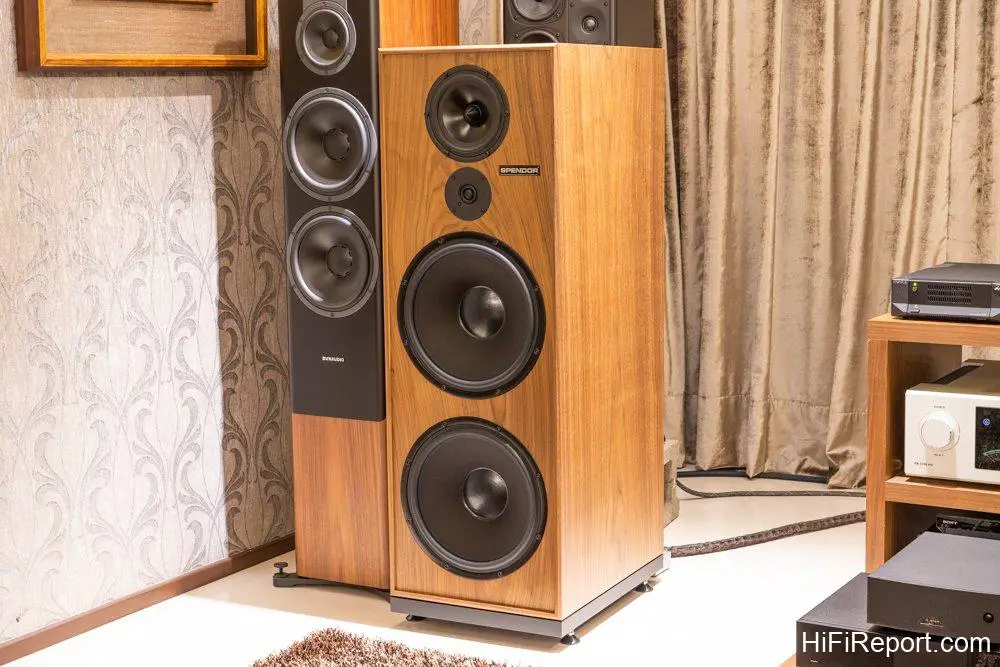
Uncompromised Classic Design
As for the other technical features of the Classic 200, to put it directly, they are classic elements: a silk soft dome tweeter paired with a PP cone midrange, and dual large-diameter Kevlar woofers. However, the silk soft dome tweeter uses polyamide internally, a newly popular and well-regarded material. As for the EP77 polymer cone, its formula is Spendor’s technological essence and a key to Spendor’s classic sound.
The selling point of traditional British speakers usually isn’t rare and expensive materials, but rather the technology itself. Take thin-walled cabinet designs, for example. The key technology lies in controlling cabinet resonance.
We all know that speaker drivers are mounted on the front baffle. When the drivers move like pistons, they inevitably generate forces that cause cabinet resonance. Using thick, multi-layered composite materials to build speaker cabinets aims to eliminate resonance through high mass and high damping. However, thin-walled cabinet designs are different. They rely on lighter cabinets and complex internal bracing to control resonance. The design of internal supports and bracing is where each manufacturer’s expertise lies, with subtle differences in approach.
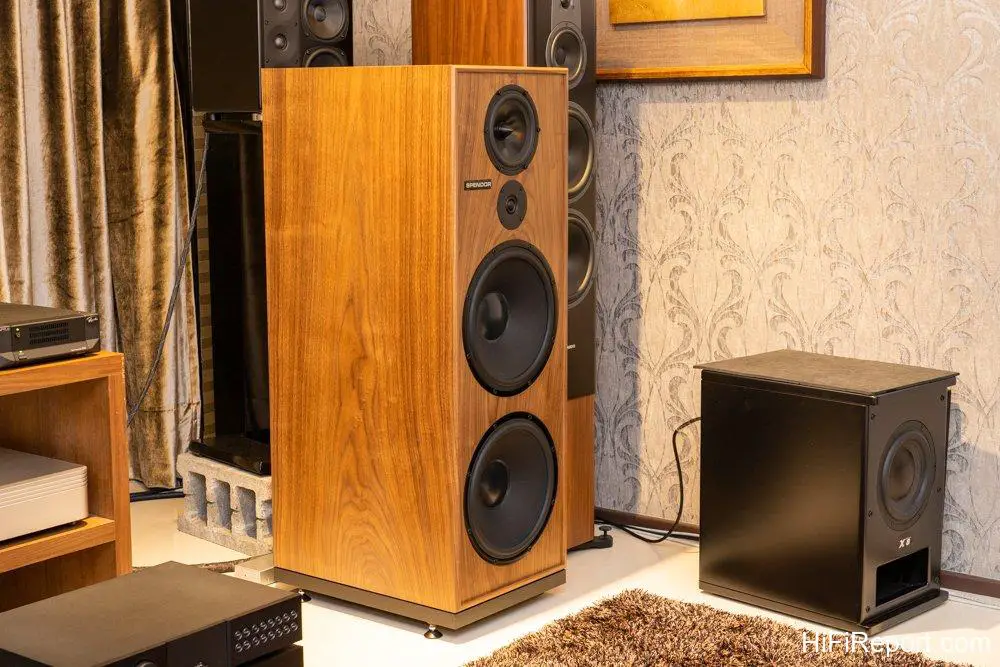
Want to learn? Even disassembling the speaker might not reveal the secrets.
Therefore, the Classic 200’s cabinet description simply states four words: Thin Wall, Damped, Braced, Sealed. These words represent thin-walled, damped, braced, and sealed. The meanings are simple, but the underlying technology is extremely complex. Combining these four aspects in speaker design introduces numerous variables. How to control resonance and make the speaker musically rich transforms speaker design from pure science into the subjective realm of music appreciation.
Paired with Cyrus Electronics
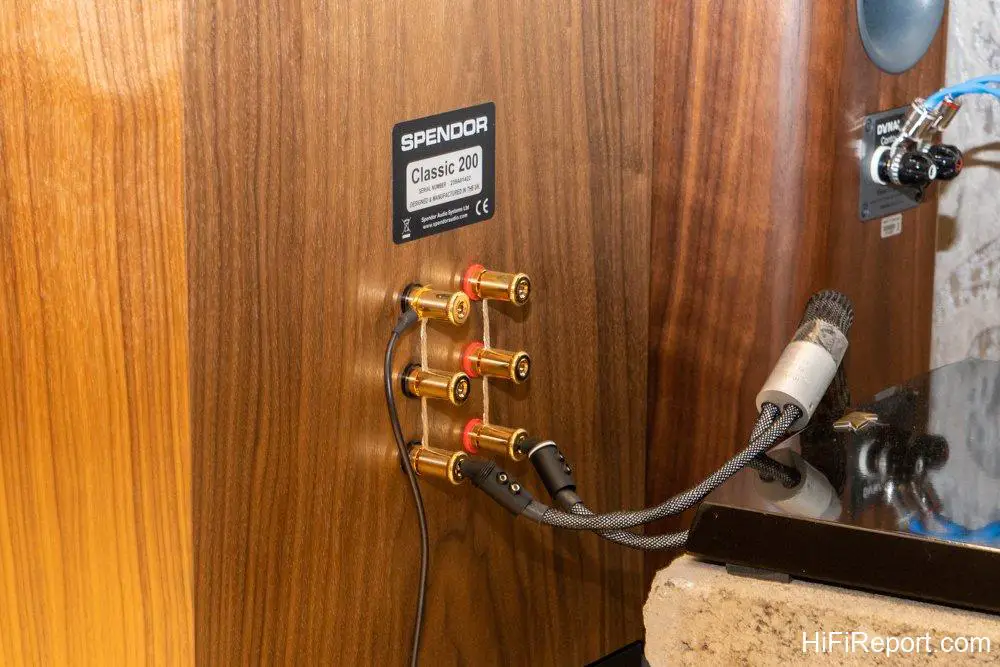
At HiFiReport Audio, the Classic 200 is paired with a full Cyrus system, from the CDt-XR CD transport and Pre-XR DAC preamp to the Mono X 300 Signature monoblock power amplifiers. This is the same setup exhibited by Jade Audio at the TAA Audio Show in August. The speaker cables are also from inAkustik, just one level below their top-of-the-line Referenz series.
Using British electronics with British speakers can be considered an authentic British sound. However, in the early days, mentioning British sound often evoked comments like, “Isn’t it just warm and muddy?” Rewinding thirty years, that might have been somewhat accurate. But after so many years of progress in material science, British sound still represents warmth, but definitely not muddiness. Their ability to reproduce musical detail is far superior to what it was thirty years ago.
The Cyrus components, except for the power amplifiers, are all from the latest generation high-end XR series. The new series still uses die-cast metal chassis and retains the half-width, small-size design, but the color has slightly changed to a new Phantom Black.
Phantom Black, isn’t it just black? What’s so different about XR’s Phantom Black? Comparing it with the Mono X 300 Signature placed next to it reveals the difference in black shades. I’m not sure if the photos can capture the difference, but Phantom Black looks deeper and more understated. Although both are black, the Phantom Black finish feels more refined.
Feature-Rich Pre-XR
The reason for choosing the Mono X 300 Signature for amplification is that the new XR series hasn’t yet released power amplifiers. So, the current top-of-the-line monoblock power amplifier is the Mono X 300 Signature, which boasts a non-negative feedback amplification circuit and 225 watts of output power.
Reportedly, Cyrus will not be releasing new XR series power amplifiers in the near future. Therefore, the factory offers a Phantom Black appearance upgrade option (at an extra cost) so that XR users can match Signature components with a consistent color scheme.
The XR series may still look like classic Cyrus on the outside, but the internal technology is highly advanced. Among them, the Pre-XR can be considered the most complex Cyrus component I’ve ever seen. The Pre-XR is not only a line-level preamplifier, but also includes a built-in DAC and MM phono stage. Each input terminal can independently set gain and balance. The DAC also offers multiple digital filter options. Its features are incredibly comprehensive. I really don’t know how they crammed such complex circuitry into such a small chassis. However, the focus of this listening session is not Cyrus, so I didn’t explore it in detail, keeping my attention on the Classic 200 speakers.
Inaudible Crossover Points
I listened to the Classic 200 in HiFiReport Audio’s dedicated listening room on the second floor. Before starting the music listening, I first played the 20 Hz ~ 20 kHz continuous test signal from the “Ayre Acoustics Test Disc.” This is my tool for initial speaker evaluation. I had already witnessed the Classic 200’s powerful musical energy at the TAA Audio Show, but I still wanted to test its performance at HiFiReport.
The 20 Hz ~ 20 kHz continuous test signal is used to assess the crossover integration. The Classic 200 is a three-way speaker, meaning it has two crossover points. Ideally, the integration between crossover points should be smooth and seamless, with virtually no audible dips or peaks. Test signals are most accurate for this purpose. Under normal circumstances, the test tone should be focused in the center of the soundstage. If there are dips or peaks at the crossover points, the sound image will seem to waver slightly. Visually speaking, it feels like the flickering of a candle flame. Therefore, the Classic 200 might exhibit sound image wavering in two places.
The first time I played the test signal, I was surprised. During the 60-second test signal, I could barely hear any sound image wavering. This indicates that the Classic 200’s crossover integration is exceptionally smooth. I’ve used this test signal for many years and rarely encountered speakers as smooth as the Classic 200. So, I listened repeatedly three times, and then asked HiFiReport Audio staff to listen again with me. I said, “This Classic 200 is truly impressive. The crossover points are almost imperceptible, with hardly any dips or peaks. It’s rare to encounter such accurate speakers.”

Accurate Crossover due to Precision
Smooth crossover integration doesn’t necessarily equate to good sound, but it signifies the precision of the Classic 200’s crossover network. This level of accuracy is quite remarkable. It requires not only a crossover design that seamlessly integrates the three drivers, but also precision in crossover and speaker manufacturing. Sometimes, the issue isn’t the crossover design itself, but rather the channel imbalance between the left and right speakers. It’s evident that Spendor’s manufacturing quality is very rigorous. Without careful matching of numerous passive components, it would be difficult to eliminate channel imbalance. Simply demonstrating smooth three-way crossover integration with test tones, while not fully validating the Classic 200’s sound quality, is sufficient to illustrate that the Classic 200 not only has accurate and smooth crossover integration, but also very minimal channel imbalance.
This single 20 Hz~20 kHz test made me hold the Classic 200 in high regard. It turns out, beneath the classic exterior, lies Spendor’s precise manufacturing craftsmanship.
I often say that after a century of evolution, speaker design no longer holds many secrets. But the challenge isn’t knowing what to do, but rather how to persevere in the details and strive for utmost precision.

Balance of Richness and Transparency
Time to listen to music. I started with Eva Cassidy’s live recording “Live At Blues Alley.” The Classic 200’s musical charm still stems from its rich midrange, very much in the British tradition. However, the Classic 200 possesses a wide soundstage, and transparency is not compromised by the full-bodied midrange. Listening to “Bridge Over Troubled Water,” the electric guitar tone carries the warm hue of a Fender Tweed amp. The clinking of glasses and dishes in the small club recording brings out a fresh sense of live atmosphere. Eva Cassidy’s vocals are sweet and full, focused in the center of the soundstage. When the electric bass and drums join in, the musical scene becomes full and vibrant.
Listening to Eva Cassidy sing “Bridge Over Troubled Water,” the electric bass deserves extra attention. The bassist is Chris Biondo. In the age of Google, you can instantly find much information about Chris Biondo’s accomplishments. But if you listen closely to Chris Biondo in the recording, you’ll notice how the electric bass intricately complements Eva Cassidy’s unique vocals, even more prominently than the drums in driving the rhythm. The Classic 200 accurately reveals the electric bass’s fullness and articulation.
This balance between the two is not simple. The elaborate electric bass not only demands bass output, but more importantly, the bouncing energy. The bassist’s right hand controls the dynamic variations, while the left hand makes chord changes flow more smoothly and appropriately elevates the musical atmosphere, trading licks with the electric guitar. The Classic 200 presents the small club live recording with natural and appropriate dynamics. If the Classic 200’s bass were a bit sluggish, the lower frequencies would become muddy. But when I listened at HiFiReport, the electric bass’s articulation was clear, natural, and flowing. This British gentleman, the Classic 200, is not only elegant and relaxed, but also possesses tight muscles.

Muscular Bass Performance
To further test the bass capability, I listened to bassist Marcus Miller’s “Free” album. The opening track “Blast” starts with a blistering electric bass solo. The Classic 200 reproduces the dynamic variations of the right-hand fingertips, from soft to loud, quickly and clearly. Its bass has a supple texture, but the transient response is fast enough, without being muddy. Listening to Funky Bass is both exhilarating and full-bodied. This bass balance is very difficult to achieve. The bass needs to be both unrestrained and relaxed, yet also possess dynamic impact. The Classic 200 is indeed an exceptionally high-performing Spendor speaker. Smaller Spendor models might still maintain a relaxed and flowing bass character, but they might lack the bass authority of the Classic 200. This could also be a performance enhancement brought by the sealed cabinet. After all, sealed cabinets are free from subtle noise from bass reflex ports, resulting in cleaner and clearer bass timbre and definition.
Listening to “Blast,” you can also appreciate the Classic 200’s accurate phase reproduction. The electric bass takes on the role of a solo instrument, making the musical elements relatively simple. Therefore, Marcus Miller often adds effects processors to make the electric bass sound swirl between the left and right channels, using phase reversal to create variations in the electric bass articulation. It’s not just simple left-right channel panning, but rather allowing the electric bass notes to move freely in the soundstage. If the speaker’s phase reproduction is accurate, the soundstage changes created by the effects processors will be more pronounced. Listening to “Blast” on the Classic 200 is certainly fascinating for those who understand recording techniques. You can listen and guess what effects were added in the studio to make the electric bass float freely in the soundstage.
Unquestionable Bass Reproduction
After listening to Marcus Miller, I have no more doubts about the Classic 200’s bass reproduction capability. HiFiReport Audio’s listening room on the second floor is not small, but when I turned up the volume, I felt that the space was still slightly small for the Classic 200. In a larger space, the Classic 200 could be pushed even harder and sound even more powerful. And using the Mono X 300 Signature monoblock power amplifiers, driving 89 dB efficiency speakers to over 100 dB is not a problem. However, the space couldn’t accommodate such massive energy, which would distort the Classic 200’s sound.
So, I only briefly tested the volume, and then didn’t listen to the Classic 200 at very high volumes. But if you are fortunate enough to have a spacious listening room, the Classic 200 will definitely let you have a blast. The music can be both full and spacious.
High Fidelity to Timbre and Atmosphere
Listening to the Classic 200 at a relaxed volume, the gentle charm of British speakers becomes more apparent. Listening to Jennifer Warnes’ “Famous Blue Raincoat,” the first track “First We Take Manhattan,” German spoken word is reversed and layered at the bottom of the soundstage. A drumbeat leads into electric guitar, welcoming Jennifer Warnes’ vocals. Behind the warm vocals, electric guitar interweaves as decoration. The crisp sound of electric bass and drums creates a lively rhythm. The Classic 200 delicately reproduces the details in the recording. And, I wasn’t listening at a very loud volume, even at a relatively low volume. This shows that the Classic 200’s operating linearity is excellent. You don’t need to turn up the volume to hear rich recording details.
Listening to female vocals again, but switching to Hsu Ching-Chun’s album “The Moon in the Sky,” the flavor is completely different. “Father’s Guitar” deliberately creates guitar positioning in the left and right channels. Nylon-string guitar on the right, steel-string guitar on the left. Listening on the Classic 200, clear positioning is a small matter. Even cheap computer speakers can reproduce the deliberately created guitar positioning in the recording. But the subtle changes in timbre and the recording atmosphere, that’s where the Classic 200 excels. Slightly richer midrange, coupled with relatively exaggerated reverb effects, that’s the old sound preferred by Mandarin pop music in the 1990s. Compared to Jennifer Warnes’ spacious, transparent, and fast-paced sound, Hsu Ching-Chun’s recording sounds relatively old-fashioned. But for people in their fifties and sixties, this slightly “Nakasi” atmosphere is a memory of an era! Listening to Hsu Ching-Chun on the Classic 200, this memory of the era becomes even richer.
Rich Details Even at Low Levels
Switching to classical music, listening to Rachel Barton and Samuel Sanders’ collaboration “Homage to Sarasate.” This recording has become a classic. Although Rachel Barton is still active on the music stage, pianist Samuel Sanders passed away in 1999. The wonderful piano and violin duets can only be reminisced through recordings.
Listening to “Serenade Andaluza,” without needing high volume, the Classic 200 can present the tender and intimate duet. “Serenade Andaluza” begins with a slow tempo, warm piano arpeggios, accompanied by the violin’s smooth and lustrous melody, gradually escalating to allegro, with the violin showcasing virtuosity, before returning to the warm and gentle melody.
Although listening at a low volume, the Classic 200 doesn’t sound timid. The delicate timbre of the violin’s bowing is quite beautiful, and the piano’s fullness is also sufficient. I think the ability to maintain adequate detail even at low volumes is very important for home speakers. After all, enjoying music at home is not always about blasting high volumes. More often, it’s about listening at a comfortable volume. In this regard, the Classic 200’s excellent operating linearity, maintaining sufficient detail and fullness at low volumes, and delivering abundant energy at high volumes, can satisfy every mood for home listening.
Finally, I had to “slightly push” the Classic 200 a bit harder, listening to Martha Argerich’s solo performance with the Russian National Orchestra conducted by Mstislav Rostropovich in Schumann’s Piano Concerto. The first movement’s explosive opening, high volume is no challenge for the Classic 200 at all. After the orchestra’s fortissimo, the piano responds powerfully. Gentle woodwinds emerge from the depth of the soundstage, introducing a romantic melody. The piano responds gently. The Classic 200 presents beautiful piano note articulation, with a bright timbre tinged with warmth. Subsequently, the string section and percussion instruments escalate the musical atmosphere to an exciting climax. The piano solo responds powerfully. Argerich’s dynamic variations are brilliantly presented on the Classic 200. It’s not just about brute force, but the contrast between powerful force and piano tenderness. The rich string section resonates with the piano. The Classic 200 vividly presents the dramatic contrast between strength and gentleness in the first movement. In terms of timbre, the Classic 200 still leans towards a warm direction, carrying a British flavor. But in terms of mid-bass power and soundstage transparency, Spendor has truly made significant progress compared to the past.
Visit HiFiReport
If you appreciate the slightly rich midrange of British sound but also desire authoritative bass, the Classic 200 can be considered a flagship speaker of modern Spendor. Its appearance still evokes the classic 1970s, but the all-new drivers and crossover, paired with a sealed cabinet, endow the bass with more abundant output and agile speed. The Classic 200 can be described as “both classic and modern.” Within the retro speaker cabinet, it embodies the performance of modern speakers, while maintaining the balance between rich midrange and open soundstage. It carries a touch of British flavor without being overly thick. The mid-bass power can be described as muscular. This British gentleman who can flex his muscles is arguably Spendor’s contemporary classic, worthy of careful appreciation.
Want to listen? Please visit HiFiReport Audio.
Technical Specifications
* Type: 3-way 4-driver sealed floor-standing speaker
* Drivers: 22 mm polyamide soft dome tweeter x 1, 180 mm EP77 midrange x 1, 300 mm Kevlar cone woofer x 2
* Frequency Response: 20 Hz ~ 25 kHz
* Sensitivity: 89 dB
* Impedance: 8 ohms (minimum 6 ohms)
* Recommended Amplifier Power: 25-300 W
* Dimensions: 1117 x 368 x 513 mm
* Weight: 55 kg