
Spotless A1 & Eternal 5.2 Review
I often feel like an old soul resides within my body.
I have a particular fondness for vintage items. I adore vintage cars and vintage audio equipment.
While the Mercedes-AMG GT Coupe boasts beautiful lines, in my mind, Mercedes’ pinnacle of design remains the SL300 Gullwing. Those iconic gullwing doors, paired with the car’s rounded and elegant lines, make it more beautiful than any Mercedes that has come after it.
I appreciate the minimalist aesthetics of modern audio equipment, but I am even more deeply captivated by the knobs, levers, analog tuning dials, and VU meters dancing to the music on vintage receivers. When it comes to vintage goods, I have absolutely no resistance.
Spotless: An Old Soul Encounter
HiFiReport International, somehow aware of my “vintage affliction,” sent me the Spotless A1 and Eternal 5.2, knowing it would trigger my “condition.”
The packages weren’t heavy, easily managed by one person for unboxing. The process itself was filled with exclamations of delight and pleasant surprises.
I had seen the A1 integrated amplifier at audio shows before, but unboxing one myself felt much more personal.
As for the Eternal 5.2, a speaker I was meeting for the first time, it was essentially an LS 3/5A reborn – utterly captivating.
When an old soul like myself encounters a brand like Spotless, which clearly shares that vintage spirit, it’s more than just mutual appreciation.
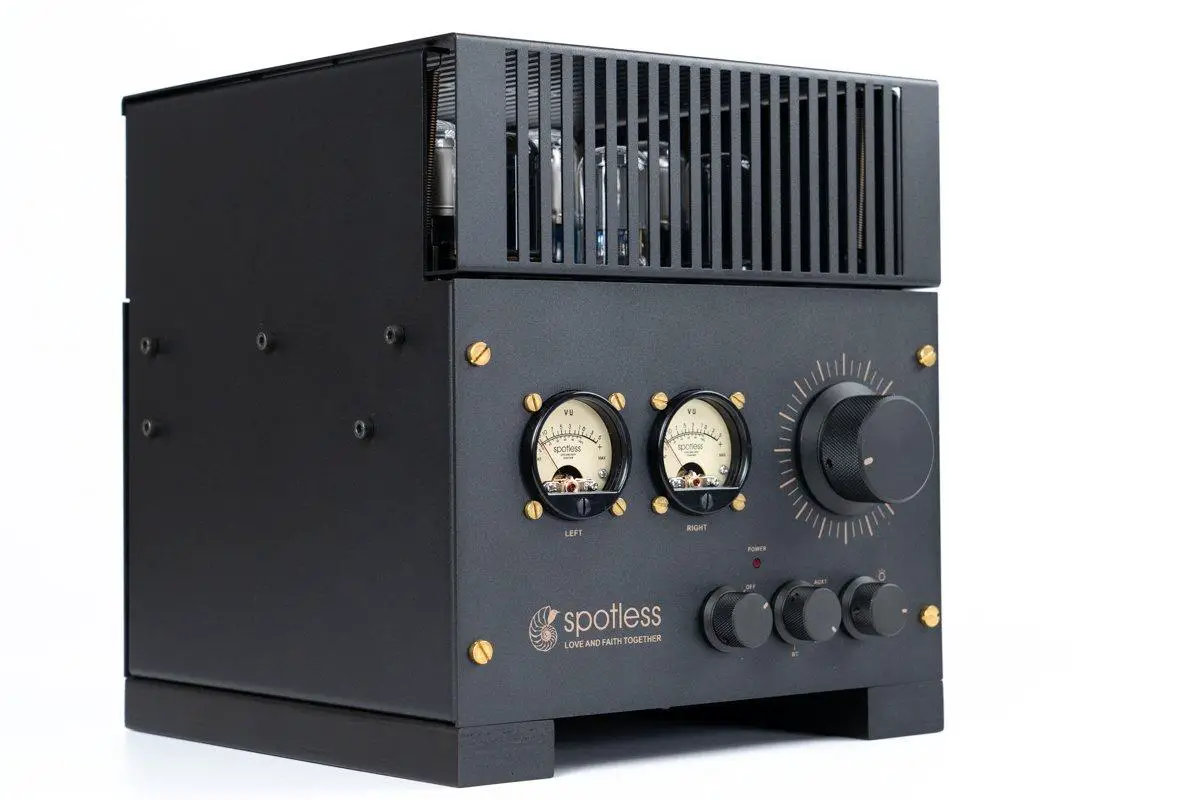
The Spotless A1 employs a distinctive tower structure, allowing the unit to maintain a small, square footprint while expanding vertically.
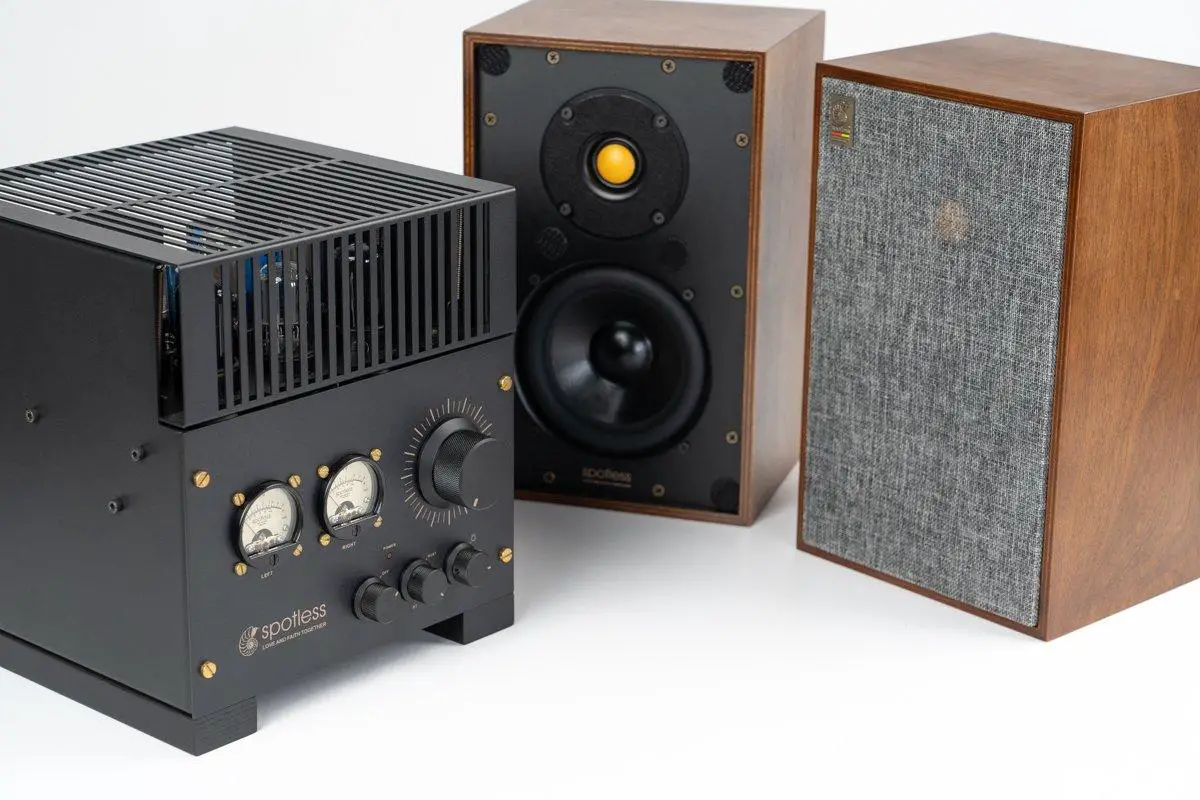
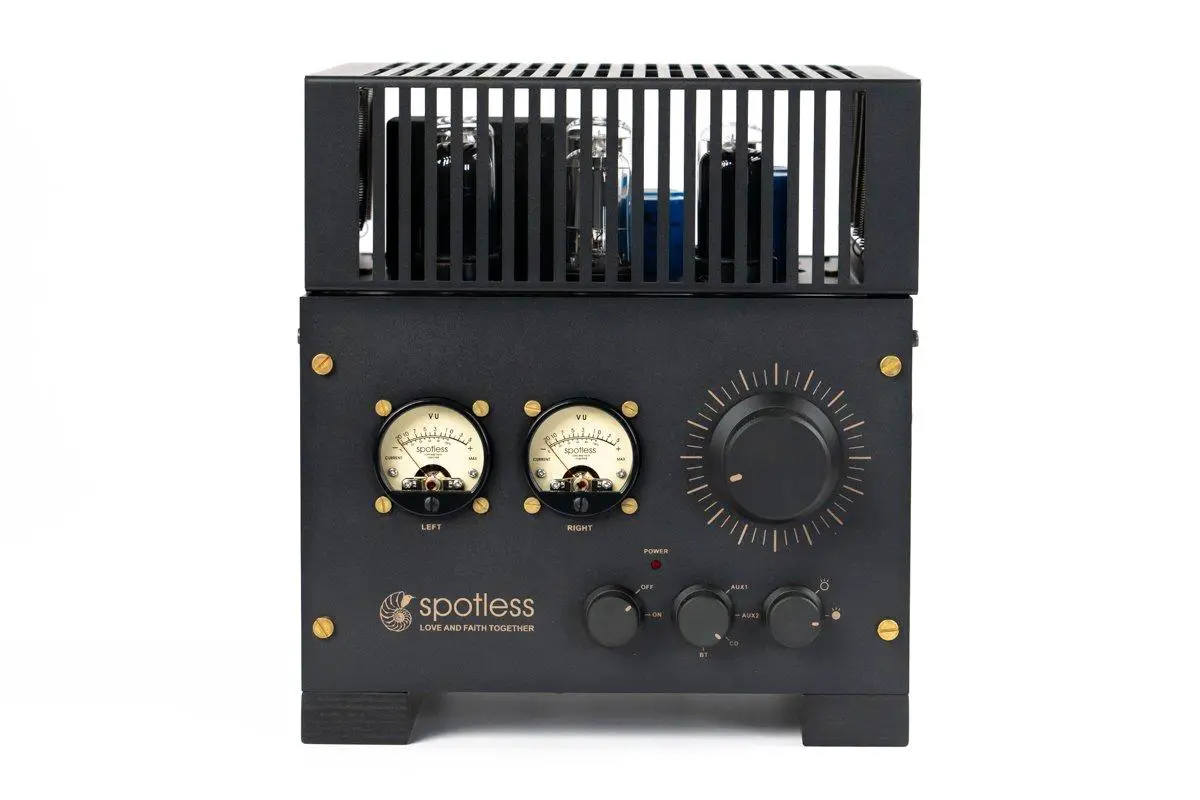
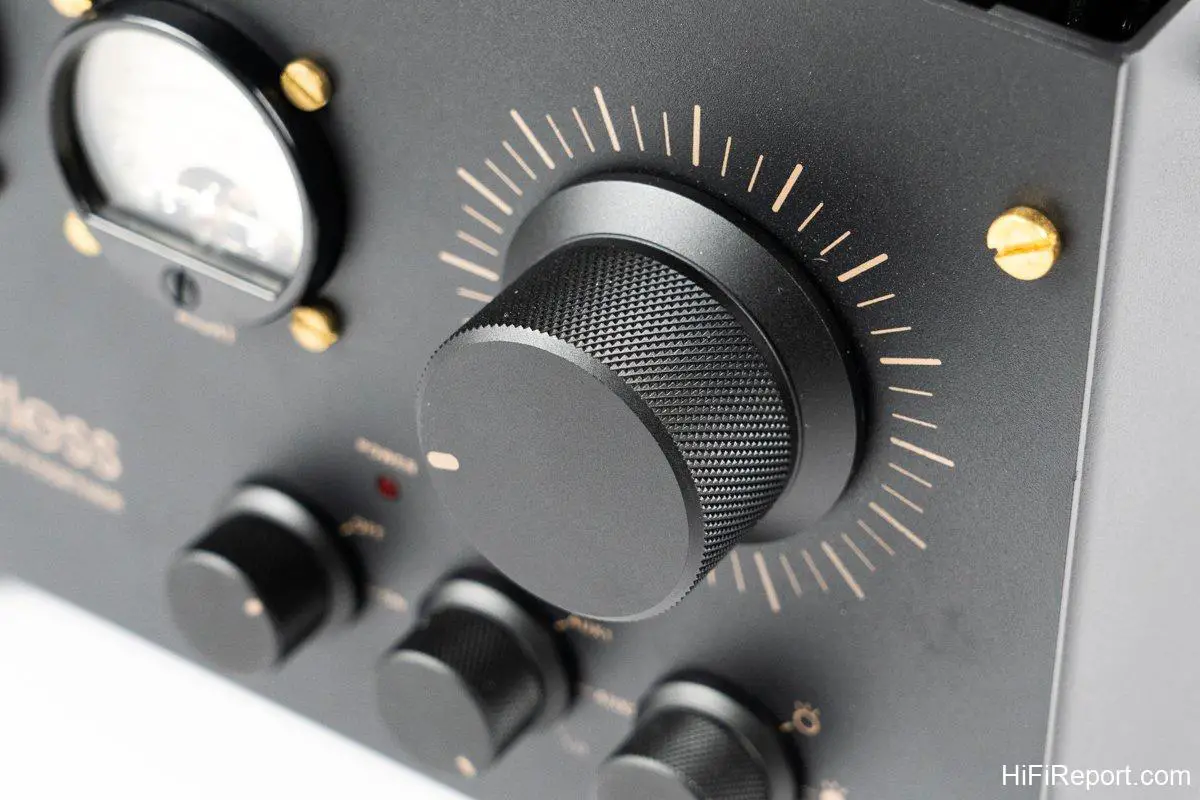
With its grill cover on, the A1 resembles a retro-futuristic cube, accented by two round, eye-like VU meters, and resting on two wooden block feet, perfectly embodying a vintage aesthetic.
The square shape, the uncommon tower structure, the matte black painted metal chassis, and the high-quality aluminum knobs all contribute to a touch of modern sleekness as well.
Tube Preamp, Solid-State Power, Tube Rectification
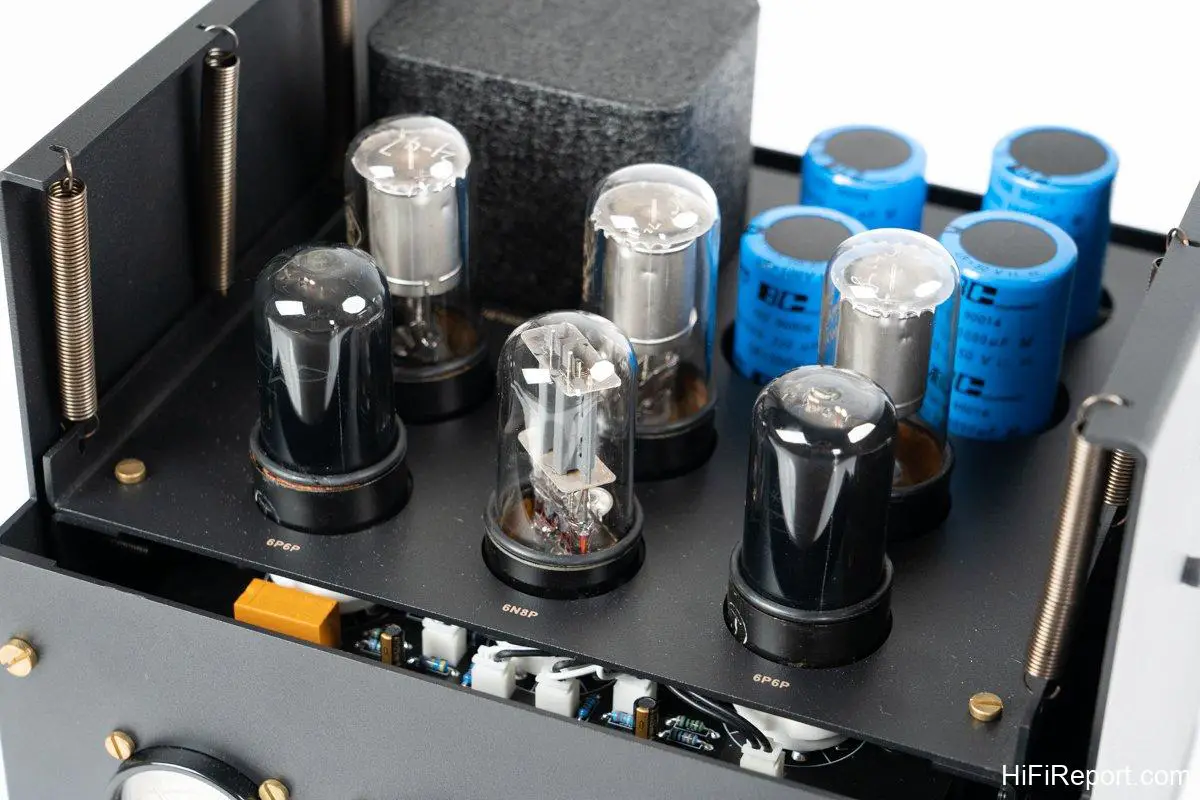
Lifting off the top cover, which simply rests on top, reveals the previously hinted-at vacuum tubes in full view.
The Spotless A1’s preamp stage uses a separate power transformer, coupled with Philips filtering capacitors and three WY3P vacuum tubes in parallel for voltage regulation. It then employs a 6N8P and two 6P6P vacuum tubes for two stages of amplification, utilizing a no-negative-feedback design, paired with ON Semiconductor transistors for the fully balanced power amplifier stage. It’s hard to believe such a compact A1 delivers 100W of output power per channel.
Separate Power Supplies, Suspended Preamp Circuit
Beyond this, the Spotless A1 boasts several noteworthy features.
Firstly, its power supply is separated for the preamp and power amp stages, each with its dedicated UI transformer, aiming for a more balanced, gentle, and approachable sound.
Secondly, its preamp circuit is constructed in a suspended manner. Using a spring mechanism, the entire preamp stage becomes a floating layer, isolating it from vibration interference. This suspended preamp design is quite rare.
If you wish to engage this suspension system, simply remove the middle top and two bottom hex screws on each side. The preamp circuit will then be in a suspended state, and you can even feel it move slightly when gently pushed.
Premium Components and High-Quality Bluetooth
Thirdly, despite its accessible price point, the Spotless A1 is built with high-quality components, including Vishay resistors and capacitors, KOA resistors, Philips capacitors, and BC capacitors – a veritable treasure trove of audiophile-grade parts, like a “Buddha Jumps Over the Wall” dish of components.
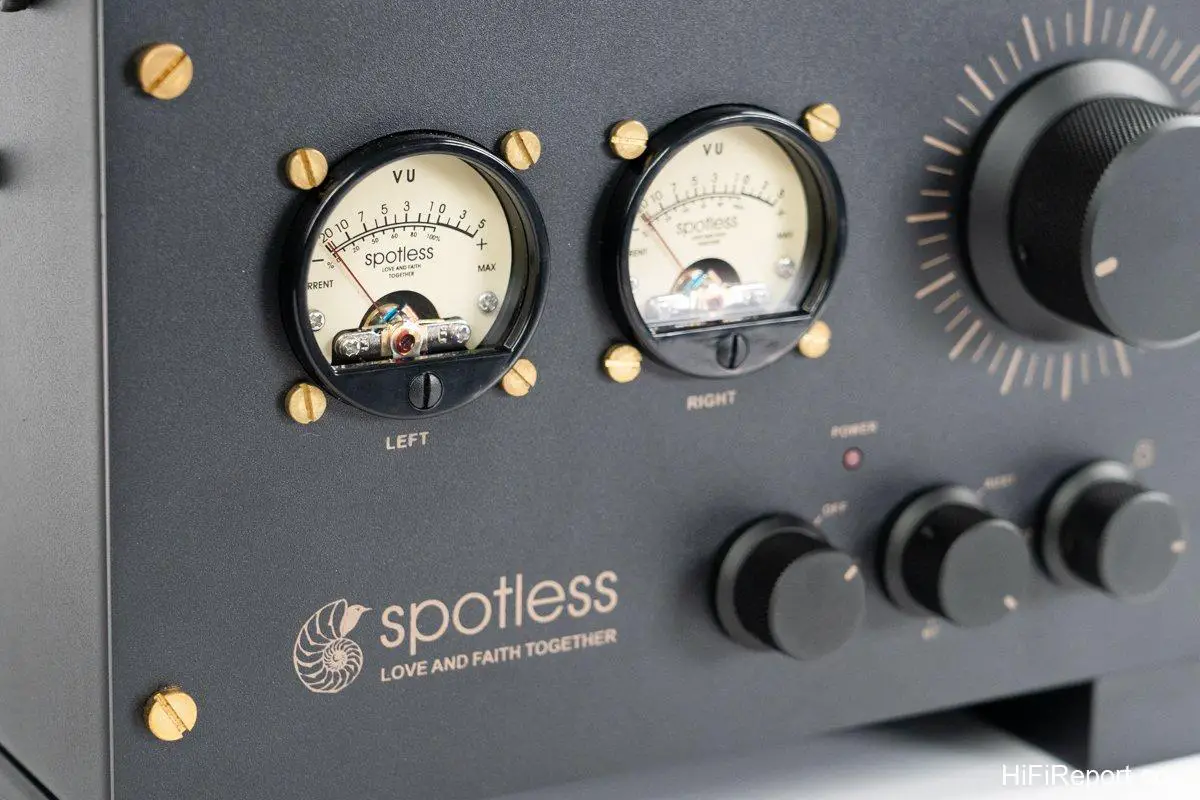
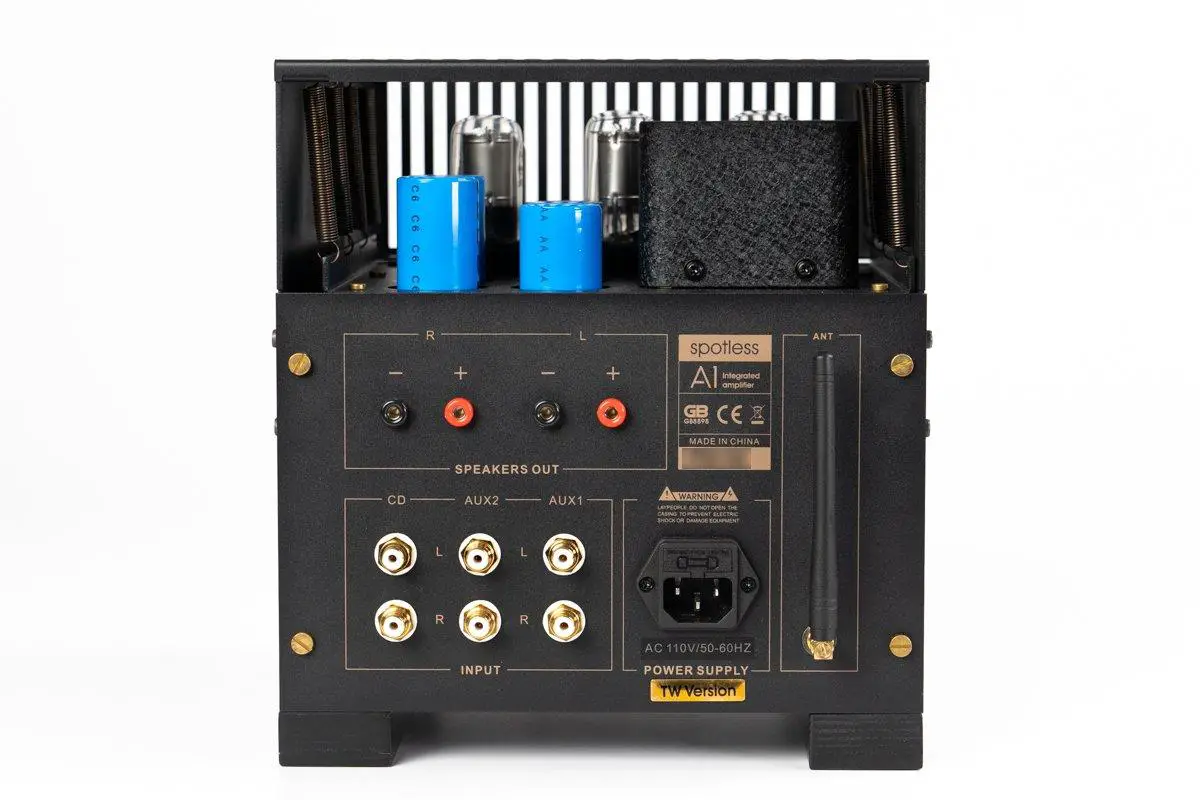
Fourthly, in addition to three sets of RCA analog inputs, the Spotless A1 also features a Bluetooth input. This Bluetooth input uses a CSR8675 Bluetooth receiver chip and an ESS9018 DAC chip, allowing users to pair their smartphones and stream music wirelessly, eliminating the need for a separate source device to enjoy music.
Eternal 5.2: A Nod to Classic Design, With Modern Ideas
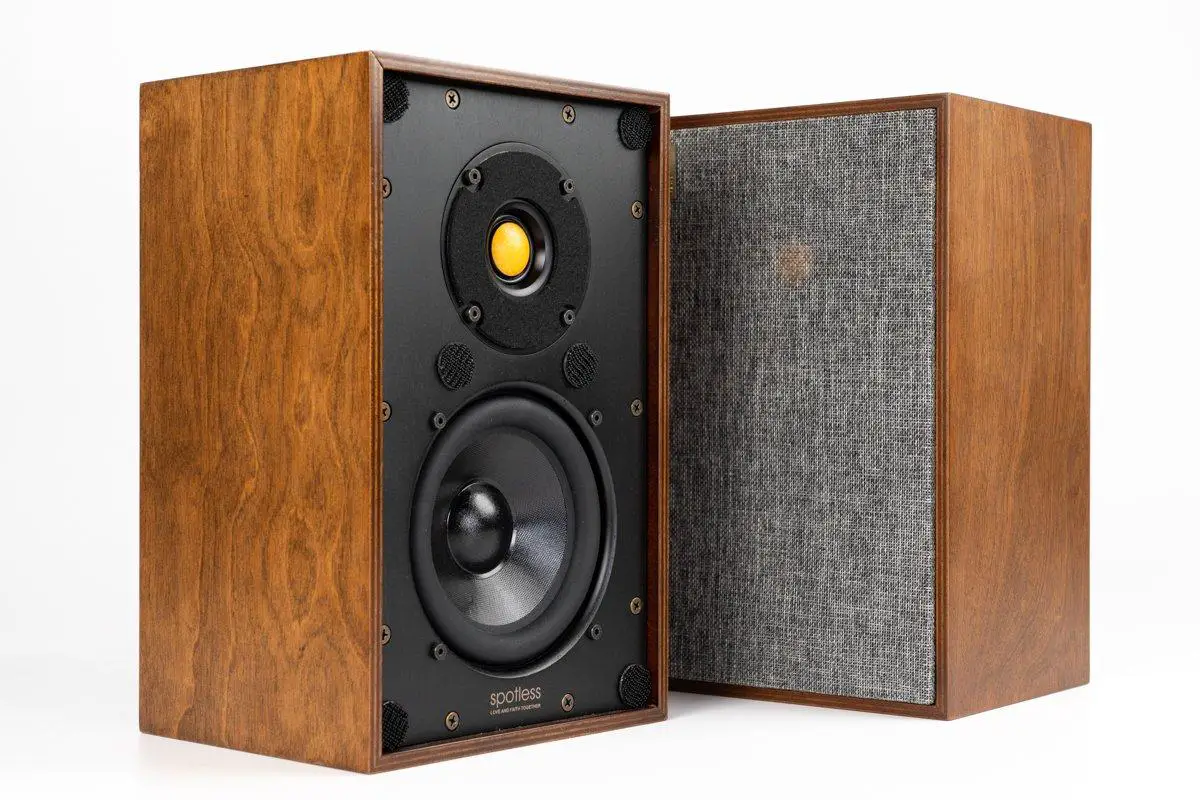
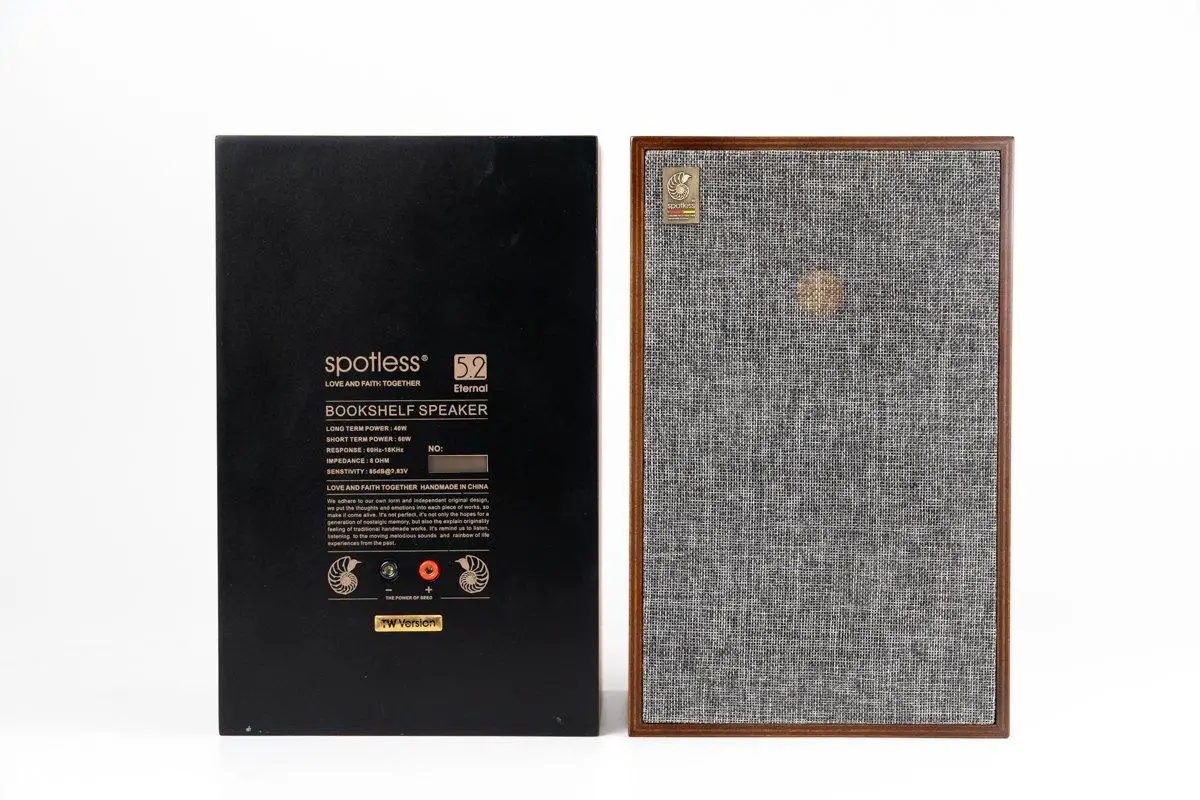
The other captivating piece is the Eternal 5.2 speaker, remarkably similar to the LS 3/5A. It shares not only the classic LS 3/5A’s compact dimensions and closed cabinet design, but even its overall aesthetic.
However, while the Spotless Eternal 5.2 seems to pay homage to the LS 3/5A, it is, in fact, a distinctly different design.
How so? The Eternal 5.2 uses Spotless’ latest 5-inch woofer unit, designed with a long-stroke for higher power handling. It features a traditional paper cone crafted with a paper-making process, aiming to deliver captivating midrange performance. This alone sets it apart from the LS 3/5A, which uses a PP cone.
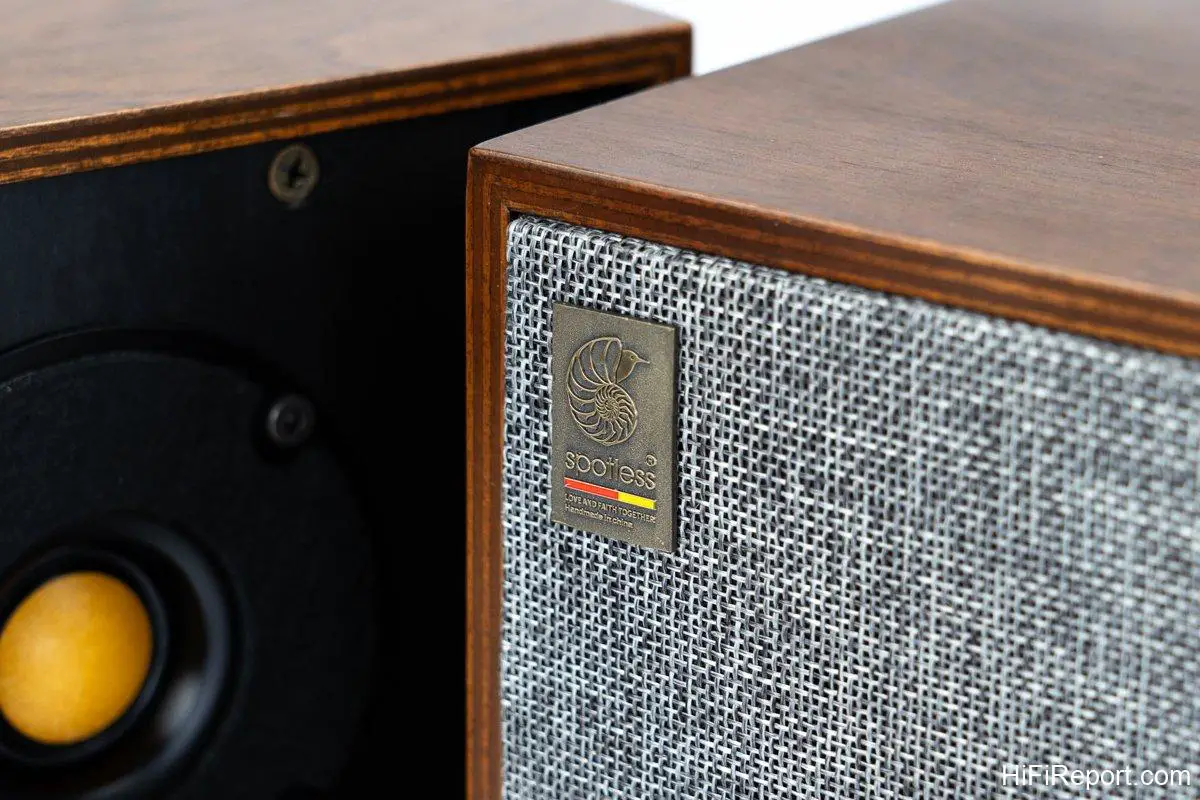
The tweeter is a gold-coated dome tweeter, also differing from the LS 3/5A.
The cabinet construction is equally meticulous. The Eternal 5.2 uses birch plywood for its cabinet, offering better strength and density than MDF.
Internal bracing further strengthens the cabinet, aiming for a more solid and rigid structure to minimize resonance-induced coloration.
Exceptional drivers and exceptional cabinet construction.
Carefully Selected Components for Superior Sound
The vintage design might lead one to assume Spotless simply replicates old designs. The company is aware of this, and they want you to know just how meticulously designed the Eternal 5.2’s crossover is.
Firstly, they employ two ERSE high-performance MPX metallized polypropylene film capacitors, using pure aluminum conductors internally to minimize ESR.
These are paired with high-precision resistors and custom-made inductors with near-zero FM distortion. Internal wiring is all Kimber Kable.
These details underscore Spotless’ deep understanding of audiophile sensibilities.
Classic Birch Plywood Cabinet, Refined Design Aesthetic
Furthermore, the cabinet, constructed from 14mm thick birch plywood, features 45-degree miter joints on every edge and internal bracing for added rigidity.
One side retains the natural wood finish, while another is stained to enhance its visual appeal.
The grille is made of custom linen fabric, attached with Velcro, just like the LS 3/5A, and adorned with a refined metal nameplate, further enhancing its sophisticated vintage charm.
In my opinion, the Eternal 5.2’s build quality and attention to detail are in no way inferior to the original LS 3/5A. In fact, it feels even more refined and thoughtfully designed throughout.
Just reading these descriptions is enough to stir excitement and awaken the old soul within.
Your old soul is stirred; mine, even more so.
Understated Yet Sophisticated Speaker Cables
Also included was a pair of Spotless’ own speaker cables, sheathed in black nylon mesh and terminated with banana plugs.
Despite their unassuming appearance, the company has put considerable effort into their design. Internally, they feature six solid-core copper conductors paired with six strands of multi-strand 7N oxygen-free copper wire, with a central damping core. Each cable has a substantial 5.25 mm² cross-section, equivalent to 10AWG.
These cables are also available for purchase separately, and at a similarly attractive price – $185 USD for a 2.5-meter pair (Original price: 5,980 NTD).
Soundstage Exceeds Expectations
Although I’ve repeatedly mentioned the Eternal 5.2’s visual resemblance to the LS 3/5A, their sonic character is quite different.
Relatively speaking, the LS 3/5A, with its monitor speaker heritage, leans towards a cleaner sound, but lacks in power and scale.
The Eternal 5.2’s soundstage is surprisingly expansive, sounding much larger than its size suggests.
If you placed a pair at an audio show next to floor-standing speakers, it might be hard to tell which was playing.
The Spotless A1 integrated amp is also surprisingly capable. This small 100W amplifier, seemingly unassuming, drives the Eternal 5.2 with remarkable vigor, handling orchestral and rock music with ease.
The HiFiReport listening room is a large space, over 700 square feet, yet the volume knob only needed to be turned to the 10-11 o’clock position for a grand musical scale and ample energy to fill the room.
Even louder, the A1 still had headroom, though the Eternal 5.2 started to show its limits.
Considering sonic balance, I found that keeping the volume within the 12 o’clock position, the Spotless A1 and Eternal 5.2 combination offered exceptional value in music reproduction.
Listening to Lahav Shani conducting the Rotterdam Philharmonic Orchestra in Beethoven’s Symphony No. 7, the Eternal 5.2 projected a vast and open soundstage. The short, powerful, driving rhythms Beethoven wrote into the piece were rendered with spirited energy by the Spotless system.
The speakers were positioned away from the back and side walls, spaced about 180cm apart, and after comparing toe-in and no toe-in, I ultimately opted for a slight toe-in, with the listening position slightly behind the apex of an equilateral triangle.
The soundstage I experienced was not only wide but also deep and immersive.
Moreover, the detail retrieval was rich, with clear layers within the music and precise instrument placement.
The slower second movement particularly highlighted these qualities.
The woodwinds sang with a rounded and melodious tone, while the strings maintained the music’s momentum with continuous eighth notes. Whether the music was lyrical or lively, the Spotless A1 and Eternal 5.2 delivered a sound that was engaging and inviting.
In the third movement’s scherzo, the music’s ebb and flow, building layer upon layer, became increasingly exciting.
The timpani, acting as punctuation, sounded full and round, with clear and crisp drumbeats.
The brass, rising with the ascending strings, possessed a brilliant timbre, revealing the Eternal 5.2’s lively character.
With the Eternal 5.2, if you find the sound too unrestrained without the grilles, the linen grilles can act as a subtle tone control, mellowing the sound slightly when attached.
An Intimate Sense of Presence
Listening to the 2016 recording of Georges Pretre conducting the Teatro alla Scala Orchestra, in the “Egmont Overture,” Beethoven’s weighty strings, which in the hands of Karajan and Klemperer become dense and solid blocks of sound, took on a more dramatic expression under Pretre and the Scala orchestra. While perhaps lacking some of the tragic weight, it gained in emotional fervor, especially towards the end, where the sustained high notes of the violins brought a brilliant radiance to the music.
In the “Overture to the Force of Destiny,” the opening trombones sounded resonant yet mournful, with a direct and impactful sense of energy.
The Eternal 5.2’s treble isn’t ethereal, but its relatively prominent high-frequency range is how it expresses youthful vitality beneath its vintage appearance.
Subsequently, the clarinet played a gentle melody, softly echoed by the violins, creating an intimate atmosphere, natural and open, presenting a palpable sense of live performance.
Full-bodied and Relaxed Texture, Not High Density
The overall sound of this system leans slightly warm, but not dull, and the texture is also on the softer side.
Listening to Yo-Yo Ma and Kathryn Stott’s “Songs of Comfort and Hope” album, the piano was warm and gentle, with a sense of articulation, but not of the sharply focused, tightly defined type. The sound was full-bodied and relaxed. The cello even more so.
Surprising, right? I was also taken aback.
It’s evident that Spotless had a clear sonic vision in mind during the design process.
Seeking a pleasing and approachable sound, Spotless delivers full and rich imaging, a vast and open soundstage, and in terms of timbre and texture, they have made the sound warmer, gentler, softer, and more relaxed, making it enjoyable for extended listening sessions without fatigue.
The album’s third track, “Shenandoah,” begins with steady single notes played on the piano, followed by the cello entering with pizzicato, introducing the main theme. Even here, you can discern Spotless’ tuning philosophy towards a relaxed and warm tonal character.
When the cello switches to bowed playing, it further confirms Spotless’ sonic approach.
This is a comfortable way to listen to music.
The Real Strength: Vocals!
As I mentioned earlier, orchestral music reveals the Spotless system’s surprisingly large scale and grandness. Despite their small size, their sound is far from diminutive.
Chamber music demonstrates its tonal and textural characteristics – a relaxed and full-bodied presentation, rather than a refined and tightly focused one.
However, the most captivating aspect is vocals.
When I listened to Diana Krall through the Spotless A1 and Eternal 5.2, I exclaimed internally: “This is simply a system born for vocal playback!” Rich detail, clear imaging, a lifelike presence – effortlessly constructing a three-dimensional and distinct image of the singer.
Diana Krall’s vocal nuances, and all the subtle details of her enunciation and vocalization, were crystal clear.
Vocal texture, nasality, breath sounds – aren’t these the things audiophiles and enthusiasts crave? Listening to “All or Nothing at All,” I didn’t demand deep, powerful, and weighty plucked bass. For such small speakers, the full, rounded bass notes, still revealing the string vibrations of the pizzicato, coupled with the outstanding vocal performance, made the $825 USD price tag (Original price: 26,800 NTD) incredibly worthwhile.
See? I’ve already given it a thumbs up. In fact, I’d like to give it a few more.
A Small Joy for the HiFiReport Reviewer
I said it excels with vocals, not just female vocals.
Therefore, male vocals are equally captivating.
Listening to Eric Clapton’s album “The Lady in the Balcony: Lockdown Sessions,” recorded during the pandemic lockdown, the Spotless system presented a clear and distinct sense of space. The natural room acoustics and the spacing between musicians were rendered with excellent clarity.
Guitar strums were crisp and energetic, the metallic sheen of the steel strings distinct. In “Black Magic Woman,” the sounds of percussion on the guitar body and the guitar notes intertwined to create a more lively scene.
In “Tears in Heaven,” Eric Clapton made some arrangements, with improvisational variations in the performance, slightly different from the version we are familiar with.
In his seventies, Eric Clapton’s voice and energy are not what they once were, but his husky and weathered voice, honed by time, now possesses a sense of maturity and generosity.
Perhaps he has moved past the pain of losing his son, and the relaxed rhythms reveal a peaceful and open-minded state.
Wow, can the Spotless A1 and Eternal 5.2 convey such profound emotions? My answer is: how much you perceive depends on how much you truly love music.
In my opinion, the Spotless A1 paired with the Eternal 5.2 system can be a small joy for any music lover.
Endless Musical Emotion
I could say even more. For example, I could recommend listening to Dire Straits’ “Money for Nothing.” The deep sense of space, the explosive drum sounds, and the wild electric guitar all make you question if you are really listening to such small speakers. And the unrestrained, frenetic electric guitar carries a thrilling urgency, making an accelerated heartbeat and elevated blood pressure almost inevitable physiological responses.
Michael Jackson’s songs are also spectacular. Beyond the heavy impact of the strong beats and the clearly layered and rich musical textures, you will be even more amazed by the 3D spatiality created through mixing in some tracks.
When those sounds appear beside your ears and behind your head, you will be astonished by the spatial rendering capabilities of the Spotless system.
Addendum 1: Practical Bluetooth Functionality
Additionally, I want to add three points.
Firstly, if you only purchase the A1 and Eternal 5.2 and don’t have other source devices at home, the A1’s built-in Bluetooth function is very practical. Simply switch to the BT input, and the “Spotless A1” option will appear in your phone’s Bluetooth pairing list. After pairing, your phone becomes the source. You can set the A1’s volume to a fixed level (e.g., 12 o’clock) and then control the volume using your phone.
Since I use an iPhone, which only supports AAC format transmission, if you use an aptX-supported Android phone or DAP, or even a device supporting Sony LDAC, the sound quality you hear will definitely be even better than mine.
Addendum 2: A1’s Impressive Power
Secondly, the Spotless A1 amplifier’s power is indeed impressive.
When paired with its own Eternal 5.2 speakers, it is naturally more than capable.
To satisfy my curiosity, I swapped in Dynaudio Contour 60 speakers and played Beethoven’s Symphony No. 7. The Contour 60s naturally sounded more stable and grand than the small bookshelf speakers, but I was surprised that the A1 actually drove them quite well.
Again, without demanding perfection in overall performance or comparing it to other amplifiers, with the volume set around the 10 o’clock position, the A1 driving the Contour 60s was perfectly acceptable, allowing me to continue enjoying the music.
Addendum 3: Footers Enhance Sound Quality
Thirdly, if you have speaker footers on hand, you might want to try using them to elevate the Eternal 5.2s. The sound will become cleaner, and the sonic outlines will be more defined.
Especially when you place the speakers on a low cabinet in the living room or on a desk, footers can bring an overall improvement in sound quality.
On a side note, I particularly appreciate the Eternal 5.2’s near-field listening performance. Its rich detail retrieval means even at low volumes, everything is clearly audible.
Satisfying the Old Soul’s Longing
If you have a modest budget and want to buy a hi-fi system, you should inquire about auditioning this system. Listen to it, look at it, and handle it yourself.
The design, imbued with a humanistic vintage aesthetic, can satisfy the old soul’s yearning for vintage objects. Hidden beneath the retro exterior is vibrant youthful energy. The abundance of detail allows you not only to hear the singer but also to “see” the singer.
It’s not flawless, but it has its own unique character, and that character, for some, will be irresistible.
Specifications
* **Spotless A1**
* Type: Tube-Solid State Hybrid Bluetooth Integrated Amplifier
* Output Power: 100 Watts × 2
* Total Harmonic Distortion: <1 % / 1W, 1 kHz
* Output Impedance: 4-8 ohms
* Input Sensitivity: 350 mV
* Frequency Response: 20 Hz ~ 20 kHz
* Bluetooth: 5.0 LDAC
* Inputs: RCA × 3
* Dimensions: 230 × 230 × 250 mm (W×H×D)
* Weight: 13.75 kg