
Stax SRS-X1000 Electrostatic Headphone System Review
In my estimation, any friend who loves headphones, anyone who frequently uses headphones for listening to music, or any HiFi aficionado who appreciates a clean, clear, refined, and delicate sound should seriously consider acquiring a Stax electrostatic headphone system.
Electrostatic headphones aren’t universally perfect, nor will they satisfy everyone’s every requirement for headphones. However, they possess a distinct quality that dynamic headphones simply lack – a unique charm that is entirely their own.
Different Principle, Electrostatic Sound is Beautiful
Electrostatic headphones require a dedicated driver. High voltage transmits the signal to metal plates called “stators,” causing changes in the electrostatic field between them. This movement drives a diaphragm positioned between the two stators, generating sound.
Because their operating principle differs from traditional dynamic headphones, electrostatic headphones boast faster transient response and superior detail retrieval. This results in the captivating finesse and precision that enthralls many users.
Electrostatic headphones typically have higher manufacturing costs and are pricier than dynamic headphones. Furthermore, they necessitate a dedicated driver – you can’t just buy the headphones alone; you need an additional budget for the driver. This means using electrostatic headphones requires a greater “investment.”
This is often the reason many enthusiasts hesitate. Therefore, you truly need to hear them for yourself to understand the unique magic of electrostatic headphones.
Over Sixty Years of Refinement for SRS-X1000
When discussing electrostatic headphones, Stax of Japan is indispensable. Founded in 1938, the company has a history spanning nearly 90 years.
They developed their first electrostatic headphones in 1959, which officially launched the following year as the SR-1.
In 1970, they introduced the SR-X, which featured an even thinner diaphragm and arguably laid the groundwork for Stax electrostatic headphones as we know them.
Don’t worry, I won’t bore you with more history; I’ll stop there.
The SR-1 is the origin of Stax electrostatic headphones, and the SR-X represents a groundbreaking achievement for the company. The SR-X1 I’m discussing today is, in fact, the manufacturer’s homage to both the SR-1 and SR-X headphones.
Because electrostatic headphones require a specific driver to function, Stax often pairs their headphones and drivers into systems, matching them based on performance, compatibility, and price point, offering these bundles to consumers.
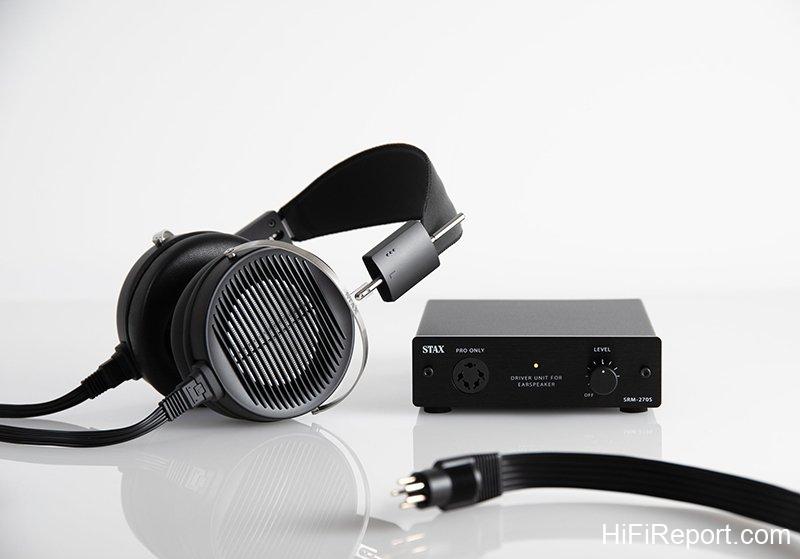
The newly launched SR-X1, featuring a medium-sized circular diaphragm, paired with the SRM-270S driver, forms the current entry-level, yet most value-oriented, SRS-X1000 electrostatic headphone system in the Stax lineup.
“Entry-level” is an objective description, evident simply from the price. “Value-oriented,” however, is my subjective assessment. After listening to numerous Stax systems, including their flagship models, hearing the SRS-X1000 stirred a feeling akin to rediscovering my initial passion for high fidelity.
Simple Homage to Classic Design
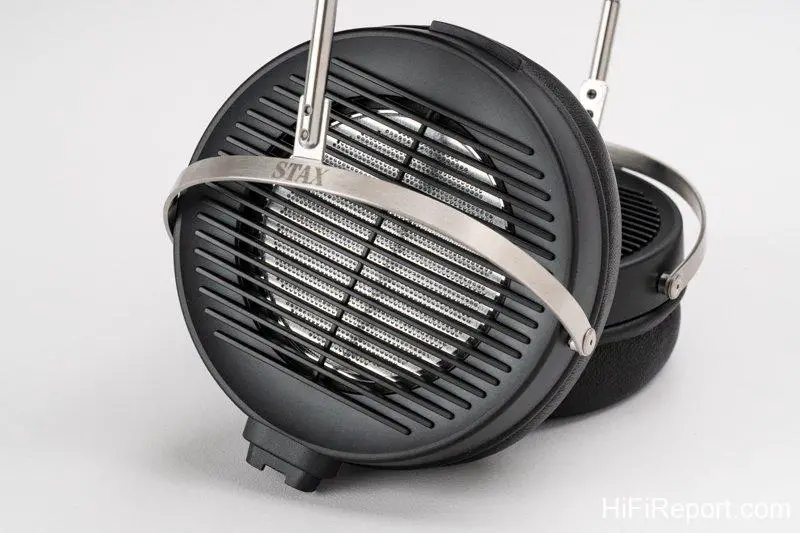
The SR-X1 headphones feature a medium-sized circular diaphragm. The entire electrostatic mechanism, including the stators and diaphragm, is housed directly within the headphone enclosure. This design reduces weight and, through meticulous craftsmanship, ensures all components are tightly fitted without gaps.
The transverse grille on the outer side of the headphones allows you to clearly see the internal structure. This fully open design is precisely the primary reason behind the captivating transparency and openness that characterize electrostatic headphones.
The retro, simple, and intuitive frame and headband design are free of unnecessary embellishments, exuding an entirely unadorned, classic charm.
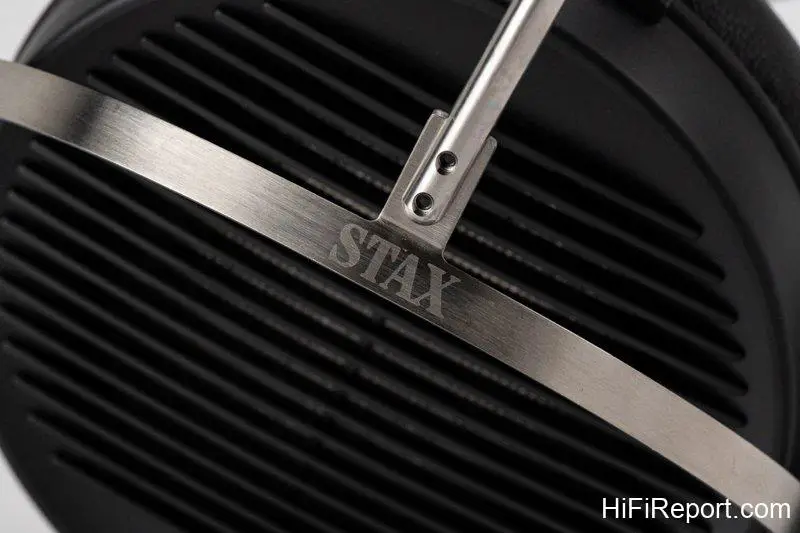
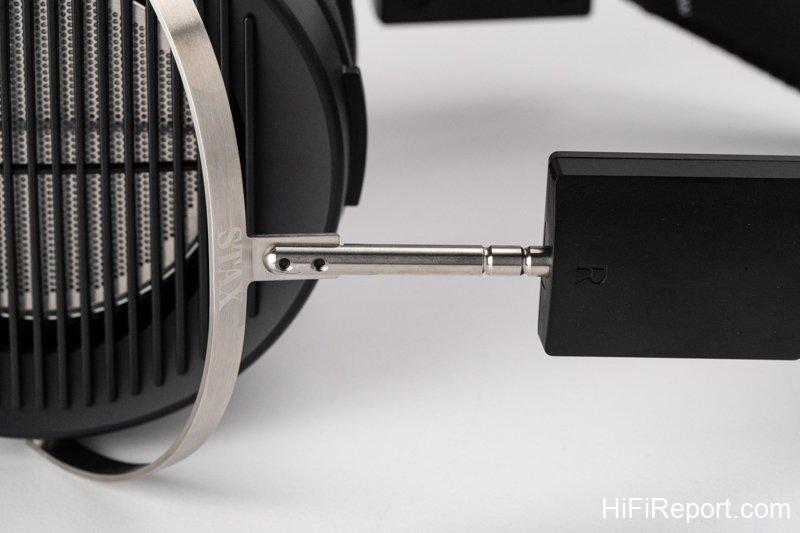
The circular yoke utilizes the inherent elasticity of the metal to clamp the headphone body. According to the manufacturer, these design elements and materials are chosen to minimize resonance.
The headband is wrapped in leather over a metal frame. Its broad contact area, combined with the lightweight design, ensures comfortable wear without pressure.
The ear pads contain a moderate amount of memory foam, covered in soft, skin-friendly lambskin leather. Both the fit and comfort during wear are highly satisfactory.
The mechanism for adjusting the headphone height relative to the headband employs metal pillars with stepped adjustments, another nod to retro design.
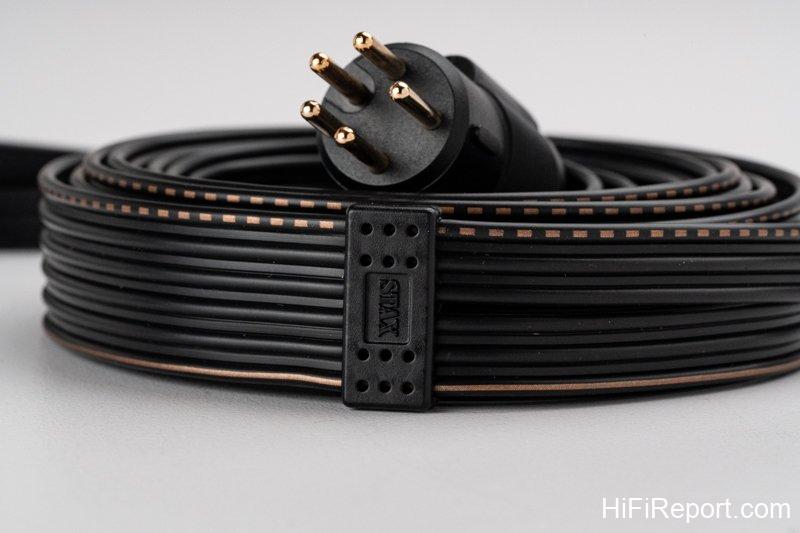
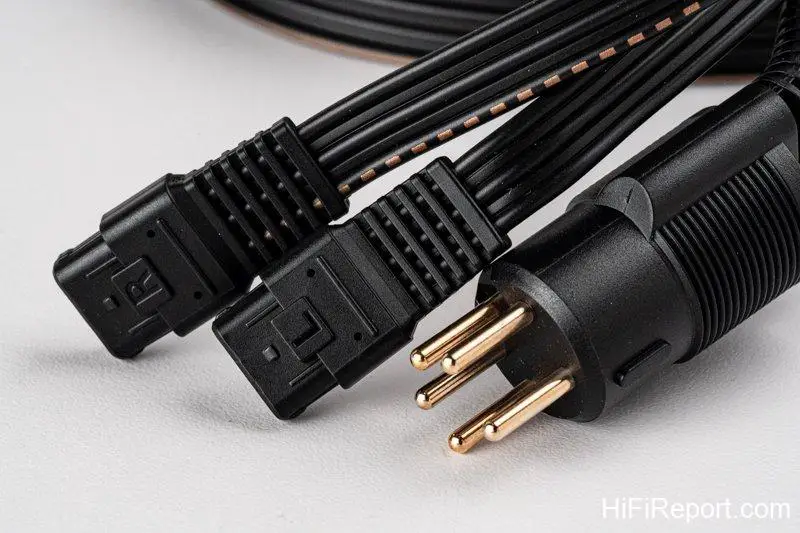
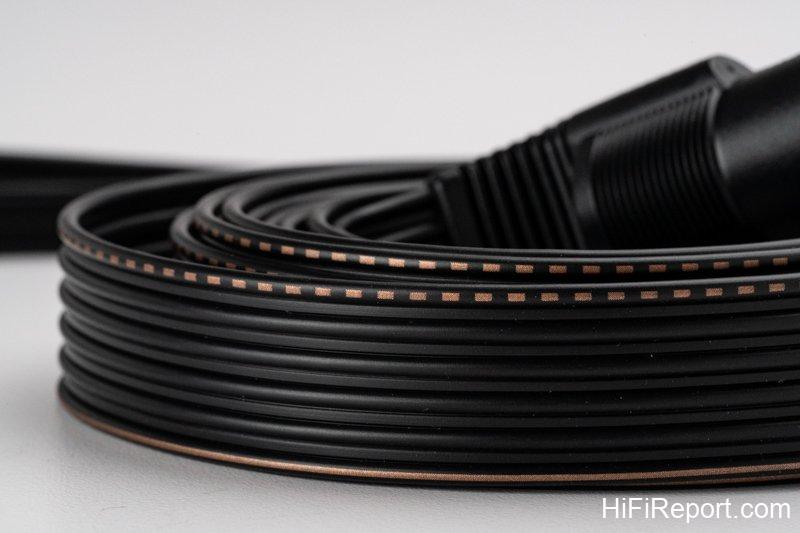
The detachable cable offers room for future upgrades and also facilitates convenient storage.
Overall, while the simple design helps keep costs down, it undoubtedly retains the core elements that pay the utmost respect to the classics.
I admire the refined aesthetics of the SR-X9000, but I equally appreciate the stripped-down elegance of the SR-X1.
Upgraded Entry-Level Driver SRM-270S
As for the SRM-270S driver, it is an improved version of the previous SRM-252S model.
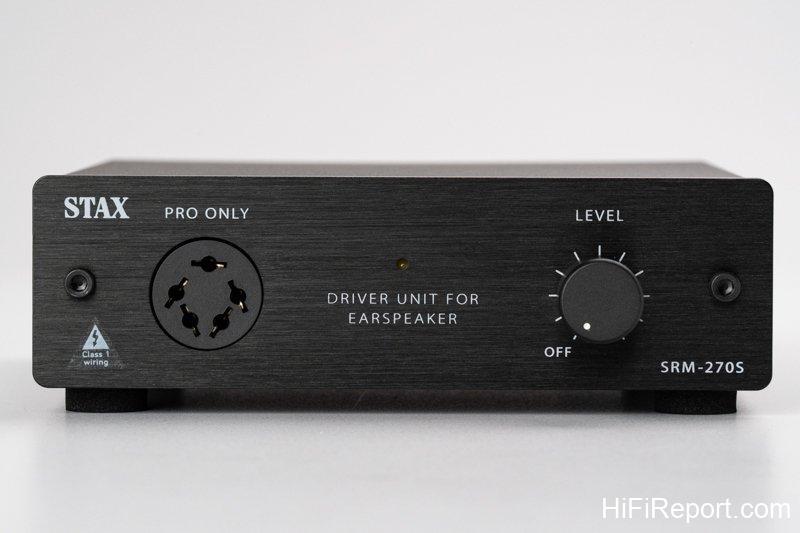
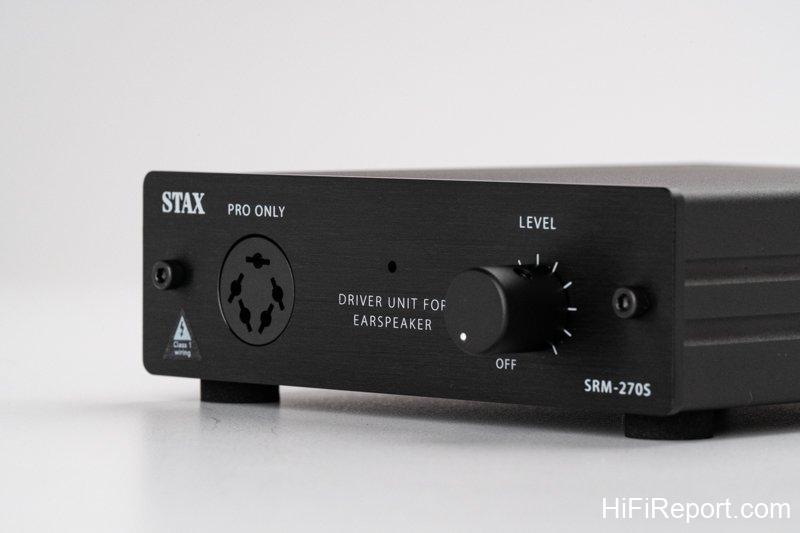
The SRM-270S replaces the older model’s silver faceplate with a substantial 3mm-thick black one. The all-black aesthetic makes the unit look more understated and pairs harmoniously with the equally black SR-X1.
The build quality of the casing has also been enhanced. While still using an extruded aluminum chassis, heat dissipation is improved.
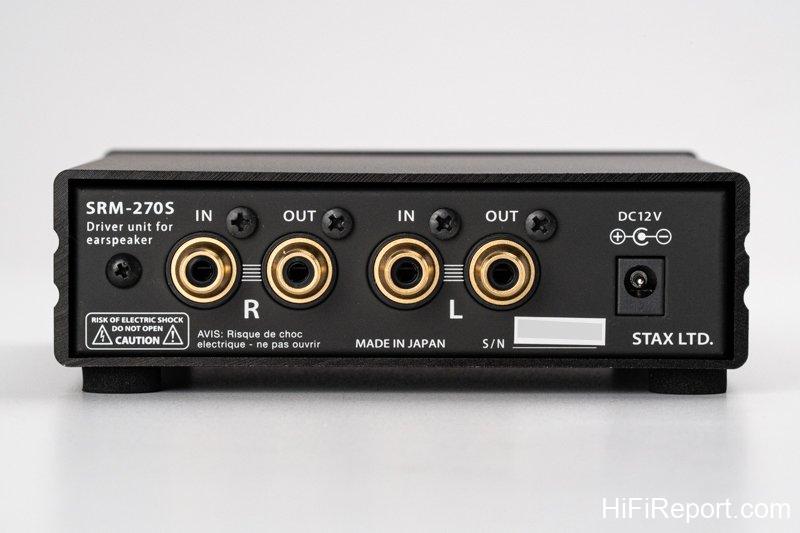
The connections on the rear panel are straightforward: one RCA input and one RCA output. Although still a single-ended design, the SRM-270S uses higher-quality terminal components this time around.
FET (Field-Effect Transistor) devices are used for the first-stage amplification, characterized by low noise. Paired with an improved current emitter follower, this configuration is capable of driving the SR-X1 headphones perfectly.
The front panel layout of the SRM-270S is simple. On the left is the 5-pin electrostatic headphone output socket, and on the right is the power switch combined with the volume control.
Why include an RCA output? This allows you to integrate the Stax system into your existing audio setup without having to constantly unplug and replug cables, saving a lot of hassle.
Entry-Level I Know, But Value-Oriented?
While the SRS-X1000 system, consisting of the SR-X1 and SRM-270S, may look unassuming, its true value becomes apparent upon listening.
Stax long ago introduced the concept that their “electrostatic headphones” should be referred to as “earspeakers.” They believe that the sound heard through their electrostatic headphones is comparable to that of a high-end speaker system. Hence, they call their products “earspeakers” rather than “headphones.”
Does the most entry-level SRS-X1000 possess this capability? Can it be called an earspeaker?
This IS an Earspeaker!
The SRM-270S is a purely analog driver and requires a source component.
I used the Marantz CD 50n, a versatile player, as the source, connecting it to the SRM-270S driver via RCA analog input.
The CD 50n is not just a CD player; it also functions as a DAC, with digital inputs including coaxial, optical, and USB type B. It supports network streaming (both wired and wireless), includes Bluetooth, and even has an HDMI ARC port for TV connection. It’s truly a comprehensive digital source.

I used it for playing CDs and also connected it to a computer for streaming.
While this review focuses on the SRS-X1000 system with the SRM-270S driving the SR-X1, I will often refer directly to what I heard as the performance of the SR-X1 in the following paragraphs.
This is partly for ease of writing, but also because the sound performance of the SR-X1 is simply classic! Even as an entry-level model, its sound is highly representative of the Stax brand, with excellent performance across the board.
Even though the complete set costs around USD 1033, at this price point, achieving such transparency and spiritual agility, while also delivering competent performance across the high, mid, and low frequencies, and providing the natural listening experience characteristic of electrostatic headphones – a feeling as if you’re not even wearing headphones – makes this package truly worthwhile.
Ethereal Charm within Soft Texture
Stax electrostatic headphones possess a particularly ethereal charm when reproducing plucked instruments, and I found this quality present in the SR-X1.
Taking Fausto Mesolella’s “Live ad Alcatraz” album as an example, Mesolella’s guitar has an internal pickup and its sound output is amplified through an amplifier and speaker cabinet. Although the guitar body isn’t large, the sound is rich and full due to the amplification.
Through the SR-X1, these guitar notes sound even more refined and elegant. The sound is bright yet soft, with distinct string vibration and a full-bodied resonance from the guitar body.
I particularly enjoy listening to the single notes gently plucked by the guitarist and the sliding sounds produced by the left hand quickly moving between frets without completely lifting off the strings when reproduced by the SR-X1.
These sounds, whether explicitly written in the score or created improvisationally during the performance, are all part of the performance.
When listening on dynamic headphones, these sounds are clear, but they lack a certain character. On the SR-X1, in addition to being clear, they possess a greater sense of nuance built from shimmer and brilliance.
Excelling in Airiness and Delicacy
Beyond resonant guitars, plucked instruments with shorter decays also sound equally stunning.
Consider the album “Bass & Mandolin,” a collaboration between mandolin player Chris Thile and bassist Edgar Meyer.
The mandolin’s notes are short and crisp. Its timbre isn’t as rich and full as a guitar’s, but it’s bright and nimble, with a delightful sense of airy charm within its rapid articulation.
With this sonic foundation, listening to Chris Thile’s improvisations is pure joy.
The mandolin playback on the SR-X1 is truly wonderful, adding even more airiness to an already airy sound and enhancing the crispness.
If you want sharpness in plucked strings, dynamic headphones might win. But for airiness and delicacy, electrostatic headphones prevail.
Warm Timbre with Lush, Harmonious Sound
Next, listening to Thomas Dunford perform Bach’s unaccompanied preludes and suites on the lute. Transposing pieces originally written for cello to the lute offers a completely different flavor.
The lute is a highly representative elder statesman of the plucked instrument family. The evolution of instruments like the guitar and mandolin, which I just mentioned, can be traced back to the lute.
The lute possesses a unique warm timbre that is lush, full-bodied, sustained, and harmonious. Its music always carries a pure quality.
Here, the SR-X1 clearly presents the characteristics of the lute. Furthermore, the reverberations from the plucked strings are particularly audible through these headphones.

Details Unveiled
We can’t just talk about plucked instruments, let’s add some vocals.
Listening to the album “Blue Coast Collection: The E.S.E. Sessions,” on the track “Looking for a Home,” the SR-X1 not only lays out a clean guitar accompaniment but also clearly presents Keith Greeninger’s slightly husky singing voice. As for the sound of him stomping his foot for rhythm, it’s distinctly audible.
In “Slow Day,” the female vocalist Jane Selkye has a sweet voice with a clear presence. What’s even more surprising is the double bass; its sound is soft yet deep.
I also experienced the SR-X1’s bass reproduction capabilities on the “Bass & Mandolin” album mentioned earlier.

In the past, we often assumed that electrostatic headphones excelled in the mid-high range but were relatively weak in bass.
However, the SR-X1, as Stax’s entry-level headphone, offers impressive bass performance that is genuinely eye-opening.
The last track on this album features bowed double bass. On a dynamic headphone, the bowed bass might sound more powerful and thicker.
However, the SR-X1’s bass quantity and extension are not inferior; it’s simply that the texture presented is different.

Round, Intimate Vocals, Clear and Vivid Voices, Impressive Bass Extension!
Another example is Billie Eilish’s “Lo vas a olvidar.” Billie Eilish’s singing is vivid and three-dimensional, with clear vocal textures. These are strengths of Stax electrostatic headphones, which I anticipated.
However, this track is full of electronic bass. Those low frequencies are the ingenious touch that makes the song. Without them, or if they are insufficient, the track loses its appeal. The bass must go deep enough to provide the song with its necessary dynamic range.
I must say, the SR-X1’s performance far exceeded my expectations. The bass? It passed with flying colors.
Listening to Katie Melua’s “Live in Concert” album, the SR-X1 reproduces Katie Melua’s voice cleanly and clearly.

This is a live concert recording, incorporating more reverb than a studio recording, making the voice sound richer and more hydrated. The SR-X1 can clearly decipher these subtle details present in the recording.
The accompanying drums and bass sound exceptionally clear. The thumping sound of the kick drum is truly satisfying. Don’t doubt it, the Stax SR-X1 *does* have bass.
The organ creates a singing-like timbre, as if someone is providing backing vocals.
Katie’s own guitar playing provides just the right support for her singing.
Several tracks also include backing female vocals, their round voices conveying a sense of peace.
Unlimited Musical Emotion for Under USD 1000, Isn’t That Value?
Naturally, while I’ve primarily mentioned the SR-X1 throughout, the credit isn’t solely its own. It also includes the paired SRM-270S driver.
These are the most entry-level headphone and driver respectively in the Stax lineup, yet they deliver an abundance of listening enjoyment.
The open soundstage, warm tonality, rich detail, soft sound quality, transparent texture, and ethereal charm – everything you hope to hear from an electrostatic headphone system is present in this setup.
This unique emotional connection inherent to electrostatic headphones touches your heart little by little with every piece of music. Even at this entry level, the emotional payoff is immense.
The SR-X1 sells for around USD 567, and the SRM-270S for around USD 467. The total set comes to just over USD 1000. Paired with a suitable source, it forms a simple personal audio system.
The SRM-270S is compact and doesn’t take up much space, fitting easily on a desk.
If you were to aim for similar sound quality with a two-channel speaker system, assembling speakers, amplifier, and cables while staying within this budget and achieving better sound than the Stax SRS-X1000 package would be extremely challenging.

If you need even more space-saving options, Stax also offers the portable SRM-D10 II driver with a built-in DAC and lithium battery.
However, that’s another story for another time.
Specifications
SR-X1
* Type: Open back, push-pull circular diaphragm electrostatic headphone
* Frequency Response: 7Hz~41,000 Hz
* Diaphragm Shape: Medium-sized circular diaphragm
* Capacitance: 110pF
* Impedance: 145k Ω @ 10kHz
* Sound Pressure Sensitivity: 101dB (100Vr.m.s/1kHz input)
* Bias Voltage: 580V DC
* Cable Conductor: OFC
* Cable: Parallel 6-strand, 2.5m length, low capacitance special wide OFC cable
* Weight: 234g
* Ear Pad Material: Genuine sheepskin leather (ear contact area), artificial leather (surrounding area)
* Price: Approximately USD 567
SRM-270S
* Type: Electrostatic headphone driver
* Frequency Response: DC~35,000Hz
* Gain: 58dB
* Total Harmonic Distortion: < 0.01% * Input Impedance: 25kΩ * Maximum Output Voltage: 280V r.m.s./1KHz * Bias Voltage: DC 580V * Operating Temperature: 0~35°C / below 90% * Input: RCA x1 * Output: RCA x1 * Power Consumption: DC12V/500mA * Dimensions: 132x38x153mm (WxHxD) * Weight: 540g