Stein Music and Origin Live Record Mats Review
When diving into the world of vinyl, it feels like there’s no end to the possibilities. After exploring both soft and hard platter mats, the next step is to experiment with a variety of complementary accessories. From headshells and record weights to anti-static devices, the avenues for tinkering are vast. This time, we’re taking a listen to three record mats from Stein Music and Origin Live. Each boasts a different material and varying degrees of complexity in their construction, offering a delightful way to explore the diverse sonic palette of vinyl playback.
A Helper for Tonal Sculpting
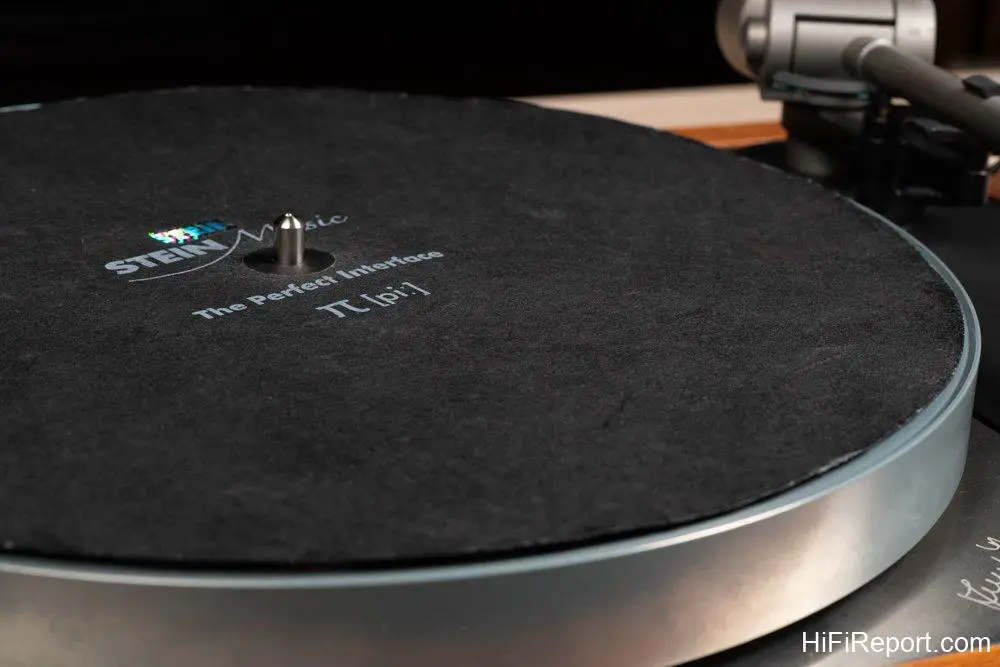
Among the record mats we’re evaluating, the Stein Music The Perfect Interface π presents the simplest design. It’s essentially a sheet of washi paper, treated by Stein Music with an invisible Maestro lacquer. I’ve previously reviewed the white version and have kept it in my own system. The sample sent for this review is the black version of The Perfect Interface π, and the discernible difference lies solely in its color.
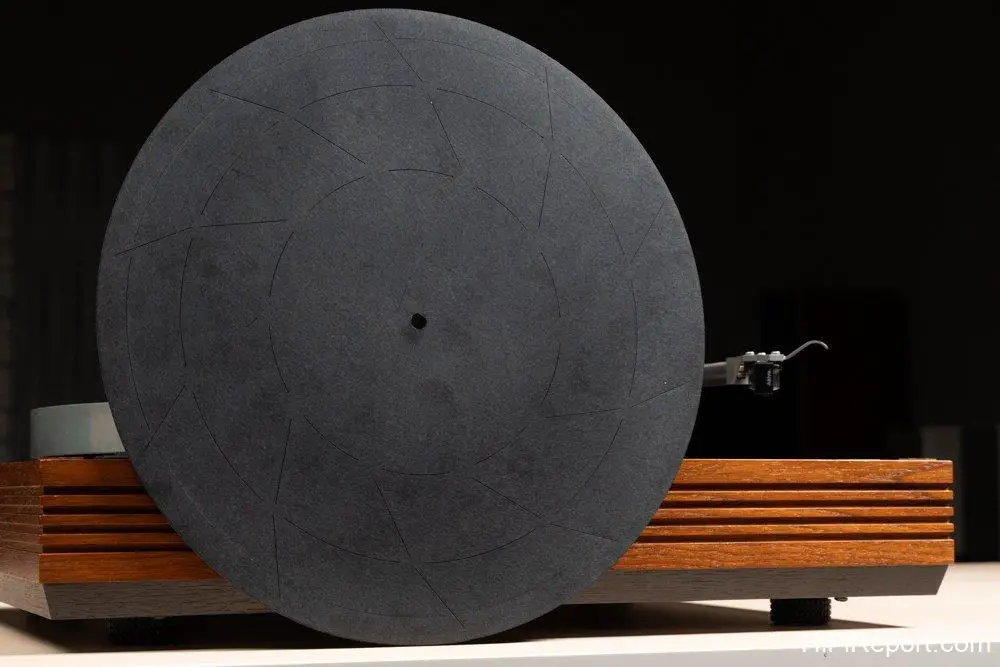
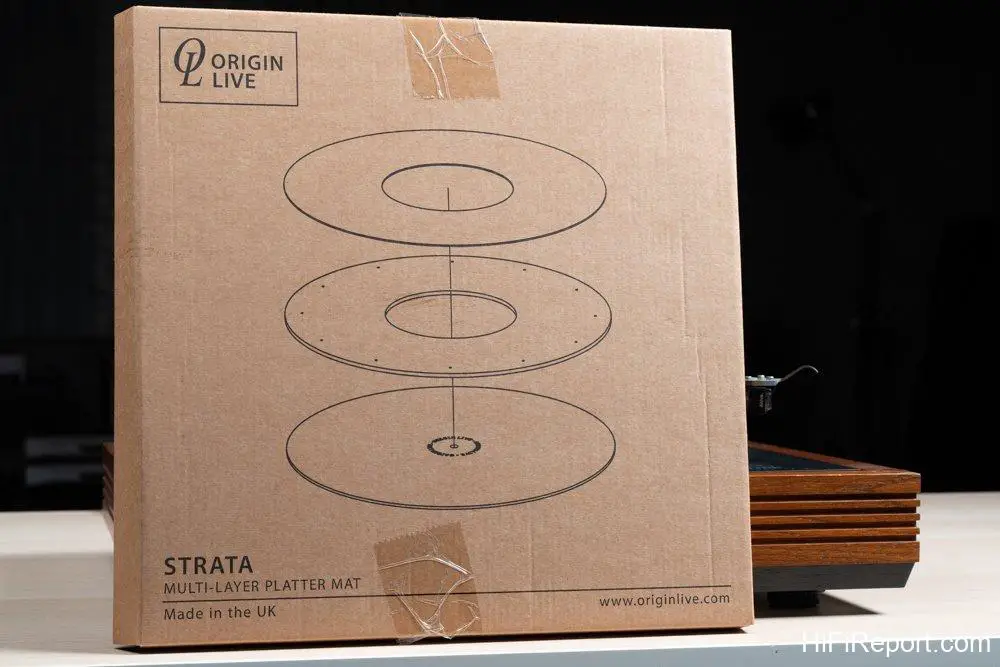
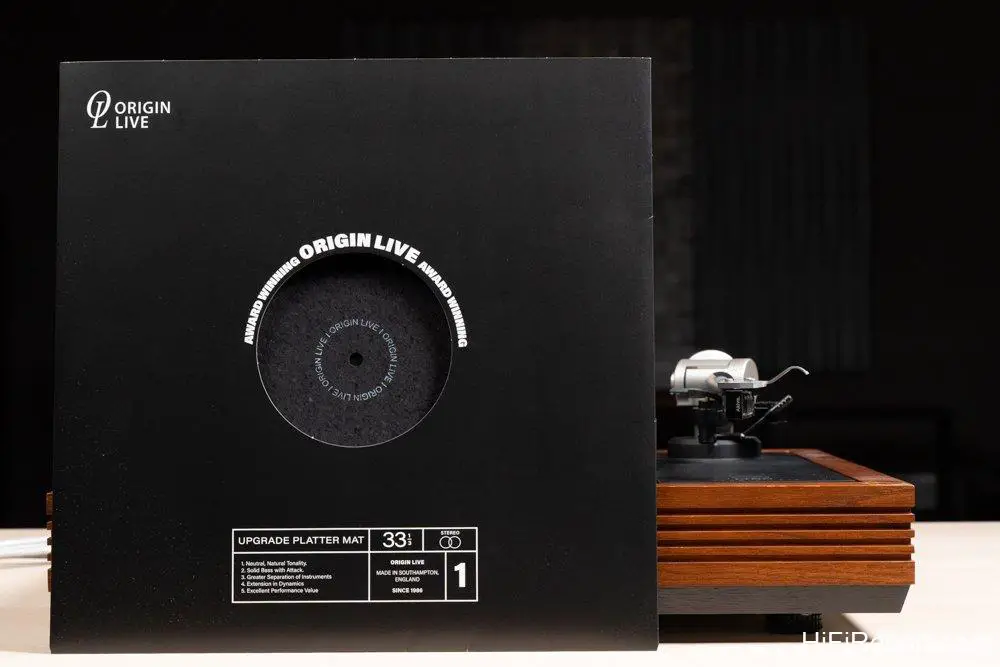
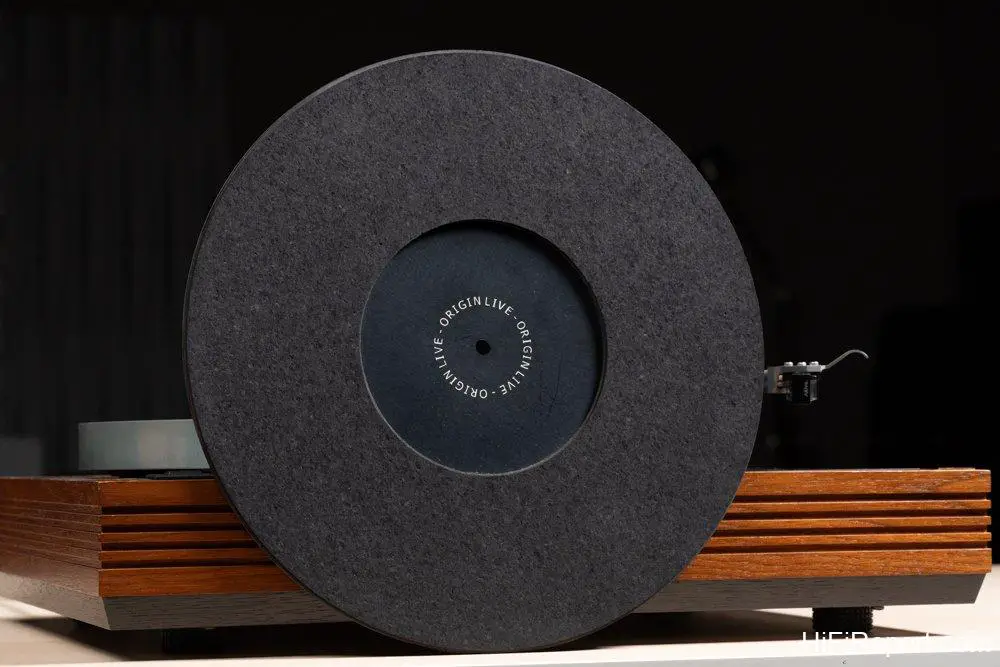
The other two record mats are from Origin Live. The simpler of the two is the Upgrade Platter Mat, while the thicker one is the Strata Multi-Layer Mat. This latter mat employs a composite of materials, blending soft and hard elements, resulting in a rigid mat, unlike the softer materials of the previous two.
Enhancing Grip and Providing Damping
What is the purpose of a vinyl record mat? Simply put, it’s the intermediary placed between your turntable’s platter and your vinyl record. Its primary functions are to mitigate resonances between the record and the platter, and to provide a stable contact surface, preventing the vinyl from slipping. Some mats also incorporate static elimination capabilities to reduce crackles and pops. For audiophiles, however, the record mat can also alter the sound quality, adding to the enjoyment of listening to vinyl.
It’s important to note that the editor is referring to a “change” in sound quality, not necessarily an “improvement.” With analog turntables, even placing a piece of tissue paper can alter the sound. Therefore, whether the sonic shift brought about by a record mat constitutes an improvement or introduces additional coloration is something that can only be determined through hands-on listening. Only then can one find a record mat that aligns with their personal taste.
From Single Materials to Composites
Common record mat materials typically fall into a few categories. The most prevalent is likely felt, a soft material that offers a degree of vibration absorption and is relatively inexpensive. Another common material is rubber, chosen for its excellent damping properties. In earlier times, cork was also frequently used for record mats—the same material found in wine stoppers—though it’s less common recently.
These three materials are generally found in thinner record mats, approximately 1-2 mm thick. Mats exceeding this thickness see a wider variety of materials, including acrylic, graphite, or multi-layer composites. The Origin Live Strata, which we are testing, is an example of a multi-layer composite record mat.
Thickness: Thin vs. Thick, Each with Its Own Effect
Should you opt for a thick or thin record mat? There’s no definitive answer to this question. It necessitates practical listening comparisons with your specific turntable to determine which record mat is most suitable. My listening reports can only serve as a reference, not as authoritative pronouncements. The same record mat can yield different results on the Linn LP12 Klimax and Elac Miracord 90 turntables used by HiFiReport. This report is purely a reflection of my personal listening experience, offered as a reference for your own comparative listening.
Fortunately, unlike phono cartridges, record mats are not subject to the same limitations for auditioning. Once a cartridge has been tested, the angle of its stylus tip changes, rendering it immediately a used item—much like a car that, even after a mere 60 miles, becomes a pre-owned vehicle. Record mats, however, are different. It’s likely that demonstration units are available for loan. Therefore, if this article sparks your interest in these three record mats, you should be able to request trial units from the distributor or dealer to compare within your own vinyl playback system before making a decision.
Using a Familiar Mat as a Reference Point
Listening to four record mats in one go – won’t that be overwhelming? Rest assured, the editor has extensive experience with such accessories. As long as there’s a standard for comparison, it’s possible to avoid confusion.
I brought my Roksan Rmat-5, which I’ve used for many years, to the HiFiReport editorial office as my reference standard for direct comparison.
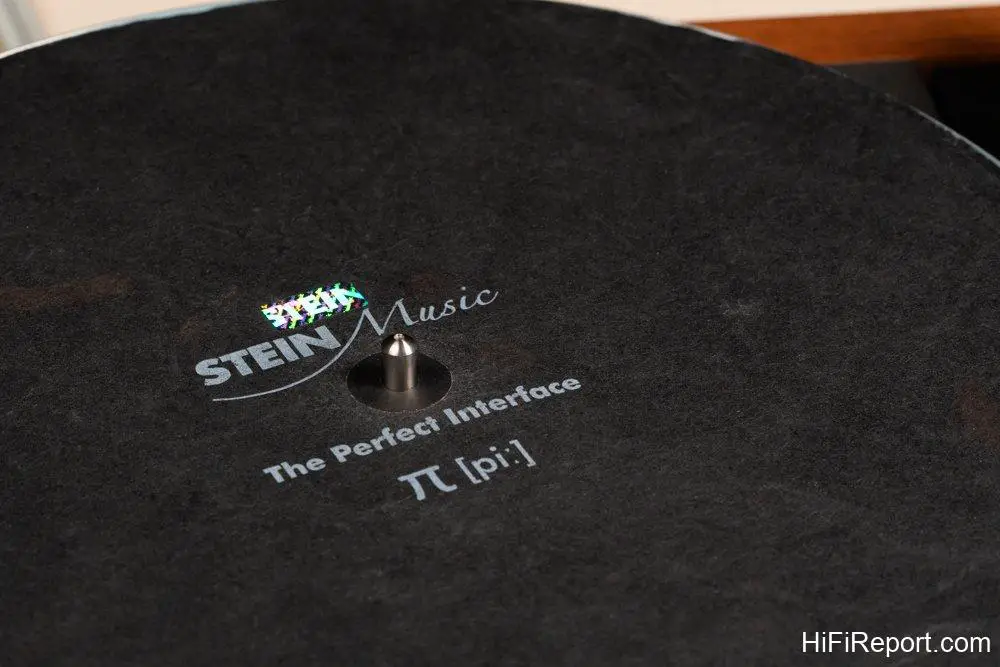
I reviewed Stein Music’s The Perfect Interface π back in 2017 and kept the white version for personal use. The new Carbon Edition, on loan this time, appears to be a combination of washi paper and the so-called “Maestro lacquer” treatment. However, the texture of the washi paper on the black version looks a bit coarser, with longer fibers in the paper pulp.
The Carbon Black Version: Focused and Coherent
Using the Roksan Rmat-5 as a benchmark, the white version of The Perfect Interface π, which I’ve used for eight years, clearly excels in soundstage width and depth. The new The Perfect Interface π Carbon Edition, conversely, has a more focused effect, bringing the images closer and enhancing the sense of physical presence of instruments and vocals.
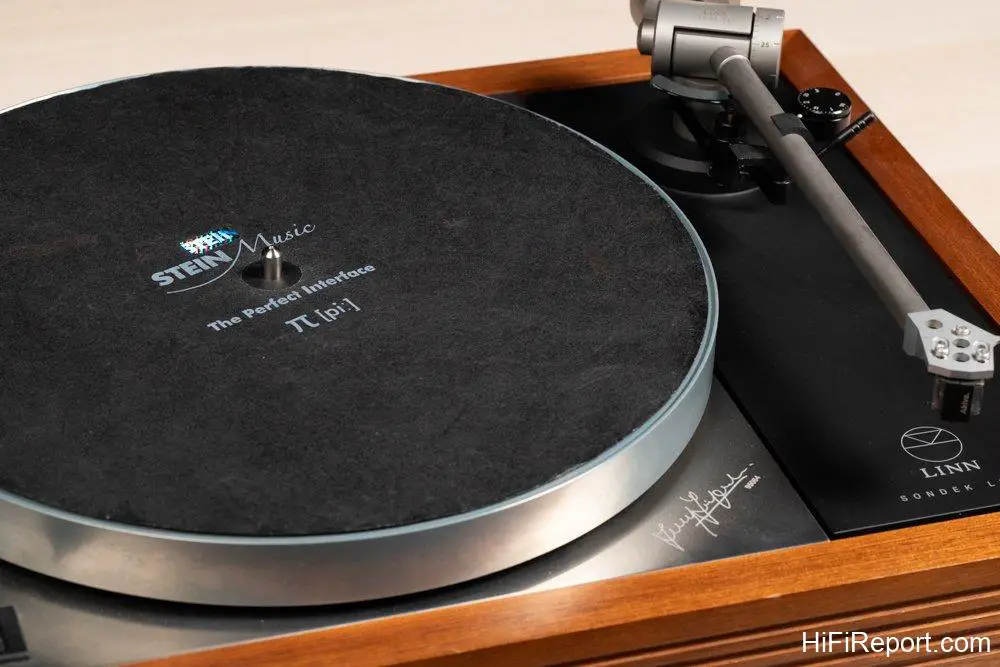
If we were to categorize by music genre, the white The Perfect Interface π is better suited for orchestral works, offering a more expansive sense of stage. The black Carbon Edition, on the other hand, provides a more intimate and comfortable listening experience for the swinging rhythms of jazz, bringing the listener closer to the musicians.
The Rubber Origin Live: Improved Elasticity
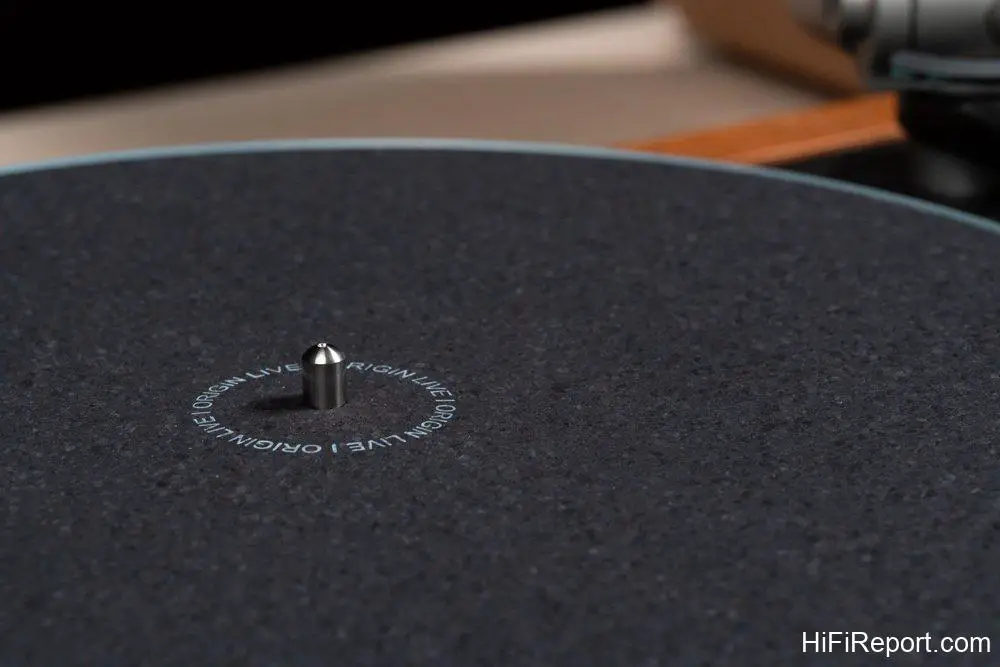
Next up is the Origin Live Upgrade Platter Mat. The material of this mat feels like rubber. It has one textured side and one smooth side, suggesting both can be used. I opted to place the smooth side facing up, or with the Origin Live logo on the inner ring facing upwards.
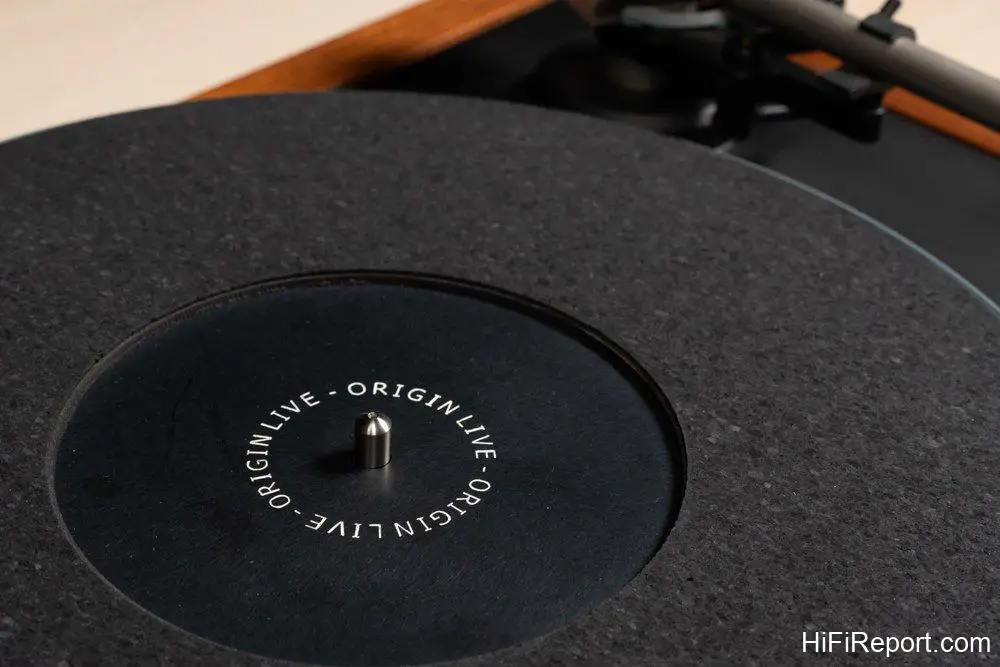
Compared to the Stein Music washi paper mats, the Origin Live rubber material offers better elasticity and “Q” factor in the low frequencies. It exhibits excellent “tightening” of the bass foundation. It’s important to note that this isn’t a reduction in bass quantity, but rather a tightening of the bass’s physical form. This results in a more impactful kick drum, and more defined contours for the electric bass. Those who enjoy jazz will likely find the Origin Live Upgrade Platter Mat to be a suitable choice.
The Thick Strata Requires VTA Adjustment
The final mat to be introduced is the Origin Live Strata. This one is challenging to compare directly with the previous three. This composite material record mat is notably thicker, thus requiring VTA (Vertical Tracking Angle) adjustment. Once I adjusted the VTA for the Strata, I couldn’t simply swap it out for the other three mats for comparison. With the VTA set for the Strata, using the thinner mats would result in the tonearm being too high, leading to reduced bass. Therefore, I only compared the differences between the three thin mats and described the Strata’s performance independently.
The Strata, being a composite material, blends elements like felt and paper. However, these materials are proprietary secrets of the manufacturer and are not disclosed. We can infer its properties from its rigidity, which surprisingly offers a damping, soft effect rather than the unyielding hardness of a solid metal plate.
Strata Emerges as the Top Performer Among the Three
With the VTA on the Miracord 90 adjusted slightly higher to accommodate the Strata record mat, please note that during this adjustment, you should first place the Strata mat, then a vinyl record, and use the combined height as a reference for VTA setting.
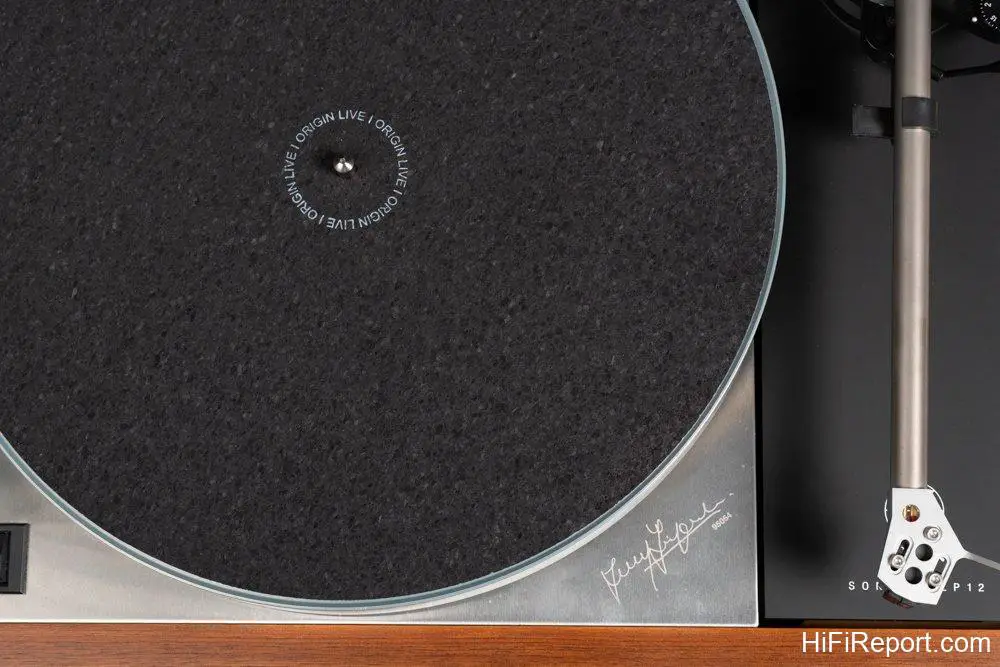
In terms of enhancing soundstage height, width, and depth, as well as the coherence of musical images, the Strata outperforms the previous three mats. Its sonic density is also the best. This might be attributable to my VTA adjustment, but from a materials science perspective, a record mat designed to suppress resonance would theoretically perform best when constructed from composite materials.
To test this hypothesis, I retrieved a thick graphite record mat purchased many years ago. Its thickness is even greater than the Strata, and it likely requires no VTA adjustment. The single-material graphite mat, at first listen, reveals more musical detail, but its high-frequency extension has a slight roughness. Compared to the Strata, the mid-high frequency details are not diminished, and its extension exhibits a more beautiful sheen and refinement. The mid-to-low frequency drive and power are also superior. This demonstrates that the composite Strata mat offers superior performance compared to single-material designs.
Unlocking the Ever-Changing Sonic Pleasures of Vinyl
After listening to three new record mats and comparing them with three mats I’ve used for many years, the question arises: which is better? The editor’s standard answer is: there is no “best,” only “favorite.” The tonal characteristics of analog vinyl are inherently multifaceted. Even placing a piece of tissue paper on the platter will alter the sound. The real question is: is this the sound you desire? Therefore, the editor believes that record mats, much like record weights, are delightful toys that encourage more of them in a vinyl setup. Each has its own sonic signature. Having a few on hand to switch between allows for timely tonal adjustments, which is precisely the joy of appreciating vinyl. It’s about constantly discovering new sonic variations and the pleasure they bring.