
T+A MP200/DAC200/A200 Review
Before delving into these three remarkable components, I must first introduce Siegfried Amft, the founder and president of T+A. He is a figure I feel compelled to mention whenever discussing T+A equipment, even having written about him numerous times before. This is because Siegfried is, in my opinion, the most brilliant and professionally accomplished audio designer I have ever encountered.
Only by understanding Siegfried the man can you truly grasp why the 200 series possesses such formidable and unique technical prowess.
I had the privilege of interviewing Siegfried Amft at an audio show in 2013. T+A is Germany’s largest high-end audio brand, and initially, I expected a man running such a large company might be somewhat unapproachable. To my surprise, Siegfried had absolutely no presidential airs. Once we began discussing audio design, his willingness to answer every question with such professional depth revealed his profound passion for sound.
It was during that conversation I learned that Siegfried was a standout student, consistently ranking first in exams during his physics studies at the Technical University of Hannover in Germany. His electroacoustics professor at the time was none other than Fritz Sennheiser, the founder of the renowned headphone brand. The encounter between a master teacher and a brilliant student ignited Siegfried’s intense interest in acoustics and audio.
They maintained contact until Professor Sennheiser’s passing in 2010; for Siegfried, Sennheiser was not only a mentor but also a close friend.
So passionate about audio, Siegfried resolved to start his own company immediately after graduation. However, he had no capital, and no bank was willing to lend money to a recent graduate. Fortunately, his wife offered her full support, stepping in as his guarantor, which finally secured the startup funds. In 1978, T+A was founded. The brand name is an abbreviation of “Theory and Application,” a direct declaration of their design philosophy: all products are rooted in science.
Who could have imagined that the ambitious young man of forty-odd years ago would indeed realize his dream, becoming the head of Germany’s largest high-end audio company?
Introducing the 200 Series
Having briefly introduced the story of T+A and Siegfried Amft, let’s quickly shift our focus back to the protagonists of this review: the 200 series. T+A boasts a broad product line, and while the 200 series might appear entirely new at first glance, audio systems with this compact form factor are not unprecedented for T+A. More than 20 years ago, T+A released the highly successful 800 series, which featured a similar cabinet proportion and design.
However, in terms of technical substance, the 200 series represents a massive leap forward compared to the 800 series of yesteryear.
The 200 series comprises four products. In addition to the three reviewed here, there is also the HA200 headphone amplifier with a built-in DAC. This was the first product launched in the 200 series. The three-component combination reviewed in this article was unveiled more recently, in September of last year.
The T+A MP200 Streamer/Transport
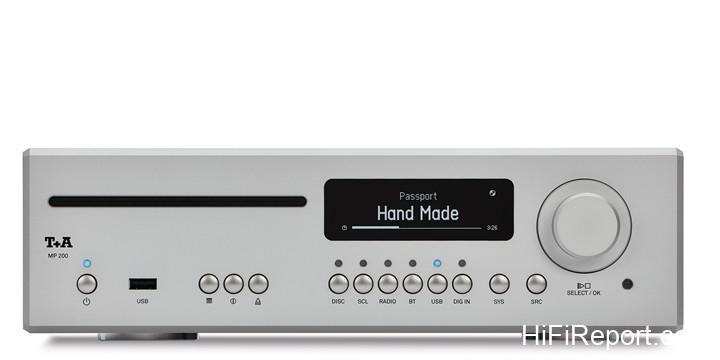
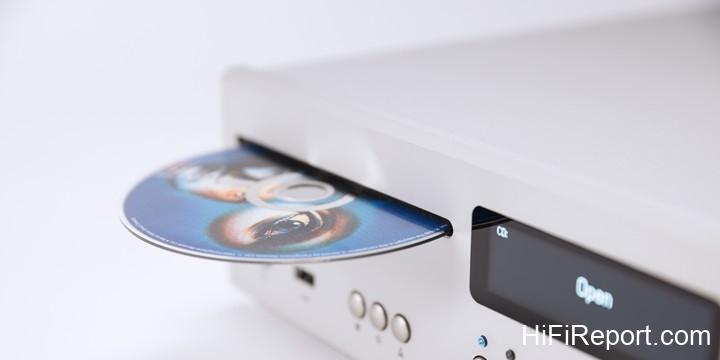
Let’s start with the MP200. I believe what most people first notice is its slot-loading disc drive, leading them to assume it’s a CD player. This assumption is only partially correct. While the MP200 can indeed play CDs, it does not have built-in decoding circuitry; it functions purely as a CD transport. And playing CDs is just one of the MP200’s capabilities. It is simultaneously a fully-featured streaming player, and *this* is where the MP200 truly shines.
Why did T+A decide to place the streaming functionality in the MP200 instead of the DAC200? Combining streaming and DAC capabilities would seem to better meet most users’ needs and is the approach taken by most streaming sources on the market. T+A’s decision, however, is driven by its own logic and principles. Streaming functions involve digital processing circuits and network receiving circuits, both of which generate significant high-frequency digital noise.
If streaming circuits and the DAC are housed within the same chassis, this noise can interfere with the decoding circuitry, clocking circuits, and analog output stage, which is absolutely not ideal for musical reproduction. Therefore, T+A placed the CD transport, which generates mechanical vibration, and the streaming circuitry, which produces high-frequency noise, within the MP200 chassis, while designing the decoding circuitry as a separate unit, the DAC200.
This demonstrates that although the 200 series is compact in form, it is by no means a lifestyle product merely catering to market trends, but rather a series developed with genuine high-end audio principles at its core.
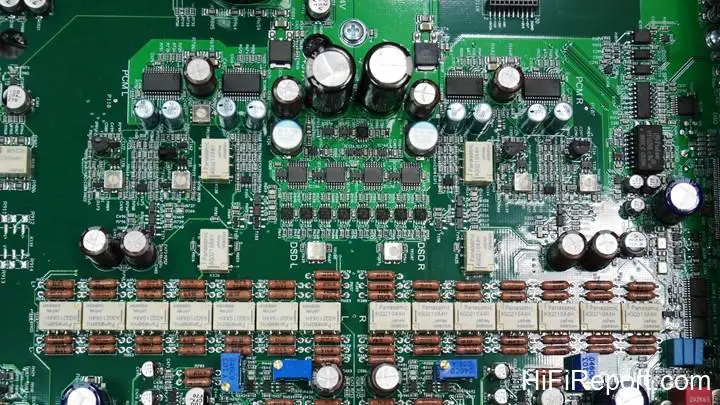
Delving deeper, I uncovered even more astonishing details about the MP200. The circuitry of typical streaming sources is essentially a simplified computer, with the main circuitry being effectively a computer motherboard. This holds true even for many high-end audio products. But the MP200 is different. T+A simply doesn’t approve of streaming sources that directly utilize off-the-shelf computer boards.
They insisted on building their own streaming circuitry from the ground up, ensuring that the streaming signal passes through no unnecessary processing and that musical quality is not compromised in any way.
This is no small feat. A conventional audio company wouldn’t typically possess expertise in network circuitry. Forcing themselves to develop such technology independently would not only incur massive costs but also carry a significant risk of failure. Yet, T+A is precisely this kind of extraordinary company. They insist on doing everything themselves, from loudspeaker drivers and amplifier Class D modules to digital source SACD pickup mechanisms.
T+A is committed to in-house development, avoiding reliance on external manufacturers. Only through self-development can they fully control and achieve the highest possible quality.
Returning to the MP200, T+A’s insistence on developing their own streaming circuitry, while surprising, is entirely consistent with their modus operandi. Oh, I forgot to mention that T+A also developed an exceptionally user-friendly streaming app that can connect to NAS network drives and supports streaming services like Tidal and Qobuz. How can a high-end audio company possibly be a master of so many different trades?
One must remember that T+A’s R&D department boasts over twenty professional engineers specializing in various fields, a scale far exceeding that of typical small audio manufacturers. Thus, they absolutely possess the capability to handle everything themselves and achieve impressive results in the process!
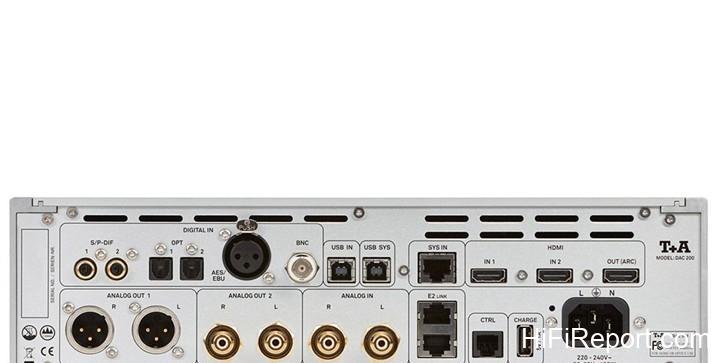
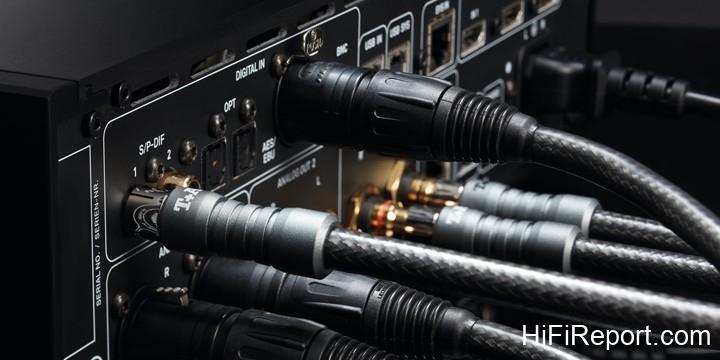
It’s worth noting that the MP200 doesn’t just play CDs and stream networks; it also includes built-in FM radio and aptX HD high-quality Bluetooth. Furthermore, the T+A features digital inputs to receive digital signals from other sources. It is also equipped with a USB interface, allowing connection of external hard drives to play stored music files. What streaming source on the market offers such a rich and complete set of features?
And which streaming player utilizes self-developed streaming circuitry? Don’t doubt it; this is currently the only one on the market. Even if used independently without partnering with the DAC200, the MP200 is arguably the most feature-rich and capable streaming source available today.
The T+A DAC200 DAC/Preamplifier
Next, let’s examine the DAC200. Within the 200 series, the DAC200 undoubtedly plays a central role. It serves two primary functions: DAC digital-to-analog conversion and volume control. As it includes analog inputs, it can also function as a traditional preamplifier.
Starting with the DAC200’s DAC circuitry, it fully inherits the architecture of T+A’s top-tier digital sources. This means it features two independent decoding paths: one specifically dedicated to processing PCM digital music signals and another dedicated solely to decoding DSD digital music signals.
Why implement two separate circuits? Isn’t digital-to-analog conversion handled by a single DAC chip? The reality is not as simple as you might think. PCM (Pulse-Code Modulation) is a multi-bit sampled encoding modulation signal, while DSD (Pulse-Density Modulation) is a 1-bit modulation. The technologies have fundamentally different characteristics.
Many audiophiles enjoy debating whether PCM or DSD is superior, but the truth is, what truly impacts sound performance is not the file format itself, but the decoding technology. To leverage the strengths of PCM, you need a true multi-bit R2R decoding circuit. To exploit the advantages of DSD, you need a true 1-bit DSD decoding circuit. Using only a common off-the-shelf Delta-Sigma DAC chip will prevent either format from achieving its maximum potential.
The challenge is that there are currently no readily available R2R DAC chips dedicated solely to PCM decoding, nor are there chips specifically designed for 1-bit DSD decoding. What to do? T+A, being a company that prefers to do everything themselves, naturally chose to develop them in-house.
Let’s discuss the PCM decoding section first. Strictly speaking, T+A hasn’t built a true multi-bit decoding circuit; such circuits demand extremely high precision in resistor matching, and attempting this in-house could easily backfire. So, T+A took a different approach, utilizing two (four groups) 32-bit PCM1795 DAC chips per channel to construct a Double Differential Quadruple Converter.
This design further reduces the already very low noise floor by 6dB and significantly enhances dynamic performance. The maximum supported PCM sample rate is 768kHz, representing the highest specification currently achievable with PCM decoding technology. The DAC also includes four digital filters, each with different sonic characteristics, allowing users to switch based on personal preference and music genre.
What about the DSD circuitry? T+A has built a true 1-bit decoding circuit from scratch. Theoretically, while this decoding circuit architecture is simpler, it imposes stringent requirements on component quality and clock precision. Consequently, very few manufacturers on the market are capable of building 1-bit decoding circuits independently, and this design is typically found only in high-priced digital sources.
Compared to other similar technologies, what distinguishes T+A’s 1-bit decoding circuit? Upon examining the DAC200’s specifications, my jaw literally dropped. It can support decoding of DSD1024 high-resolution files! What does DSD1024 signify? The familiar SACD is DSD64 resolution. Double the modulation is DSD128, and so on. DSD1024 is 16 times the modulation of DSD64!
While DSD modulation differs from PCM sampling concepts, if you directly convert the sample rate of CD, DSD1024 is approximately 1024 times the CD sample rate of 44.1kHz (45.2 MHz)!
Such astonishing data volume is not only a significant test for digital circuit computing power but also a major challenge for 1-bit decoding circuits. If the filter circuitry is improperly designed, the final sound performance will not improve. T+A hasn’t revealed many specifics about this technology, but it’s certain that they have genuinely achieved it! Note that the two independent decoding paths I mentioned earlier were originally utilized in T+A’s flagship digital sources.
It’s incredibly generous that they have now made this technology available in the DAC200, almost in its original form. Isn’t that incredibly kind?
Beyond the decoding circuits, the DAC200’s clocking system is also highly refined. It features two independent clocks, corresponding to digital audio with sample rates of 44.1kHz, 48kHz, and their multiples, respectively. All clock signals pass through T+A’s specially developed De-Jitter Masterclock to eliminate jitter.
If any residual jitter remains, it enters a second line of defense, a specially constructed Phase-Locked Loop (PLL) circuit, which further reduces jitter to one-quarter of its original level.
Please don’t assume that just because the DAC200’s chassis isn’t large, all circuits are crammed together, leading to mutual interference. The DAC200 incorporates exclusive DASS (Digital Analogue Separation System) isolation technology, utilizing ultra-fast digital isolators developed by Silicon Labs to completely isolate the ground planes between digital and analog circuits, eliminating the possibility of analog circuits being contaminated by digital noise.
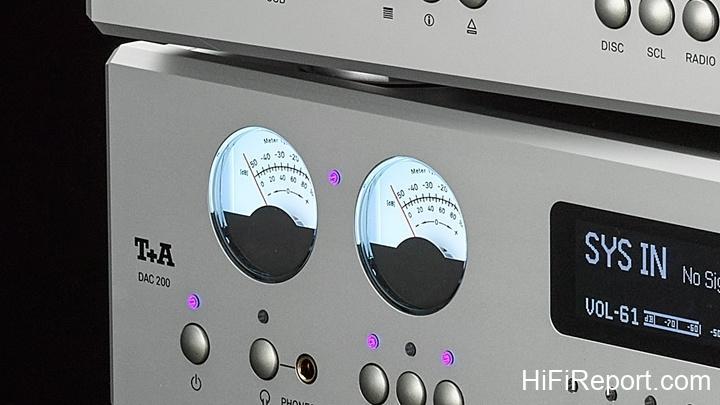
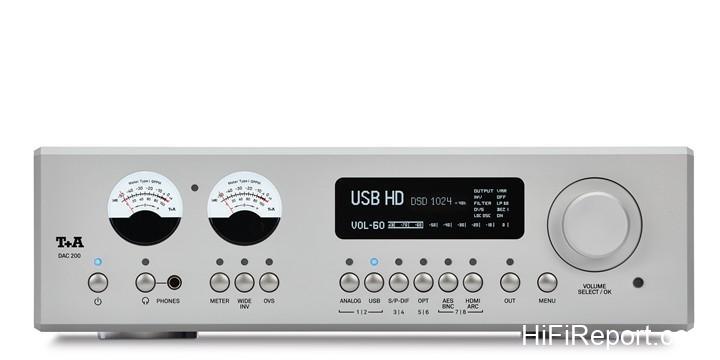
Aside from the near-flagship digital decoding architecture, what I most admire are the two circular meters on the DAC200. I absolutely love their instrument-like visual appeal. Only after consulting the manual did I realize these meters are not mere decorations but true “instruments” that can display various operating states! While many audio components feature meters, I’ve only encountered the DAC200 that truly maximizes their utility.
These two circular meters can be switched between four display modes simply by pressing the small ‘meter’ button below them. The first mode displays the signal level of the input. The second mode shows the signal level of the output.
Switching to the third mode, the left meter displays the internal chassis temperature, with the optimal operating temperature being between 30-50 degrees Celsius; the right meter shows the operating temperature of the Class A output stage, with the optimal state being between 40-60 degrees Celsius. Switching to the fourth mode, if the left meter’s pointer is centered, it indicates that the input clock from the source is precise; the meter displays the jitter range within ±150ppm.
As for the right meter? It shows the relative jitter ratio of the incoming digital signal from the source, with the pointer displaying a range of 0-100. If the clock is precise, the pointer should rest at the 0 position.
Frankly, I think T+A might be a little *too* serious here. Few would expect audio equipment meters to convey such specific information, yet the DAC200’s two meters are incredibly useful. I’m convinced some people would buy the DAC200 solely for these meters, because every audiophile would want to know the operating status of their equipment displayed in this way!
Within the DAC200’s settings menu, a wide range of functions can be configured, such as channel balance, bass and treble equalization, a 60kHz low-pass filter, phase inversion, digital filter switching, variable and fixed volume output options, and much more. Due to space constraints, I cannot detail them all here; interested users can consult the manual.
The T+A A200 Power Amplifier
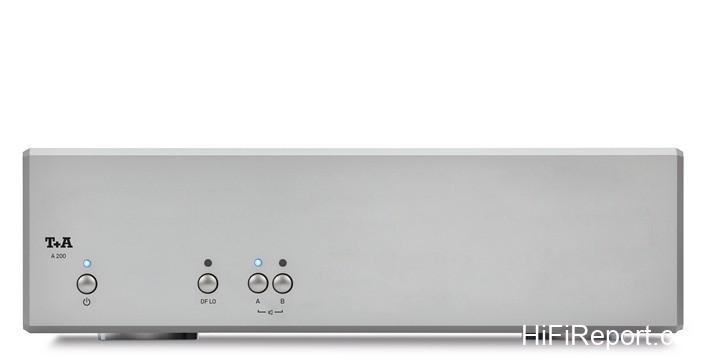
Finally, let’s introduce the A200 power amplifier. The A200’s appearance is understated, with just four buttons on the front panel. One might assume there isn’t much technical detail or functionality to discuss, right? Wrong. The A200 is actually the most surprising product among the three reviewed. While its size is not large, its driving capability is unexpectedly powerful.
Even when paired with challenging speakers like the Graham VOTU floorstanders, the A200 handled them effortlessly, allowing these speakers to perform to their full potential.
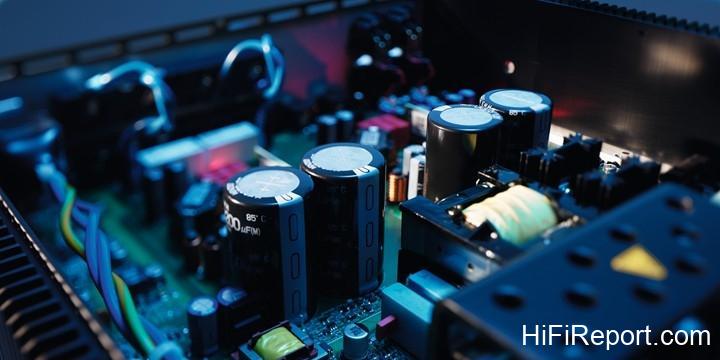
What special technology is hidden within the A200’s compact chassis? After reviewing the original specifications, I was amazed to discover it employs the recently highly acclaimed Purifi Eigentakt Class D amplifier module. What is the origin of the Purifi brand? Its three core founders are Peter Lyngdorf, Bruno Putzeys, and Lars Risbo. Knowledgeable audiophiles hearing these names will recognize them instantly, as these three are pioneers in Class D amplification technology.
Peter Lyngdorf’s audio brand Lyngdorf has its own Class D amplification technology. Bruno Putzeys is widely recognized as the designer of the excellent Hypex Ncore Class D modules. Lars Risbo is the designer of the world’s first “pure digital” amplifier, the Tact Millennium.
These three joined forces to establish Purifi with the goal of designing the ultimate Class D amplification technology, surpassing Ncore. The Eigentakt module is the result of their research. Previously, audiophiles often felt that Class D amplification sounded too cold, hard, or thin, primarily due to excessively high high-frequency harmonic distortion.
Eigentakt’s unique feature is its ability to suppress harmonic distortion to extremely low levels, with high-frequency distortion surprisingly lower than mid and low frequencies, completely overcoming the drawbacks of traditional Class D amplification.
Furthermore, traditional Class D amplifiers often had low damping factors. However, Eigentakt can achieve a damping factor of 800, clearly offering significantly higher driving power than similar products. Purifi only began making waves in the market in 2019, and there are not many amplifiers currently using this Class D module. Only NAD and Lyngdorf are using it at present; T+A is the third brand to adopt it.
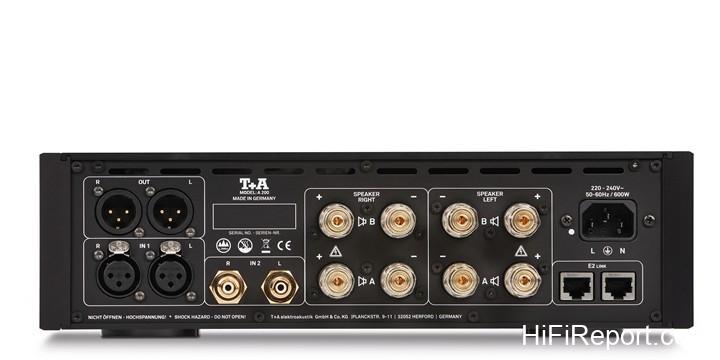
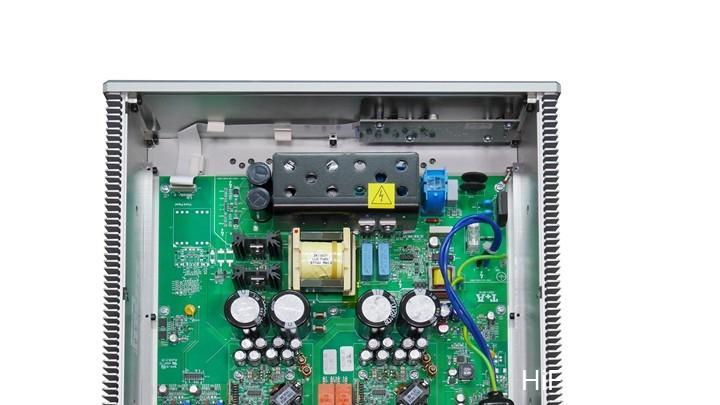
Wait, didn’t I just say T+A likes to do everything themselves, and they already have their own internally developed Class D amplification technology? Why would the A200 use someone else’s circuitry? After careful examination, I realized T+A hasn’t changed its approach. The reason they adopted Purifi Eigentakt is because Purifi Eigentakt is indeed good enough. The difference is, they didn’t just drop it in; they made significant modifications based on the Eigentakt foundation.
The clue is evident in the A200’s specifications. Purifi Eigentakt currently offers only one Class D module, the 1ET400A, with an output power of 425 watts into 4 ohms. However, the A200’s output power is only 250 watts into 4 ohms. The difference is clear.
So what specific adjustments did T+A make to the Eigentakt module? Firstly, the A200 uses its own high-frequency sinusoidal switching power supply, operating at twice the frequency of similar technologies. This not only significantly reduces noise but also provides cleaner power.
Secondly, the A200 incorporates T+A’s own developed filter capacitors, capable of fully charging 100,000 times per second, 2,000 times higher than typical capacitors, resulting in more stable power delivery.
Thirdly, T+A paired the Eigentakt frontend with its most famous HV (High Voltage) output stage. This is technology T+A derived from researching vacuum tube circuits. They discovered that the high-voltage characteristics of vacuum tubes not only make the amplification circuit’s operation more linear but also provide a wider dynamic range.
They then transplanted this concept to solid-state circuitry, giving the solid-state amplification circuit characteristics of ultra-linearity, low distortion, and wide dynamics.
Another key factor behind the A200’s powerful drive is its exclusive ISC (Intelligent Safe Control) technology. ISC real-time monitors the A200’s operating temperature, load impedance, and distortion status, instantly issuing compensatory signals to ensure the A200 is always operating in its optimal state.
Another unique feature of the A200 is its two-stage adjustable damping factor, easily switched via the ‘DF LO’ button on the front panel. Setting it to high damping factor results in a more direct and precise sound, with improved resolution and soundstage layering. Switching to the lower damping factor provides a softer, warmer sonic texture. These two settings can be switched based on different music genres.
Listening Impressions
Moving to the actual listening test, let’s first discuss the individual sonic characteristics of these three components. Beginning with the MP200, when compared to the Aurender N200 streaming source used for this review, I found the MP200’s sonic foundation to be more neutral and precise. Its resolution and layering are excellent, and string instruments sound even more delicate than with the Aurender.
The background is quiet, allowing the subtle nuances of vibrato to be presented with richer detail.
Next, the DAC200. Its sonic presentation also leans towards neutrality, characterized by high resolution and rich detail. However, when playing DSD files, the sound gains a touch of warm and gentle texture. This characteristic makes the music more intimate and the emotional portrayal richer, preventing it from becoming overly analytical and perhaps dry.
As for the A200? It is indeed the component that surprised me the most among the three. Its powerful driving capability was already impressive, but I was even more captivated by its naturally smooth sonic texture. The treble has appropriate body, the midrange possesses natural elasticity, and the bass is full and relaxed, coupled with swift speed and clear layering.
Notably, the A200 exhibits a distinctly different sonic style compared to the NAD M33 integrated amplifier I’ve heard before. Although both utilize the Eigentakt Class D amplification module, the M33’s sound is akin to neutral, uncolored, odorless high-mountain spring water, whereas the A200’s sound is enveloped in a warm texture full of natural elasticity.
This demonstrates that while Eigentakt’s characteristics are excellent, the tuning expertise of each designer is key to influencing the final sonic signature.
Let’s now discuss the overall performance when the three components are combined. I immediately challenged them with “Daito Banri” by Kodo, featured in the editor’s column this issue. When the powerful deep bass of the taiko drums erupted from the VOTU’s two 10-inch bass drivers per channel, I nearly leaped out of my chair. I hadn’t expected the VOTU to produce such energetic, substantial, and full-bodied yet well-defined taiko drum bass.
Even more surprising, the compact A200 fully unleashed the VOTU’s bass reproduction capabilities, proving that the A200’s driving power is truly not to be underestimated.
Next, I listened to the kick drum in “The Tricycle.” If an amplifier’s instantaneous output isn’t strong enough, the kick drum’s transient impact can sound weak. However, the A200 tackled this challenge without compromise. The drum hits were not only powerful and fast but also possessed uncompromising transient impact, and the bass had a genuinely full-bodied presence. Now, I can completely believe that the A200’s driving power is truly astonishing!
Following that, I listened to two piano pieces. First, Mitsuko Uchida’s performance of the second movement of Schubert’s Piano Sonata D960. Uchida’s interpretation is very dreamy, with pianissimo notes so soft they almost vanish into a mist. However, played through this system, Uchida’s softest notes emerged from the mist, shimmering like distant stars, and even the undulations of the lingering overtones were clearly audible.
One must admire the system’s astonishing ability to resolve subtle information!
Then I listened to Krystian Zimerman’s performance of Schubert’s Impromptu No. 4 from D935. The four pieces in D935 have sweet melodies, but under the interpretation of this system, Zimerman’s playing didn’t sound like mere trifles but exuded a magnificent and elegant demeanor, with his extraordinary technique appearing effortless.
Some fast scale passages were unbelievably quick, almost like double-speed fast-forwarding, yet this system was still able to resolve the distinct key strikes, once again demonstrating its superb resolution capabilities.

The local distributor provided the Aurender N200 streaming player for testing, loaded with ultra-high-resolution PCM and DSD files. The purpose, of course, was to test the DAC200’s support for maximum resolution music up to PCM 768kHz and DSD1024. Perhaps you believe such high-resolution files aren’t necessary for listening, but I must say, playing them through this system truly revealed a difference.
The soundstage became wider, with clearer and more natural depth and layering, creating a more realistic sense of being in a concert hall. String textures were more natural, realistic, and refined, and piano harmonics had richer extension. This added harmonic richness wasn’t from inaudible ultra-high frequencies, but rather musical information within the audible 20kHz band that became richer when played through the DAC200 using ultra-high-resolution DSD files.
Conclusion: Giant Killers?
In conclusion, I must emphasize once more: please do not mistake the 200 series for mere compact lifestyle audio systems. The MP200 streams, plays CDs, and even has radio, offering functionality with no equal on the market. The DAC200’s independent PCM and DSD decoding architecture is a direct transplant from T+A’s flagship technology, providing unexpectedly powerful resolution with no competition in its price range (around $6,800).
As for the A200, it boasts powerful driving capability and a captivatingly natural and smooth sonic foundation. I’ve mentioned several times in this review how much it impressed me. T+A truly gave their all this time, aiming to prove their capabilities with the 200 series. I think they might have pushed a little too hard, accidentally designing a set of ‘super pocket rockets’ capable of challenging components far above their weight class!
Additional Perspectives
Having just seen the static display of T+A’s new three-piece system at an audio show this year, getting to listen to the full “suited” system in our office just a month later is perhaps one of the rare joys of being an audio editor. This time, the full T+A system was driving the Graham Audio VOTU. I must say this pairing was absolutely superb, coaxing a very full-bodied effect from these speakers’ robust midrange.
Previously, I always felt these speakers’ treble was slightly reserved, but paired with the full T+A system this time, I experienced a level of treble refinement I hadn’t heard before. Playing jazz music sung by Diana Panton, her vocals had a clear, sweet timbre and moving phrasing, demonstrating T+A’s ability to maintain neutrality while revealing the inherent beauty and pure sound quality of the music.
Switching to Martin Zeller’s performance of Bach’s Unaccompanied Cello Suites, released by MA Recordings, the full T+A combination shed the “old-fashioned” sound the VOTU could sometimes exhibit when driven by less capable systems lacking sufficient power or resolution. I believe the best aspect of this pairing is its ability to preserve the cello’s rich, warm tone while clearly presenting the highly dynamic variations and performance details of the strings.
The substantial midrange heard live allowed one to feel the relaxed resonance of a wooden instrument being played throughout the body – it’s the kind of sound that instantly captivates! Finally, don’t underestimate the miniature appearance of each T+A component. When driving the large VOTU speakers, the sense of musical scale built upon robust low frequencies was still astonishing.
Playing the orchestral version of the Final Fantasy VII OST, I heard thick, yet powerfully trailing bass energy, with dynamic tension gradually building upwards. This wasn’t an empty bass foundation, but rather, as the melody demanded, the orchestral bass continuously explored deeper registers, utilizing sound energy that seemed to exceed the physical constraints of the chassis to paint a wide and deep soundstage between the speakers.
I must say, this is a three-piece audio system that possesses a high degree of consistency across visual design, operational experience, and sonic characteristics. Removing any single component would diminish T+A’s distinctive technical philosophy, pushing the sonic charm of German audio to its zenith!
I’ve reviewed quite a few different types of T+A equipment before, and my impressions have always been very positive. However, sometimes I’ve felt their gear was perhaps a bit too devoid of emotion, simply reproducing all sounds with utmost fidelity – neutral, clean, and rational to an extreme degree. This group listening session connected three T+A components, and I had anticipated good performance.
However, after actually inserting a CD and hearing the sound reproduced through our reference speakers, the result was even more surprisingly stunning than I could have imagined! Let me first describe the sonic characteristic I enjoyed the most this time. When playing Japanese rising female vocalist ReoNa’s album “unknown,” ReoNa’s voice is very soft and delicate.
Under the interpretation of this complete T+A system, I not only fully experienced all the breath and texture within her ultra-fine vocals but also perceived a precise and concentrated sweetness. This nuanced quality beyond neutrality was a significant surprise this T+A system delivered.
Additionally, some tracks on the “unknown” album feature rock arrangements with quite aggressive rhythms, but this system was able to analyze and present every intense sound wave with considerable energy, sounding very full and satisfying. Switching to Seonwoo Jungah’s “Serenade” album, in my favorite track “Run With Me,” this system also portrayed Seonwoo Jungah’s rich, artistic singing style with a slightly sweet feeling, adding a touch of refinement and beauty.

This is indeed quite different from my previous impression of T+A; this time, it definitely earned extra points! Through this listening session, I can say I had my strongest desire yet to own T+A gear. The exterior of these three components has a refined, minimalist German style, while the sound possesses a sweetness and nuance that continuously permeates beyond neutrality. And all functionalities are covered!
I can only say that having these three units at home would certainly be a great source of happiness!
Key Points
* The MP200 streamer integrates CD, FM radio, and Bluetooth functions, making it virtually unique on the market.
* The DAC200 features independent PCM and DSD decoding paths, combined with resistor-ladder volume control circuitry, mirroring flagship-level technology.
Overall Performance
* Optimal performance when used as a complete system, but each component also performs excellently individually.
* The A200’s driving capability is astonishing, easily handling typical medium to high-efficiency loudspeakers.
Specifications
T+A MP200
* Type: Streaming/CD/FM Player
* Supported Audio Formats: MP3, AAC, FLAC, OGG-Vorbis, FLAC, WAV, AIFF, ALAC
* Supported Streaming Services: Tidal, Deezer, Qobuz, Roon Ready
* Digital Inputs: 2x RCA Coaxial, 1x Toslink
* Digital Outputs: 1x RCA Coaxial, SYS-LINK/USB-SYS Interface
* Dimensions (WHD): 320×100×340 mm
* Weight: 4.4 kg
T+A DAC200
* Type: DAC Preamplifier, PCM/DSD Independent Decoding
* Frequency Response: 0.1Hz-200kHz
* Signal-to-Noise Ratio: 114 dB
* Digital Inputs: 1x AES/EBU, 1x RCA Coaxial, 1x Toslink, 1x BNC, 1x USB (Optional HDMI 2-in 1-out module)
* Analog Input: 1x RCA
* Analog Outputs: 1x RCA, 1x XLR, 1x Headphone Output (4.4 mm Pentaconn)
* Weight: 6.2 kg
T+A A200
* Type: Class D Two-Channel Power Amplifier
* Output Power: 125 watts (8 ohms), 250 watts (4 ohms)
* Damping Factor: 800 (Low setting 80)
* Frequency Response: 1Hz-60kHz
* Signal-to-Noise Ratio: 113dB
* Total Harmonic Distortion: Less than 0.002%
* Weight: 5 kg