
TEAC UD-507 Review
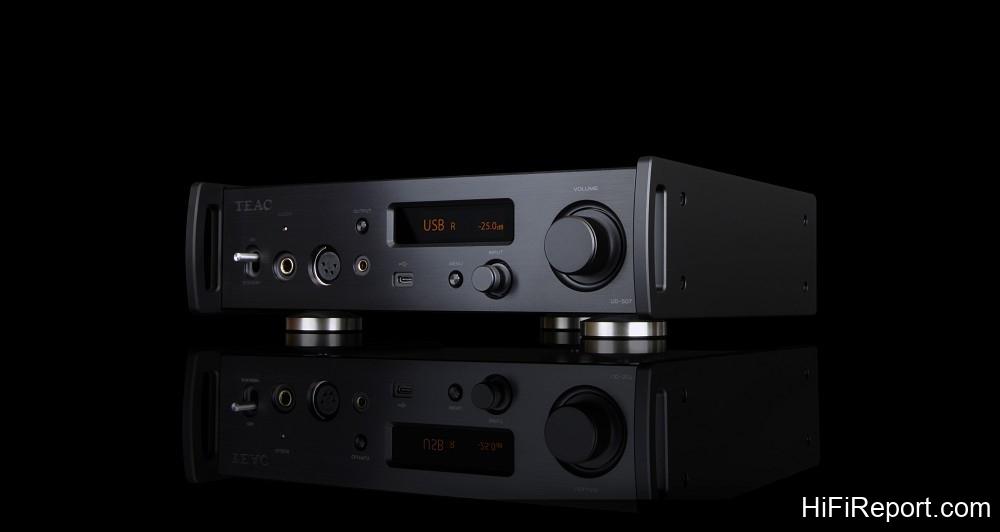
We initially thought the 700 series was an anomaly, but unexpectedly, in 2024, TEAC has equipped the more affordable, second-tier flagship Reference 500 series with a Discrete DAC. The first model featuring this is the UD-507, the star of this review. It’s a multi-functional unit, essentially combining a DAC, an analog preamplifier, and an analog headphone amplifier. It also supports Bluetooth, including high-quality transmission codecs like LDAC, LHDC, and apt-X.
Design and Setup
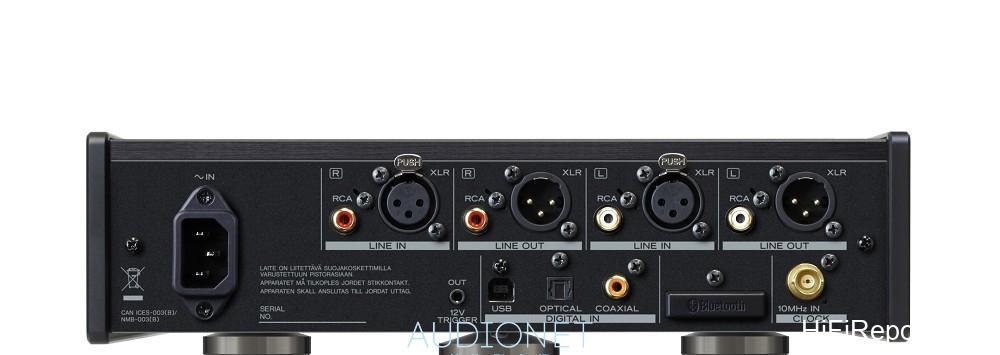
Its compact half-size chassis makes the UD-507 ideal for desktop placement, allowing you to use a laptop as a source and connect headphones for listening. If you plan to build a 2-channel system in your living room, I recommend pairing it with a streaming transport or a music server capable of playing digital music files and outputting digital audio via USB. The UD-507’s balanced and single-ended analog outputs can be set to either fixed or variable volume.
When set to fixed volume, the unit acts purely as a DAC (source) to be used with an integrated or separate pre/power amplifier. When set to variable volume, it functions as a preamp, capable of directly driving power amplifiers to power speakers or forming a system directly with active speakers.
Internal Architecture
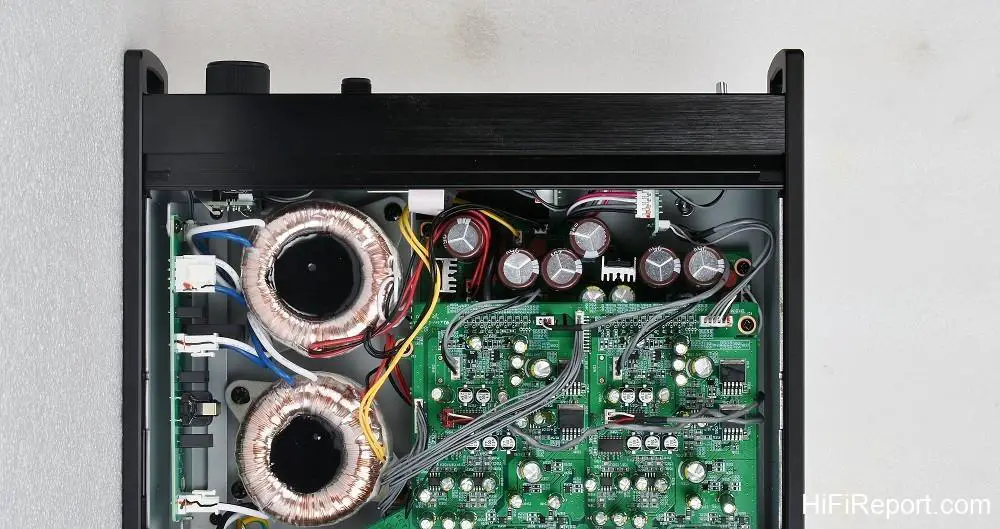
Moving on to the hardware construction, the main circuitry of this unit is comprised of two circuit boards stacked vertically. The lower board primarily houses various digital input interfaces, control circuits, digital audio processing circuits, and the DAC. To cater to users’ tuning preferences, the digital audio processing circuit offers flexible options for PCM input.
You can choose Upconvert OFF (original sample rate) or use the “RDOT-NEO” technology to multiply the sample rate by 2, 4, or 8 times (2× Fs, 4× Fs, 8× Fs). This upsampling converts the sample rate to higher integer multiples: 44.1kHz and its multiples can be upsampled to a maximum of 352.8kHz, while 48kHz and its multiples can reach up to 384kHz.
Upsampling the sample rate helps optimize linearity and improve the signal-to-noise ratio (as digital noise is pushed further away from the audio band).
Discrete DAC Implementation
For the digital-to-analog conversion, the UD-507 features the TEAC Reference Discrete DAC: TRDD 5. It employs an FPGA chip to perform 64bit/512Fs ΔΣ modulation using TEAC’s proprietary algorithm. The FPGA chip provides four outputs per channel. For each channel, two FPGA outputs control two logic ICs and 16 precision resistors (each phase, positive and negative, uses 1 logic IC and 8 precision resistors).
The outputs from all variable resistors are finally combined and converted into an audio signal via a low-pass filter circuit. Based on its principle and structure, this discrete component DAC’s configuration (including the number of precision variable resistors) is the same as the higher-end models, the UD-701N and Esoteric N-05XD.
However, the flip-flop control and the component arrangement of the output JFET amplifier circuits in those higher-end models differ from the UD-507, leading me to anticipate variations in sound character.
Analog Preamplifier and Volume Control
The “upper” circuit board houses a complete analog preamplifier circuit. By “complete,” I mean it supports both balanced and single-ended “analog” inputs and features a “proper” analog volume control circuit (unlike many streaming players/preamps that use digital volume control). The preamp circuit maintains TEAC’s consistent “dual-mono, fully balanced” structure.
Each channel uses a JRC NJW1195A for source selection and is combined with a low-noise dual OPA chip, the NE5532, to form the balanced variable gain volume control circuit known as TEAC-QVCS. Its design prioritizes minimizing the audio path length to reduce sound quality degradation.
Output Stage and Power Supply
The output stage utilizes the TI LME49600 headphone buffer amplifier chip, known for its wide bandwidth, high slew rate, and high current output. Two such chips are used per channel for balanced output. This buffer amplifier circuit is called “TEAC-HCLD2,” where HCLD stands for “High Current Line Driver.” In single-ended output mode, the two buffer amplifiers originally configured for balanced output are reconfigured for parallel output, effectively doubling the output current.
Regarding the power supply, the unit is equipped with two toroidal transformers: one dedicated to the digital circuitry and the other to the audio circuitry. Completely separating the digital and analog power supplies ensures audio purity is not compromised by noise from the digital circuits.
The analog circuit’s left and right channels are individually powered by separate secondary windings of the toroidal transformer and corresponding power supply circuits, resulting in higher channel separation within the audio circuitry.
External Clock Synergy
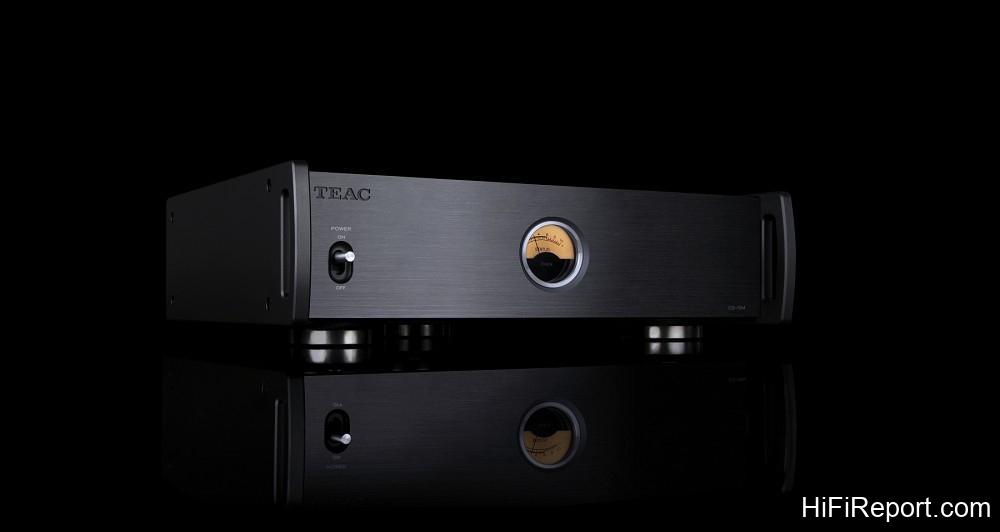
During this review, I was fortunate to be able to pair the UD-507 with the TEAC CG-10M-X, a master clock generator that uses an OCXO (Oven Controlled Crystal Oscillator) as its main component. This is an evolved version of the CG-10M, featuring improvements in circuit layout and output buffer amplifiers.
It’s equipped with TEAC’s unique screw-less floating top panel and rests on TEAC’s proprietary “Stressless Foot” vibration dampening feet with a three-point support configuration (two at the front, one at the rear). A single CG-10M-X can provide a master clock signal for up to four external digital sources.
Impact of the External Clock
After sufficient warm-up, I began listening tests. In the first stage, I compared the UD-507 using its internal clock versus using the external CG-10M-X. Ah, what a potentially ruinous comparison! Initially, I found the UD-507 alone to be very enjoyable to listen to (both in terms of sound quality and tuning options), well exceeding what one would expect for its price. It could easily be considered a digital source (or DAC preamp) with exceptionally high value for money under ~$3,100 USD.
However, once I introduced the CG-10M-X’s clock, the change wasn’t subtle; it was a completely tangible improvement in the focus of the soundstage and imaging. The sense of visual presence became significantly stronger, and the shape and weight of vocals and natural instruments became much more realistic. Therefore, I strongly advise listeners with insufficient budget to purchase the CG-10M-X *not* to connect it and listen.
Once you’ve heard it, you won’t be able to sleep without buying it alongside the UD-507, because this not-inexpensive “add-on” (the CG-10M-X has a reference price of ~$1,550 USD) elevates the sound quality of this two-unit combination to directly challenge digital sources costing around ~$6,200 USD.
Exploring Tuning Options
I was well aware that the UD-507’s circuitry was designed above its price class, so I matched it with higher-tier equipment to allow the UD-507 and CG-10M-X to fully showcase their capabilities. The UD-507 offers numerous ways to fine-tune the sound. In the DSP setting, I selected the highest option, 8x FS. Upsampling to the maximum sample rate makes CD-quality audio sound remarkably similar to Hi-Res, increasing resolution without the side effect of making the treble harsh or fatiguing.
Another tunable option is the DELTA SIGMA Fs under DAC configs. Comparing the 512x Fs, 256x Fs, and 128x Fs settings, I found that a higher multiplier resulted in a finer and more delicate sound texture. Next up is PCM DELTA SIGMA, which is my absolute favorite tuning parameter. When set to “MULTI BIT,” the sound leans towards high resolution, high dynamics… emphasizing a realistic, audiophile-centric style. However, I much preferred setting it to “DSD.”
Upon initial listening, I felt the UD-507 sounded relatively youthful and lively compared to the higher-end UD-701N. Choosing the “DSD” setting pushed it towards a more “flavored” or nuanced sound character. Furthermore, the DSD LPF options (with four settings: OFF, FIR 1, FIR 2, FIR 3), which are not explained at all in the manual, yielded results upon sequential listening comparisons that can be summarized as: “the larger the number after FIR, the more mature the sound becomes.”
I believe you can guess that I ultimately chose FIR 3. And while the sound becomes mature, it loses no speed, and the soundstage maintains excellent clarity and visibility.
Listening Impressions
The settings described above are what I arrived at after experimentation, aiming for the UD-507 to not just sound good, but to also provide a deeper level of listening enjoyment. When listening to recent pop music, the sound achieves a good balance between high-resolution realism and a comfortable, soft listening experience.
With Veegee’s “Every Tomorrow,” the close-mic’d vocals create an intimate sense of being in the same room, capturing the young female singer’s smoky voice completely and accurately. Using it for classical music reveals the natural voicing of instruments (the sound is completely free of digital artifacts); the texture of violin and cello bowing is delicate, and the response to timbre and dynamics is remarkably sensitive.
The “acoustic space” of the concert hall and the layering of different sections of the orchestra are richly rendered.
Analog Character from Digital
Listening to modern multi-bit recordings, the UD-507’s “sound texture” is strikingly similar to SACD. Exploring more musical genres brought further surprises: it excels at reproducing recordings from the analog era (with tape masters). Even though we are playing digital files, there’s a feeling akin to listening to reel-to-reel tape or a high-end vinyl turntable.
Oscar Peterson Plays The Cole Porter Song Book (a 192kHz/24bit file transferred from a 1959 recording) presents the warmth and softness of old recordings, with a texture far more refined than expected. The piano has an appropriate amount of sparkle, and the double bass possesses excellent thickness and elasticity. Listening to Stan Getz’s “I’m Late, I’m Late,” you can feel the rich, old-fashioned charm of the 1961 recording, yet it is vividly rendered and remarkably detailed.
I almost forgot the TEAC UD-507 is a digital source; its ability to conjure an analog sound from music files is spot on! In the final stage, I connected my Sennheiser HD 800 monitoring headphones (driven via the balanced output) for listening. Since the headphone and rear panel analog outputs share the same circuit, both speaker and headphone listening were neutral, and the sonic characteristics heard through both were highly consistent.
Conclusion: Exceptional Value
Considering the price, I believe the combined musical performance of the TEAC UD-507 and CG-10M-X reaches the sound quality level of digital sources costing twice as much (~$6,200 USD). Its ability to handle modern Hi-Res and extract an analog-like sound from older recordings is truly a “special ability.” I thoroughly enjoyed the very pleasant review and listening process they provided.
With exceptionally high listening pleasure and value for money, they undoubtedly deserve our highest recommendation.