
Wharfedale Elysian 4 Review
Wharfedale Elysian 4: Affordable Hi-End Sound
My first encounter with Wharfedale’s new flagship, the Elysian 4, was at the international audio show in late 2019. Wharfedale’s General Manager, Jamie O’Callaghan, was personally present to host the launch event. At the event, I not only saw, touched, and heard the Elysian 4 firsthand, but also learned its price. Combining all these sensory experiences and considering the price point, it became clear to me what Jamie wanted to convey: the Elysian 4 is Wharfedale’s determined effort to polish its Hi-End gold sign, without forgetting the brand’s original commitment to quality and affordability.
Having listened to the Elysian 4 for the second time at Beimen Audio, I am even more convinced that it truly represents attainable Hi-End.
Air Motion Transformer Tweeter
The Wharfedale Elysian series currently comprises two models: the floor-standing Elysian 4 and the bookshelf Elysian 2. While classified as a “bookshelf” speaker, the Elysian 2 is by no means small. It is a full-fledged three-way system with an 8.5-inch woofer, rivaling the scale of many mid-sized floor-standing speakers.
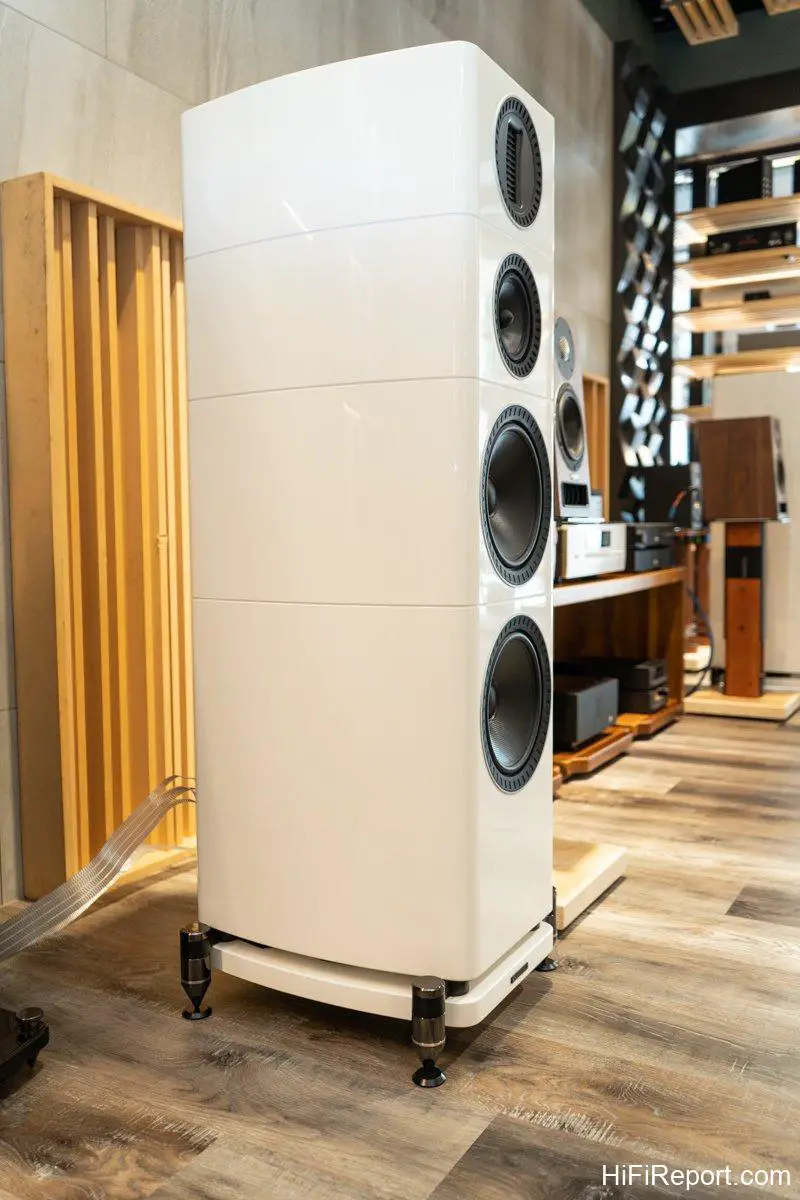
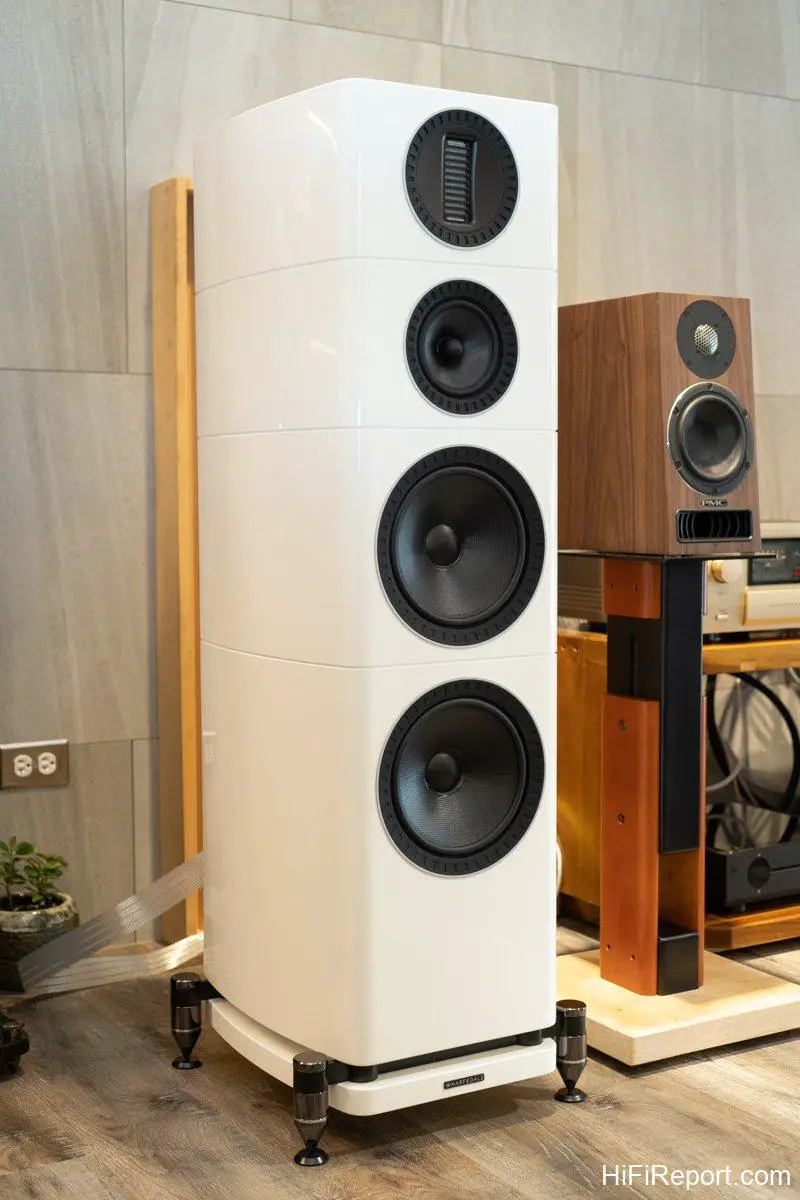
The Elysian 4, positioned in the large speaker category, features dual 8.5-inch woofers, a 6-inch midrange driver, and a 90mm AMT (Air Motion Transformer) tweeter. Standing nearly 120 cm tall and weighing 50 kg each, the Elysian 4, with its high-quality piano lacquer finish and sophisticated design, rightfully earns its place among luxury-grade speakers.
Wharfedale has invested its most valuable technologies and top-tier manufacturing into the Elysian series. All drivers used are brand new designs, specifically developed for the Elysian range.
For the high frequencies, the Elysian 4 impressively employs an AMT tweeter, a feature uncommon in its class. This alone demonstrates significant dedication.
Unlike conventional dome tweeters that use a “push/pull” motion to drive air, AMT tweeters operate using a “squeeze/inhale” method. This results in faster response, superior transient performance, lower distortion, and higher efficiency due to the significantly larger diaphragm area.
Furthermore, in an AMT tweeter, the voice coil is directly printed onto the diaphragm, ensuring tight control from the magnetic circuit system, leading to enhanced precision and finer detail reproduction.
Custom Midrange and Bass Drivers
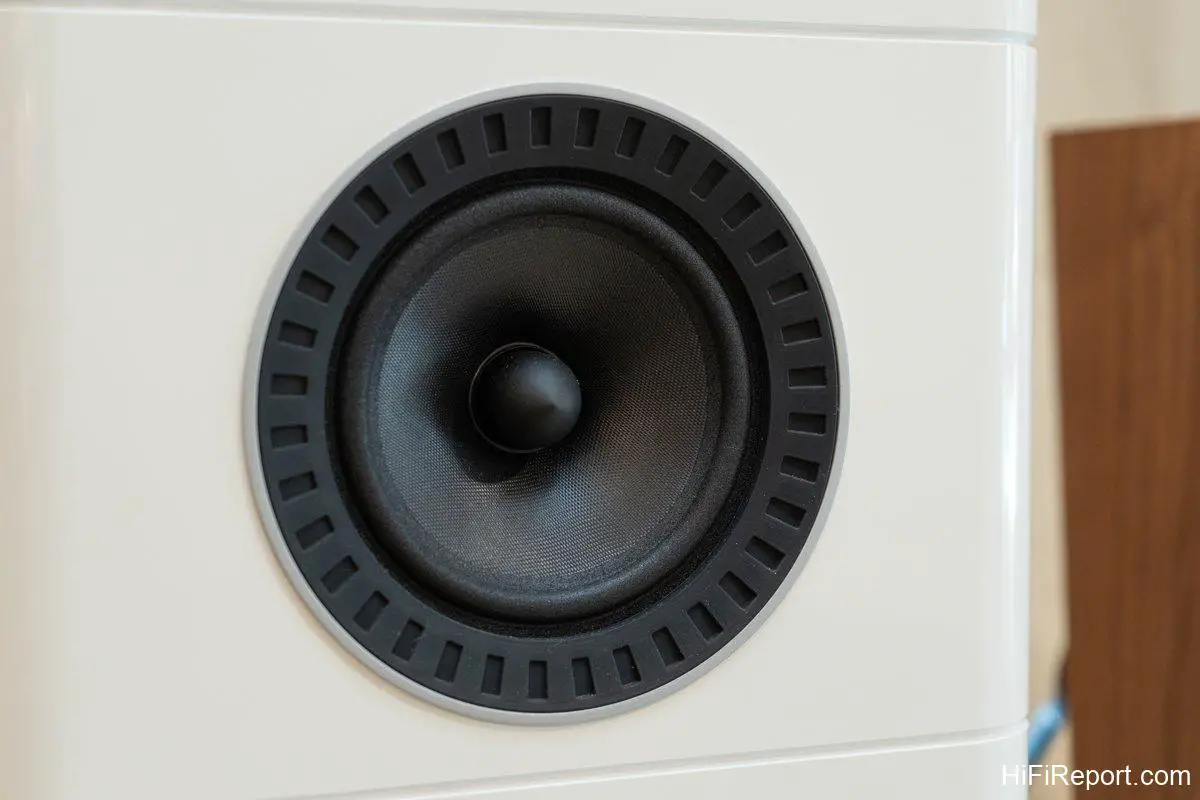
To seamlessly match the AMT tweeter’s high sensitivity and accuracy, Wharfedale developed a new midrange driver specifically for the Elysian 4. It utilizes a woven glass fiber diaphragm as its base material, chosen for its lightweight and high-strength properties. The acoustic characteristics are then meticulously fine-tuned through surface coating to achieve ideal performance and tonal balance.
The midrange driver’s surround is also specially designed, using low-damping foam rubber to keep pace with the ultra-light diaphragm’s rapid transients. A surface coating is also applied to enhance durability.

The phase plug at the center of the midrange diaphragm is carefully engineered. Its shape is precisely calculated to ensure a flatter frequency response and wider dispersion, allowing for consistent sound quality even when the listener is not positioned in the prime “sweet spot.”
Moving from the high and midrange to the crucial bass section, there are two key elements: the bass drivers themselves and the SLPP technology.
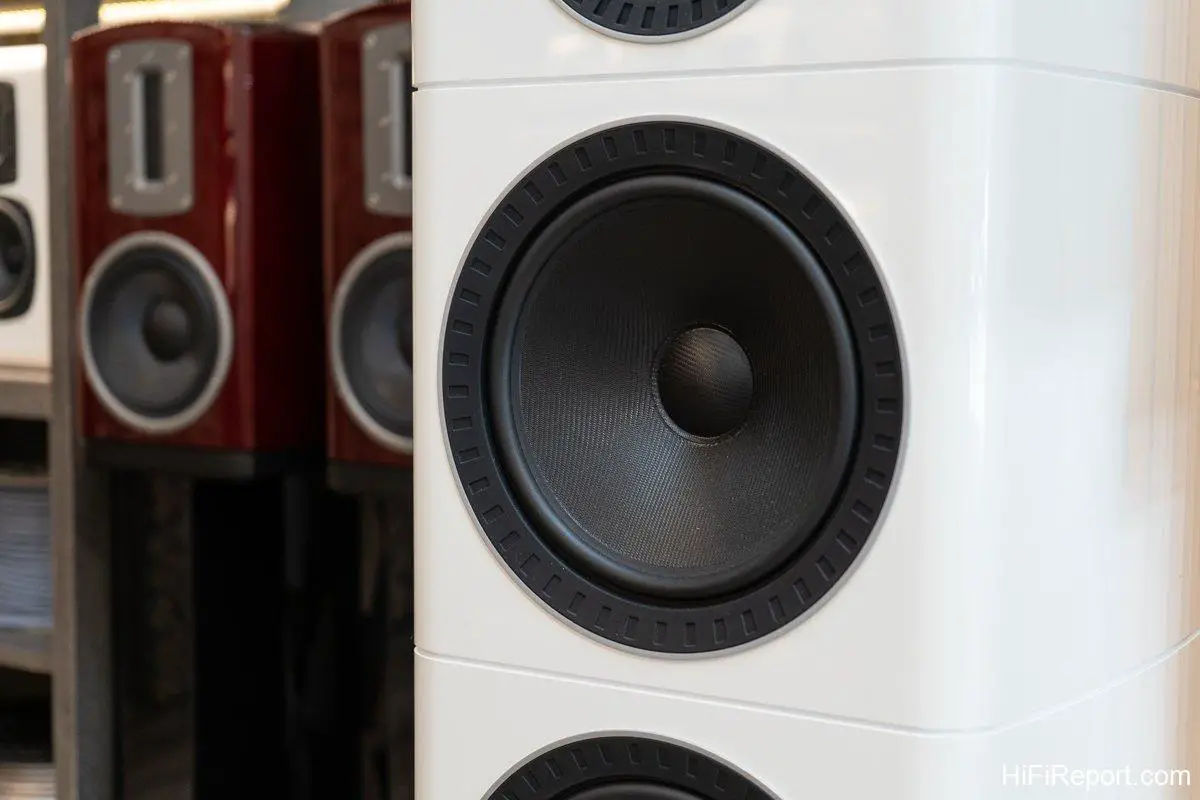
The Elysian 4’s bass drivers are also a brand new design. The diaphragm material remains coated woven glass fiber, but the surround is slightly modified to use elastic rubber for increased support.
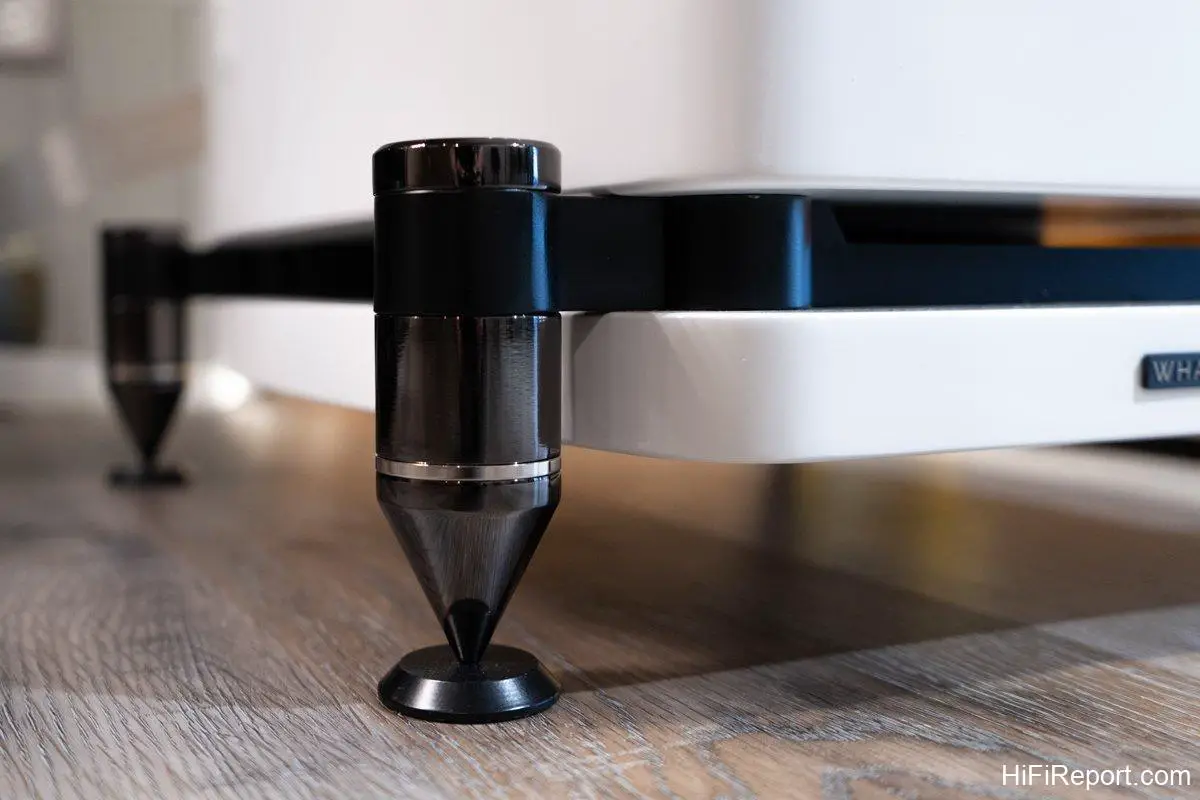
SLPP stands for Slot Loaded Profiled Port. Essentially, the Elysian 4’s cabinet incorporates an internal down-firing port that vents to the exterior. A base plate is positioned at the bottom of the cabinet, creating a slot between it and the cabinet, through which airflow is channeled after passing through the port.
The principle of SLPP is to fully utilize the energy of the bass driver’s back wave. The lowest frequency sound waves within the cabinet are guided into the port and then expelled through the slot between the port and the base plate, dispersing in all directions. This equalizes the high pressure inside the speaker cabinet with the lower pressure in the listening space, allowing internal pressure to be released into the room quickly and smoothly.
The entire Elysian 4 cabinet sits on a black base that extends into four robust legs, with the base plate bolted underneath, creating the slot for the SLPP design.
SLPP significantly enhances speaker efficiency, enabling any amplifier to deliver excellent dynamics. The Elysian 4 boasts a high sensitivity of 92 dB, likely attributed to the SLPP implementation.
While SLPP technology has been previously used in series such as the Reva, Diamond 100, Diamond 200, and Diamond 11, the Elysian 4 features the latest, newly developed version.
According to Wharfedale, the SLPP system, combined with the newly designed dedicated bass drivers, allows the Elysian 4’s low frequencies to possess not only substantial quantity but also impactful force and clear layering. My listening experience indeed confirmed this, with the Elysian 4 demonstrating truly outstanding bass performance.
49.5 kg Weight Each
During the audition at Beimen Audio, I closely examined the Elysian 4. The build quality is exceptional, a result of handcrafted construction and a piano lacquer finish achieved through six layers of paint and polishing. The surface is flawlessly smooth and exudes a premium feel.
To prevent the substantial cabinet from appearing bulky, the Elysian 4 features slightly curved left and right side panels, rather than being completely flat. The corners are also rounded, contributing to a more streamlined silhouette.
Without being told, one might not guess that each Elysian 4 weighs a substantial 49.5 kg. This considerable weight is due to the cabinet’s multi-layer sandwich construction and internal bracing, which significantly contributes to reducing cabinet resonance.
The Elysian 4 is available in three piano lacquer finishes: black, white, and wood veneer. The pair I auditioned was white, which, set against the backdrop of Beimen Audio’s newly renovated showroom with its Scandinavian-inspired minimalist decor, appeared even more elegant, grand, and subtly luxurious.
Originally, the Elysian 4 audition at Wharfedale’s distributor, Welborne, had been arranged quite some time ago. However, perhaps due to the pandemic, Beimen Audio took advantage of the period when consumers were less inclined to go out to completely renovate their ground floor showroom. Consequently, my audition of the Elysian 4 was delayed until the renovation was completed and the pandemic situation had eased.
I remember almost missing Beimen Audio on the day of my visit as I habitually walked along the arcade, as the storefront was completely transformed! The newly renovated Beimen Audio no longer resembles a traditional thirty-year-old establishment. Gone are the cramped conditions where one feared knocking over speakers while navigating through. Instead, there are now neatly arranged display windows and a spacious, brightly lit listening area. Upon entering, the immediate impression is one of comfort.
Rich Texture and Color
The revamped Elysian 4 is perfectly at home in the new Beimen Audio. Initially, I expected to audition the speakers in the upstairs listening room, which is considerably larger than the ground floor and typically houses larger systems. However, upon arrival, I discovered the audition was to take place downstairs. On second thought, it made perfect sense; placing such beautiful and imposing speakers like the Elysian 4 upstairs would mean missing the opportunity to showcase them to the passersby on Zhonghua Road. Displaying them in the newly renovated ground floor showroom was a smart decision.
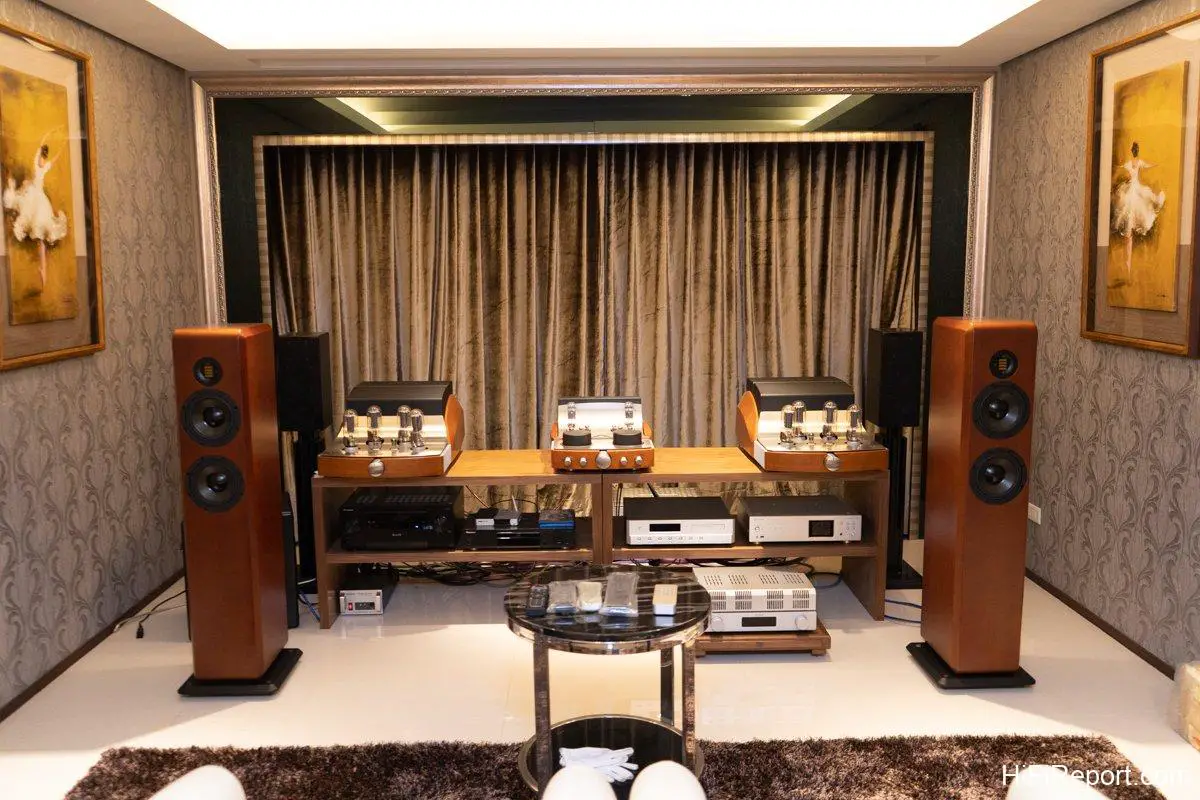
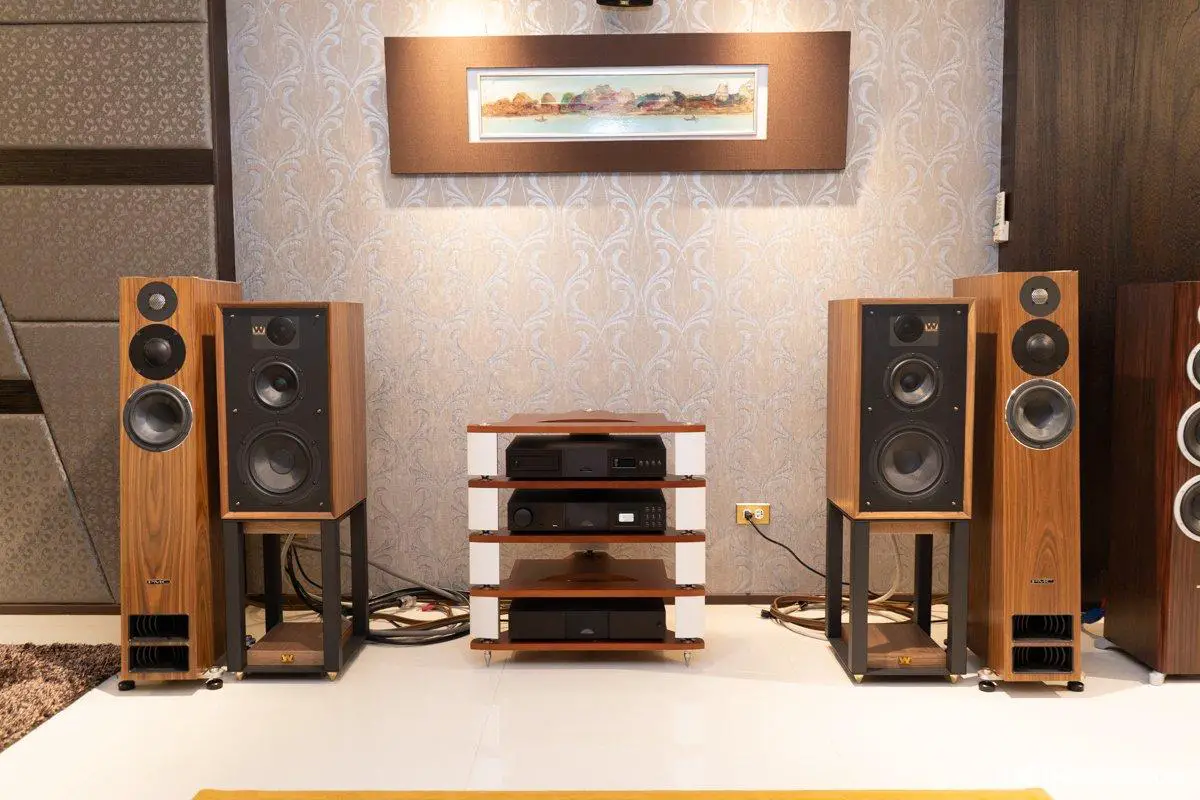
Beimen Audio prepared two system configurations for my listening session: a high-end and a mid-range setup. The high-end system consisted of an Accuphase DP-410 CD player and E-600 integrated amplifier, totaling approximately USD 14,400. The mid-range system featured a Quad Artera Play CD player and Artera Stereo power amplifier, totaling around USD 6,000. These two setups were intended to provide a comprehensive understanding of the Elysian 4’s capabilities in a single visit.
Whether intentionally or unintentionally, Ms. Chen, the store owner, started me off with the high-end system before switching to the more affordable one. I wondered if this would amplify the weaknesses of the budget-friendly setup by comparison. Regardless, the systems were already connected, so I proceeded with the audition. To maximize the use of the display space, the entire system was positioned along the longer wall, with the speakers necessarily placed close to the back wall and the listening position not far away. To compensate for this, I employed a more pronounced toe-in angle to focus the soundstage, achieving decent image solidity and localization.
This placement was not ideal for creating soundstage depth, layering, or a panoramic soundscape. Therefore, I focused my listening primarily on timbre and atmosphere.
I began with the 2017 Kaohsiung Audio Show commemorative CD, which features selected piano pieces from Steinway & Sons. Playing track 4, Haydn’s Piano Sonata No. 38 in F Major, second movement, the Elysian 4 presented a piano tone that was beautiful, effortlessly relaxed, and ethereal. Clearly, this exquisite timbre originated from the Accuphase electronics, exhibiting transparency and crystalline clarity imbued with a sense of warmth, revealing rich texture and tonal color.
I also noticed a subtle “ang” resonance at the tail end of each note, giving the sound an upward, airy lift. This is the advantage of the Elysian 4’s AMT tweeter, allowing the high frequencies to extend gracefully and unconstrained.
Track 5, the “Theme” from Beethoven’s “Diabelli Variations,” is a brisk and dynamically varied short piece. Through the Elysian 4, I could perceive a high level of dynamic and transient performance. The key strikes were defined and decisive, with clear gradations in loudness. Particularly in the forte passages, the piano exhibited a very appropriate lower register presence, possessing both weight and agility—a truly remarkable performance!
Grand Speaker Aura
Next, I played Vivaldi’s “The Four Seasons” performed by Giuliano Carmignola and the Venice Baroque Orchestra. This recording, known for its high resolution and slight sharpness, was rendered through the Accuphase and Elysian 4 system without any sense of strain. It was possible to listen at high volumes without fatigue.
The string tone was not only brilliantly vibrant but also seemed to possess a honey-like texture, slightly viscous, not exceptionally fast or crisp, but utterly captivating. Moreover, the mid-bass to midrange frequencies exhibited a rich fullness, almost nasal in quality, enhancing the resonant warmth of the string instruments.
Even more impressive was playing the “Frozen” movie soundtrack. From the first track, “Frozen Heart,” it was evident that the Elysian 4 handled complex music effortlessly, with ease and authority. The tonal balance across the frequency spectrum was remarkably good, possessing the grand presence expected from large speakers.
In track 2, “Do You Want to Build a Snowman?”, the two girls’ voices sounded truly delightful—full-bodied, rounded, and sweet. They were also soaring and extended, with ample brightness, making for easy listening while simultaneously revealing subtle musical details. Through the Elysian 4, I could clearly discern the nuances of the girls’ vocals—their timbre, throat resonance, breath sounds, and articulation. Furthermore, the bass was both substantial and refined, possessing fullness yet with clear definition and excellent elasticity—an all-around impressive performance.
For example, listening to Tom Waits’ “Used Songs 1973-1980” compilation, track 1, “Heartattack And Vine,” what struck me was the rich musical atmosphere. While the sonic palette of this track isn’t particularly diverse—the instrumentation is simple, consisting only of vocals, plucked double bass, and drums—and even the percussion is limited to drum sounds without cymbals or hi-hat, the Elysian 4 reproduced a surprisingly rich sonic texture. This richness stemmed from the complete rendering of details, making the sound realistic and alive. Thus, even with simple music, it never felt monotonous or stifling.
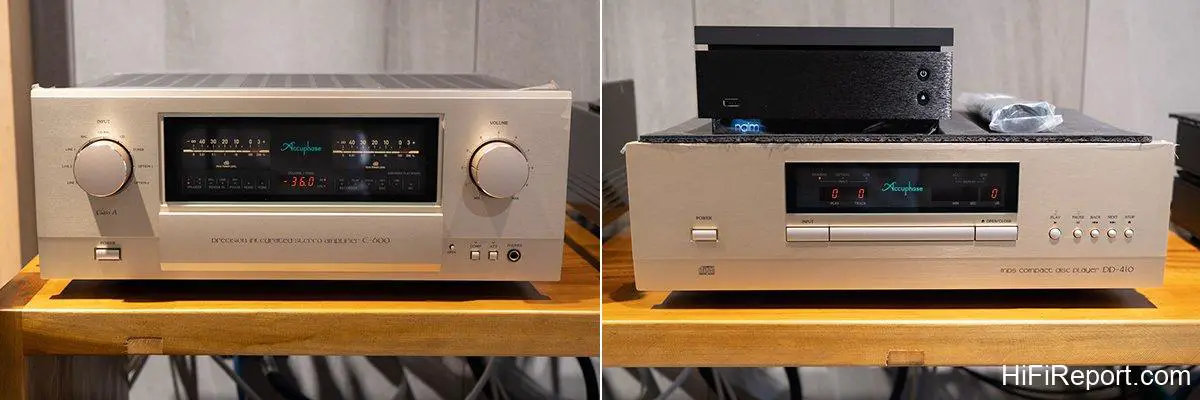
This type of sound easily captivates the listener and encourages extended listening sessions. Had I not had another system to evaluate, I would have likely listened to every track on this album.
More Direct Sound with Quad System
Next, I switched to the Quad Artera Play CD player and Artera Stereo power amplifier combination. While the Artera Play is primarily a CD player, it includes preamplifier outputs, allowing it to be directly connected to a power amplifier, creating a streamlined system as user-friendly as the Accuphase setup.
I replayed the same CDs in reverse order, starting with Tom Waits. Immediately, I noticed that the Quad system was even better suited for Tom Waits’ music than the Accuphase. Through the Elysian 4, I heard more of the raw, unrefined texture that should be present in his voice—the smoky quality and the world-weary rasp resulting from years of alcohol and cigarettes. Importantly, the sound remained effortless and unstrained.
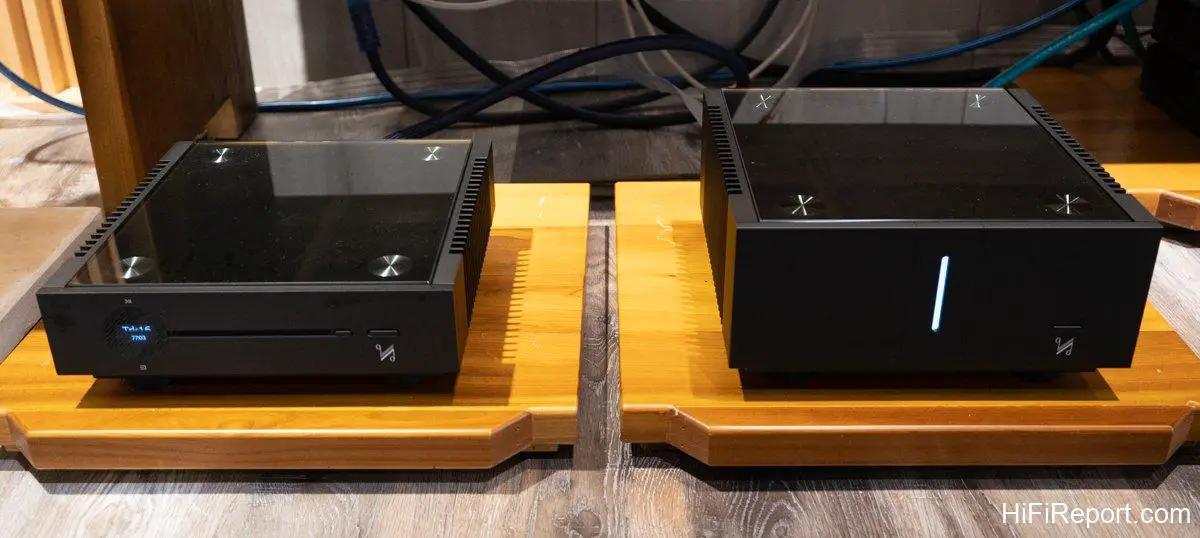
This demonstrated the Elysian 4’s ability to faithfully reflect the characteristics of the upstream components. The Accuphase system presented a meticulously refined sonic beauty, while the Quad leaned towards a more direct and unvarnished presentation.
I also observed that the soundstage became more focused with the Quad system. This might be because the Accuphase system benefited from a slightly greater listening distance, while the current distance was more optimal for the Quad.
The tonal characteristics of the two systems were distinctly different, but both the Accuphase and Quad paired wonderfully with the Elysian 4. Both drove the speakers with vibrancy, liveliness, and a comfortable smoothness and fluidity.
Moving on to Vivaldi’s “The Four Seasons” with the Quad system, the sonic density and brilliance remained excellent, and the timbre retained its sweetness and allure. The dynamic contrasts and nuances in intensity were also vividly portrayed, demonstrating that the Elysian 4 is not difficult to drive.
In terms of soundstage scale, the Quad system presented a smaller soundstage compared to the Accuphase. The Accuphase created a sense of sound extending beyond the speaker boundaries, while the Quad’s soundstage remained more contained within the speakers, which was arguably better suited to the room and speaker placement.
Playing “Frozen,” the Quad’s directness made the girls’ voices sound even more innocent and pure, aligning better with their age in the movie. The Accuphase system, in comparison, imparted a more mature and sophisticated quality.
During the more demanding musical passages, it became apparent that the Artera Stereo’s control was not as robust as the E-600’s. This resulted in a slightly less organized soundstage and less defined deep bass extension. However, micro-dynamic nuances were still present, bass layering was quite good, and the overall tonal balance remained commendable. Overall, the sound was still intuitively enjoyable and immediately appealing.
Worth a Visit to North Gate Audio
Finally, I listened to the 2017 Kaohsiung Audio Show commemorative CD once more, this time with the Quad system. Thanks to the sensitive AMT tweeter, the piano tone sparkled with brilliance, each note effortlessly floating upwards. While lacking the ethereal quality of the Accuphase system, the sound produced by the Quad was still beautiful. The key strikes were defined, crisp, and without any muddiness, exhibiting both agility and composure. This demonstrated that the Elysian 4 is not only easy to drive but also a highly versatile speaker that pairs well with various amplifiers.
This reminded me of Wharfedale General Manager Jamie O’Callaghan’s Elysian 4 launch event in Taiwan, where the demonstration system featured a NAD M10 streaming amplifier—an all-in-one unit priced under USD 3,200—which still made the Elysian 4 sing beautifully.
This clearly indicates that the Elysian 4 is not only Hi-End within reach for many, but also an easily compatible speaker that is simple to place, and capable of delivering excellent sound without demanding amplification. It is certainly worth a visit to Beimen Audio to experience and appreciate them firsthand.
Store Information
**Beimen Audio**
Address: No. 99, Section 1, Kaifeng Street, Taipei City
Phone: 02-2382-0122, 0958-162-600
Website: www.northgate.com.tw
Specifications
**Wharfedale Elysian 4**
* Type: 4-driver, 3-way floor-standing speaker
* Drivers: 27 × 90 mm AMT tweeter × 1, 6-inch coated glass fiber midrange × 1, 8.5-inch coated glass fiber woofer × 2
* Recommended Amplifier Power: 15 – 250 Watts
* Nominal Impedance: 4 Ohms
* Sensitivity: 92 dB
* Frequency Response: 30Hz – 22kHz / ± 3dB
* Crossover Frequencies: 340Hz, 3.1kHz
* Dimensions (H×W×D): 1,188 × 402 × 432 mm
* Weight: 49.5 kg each