
Wilson Audio Alexia V Review
Finally, the opportunity arose to audition the Wilson Audio Alexia V at Wha Shing Audio, and the experience has left me contemplating a purchase!
A Year-Long Wait for Alexia V
My audio journey with Wilson Audio began in 2017 with the acquisition of the W/P Sasha 2, speakers I thoroughly enjoyed. A year later, the siren song of the Alexia 2 reached my ears, instantly igniting an upgrade desire. In 2018, the Alexia 2 became a part of my system, initially gracing my home before being relocated to the HiFiReport office. There, these reference-grade, full-range loudspeakers served to broaden the horizons of our editorial team in the realm of high-end audio.
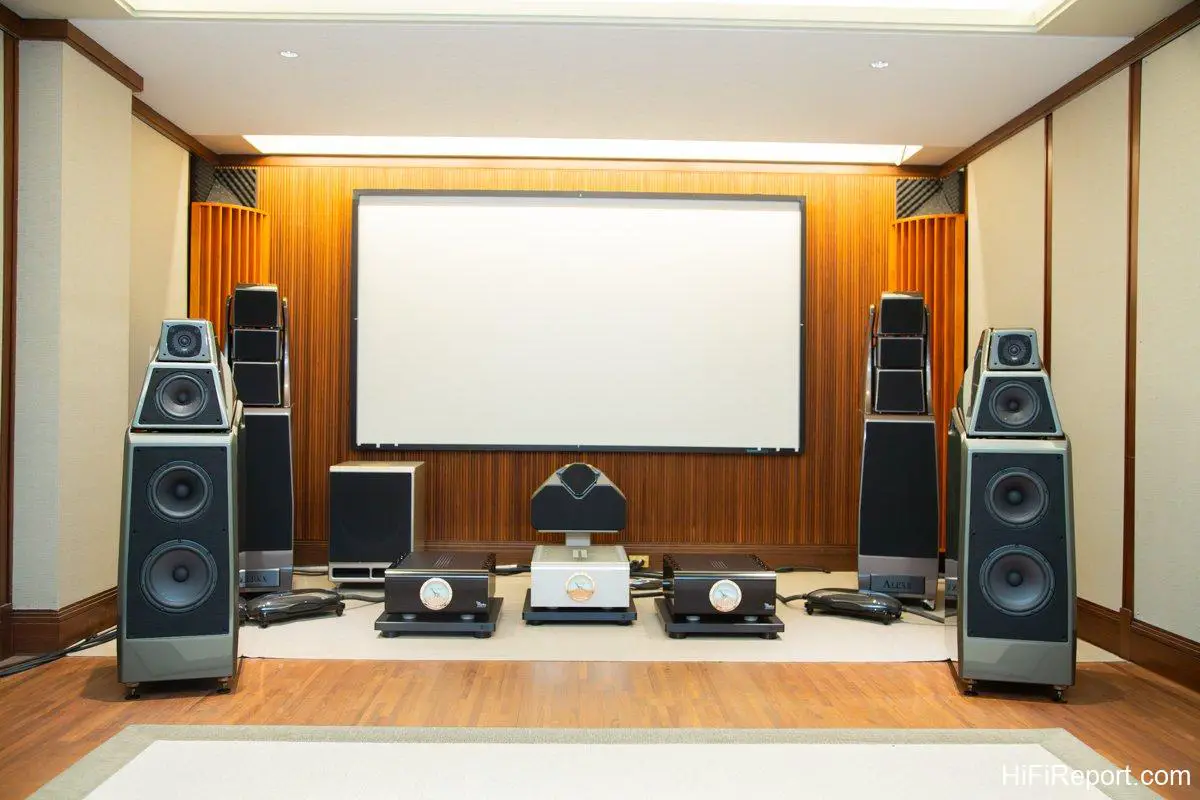
The Alexia V, successor to the Alexia 2, debuted in 2022. Yet, it took over a year before I could finally experience them firsthand at Wha Shing Audio. This delay wasn’t due to my lack of initiative; I had inquired about an audition multiple times. However, Wha Shing was consistently swamped fulfilling orders, leaving no demo units available. Thus, a year elapsed before I could finally visit and immerse myself in the sound of the Alexia V.
Truth be told, I approached this audition at Wha Shing with a premonition. I suspected the familiar upgrade itch would resurface. As I pen this review, the decision feels almost inevitable; the only remaining question seems to be color selection.
Sonic Evolution: A Significant Leap
One might ask, why “Alexia V” and not “Alexia 3”? Wilson Audio has been crafting this narrative for over half a decade, starting with the Chronosonic XVX in 2019. The XVX marked the debut of V-Material, a composite blended with the pre-existing X-Material and S-Material. This “V” designation from the Chronosonic XVX flowed into the Alexx V, and subsequently to the Alexia V and Sasha V, signifying a grand evolution for the “V” generation.
The magnitude of sonic improvement from the Alexia 2 to the Alexia V is truly astounding, far exceeding my expectations. From the very first CD played at Wha Shing Audio, Sara K.’s live recording of “Water Fall,” specifically track three, “Turn My Upside Down,” I was immediately captivated. Having lived with the Alexia 2 for five years, I was unprepared for such a substantial leap in performance from the new Alexia V. A single track was enough to reveal a whole new level of sonic excellence. Initially, I had hoped the Alexia V would be only incrementally better than the Alexia 2, thus avoiding the temptation to upgrade. However, experiencing the Alexia V firsthand, the extent of improvement is undeniable, making an upgrade virtually unavoidable.
Internal Innovations: A Technological Overhaul
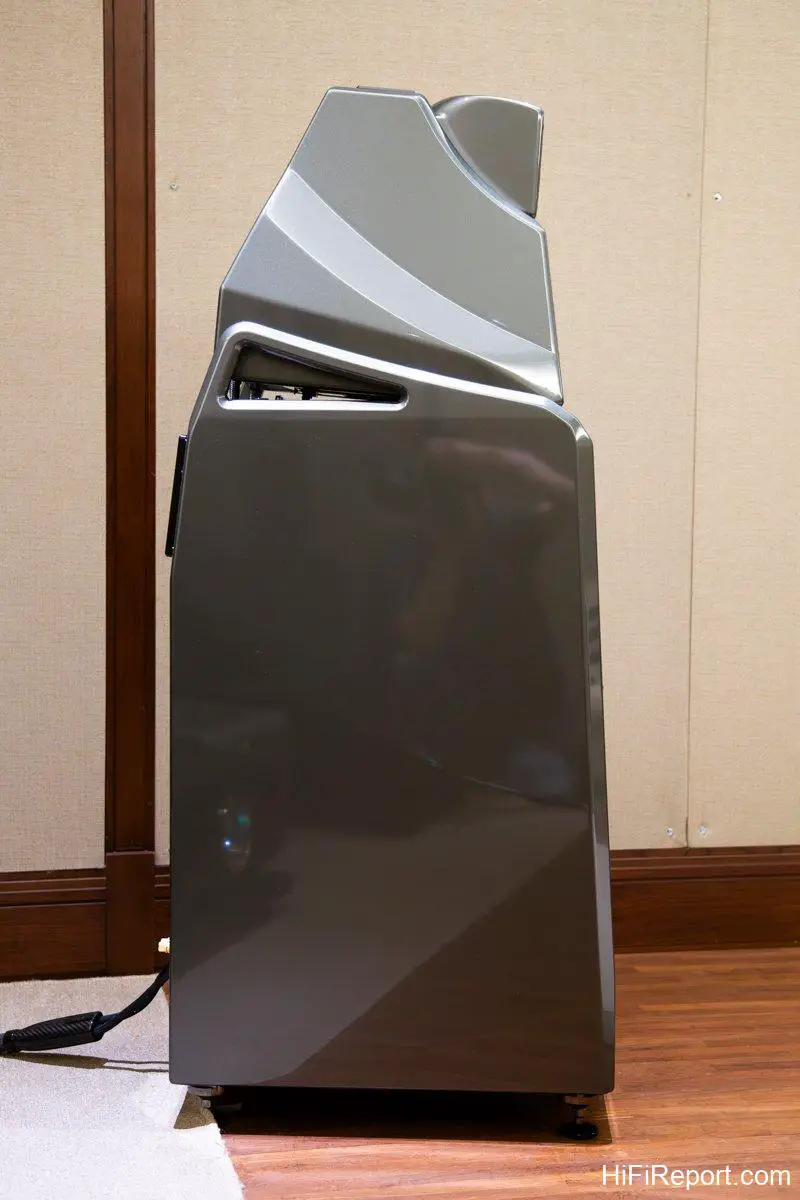
Visually, the Alexia V maintains a familiar aesthetic, with subtle yet significant changes. The most apparent difference is the addition of vented apertures on either side of the bass enclosure. These vents are engineered to mitigate internal air pressure build-up between the midrange/tweeter module and the bass module. This design element first appeared in the Sasha DAW, and its presence there suggested its eventual incorporation into the Alexia V. These advancements are rooted in the skeletal architecture pioneered by the WAMM Master Chronosonic, Dave Wilson’s final masterpiece and swan song.
While the Alexia V’s core design language remains consistent, the internal technology has undergone a comprehensive overhaul. This includes the strategic implementation of V-Material to enhance cabinet damping, along with structural optimizations that yield a slightly increased internal volume without altering the speaker’s external dimensions. These are unseen engineering refinements that contribute to a demonstrably richer sonic experience.
A Lineage of Excellence
Under the leadership of Daryl Wilson, Dave Wilson’s son, Wilson Audio continues to produce exceptional audio products. Daryl’s tenure has been marked by significant achievements, most notably the creation of the Chronosonic XVX and the strategic acquisition of RealCap. This acquisition led to the establishment of Wilson Audio’s own capacitor manufacturing division, Reliable Capacitor, producing hand-crafted AudioCapX-WA capacitors. This exemplifies a vertically integrated approach, ensuring control over critical component quality.
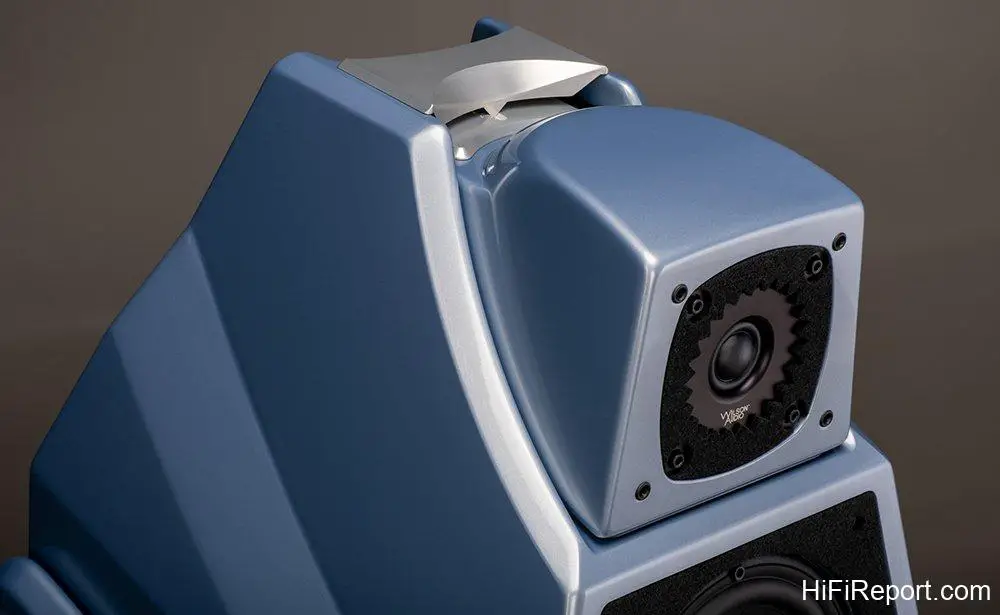
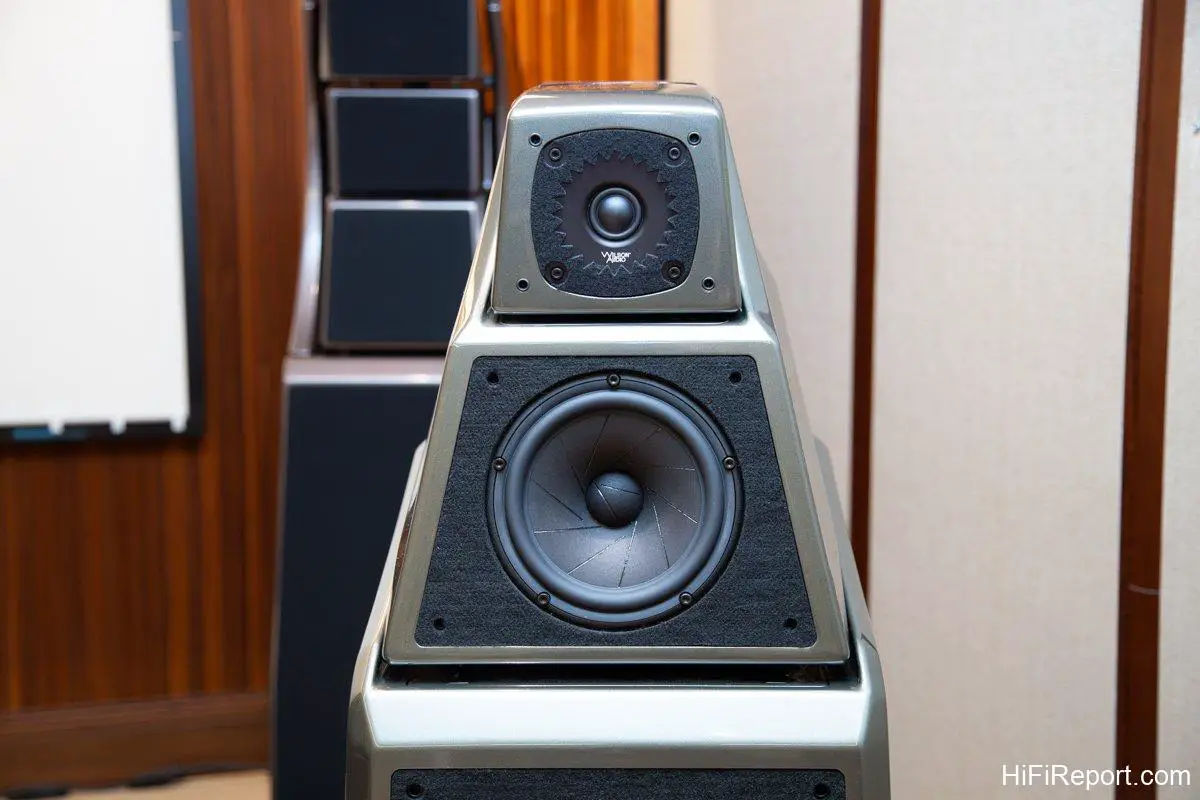
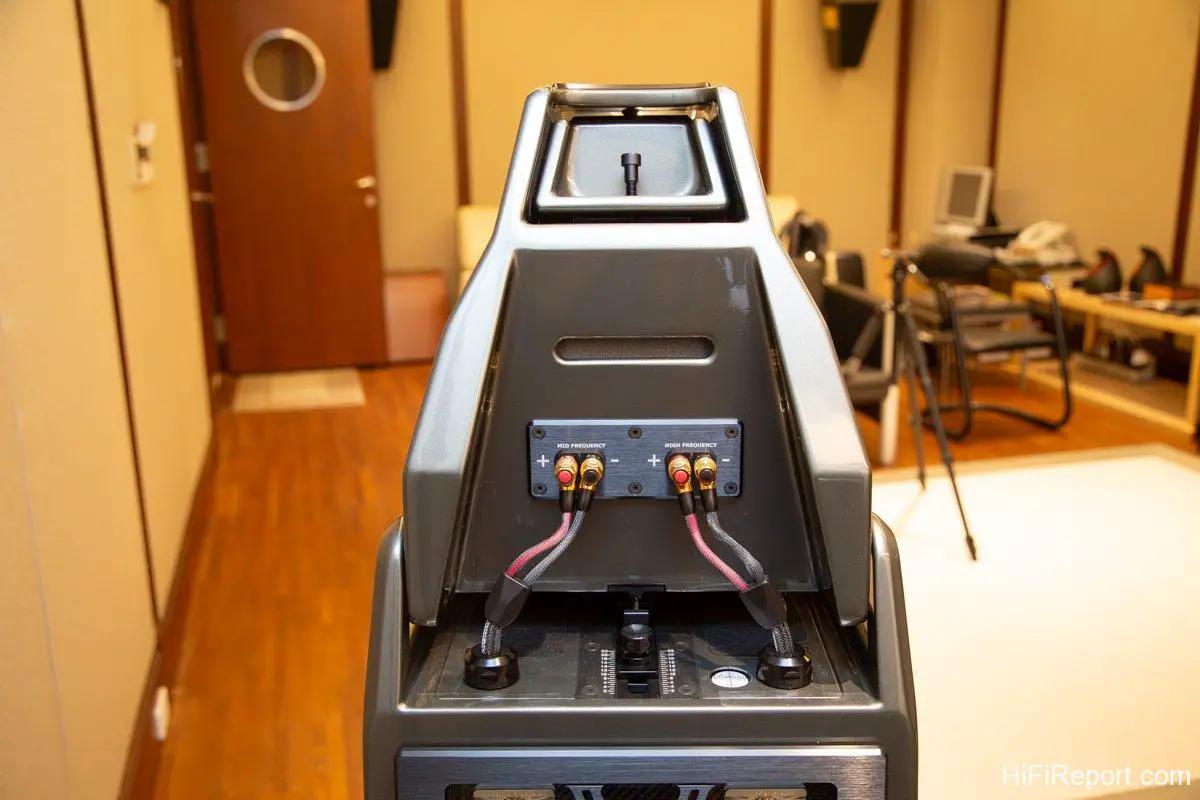
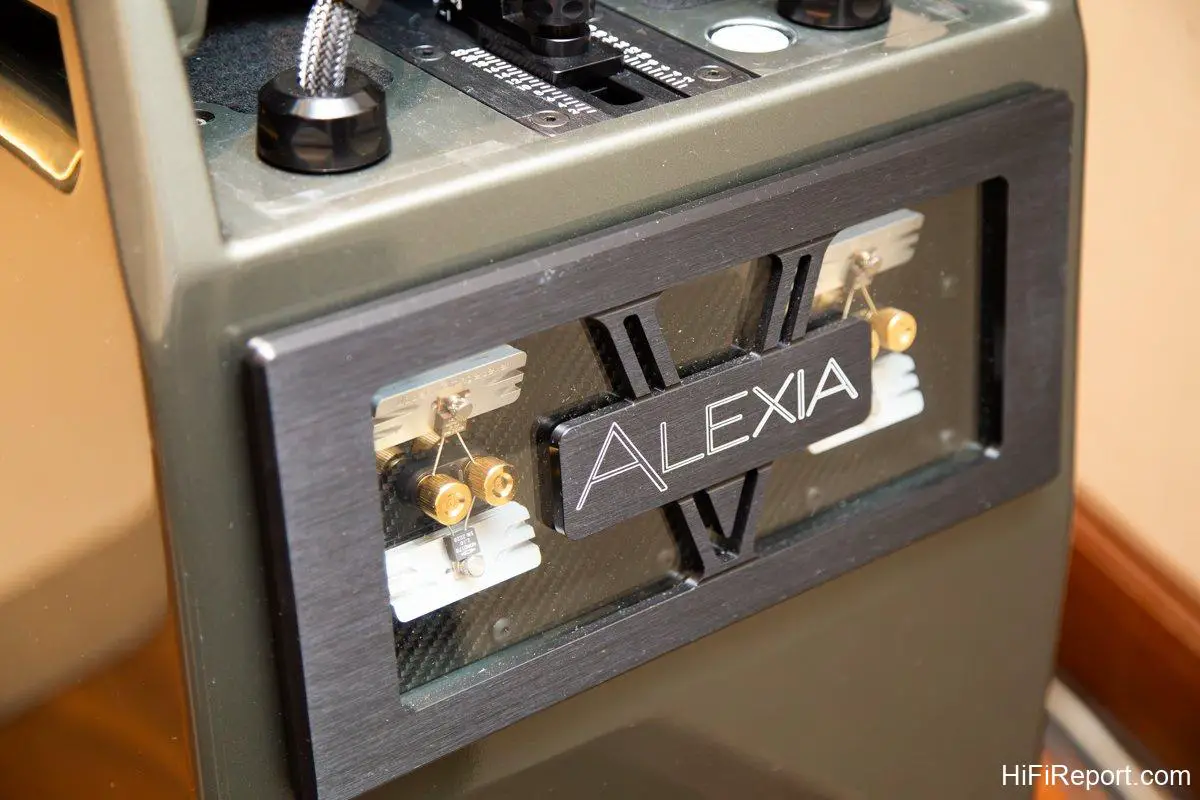
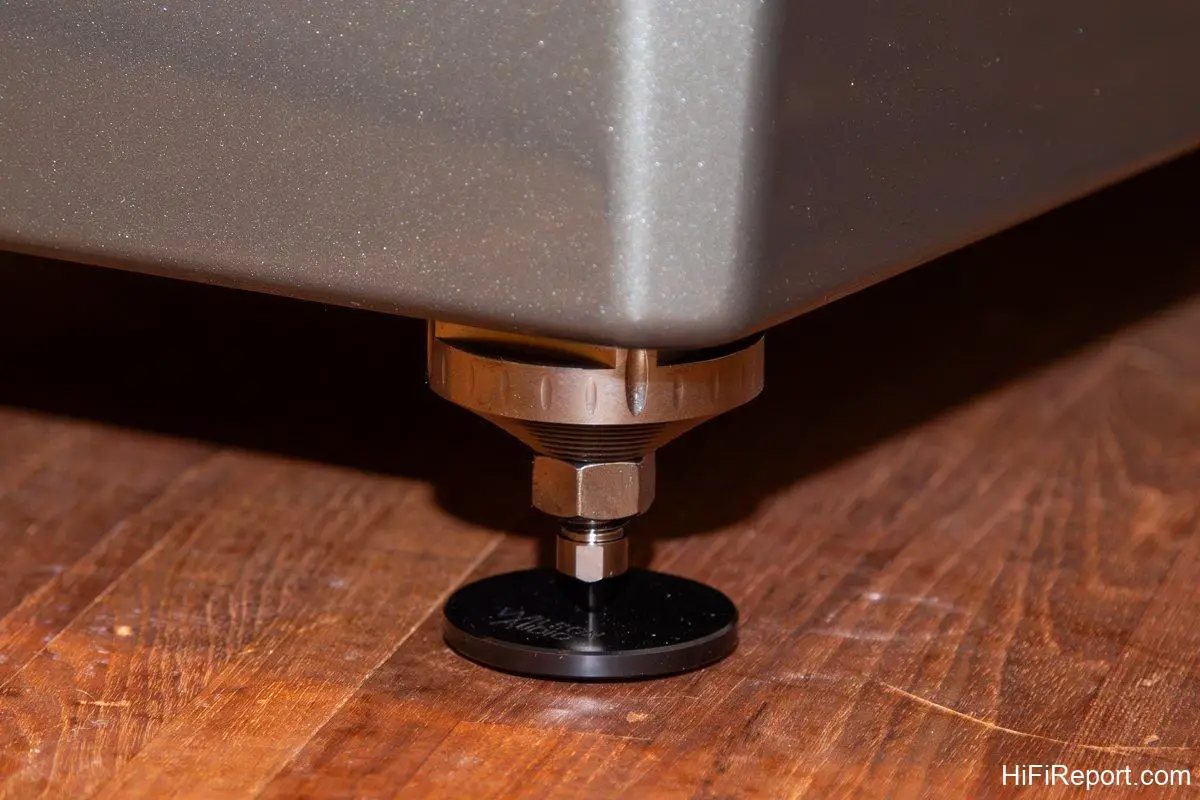
The Alexia V inherits key technologies from the flagship Chronosonic XVX, including the Convergent Synergy Carbon (CSC) tweeter and the QuadraMag Alnico midrange driver. Internal wiring utilizes V-Cable, and the speakers now feature Acoustic Diode feet, crafted from austenitic stainless steel with V-Material damping. A transparent rear panel allows for resistor tuning, complemented by carbon fiber accents. These are the tangible, specification-level enhancements.
The Primacy of Time Domain Accuracy
Wilson Audio’s foundational design principle remains unwavering: time domain accuracy. This commitment has guided their speaker design for nearly half a century, setting industry benchmarks.
Sound, in its physical essence, can be analyzed in two domains: frequency and time. While frequency response specifications often dominate discussions, the temporal aspects of sound are equally, if not more, crucial. Frequency response, representing the range of audible tones, is readily grasped. However, the time domain, encompassing the transient and phase relationships of sound waves, is more abstract. Yet, human auditory perception is demonstrably more sensitive to timing cues than to frequency deviations.
This heightened time sensitivity is an evolutionary adaptation. The ability to discern subtle timing differences in sound allows for sound localization. In ancestral environments, this ability was critical for survival, enabling the localization of predators and prey. Those with keen temporal acuity thrived, passing on this auditory advantage. Today, this evolved sensitivity allows us to perceive the spatial arrangement of instruments in an orchestra – violins stage left, cellos stage right, brass in the rear. This holographic soundstage is a manifestation of time domain information.
Achieving full-range frequency reproduction, spanning 20Hz to 20kHz, necessitates multi-driver speaker designs. However, integrating multiple drivers introduces complexities in maintaining time domain coherence. The more drivers, the greater the challenge in ensuring they operate in perfect temporal synchronicity. Wilson Audio, since the inception of the WATT bookshelf speaker, has championed the paramount importance of time domain accuracy, employing innovative designs to achieve mechanical compensation for time alignment.
Mechanical Time Alignment: A Wilson Audio Innovation
Wilson Audio arguably pioneered adjustable time domain alignment in loudspeaker design.
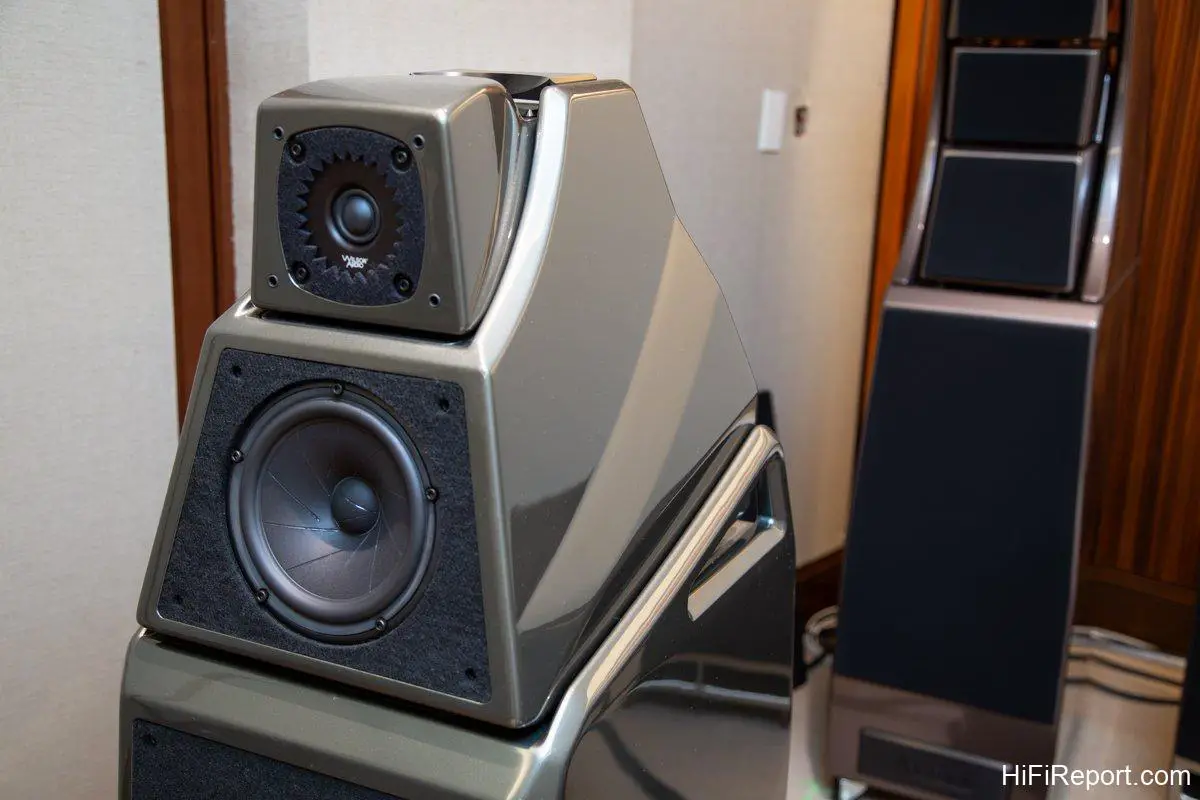
While crossover network design can influence time alignment in multi-way speakers, its effectiveness is limited to idealized, on-axis conditions. Wilson Audio revolutionized multi-way design by modularizing speaker components, enabling mechanical time alignment.
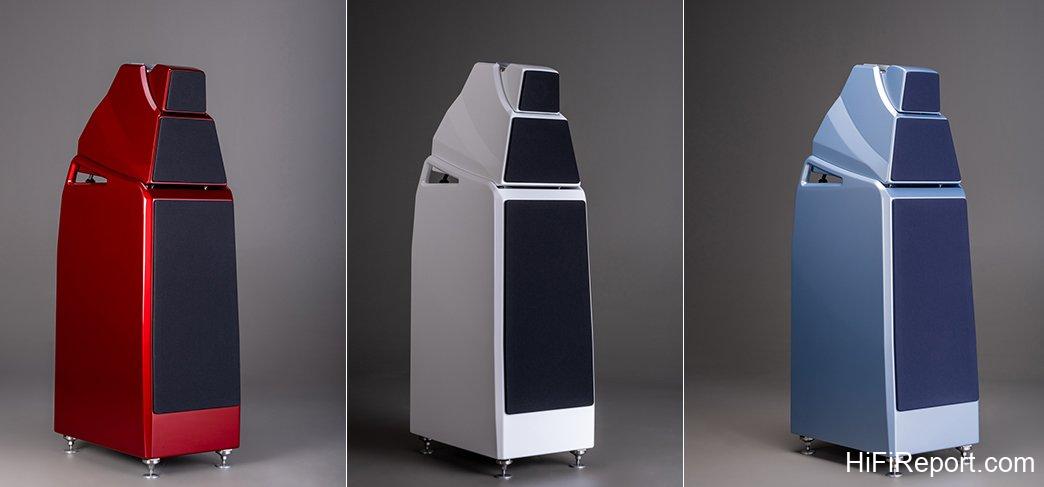
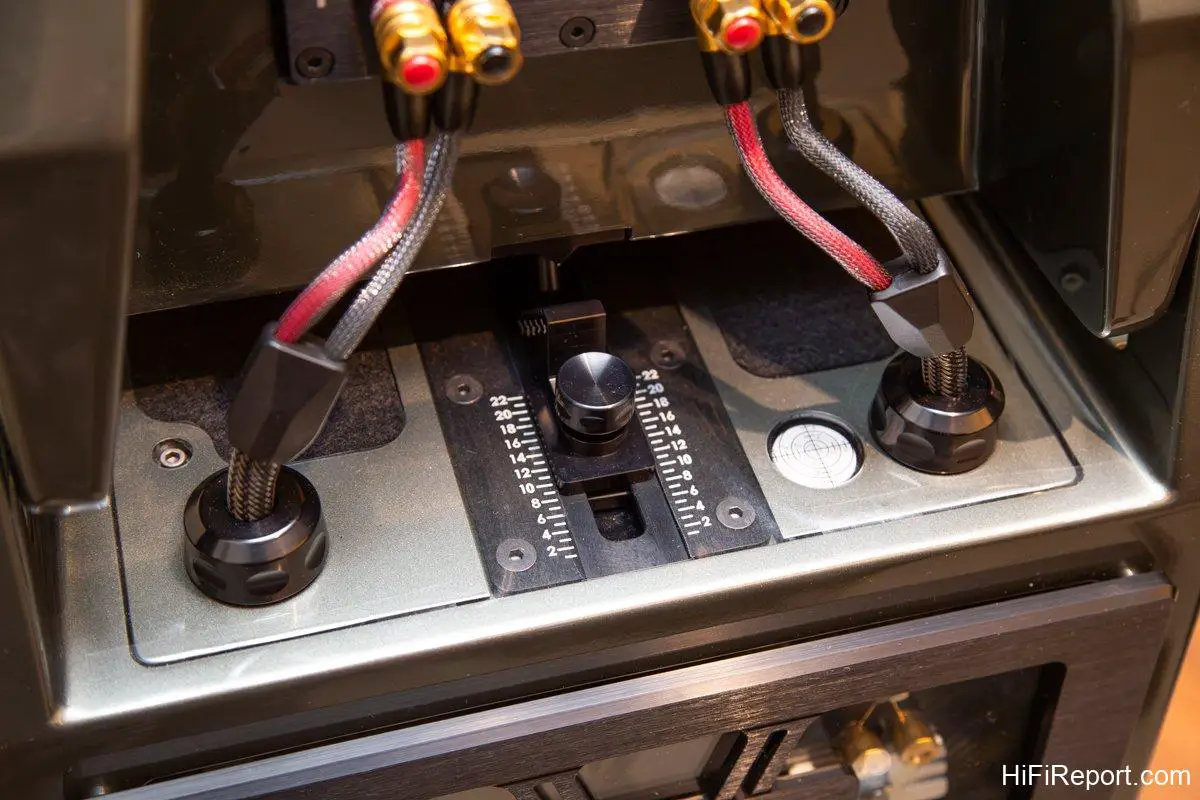
The Alexia V exemplifies this modular approach, comprising separate tweeter, midrange, and bass modules. The midrange and tweeter modules are positioned atop the bass module and are independently adjustable. This adjustability allows for precise alterations to driver projection angles, optimizing time alignment for diverse listening environments and seating positions. Mechanical compensation, through distance and angular adjustments, achieves accurate time domain correction.
Professional Calibration: Trust the Experts
Adjustable time domain alignment is not a novel feature in the Alexia V, but rather a refinement of Wilson Audio’s core design philosophy. The latest generation of speakers benefits from enhanced adjustment precision and user-friendliness.
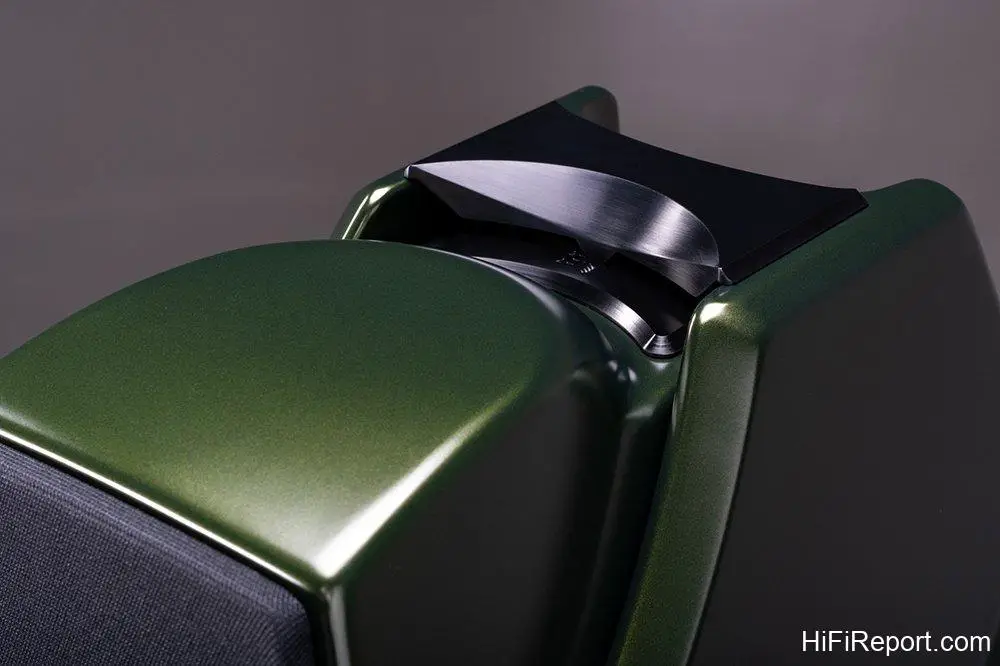
Integrated spirit levels adjacent to the adjustment scales facilitate accurate calibration.
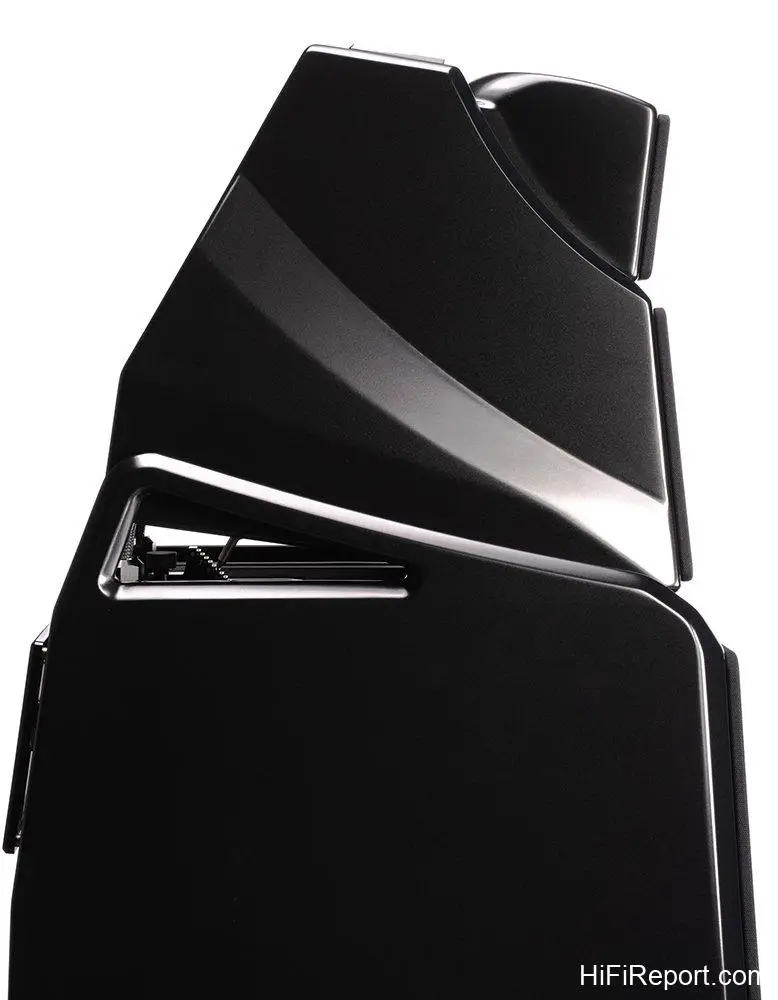
Proper Alexia V setup adheres to Wilson Audio’s specific guidelines. Appropriate spike lengths are determined by the listening distance and speaker placement. These seemingly subtle adjustments are critical elements of professional audio setup, far from trivial. Consult authorized Wilson Audio dealers for expert installation and calibration services.
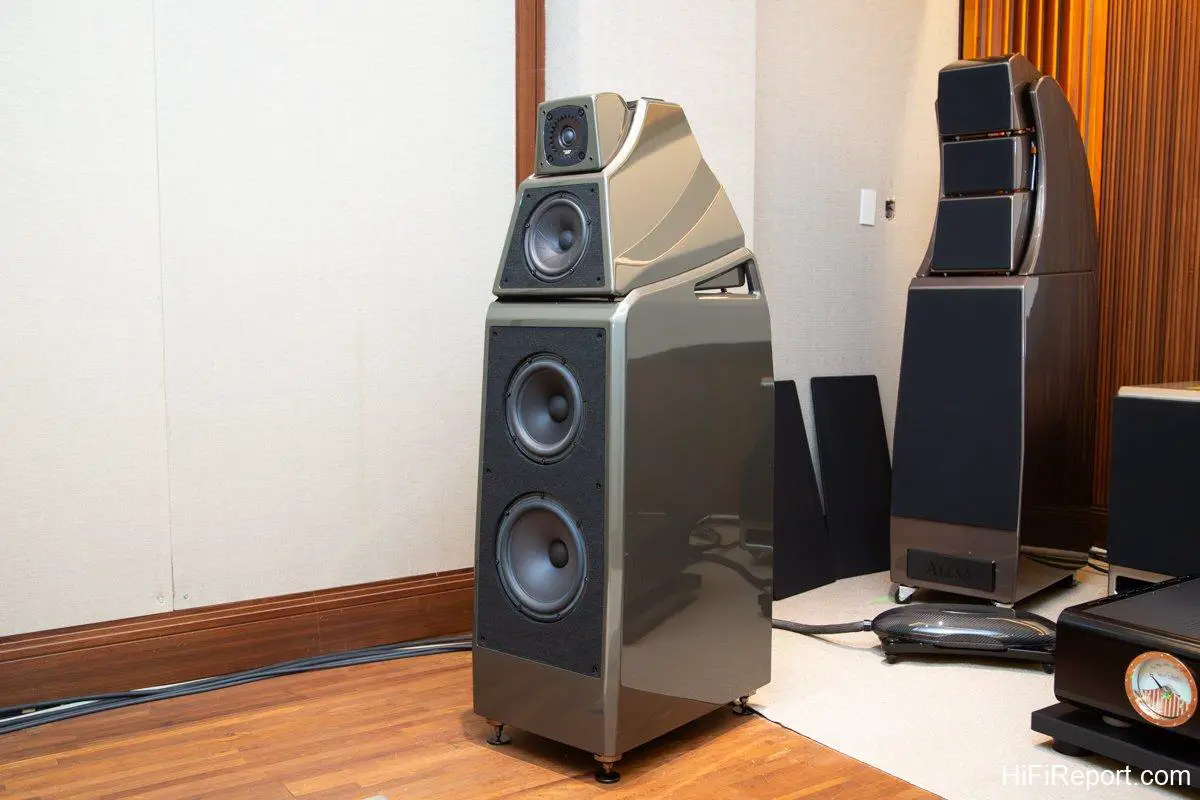
Wha Shing: My Best Audition Yet
This listening session at Wha Shing Audio highlighted the value of professional speaker setup. Demonstrating optimal speaker performance is fundamental to audio retail, captivating potential customers and justifying the investment in high-end audio.
Having auditioned equipment at Wha Shing Audio previously in their familiar second-floor listening room, I can confidently say that this Alexia V audition represented the pinnacle of sound quality I’ve experienced there.
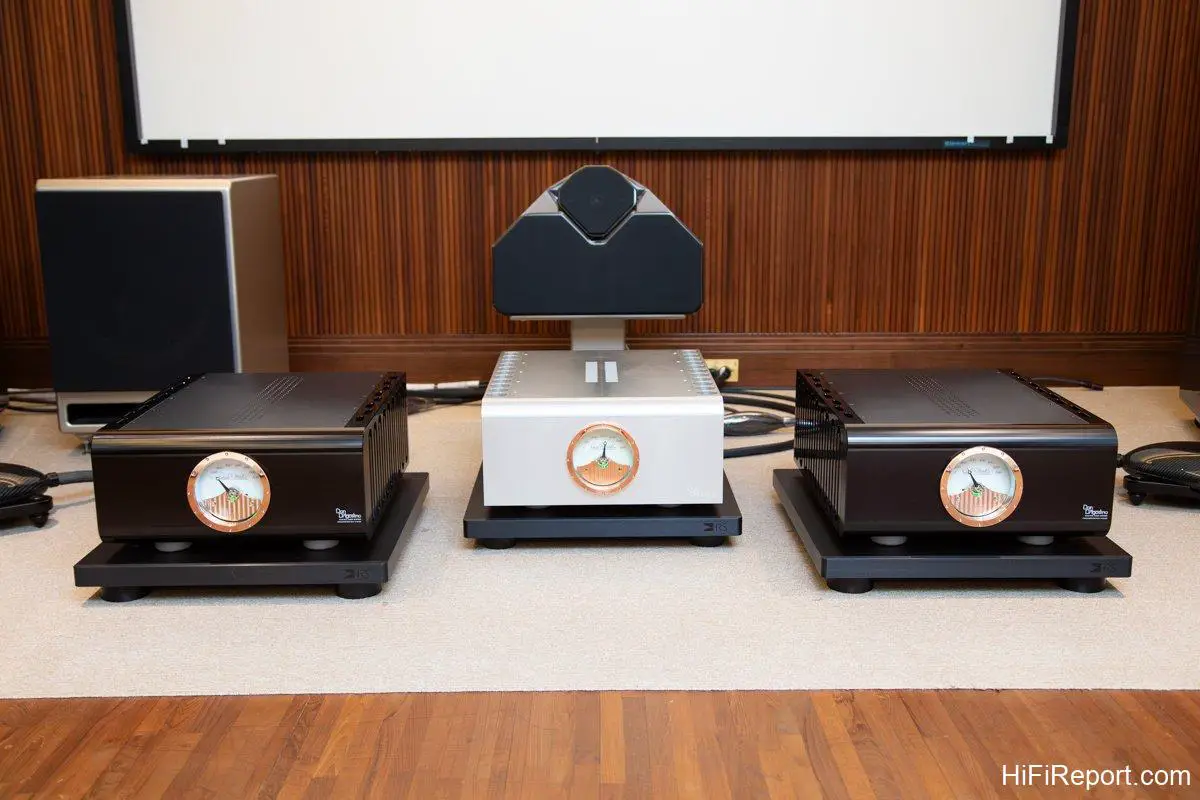
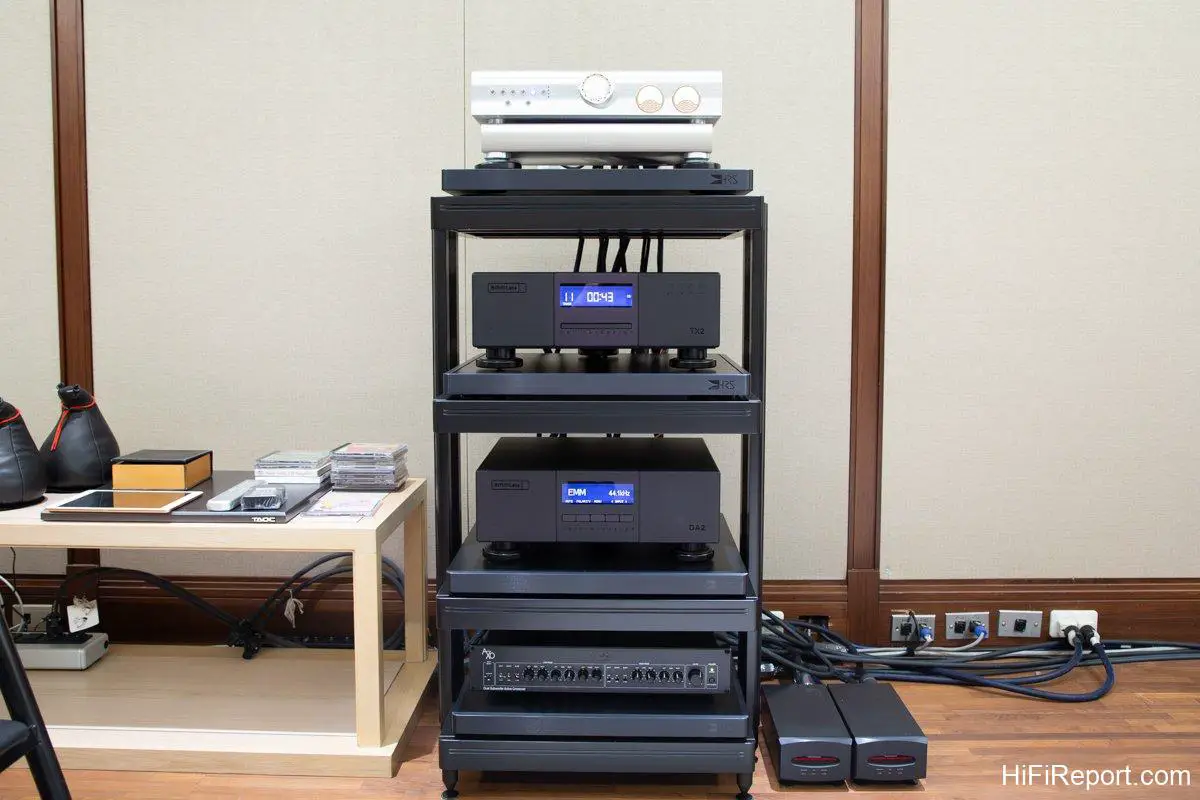
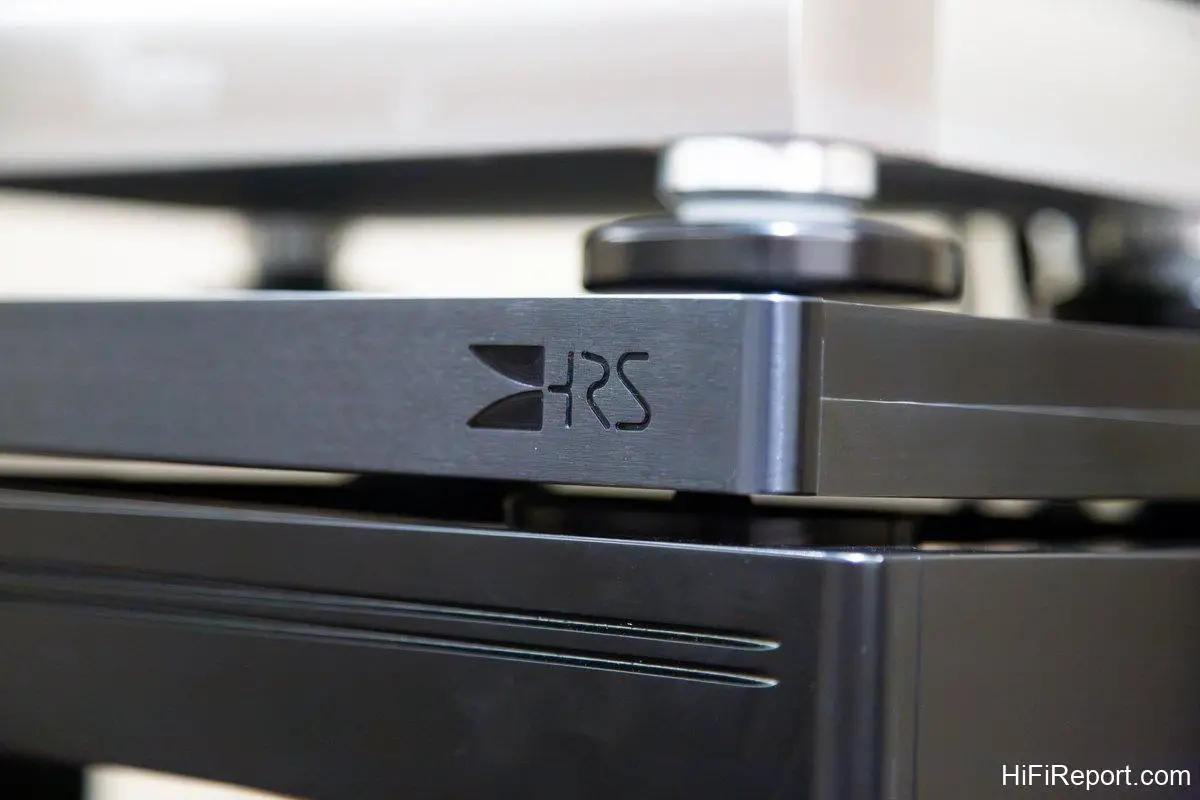
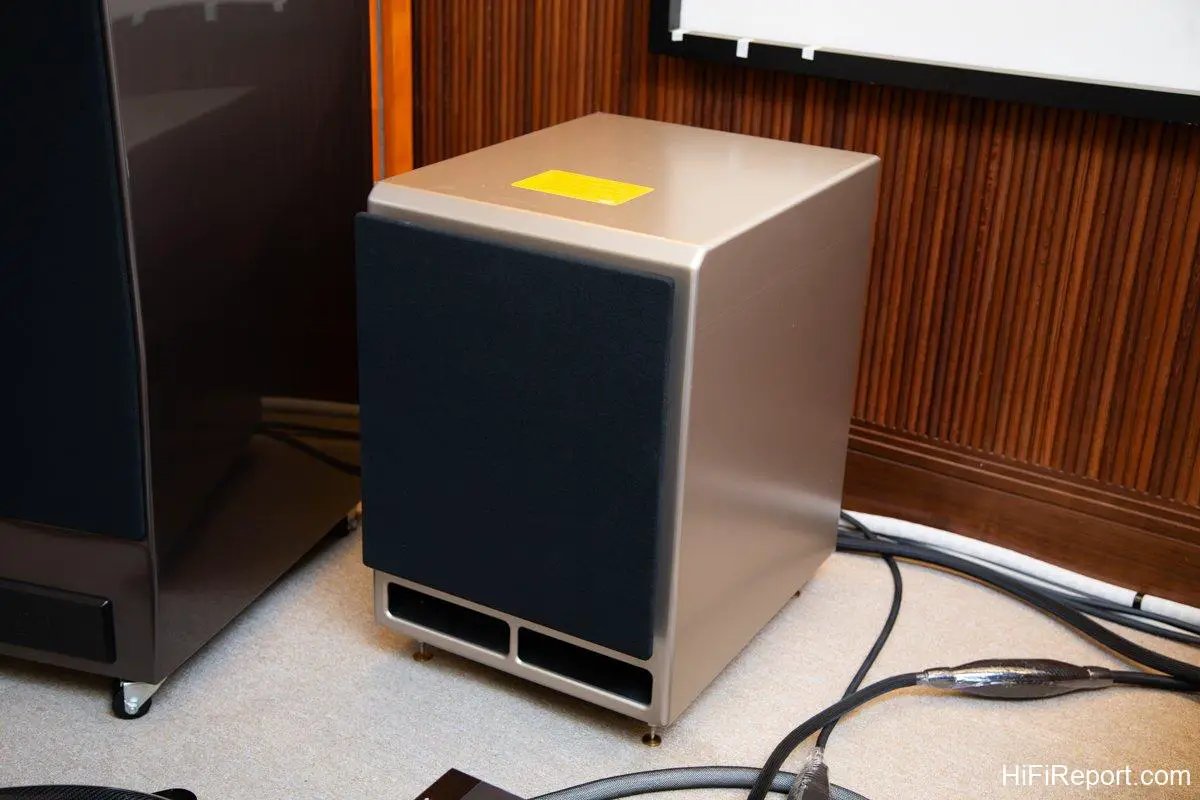
Wha Shing assembled an impressive system around the Alexia V. A pair of D’Agostino Progression M550 monoblock amplifiers provided the power, naturally complemented by the Progression Pre preamplifier. The digital source was an EMM Labs TX2 SACD/CD transport and DA2 D/A converter. DSD signal transmission utilized a custom fiber optic digital cable. Notably, a Wilson Audio Watch Dog subwoofer, driven by a Progression M500 amplifier and managed by Wilson Audio’s ActivXO crossover, was integrated into the system. Transparent high-end cables were used throughout, and HRS equipment racks provided isolation. HRS Helix footers further enhanced isolation beneath the source and preamplifier.
Sonic Disappearance: A Concert Hall Realized
From the moment Sara K.’s voice filled Wha Shing’s listening room, the Alexia V captivated my senses.
Listening to “Water Falls,” the Alexia V rendered vocals and piano with both crystalline clarity and palpable richness. The soundstage was expansive, Sara K.’s voice possessed both presence and depth, and the piano was positioned slightly back in the mix, with the sustain pedal creating beautiful note decay. When the electric bass entered, full, textured low frequencies emerged. The expansive soundstage created by the Alexia V seemingly dissolved the speakers themselves, transforming the listening space into a live concert venue.
While my Alexia 2 speakers can also create a live-like soundstage, the Alexia V’s effortless presentation of such a vast and transparent soundscape was remarkable. The key lies in the nuanced details. Sara K.’s vocals sounded more intimate and emotionally resonant, the fluidity of her vocal lines mirroring the piano’s arpeggiated chords. The electric bass, with its descending depth and sustained coherence, was remarkably well-defined. This is a familiar recording, one I’ve enjoyed on the Alexia 2 with satisfying results. Yet, the Alexia V unveiled a wealth of previously unheard details, captivating me from the very first track. The magnitude of the Alexia V’s improvement was undeniable.
Bass Authority: Superb Even Without Subwoofer
To assess the subwoofer’s contribution, we transitioned to the Jacques Loussier Trio’s “Jazz Seasons,” a recording renowned for its exceptional bass. Starting with “Spring,” the interplay between drums and bass immediately established a rich, swinging atmosphere. The Alexia V reproduced the bass with both solidity and elasticity, perfectly complementing the delicate high frequencies of the percussion. The piano entered with chords, leading into the familiar Vivaldi “Spring” theme. The drums and bass remained active, embellishing each phrase transition. The listening experience was thoroughly engaging.
Focusing on the low and mid-bass frequencies, I listened to the main theme for about a minute, then requested Wha Shing to disable the Watch Dog subwoofer. This was easily accomplished via the D’Agostino Preamp, which features dual outputs, one for the Alexia V and one for the Watch Dog. Disabling the output to the subwoofer was a simple preamp adjustment.
Listening again without the subwoofer, it became clear that the Watch Dog did contribute, but even the Alexia V’s inherent bass performance surpassed that of my Alexia 2. The improvement wasn’t solely in bass quantity, but rather in the enhanced solidity and authority of the low frequencies, delivered with greater ease and control. Listening to the entirety of “Spring,” the Alexia V’s bass performance remained exceptional even without the subwoofer. The addition of the Watch Dog served not to increase bass quantity, but to refine bass quality and ease, while also expanding the soundstage’s vertical and horizontal dimensions.
I inquired about the crossover frequency setting. While I received the information, I was asked to refrain from publishing it, as it represents a subtle aspect of their setup expertise. I can disclose that it was set below 50Hz, indicating the subwoofer’s role was primarily to enhance the overall atmosphere and ambience. Even without the Watch Dog, the Alexia V’s bass performance is inherently superb, and subjectively more natural and effortless than the Alexia 2.
Total Musical Immersion
The next disc presented an even greater surprise: Cecilia Bartoli’s “Live in Italy.” Listening to Handel’s art song “Lascia la Spina,” a live recording with remarkably quiet background noise, the Alexia V revealed a transparent and expansive soundstage, populated by strings and harpsichord. The vocal lines flowed with natural ease. When Bartoli’s voice emerged, the subtle transition from breathy tones to full voice, and the delicate breaths between phrases, were rendered with exceptional fidelity. The string section’s sustained notes provided a lush backdrop, and I found myself completely immersed in the musical performance.
The striking aspect of the Alexia V was its naturalness in reproducing music. The presentation was seamless and fluid. The dynamic contrasts, from powerful fortes to delicate pianissimos, and the nuanced articulations, were conveyed effortlessly, transporting me back to the original recording venue.
Tango Intensity and Nuance
Next, Viveza’s “Tango Tango” took center stage, a recording of exceptional performance and sonic quality, and a long-time favorite. “Jalousie (Tango Tzigane)” begins with a soaring violin melody, answered by piano chords, initiating a captivating tango. Piano and bass establish the rhythmic foundation, while the violin melody exudes passion and tension, with accordion embellishments adding texture.
The Alexia V skillfully delineated the interwoven layers of instruments, painting a vivid musical tableau.
Increasing the volume, the Alexia V brought the soundstage forward, maintaining excellent instrumental separation and layering. The violin’s soaring passages became even more emotionally charged, yet the upper registers remained smooth and controlled, devoid of any harshness.
Lupu’s Breath: Intimacy and Dynamics
Pianist Radu Lupu then graced the stage with Schumann’s Piano Concerto, first movement, marked allegro affettuoso, or affectionately fast. The opening orchestral chords were thunderous, immediately followed by rapid piano arpeggios, then yielding to tranquil woodwind passages. The sudden dynamic contrasts, from fortissimo to pianissimo, were rendered with striking impact by the Alexia V. Schumann’s affection, expressed through dramatic dynamic shifts, ranged from surging passion to tender serenity. Lupu’s piano eloquently conveyed Schumann’s emotional range, navigating between power and delicacy, embodying the essence of Romanticism.
The Alexia V’s allure lies not merely in enhanced sonic performance, but in its captivating musicality. Even with familiar recordings, attentive listening revealed new layers of detail and emotional depth. The Alexia V seemingly unearths richer nuances, drawing the listener closer to the recording venue, allowing one to almost perceive the breathing of Lupu and the orchestra.
Audiophile Transformation: Every Recording Elevated
It was time for orchestral grandeur. I selected Rimsky-Korsakov’s “Scheherazade,” specifically the Seiji Ozawa/Boston Symphony Orchestra rendition on DG. While a Penguin Guide recommendation, it lacks the coveted three-star rosette, not typically considered a top-tier audiophile recording. However, when played on the Alexia V at Wha Shing, the sonic impact was so profound that everyone in the room rushed to photograph the CD cover. The effect was simply extraordinary.
The first movement, “The Sea and Sinbad’s Ship,” opens with majestic brass fanfares. The Alexia V effortlessly conveyed the orchestra’s power and weight, while delicate woodwind passages provided contrasting tranquility, introducing an exotic violin solo and harp arpeggios, creating the evocative atmosphere of “Scheherazade.” The themes unfolded dynamically, building in intensity. The Alexia V handled the crescendos with ease, and as the first climax subsided, listeners were eager to know the recording details. It was evident that the exceptional sonic experience transcended the specific recording, highlighting the Alexia V’s transformative capabilities.
Guitar and Orchestra: Perfect Balance
Switching to “Concierto de Aranjuez” from the Mercury Living Presence SACD reissue, featuring The Romeros family on guitars and Victor Alessandro conducting the San Francisco Symphony, a familiar audiophile staple, the Alexia V revealed fresh perspectives. This ability to rediscover familiar recordings is a key factor driving my desire to acquire the Alexia V.
The Alexia V effortlessly captured the rhythmic strumming of the classical guitars, while the string orchestra expanded into a wide and deep soundstage, contrasting with the guitars’ comparatively delicate volume.
I’ve often felt that “Concierto de Aranjuez” can sound even more captivating on recordings than in live performance. The relatively quiet classical guitar can be easily overwhelmed by the orchestra in a concert hall. Recordings, however, allow for meticulous balancing of instrumental levels. Through the Alexia V, the balance was impeccable. Whether cello solos or guitar passages, the recording engineers had skillfully balanced their relative volumes. In live concerts, guitars often rely on amplification via PA systems to avoid being masked by the orchestra, but even the best PA systems cannot replicate the nuanced sonic fidelity of a studio recording.
Mahler: A Captivating Finale
The final piece auditioned on the Alexia V at Wha Shing Audio was, naturally, Mahler – Bernstein conducting the Vienna Philharmonic in Mahler’s Symphony No. 5. The fifteen-minute fifth movement unfolded in its entirety. The woodwind introduction, imbued with pastoral charm, led to the first theme. The Alexia V presented a soundscape characterized by freshness, brightness, and vitality. The theme then transitioned into a fugue, with the low strings establishing a broad soundstage, echoed by the high strings. The agitated brass interwove with the woodwinds, connecting to the second theme, presented by the strings. Another fugue ensued, with layered strings, woodwinds, and brass creating a vivid soundstage within the Alexia V’s expansive presentation.
The fifth movement’s climax erupted at the 13:30 mark, with the brass powerfully proclaiming a radiant theme. The Alexia V rendered the brass with a warm, flowing quality. Upon the theme’s repetition, the brass tempo slowed, enhancing the brass’s brilliance and warmth. The final coda returned to tempo, with Bernstein seemingly accelerating slightly, driving towards a brilliant, climactic finish.
Bravo! Truly moving Mahler!
Essence of Music: An Investment Justified
Spending an afternoon with the Alexia V, the decision to upgrade from my Alexia 2 became clear after the first Sara K. track. My focus is not on mere craftsmanship or incremental specifications, but on musical expressiveness. The Alexia V offers a comprehensive and demonstrably significant improvement. Its nuanced portrayal of dynamics, from the loudest to the softest passages, allows a deeper connection with the musicians’ intent, revealing a more natural and emotionally rich musical experience. This, I believe, is the true essence of the high-end audio pursuit. If the Alexia V can bring me closer to the heart of music, then the investment is undoubtedly justified.
Specifications
**Wilson Audio Alexia V**
* Type: Hybrid Enclosure Design, Bass Reflex and Enclosed Three-way Floorstanding Speaker
* Drivers: 1 x 1 inch Soft Dome Tweeter, 1 x 7 inch Midrange Driver, 1 x 8 inch Woofer, 1 x 10 inch Woofer
* Sensitivity: 90 dB (2.83V @ 1m/ 1kHz)
* Impedance: 4 ohms (Minimum 2.59 ohms @ 84 Hz)
* Frequency Response: 19 Hz – 33 kHz (+/- 3 dB)
* Dimensions: 1348.6 x 400.1 x 614.1 mm (H x W x D)
* Weight: 120.2 kg per channel