
Wilson Audio Sasha V Review
HiFiReport friends in the south, if you’re eager to experience the Wilson Audio Sasha V, now is the perfect time to visit Rich Will Audio! For those seeking a lifelike musical stage and the most realistic and precise music reproduction, Rich Will Audio is the place to be.
Time Phase Accuracy: The Crucial Element
As an owner of Wilson Alexia 2 speakers, my visit to Rich Will Audio to audition the Sasha V might be perceived with bias – a bias of deep admiration, of course. This is my subjective preference, and naturally, I’m inclined to speak highly of the Sasha V. However, my choice of Wilson Audio isn’t solely based on sonic aesthetics; it’s fundamentally about the precision of time phase adjustment.
The “goodness” of a speaker’s sound is subjective, akin to the flavors of sweet, sour, bitter, spicy, and umami. Everyone has their own taste, and personal preferences are not to be debated. My reason for choosing Wilson Audio boils down to their ability to offer adjustable time phase.
Time is Everything
What exactly is time phase? It refers to the timing alignment of high, mid, and low frequencies reaching your ears. Human hearing is remarkably sensitive to time phase differences, with a threshold of around 10 milliseconds. When the time difference is below this, we achieve a “deceptively real” auditory experience. Wilson Audio’s slogan, “Time is Everything,” underscores their commitment to achieving accurate time phase coherence through mechanical adjustments in their speakers.
This unwavering commitment has spanned over four decades, progressively refining the art of precise time micro-adjustment.
One might wonder, aren’t all speaker manufacturers emphasizing time phase accuracy these days? Why is the editor singling out Wilson Audio? Does this imply that others’ time phase alignment is inaccurate? Not at all. The key differentiator lies in “adjustability,” which is crucial for recreating the authentic musical stage presence of a recording.
Unique Mechanical Micro-Adjustment Technology
Whether it’s a two-way, three-way, or multi-way speaker design, inherent phase differences exist between high, mid, and low frequencies due to their varying speeds. How do we correct this? Crossovers, of course, and Wilson Audio is no exception, recognizing the importance of crossover design. However, where does Wilson Audio stand apart? The answer lies in their mechanical micro-adjustment of time phase through the front-to-back positioning and projection angle of speaker modules.
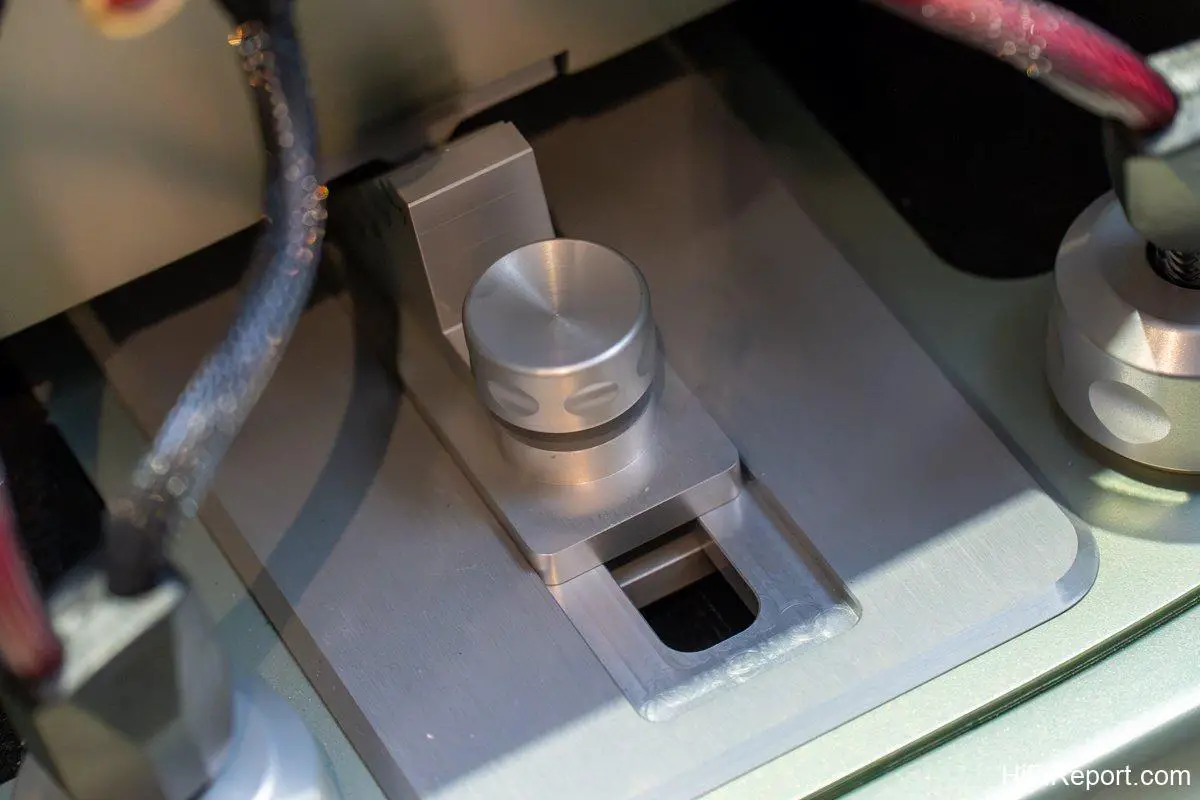
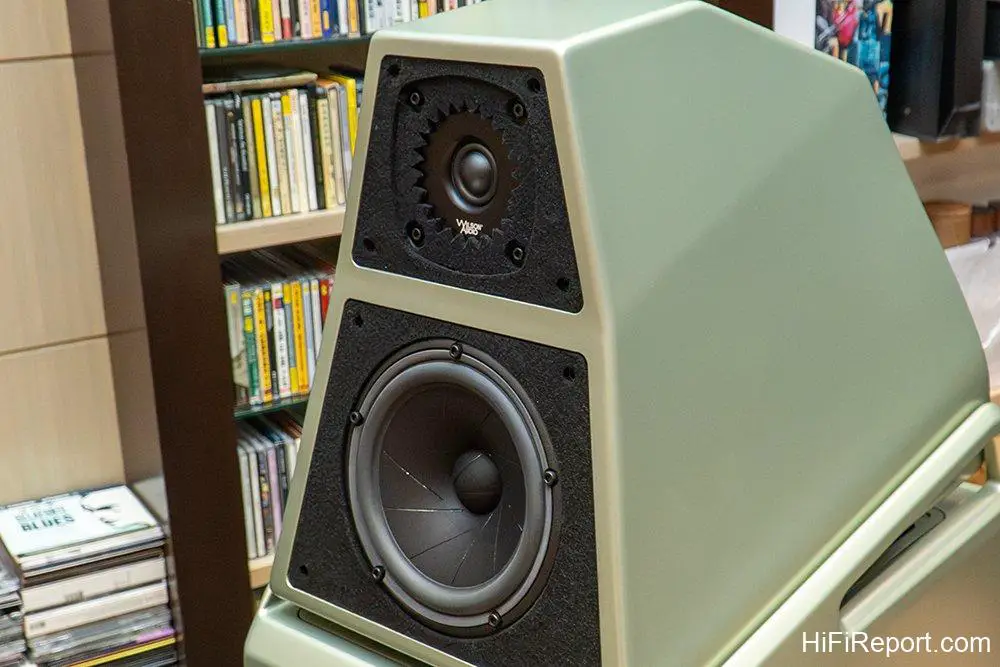
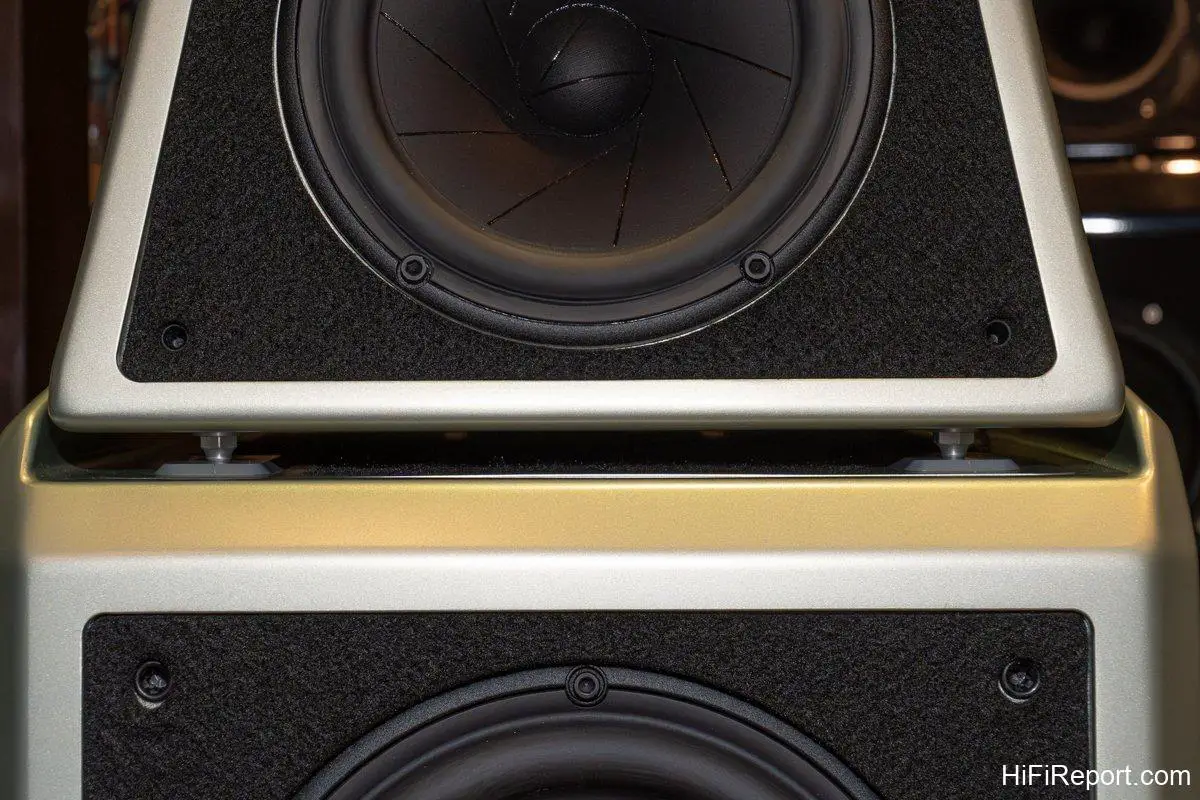
The physical position of a speaker driver determines the distance between its sound source and the listener’s ears. Therefore, the Sasha V’s mid-high module allows for adjustments in both front-to-back position and projection angle. Once you’ve established your listening position, you can fine-tune the mid-high module to achieve precise time phase alignment with the low frequencies, tailored to your specific listening distance.
In contrast, traditional speakers rely on crossovers to correct time phase. Designers must “assume” an optimal listening position, perhaps 3 meters or 5 meters from the speakers. Then, through crossover compensation, they optimize performance at that assumed listening point. The challenge is that home listening spaces vary significantly, leading to diverse listening positions. What’s the solution? Speaker placement becomes crucial, requiring experimentation to discover the optimal location within your listening room. This pursuit is subjective, demanding time, experience, and personal exploration to master.
However, with the Sasha V, you gain an unparalleled advantage: the ability to adjust the position and angle of the mid-high module, a powerful tool for fine-tuning time phase alignment that others simply don’t offer.
Wilson Audio even provides a dedicated app, outlining guidelines for listening positions and corresponding speaker module angle settings. Once your listening position is determined, you can follow these factory specifications to calibrate time phase accurately.
Of course, this adjustment process doesn’t necessarily require a DIY approach. When you purchase Sasha V speakers from Rich Will Audio, their expert service extends to your home, ensuring professional and precise setup and calibration.
(Image Source: Wilson Audio Official Website)
More Modules, More Adjustability
This design philosophy reveals Wilson Audio’s underlying principle: the Sasha V marks the starting point for mechanically adjustable time phase correction, allowing for micro-adjustments of the relative position and angle of the mid-high and low-frequency modules. Stepping up to the Alexia V, the speaker module count increases to three, offering even greater adjustability. The Alexx V further expands to four modules, while the Chronosonic XVX boasts five, and the legendary Master Chronosonic reaches six modules. Each module incorporates corresponding mechanical adjustment mechanisms.
More adjustment options translate to finer control over time phase accuracy, albeit with increased complexity. Therefore, for those venturing into the world of Wilson Audio, the Sasha V presents an excellent entry point.
In my view, the precise micro-adjustment of time phase difference stands as the most crucial and distinctive feature of Wilson Audio speakers. It’s a function unmatched by others. Naturally, because time phase can be adjusted through the front-to-back position and angle of the mid-high module, you have the potential to achieve precise alignment, but also the possibility of misalignment. This is part of the audiophile journey – the joy of experimentation. Sometimes, suboptimal adjustments might leave you feeling that you’re not fully realizing your system’s potential, causing frustration. However, as you refine your setup and the sound quality improves, bringing your music to life, the rewarding experience becomes a daily delight.
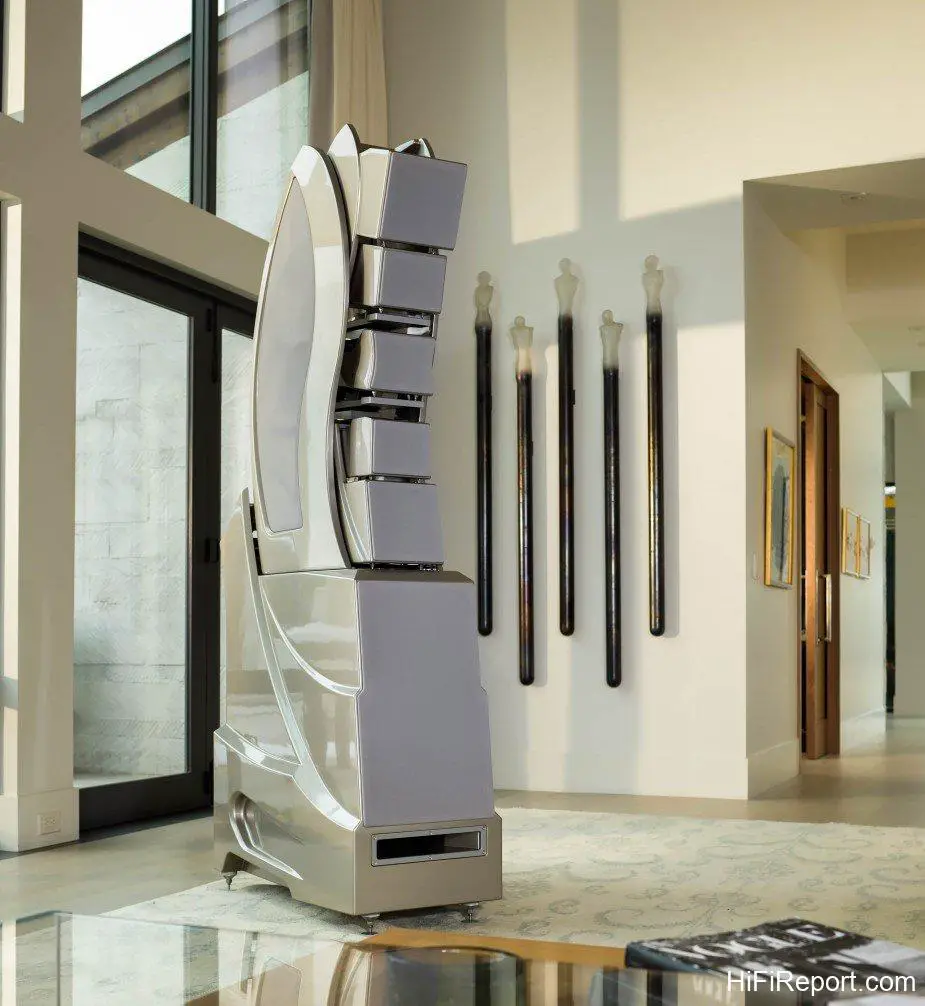
Wilson Audio Master Chronosinic (Image Source: Wilson Audio Official Website)
Introducing New V-Material
Having highlighted the unique feature of “adjustable time phase correction,” let’s delve into the design specifics of the Sasha V.
Some might wonder about the naming logic from Sasha 2 to Sasha DAW and now the latest Sasha V. Sasha DAW was primarily a tribute to Dave Wilson, hence “DAW.” However, Sasha V marks the evolution to the “V” generation, incorporating the new V-Material alongside the existing X-Material and S-Material. Therefore, “V” doesn’t represent the Roman numeral 5 but signifies Wilson Audio speakers incorporating V-Material.
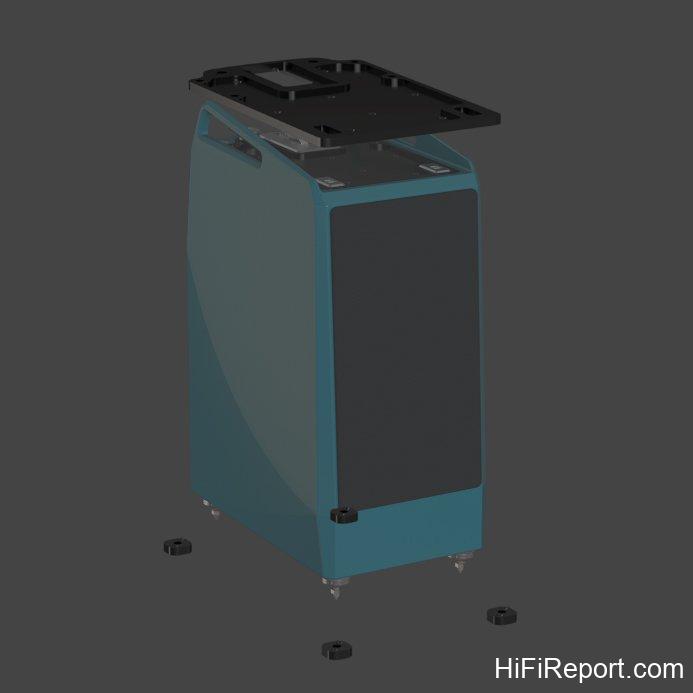
V-Material (Image Source: Wilson Audio Official Website). What exactly is V-Material? According to the manufacturer, it’s a high-damping composite material strategically placed on the top and bottom of the Sasha V’s woofer module. Its high-damping properties serve to isolate the woofer module from the mid-high module, preventing resonance transmission and blocking vibrations from the floor.
The fundamental principle of speaker sound production involves driver cone movement coupled with cabinet volume to create Helmholtz resonance. If the speaker cabinet resonates along with the drivers, it introduces cabinet coloration, an undesirable interference. Ideally, the cabinet should remain inert, firmly anchoring the drivers and allowing them to move air and produce sound.
Wilson Audio’s material science approach has yielded X-Material and S-Material, each with distinct hardness characteristics, utilized in different parts of the speaker cabinet. The new V-Material acts as an isolation material, effectively decoupling speaker modules and preventing mutual resonance.
Don’t expect me to reveal the precise composition of Wilson Audio’s composite materials. This is the culmination of years of dedicated material research and development – a closely guarded technological secret.
CSC Carbon Fiber Silk Soft Dome Tweeter
The Sasha V’s tweeter utilizes the same CSC silk soft dome tweeter found in higher-end models. The full name is Convergent Synergy Carbon (CSC) tweeter. Where is the carbon fiber element? It’s hidden from view. Behind the CSC tweeter’s dome, Wilson Audio has engineered a complex structure designed to eliminate back-wave interference.
When a dynamic driver operates, the diaphragm’s piston motion generates sound waves both forward and backward. The backward-radiating sound, known as back-wave, if reflected back from the cabinet walls at a delayed time, can interfere with the forward-radiating sound. Therefore, suppressing back-wave generation is crucial. The CSC tweeter’s rear carbon fiber cavity serves precisely this purpose. Through a complex internal channel structure, back-wave energy is converted into heat and dissipated. Due to the intricate nature of this structure, Wilson Audio employs state-of-the-art 3D printing technology for its fabrication.
Alexx V-Grade Alnico QuadraMag Midrange
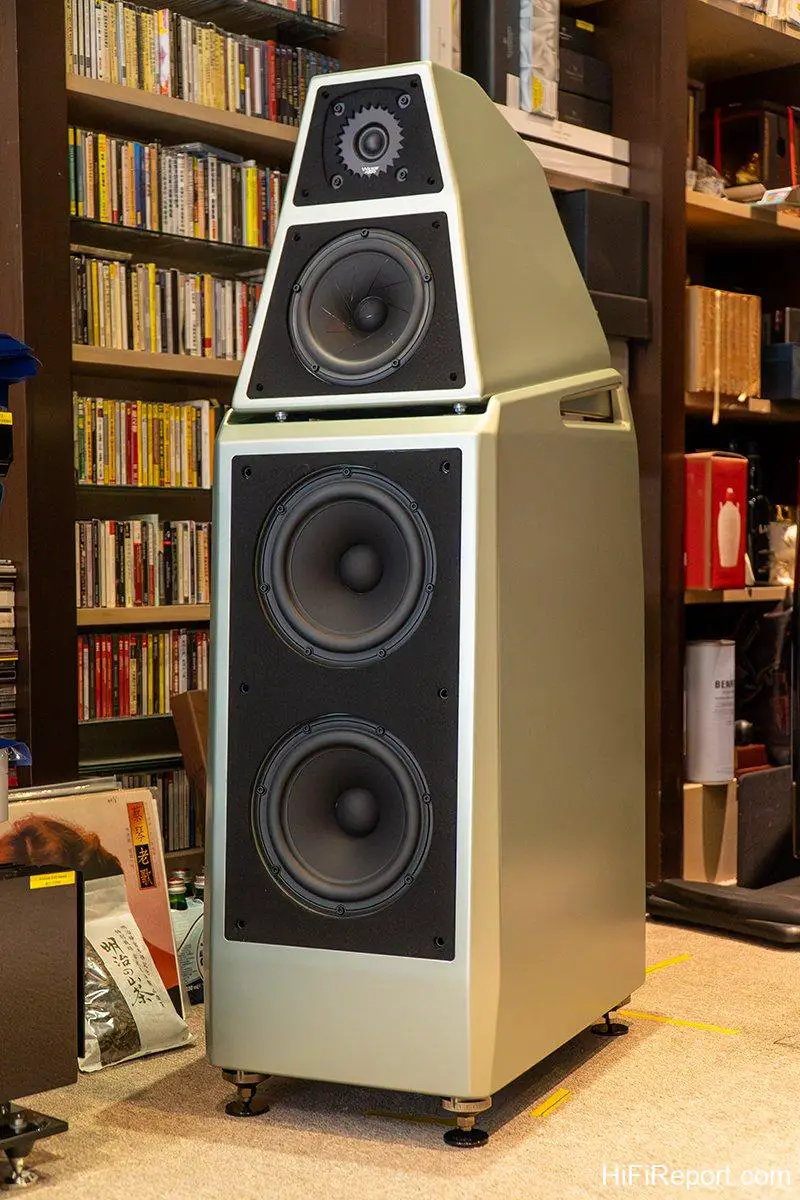
The Sasha V’s midrange driver also inherits technology from the Alexx V, employing the Alnico QuadraMag 7-inch midrange driver. The woofer module features dual 8-inch drivers. In terms of cabinet design, a hybrid approach combines bass reflex and sealed enclosures. The tweeter is housed in a sealed enclosure, while the midrange and woofers utilize bass-reflex designs, each with distinct port configurations tailored to the specific driver characteristics. Every detail of the cabinet design is meticulously matched to the drivers’ performance attributes.
The Sasha V’s woofer module incorporates slotted vents on both sides, a design element carried over from the Sasha DAW. These vents serve to release accumulated musical energy from the rear of the mid-high and woofer modules, enhancing overall sonic transparency.
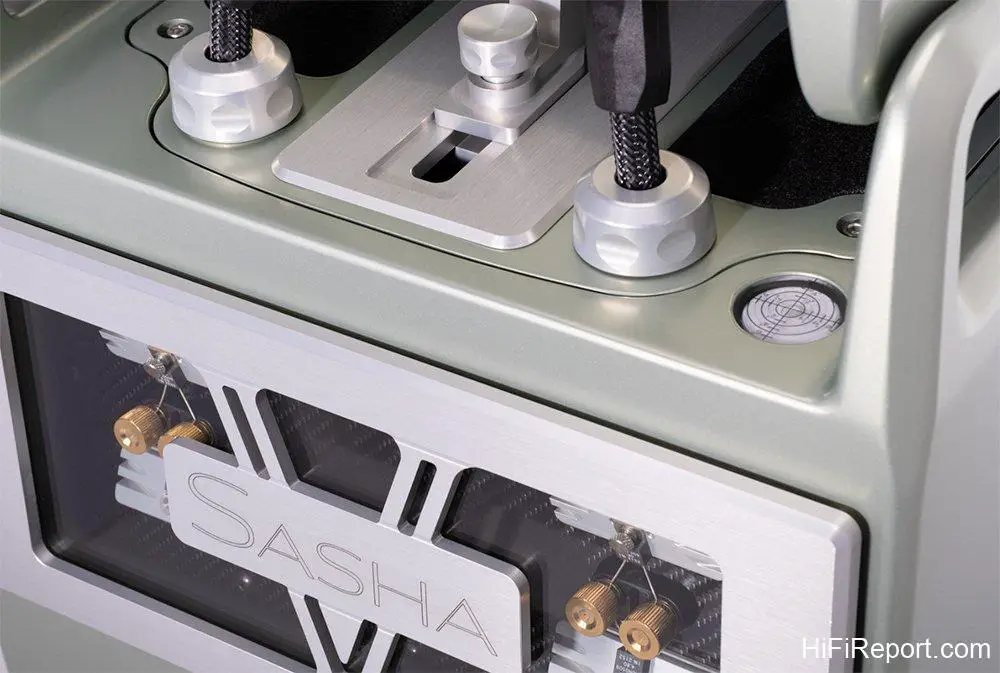
With each generation of Wilson Audio speakers, the craftsmanship and quality of cabinet construction consistently improve. The Sasha V is no exception. The openwork decorative panel on the cabinet’s rear and the sculpted curves along the cabinet sides are details that photographs struggle to capture adequately. You must witness the Sasha V in person to truly appreciate its exceptional build quality.
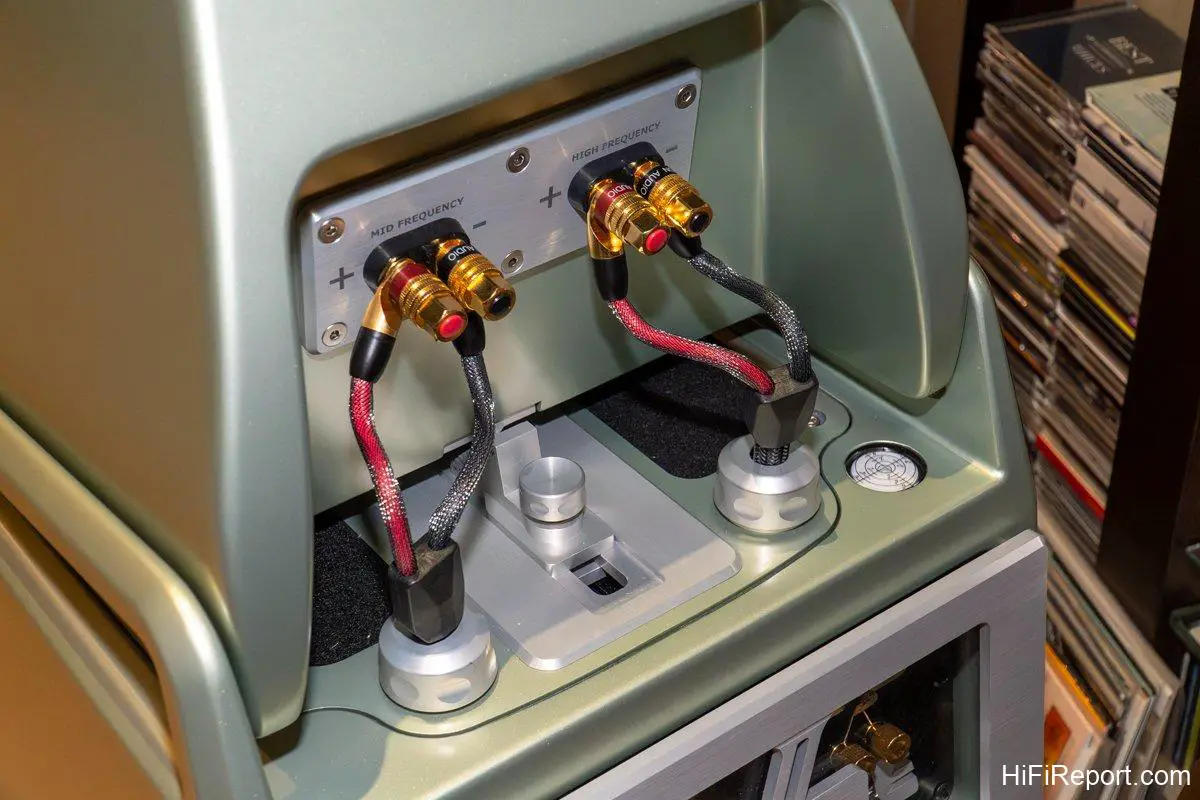
According to Wilson Audio’s official data, the Sasha V’s woofer module cabinet features a 25% increase in X-Material thickness on both side panels, resulting in even greater rigidity and strength. A bubble level is integrated into the top of the cabinet for convenient and accurate leveling during setup.
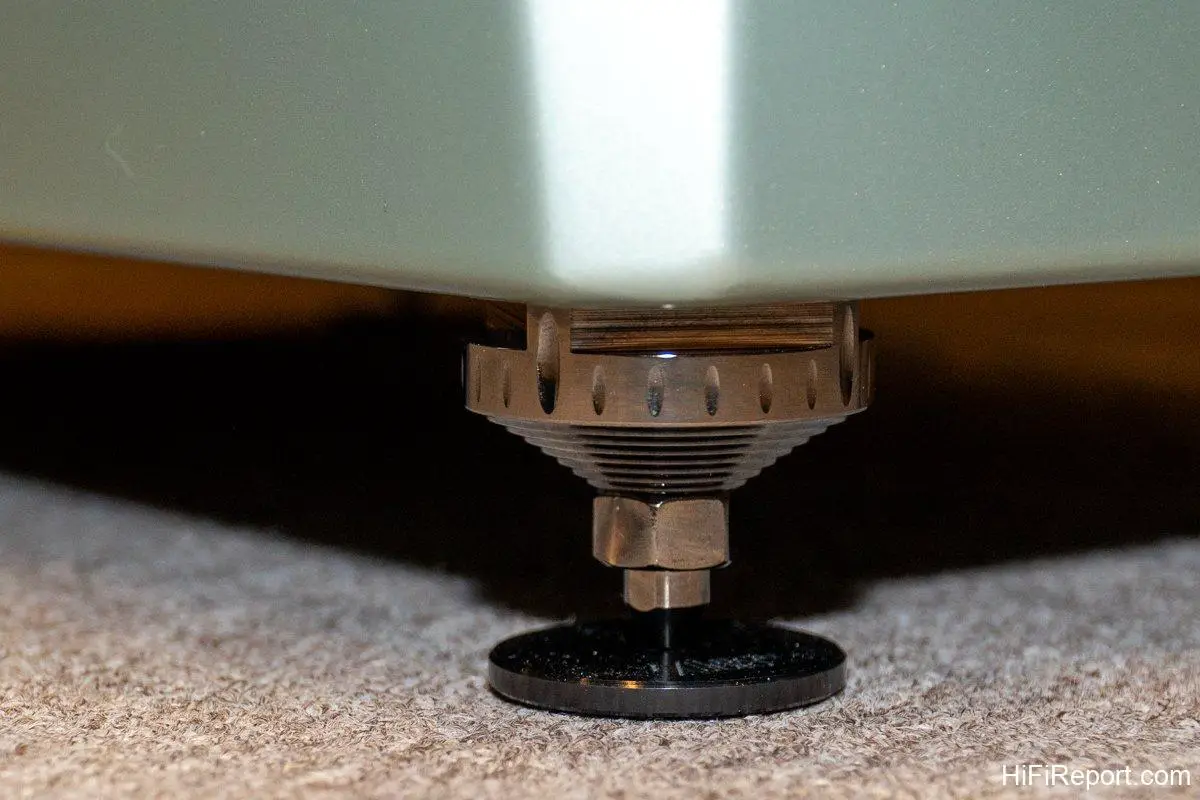
Furthermore, the Sasha V comes standard with Acoustic Diodes, Wilson Audio’s proprietary vibration-isolating feet. While Acoustic Diodes were not yet available at the time of the Sasha DAW’s release, they are naturally incorporated into the new Sasha V.
New V-Cable Internal Wiring and Custom Binding Posts
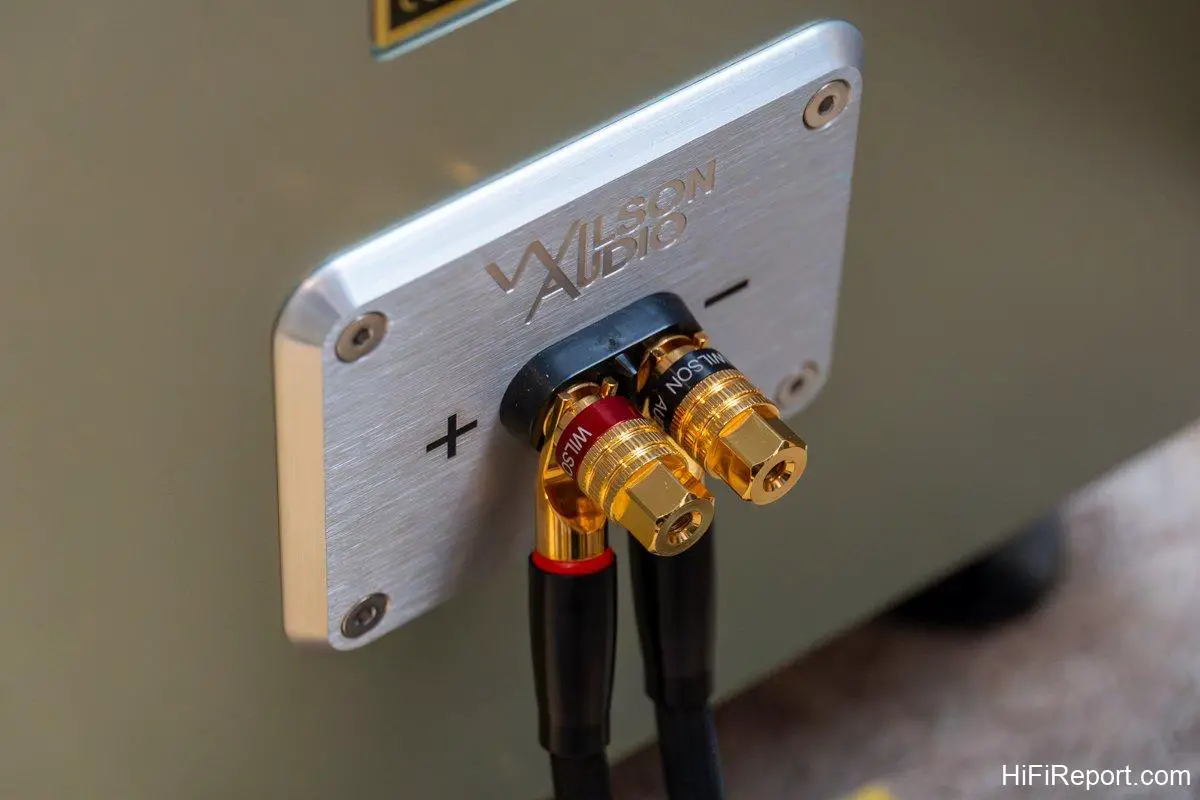
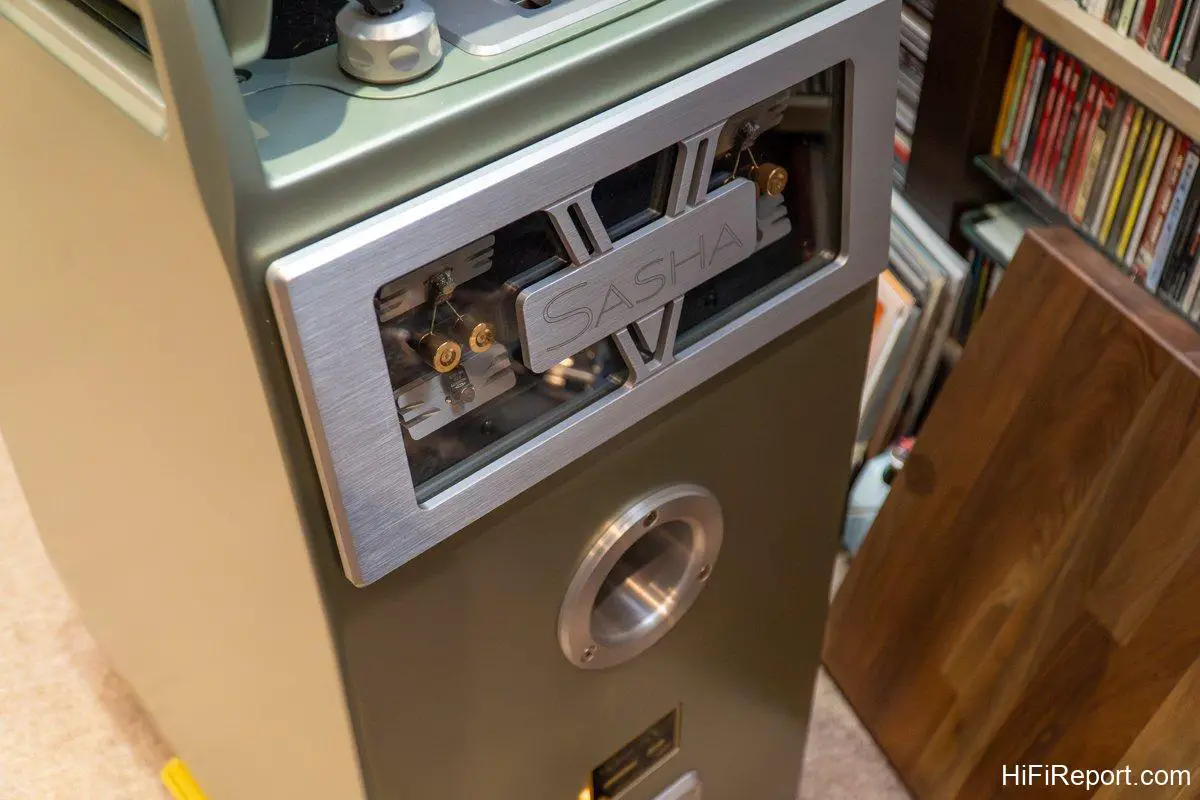
Historically, Wilson Audio has favored Transparent internal wiring from the US. However, with the Sasha V, they’ve transitioned to their in-house developed V-Cable and introduced new custom-designed binding posts. Wilson Audio simply describes the binding posts as being made of high-purity metal, without divulging specific details. However, the Sasha V’s new binding posts offer enhanced practicality, now accommodating banana plugs, whereas previous Wilson Audio binding posts were exclusively compatible with spade connectors. The new custom design now supports both connection types.
Unseen but significant upgrades in the Sasha V also include the all-new AudioCapX-WA capacitors. These aren’t just copper foil capacitors custom-designed for the Sasha V’s crossover; they are meticulously hand-crafted in-house by Wilson Audio, an exclusive component.
In-House Hand-Crafted Copper Foil Capacitors
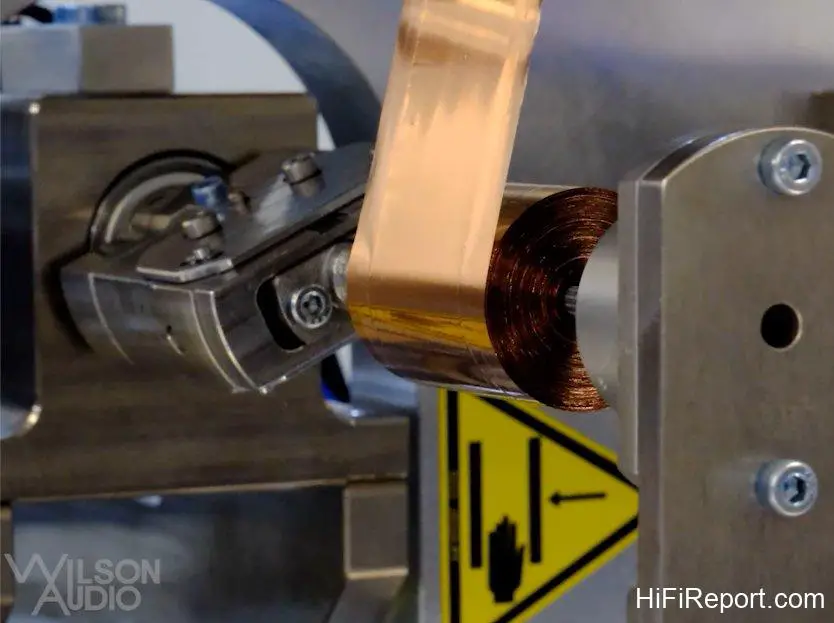
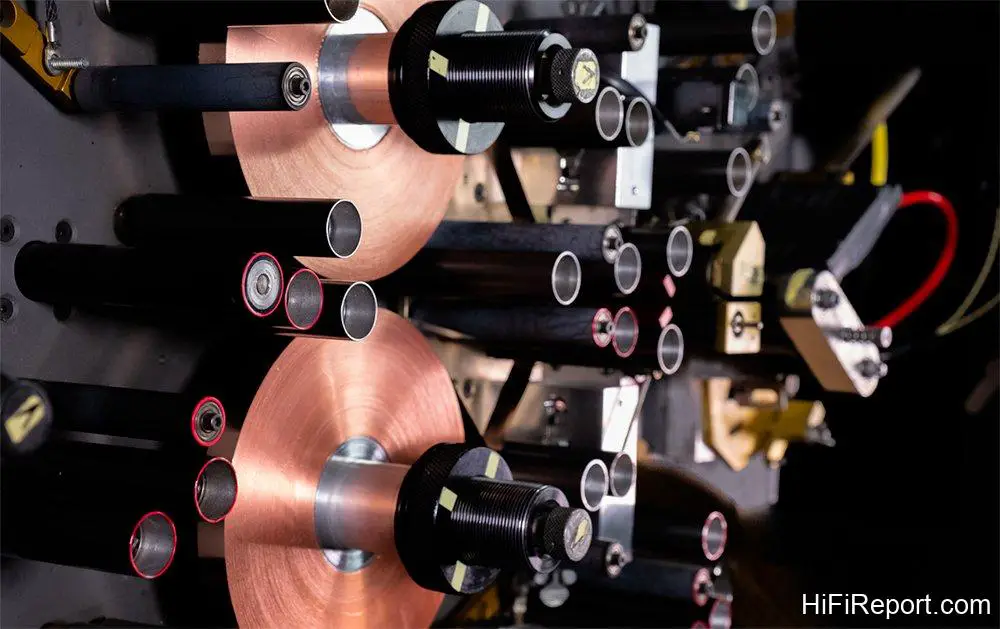
To produce these specialized copper foil capacitors for Wilson Audio speakers, they acquired Rel Cap and relocated the original California factory equipment to Wilson Audio’s Utah facility. Simultaneously, they commissioned new copper foil winding machinery from precision equipment manufacturers in Switzerland and the US, all dedicated to producing Wilson Audio’s unique specification copper foil capacitors. This represents a substantial investment, underscoring Wilson Audio’s unwavering commitment to sonic excellence, regardless of cost.
In addition to the in-house hand-made AudioCapX-WA capacitors, the Sasha V’s crossover employs point-to-point hand-wired construction. They believe that PCBs inevitably introduce a degree of dynamic compression to crossovers, and the best approach is meticulous hand-wiring. These time-consuming and labor-intensive details are hidden from view but contribute significantly to performance.
Wilson Audio In-house Hand-Wound Copper Foil Capacitors
Customizable Colors and Grille Cloth
Finally, I want to highlight another area where Wilson Audio stands as a leader: the unparalleled diversity of color options. For the Sasha V, Wilson Audio offers 5 standard colors, 14 Premium colors, and 10 Pearl colors. Grille cloths are also available in 7 colors. The manufacturer’s website even provides a color configuration preview tool, allowing you to design your preferred color combination.
Whether you find the Sasha V’s aesthetics appealing is a matter of personal taste, a subjective choice. However, the sheer breadth of color customization options available from Wilson Audio is arguably unmatched in the audio industry today.
Luxurious Nagra HD Series Amplification
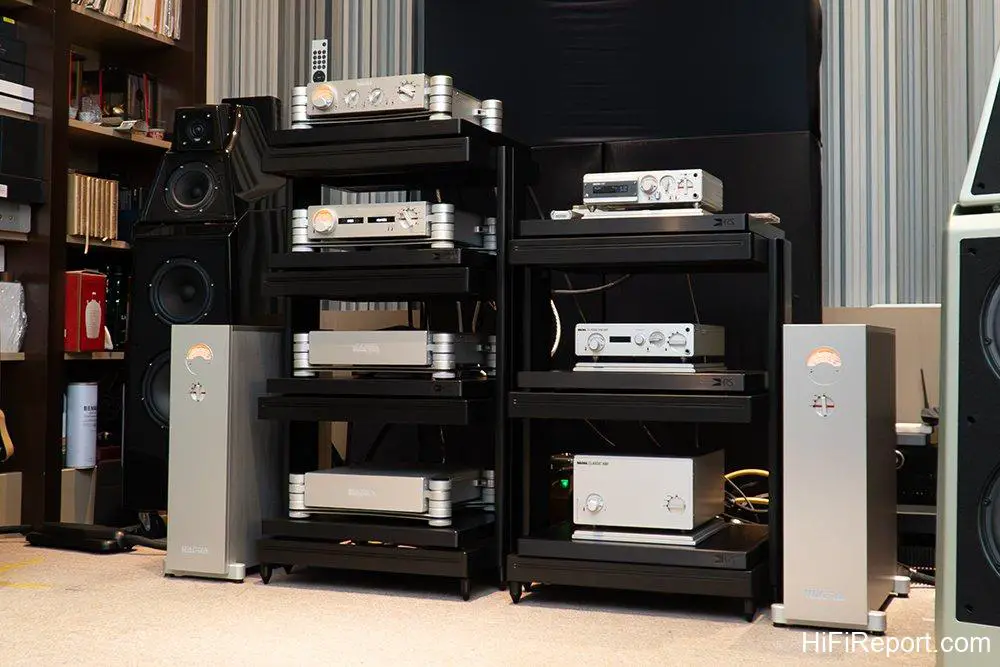
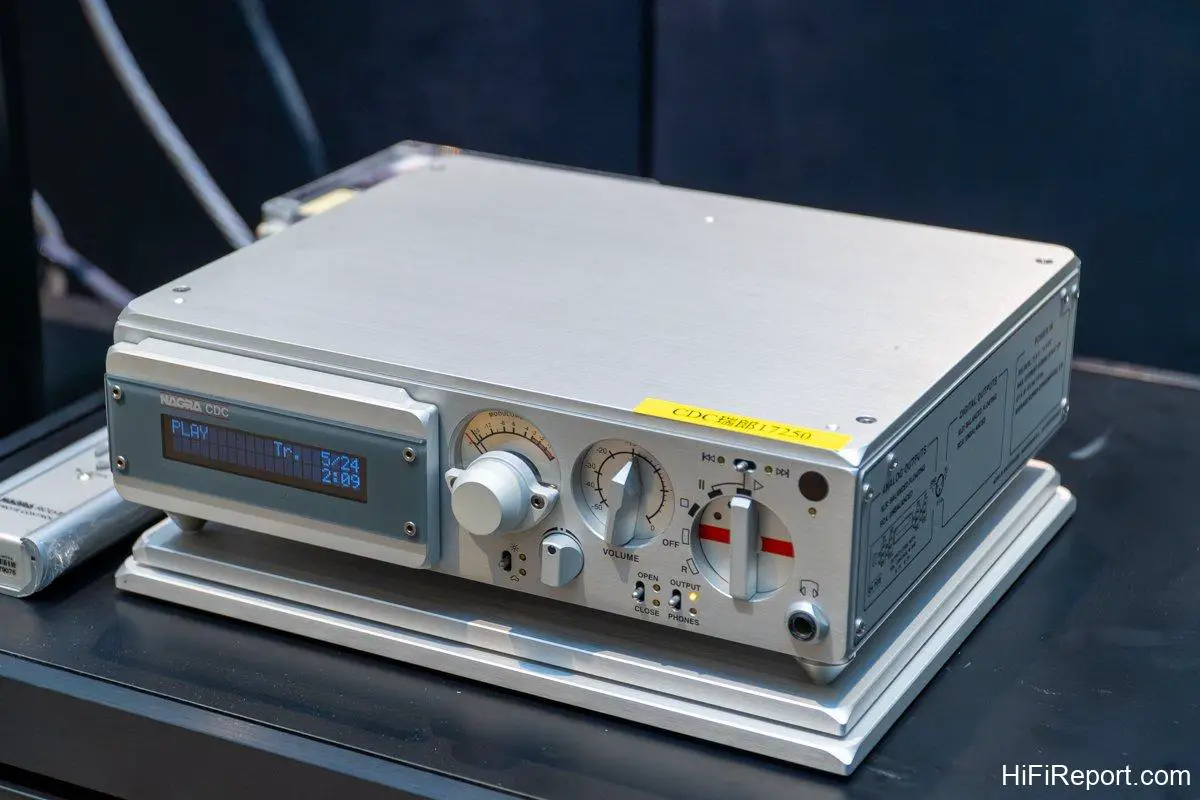
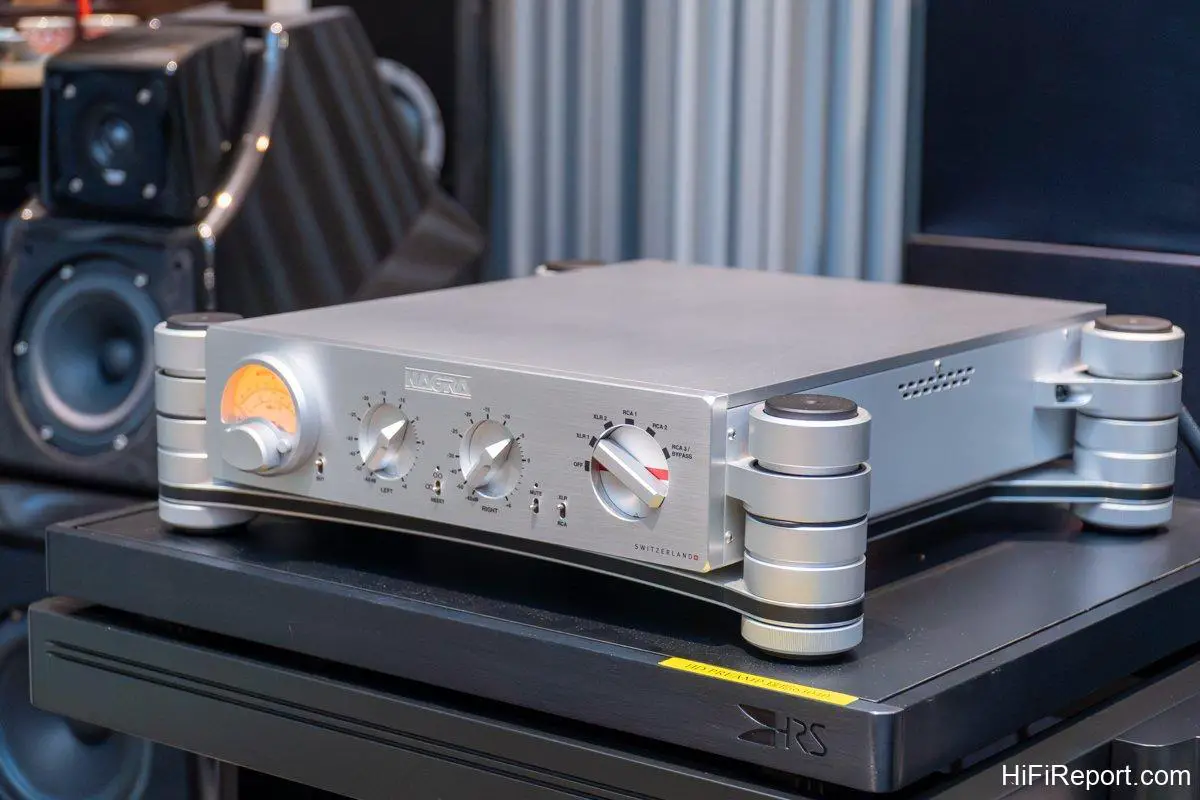
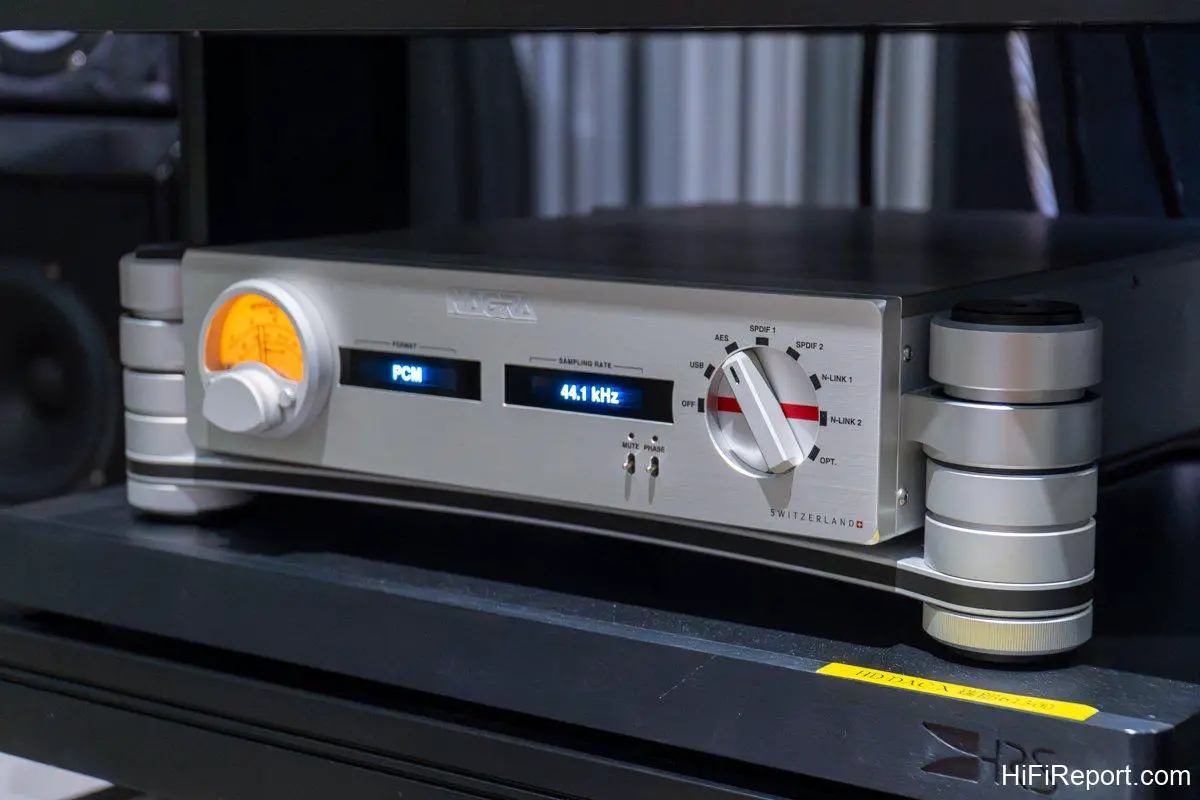
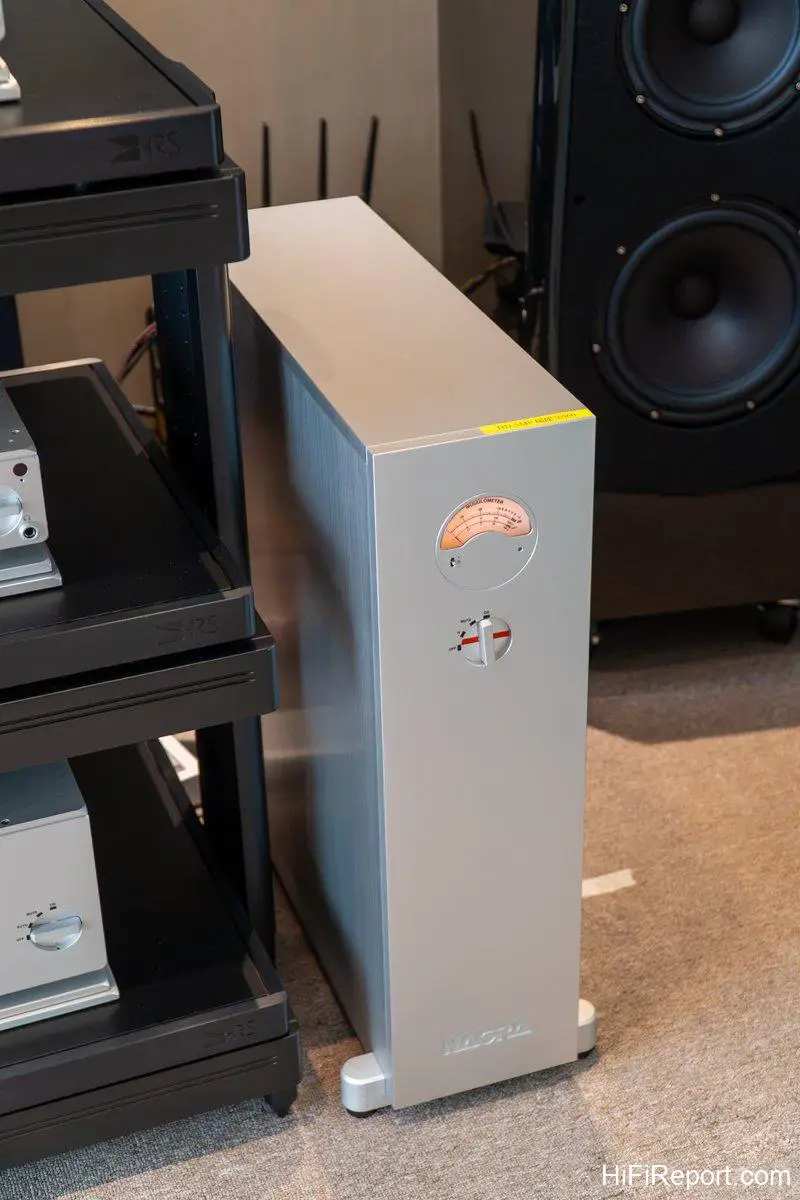
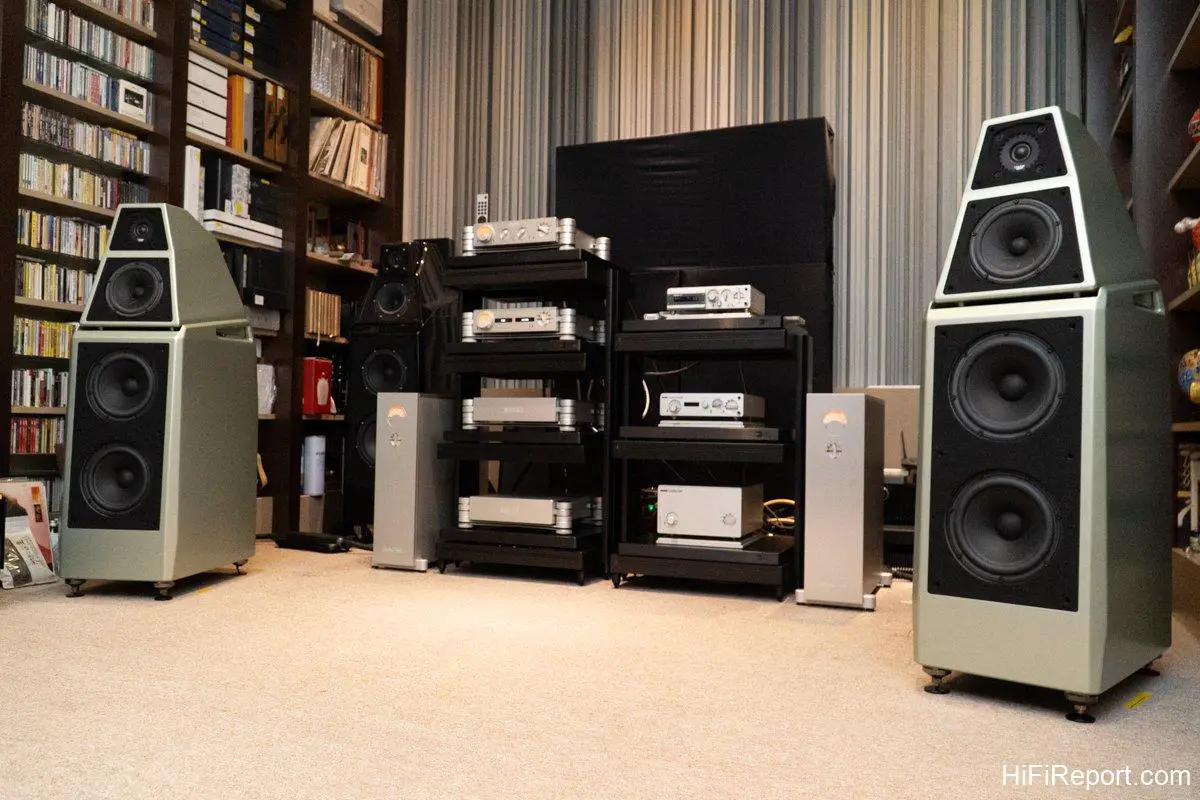
To showcase the Sasha V, Rich Will Audio assembled a formidable system, featuring the flagship Swiss Nagra HD series. Only the CD transport was substituted, as the HD series lacks a dedicated product in this category. The Nagra CDC CD player was used for digital output, connected to the HD DAC X for decoding. Preamplification and amplification were handled by the HD Pre and HD Amp monoblock power amplifiers. The system was meticulously placed on a complete set of HRS audio racks from the US. Cabling consisted of Dutch Crystal Cable power and signal cables, complemented by Transparent speaker cables – truly a dream combination.
On the HRS rack, a Nagra Classic series pre- and power amplifier set was also present. In fact, the Classic AMP, with 100 watts per channel, should be perfectly capable of driving the 88 dB sensitivity Sasha V speakers in Rich Will Audio’s listening room. However, the kilowatt-class HD Amp monoblock power amplifiers were deployed, underscoring Rich Will Audio’s serious dedication to demonstrating the Sasha V’s full potential. Before inviting me to audition the Sasha V, they invested considerable time in fine-tuning the system to achieve optimal sound reproduction.
A Rewarding Learning Experience
Spending an afternoon with the Sasha V at Rich Will Audio was a wonderfully enriching learning experience. As an Alexia 2 owner, and having previously owned Sasha 2 for about a year, I’m quite familiar with Wilson Audio speakers. However, my earlier audition of the Alexia V at HiFiReport revealed such a significant leap in sonic performance that I was compelled to order a pair myself. This time, listening to the Sasha V, the degree of improvement was comparable to that of the Alexia V. Of course, I won’t be placing an order for Sasha V, as I have the larger Alexia V on order from Wilson Audio.
In essence, the Sasha V’s sonic character is virtually identical to that of the Alexia V, or even the higher-end Alexx V. The distinctions lie in dynamic range and low-frequency reproduction headroom. Larger cabinet volumes naturally facilitate a more expansive and grand soundstage. In Rich Will Audio’s listening room, which isn’t overly large, the Sasha V was perfectly proportioned. An Alexia V in the same space might potentially be overwhelming in terms of sonic energy, making optimal setup more challenging.
Starting with Mix-Heavy Recordings
My Sasha V listening session was divided into two phases. The first half focused on CDs with extensive mixing and post-production, while the latter half featured recordings of naturally acoustic instruments.
I began with Miles Davis’ “Kind of Blue,” listening to “So What,” a recording I know intimately, even able to hum the melody from memory. From the first notes of the Sasha V, the enhanced soundstage transparency was immediately apparent. The speakers completely vanished from the room, creating a vast and precisely defined musical landscape behind them.
“Kind of Blue” was recorded in 1959, entirely in analog, using multi-track mono recording. In the stereo era, these mono master tapes rely on the mixing engineer to create a stereo soundstage. In a well-optimized audio system, “Kind of Blue” can reproduce remarkably accurate instrument placement. The trumpet and saxophone positions in the soundstage exhibit subtle left-right separation, while the double bass, drums, and piano are also precisely located. These are the masterful arrangements of the mixing process, and the audio system’s role is to faithfully reproduce the recording’s inherent soundstage effects.
In Rich Will Audio’s listening room, the Sasha V recreated the nuanced soundstage of “Kind of Blue” – or rather, the soundstage captured in the Sony Jazz Masterpiece Remaster edition I was listening to. The Nagra HD DAC X clearly resolved the subtle tape flutter and pre-track tape hiss, conveying the recording’s vintage character, imbued with a rich analog warmth. Through the Sasha V, the soundstage was transparent, expansive, and natural. Closing my eyes, I could visualize Miles Davis positioned centrally in the ensemble, pianist Bill Evans to the left, double bassist Paul Chambers slightly right of center, and drummer Jimmy Cobb’s cymbal work emanating from the right, slightly elevated. The Sasha V speakers themselves disappeared, conjuring an almost visually perceptible soundstage.
Time Phase Adjustment: Like Camera Focusing
The Sasha V’s forte lies in portraying soundstage realism. Its “adjustable time phase” capability is akin to a photographer fine-tuning focus using a split-image focusing screen, capturing the sharpest image and maximum detail. Similarly, the Sasha V’s precise time phase adjustment allows for tailoring the soundstage accuracy to the specific listening position.
Switching to “Dave’s True Story,” I listened to their cover of “Fever.” The jazz drum’s hi-hat strikes, accompanied by finger snaps, and the walking bass line in the electric bass guitar created a relatively intimate listening experience with the Sasha V. The recording level was elevated, bringing the vocals, drums, and bass closer to the listener. Only the electric guitar, enhanced with delay and reverb, was positioned further back. To amplify the recording’s impact, studio compression effects were noticeably applied. The Sasha V accurately conveyed the character of this audiophile recording, employing various techniques to make the music more engaging and emotionally resonant.
Next, I selected another audiophile recording, “TAS 2023,” choosing Eric Bibb’s rendition of “Where The Green Grass Grows.” Opus 3 recordings are known for their beautiful intimacy. The accordion intro, centered between the Sasha V speakers, possessed a relatively substantial image size. Eric Bibb’s vocals were sincere, and the Sasha V’s midrange and high frequencies exhibited a warm, sweet sheen, lending an appropriate touch of moisture to his voice. The steel-string guitar entered, floating center-right in the soundstage, with backing vocals positioned behind Eric Bibb, creating a gospel-infused musical tableau.
Fully Revealing Musicians’ Interpretive Intent
The preceding tracks were examples of heavily produced recordings. Next, I transitioned to recordings of naturally acoustic instruments to further assess the Sasha V.
I began with chamber music, listening to Szeryng and Rubinstein’s collaboration on Beethoven’s “Spring Sonata” for violin and piano. Szeryng’s violin emerged with a clear image in the center of the Sasha V soundstage, accompanied warmly by Rubinstein’s piano. The piano then took the lead, slightly louder, while the violin embellished with arpeggiated chords. The dynamic nuances between the piano and violin were vividly rendered by the Sasha V, creating a sense of dialogue between the two instruments in the first movement of “Spring.”
As the saying goes, “It’s easier to paint the skin of a tiger than its bones.” Listening to the Sasha V, the violin and piano in “Spring” coalesced into beautiful images at the center of the soundstage. However, I wasn’t merely hearing sounds; I was also subtly appreciating the interpretations of the pianist and violinist. Szeryng’s violin tone possessed a sharp, penetrating quality, and the Sasha V reproduced this intensity faithfully. In the development section of “Spring,” the passionate melodic lines and piano interplay were captivating. The Sasha V exhibited a powerful musicality, elevating the listening emotion. Upon returning to the recapitulation, the gentler melodic lines softened the emotional tension. The Sasha V seamlessly drew me into the recording, allowing me to fully focus on the nuances of the pianist and violinist’s interpretation of “Spring,” discernible in their subtle finger movements.
Dynamic Contrast Creates Vivid Musical Scenes
To broaden the sonic scope, I listened to Ashkenazy’s solo performance with Haitink conducting the Royal Concertgebouw Orchestra of Amsterdam in Rachmaninoff’s Piano Concerto No. 2. The first movement begins with a soft piano passage, imitating the sound of bells, gradually crescendoing, creating the impression of music approaching closer. As the piano reached a forte, the orchestra responded with a wave-like surge. The Sasha V effectively captured the piano’s dynamic gradations, eliciting expansive, layered orchestral responses. The resulting musical scene extended far beyond the confines of Rich Will Audio’s listening room.
Is this hyperbole? Experience it at Rich Will Audio to understand. The Sasha V effortlessly disappeared from the space, leaving behind only a beautiful soundstage. The subtle inclusion of room ambience in the recording expanded the concerto’s musical canvas.
In contrast to the intimate nature of the “Spring Sonata,” “Rachmaninoff’s Piano Concerto No. 2” broadened the soundstage, presenting a more expansive stage presence. This wasn’t the Sasha V performing sonic magic; it was the recording itself, incorporating room ambience to create a larger-than-life musical stage.
Mahler: The Ultimate Test
The final trial, of course, involved Mahler, specifically Bernstein conducting the Vienna Philharmonic in Mahler’s Symphony No. 5. The brass section erupted from the depths of the soundstage, moving from distant to near. Cymbal crashes unleashed a full orchestral roar. The somber march rhythm, the *trauermarsch*, resided in the lower registers. The second theme, performed by the strings, was ethereally beautiful, almost otherworldly. Light and airy, the double bass pizzicato sustained the march rhythm. The heavy funeral theme returned, somber and gloomy. The brass again unleashed turbulent waves of sound. The Sasha V dramatically conveyed Mahler’s complex emotional landscape, or rather, the Sasha V fully expressed the rich musicality of Bernstein’s dramatic conducting style.

Paired with the complete Nagra HD series, listening to Mahler through the Sasha V felt deeply emotional, profoundly beautiful – a sensation where musicality surpassed mere sonic reproduction.
The first movement of Mahler’s Symphony No. 5 lasts nearly 15 minutes. Around the 13-minute mark, the orchestra reached its most powerful *tutti*, the volume abruptly subsided, giving way to melancholically beautiful strings, descending scales, the *trauermarsch* rhythm subtly present in the background. The brass seemed to play from afar, suddenly ceasing with a pizzicato from the strings.
The Sasha V showcased Mahler’s immense dynamic contrast. At the orchestra’s loudest peaks, it unleashed full, abundant musical energy. The orchestra washed over the listener – strings, brass, and woodwinds surging forth with musical power. When Mahler suddenly scaled back the volume, presenting a muted, end-of-days melancholy, the Sasha V maintained musical detail, capturing every nuance. The dynamic contrast, from fortissimo to pianissimo, was rendered without missing a single detail.
HD Amp Finally Breaks 100 Watts
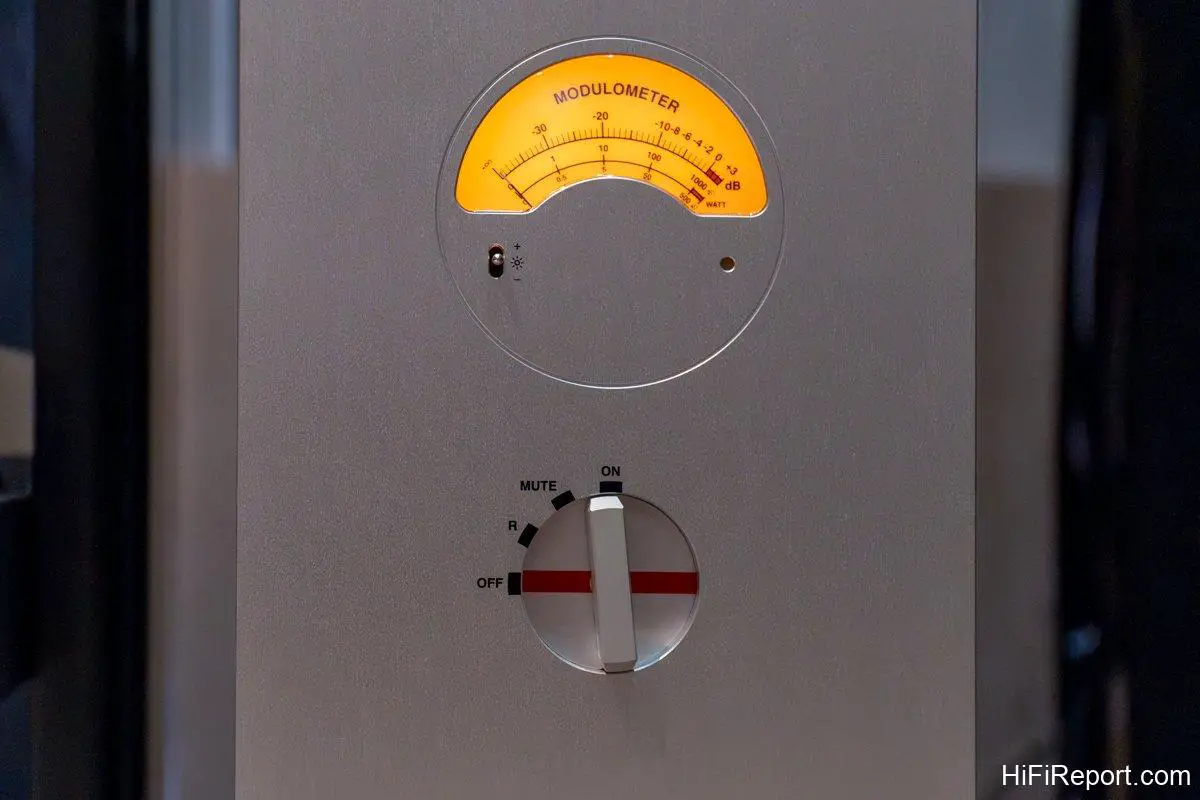
Of course, this was also thanks to the HD Amp’s robust power delivery. Prior to listening to Mahler, the music I played hadn’t exceeded 100 watts. The HD Amp’s meters, even reaching the center, indicated only about 10 watts. The next increment marked 100 watts, and the final segment represented the range between 100 and 1,000 watts. Finally, “Mahler’s Symphony No. 5” pushed the HD Amp beyond 100 watts. Whether it reached 100, 200, or 500 watts, I’m unsure, as the final meter segment is quite broad. However, the Sasha V’s ability to convey Mahler’s vast and realistic dynamic contrasts is undoubtedly due to the HD Amp’s stable control over the speakers, extracting the Sasha V’s formidable dynamic capabilities.
After the first movement, still wanting more, and with time remaining, I continued with the fourth movement, the Adagietto. This is the most famous movement of Mahler’s Symphony No. 5, famously used in the soundtrack of the film “Death in Venice.” The exquisitely romantic strings, seemingly boundless, floated upon the waves of a lake, endlessly undulating. The Sasha V allowed me to forget the audio system and immerse myself in the almost rhythmically elusive Adagietto, drifting with the ebb and flow of the notes, lost in the romanticism Mahler depicted. Enjoying Mahler in this way is truly beautiful.
Ideal Starting Point for Time Phase Tuning
Satisfied with the Sasha V? Absolutely. My conclusion mirrors my Alexia V experience: the Sasha V represents a significant leap forward. Soundstage transparency, dynamic contrast, and mid-bass control have all demonstrably improved. Coupled with Nagra HD, Crystal Cable, and Transparent components, the system was intoxicatingly seductive. Fortunately, I had already taken preventative measures, having previously ordered the Alexia V.
Comparing the Alexia V and Sasha V, their sonic character is virtually identical. The primary difference lies in the Sasha V’s slightly fewer adjustment options. The larger cabinet size of the Alexia V provides inherently superior acoustic conditions for musical scale and low-frequency headroom. However, in Rich Will Audio’s listening room, the Sasha V might even be more ideally suited than the Alexia V. Therefore, the choice of Wilson Audio speaker should primarily consider room size, while the fundamental sonic qualities remain consistent across different models.
If you’re intrigued by the potential of “adjustable time phase,” the Sasha V is an excellent starting point. Precisely calibrating time phase will reveal a newfound vitality in your music collection, recreating a realistic, vibrant, expansive, and precise musical live performance experience.
Specifications
* Type: 3-way 4-driver bass-reflex floorstanding speaker
* Drivers: 1 x 1-inch silk soft-dome tweeter; 1 x 7-inch midrange; 2 x 8-inch woofers
* Frequency Response: 20 Hz – 32 kHz +/- 3 dB
* Sensitivity: 88 dB
* Impedance: 4 ohms (minimum 2.46 ohms)
* Recommended Amplifier Power: 25W or more
* Dimensions: 1144.8 x 368.3 x 607.8 mm (HxWxD)
* Weight: 111.13 kg