Yamaha R-N2000A Review
Looking back at Yamaha’s audio history, their first product, launched in 1954, was a popular all-in-one unit featuring a turntable on top, a radio underneath, and a lift-up lid. In 1967, Yamaha announced its entry into the Hi-Fi market with the NS-20 and NS-30 loudspeakers. These two speakers were quite distinctive, employing a three-way design within flat cabinets. While the tweeter and midrange drivers were conventional, the bass driver was a flat, unusually shaped unit.
The NS-30’s bass driver measured 89x63cm, and the NS-20’s was 68x50cm.
These gigantic, flat-diaphragm drivers were originally developed for Yamaha’s electronic organs and were modified for use as speaker woofers. You see, Yamaha’s very first speaker featured a bass driver that was profoundly different from the norm. It’s little wonder that Yamaha has since consistently introduced products featuring “world-first” technologies. Incidentally, the abbreviation “NS” for “Natural Sound” from those early days is still used today.
Yamaha’s first amplifier, the CA-700, was introduced in 1972. This integrated amplifier was packed with features, including both MM and MC phono stages, and remarkably, even stereo microphone inputs. It was a product seemingly bridging the gap between home and professional use – another highly unconventional integrated amplifier. It seems Yamaha’s designers were always tasked with creating truly unique products back then; failure to deliver might have had rather… dramatic consequences!
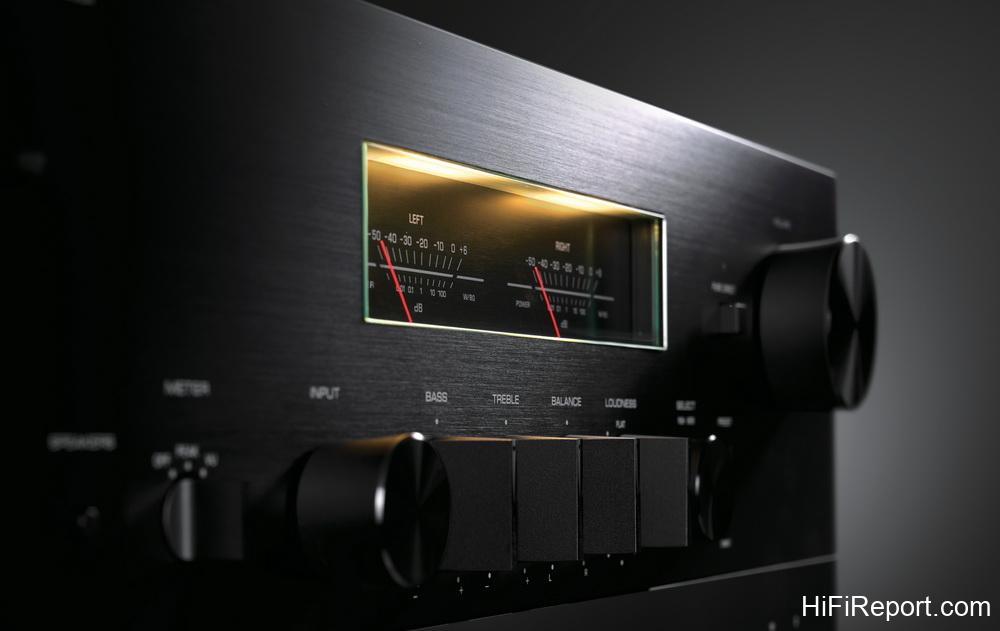
In 1973, Yamaha launched the CA-1000 integrated amplifier, whose styling was entrusted to the renowned GK Design Group. It boasted a snow-white aluminum faceplate, elongated toggle switches, and refined, elegant lever switches, all housed within a wooden cabinet. This exquisite, elegant aesthetic has remained a Yamaha hallmark since 1973, extending even to the appearance of the R-N2000A today.
Naturally, Yamaha’s innovation wasn’t limited to aesthetics. The CA-1000 was the world’s first integrated amplifier capable of switching between Class A and Class AB operation. I suspect Yamaha’s designers must have been very well compensated back then, judging by the groundbreaking products they consistently delivered. Despite the “1000” in its name, the CA-1000 only delivered 70 watts per channel.
This approach of using relatively modest power outputs has continued through to today’s integrated amplifiers, with the R-N2000A offering just 100 watts per channel.
Let me briefly mention Japan’s GK (Group of Koike). This is a large, international design firm founded in 1957 with its headquarters in Tokyo. Their design portfolio is vast, ranging from the small soy sauce bottles commonly seen on tables in Japanese eateries (for Kikkoman) to the external design of JR East’s electric trains and the famous Yamaha V-MAX motorcycle.
In 1974, Yamaha again stunned the world with the B-1 power amplifier, based on V-FET transistors. What were called V-FETs are known today as SITs (Static Induction Transistors). This type of transistor was developed by Professor Junichi Nishizawa of Tohoku University, who also happened to be a consultant for Yamaha’s semiconductor division. Thus, Yamaha manufactured its own V-FETs for use in the B-1.
Yamaha wasn’t the only Japanese manufacturer using this technology; other major companies like Sony also released V-FET amplifiers at the time.
Frankly, in those days, Japan’s developments in both loudspeakers and amplifiers were astounding to the world because they were driven by large corporations, unlike the garage startups often seen in Europe and the US. The B-1 was Yamaha’s first power amplifier, rated at 150 watts per channel. Its chassis felt like a solid block of metal, and its appearance was also designed by the GK Design Group.
The Yamaha B-1 had the unique feature of allowing an optional control panel to be fitted onto the main unit. Weighing in at a substantial 37kg, it ran quite hot in operation but offered superb sound quality. Following the B-1, Yamaha introduced the C-1 preamplifier in 1975, a unit that looked like test equipment and also caused a sensation upon its release.
Subsequent models included the B-2 power amp (1976), the B-3 (1977, Yamaha’s last SIT power amp), the C-2 preamp (1976), and the C2a preamp (1978).
Even by today’s standards, these products remain top-tier. However, leftover stock of these products was later sold as scrap metal and shipped to Taiwan. Despite their battered external condition, clever businessmen acquired this “scrap,” refurbished them – including panel beating and repainting – and then sold these reconditioned high-end Yamaha products affordably on the Taiwanese audio market. I myself bought a B-1 and a C-2a back then; they truly were superb pieces of equipment!
That concludes our brief historical journey through Yamaha’s amplifier legacy; there are many more stories to tell if we were to continue.
Modern Features: Streaming and YPAO
Now, let’s turn our attention back to the protagonist of this review, the R-N2000A integrated amplifier. From a distance, its exterior appears similar to other Yamaha amplifiers, but upon closer inspection, differences emerge, and the internal design is vastly different.
The R-N2000A is an integrated amplifier with Yamaha’s proprietary MusicCast streaming playback functionality built-in. It delivers 90 watts per channel into an 8-ohm load and 110 watts into a 6-ohm load. Integrating streaming capabilities into integrated amplifiers is a growing trend. It supports various services including Tidal, Spotify, Deezer, Amazon Music, Pandora, Napster, Qobuz, QQMusic, and Net Radio. While not exhaustive, this selection is certainly sufficient for most users.
Furthermore, Bluetooth and AirPlay are standard features. Users simply need to connect the R-N2000A to their network via Ethernet and download the Yamaha MusicCast App from the App Store to begin operation.
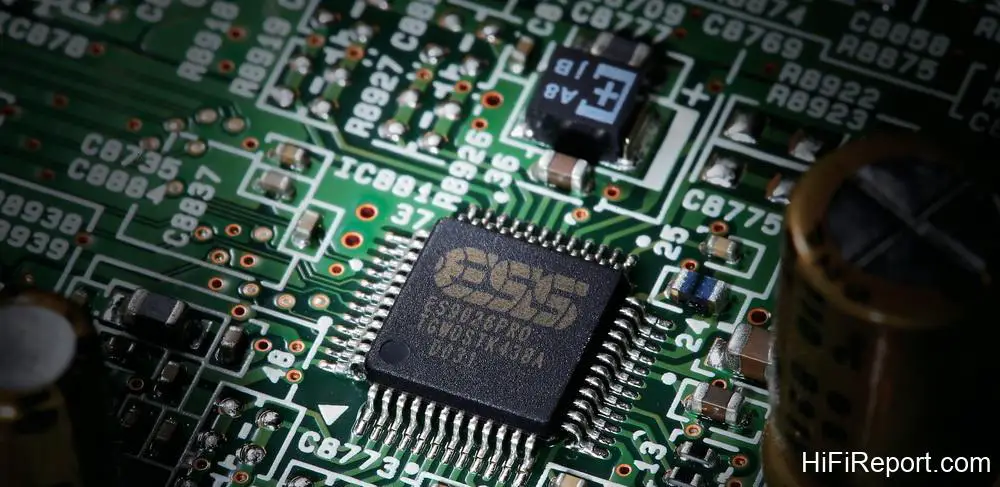
Internally, the R-N2000A utilizes the ESS ES9026 Pro DAC chip. This chip handles PCM resolutions up to 32bit/768kHz and DSD up to DSD1024. Employing this 8-channel DAC chip for 2-channel digital-to-analog conversion effectively places it in the top tier.
The R-N2000A is not just a conventional amplifier with streaming added; it also incorporates Yamaha’s acclaimed YPAO (Yamaha Parametric Room Acoustic Optimizer) automatic room correction system. YPAO not only measures room parameters to mitigate the interference of reflected sound (Reflected Sound Control) but also performs automatic parametric equalization. All the user needs to do is enable or disable this function via the App.
When you purchase the R-N2000A, it includes a measurement microphone, just like Yamaha’s AV receivers. To use it, simply place the microphone at the listening position, at ear height, pointing upwards, and the R-N2000A will perform the automatic measurement. The R-N2000A is not Yamaha’s first integrated amplifier with built-in 64-bit YPAO and streaming; that distinction goes to the R-N803 released in 2017, which has since been discontinued and succeeded by the higher-end R-N2000A.
Before conducting the YPAO measurement, ensure that the Treble, Bass, Balance, and Loudness knobs on the front panel are set to their center positions, meaning no coloration is applied, and Pure Direct is turned off. However, the measurement results displayed in the App are quite basic, showing only simple items such as the distance between the speakers and the listener, and left/right channel balance compensation.
Other parameters are not shown, and there are no manual adjustment options, preventing users from delving deeper into the menus for fine-tuning. Based on my measurements in the magazine’s listening room 2, our speaker placement was very precise, with both speakers equidistant from the listening position at 2.35 meters. However, due to slightly different conditions on the left and right side walls, the right channel sound pressure was automatically increased by 0.5dB.
Don’t underestimate the YPAO function; it can help you achieve a relatively flatter frequency response curve, reducing the potential for music to be distorted and allowing you to enjoy balanced musicality. This is especially effective if your listening space has extreme imbalances between the left and right sides; the R-N2000A’s YPAO can ensure you hear a correct soundstage distribution from the sweet spot.
During my listening tests, I intentionally skewed the toe-in angles of the two speakers significantly. Without YPAO activated, the soundstage sounded noticeably lopsided; with YPAO engaged, the soundstage remarkably “corrected” itself. If your listening space has a wall on one side and an open area on the other, the R-N2000A’s YPAO will be highly effective.
Perhaps you might worry that processing via DSP could degrade the sound quality. Yamaha anticipated this concern and employed 192kHz, 64-bit processing. Theoretically, this might cause some slight degradation, but the benefits gained far outweigh this potential drawback, and most people likely wouldn’t notice it anyway.
Design, Controls, and Connectivity
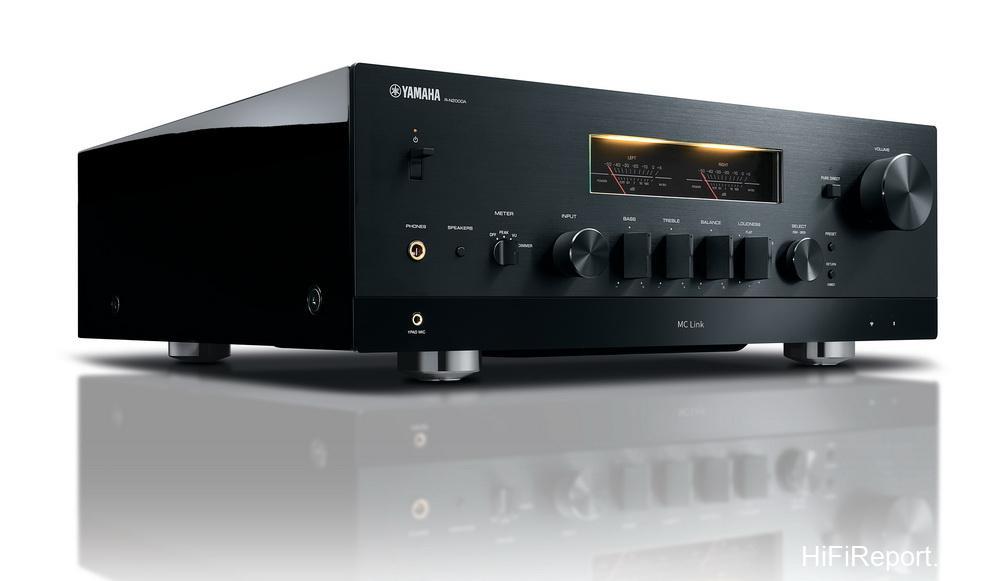
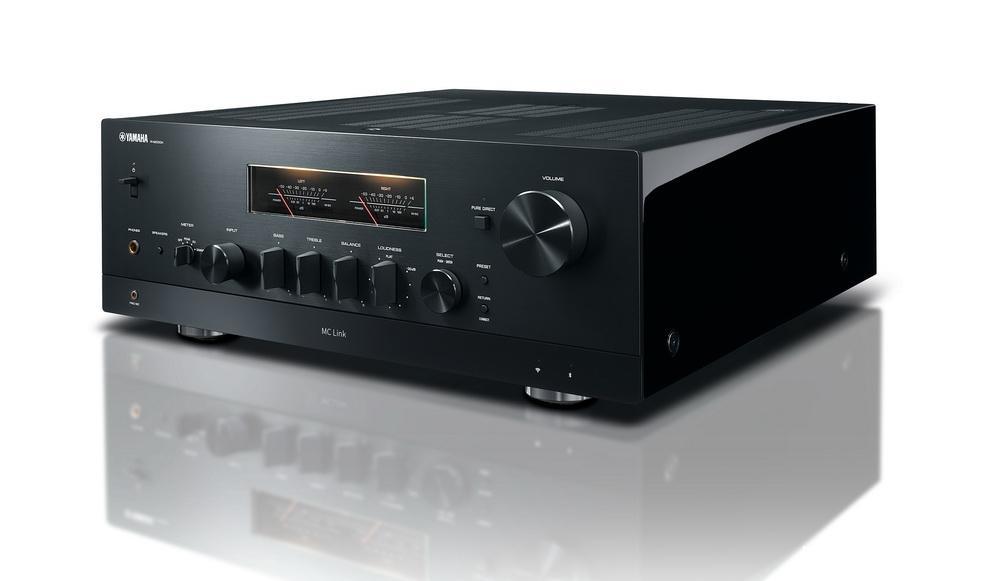
Having highlighted the R-N2000A’s two most important features, let’s revisit its exterior and panel controls. The front panel of the R-N2000A, at first glance, appears similar to previous Yamaha amplifiers, but it is, in fact, significantly different. Pay close attention to the black area at the bottom of the panel. From a distance, you might overlook it, but up close, you’ll realize it’s a display screen that can show a wealth of information.
To the left of the display is a small jack, which is the input for the YPAO microphone.
Above the small jack is the 6.3mm headphone jack. This long, narrow display has a rather interesting feature: a “Warm Up” display. It shows a thermometer icon, and as the unit’s temperature rises, it indicates three states: “Still Cold,” “Getting Warm,” and “Warmed Up.” I find this intriguing because I haven’t seen such a Warm Up indicator on other amplifiers.
The entire display screen is quite long and shows more than just the warm-up status. It can display the status of various inputs, as well as the title of the track being played from a Music Server or streaming service, and playback status (play, stop, pause, rewind, etc.). Honestly, this design is quite elegant. I suspect the designers wanted to preserve the classic Yamaha amplifier panel appearance and therefore devised this method of adding a “layer” of display at the bottom.
Moreover, when no message is displayed, visually, people tend to overlook this screen, making it seem almost invisible.
The front panel features numerous control knobs. Most designs are standard, but a few warrant a brief explanation. For instance, the circular Select (Push/Enter) knob is used in conjunction with menus; you select an item and then push the knob to confirm. This menu control method should be quite familiar. The Return/Connect button is also used for menu navigation or registration within MusicCast.
To set the FM frequency band, you must first turn off the power via the panel, then press and hold the Return button while turning the power back on.
The Preset button allows recalling saved radio or internet radio stations, or saved songs. Pressing the Pure Direct button bypasses all adjustments and YPAO processing, providing the most direct signal path, which is intended to offer the best sound quality.
As is customary for Yamaha, the R-N2000A offers Treble and Bass tone control adjustments. The Bass adjustment center frequency is 20Hz, with a range of +/-10dB. Frankly, 20Hz is extremely low, a frequency rarely reached by most musical instruments, so users might find this adjustment doesn’t have a noticeable effect. I personally would prefer the center frequency to be around 100Hz, which would provide a more tangible impact when adjusted.
The Treble adjustment center frequency is 20kHz, also with a range of +/-10dB. Adjusting at 20kHz will also likely feel inaudible, although 20kHz is just the center frequency, and the adjustment does affect lower frequencies.
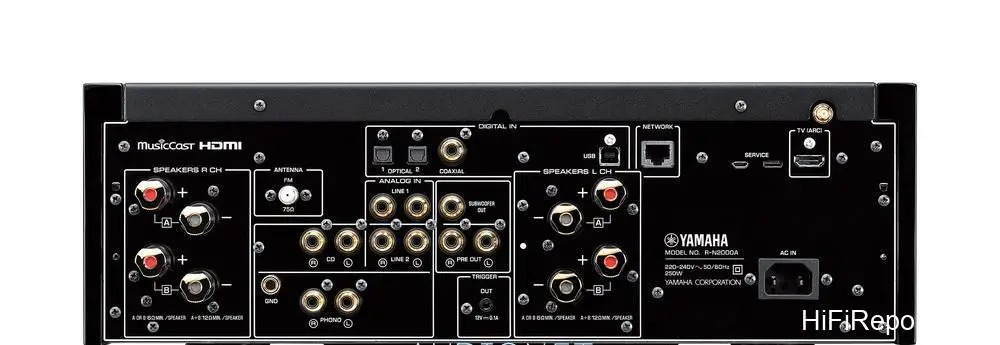
Moving to the rear panel, you’ll find two sets of speaker terminals, labeled A and B. These work with the Speaker button on the front panel to select A, B, or A+B (for bi-wiring). This means you can connect two pairs of speakers or use the two sets of terminals for a bi-wired connection to a single pair. When bi-wiring, connect the A terminals to the high/midrange drivers and the B terminals to the bass drivers.
Remember to switch the Speaker selection on the front panel to A+B and rerun the YPAO measurement.
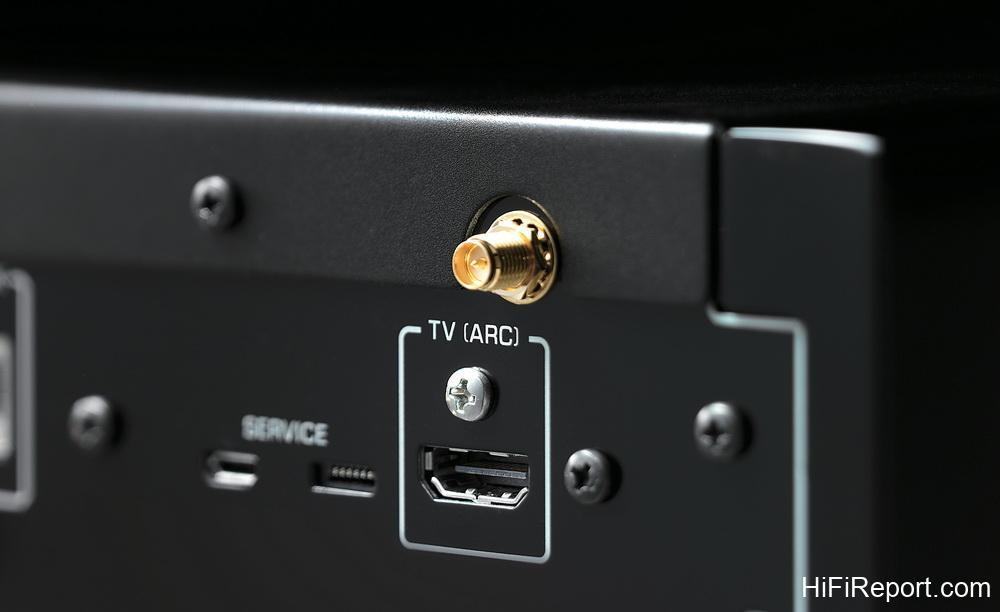
Additionally, there are analog inputs including Line 1, Line 2, CD, and Phono (supporting only MM cartridges with output 3.5mV or higher). Digital inputs comprise two optical, one coaxial, and one USB DAC input (supporting DSD 11.2MHz native and PCM 384kHz). There is also one set of Pre Out jacks, one Subwoofer output, and a 12V Trigger socket. Naturally, an Ethernet port is present, along with a TV ARC (Audio Return Channel) HDMI terminal.
As the R-N2000A includes radio functionality, it also features a 75-ohm FM antenna connection and a wireless reception antenna. Finally, there are two Service Ports intended for maintenance, not music playback.
The R-N2000A also includes a subwoofer output terminal for connecting an active subwoofer, a feature not to be ignored by those wanting to set up a 2.1 channel system. If you connect a subwoofer, before performing the YPAO measurement, set the subwoofer’s volume to the mid position and its crossover frequency to maximum for accurate measurement. By the way, to initiate the YPAO measurement, you must press the Enter button on the remote control. The measurement takes about 1 minute.
If the ambient noise is too high or other factors interfere, YPAO may not complete the measurement; the display will indicate the reason, and you should resolve it before attempting to measure again.
If you connect the R-N2000A using an Ethernet cable (which I recommend), you’ll avoid many potential issues. If you use a wireless connection, be aware that upon the first wireless connection, the display will show “Wireless WAC” (Wireless Accessory Configuration). You need to press the small Return/Connect button on the front panel to complete the connection.
Also, when using a wireless connection, do not immediately turn the unit back on after shutting it off; wait at least 10 seconds, otherwise, you might encounter noise.
Although the R-N2000A has the MusicCast App, the remote control is essential for many functions, so be sure not to lose it. The remote allows direct control of numerous features, including input switching, settings, display options, and volume control. The Display button cycles through different information displayed on the front panel. The remote also has a Memory button used after setting up presets to confirm they are saved.
Additionally, there’s a Sleep button to set an automatic shutdown time (30, 60, 90, or 120 minutes) or disable the function (Off).
The R-N2000A offers both FM and DAB (Digital Audio Broadcasting) radio functions. FM is usable in Taiwan and other Asian regions, while DAB is used in Europe, Russia, and Australia. When connecting to a TV via the HDMI terminal, note that the output is indicated as 2-channel PCM, so the audio settings on your TV should also be set to 2-channel PCM.
If you purchase the R-N2000A, I highly recommend reviewing the owner’s manual. This manual is a substantial 149 pages long and provides incredibly detailed information, covering various functions, operation instructions, potential troubleshooting scenarios, and resolutions. I can only imagine the tremendous effort that went into writing this manual, and I salute the author.
Inside the R-N2000A
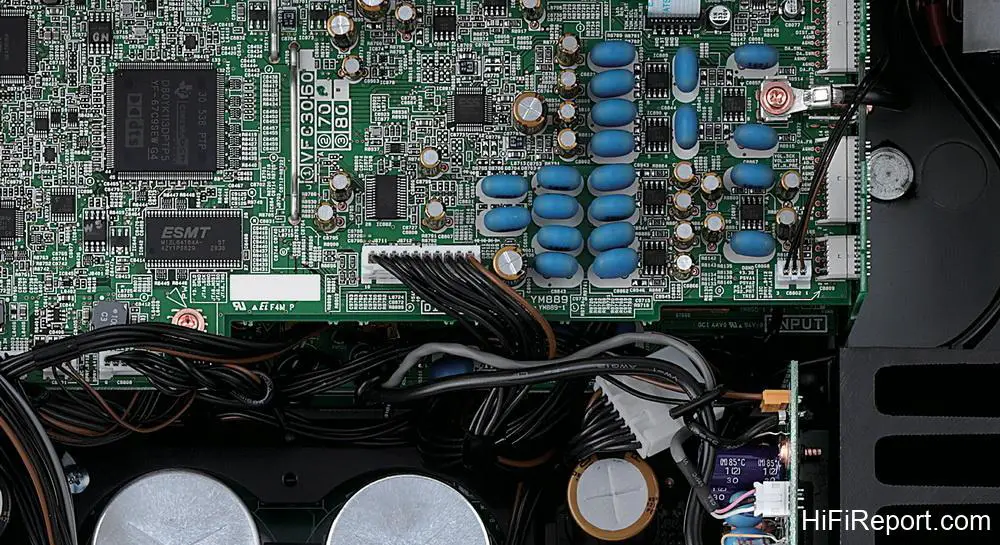
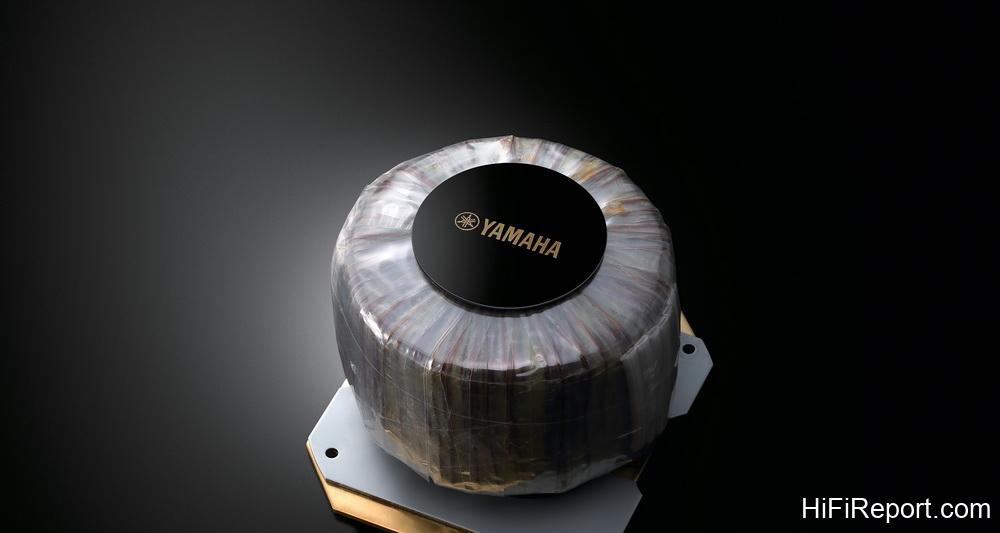
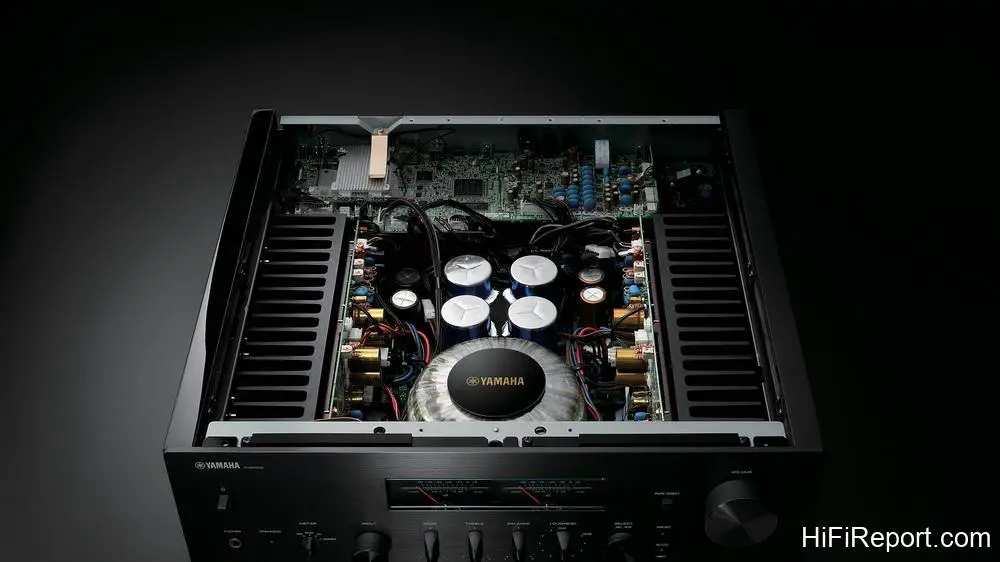
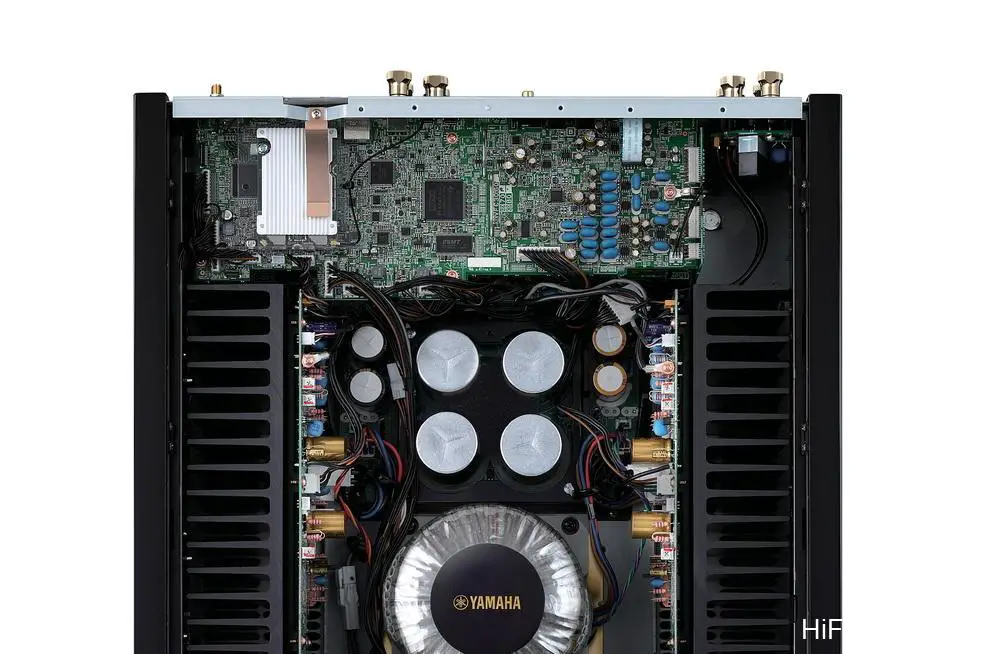
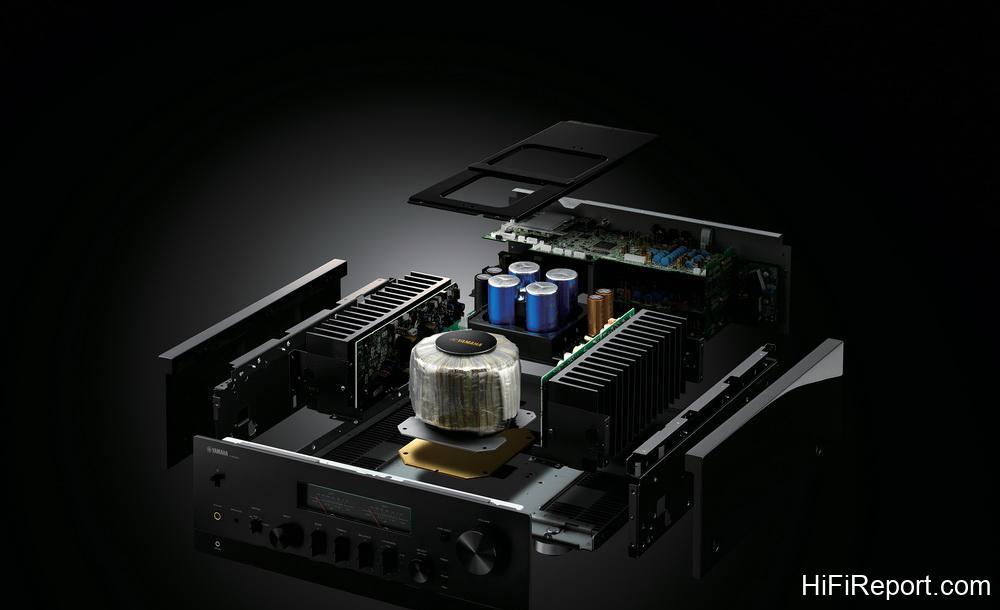
Lifting the top cover of the R-N2000A reveals an internal layout similar to previous Yamaha amplifiers. A large toroidal transformer is positioned centrally, with four substantial filter capacitors behind it. The heatsinks and power output stages are located on the left and right sides, while the MusicCast and preamplifier circuits are towards the rear. The overall layout is very balanced.
The R-N2000A’s large toroidal transformer provides ample power, and the internal wiring is quite thick, helping to reduce impedance. The power supply is isolated from the ground loop to prevent power noise from contaminating other circuits, a concept Yamaha refers to as “floating design.” Furthermore, the R-N2000A’s circuitry is arranged in a balanced configuration to further minimize noise. The internal layout is also symmetrically arranged left and right.
Yamaha collectively refers to these design principles as “Floating Balanced Design.”
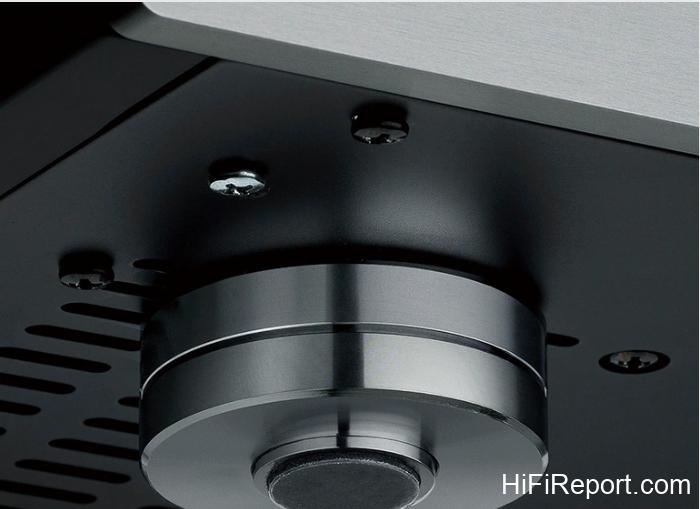
The R-N2000A’s chassis appears refined on the exterior and is designed with a dual-layer concept internally. The front, back, sides, and bottom panels all feature a double-layer structure, and there is also a double-layer vibration isolation design beneath the transformer. This amounts to excellent vibration control.
Additionally, the chassis is designed with a mechanical grounding concept, and the R-N2000A makes contact with the surface via silver-plated copper isolation feet, demonstrating a comprehensive approach to vibration management.
Sonic Performance
My listening tests of the R-N2000A were conducted in the magazine’s two listening rooms, primarily paired with the Yamaha NS-2000A loudspeakers, though I also listened with other speakers for reference. The primary source was, of course, Tidal, played directly via the R-N2000A’s streaming function. If you expect the R-N2000A’s sound to be thin and lean, like a paper-thin model, you’d be mistaken.
The R-N2000A’s sonic character is clear, transparent, refined, and balanced, yet it has substance; it is not “skinny and flat.”
To use a female analogy, while the R-N2000A might not be a voluptuous beauty with striking curves, it possesses a well-proportioned, perfectly balanced physique. Using a male analogy, the R-N2000A isn’t a rugged, bulky strongman but more like a K-drama actor. Anyone who watches K-dramas knows these actors look dashing and elegant in a suit, yet reveal a six-pack when they take it off. In simpler terms, the R-N2000A’s sound is full-bodied and never thin.
It’s non-aggressive, balanced, and easy to listen to for extended periods. However, I must also be fair: compared to some high-end European/American amplifiers, the R-N2000A’s sound density and weightiness are slightly less prominent. But this difference is most apparent to those accustomed to expensive European/American amplifiers; most listeners likely wouldn’t notice.
The R-N2000A reproduces piano with great fidelity, which is a musical genre Yamaha products always feature during their presentations. Why does the R-N2000A render piano music with such realism? I suspect it’s because Yamaha pianos are familiar to most people, and engineers likely use their own pianos as a reference when designing amplifiers, resulting in particularly truthful reproduction. Listening to Baek Kun-woo’s Chopin Nocturnes, the crystalline notes sparkle and leap out.
The transient texture of the hammer striking the string is incredibly realistic, with fast response, and each note is accompanied by rich harmonics.
Listening to Elissa Lee Koljonen’s album “Heartbreak,” although the violin is the star, the accompanying piano is also beautiful. It’s easy to hear the difference in the piano sound on this recording compared to Baek Kun-woo’s album. This difference partly comes from the recording itself, and partly from the difference between the two pianos. Yamaha’s audio equipment champions natural, balanced sound, so accurately presenting the differences between these two pianos is to be expected.
Since I mentioned “Heartbreak,” I must also comment on the violin reproduction. The R-N2000A renders the violin with a fine texture and focused lines, capturing the subtle tension and elasticity of the bow on the strings. Furthermore, during bow changes, the sound is gentle and delicate, with a soft texture that is never coarse. The sound is also controlled, never becoming harsh even in the upper registers.
For instance, listening to Daniel Hope’s “Hope at Home,” the violin sound has a distinctly “European flavor”—it’s not thin or lean. The accompanying piano notes have excellent body and sound impactful and realistic. When listening to “Morgen” from Joshua Bell’s “Voice of the Violin,” the violin sounds particularly sweet and delicate, while the soprano’s voice is full, rounded, and focused. Both are reproduced with beautiful tonal quality.
The R-N2000A presents the cello sound as clean and warm, with clear rendering of subtle vibrations rather than a thick, nasal quality. Listening to Janos Starker’s performance of Bruch’s “Kol Nidrei,” the R-N2000A portrays the cello beautifully, frankly not losing much to higher-priced European/American amplifiers. On Pablo Ferrandez’s album “Reflections,” the subtle vibrato of the cello sounds lovely, warm and relaxed, without excessive nasality, maintaining a sense of clarity.
The piano is warm and refined; although not the main instrument, each note still has distinct body and dimensionality, feeling like it creates a lively, three-dimensional image alongside the cello.
When listening to string quartets, the R-N2000A’s balance among the four instruments exceeded my expectations. Listening to the Tokyo Quartet’s Beethoven String Quartets, the four instruments sound warm and relaxed, conveying a sense that they are indeed wooden instruments, not electronic or metallic.
Listening to the Elias String Quartet’s Beethoven String Quartets, although it’s the same composer, the tonal quality and timbre of the four string instruments are completely different from the Tokyo Quartet’s. What I mean is, the R-N2000A can accurately reproduce the sonic differences between different recordings, and both renditions are equally beautiful.
The R-N2000A’s resolving power is evident when listening to “Hedwig’s Theme” from John Williams’ “Harry Potter 20th Anniversary” movie soundtrack. This piece contains many subtle performance details, and the orchestral arrangement is vividly crafted, with various instruments appearing in succession. This not only challenges the sense of layering and depth within the soundstage but also tests how realistically various instruments are rendered.
The most impressive aspect of the R-N2000A is its ability to resolve many subtle performance nuances, separating them like oil and water. Even amidst the grand orchestral passages underneath, these details are not obscured. Furthermore, listening to the brass and woodwind instruments, one can’t help but feel how lifelike the sound is. In other words, the R-N2000A presents the correct timbre of the instruments.
When listening to Eugene Ormandy conducting the Philadelphia Orchestra in the “Dance of the Hours” (from La Gioconda), the R-N2000A’s characteristics of refinement, clarity, and transparency are even more apparent. This piece starts softly and delicately, with particularly beautiful woodwind timbres. The music then gradually unfolds, revealing the full grandeur of the orchestra.
Here, the R-N2000A presents dense and refined string sections, along with rounded and clear woodwinds, and a beautiful overall orchestral sheen.
How about the R-N2000A’s reproduction of acoustic bass? Listening to Musica Nuda’s “My Favorite Tunes,” the R-N2000A fully exhibits its ability to reproduce the bouncy quality of the low frequencies. This album features a duo of acoustic bass and female vocalist, accompanied by other simple instruments. The bass notes played by the male bassist are incredibly elastic, and the texture of fingers plucking the strings is particularly realistic.
The female vocalist’s voice is clear, powerful, with a wide dynamic range and fast transients.
Don’t think I’m using the wrong adjectives; this female singer truly sings with incredible energy, rapidly shifting between high and low registers. Here, the R-N2000A completely unleashes its transient response, control, transparency, and resolving power, delivering a nimble, lively, full-bodied, and powerful performance. After listening to this album, you won’t feel that the R-N2000A’s 90 watts are insufficient, because everything sounds so energetic and substantial.
While the R-N2000A’s acoustic bass sounds lively and bouncy, it also renders electric bass in various styles equally well. For example, listening to Brian Bromberg’s “My Bass,” the R-N2000A’s reproduction of fast, crisp, and bouncy electric bass transients perfectly keeps pace with the player’s rapid slapping and plucking. The texture of the thick metal strings of the electric bass is very realistic, and the downward extension of the bass notes is clear and focused, without losing shape.
When listening to “Capri Calling” from Yello’s “Baby” album, the bass here becomes full, soft, elastic, and bouncy. The bass notes hit you gently like physical entities, providing a very tactile sensation.
Although the R-N2000A may not be a curvy beauty with prominent features, it is still impressively cool and full-bodied when playing pop music. For example, listening to Fink’s “Perfect Darkness,” the depth and substantial bounce of the low frequencies (kick drum and electric bass) maintain excellent balance with the guitar, drums, and vocalist’s voice.
The vocalist’s voice is full-bodied in the lower mid-range, carrying a sense of (weariness/experience), making the music feel centered around his voice. In the thick accompaniment and full-bodied vocals, you won’t find a trace of the so-called “Japanese sound.”
Listening to Diana Krall’s “Sway,” her deep, rich voice sounds clear, with distinct throat details and subtle mouth noises. Although Diana Krall’s voice is the main focus and most prominent, other accompanying instruments like guitar, piano, bass, cello, and strings are still clearly audible, and their layers are resolved without becoming a muddled mess.
Some audio systems render this track very murky, losing the plucked texture and elasticity of the bass, and failing to capture the vocal details, leaving only Diana Krall’s voice sounding bloated and lacking clarity. The R-N2000A, however, sounds very balanced, neither too lean nor too fat.
The R-N2000A offers only 90 watts per channel (or let’s say 110 watts). Can it reproduce kick drums satisfyingly? Yes, it can! When listening to “End of the War” from the “Curse of the Golden Flower” movie soundtrack, those few kick drum hits are powerful enough, the full low-frequency air pressure launching from the speakers and pressing against the skin, feeling like a soft push. Listening to Myung-Whun Chung conducting the Philadelphia Orchestra in Shostakovich’s “Symphony No.
4,” the initial drum hits and intense orchestral tutti in the first movement are also very impactful, without any sense of weakness.
Of course, this is partly because the R-N2000A was paired with the NS-2000A loudspeakers, which have a sensitivity of 88dB. If paired with speakers below 84dB sensitivity, the R-N2000A’s 100 watts might not perform as effectively. Therefore, I recommend pairing the R-N2000A with speakers that have a sensitivity of 88dB or higher, ideally the NS-2000A itself, to allow it to perform to its full potential.
Exceptional Value for Money
When considering the Yamaha R-N2000A, most people will focus solely on its excellent sound performance and refined, elegant appearance. However, one significant advantage is often overlooked: its exceptional value for money. Why is the R-N2000A such great value? Because of mass production. For a large manufacturer like Yamaha, once a production line is set up, it must produce a considerable quantity, and this large volume directly reduces various costs.
The same R-N2000A, if produced by a small high-end audio manufacturer, would inevitably have much higher costs due to the low volume, making it impossible to keep the price down.
In my estimation, for a high-end boutique manufacturer to offer a product with the R-N2000A’s build quality, appearance, features, and sonic performance, they would need to sell it for at least USD 9,000-10,000 to be profitable. For an integrated amplifier with streaming playback and built-in YPAO correction, manufactured with such rigorous attention to detail, priced at this level, I believe you’d need a searchlight to find anything comparable in value.
Specifications
* Type: Streaming, YPAO Integrated Amplifier
* Launch Year: 2023
* Frequency Response: 5-100 kHz +0/-3 dB, 20-20 kHz +0/-0.3 dB (Pure Direct ON)
* Rated Output Power: 90 watts (8 ohms, 20-20 kHz, 0.07% THD)
* Signal-to-Noise Ratio: 110 dB (Pure Direct ON)
* Dimensions: 435 x 157 x 473mm
* Weight: 22.1 kg

- With its authentic Hi-Fi quality, The Yamaha R-N2000A is a next-generation network HiFi receiver, compatible with lossless and high-resolution music sources, including streaming services.
- ESS SABRE ES9026PRO Ultra DAC for ultimate high-performance conversion
- High-performance USB DAC function supports DSD 11.2 MHz native playback and 384 kHz playback
- Toroidal power transformer for spacious sound filled with realism
- MusicCast lets you stream from your favorite music services