
Yamaha R-N600A Review
Japanese audio giant Yamaha places significant importance on this market segment. Since 2023, they have progressively released three integrated streaming amplifiers: the R-N2000A, R-N1000A, and R-N800A. All feature Yamaha’s robust MusicCast streaming capabilities, allowing seamless integration of various streaming music services via a connected app, making listening simple and convenient, even for newcomers to the world of audio.
However, Yamaha felt this level of approachability wasn’t quite enough. Last year, they further expanded the series with its younger sibling, the R-N600A. This model foregoes some “non-streaming” features found in the previous three.
For young enthusiasts, pairing this with a set of speakers could result in a complete, feature-rich streaming audio system, offering truly exceptional value. If you’re curious whether such an affordable, feature-packed amplifier as the R-N600A can deliver good sound, then you absolutely shouldn’t miss this review.
Design and Connectivity
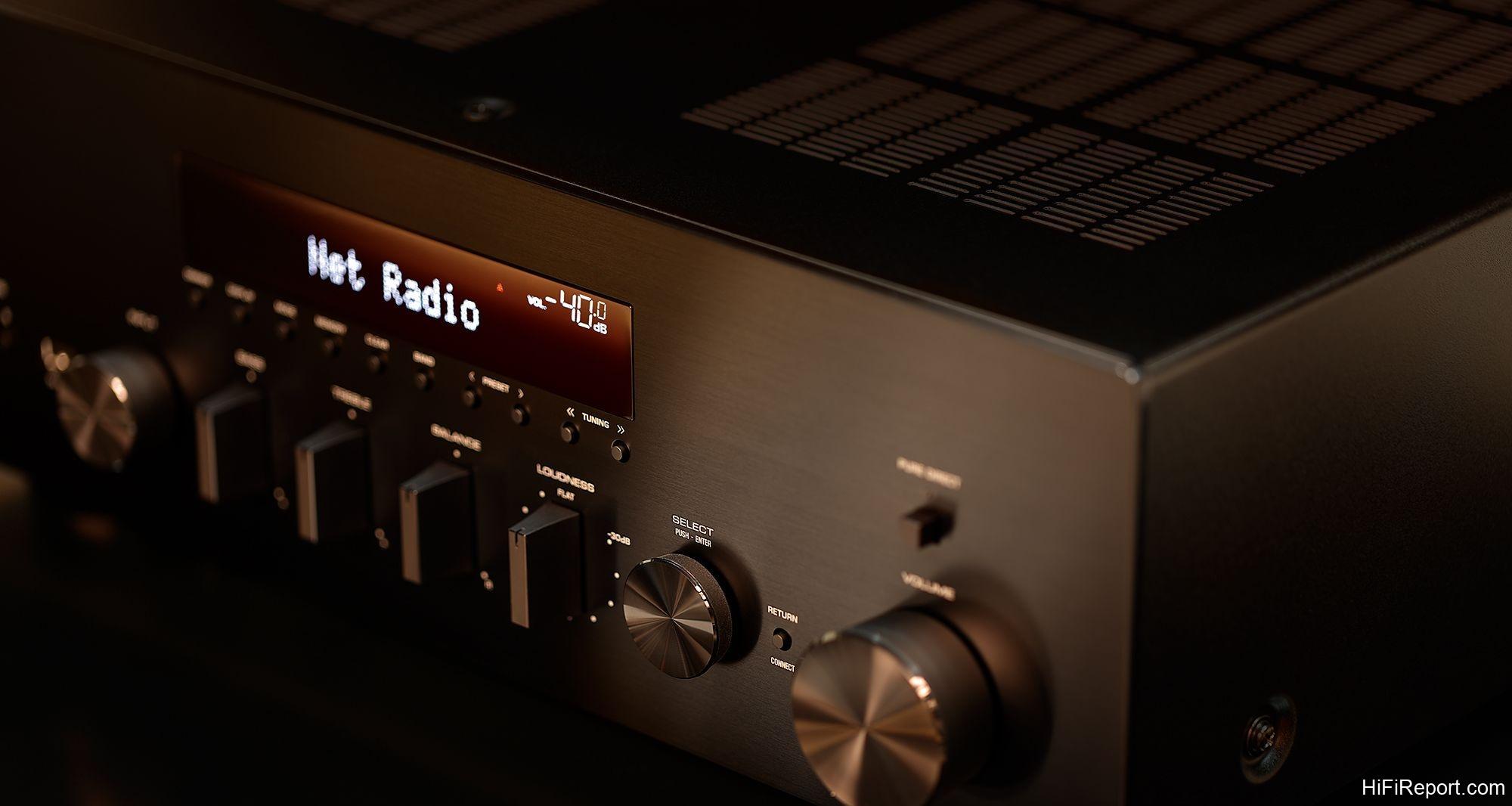
Available in black and silver, the R-N600A inherits Yamaha’s minimalist and elegant Hi-Fi amplifier style. The front panel is crafted from aluminum with a fine hairline finish and features the brand’s traditional square EQ knobs, lending it a rather vintage feel that will surely evoke memories for seasoned audiophiles. Even audio beginners will find the R-N600A very user-friendly, as its button functions are clearly labeled.
Besides EQ, the panel allows direct selection of sources like Bluetooth, MusicCast, and network radio, and it can switch between A and B speaker outputs. It even retains a link to the company’s AV receiver heritage, offering a Pure Direct mode that turns off the display and all lights to minimize interference and enhance sonic purity.
Turning to the back panel, the R-N600A’s connectivity is straightforward. It includes optical and coaxial inputs for connecting CD players or streaming transports, as well as AM/FM antenna terminals if you wish to use it as a radio. It also features two sets of speaker terminals (A and B), allowing you to switch between two pairs of speakers or set up a second system.
If you feel the low frequency in your room is insufficient, it has a subwoofer output for connecting an active subwoofer to create a 2.1 channel system and enhance bass impact. Additionally, the unit provides four sets of RCA analog inputs for connecting CD players. To cater to the growing popularity of vinyl among today’s cultural enthusiasts, it also includes a Phono input, indicating built-in MM phono stage capability, allowing direct playback when connecting a turntable.

Streaming and Digital Features
While the R-N600A omits the R-N800A’s HDMI ARC and USB Type-B digital inputs, meaning you can’t connect it directly to a TV or PC via these methods, it fully retains its streaming capabilities. It supports Wi-Fi and Ethernet connections and, most importantly, features the powerful native MusicCast function. Using the MusicCast Controller App, you can stream from services like Spotify, Amazon Music, and internet radio.
It also supports Tidal Connect, allowing you to control playback directly from the Tidal app. Furthermore, it includes AirPlay 2 functionality, enabling Apple users to wirelessly stream Apple Music or audio files from their devices.
Should you lack a network connection, the R-N600A includes a USB Type-A terminal for playing files from a flash drive, supporting high-resolution audio sources up to 32bit/384kHz. Finally, the unit supports Bluetooth 4.2 for simple playback from a mobile phone. For late-night listening sessions, there’s a 6.3mm headphone output on the front panel. Although an entry-level model, its features are quite comprehensive.
Internal Design and Technology
The R-N600A isn’t just feature-rich; its hardware design is also noteworthy. Opening the chassis reveals a highly rigid base chassis inherited from higher-end models, paired with a unique “Art Base” resin frame for vibration damping. The foot section of the base plate is a Yamaha-developed structure, with a curved outer ring and a straight inner structure designed to suppress unwanted energy transmission and absorb/block unnecessary vibrations.
Inside, a large EI transformer handles power supply for the audio circuits, while a separate switching power supply is used for the display and network card, achieving power separation.
Digital-to-analog conversion is handled by an ESS ES9010K2M 32-bit DAC chip, capable of decoding PCM up to 32bit/384kHz and DSD up to 11.2MHz. The amplifier circuit incorporates Yamaha’s classic “ToP-ART” (Total Purity Audio Reproduction Technology) philosophy, aiming for extremely clear audio reproduction based on the “shortest path” circuit concept to ensure highly efficient signal transmission.
For improved dynamics and signal-to-noise ratio, the power amplifier section uses a discrete single push-pull output stage, delivering 80 watts per channel into an 8-ohm load, which is more than sufficient for most entry-level speakers.
Listening Experience
For this review, I paired the R-N600A with Klipsch R-625FA floorstanding speakers. The R-N600A’s 80 watts per channel into 8 ohms easily drove these highly sensitive Klipsch speakers, and as a result, unlocked richer details and dynamics. The sound of the R-N600A differs from the neutral and crisp character I recall from the R-N800A.
While it may not possess the same density as the higher-end models, its sound is smoother and warmer, pairing well with the more direct nature of the R-625FA speakers.
Starting with a simple piano solo, I played Daniil Trifonov’s performance of Liszt’s “12 Etudes.” The piano notes felt rounded and elastic, the high notes were full and resonant, and the impact of the low notes was dynamic. During the performance, I could hear the warm, full resonance of the piano body. This slightly colored sonic characteristic also gave the piano’s low frequencies a greater sense of scale.
Even during the most virtuosic passages, the playing flowed effortlessly, with notes remaining distinct and never sounding messy.
While the R-N600A might lack the sheer transparency and resolution of higher-end units, its rich midrange is truly captivating! Playing “Someday I’ll Find You” from Sonny Rollins’ “Freedom Suite” album, the saxophone had a warm, full texture with ample energy. You could feel the power of Rollins’ playing. Even the “shattering” sound at the peak of his passionate playing was smoothed out and gentle. Even through the R-625FA’s revealing detail reproduction, it never sounded overly harsh.
The double bass accompaniment had a fluffy, full character, sounding slightly weightier than usual. Although there was a slight lack of control in the mid-bass, it’s rare for an entry-level Japanese amplifier like the R-N600A to possess such a warm, listenable quality. This gave the simple jazz trio a more solid foundation, making it even more enjoyable.
The R-N600A’s sound signature is warm and thick but without being sluggish. Its soundstage and positioning are still quite good. When I played Vivaldi’s “Concerto for Three Violins” from Mutter’s 60th birthday concert, I could discern a clear orchestral outline between the speakers. The various string sections were well-organized, creating a three-dimensional, expansive stage. The solo violin had a smooth, sweet character with rich, resonant wood tones and a nuanced feel.
Although the sound density wasn’t exceptionally high, the sense of form was very clear. However, what impressed me most was the R-N600A’s full low-end energy. When the strings played together, the sound was truly powerful. Even the double basses within the inner voices had a solid thickness. The substantial musical dynamics did not cause the R-N600A to sound uncontrolled or messy; it maintained a clear sense of hierarchy and layering.
The tuning of this R-N600A differs from many other Yamaha amplifiers, possessing a smoother, more listenable quality. During the review, I tried pairing it with the KEF LS50 bookshelf speakers, known for their speed and resolution, and they still produced a warm, comfortable sound, proving its flexibility in pairings, which is great for beginners. If your budget is limited and you don’t want the hassle of overthinking system matching, then the R-N600A is definitely for you.
With it, you can start enjoying a wealth of streaming music with the most streamlined system configuration.
Specifications
* Design: Integrated Streaming Amplifier
* Output Power (20Hz-20kHz, 0.7%THD): 80W + 80W (8 ohms)
* Dynamic Power (8/6/4/2 ohms): 105/125/150/175W
* Signal-to-Noise Ratio (CD in): 100dB
* Analog Inputs/Outputs: Phono, CD, Line 1, Line 2, Line 3, Subwoofer Output
* Digital Inputs/Outputs: Optical 1, Optical 2, Digital Coaxial 1, Digital Coaxial 2, USB, Network, Wi-Fi, Bluetooth
* Standby Power Consumption: 0.2W (Network Standby On / Wi-Fi connection 2.0W)
* Dimensions (W x H x D): 435 x 151 x 392mm
* Weight: 9.8kg