
Apple AirPods Wireless Ear Buds Review
Overview
The Apple AirPods Wireless Ear Buds (MV7N2AM/A) represent the product that launched Apple’s true wireless earbud era. First available on March 20, 2019, these earbuds were powered by Apple’s H1 headphone chip and designed to deliver a seamless wireless audio experience for users of the Apple ecosystem. While Apple has since released multiple generations of AirPods — including the AirPods Pro 3, AirPods 4, and AirPods Max 2 — the original AirPods remain a significant entry point into Apple’s audio lineup. With over 635,000 ratings on Amazon and an aggregate score of 4.7 out of 5 stars, the original AirPods have earned widespread consumer approval.
Design and Build
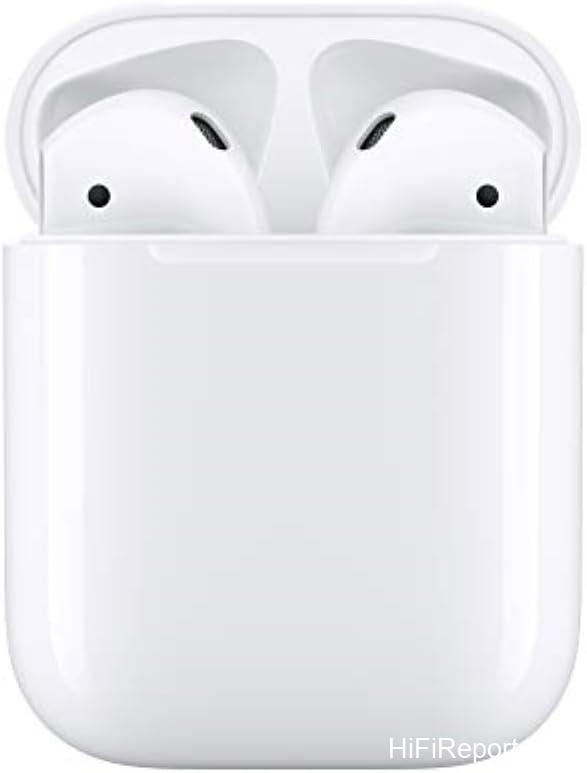
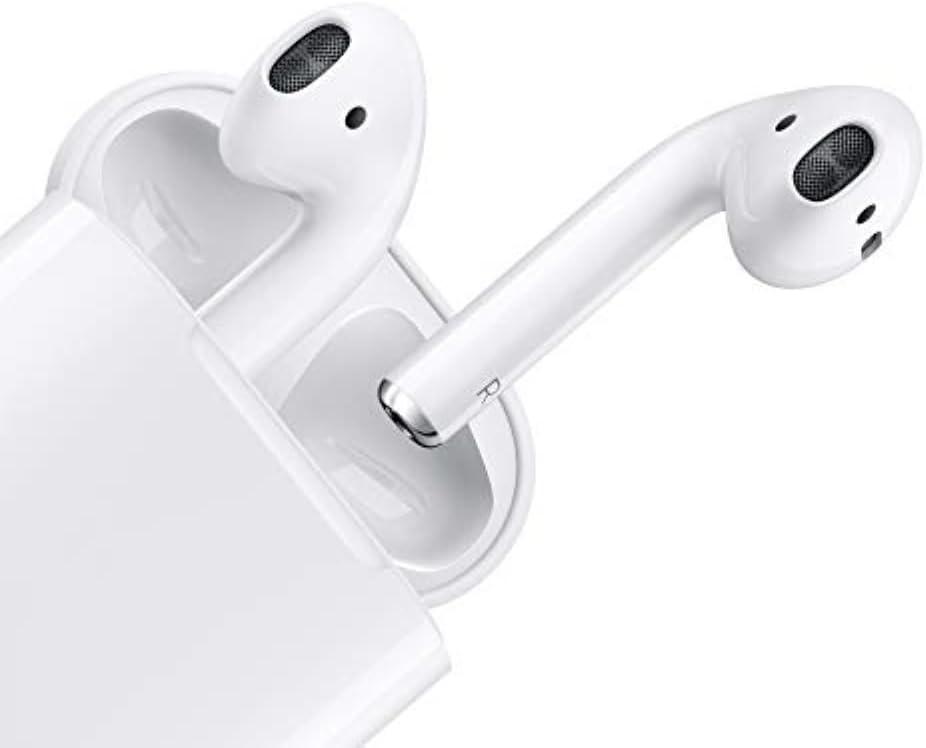
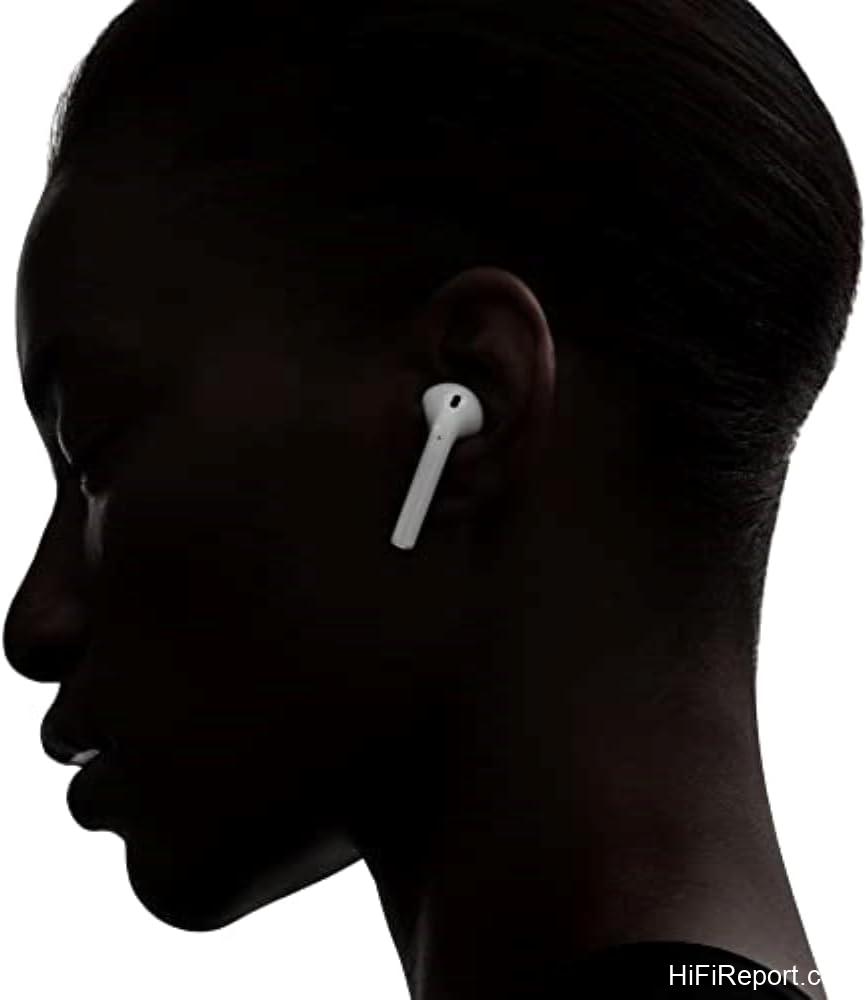
The AirPods have a compact form factor, measuring 0.65 x 0.71 x 1.59 inches, with a total weight of 3.5 ounces including the charging case. The design is minimalist and instantly recognizable, consistent with Apple’s design philosophy across all its products. The earbuds themselves feature a stem-style design that extends downward from the ear tip, housing the microphones and sensors that enable the automatic on/off functionality.
The Lightning Charging Case serves as both a power source and a protective storage compartment. At the time of the AirPods’ release, Apple was still using the Lightning connector across its product lineup, which meant the charging case used Lightning rather than the newer USB-C standard. This is a notable limitation for users who have since transitioned to USB-C charging across their devices, as the AirPods’ case requires a Lightning cable or a Lightning-to-USB-C adapter.
The earbuds are designed to sit in the outer ear without silicone tips, which is a departure from the in-ear design used by many competitors. This open-fit approach means the AirPods do not create a seal in the ear canal, which affects both sound isolation and the fit’s security during vigorous activity.
Sound Quality
According to Apple, the AirPods deliver “rich, vivid sound” powered by the H1 headphone chip. The H1 chip was Apple’s first dedicated audio processor, designed to handle audio processing, Bluetooth connectivity, and power management in a single package. This integration allowed Apple to reduce latency, improve battery efficiency, and enable features like automatic device switching that were not possible with generic Bluetooth chips.
While third-party reviewers have since tested newer AirPods models with more advanced chips, the original H1-powered AirPods were noted for their clean and balanced sound signature when they launched. The lack of active noise cancellation means that ambient sound is always present, which some listeners may find acceptable for casual listening but less ideal for commuting or noisy environments.
Connectivity and Setup
One of the AirPods’ defining features is their effortless setup experience. After a simple one-tap pairing process, the earbuds automatically connect and disconnect when placed in or removed from the ears. The H1 chip enables seamless switching between Apple devices — iPhone, Apple Watch, Mac, iPad, and Apple TV — without manual re-pairing. This ecosystem integration remains a key differentiator that competitors have struggled to match, particularly for users who own multiple Apple devices.
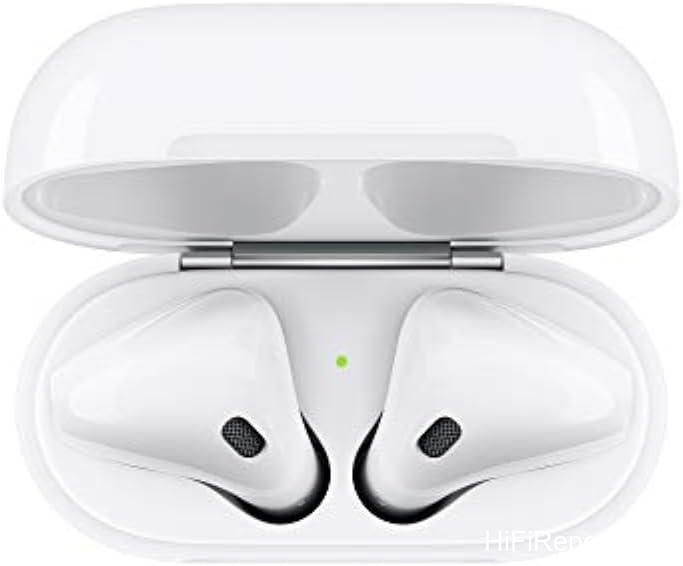
The automatic on/off functionality works by detecting when the earbuds are in the ears using built-in sensors. When the earbuds are removed, audio playback pauses automatically. When they are reinserted, playback resumes. This feature eliminates the need to manually pause and resume music, making the AirPods particularly convenient for users who frequently take their earbuds out to talk to someone or check their phone.
Voice Control and Siri
The AirPods support hands-free voice control through “Hey Siri,” allowing users to access Siri without reaching for their iPhone. This feature was groundbreaking when introduced, enabling users to control music, make calls, set timers, get directions, and ask questions through voice commands alone. The H1 chip processes the wake word locally, which means the earbuds can listen for “Hey Siri” without constantly transmitting audio to the iPhone, helping to conserve battery life.
Battery Life
Apple rates the AirPods for more than 24 hours of total listening time when used with the included Lightning Charging Case. The earbuds themselves contain two Lithium Metal batteries, and the case provides additional charge cycles to extend total listening time. While newer AirPods models have extended battery life — the AirPods Pro 3 is rated for up to 8 hours per charge, up from 6 hours for the AirPods Pro 2 — the original AirPods’ 24-hour total battery life was competitive at the time of release and remains adequate for most daily use cases.
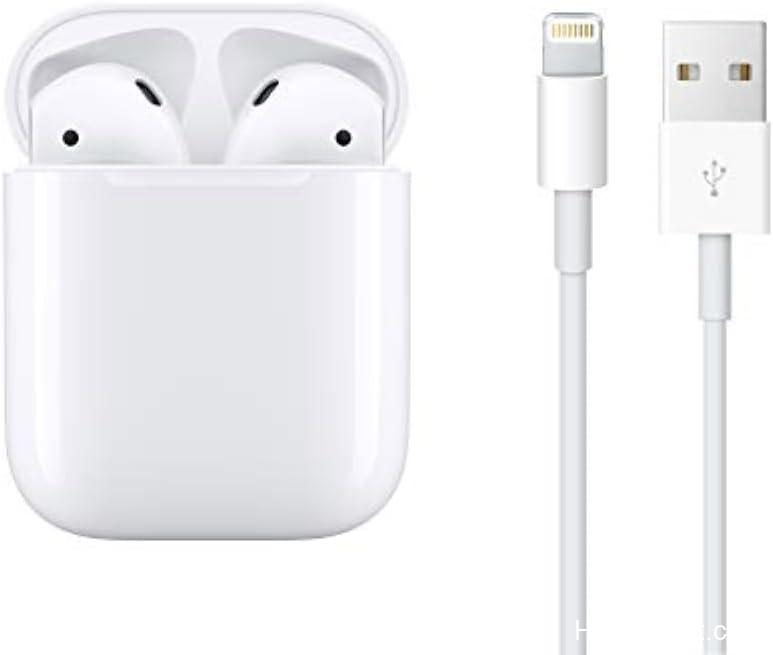
The charging case uses the Lightning connector, which means users will need a Lightning cable or an adapter to charge the case with USB-C or USB-A ports. This is a minor inconvenience for users who have transitioned to USB-C as their primary charging standard, but it does not significantly impact the overall user experience.
Audio Sharing
A unique feature of the AirPods is Audio Sharing, which allows two sets of AirPods to simultaneously receive audio from a single iPhone, iPad, iPod touch, or Apple TV. This makes it easy to share music, movies, or podcasts with a friend or family member without needing a second device. The feature works by pairing both sets of AirPods with the same source device and then selecting Audio Sharing in the Control Center on iOS devices.
What Customers Are Saying
With over 635,000 ratings on Amazon and an aggregate score of 4.7 out of 5 stars, the original AirPods have been widely praised by consumers. The high rating suggests strong overall satisfaction, likely driven by the seamless Apple ecosystem integration, reliable connectivity, and familiar sound quality. The volume of ratings indicates that the AirPods have been a bestseller, with hundreds of thousands of units sold through Amazon alone.
The aggregate rating implies that the majority of customers are satisfied with their purchase, with praise likely centered on the ease of setup and use, the quality of sound, and the convenience of the charging case. However, the absence of active noise cancellation and the Lightning-only charging port are limitations that some users may find notable, especially when compared to newer models that offer USB-C charging and advanced noise cancellation features.
Expert Context
While third-party reviewers have focused their recent testing on Apple’s newer AirPods lineup, the original AirPods with the H1 chip have been largely superseded by newer models. CNET notes that the AirPods Max 2 now uses Apple’s more powerful H2 chip instead of the H1, indicating the generational leap in audio processing that has occurred since the original AirPods’ release. The H2 chip enables features like adaptive audio, Live Translation, and improved noise cancellation that are not available on the original AirPods.
PCMag’s current recommendations favor the AirPods Pro 3 for its leading noise cancellation and sound quality, while the AirPods 4 represent the most affordable entry point in the current lineup at around $99. The original AirPods, while no longer in Apple’s active lineup, established the template for the entire product family and remain a reference point for how Apple approaches true wireless audio.
SoundGuys has tested every AirPods model, noting that the AirPods Pro 3 received a headphone score of 7.6 with excellent noise cancellation and sound quality, while the AirPods 4 scored 6.2. The original AirPods, with their H1 chip and lack of ANC, would likely fall below these scores in modern testing, but their value proposition remains strong for users who prioritize ecosystem integration over advanced audio features.
Pros and Cons
Pros:
- Seamless one-tap setup and automatic connection for Apple users
- H1 chip delivers reliable Bluetooth connectivity and audio processing
- 24+ hours total battery life with the Lightning Charging Case
- Hands-free “Hey Siri” voice control
- Audio Sharing allows two sets of AirPods to play simultaneously
- Compact, lightweight design at 3.5 ounces
- Automatic pause and resume when earbuds are removed or inserted
- Seamless switching between iPhone, Apple Watch, Mac, iPad, and Apple TV
Cons:
- Lightning charging port rather than USB-C
- No active noise cancellation
- Limited functionality outside the Apple ecosystem
- H1 chip has been superseded by newer H2 and beyond
- No user-adjustable EQ
- Open-fit design may not suit all ear shapes
- No IP rating for water or sweat resistance mentioned
Verdict
The Apple AirPods Wireless Ear Buds (MV7N2AM/A) remain a solid choice for Apple ecosystem users who want a simple, reliable true wireless experience. The seamless integration with iPhone, iPad, Mac, and Apple TV is unmatched by competitors, and the 24-hour battery life with the charging case is more than adequate for most use cases. The H1 chip, while now several generations old, still delivers reliable Bluetooth connectivity and low-latency audio processing that meets the needs of casual listeners.
However, the lack of active noise cancellation, the Lightning-only charging port, and the aging H1 chip make these earbuds feel dated compared to Apple’s current lineup. For new buyers, the AirPods 4 or AirPods Pro 3 offer significantly more features and performance, including USB-C charging, adaptive audio, and advanced noise cancellation. The AirPods 4 with Active Noise Cancellation, in particular, offers a compelling middle ground for users who want ANC without the premium price of the Pro models.
That said, the original AirPods still deliver the core Apple experience — effortless connectivity, clean sound, and intuitive controls — that made them a landmark product when they launched in 2019. For users who already own the AirPods and are satisfied with their performance, there is no compelling reason to upgrade unless they specifically need features like active noise cancellation or USB-C charging. The AirPods’ 4.7-star rating from over 635,000 customers is a testament to their enduring appeal, even as newer models push the boundaries of what true wireless earbuds can do.
Specifications
- Brand: Apple
- Model: MV7N2AM/A
- ASIN: B07PXGQC1Q
- Chip: Apple H1 headphone chip
- Product Dimensions: 0.65 x 0.71 x 1.59 inches
- Item Weight: 3.5 ounces
- Battery: 2 Lithium Metal batteries (included)
- Battery Life: More than 24 hours total listening time with Charging Case
- Charging: Lightning Charging Case included
- Voice Control: “Hey Siri”
- Audio Sharing: Yes (between two sets of AirPods)
- Device Compatibility: iPhone, Apple Watch, Mac, iPad, Apple TV
- Date First Available: March 20, 2019
- Rating: 4.7 out of 5 (635,027 ratings)
No products found.