
Arcam ST60 Streamer Review
For audiophiles, the veteran British audio brand Arcam needs little introduction. As part of the Harman group, alongside major names like Mark Levinson, Lexicon, Revel, and JBL Synthesis, Arcam benefits from a wealth of technological resources. Despite this, Arcam remains a quietly formidable force. Their equipment possesses a simple, understated aesthetic – a traditional British design characterized by clean, angular lines that convey a sense of solid reliability.
While not flashy, Arcam’s products incorporate unique design philosophies, most notably their preference for the less common Class G amplification technology, which gives their amplifiers high efficiency and the ability to faithfully reproduce the original character of the music. This commitment is a key reason for Arcam’s enduring popularity in the audio world.
In recent years, consumer listening habits have shifted, and Arcam, traditionally rooted in convention, has gradually adapted, embracing the trend towards network streaming. Following the release of the compact and refined Solo Uno all-in-one streamer, they’ve now unveiled their first “pure” streaming player, the ST60. Designed to be paired with an integrated amplifier, the ST60 also features volume control, effectively making it a streaming preamplifier.
This allows it to connect directly to power amplifiers or active speakers to form a complete streaming audio system. For those who already own Arcam amplifiers, the ST60 offers seamless integration, adding streaming capabilities to their existing setup. It’s worth noting that if you connect the ST60 to an integrated amplifier, remember to disable the ST60’s volume control in the menu to ensure optimal sound quality.
Design and User Interface
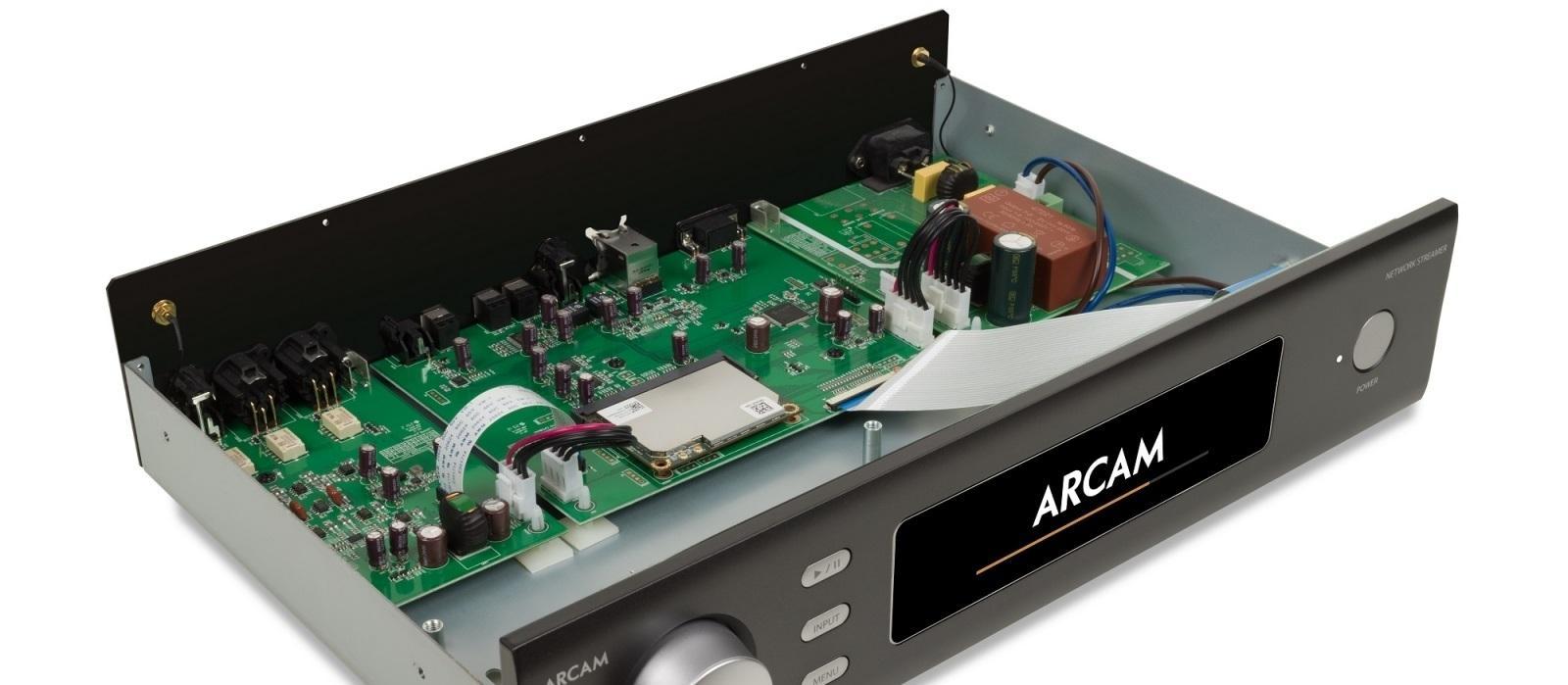
In terms of design, the ST60 adheres to Arcam’s characteristic style. The chassis reverts to a standard component size, featuring a metal body with the brand’s signature grey finish. A distinctive knob on the left side of the front panel serves not only for volume adjustment but also for navigating the ST60’s menu and adjusting various functions. The center features a long, color display – a detail I particularly appreciate.

It’s considerably larger than the displays on Arcam’s amplifiers or CD players, lending the ST60 a less “traditional” appearance and a more modern streaming audio vibe. Beyond displaying operation menus and track titles, this screen now beautifully renders album artwork, enhancing the user experience in a visually pleasing way, which is a thoughtful touch not always found in streamers at this price point.
Comprehensive Connectivity
Moving to the rear panel, the ST60 is equipped with standard RCA and XLR analog outputs. It also features an antenna, giving you the choice of connecting to your local network via RJ45 Ethernet or Wi-Fi to stream music services or play music files from an external USB Type-A drive. While the unit doesn’t support HDMI eARC, it includes two optical and two coaxial digital inputs, allowing you to connect a TV or an external transport to use the ST60 as a pure DAC.
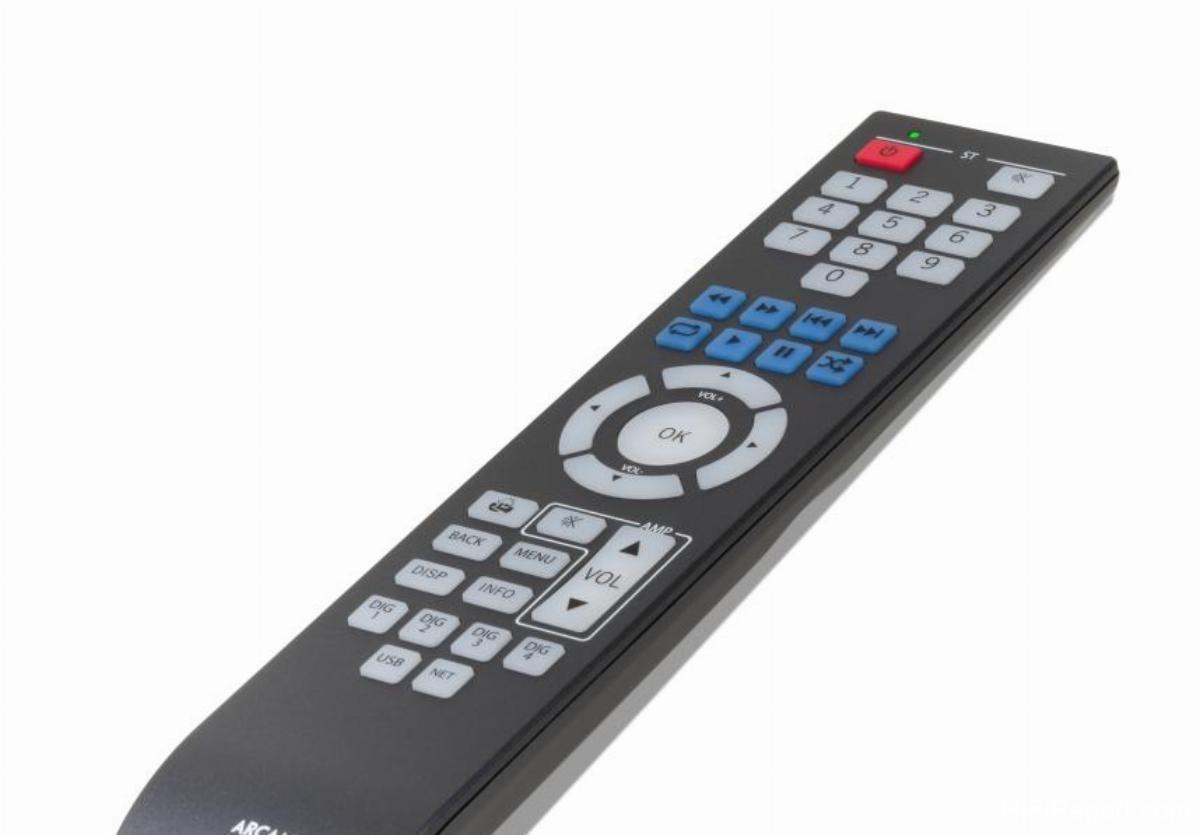
For outputs, the ST60 also provides one optical and one coaxial connection, meaning it can also function as a streaming transport if you have a preferred external DAC.
Decoding and Audio Technologies
For decoding, the ST60 utilizes a 32-bit ESS9038K2M Sabre DAC chip internally, enabling it to handle high-resolution audio up to 24bit/192kHz. It supports various file formats including AIFF, ALAC, FLAC, and WAV. Importantly, the ST60 boasts full MQA decoding capabilities, ensuring you get the best possible sound quality when streaming popular lossless platforms like Tidal.

Streaming Features and Control
Regarding streaming functions, Arcam has developed its own application, the MusicLife App. Its interface is intuitive and minimalist, allowing you to control the ST60 via your phone to stream from platforms such as Tidal, Qobuz, Spotify, Napster, and Deezer. Naturally, it supports UPnP/DLNA functionality, enabling control via third-party streaming apps like MConnect or Bubble UPnP to play music files stored on a NAS or PC within your local network.
Additionally, the ST60 incorporates Chromecast and AirPlay 2, allowing you to mirror and push music files from your mobile devices for playback. Finally, the ST60 is Roon Ready, so if you have a Roon Core, you can use this device as a playback endpoint for optimal streaming fidelity.
Exploring Digital Filters
Beyond its capable decoding, the Arcam ST60 possesses a unique secret weapon: Arcam’s exclusive digital filter function. Delving into the ST60’s Digital Filters menu reveals three main filter modes: Hybrid Filters, Linear Phase Filters, and Minimum Phase Filters. Each mode is further divided into two to three settings. According to Arcam, these different filter modes can adjust sound phase and high-frequency ringing distortion.
Through actual listening tests, I found that each setting not only produced a noticeable tuning effect but also resulted in distinct sound signatures.

This feature is particularly friendly for entry-level audiophiles who might lack extensive experience with cable and isolation pairings. The ST60’s filter function allows users to experiment with sound styles as they listen, without any additional expenditure. It’s a relatively simple and effective way to fine-tune the sound to personal preference.
Listening Test Setup
For my listening tests, I initially disabled the ST60’s volume control, using it as a pure streaming source. I paired it with a Hegel H190 integrated amplifier driving the Pioneer S-1EX floorstanding speakers in our listening room. My initial impression of the ST60 was a warm, rich sound with a full and supple mid and low frequency range, and smooth, non-fatiguing highs. Overall, the sound leaned towards a gentle and easy-to-listen-to character.
However, after some listening, I felt this pairing lacked a bit of resolution and crispness. Since the H190 also has a warm sonic signature, perhaps the two were overly similar. I then switched the ST60 to preamp mode and paired it with the subtly detailed Nuforce STA 200 power amplifier. This is where something remarkable happened! The sound immediately opened up, becoming bright and clear, as if clouds had parted.
Instruments gained better focus and density, and the low-frequency control improved significantly. This system configuration became the basis for my final listening impressions.
Detailed Sonic Impressions
First, I played Beatrice Berrut’s solo piano album “Jugendstil.” The first track, an arrangement of Mahler’s Fifth Symphony, presented a piano tone that was broad and steady. Key strikes felt weighty, imbued with a rich sense of moisture and elasticity. The high notes weren’t just thin ‘tings’; they had a rounded, sweet quality to their texture. Another rare strength of the ST60 is its excellent dynamic range. From light touches to heavy bass notes, the contrast in dynamics was striking.
When chords were struck forcefully, the energy from the soundboard created a vast sense of immersion, with deep, relaxed bass accompanied by the clear, lingering metallic resonance of the soundboard. It was another demonstration of the perfect rendition of the piano’s timbre.
Next, I listened to “Ain’t No Sunshine” from Eva Cassidy’s album “Time After Time” (track 2). The opening guitar had a full and plump tone, with the plucked strings exhibiting a vibrant elasticity. The string vibrations left an ethereal trailing decay in the air, revealing that the ST60’s sound isn’t completely neutral but carries a slight coloration in the mid and low frequencies, adding to its rich character. This style also made the vocal image more prominent and full-bodied.
The ample sound lines gave Eva Cassidy’s voice a mature elegance. All the subtle vocal nuances, throat sounds, and mouth shapes sounded incredibly warm, utterly devoid of any sharpness. You could truly hear the smooth quality inherent in high-resolution music. Even with a simple voice and guitar arrangement, it sounded more lifelike and natural.
Finally, I put on Nemanja Radulović’s performance of Tchaikovsky’s Violin Concerto. From the outset, it created an expansive soundstage. Despite the large orchestral forces, the instrument images remained full and vibrant, with clear, three-dimensional presence. This is crucial, as some equipment emphasizing soundstage depth often sacrifices the sense of body, making instruments sound small and thin. The ST60 is absolutely not like that.
In the concerto, Nemanja Radulović’s solo violin possessed a soft, natural tone with a sense of moisture. The high frequencies were smooth and controlled, sounding polished without any harsh edges. While not a style that strongly emphasizes extreme detail, you could still hear the rich textures of the bow strokes and the resonance of the wood. Even at the highest notes, the sound maintained a substantial thickness, making for very enjoyable listening.
The ST60’s strength in interpreting large-scale orchestral music was particularly evident. When the strings and drums erupted together in sudden bursts, the power was astonishing, with dynamics swinging wide open, showcasing a relaxed and impactful low-frequency presence. Impressively, even under significant sound pressure, the unit managed to present details in an orderly fashion, without any sense of compression or distortion.
The texture of the instruments remained consistently relaxed and natural.
Summary and Conclusion
Throughout my testing, I found the Arcam ST60 to have excellent inherent quality. Its warm and full sound character is comfortable for long listening sessions without fatigue. When paired with an amplifier possessing high resolution and strong control, the musical dynamics and spaciousness it delivers are certainly outstanding among affordable streaming sources.
If you are looking for a smooth, engaging, and highly musical streaming player, the ST60 is an excellent component that can stay with you for a long time, providing endless listening pleasure.
Specifications
* Product Type: Streaming Player
* Supported File Formats: WAV, FLAC, ALAC, AIFF, HRA, MQA, WMA, OGG, AAC, MP3
* Maximum Digital Audio File Resolution: PCM 24bit/192kHz
* Frequency Response: 10Hz–20kHz ± 0.5dB
* Signal-to-Noise Ratio: 118dB (single-ended), 122dB (balanced)
* Network Interface: Ethernet, Wi-Fi (2.4GHz/5GHz)
* Digital Inputs: Toslink optical, RCA coaxial, USB Type-A
* Audio Outputs: RCA (unbalanced), XLR (balanced), Optical, Coaxial
* Color: Dark Grey
* Dimensions (W.H.D.): 433x102x306mm
* Weight: 5.5kg