
ARRIBA T-1801 Isolation Transformer Review
Improving power quality is widely recognized as one of the most effective ways to enhance the sound performance of an audio system. Among the various methods, using an isolation transformer stands out as a relatively simple, direct approach with minimal negative side effects. This is precisely why many professional recording engineers, when working on location, go to the trouble of hauling heavy, bulky isolation transformers. They do so to effectively block unpredictable and often pervasive power line noise encountered in different recording environments.
But how exactly does an isolation transformer improve power quality? A transformer operates on the principle of electromagnetic induction, utilizing two sets of coil windings to step voltage up or down. If the number of turns in both coils is the same, the output voltage remains unchanged. However, crucially, because the current does not flow directly between the two coil windings, electrical isolation is achieved.
Furthermore, isolation transformers can leverage the high-frequency loss characteristics of their core material to reduce the components of high-frequency noise and harmonics, delivering a cleaner power supply.
The sonic quality of an isolation transformer is fundamentally dependent on the quality of the transformer itself.
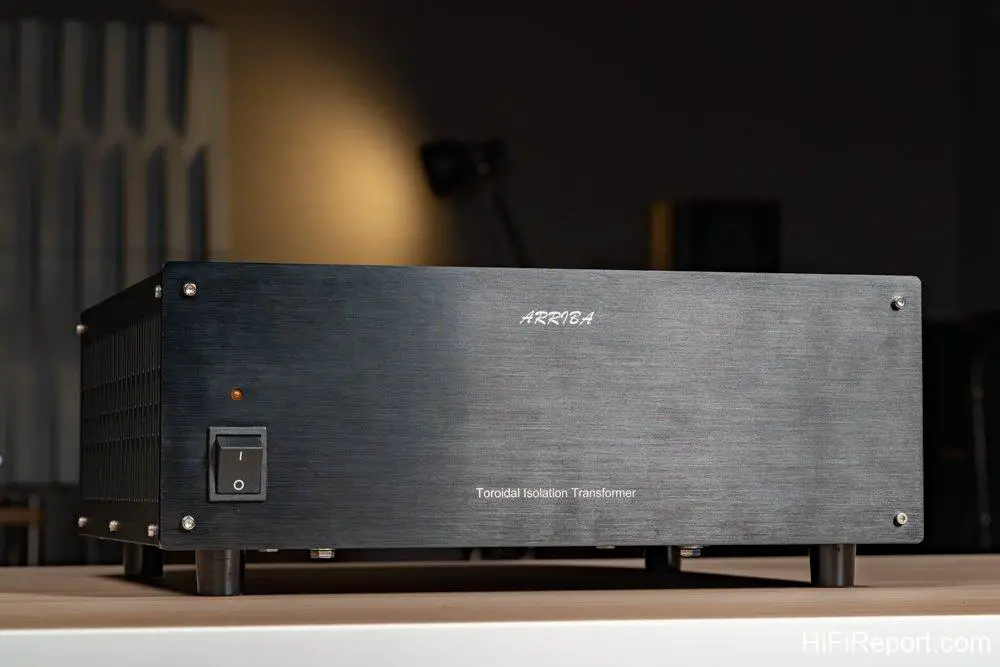
While a transformer might appear simple, there are numerous critical details and subtleties involved in its design and manufacture. Manufacturers capable of developing isolation transformer products are typically those with the expertise to design and produce transformers in-house. Guanqiu is a prime example of such a leader in the field. Their latest offering, the ARRIBA T-1801, features a truly unique and innovative design that significantly departs from their previous isolation transformer products.
Multiple Transformers in Parallel Sound Better
The most significant and unique characteristic of the T-1801 is that it doesn’t rely on a single transformer internally. Instead, it utilizes multiple smaller-capacity transformers connected in parallel to achieve a sufficient total capacity.
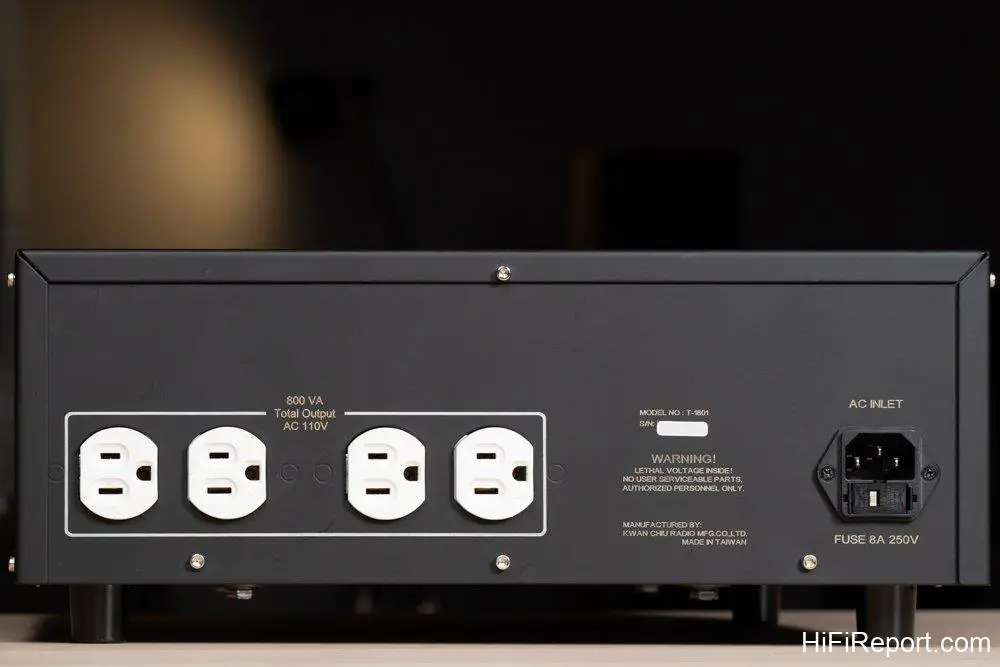
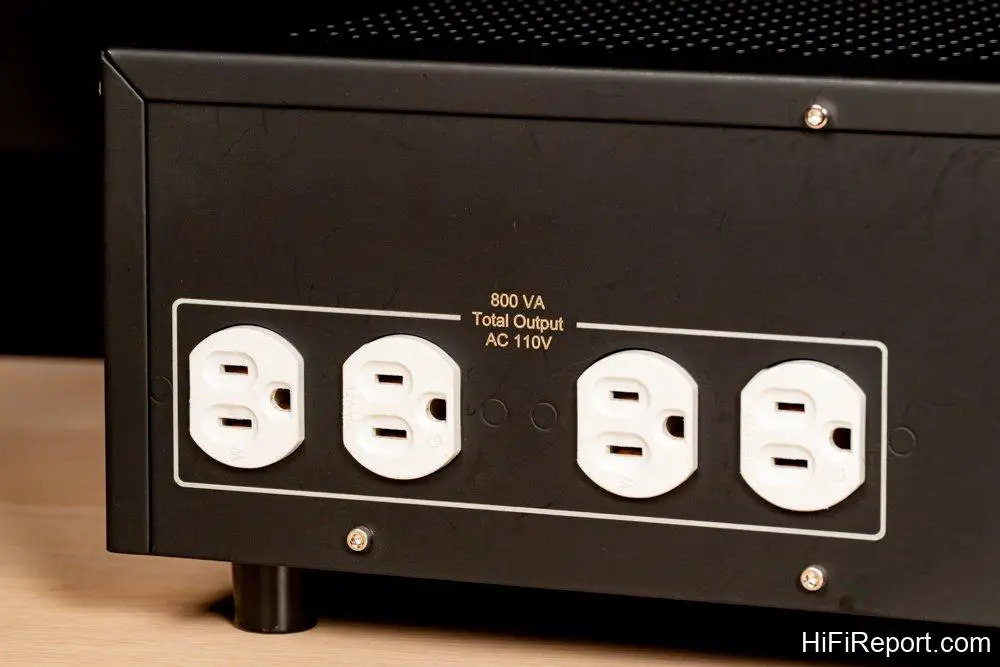
The T-1801 houses four 200VA isolation transformers. Connected in parallel, they provide a total capacity of 800VA, which is ample to power typical medium-sized amplifiers or multiple source components and preamplifiers.
Guanqiu is certainly not incapable of manufacturing large-capacity isolation transformers. So, why opt for a parallel configuration of four smaller units? Does this approach yield better results? In fact, Guanqiu’s initial plan was to build a unit with four independent 200VA outputs (i.e., 200VA x 4).
Around the same time, Guanqiu had also developed a model featuring a single 600VA isolation transformer. Coupled with their existing T-1201 model, which offers a single 200VA output, Guanqiu had a novel idea: they decided to connect four 200VA transformers in parallel and compare the result to the single 600VA unit. While the total capacity difference was minimal, the sound quality from the configuration using four 200VA units in parallel was noticeably superior. Consequently, the newly launched T-1801 adopted the design featuring four parallel transformers.
Overall Interference Reduction
Why would four smaller transformers in parallel sound better than a single large one? When multiple units are used in parallel, the load can be distributed. Furthermore, each transformer has lower magnetic field radiation and thermal effects. Theoretically, this makes it easier to reduce mutual interference and common-mode noise, contributing to a cleaner sound.
In contrast, with a single large-capacity transformer, all components share the same power source. If the transformer itself has higher noise or magnetic radiation, it can easily impact the signal-to-noise ratio of the entire system.
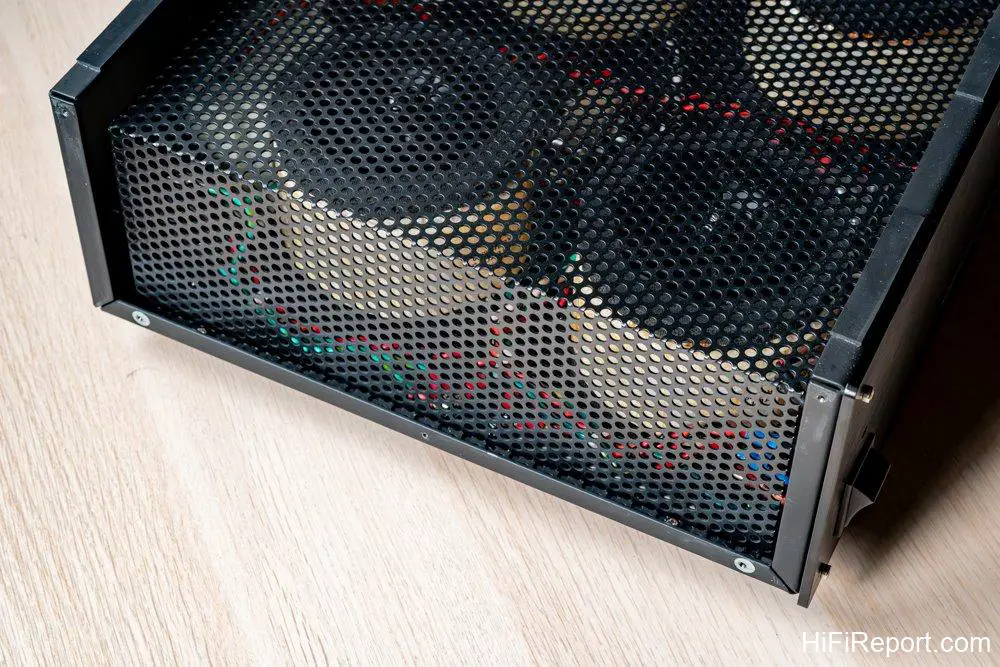
You might wonder if using multiple smaller transformers in parallel to achieve the same total capacity as a single large transformer is more cost-effective. Surprisingly, it’s not; it’s actually more expensive.
According to Guanqiu, using four smaller transformers requires more materials overall, which alone increases the cost. Beyond that, the parallel configuration demands strict matching of each transformer. Otherwise, unequal load distribution could potentially lead to overloading some units or generating slight voltage deviations, thereby introducing additional distortion or interference.
When winding these four transformers, the number of turns in the windings must be precisely the same – not one more, not one less. After winding, their inductance must be measured, and the tolerance must fall within a specified range for optimal performance when paralleled.
This means that to achieve an 800VA capacity, the T-1801 not only doesn’t reduce material costs but actually incurs higher production costs.
The T-1801 also pays meticulous attention to its grounding design, benefiting from years of research and accumulated experience at Guanqiu.

Each transformer in the T-1801 is grounded to the chassis, ensuring continuity between them. This allows the chassis to simulate the effect of earth ground. The chassis ground is also connected to the AC ground. If your wall outlet is a three-prong type and is properly grounded, using the T-1801 will yield even better results.
The transformer cores in the T-1801 are made from premium materials, specifically selected high-quality silicon steel sheets from Nippon Steel. These cores exhibit low magnetic leakage and excellent permeability, allowing the transformers to achieve the required capacity without being excessively large or heavy.
Another advantage of the T-1801’s parallel transformer design is the increased flexibility in capacity and output. For instance, future models could potentially be configured as 400VA + 400VA or 400VA + 200VA + 200VA.
Music Gains Visual Depth
The listening test was conducted in the HiFiReport listening room. The equipment used included a Cambridge EXN100 streamer, a Linear Acoustic LAV-60 MKII integrated amplifier, and Dynaudio Contour 60 loudspeakers, with playback managed by an Intel NUC running Roon Core.
I connected both the EXN100 and the LAV-60 MKII to the T-1801. The reference for comparison was a standard power strip with no filtering capabilities.

First, I played Bach’s Brandenburg Concertos conducted by Trevor Pinnock with The English Concert. The instrumentation of this piece is primarily strings, augmented by some woodwinds and brass. While not overly complex, it’s quite demanding on the separation of instrumental sections and layering.
The first change brought about by the T-1801 was that the music acquired a greater sense of visual depth. The shape and boundaries of the soundstage were rendered more clearly, as if contained within a frame.
A more significant difference was that the musical images became more focused and three-dimensional, appearing more concrete and palpable. Furthermore, the depth of the soundstage improved considerably, resulting in clearer separation between different instrumental sections and distinct front, middle, and rear layers.
In short, the sonic picture became significantly more vivid and defined! At this point, I plugged the EXN100 and LAV-60 MKII back into the regular power strip, and the soundstage immediately became more open – or perhaps, more diffuse.
The width did increase, but it felt somewhat scattered, lacking focus. The soundstage depth also became less defined, and the front-to-back layering of different sections was indistinct, sounding more piled together, with a rather flat quality.

During the test, the Contour 60 speakers were placed flat against the wall with no toe-in angle. This placement naturally tends to flatten the soundstage and reduce the focus of sonic images, although it results in a more open soundstage and a relaxed presentation, which is a placement I generally prefer and am accustomed to.
The T-1801 allowed me to achieve excellent 3D imaging and a deeper soundstage even without toe-in. Frankly, this is a rather impressive advantage.
Another benefit of the T-1801 is its ability to reduce sonic harshness.
Using the same Brandenburg Concerto piece, without the T-1801, the friction of the bows on the strings felt too pronounced, resulting in a somewhat sharp, hard sound quality that wasn’t particularly pleasant. With the T-1801 in place, the high-frequency bite and harshness instantly diminished. The string tone retained its excellent sheen but gained a sense of liquidity and a softer texture. The difference was substantial.
Beyond smoothing the high frequencies, the T-1801 also made the location of the string bass section more precise, their form more tangible, and the definition of the low frequencies clearer. This lent greater organization to the upper, middle, and lower structure of the soundstage.
Sound Grabs Listener’s Attention
Next, I played HiFiReport’s collection of violin sonatas by French composers, specifically the third movement of Franck’s Sonata in A Major. The piano introduction immediately made an impact. The T-1801 allowed the sound to better capture the listener’s attention.
Without it, the piano’s touch felt less solid and powerful, the sound quality was looser, and the piano itself seemed larger but lacked clear scale definition. Soundstage depth was also insufficient, making the piano appear closer. When the violin entered, the force of the bow on the string felt weaker, resulting in less sonic tension.
After switching to the T-1801, the sonic images became more concrete, the separation between the two instruments improved significantly, and the dynamic range between soft and loud passages was greater, resulting in a stronger dynamic contrast. Combined with the richer and clearer textural details, the sound felt more lifelike, making the musical expression more vivid and possessing a greater ability to captivate the listener.
Music Feels More Forceful
Let’s switch to something more explosive. I tried Vital Tech Tones’ album “Vtt2.” This is a jazz fusion trio consisting of guitar, bass, and drums. The music is highly rhythmic and intensely energetic.
The purpose of listening to this album was to determine if the T-1801 would limit energy or compress dynamics. After all, it uses multiple smaller transformers in parallel, and despite the ample total capacity, there might be some concern.
After listening to several tracks, there was basically no sense of current limitation. On the contrary, the power felt more forceful. How could this be? I believe the T-1801 doesn’t genuinely boost power or increase energy. Instead, because it makes the sound more focused, the images more three-dimensional and clear, the outlines more defined, and the bass tighter, it subjectively *sounds* more energetic, faster, and more powerful.
Furthermore, there’s another reason: organization.
The instrumentation on this album isn’t complex, just three instruments, but the music itself is quite intricate, especially at high volumes. The bass is extremely abundant, filling the soundstage completely. If the frequency structure isn’t clear, separation is poor, and imaging lacks three dimensions, the sound can easily blend into a muddy mass, losing definition and thus failing to convey power.
The T-1801 brings order, providing structure and a clear sonic picture. The sound becomes articulate and lively, naturally resulting in a sense of power.
Simple, Effective, and Excellent Value Power Solution
Considering the components used, the price of the T-1801 is quite appealing compared to similar products. Evaluating its performance against its price, I believe the T-1801 offers not just good value, but exceptional value. Moreover, coming from a professional and reputable manufacturer, the quality is undoubtedly guaranteed.
If you are seeking a simple, effective, side-effect-free, convenient, and reasonably priced power treatment solution, you should definitely add the T-1801 to your shortlist. It’s worth your attention.
Specifications
* **Model:** ARRIBA T-1801 Isolation Transformer
* **Total Capacity:** 800 VA
* **Output Sockets:** 4
* **Dimensions (W x H x D):** 355 x 142 x 318 mm
* **Weight:** 13.8 kg